
Reviewed · TAPAS AND FOOD TOURS
Authentic Premium Paella & Sangria in a Stunning Location
The heart of this experience is the paella itself. You learn how to make seafood rice properly, including the prized crispy bottom and the chef’s rosemary-smoking trick, rather than settling for the overcooked yellow rice served at many tourist restaurants. The class takes place in a rooftop loft near C/ Badajoz 115, giving the meal a relaxed home-style setting.
I like the hands-on cooking and the chance to learn sangria as well as paella. I also like the unusual Vulcano method, an aluminum cover used while rosemary twigs are torched to give the rice a smoky aroma. The main consideration is the meeting point: it is inside an industrial building, so you need to follow the address carefully and arrive five minutes early.
In This Review
- Key points to know
- Why this paella class feels different
- Arriving at the rooftop loft near C/ Badajoz 115
- Starting with pan tomaquet and a welcome drink
- Building the meal before the paella
- Learning the seafood paella step by step
- The Vulcano rosemary-smoking method
- Making sangria with the chef
- Sitting down to eat what you prepared
- The teaching style and named hosts
- Dietary needs and practical limits
- Is $79 a fair price?
- Who should book this experience?
- Should you book this paella and sangria class?
- FAQ
- Where does the paella and sangria class take place?
- How long does the experience last?
- How much does the experience cost?
- What food is included?
- What drinks are included?
- Which languages are available?
- Do I get to cook the food myself?
- Can I cancel for a full refund?
- Can I reserve now and pay later?
Key points to know
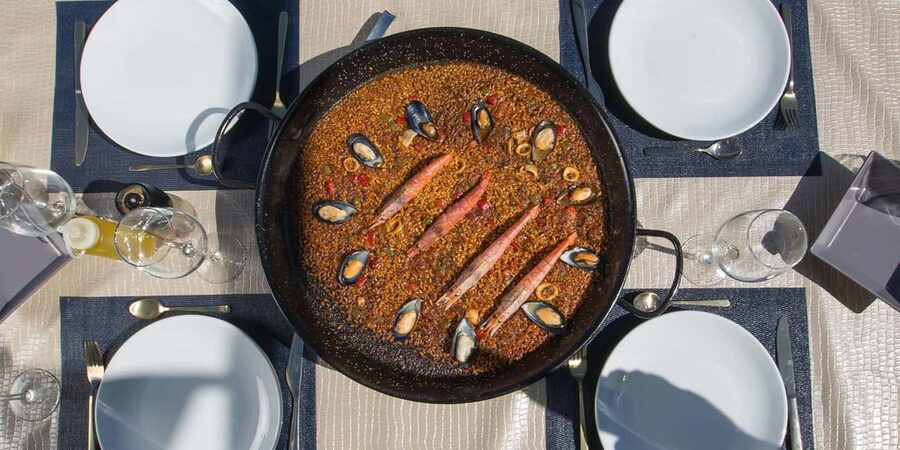
- The paella is the main event: You prepare seafood rice with prawns, mussels, squid, and seafood broth.
- The Vulcano adds a special touch: Torched rosemary is used under a custom aluminum cover to scent the finished rice.
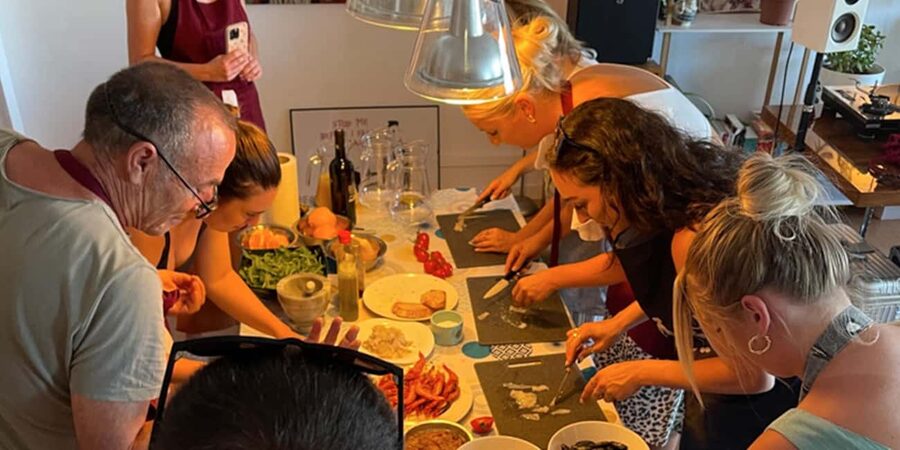
- You cook, not just watch: The class includes hands-on work with guidance from the chef and team.
- The rooftop setting changes the mood: The loft has an outdoor balcony, music, and room to linger over the meal.
- The menu is generous: Pan tomaquet, salad, paella, Catalan cream, cava, wine, sangria, water, or soft drinks are included.
- The class suits food-focused visitors: It is especially useful if you want skills and recipes to take home, not only a meal.
Why this paella class feels different
When you visit Barcelona, paella is hard to avoid. The problem is that the dish served under that name can be a poor shortcut: colored rice, too many unrelated toppings, and little sign of the careful cooking that makes paella special.
This class takes a more useful approach. You are shown how the rice, stock, seafood, heat, and timing work together. That matters because paella is not simply rice cooked in a broad pan. The texture depends on how much liquid the rice absorbs, and the bottom layer can develop a crisp finish known as socarrat.
I like that the class treats paella as a dish with technique behind it, not a photo opportunity. You get to take part in the process, then eat the result at the same table. That shared meal gives the cooking a clear purpose.
The class is run by Foodies Xp, with instructors named Tommy, Martino, and Valerio associated with the experience. The teaching style is friendly and active. You can expect the chef to explain what is happening as the food comes together, with room for questions and practical tips you can use at home.
More paella classes in Barcelona:
- Barcelona: Paella Cooking Experience & Boqueria Market Tour
★ 4.8 · 3,661 reviews - Barcelona Paella Cooking Class with Market Visit, Tapas & Sangria
★ 5.0 · 2,531 reviews - Barcelona Interactive Spanish Cooking Experience
★ 4.5 · 2,155 reviews
Arriving at the rooftop loft near C/ Badajoz 115
The meeting point is in Catalonia, in an industrial building at C/ Badajoz 115, postal code 08018. The instruction is to arrive at the door five minutes before the class begins.
This is useful to know because the address does not describe a classic restaurant entrance. If you take a taxi, give the driver the street address rather than simply asking for a paella class. The industrial setting may take a moment to recognize, so do not plan to arrive at the last second.
The class ends back at the same meeting point. There is no transfer to or from the activity, and the provided information does not include hotel pickup as a standard part of the booking. One person did receive help getting from a train, but I would not count on that unless it has been arranged directly.
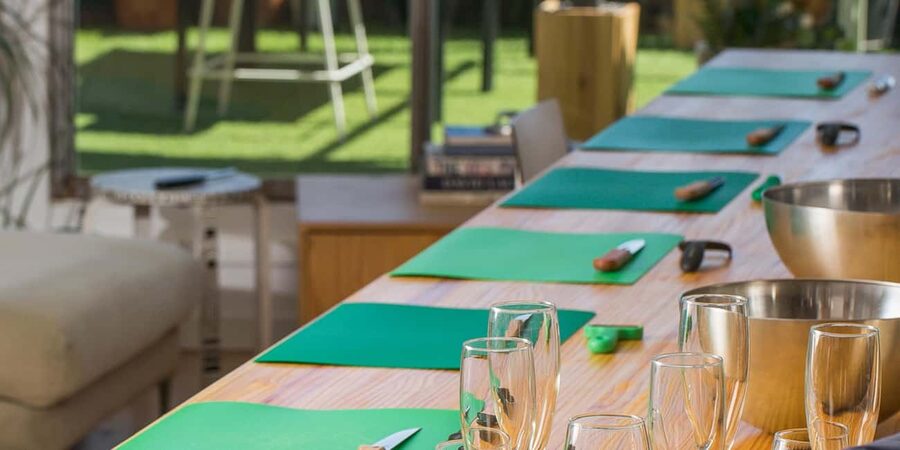
Once inside, the setting becomes more relaxed. The experience takes place in a loft with a rooftop outdoor area and balcony. Music and the open-air space add a social feel, though weather may affect how much time you spend outside. The rooftop was still appreciated on a cool, cloudy afternoon, but you should dress for the conditions if you hope to sit outdoors.
Starting with pan tomaquet and a welcome drink
The meal begins with Spanish pan tomaquet, bread rubbed or prepared with tomato, along with a welcome drink. This is a small course, but it gives you a taste of a simple Catalan habit: good ingredients do not need a long recipe.
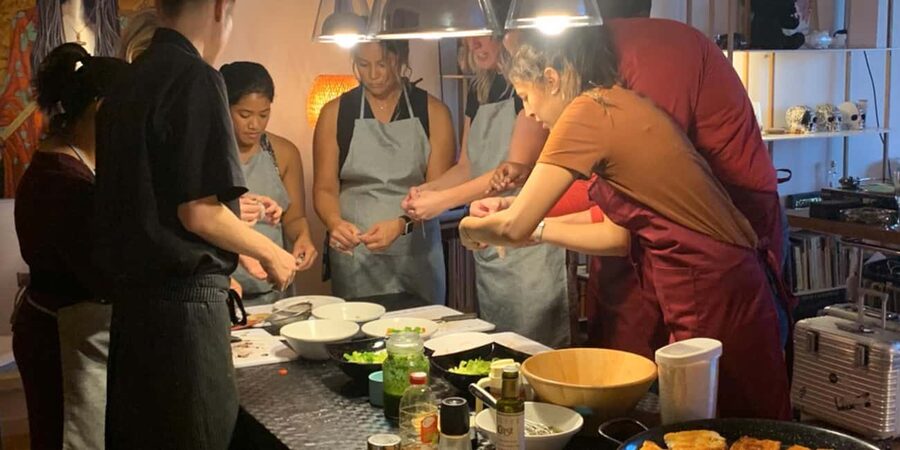
The welcome drink helps set the pace before the main cooking begins. This is not a rushed demonstration where you stand at the back of a kitchen and wait for the final plate. The plan is to cook together, talk about the food, and share the meal afterward.
You may also receive a glass of cava during the experience. Cava is Spain’s sparkling wine, and its inclusion adds a local touch without turning the class into a formal wine tasting.
Building the meal before the paella
A Mediterranean salad with cherry tomatoes and balsamic vinaigrette is also included. It works as a fresh counterpoint to the seafood rice, which is naturally richer and more filling.
The menu has a good rhythm. Pan tomaquet gives you a Catalan starter, salad keeps the first part of the meal light, and paella provides the main cooking lesson. The dessert then finishes the meal without requiring another activity or stop elsewhere.
I would not choose this class expecting a full tour of Catalan food. The focus is clearly paella, sangria, and a few dishes around them. That narrow focus is a strength if you want to learn one famous dish properly, but it may feel limited if your goal is a broad food tour.
More tapas crawls around Barcelona:
- Montserrat Half-Day Tour with Tapas and Gourmet Wines
★ 5.0 · 7,359 reviews - Montserrat & Cogwheel Train, Gourmet Wine Tasting & Tapas/Lunch
★ 5.0 · 6,290 reviews - Barcelona Tapas and Wine Experience Small-Group Walking Tour
★ 5.0 · 5,804 reviews - Montserrat with Black Madonna & Medieval Winery with Tapas/Lunch
★ 5.0 · 5,209 reviews
Learning the seafood paella step by step
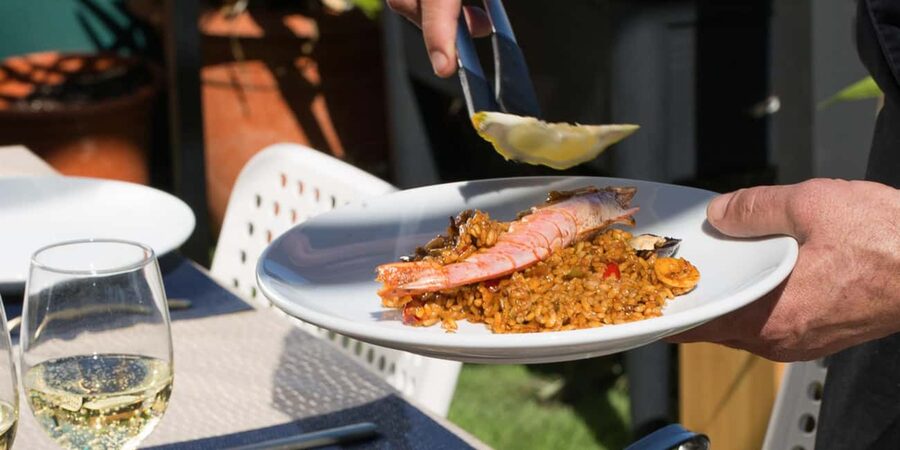
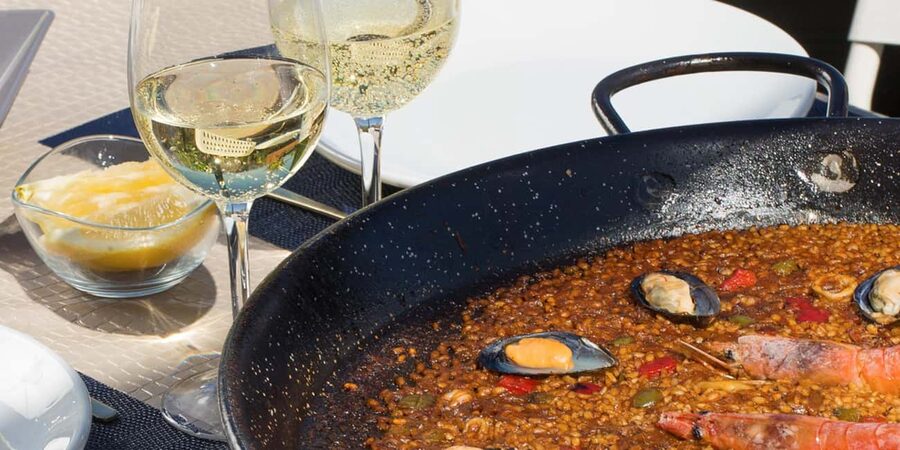
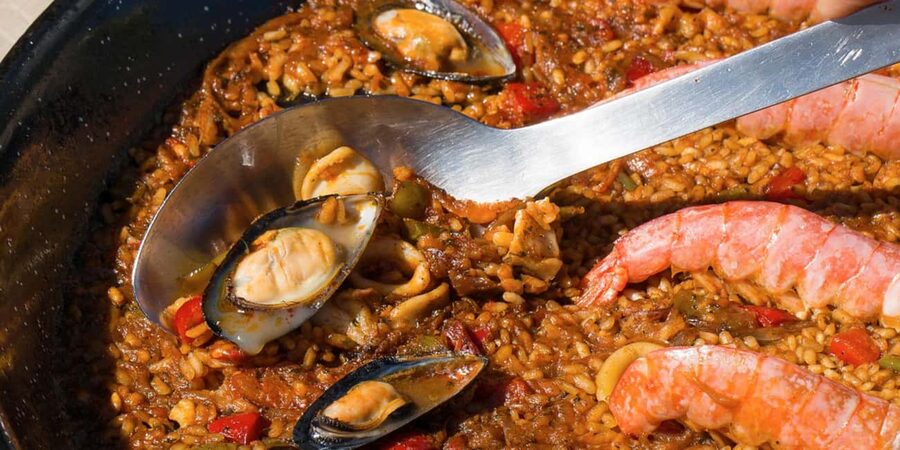
The featured dish is seafood paella made with bomba rice, prawns, mussels, squid, and seafood broth. Bomba rice is well suited to paella because it absorbs liquid while helping retain structure, though the final result still depends on heat and timing.
The chef explains how the ingredients work together as the pan develops. You get to see the rice change as it takes in the broth, rather than receiving a finished serving with no idea how it was made.
The seafood combination gives the dish its main flavor. Prawns add sweetness, mussels bring a briny note, and squid gives the rice another texture. The seafood broth ties everything together. Because the menu is specified in advance, you can decide before booking if this is the right class for your tastes.
One of the most useful lessons is the treatment of the rice at the bottom of the pan. The crisp layer is not a mistake. It is a prized part of the dish, and the class explains how that texture forms. One participant found the explanation especially useful because the crispy rice added a strong contrast to the softer grains above it.
You should not expect every grain to be soft and uniform. Good paella has texture, and the cooking method is designed to create different layers in the same pan. This is one reason a hands-on class can be more rewarding than ordering a random paella at a restaurant.
The Vulcano rosemary-smoking method
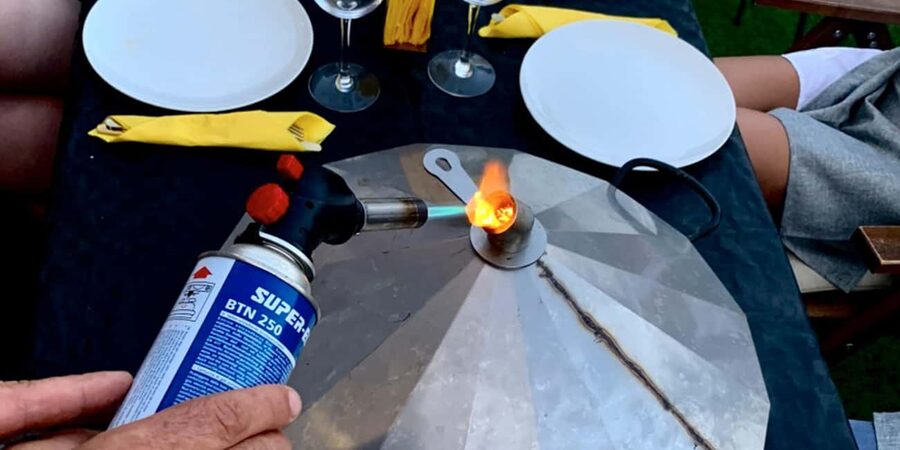
The most distinctive technique here is the chef’s Vulcano. It is a custom-made aluminum cover placed over the paella for a few minutes while rosemary twigs are torched.
The purpose is to give the rice a smoky aroma. It is a clever finishing step and one of the details that separates this class from a basic paella lesson. You are not only learning the standard ingredients, but also seeing how a chef adds a signature note to the finished dish.
The Vulcano was developed during the team’s time at Kaiku, a restaurant in La Barceloneta’s fishermen’s neighborhood facing the sea. That background helps explain why the class places so much weight on the difference between a proper rice dish and a tourist version.
I would pay close attention during this part. Even if you cannot reproduce the exact aluminum cover at home, the broader lesson is practical: aroma can be added at the end, and herbs can affect a dish beyond their flavor on the tongue.
Making sangria with the chef
Paella gets the headline, but the sangria lesson is an important part of the experience. You learn how to prepare the drink rather than simply receiving a glass at the table.
That makes the class more useful for a future dinner party or Spanish-themed meal at home. The instruction is direct and hands-on, and you can ask questions as the drink comes together.
The included drinks are flexible. The menu provides one glass of cava, a welcome drink, two glasses of wine or sangria, and water or soft drinks. The exact drink choice may depend on what you select or what is available at the session, so check the booking details if you have a firm preference.
The class is not described as a dedicated cocktail workshop. Sangria is part of the wider meal, so I would see it as a practical bonus rather than the main reason to book.
Sitting down to eat what you prepared
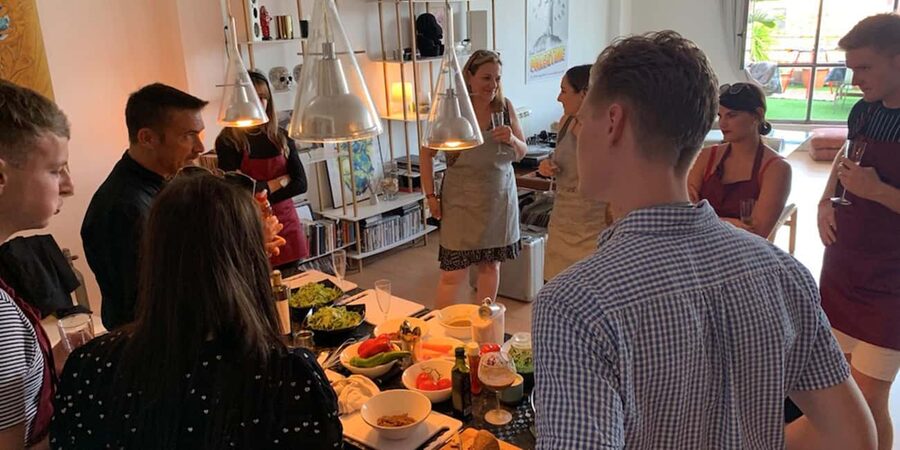
After the cooking, you sit down to eat the meal together. This communal finish is one of the best parts of the format because it gives you time to enjoy the food without rushing straight out the door.
The full menu includes pan tomaquet, Mediterranean salad, seafood paella, Catalan cream, cava, a welcome drink, and the listed wine, sangria, water, or soft drink options. The Catalan cream is a well-known Spanish dessert and gives the meal a traditional ending.
The group setting also helps the experience feel social. You are not only following instructions, but sharing the table with the people who cooked beside you. One couple was allowed to stay an extra hour to enjoy the food and drinks, though I would treat that as a courtesy rather than a guaranteed part of every booking.
The class lasts 2.5 hours, which is enough time for instruction, cooking, and the meal. It is longer than a simple tasting but shorter than a full-day culinary workshop. I think that balance works well for a Barcelona itinerary, especially if you have other plans later in the day.
The teaching style and named hosts
The available teaching languages are English, Spanish, Italian, and Portuguese. That makes the class accessible to a broad mix of visitors, though you should select or confirm your preferred language when checking availability.
The instructors connected with the experience include Chef Tommy, Martino, and Valerio. Tommy is described as lively and engaging, while Martino and Valerio are associated with a warm, welcoming approach. The useful feature is not just the personality of the host, but the amount of direct attention you receive during the cooking.
Small class size is part of the appeal, although a fixed maximum group size is not provided. You should expect participation rather than a passive kitchen show. If you prefer to watch quietly, you can do that, but the experience is designed to have you involved.
The teaching also covers the reasoning behind the food. That includes why the crispy rice forms and how the smoky rosemary method works. These explanations are worth more than a recipe card alone because they help you adjust if your own pan, stove, or ingredients differ at home.
Dietary needs and practical limits
One person with gluten-free needs received gluten-free bread, so the team has shown flexibility with that request. Still, you should contact Foodies Xp before booking if you have a dietary restriction. The listed menu includes seafood, bread, dairy-related ingredients may be present in the dessert, and the provided information does not promise changes for every allergy or diet.
The activity is not presented as a private class by default. A private option may be available, but the standard experience should be understood as a shared class unless your booking says otherwise.
The meeting point is inside an industrial building, and no specific accessibility details are supplied. If you need step-free access, elevator information, or other assistance, ask the provider before paying.
Is $79 a fair price?
At $79 per person, this is not the cheapest way to eat paella in Barcelona. You can find a plate of rice for far less, especially away from prime waterfront areas.
The comparison is not quite fair, though. Here you receive 2.5 hours of instruction, a hands-on cooking activity, a full meal, dessert, cava, a welcome drink, and additional wine, sangria, water, or soft drinks. You are also paying for a chef-led lesson and a rooftop setting.
I think the price is fair for someone who values the activity as much as the food. It offers better value than a short demonstration followed by a small tasting. It offers less value if you only want to eat paella and have no interest in cooking.
The class can also replace part of an evening plan. You get dinner, drinks, a social setting, and a local food lesson in one booking. That saves time, though the industrial location means you should allow a little extra time to find the entrance.
Free cancellation is available up to 24 hours before the start for a full refund, and you can reserve now and pay later. Those options help if your Barcelona schedule is still changing.
Who should book this experience?
I would choose this class if you want to understand what makes real paella different from a tourist plate. It is a good fit for couples, friends, and families who enjoy cooking together and do not mind sharing a table with other people.
It also suits food-focused visitors who want a practical memory to take home. The sangria lesson, socarrat explanation, and rosemary-smoking method give you more to remember than a standard restaurant meal.
You may want to skip it if your schedule is packed, you dislike seafood, or you prefer a quiet dinner without group participation. The class requires you to reach the meeting point, take part in the cooking, and spend 2.5 hours on one meal.
For an evening activity, the rooftop, music, and drinks add to the mood. For daytime, the outdoor area can make the class pleasant, but bring a layer if the weather is cool or cloudy.
Should you book this paella and sangria class?
Book it if you want a real cooking lesson with a full meal, not just a paella tasting. The seafood ingredients, bomba rice, crispy bottom, and Vulcano rosemary technique give the class a clear point of difference.
I especially recommend it for anyone who has been disappointed by tourist paella and wants to see how the dish should be handled. Just arrive early, use the full C/ Badajoz 115 address, confirm your language and dietary needs, and remember that the standard experience is shared rather than guaranteed private.
FAQ
Where does the paella and sangria class take place?
The meeting point is at the door of an industrial building at C/ Badajoz 115, CP 08018, in Catalonia, Spain. The class takes place in a loft with a rooftop outdoor area and balcony.
How long does the experience last?
The cooking class lasts 2.5 hours. Check availability for the current starting times.
How much does the experience cost?
The listed price is $79 per person.
What food is included?
The menu includes Spanish pan tomaquet, Mediterranean salad with cherry tomatoes and balsamic vinaigrette, seafood paella with bomba rice, prawns, mussels, squid and seafood broth, and Catalan cream.
What drinks are included?
The experience includes one glass of cava, a welcome drink, two glasses of wine or sangria, and water or soft drinks.
Which languages are available?
Instruction is available in English, Spanish, Italian, and Portuguese.
Do I get to cook the food myself?
Yes. This is a hands-on class, so you take part in preparing the paella and sangria with guidance from the chef and team.
Can I cancel for a full refund?
You can cancel up to 24 hours in advance for a full refund.
Can I reserve now and pay later?
Yes. The experience offers a reserve-now-and-pay-later option, so you do not have to pay at the time of booking.
Just added around Barcelona
- GoCar Full Day Tour★ 4.0 · 6 reviews
- Sagrada Familia and Barcelona Highlights: Private Guided 4-Hour Driving Tour★ 5.0 · 6 reviews
- Barcelona: Highlights & Gems Private Tour with Tapa & Drink★ 3.9 · 6 reviews
- Gothic Quarter and Born District: Photographic Workshop★ 5.0 · 6 reviews
- Gobbi Yacht Rental in Barcelona 9 Pax 2/4/8hs★ 5.0 · 6 reviews
- Barcelona: Gothic Quarter & La Sagrada Familia Private Tour★ 4.9 · 6 reviews
- Private Sailboat Ride at Sunset from Sitges★ 5.0 · 6 reviews
- Barcelona: Private Tour of Casa Batllo with Reserved Access★ 3.5 · 6 reviews
Tapas and Food Tours, compared.
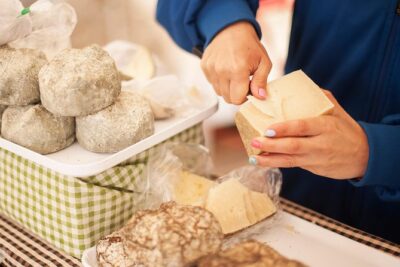
Montserrat Half-Day Tour with Tapas and Gourmet Wines
Read our review →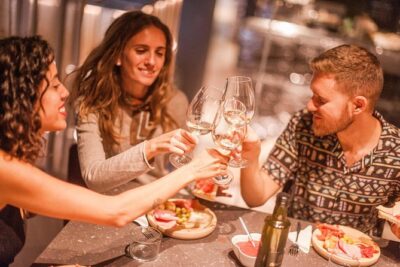
Montserrat & Cogwheel Train, Gourmet Wine Tasting & Tapas/Lunch
Read our review →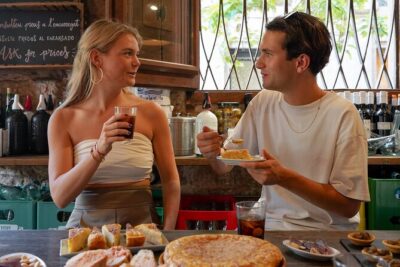
Barcelona Tapas and Wine Experience Small-Group Walking Tour
Read our review →
Montserrat with Black Madonna & Medieval Winery with Tapas/Lunch
Read our review →
Montserrat and Winery Tour with Tapas or Lunch
Read our review →
Tapas Walking Tour with Food, Wine, and History
Read our review →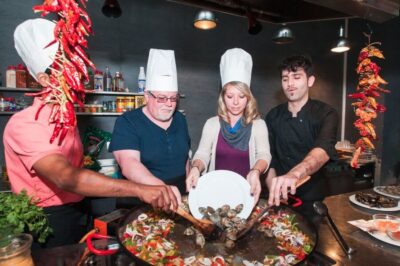
Paella Cooking Experience & Boqueria Market Tour
Read our review →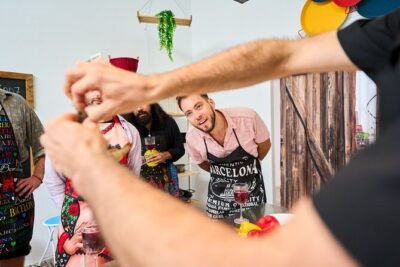
Barcelona Paella Cooking Class with Market Visit, Tapas & Sangria
Read our review →Browse the lists this tour appears in