
Reviewed · MUSEUMS
Barcelona Card: Museums + Transport for 72h, 96h or 120h
Barcelona’s museums are spread across the city, and this card turns that geography into an advantage. For one price, you can ride the metro and city buses without counting tickets, then walk into major art, history, science, and design museums at no extra charge. The free airport train from Terminal 2 to central Barcelona is a useful bonus.
I especially like the unlimited public transport, which makes short museum visits practical instead of costly. I also like the range of free museums, from the Picasso Museum and Joan Miró Foundation to the Roman remains beneath the Gothic Quarter and the National Art Museum of Catalonia. The main catch is that the card must be collected as a physical card, and many headline Gaudí sights are only discounted, or receive no listed discount at all.
In This Review
- Key points before you buy
- What the Barcelona Card actually gives you
- Airport train and getting around Barcelona
- The Gothic Quarter: Picasso, Roman Barcelona, and chocolate
- Montjuïc: MNAC, Miró, and Olympic Barcelona
- Contemporary art around El Raval
- Pedralbes, design, music, and science
- What you only get at a discount
- Planning three, four, or five days
- Where the value is strongest
- Should you book the Barcelona Card?
- FAQ
- How long is the Barcelona Card valid?
- What activates the card?
- Is public transportation included?
- Can I use it from Barcelona Airport?
- Which museums are free?
- Is the Sagrada Família included?
- Are Gaudí’s other major buildings free?
- Do I need a physical card?
- Does the card include a map?
- Can I cancel for a refund?
Key points before you buy
- Free airport train travel: Use the train from Barcelona Airport Terminal 2 to the city center, with a transfer between terminals if needed.
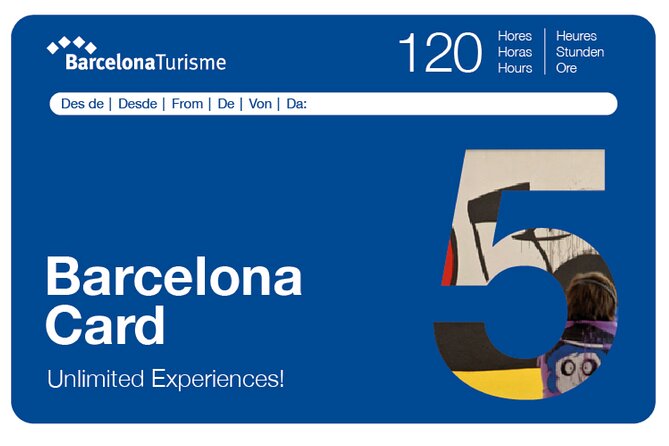
- Three pass lengths: Choose 72, 96, or 120 hours, with transport use activating the card.
- Twenty-seven museums and venues: Free admission includes Picasso, MACBA, MNAC, the Joan Miró Foundation, and more.
- Great for independent sightseeing: You set the pace, visit one museum or several, and avoid buying separate metro tickets.
- Gaudí sights are not generally free: Casa Batlló, La Pedrera, Casa Vicens, Palau Güell, and others offer discounts only.
- Pickup requires planning: A mobile voucher or Apple Wallet pass is not enough for museum entry. You need to collect the physical Barcelona Card at an information point.
What the Barcelona Card actually gives you
This is not a guided tour with a fixed route or a named guide. It is a self-guided city pass from Turisme de Barcelona, designed for people who want to build their own days.
You choose a card valid for three, four, or five days. The listed price is $72.89 per person, though prices can change. At that rate, the three-day option works out to about $24.30 per day, the four-day option about $18.22 per day, and the five-day option about $14.58 per day.
The value depends on how you travel. If you use the metro and buses several times a day, visit several free museums, and make use of the airport train, the card can earn its keep. If you mainly walk, spend your days at attractions that are not included, or use only one day of the pass, it becomes a poor buy.
The card comes with a guide in English, Catalan, Spanish, French, German, and Italian, along with a Barcelona metro map. The guide and map matter more than they may sound. Barcelona’s metro is easy to use, but the city’s many transport services and private operators can make a simple sightseeing day confusing.
A few more Barcelona options worth an hour of your trip
- Hola Barcelona Travel Card
★ 3.5 · 135 reviews - Barcelona Fitness Pass
★ 3.7 · 28 reviews - Barcelona: Luggage Storage
★ 4.5 · 21 reviews
Airport train and getting around Barcelona
The transport side is the most consistently useful part of the pass. You receive unlimited travel on Barcelona’s public transport network, including the metro, city buses, and train service specified for the city center.
The airport benefit is particularly handy. You can take the train from Barcelona Airport Terminal 2 into central Barcelona at no extra cost. If your flight arrives at Terminal 1, you need to transfer to Terminal 2 to use this train service. The airport transfer benefit is specifically for travel from Terminal 2 to the city, so read the transport details carefully before setting off.
The card becomes active when you use the transport network. That means your first metro, bus, or eligible airport train journey starts the clock for the number of hours purchased. Plan the first use sensibly. If you collect the card late at night but do not need transport until the next morning, activating it immediately may waste part of the pass.
One practical warning: the physical card must be picked up before you can use these benefits. The airport information point may close before a late arrival. One pickup location has been reported as closing at 8:30 pm, and a late arrival at 10:45 pm required collection at Plaça Catalunya instead. Check the available collection points and opening hours before you fly.
The card does not cover every vehicle that looks like public transport. Some private buses and cable cars are excluded. The metro map indicates these differences, but take a moment to check before boarding. You do not want a discount card assumption to turn into an unexpected fare.
The Gothic Quarter: Picasso, Roman Barcelona, and chocolate
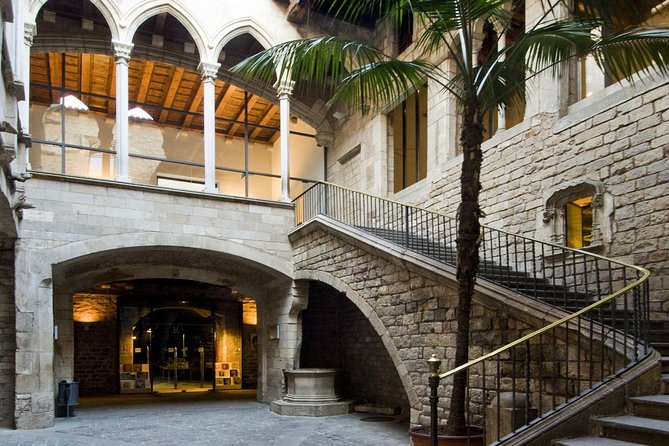
The Museu Picasso is one of the strongest reasons to choose this card. Its collection focuses on Picasso’s formative connection with Barcelona, and the museum occupies historic buildings in the Born district. Allow about an hour, though art lovers will want longer.
The card also covers MUHBA, the Barcelona History Museum. Its Roman underground remains offer a different view of the city, with excavated streets and structures beneath the modern Gothic Quarter. This is one of the most memorable stops for visitors who want Barcelona beyond Gaudí and beaches.
MUHBA Via Sepulcral Romana adds another small but worthwhile historical stop. It presents Roman-era burial remains along what was once a road outside the ancient city. It is compact, making it easy to fit between larger museums.
You can also visit the Museum of Perfume, the Egyptian Museum of Barcelona, the Frederic Marès Museum, and the Chocolate Museum among the included venues. These are not all equal in scale, but that is part of the card’s appeal. You can spend an hour at a smaller museum without feeling that you have wasted an expensive admission ticket.
The Chocolate Museum is an especially approachable choice for families and anyone needing a lighter stop after more serious art and history. The Egyptian Museum offers a focused collection, while the Museum of Perfume is an unusual specialty museum. Check current opening days in the supplied guide before planning a tightly packed route.
Montjuïc: MNAC, Miró, and Olympic Barcelona
Montjuïc gives you several of the card’s best inclusions in one broad sightseeing area. The National Art Museum of Catalonia, usually called MNAC, is the major prize. Its collection covers Catalan art across several periods, including important medieval works, and the building itself provides impressive city views.
Give MNAC at least two hours. You can easily spend longer if you want to study the art rather than simply admire the grand interior. It is also a smart rainy-day choice, as one pass holder discovered after taking the bus up Montjuïc to visit museums.
Nearby, the Joan Miró Foundation presents the work of one of Barcelona’s most important modern artists. The collection and building offer a calmer, more focused experience than the city’s larger museums. Plan about an hour, or longer if Miró’s bold colors and unusual forms appeal to you.
Montjuïc also includes the Olympic Stadium, the Joan Antoni Samaranch Olympic and Sports Museum, and the Botanical Garden. The stadium and sports museum connect the hill to Barcelona’s 1992 Olympic story. The botanical garden gives you a change of pace, though it will be more rewarding in good weather.
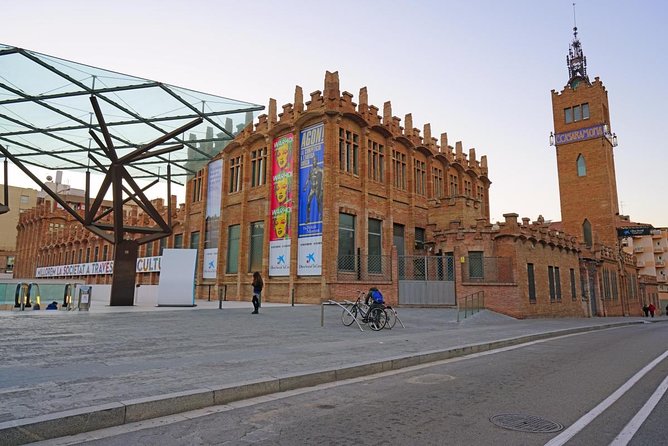
The Archaeology Museum of Catalonia and CaixaForum are also included. CaixaForum presents changing exhibitions of ancient, modern, and contemporary art in a striking former industrial building. The Archaeology Museum gives you a broader view of Catalonia’s ancient past.
Transport makes this district much easier to visit, but the card does not make every way up Montjuïc free. The Telefèric de Montjuïc offers a 15 percent discount rather than free admission. You can use the public network and walk, or pay the discounted cable-car fare if the views and convenience suit your plans.
More museums and sites in Barcelona:
- Barcelona: FC Barcelona Museum “Barça Immersive Tour” Ticket
★ 4.4 · 10,944 reviews - Barcelona: Park Güell and Gaudí House Museum Entry Ticket
★ 4.5 · 6,326 reviews - Barcelona: Picasso Museum Skip-the-Line Guided Tour
★ 4.5 · 3,355 reviews - Girona & Dali Museum Small Group Tour with Pick-up from Barcelona
★ 5.0 · 2,965 reviews
Contemporary art around El Raval

Barcelona’s contemporary-art institutions make the card particularly useful for people who like modern exhibitions.
At MACBA, the Barcelona Museum of Contemporary Art, allow around two hours. The museum is in El Raval and is one of the card’s more substantial free admissions. Its exhibitions can be demanding, so give yourself time and do not schedule it between two appointments across town.
The Center of Contemporary Culture of Barcelona, or CCCB, is another strong El Raval stop. It presents exhibitions about art, culture, cities, and society. Like CaixaForum, it relies on changing displays, so the exact experience depends on what is showing during your visit.
The Fundació Antoni Tàpies offers a more concentrated look at the Catalan artist’s work. It is a good fit if you prefer a smaller museum with a clear artistic identity.
The card listing repeats MACBA, MUHBA, and MNAC in several places, so do not mistake the repeated names for extra admissions. The practical benefit is free entry to the included venues, not multiple visits counted as separate attractions. Confirm whether repeat entry is permitted if you hope to return, since the supplied information does not specify that detail.
Pedralbes, design, music, and science

The Royal Monastery of Santa Maria de Pedralbes is one of the most distinctive inclusions. Founded in 1326 by Queen Elisenda of Montcada, it preserves the setting of a Poor Clare community that lived there for centuries. The complex includes exhibitions about the monastery, its objects, plants and remedies, and restored murals in St. Michael’s Chapel.
Allow about an hour, though the monastery rewards a slower visit. It is farther from the central cluster of Gothic Quarter museums, so use public transport and group it with other attractions in the same part of town.
CosmoCaixa is Barcelona’s science museum, with permanent displays including a flooded forest, a geological wall, a room devoted to matter, and a planetarium. It is a useful choice for families, curious adults, or anyone needing a break from churches and paintings. The card includes admission, but planetarium arrangements may have their own conditions, so check before promising a particular show.
The Museum of Music of Barcelona presents instruments and musical culture, while the Museum of Natural Sciences of Barcelona gives you another science-focused option. The Ceramic Museum adds decorative arts to the mix.
These museums show where the pass works best: not as a shortcut to every famous monument, but as a reason to explore subjects you might otherwise skip.
What you only get at a discount
Barcelona’s most famous architecture is the card’s biggest source of confusion. The pass helps with some Gaudí and modernist sights, but these are discounts, not free admissions.
The discount list includes:
- Casa Amatller, 20 percent off
- Casa Batlló, €3 off
- Casa Milà, also called La Pedrera, €3 off the Essential adult entrance
- Casa Vicens, 25 percent off
- Palau Güell, 25 percent off
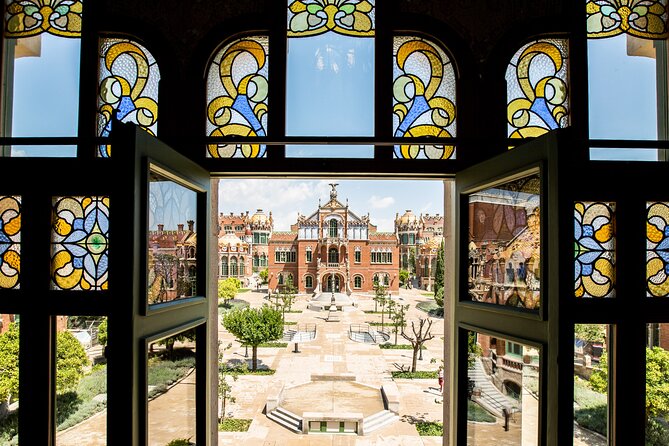
- Sant Pau Recinte Modernista, 20 percent off
- Palau de la Música Catalana, 25 percent off
- Cripta Gaudí de la Colònia Güell, 20 percent off
- Pavelló Mies van der Rohe, 25 percent off
You also receive discounts for attractions such as the Aquarium of Barcelona, Barcelona Zoo, the Montjuïc cable car, the Mirador Torre Glòries, and selected photography and art centers.
The Sagrada Família is not included among the free venues, and the supplied discount information does not list a Sagrada Família admission discount. Park Güell is also not presented as a free card attraction. You need separate tickets for the major Gaudí sights, and advance booking is important because timed admissions can fill.
This is the key buying distinction: the card is strongest for museums and transport, not for a classic Gaudí-only itinerary. If your Barcelona plan centers on Casa Batlló, La Pedrera, Sagrada Família, and Park Güell, calculate the separate ticket costs before buying.
Planning three, four, or five days
For a three-day pass, focus on central museums and one Montjuïc day. A sensible outline could include the Picasso Museum and MUHBA on one day, MACBA and CCCB on another, then MNAC and the Joan Miró Foundation on the third.
The four-day option gives you breathing room. You can add Pedralbes, CosmoCaixa, CaixaForum, or the Olympic museums without turning every morning into a race. This is probably the best balance for someone who wants art and history but also wants time for Barcelona’s streets and meals.
The five-day card suits a museum-heavy visit. At $72.89, the daily cost is lower than with the shorter options, but only if you actually use the extra days. Plan at least one or two included museums per day, plus enough metro or bus rides to make the transport portion useful.
Do not build an impossible schedule around every venue. Several museums deserve two hours, and moving between districts takes time even with good public transport. I would choose your top six to eight museums first, then add smaller stops near them.
Some venues use set bookings or time slots, and the card does not automatically solve availability at every attraction. Check booking requirements before heading out. At least one pass holder was admitted to a museum that had shown as sold out after presenting the card, but you should not rely on that outcome for every venue.
Where the value is strongest
The card earns its price through repeated small savings. A morning at Picasso, a metro ride to Montjuïc, free admission at MNAC, a bus to another district, and an airport train can add up quickly.
Its best users are independent sightseers who enjoy choosing from many museums. You can enter a venue for an hour, leave, and move on without worrying that you paid a full standalone admission for a brief visit. The transport pass also encourages you to cross the city instead of limiting yourself to attractions within walking distance.
The card is less useful for a slow, neighborhood-based trip. If you plan to visit only one or two museums, walk most of the time, and spend your days at attractions with small discounts, ordinary transit tickets may cost less.
The card also requires preparation. Download or print the guide details, mark the museums you want, and identify pickup locations before arrival. A barcode stored in Apple Wallet is not enough at the information booth or museum. Bring the voucher in the form required for collection, then obtain the physical card.
Should you book the Barcelona Card?
Book it if you will use public transport several times a day, visit at least four or five included museums, and want the freedom to explore Barcelona at your own pace. The three-day card can work well for a concentrated visit, while the four- and five-day versions make more sense for museum fans.
Skip it if your main goal is the Sagrada Família, Park Güell, and other Gaudí monuments. Those sights are not free under this pass, and the discounts alone may not cover the cost.
My practical advice is simple: list your planned museums, add two or three likely transport rides per day, and include the airport train if you can use it. If that rough total approaches $72.89, the card buys convenience as well as savings. If your list contains mostly discounted monuments, buy individual tickets and a separate transport option instead.
FAQ
How long is the Barcelona Card valid?
You can choose a card valid for 72, 96, or 120 hours, corresponding to three, four, or five days.
What activates the card?
Using the transport network activates the card. It then remains valid for the number of days indicated by the option you purchased.
Is public transportation included?
Yes. The card includes unlimited use of Barcelona’s public transport, including the metro, city buses, and eligible train services.
Can I use it from Barcelona Airport?
Yes, the card includes train travel from Barcelona Airport Terminal 2 to Barcelona city. If you arrive at Terminal 1, you need to transfer to Terminal 2 to use this service.
Which museums are free?
Free admission includes the Museu Picasso, MUHBA, Joan Miró Foundation, MACBA, MNAC, Fundació Antoni Tàpies, CaixaForum, CCCB, CosmoCaixa, the Olympic museums, the Botanical Garden, the Pedralbes Monastery, the Museum of Perfume, the Egyptian Museum, the Archaeology Museum, the Chocolate Museum, and other listed city venues.
Is the Sagrada Família included?
No. The supplied benefits do not list free admission or a specific discount for the Sagrada Família.
Are Gaudí’s other major buildings free?
No. Casa Batlló, La Pedrera, Casa Vicens, Casa Amatller, and Palau Güell offer listed discounts rather than free admission.
Do I need a physical card?
Yes. You must collect the physical Barcelona Card at an information point. A barcode or pass stored only in Apple Wallet may not be accepted for museum entry.
Does the card include a map?
Yes. You receive a map of the Barcelona metro network and a guide in English, Catalan, Spanish, French, German, and Italian.
Can I cancel for a refund?
You can cancel at least 24 hours before the experience start time for a full refund. Cancellations or changes made less than 24 hours before the start time are not accepted for a refund.
Just added around Barcelona
- GoCar Full Day Tour★ 4.0 · 6 reviews
- Sagrada Familia and Barcelona Highlights: Private Guided 4-Hour Driving Tour★ 5.0 · 6 reviews
- Barcelona: Highlights & Gems Private Tour with Tapa & Drink★ 3.9 · 6 reviews
- Gothic Quarter and Born District: Photographic Workshop★ 5.0 · 6 reviews
- Gobbi Yacht Rental in Barcelona 9 Pax 2/4/8hs★ 5.0 · 6 reviews
- Barcelona: Gothic Quarter & La Sagrada Familia Private Tour★ 4.9 · 6 reviews
- Private Sailboat Ride at Sunset from Sitges★ 5.0 · 6 reviews
- Barcelona Private Gothic Quarter Tour with Flamenco Show★ 5.0 · 6 reviews
Museums, compared.

FC Barcelona Museum “Barça Immersive Tour” Ticket
Read our review →
Park Güell and Gaudí House Museum Entry Ticket
Read our review →
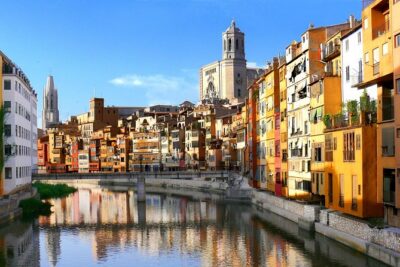
Girona & Dali Museum Small Group Tour with Pick-up from Barcelona
Read our review →

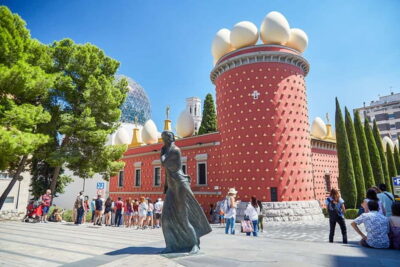
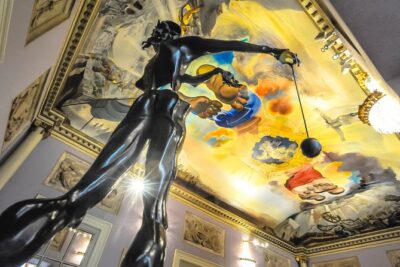
Dali Museum, House & Cadaques Small Group Tour from Barcelona
Read our review →Browse the lists this tour appears in