
Reviewed · GUIDED
Barcelona: Jewish Tour by a Jewish guide
Barcelona’s old Jewish quarter is easy to walk through and easy to miss. Its lanes hold faint clues rather than grand monuments: a Hebrew inscription here, a former Jewish home there, and the old mikve tucked into a district better known for Gothic churches and Roman remains. A Jewish guide gives those traces meaning.
I like the private format, which lets the guide adjust the pace and answer serious questions without rushing a large group. I also like the mix of Jewish and general Barcelona history, especially the way Adi, Dina, and other guides connect the Jewish past with the City Hall, Roman temple, and medieval streets. The main consideration is that some Jewish sites are not preserved or clearly marked, and entry to the synagogue museum is not included.
In This Review
- Key points at a glance
- Why Barcelona’s Jewish quarter needs a guide
- Starting at Plaça de Sant Jaume
- Following the Jewish traces through the Gothic Quarter
- The house of the Rashba and the value of personal context
- Finding the old mikve
- City Hall, Roman remains, and a wider Barcelona story
- A two-hour route with a sensible pace
- What the guide adds to the experience
- The $68 price and what is included
- Who should book this Jewish Barcelona walk
- Practical advice before you go
- Should you book it?
- FAQ
- How long does the Barcelona Jewish tour last?
- Where does the tour meet?
- What languages are available?
- Is the tour private?
- Is entry to the synagogue museum included?
- Is transportation included?
- Can I cancel for a refund?
Key points at a glance
- A Jewish guide leads the walk: Tours are offered in English, Hebrew, or Spanish, with guides such as Adi, Dina, and Monica named in recent bookings.
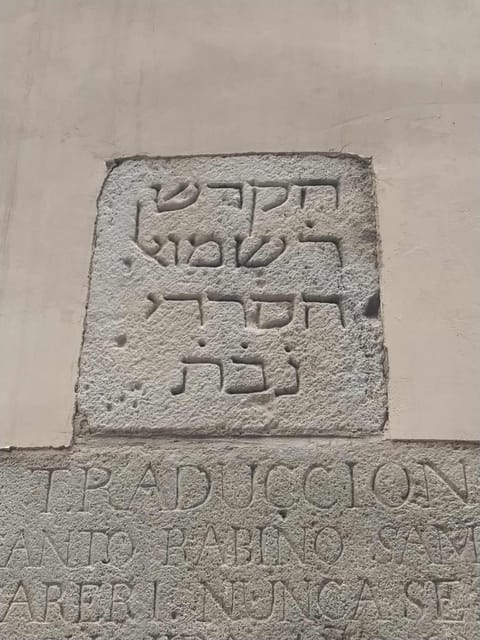
- The clues are often small: Hebrew inscriptions, old walls, and overlooked corners matter more here than large intact buildings.
- The old mikve is a major stop: This visit adds a rare physical link to Jewish life in medieval Barcelona.
- The route stays compact: Begin and end at Plaça de Sant Jaume, with about two hours on foot in the Gothic Quarter and Old City.
- The private group changes the feel: The guide can match the discussion to your background and interests.
- The museum entrance costs extra: The professional guide is included, but transportation and entry to the synagogue museum are not.
Why Barcelona’s Jewish quarter needs a guide
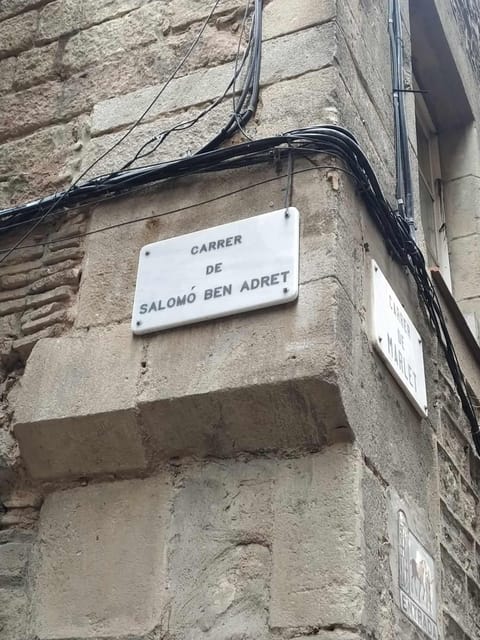
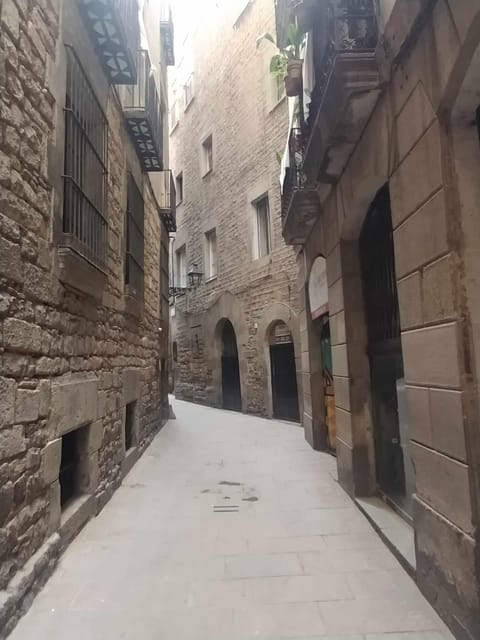
If you walk the Gothic Quarter alone, you may notice narrow lanes, handsome stone buildings, and Roman fragments. You are much less likely to recognize the Jewish traces. Many are hidden, altered, or blended into later construction. That is the central reason to book this tour.
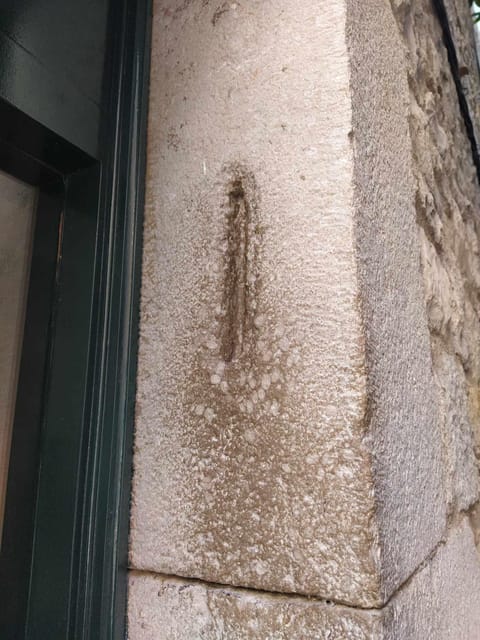
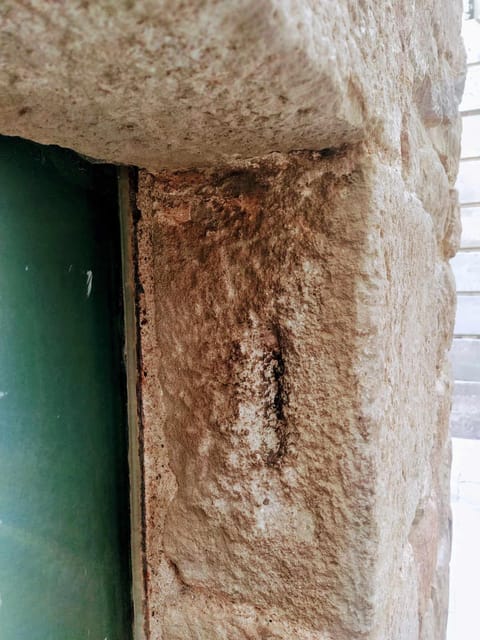
The guide points out places that lack clear signs and explains what they once meant. A doorway may connect to the house of the Rashba, one of the important Jewish scholars associated with Barcelona. A wall may hold a Hebrew inscription. A quiet passage may belong to the old Jewish quarter, even though nothing on the street announces it.
That approach gives the walk a useful honesty. You are not being shown a perfectly preserved medieval Jewish neighborhood. You are being shown the remains of a community whose physical presence was damaged, concealed, or built over. The guide’s explanation supplies the context that the stones no longer provide.
The strongest part of the experience is the link between place and story. Adi is repeatedly praised for explaining Jewish sources alongside Spanish and Barcelona history, while Dina and Monica are described as warm, clear, and attentive. The exact guide may vary, but the stated languages are English, Hebrew, and Spanish.
A few more Barcelona options worth an hour of your trip
- Barcelona: Park Güell Admission Ticket
★ 4.4 · 76,534 reviews - Barcelona: Casa Batlló Entry with Self-Audioguide Tour
★ 4.7 · 25,359 reviews - Barcelona: 24 or 48-Hour Hop-On Hop-Off Bus Tour
★ 4.4 · 20,872 reviews
Starting at Plaça de Sant Jaume
The meeting point is outside Starbucks at Plaça de Sant Jaume. This is a practical central location in the Old City, and the tour returns here at the end, so you do not need to arrange transportation between stops.
The square itself is a useful opening point. The guided introduction lasts about 15 minutes and brings in important facts about Barcelona before the route turns toward the Jewish quarter. That broader setting matters because the Jewish community was part of the city’s story, not an isolated footnote.
You should arrive ready to walk at street level for the full two hours. The route includes the Gothic Quarter and Old City, with a short break and visit during the final portion. Exact starting times depend on availability, so check the schedule when booking.
Because the group is private, this opening can be conversational rather than formal. If you already know Jewish history, you can ask for more detail. If the subject is new to you, the guide can explain the basic setting before moving into more complex material.
Following the Jewish traces through the Gothic Quarter
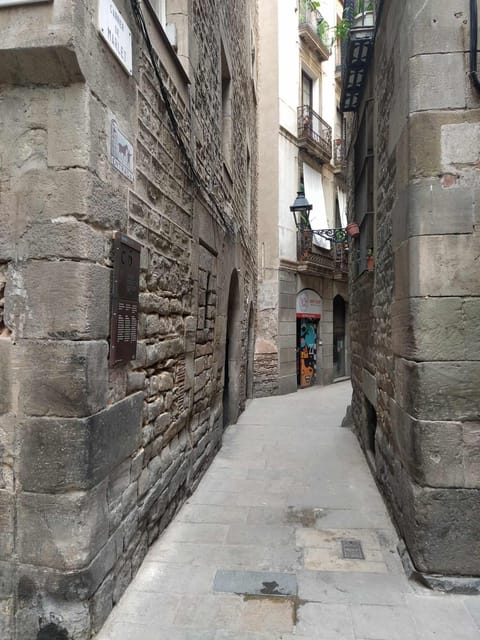
The main guided walk lasts about an hour in the Gothic Quarter. This is where the tour earns its price. You are not simply walking past famous buildings. You are learning how to read a district that has changed over centuries.
The route includes the house of the Rashba, a major Jewish scholar, and a synagogue considered one of the oldest in the world. These are the headline sites, but the small details may be more memorable. Hebrew lettering in unexpected places and overlooked corners help show how Jewish life once fitted into the city’s streets.
The synagogue visit needs a little care when planning your budget. Entry to the synagogue museum is not included in the $68 price, so confirm the additional admission cost before you go. The guide is included, but this is not an all-inclusive ticket covering every site.
The description says you will visit a synagogue considered one of the oldest in the world. That wording is important. The experience is about the site and its history, but you should not expect a large, fully furnished complex filled with displays. The Jewish remains in Barcelona are limited, and some places are best understood through the guide’s explanation.
The private setting is especially useful here. You can stop to examine an inscription or ask how a site fits into the wider Jewish story of Barcelona. With a large group, those questions can be difficult. With a private guide, the discussion can follow your interests.
The house of the Rashba and the value of personal context
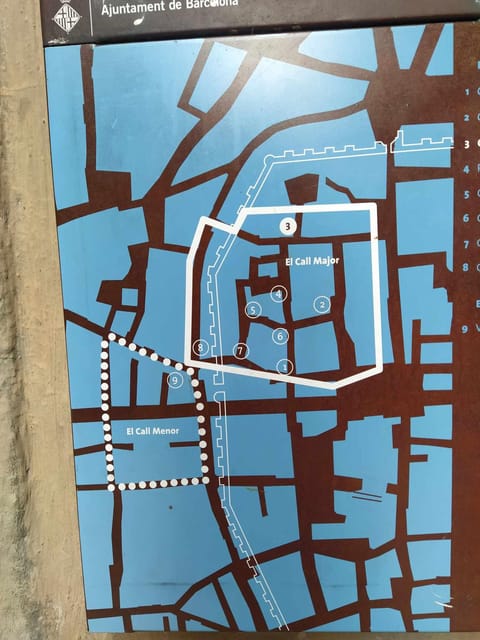
The house of the Rashba gives the walk a human focus. Instead of treating Jewish Barcelona as an abstract period in a textbook, the guide connects the neighborhood with a specific scholar and the intellectual life of the community.
That is one of the tour’s strongest features for visitors with a Jewish background. The guide can draw on Jewish sources and traditions, then place them within Barcelona’s political and urban setting. Several bookings specifically praise Adi’s ability to combine Jewish history with the history of Spain.
You do not need prior knowledge to enjoy this stop. The guides are described as able to explain details at different levels, from a broad introduction to more focused discussion. The private format also means you can say when you want more background or when you are ready to move on.
The limitation is physical rather than interpretive. The house is not presented as a large museum with a long sequence of rooms. Its value comes from locating it within the quarter and understanding what it tells you about the people who lived and worked there.
Same corner of Catalonia, a completely different day:
- Barcelona: Park Guell Guided Tour with Skip The Line Entry
★ 4.7 · 17,563 reviews - Barcelona in 1 Day: Sagrada Familia, Park Guell,Old Town & Pickup
★ 5.0 · 13,541 reviews - Barcelona Aquarium: Entry Ticket
★ 4.3 · 13,335 reviews - Barcelona: Sagrada Familia Skip-the-Line Entry Ticket & Tour
★ 4.8 · 12,789 reviews
Finding the old mikve
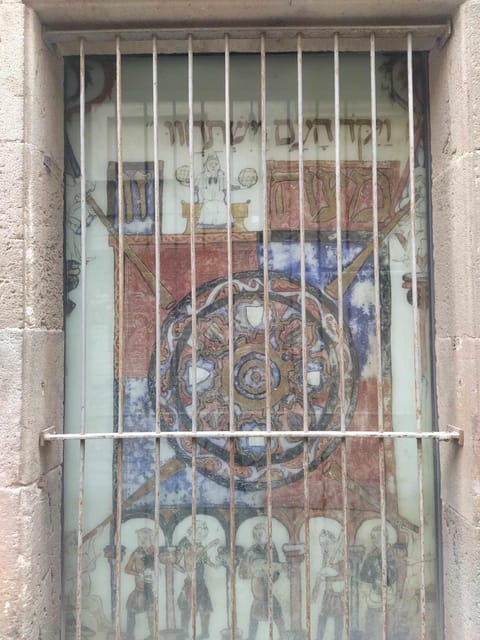
The old mikve is another important stop. A mikve is a ritual bath, and seeing the site gives you a physical sense of Jewish religious practice that a street inscription alone cannot provide.
The information supplied for the tour does not promise a large or elaborate visit, so keep your expectations measured. The old mikve is part of a compact walking experience, not a full museum program. Still, it is a meaningful stop because it brings ritual life into the story of the quarter.
The guide’s role is essential here. The structure and its setting may not explain themselves, particularly if later changes have affected the site. You will get more from the visit if you pay attention to how the guide describes the space, its purpose, and its place in the old Jewish neighborhood.
This is also a point where the tour’s subject can become emotionally heavy. The story of Jewish life in Europe includes loss and persecution. Adi is praised for acknowledging that weight while also looking for hopeful details in what remains. That balance helps keep the walk thoughtful without making it feel bleak from start to finish.
City Hall, Roman remains, and a wider Barcelona story
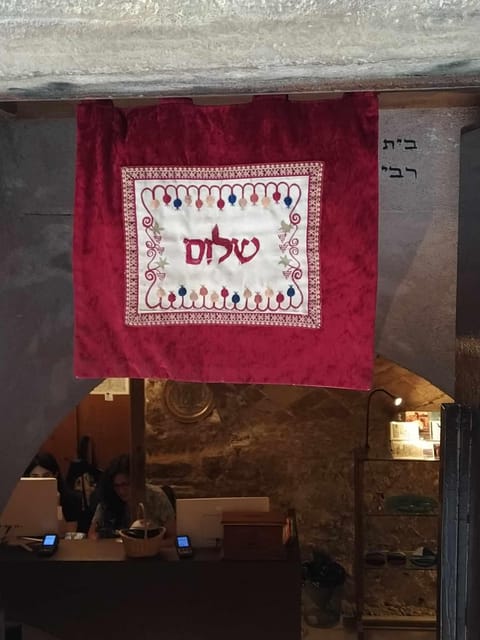
The Jewish route also includes Barcelona’s City Hall and a Roman temple. These stops may sound like detours, but they help you understand the city around the Jewish quarter.
Barcelona’s Jewish community lived within a city shaped by Roman, Christian, and medieval institutions. Seeing those layers together makes the Jewish story more concrete. You begin to understand the quarter not as a sealed attraction, but as one part of a changing urban center.
The Roman temple is especially useful for placing the medieval neighborhood in a longer timeline. The tour does not focus only on Jewish sites. It shows how Jewish Barcelona fits into the city’s broader development, which is one reason the experience can work well for non-Jewish visitors too.
The City Hall stop adds another civic layer. The guide can connect the public center of Barcelona with the less obvious streets nearby. That contrast is part of the appeal: major landmarks are close to traces that most people pass without noticing.
A two-hour route with a sensible pace
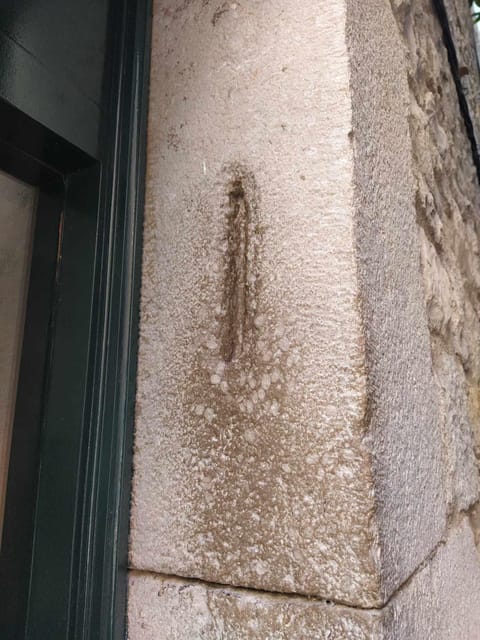
The advertised duration is two hours. The schedule divides roughly into 15 minutes at Plaça de Sant Jaume, one hour in the Gothic Quarter, and 30 minutes in the Old City, including a break, visit, and guided portion. The route finishes back at Plaça de Sant Jaume.
That length works well if you want a focused introduction rather than an all-day history program. You can fit it into a morning or afternoon without giving up the rest of your Barcelona sightseeing plan.
A two-hour walk also means the guide must choose carefully. You will not see every possible Jewish site in Barcelona, and the experience cannot provide a complete history of Jewish Spain. The benefit is a concentrated route with enough time for questions and discussion.
The pace appears suited to small private groups. One guide is praised for keeping an easy pace, while another gave extra time so the group could cover more than expected. Do not count on the tour running beyond two hours, but a private booking offers more flexibility than a standard group walk.
The activity is listed as wheelchair accessible. Since the route passes through historic streets, you may still want to confirm the current path and access arrangements when booking, especially if the synagogue museum visit is important to you.
What the guide adds to the experience
The guides are the heart of this tour. Adi is the name most often associated with the experience, and he is described as energetic, funny, personable, and able to explain difficult material without sounding formal or distant.
Dina and Monica are also specifically praised for answering questions and connecting with guests. The comments about different guides point to a useful quality: the tour is not only a memorized walk between addresses. It is designed for conversation.
That matters because this quarter offers few obvious visual rewards. The guide must make a faint clue worth stopping for. A good explanation can turn a small inscription or altered building into a window on the past.
You should also feel free to shape the discussion. If your interest is genealogy, ask about names and community life. If you are interested in architecture, ask how the buildings changed. If you are visiting as a non-Jewish student of Barcelona, ask how Jewish history fits with the city’s Christian and Roman past.
The strongest praise focuses on three things: subject expertise, a good sense of humor, and the ability to adjust the material to the group. Those qualities are more important here than theatrical storytelling.
The $68 price and what is included
At $68 per person, this is not the cheapest way to walk around the Gothic Quarter. You are paying for a private guide, a specialized subject, and the chance to see places that are difficult to identify on your own.
The value is strongest for couples, families, and small groups who want a focused Jewish history experience. Splitting a private booking among several people can make the price easier to justify, particularly if you would otherwise pay separately for a general Old City walk and a Jewish heritage tour.
The price includes a professional private guide. It does not include transportation or entry to the synagogue museum. Since the route begins and ends at the same central square, the lack of transportation is not a serious problem. The museum admission is the extra cost to watch.
I would book this tour for the guide access rather than for the number of preserved buildings. If you want a grand museum filled with original objects, this may feel too modest. If you want someone to point out what the city does not label, the price makes better sense.
The reserve-now, pay-later option is useful if your Barcelona plans are still shifting. Free cancellation is available up to 24 hours in advance for a full refund, which gives you some room to adjust your schedule.
Who should book this Jewish Barcelona walk
This tour suits you best if you want:
- A private Jewish heritage walk rather than a general Barcelona tour
- A guide who can speak English, Hebrew, or Spanish
- A personal discussion of Jewish sources and local history
- Small clues, inscriptions, and lesser-known places
- A short route that fits around other sightseeing
- A respectful introduction to the Jewish history of Barcelona
It also works for non-Jewish visitors. The tour connects Jewish life with Roman and Spanish history, so you do not need a religious or family connection to follow it.
It may be less suitable if you want a large collection of preserved Jewish buildings or a long museum visit. The quarter’s Jewish remains are limited, and several important stops depend on explanation rather than dramatic architecture.
Practical advice before you go
Meet the guide outside Starbucks at Plaça de Sant Jaume. Look for the guide there at the agreed time, and allow enough time to find the square in the narrow Old City streets.
Wear comfortable shoes. The tour is only two hours, but it is a walking route through the Gothic Quarter and Old City. No transportation is provided, and the route returns to its starting point.
Ask about synagogue museum admission before the walk begins. The museum entrance is not included, and the tour description does not give the separate price.
If you have a strong interest in a particular subject, mention it early. The private format allows the guide to adapt the level and focus. Adi, in particular, is described as able to explain details from a basic level through more advanced Jewish history.
I would also leave a little flexibility after the scheduled finish. One private group received extra time, but that should be treated as a pleasant possibility, not a promise. Plan around the stated two hours.
Should you book it?
Book this Barcelona Jewish tour if you want a guide-led walk through a quarter whose most important evidence is easy to overlook. The house of the Rashba, old synagogue, mikve, Hebrew inscriptions, City Hall, and Roman temple create a strong two-hour route, but the guide’s interpretation is what holds it together.
The tour is especially good for visitors who value personal conversation and historical context. Adi is the guide to request if available, while Dina and Monica are also named as strong options. Just budget separately for synagogue museum admission and keep your expectations realistic: this is a search for surviving traces, not a tour of a fully preserved Jewish town.
FAQ
How long does the Barcelona Jewish tour last?
The tour lasts two hours. It begins and ends at Plaça de Sant Jaume.
Where does the tour meet?
The guide waits outside Starbucks at Plaça de Sant Jaume.
What languages are available?
The live guide can lead the tour in English, Hebrew, or Spanish.
Is the tour private?
Yes. The activity is offered for a private group with a professional private guide.
Is entry to the synagogue museum included?
No. Entrance to the synagogue museum is not included in the tour price.
Is transportation included?
No. Transportation is not included, though the walking route begins and ends at Plaça de Sant Jaume.
Can I cancel for a refund?
Yes. You can cancel up to 24 hours in advance for a full refund. You can also reserve now and pay later.
Just added around Barcelona
- GoCar Full Day Tour★ 4.0 · 6 reviews
- Sagrada Familia and Barcelona Highlights: Private Guided 4-Hour Driving Tour★ 5.0 · 6 reviews
- Barcelona: Highlights & Gems Private Tour with Tapa & Drink★ 3.9 · 6 reviews
- Gothic Quarter and Born District: Photographic Workshop★ 5.0 · 6 reviews
- Gobbi Yacht Rental in Barcelona 9 Pax 2/4/8hs★ 5.0 · 6 reviews
- Barcelona: Gothic Quarter & La Sagrada Familia Private Tour★ 4.9 · 6 reviews
- Private Sailboat Ride at Sunset from Sitges★ 5.0 · 6 reviews
- Barcelona: Private Tour of Casa Batllo with Reserved Access★ 3.5 · 6 reviews
Guided, compared.

Park Guell Guided Tour with Skip The Line Entry
Read our review →
Park Guell Guided Tour with Skip the Line Ticket
Read our review →
Montserrat, Girona & Costa Brava Guided Day Trip from Barcelona
Read our review →
Sagrada Familia Guided Tour with Tower Access
Read our review →