Reviewed · TICKETS
Barcelona: Museu Nacional d’Art de Catalunya Entrance Ticket
Barcelona’s Museu Nacional d’Art de Catalunya is a two-part attraction: a superb art museum and one of the city’s grandest viewpoints. Its Romanesque mural paintings are the main event, but you’ll also find works by Gaudí, Casas, Tiziano, and Velázquez inside the former Palau Nacional.
I especially like the way the museum brings paintings rescued from old churches into displays that suggest their original setting. I also like the broad sweep of the collection, which takes you from medieval Catalonia through Modernism, European Renaissance and Baroque art, and photography. The main drawback is the uphill Montjuïc location, and the terraces and rooftop are currently out of service, so check before you count on the highest views.
In This Review
- Key points to know before you go
- Why MNAC deserves a place on your Barcelona itinerary
- Reaching the Palau Nacional on Montjuïc
- Entering the 1929 exhibition palace
- The Romanesque murals are the essential stop
- Gothic, Modernist, and Catalan highlights
- European Renaissance and Baroque paintings
- Photography and temporary exhibitions
- The views from Montjuïc, with one important warning
- How long should you spend inside?
- Is the $14 ticket good value?
- Who will enjoy MNAC most?
- Final verdict: book it for the art, not just the roof
- FAQ
- Where is the Museu Nacional d’Art de Catalunya?
- How much does admission cost?
- How long is the ticket valid?
- What does the ticket include?
- Is the audio guide included?
- Which languages are available for the audio guide?
- What should I bring for the audio guide?
- Is the museum wheelchair accessible?
- Are the rooftop and terraces open?
- When is admission free?
Key points to know before you go
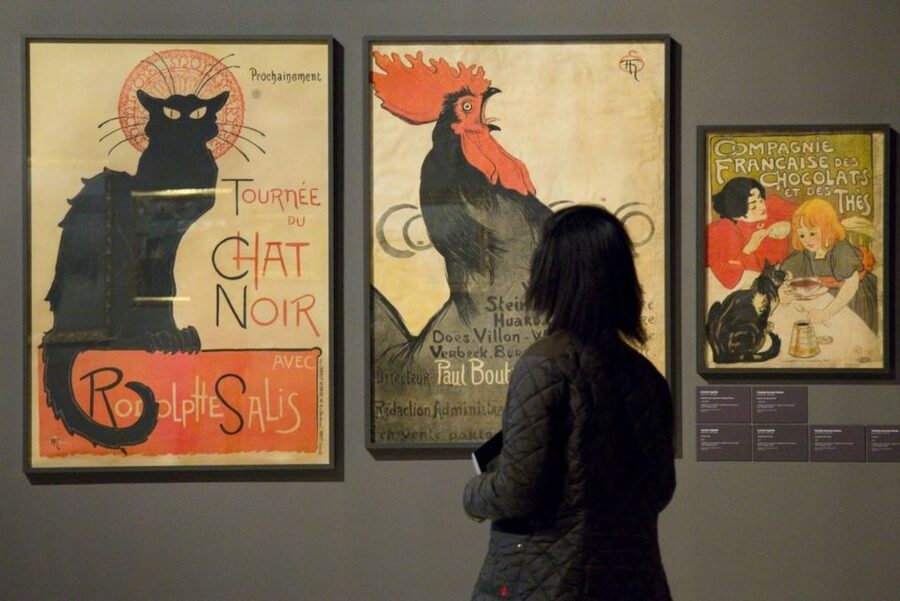
- Romanesque murals are the museum’s signature collection, with church paintings preserved and displayed in a way that helps you understand their original purpose.
- The Palau Nacional is part of the experience, with a grand exterior, monumental entrance, and a striking setting on Montjuïc.
- The collection covers many centuries, from medieval Catalan art to Modernism, Renaissance, Baroque, and photography.
- Plan at least two hours, and closer to four if you want to read labels and take your time.
- The audio guide app uses your smartphone, so bring headphones and make sure your phone is charged.
- The ticket includes permanent and temporary exhibitions, but free admission may make advance purchase unnecessary on certain dates.
Why MNAC deserves a place on your Barcelona itinerary
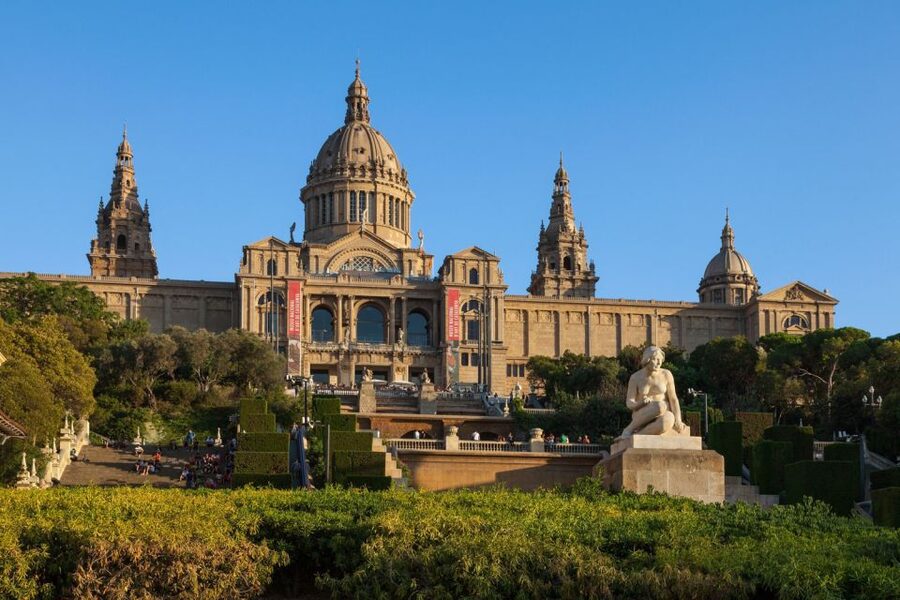
Many Barcelona museums focus tightly on one artist or period. MNAC gives you a much wider view of Catalan art, all inside the Palau Nacional, built for the International Exposition of 1929.
That building alone makes the visit worthwhile. From the approach, you see a formal palace-like structure set high on Montjuïc, with broad views toward Barcelona. Inside, the scale changes. The grand shell gives way to modern galleries, clear sections, and a layout that keeps the large collection from feeling chaotic.
I’d place MNAC high on your list if you’ve already seen Barcelona’s best-known Gaudí sites and want a fuller sense of the region’s art. It also works well on a hot afternoon, when you need several hours indoors but still want a memorable setting.
The $14 admission is good value if you plan to spend two or more hours here. It includes the permanent collection, a temporary exhibition, and the audio guide app. The value is less clear if you only have an hour, especially because free admission is offered on several occasions.
A few more Barcelona options worth an hour of your trip
- Barcelona: Park Güell Admission Ticket
★ 4.4 · 76,534 reviews - Barcelona: Casa Batlló Entry with Self-Audioguide Tour
★ 4.7 · 25,359 reviews - Barcelona: 24 or 48-Hour Hop-On Hop-Off Bus Tour
★ 4.4 · 20,872 reviews
Reaching the Palau Nacional on Montjuïc
The meeting point is Palau Nacional s/n in Parc de Montjuïc. The location is beautiful, but getting there requires some planning. The museum sits above the city, and the approach can involve uphill walking, stairs, or escalators.
One useful detail from the practical side of the visit: the museum is accessible by metro, with some walking still required. Elevators are available near the uphill route. In summer, the climb can feel tiring, although bars along the steps and escalators provide places to pause.
Give yourself time to arrive rather than booking the last possible entry. You’ll want a few minutes outside to look back toward Barcelona, take photographs, and appreciate the building before you even reach the galleries.
The approach also places MNAC close to other Montjuïc sights, although the supplied information does not specify exact cable car routes or connections. You can combine the museum with a wider Montjuïc outing, but avoid squeezing it between tightly timed attractions.
Entering the 1929 exhibition palace
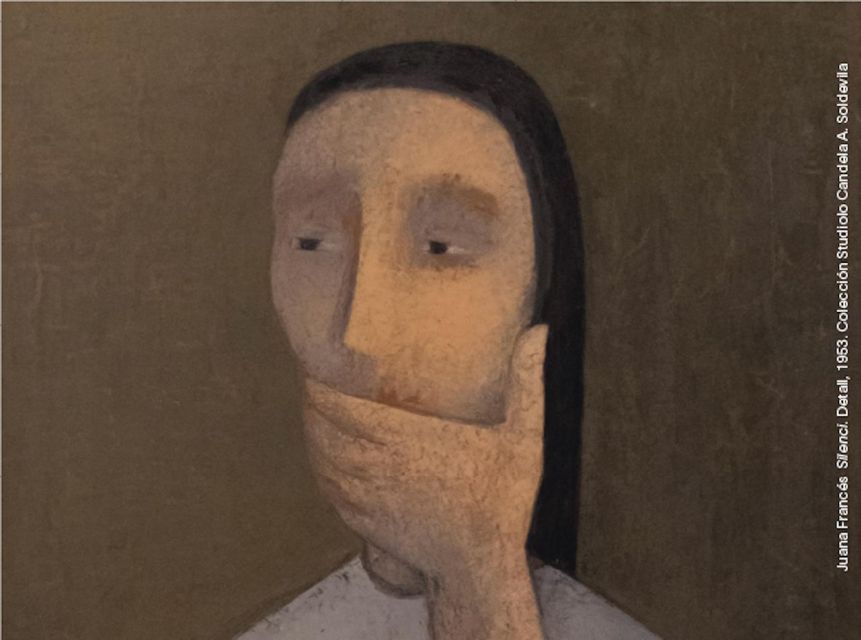
The Palau Nacional was built for the International Exposition of 1929, and its original purpose explains the building’s oversized feel. The entrance is grand and ceremonial, while the exhibition rooms are more practical and modern.
That contrast works in the museum’s favor. You get the drama of a historic public building without having to navigate every gallery through a maze of ornate rooms. The permanent collection is arranged across two floors, with sections organized by period and subject.
I like this layout for a first visit because you can move through the collection in broad stages. You are not expected to know Catalan art in advance. The galleries give you a path through the material, although some sections have fewer English explanations than you might want.
A ticket purchased in advance gives you skip-the-ticket-line access. That can save time during busy periods, though it may not be essential on a quiet day. The museum also offers free entry on Saturdays from 3 p.m. onward and on the first Sunday of each month, as well as several Catalan and Barcelona celebration days.
The free-entry dates are:
- February 12, Santa Eulàlia
- May 18, International Museum Day
- September 11, the National Day of Catalonia
- September 24, La Mercè
If your visit falls on one of these occasions, check the practical value of booking before paying the $14 admission.
The Romanesque murals are the essential stop
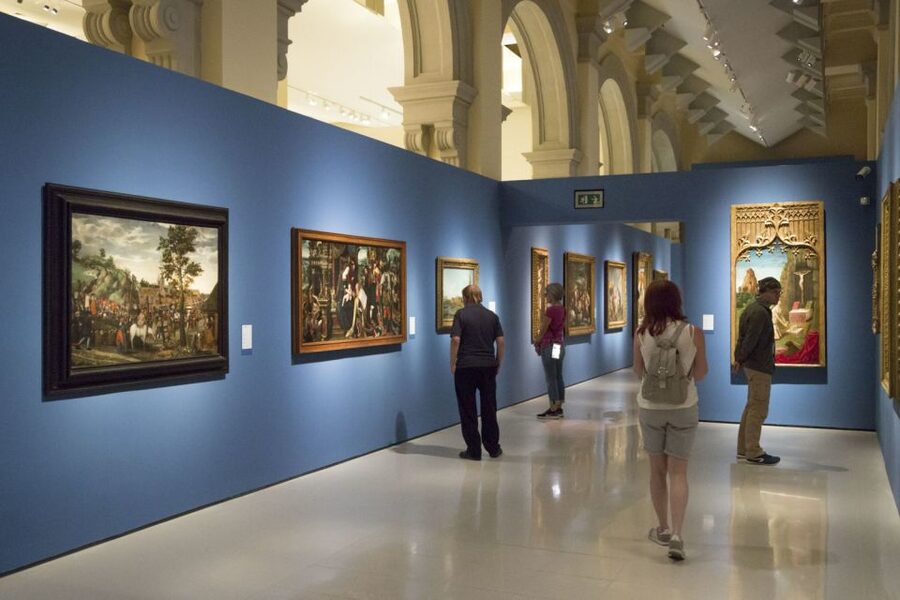
Start with the Romanesque galleries, even if medieval art is not normally your first choice. This is the section that gives MNAC its special character.
The museum’s collection includes mural paintings removed from old churches and preserved for future generations. Rather than presenting them as small fragments on a white wall, the displays help you imagine how the art functioned in a religious interior.
That matters because these paintings were never made as isolated pictures. Their scale, placement, and strong forms were meant to guide attention inside a church. In the museum, you can examine the figures and patterns up close while still sensing something of their original setting.
Allow more time here than you first expect. The paintings can look simple at a distance, but faces, gestures, colors, and symbolic details reward a slower look. You might find limited English text in parts of the medieval collection, so the audio guide app is useful if you want more context.
The audio guide is available in Catalan, Spanish, English, French, German, Italian, Russian, Japanese, and Chinese. Bring your own headphones. The ticket does not mention headphones being supplied, and the app depends on your charged smartphone.
Same corner of Catalonia, a completely different day:
- Barcelona: Park Guell Guided Tour with Skip The Line Entry
★ 4.7 · 17,563 reviews - Barcelona in 1 Day: Sagrada Familia, Park Guell,Old Town & Pickup
★ 5.0 · 13,541 reviews - Barcelona Aquarium: Entry Ticket
★ 4.3 · 13,335 reviews - Barcelona: Sagrada Familia Skip-the-Line Entry Ticket & Tour
★ 4.8 · 12,789 reviews
Gothic, Modernist, and Catalan highlights
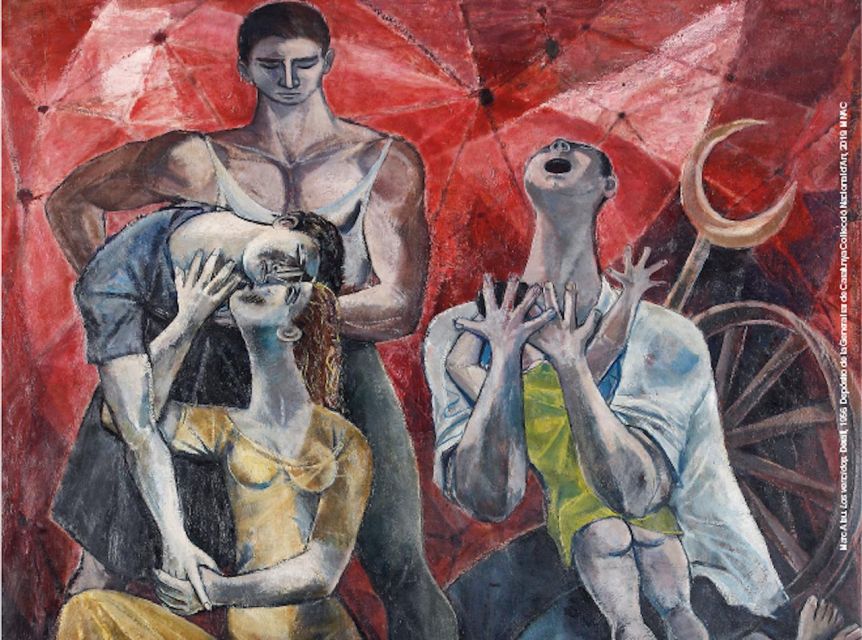
The collection continues beyond Romanesque art into other periods of Catalan history. The Gothic material adds another layer to the story, while the Modernist galleries bring you closer to the artistic world associated with Barcelona’s late 19th and early 20th centuries.
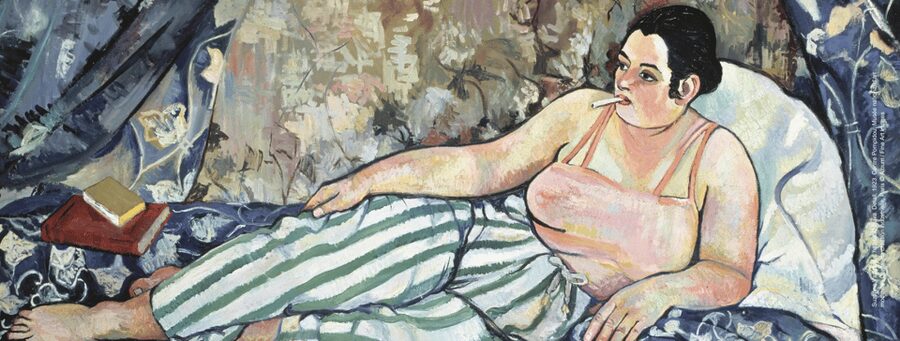
Works connected with Antoni Gaudí and Ramon Casas are among the names to look for. Gaudí is best known for architecture, but seeing his work in a museum setting helps you place his ideas within a wider artistic culture. Casas offers another route into Catalan Modernism and its interest in modern urban life.
The modern art section has been a particular highlight for many visitors, and it occupies part of the upper floor. If you have limited time, do not assume the oldest galleries are automatically the only important ones. The Modernist works can be more immediately engaging, especially if you already enjoy Barcelona’s architecture and design.
The layout helps here. Sections are separated well enough that you can choose your pace. You can spend serious time with one period, or keep moving if you are with someone who has a shorter attention span. A family member or companion who does not care for art may find the long visit tiring, so agree in advance on a meeting point or a shorter route.
European Renaissance and Baroque paintings
MNAC is not limited to Catalan artists. Its collection also includes major European painting from the Renaissance and Baroque periods, with names such as Tiziano and Velázquez.
These galleries provide a useful counterpoint to the Catalan material. You can compare local artistic traditions with broader European approaches to portraiture, religion, court life, and drama. Even if you are not an art specialist, the change in style from the medieval rooms to later European painting is easy to follow.
The collection is extensive enough that you should not try to give every work equal attention. I recommend choosing a few rooms or artists to study, then moving on before your concentration fades. The museum is a place for looking closely, not for racing through a checklist.
If you want a full visit, plan at least two hours. Four hours is more realistic if you read the information, use the audio guide, include the temporary exhibition, and pause for breaks. A one-hour visit can work, but you will see only a small part of the museum.
Photography and temporary exhibitions
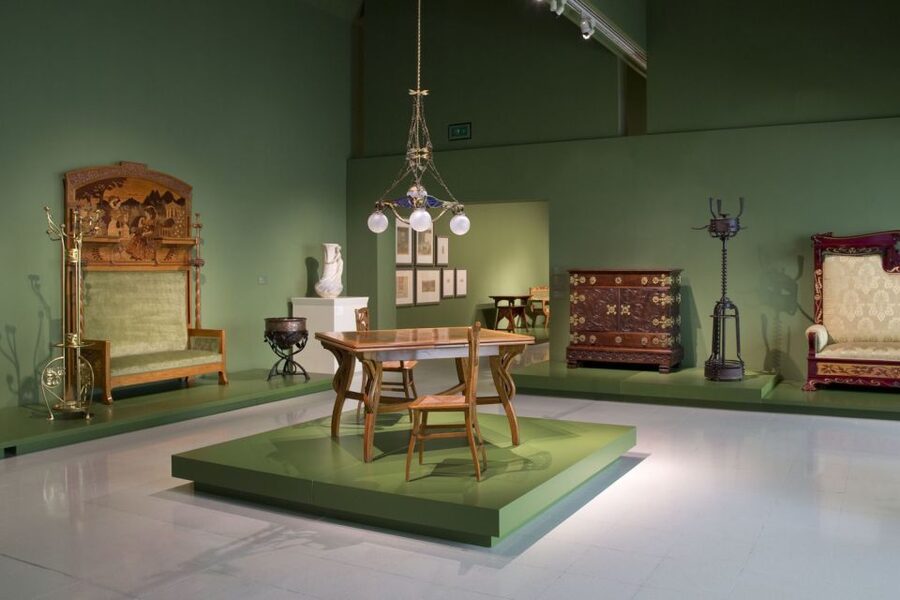
Photography is included in the museum’s broader collection, adding a more recent visual language to the historic art. This can be a welcome change after several rooms of paintings and religious works.
Your admission also includes a temporary exhibition. The subject will change, so do not build your schedule around a particular temporary display unless you check current details before booking. Its inclusion does add value to the ticket, especially if you have enough time to see both floors.
The museum’s map and signage are useful for keeping track of the sections. A museum store is also available, which gives you a practical place to browse for books or souvenirs after the galleries.
The range is one of MNAC’s strengths, but it can also feel like a lot. You are seeing several periods and types of art in one visit, not a small specialist collection. If you prefer a quiet museum focused on one artist, this may feel too broad. If you like making connections across periods, it is an excellent choice.
The views from Montjuïc, with one important warning
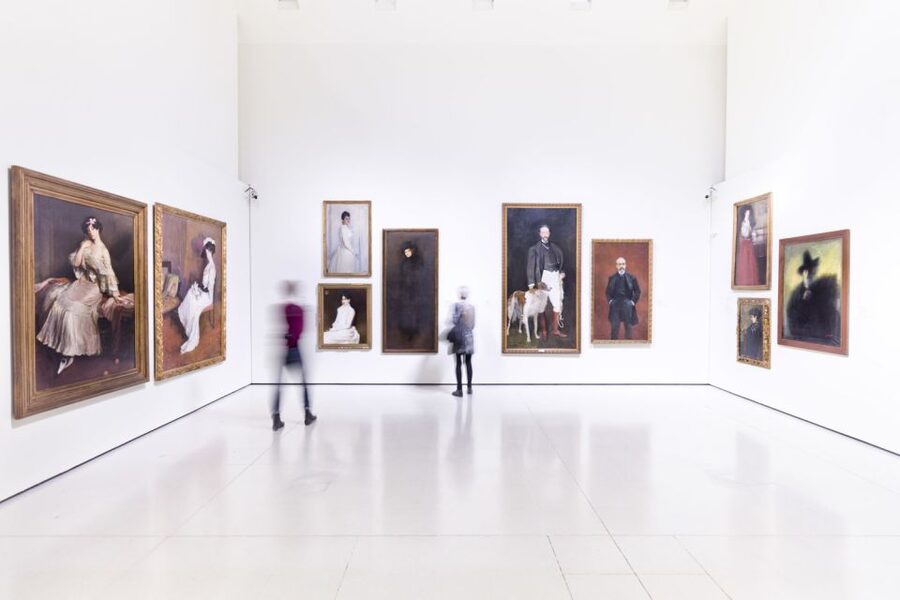
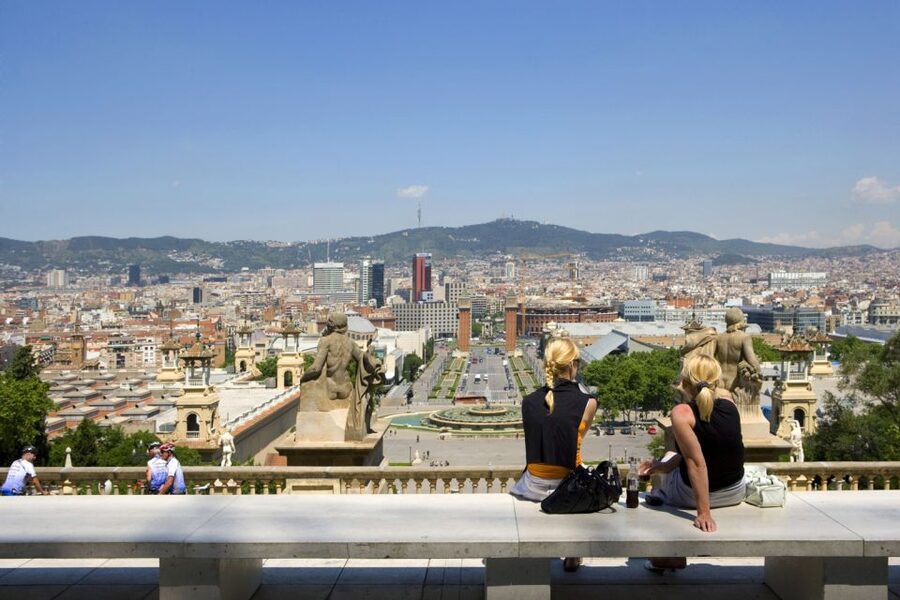
The setting is a major part of the experience. From the area in front of the Palau Nacional, you get wide views over Barcelona, and the approach itself offers excellent photo opportunities.
The rooftop and terraces have often been a favorite part of the visit, but they are currently listed as temporarily out of service because of difficulties managing current health regulations. Do not assume that the rooftop will be open simply because older information or past experiences describe it.
This is the most important current limitation. The building still provides an impressive elevated setting, but the highest panoramic viewpoint may not be available on your date. Confirm the status before you go if the roof is your main reason for choosing MNAC.
The surrounding area also gives you room to pause after the galleries. You can walk around outside, take photographs, and stop at one of the on-site cafés. A quiet café break can make a long museum visit much easier, particularly after several hours on your feet.
How long should you spend inside?
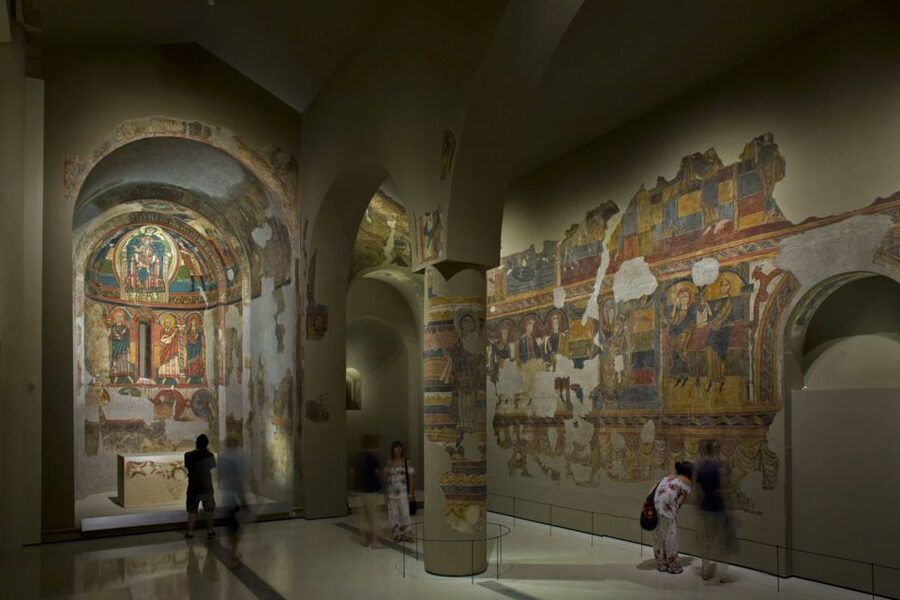
For a straightforward visit, allow two hours. That gives you time for the main Romanesque rooms, a selection of Modernist works, and some Renaissance or Baroque painting.
For a fuller visit, allow three to four hours. This is the better plan if you want to see both floors, the photography collection, the temporary exhibition, and the building itself without rushing.
The museum rooms are emptied 15 minutes before closing, and ticket offices close 30 minutes before closing. Keep this in mind if you arrive late in the day. A late one-hour slot is not enough for the full collection, and even a free late entry may leave you seeing only one gallery.
I’d avoid treating MNAC as a quick stop before dinner. The building is far more enjoyable when you can take a break, look carefully at the murals, and allow time for the Montjuïc setting.
Is the $14 ticket good value?
At $14 per person, this is one of Barcelona’s better-value major museum admissions for anyone interested in art. You receive access to the permanent collection and a temporary exhibition, plus the audio guide app in nine languages.
The price is especially fair for a half-day visit. It is less attractive if you are going only to photograph the building or the view, since the rooftop is currently unavailable and free admission applies at certain times.
Skip-the-line access is a useful extra during crowded periods. On a quiet day, you may walk straight in and feel that prebooking was unnecessary. The benefit is certainty, not always a dramatic saving of time.
Free admission is available on Saturday afternoons, the first Sunday of each month, and the listed festival and museum days. If you choose one of those periods, expect the possibility of a shorter practical visit due to timing or crowds. The ticket is refundable if you cancel at least 24 hours in advance, and the reserve-now, pay-later option helps if your Barcelona plans are still changing.
Who will enjoy MNAC most?
I recommend MNAC to you if you enjoy:
- Medieval art, church painting, or European art history
- Gaudí, Casas, and Catalan Modernism
- Museums with several periods in one building
- Grand architecture and city viewpoints
- A flexible two- to four-hour indoor activity
- Photography collections and temporary exhibitions
It is also a good choice if you have already visited Barcelona’s headline sights and want something less predictable. The collection gives you a stronger sense of Catalonia’s artistic identity than a quick look at the city’s famous facades can provide.
You may want to skip it if you have only one hour in Barcelona, dislike large museums, or are choosing it solely for the rooftop. The current closure of the terraces changes the balance of the visit, so the art must be your main reason for going.
Final verdict: book it for the art, not just the roof
I would book this ticket if you can give MNAC at least two hours and have a real interest in Catalan or European art. The Romanesque murals, rescued church paintings, Modernist works, and grand 1929 building make this a substantial experience for $14.
Check the free-entry calendar first, and confirm the terrace status before paying. If you go, arrive with a charged phone, headphones, and enough time to pause. MNAC is not a quick photo stop. It is one of the best places in Barcelona to connect the city’s architecture, regional identity, and art in one visit.
FAQ
Where is the Museu Nacional d’Art de Catalunya?
The museum is at Palau Nacional s/n, Parc de Montjuïc, 08038 Barcelona, in Catalonia, Spain.
How much does admission cost?
The listed admission price is $14 per person.
How long is the ticket valid?
The ticket is valid for one day. Check availability for the available starting times.
What does the ticket include?
It includes admission to the permanent collection, admission to a temporary exhibition, and an audio guide app for your smartphone.
Is the audio guide included?
Yes. The audio guide app is included with the ticket.
Which languages are available for the audio guide?
The audio guide is available in Catalan, Spanish, English, French, German, Italian, Russian, Japanese, and Chinese.
What should I bring for the audio guide?
Bring headphones and a charged smartphone.
Is the museum wheelchair accessible?
Yes, the activity is listed as wheelchair accessible.
Are the rooftop and terraces open?
The terraces and rooftop are temporarily out of service because of the difficulty of managing current health regulations. Check the latest status before your visit.
When is admission free?
Admission is free on Saturdays from 3 p.m. onward, the first Sunday of each month, February 12, May 18, September 11, and September 24.
Just added around Barcelona
- GoCar Full Day Tour★ 4.0 · 6 reviews
- Sagrada Familia and Barcelona Highlights: Private Guided 4-Hour Driving Tour★ 5.0 · 6 reviews
- Gothic Quarter and Born District: Photographic Workshop★ 5.0 · 6 reviews
- Gobbi Yacht Rental in Barcelona 9 Pax 2/4/8hs★ 5.0 · 6 reviews
- Barcelona: Highlights & Gems Private Tour with Tapa & Drink★ 3.9 · 6 reviews
- Barcelona: Gothic Quarter & La Sagrada Familia Private Tour★ 4.9 · 6 reviews
- Private Sailboat Ride at Sunset from Sitges★ 5.0 · 6 reviews
- Barcelona: Private Tour of Casa Batllo with Reserved Access★ 3.5 · 6 reviews
Tickets, compared.
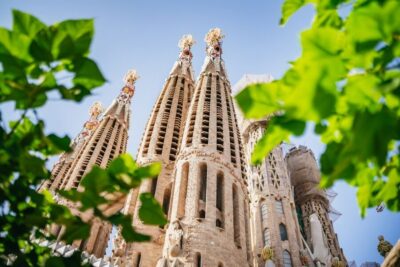
Sagrada Familia Skip-the-Line Entry Ticket & Tour
Read our review →
FC Barcelona Museum “Barça Immersive Tour” Ticket
Read our review →
Park Guell Guided Tour with Skip the Line Ticket
Read our review →
Park Guell and Sagrada Familia Tour with Skip the Line Tickets
Read our review →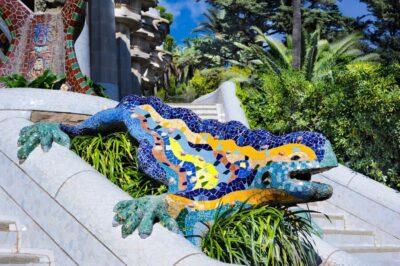
Park Güell and Gaudí House Museum Entry Ticket
Read our review →