
Reviewed · GAUDI TOURS
Barcelona: Sant Pau Recinte Modernista Entry Ticket
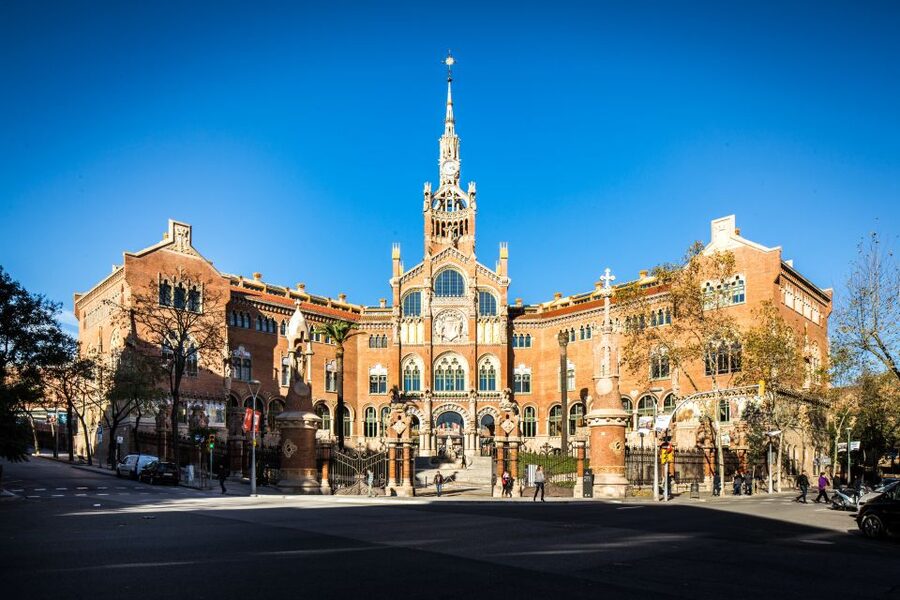
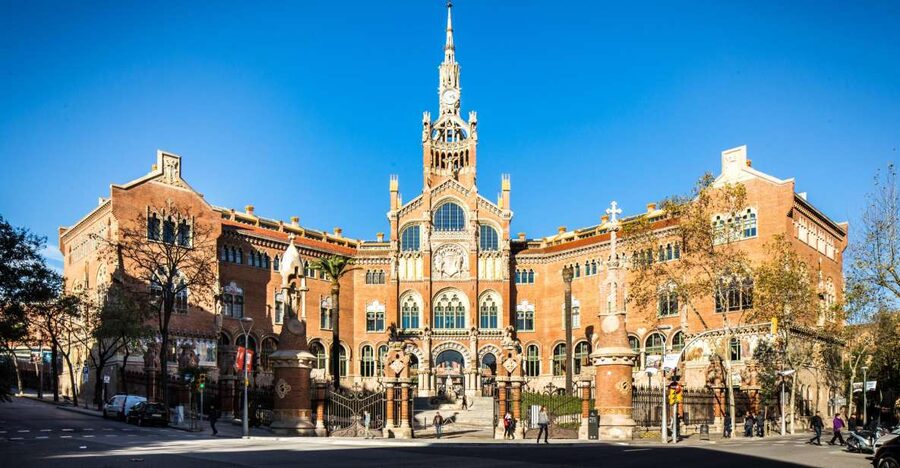
Barcelona’s Sant Pau Recinte Modernista is not simply a beautiful old building. It is a complete early 20th-century hospital city, designed so light, fresh air, gardens, art, and medical care worked together. Lluís Domènech i Montaner’s masterpiece gives you grand architecture without the crush often found at Barcelona’s biggest sights.
I especially like the restored pavilions and the underground passages that connect them. I also like how the visit joins decoration with social history: this was a charitable hospital built to care for ordinary people, not a palace designed only to impress. The main consideration is that your ticket is self-guided, so you will need to read the displays or pay separately for an audio guide if you want more explanation.
In This Review
- Key points to know before you go
- Why Sant Pau deserves time beside the Sagrada Família
- The main entrance and the first courtyard
- Gardens designed for recovery
- Inside the pavilions and former hospital rooms
- Underground passages, mosaics, and stained glass
- What a self-guided visit feels like
- How the $21 ticket earns its keep
- When to visit and how to get there
- Who will appreciate Sant Pau most
- Should you book the Sant Pau ticket?
- FAQ
- Where is Sant Pau Recinte Modernista located?
- How long should I allow for the visit?
- Is a guided tour included?
- Is Sant Pau wheelchair accessible?
- Can children visit Sant Pau?
- Are there any free admission offers for older visitors?
- Can I cancel my booking?
Key points to know before you go
- A working hospital turned cultural site: Sant Pau served Barcelona as a public hospital for about a century before restoration began.
- More than one building: The visit includes gardens, pavilions, former hospital spaces, passageways, mosaics, stained glass, and sculpture.
- A calm contrast to central Barcelona: The grounds offer space to pause, and early morning can feel pleasantly quiet.
- A strong choice for medical professionals: Historic instruments, hospital rooms, and changing ideas about patient care add meaning beyond the architecture.
- Plan for 1.5 to 2 hours: The official visit is about 1.5 hours, but a slower look at the details can take longer.
- Easy to reach: The entrance is at Calle Sant Antoni Maria Claret, 167, near a metro station.
Why Sant Pau deserves time beside the Sagrada Família
Barcelona is famous for Antoni Gaudí, but Sant Pau gives you another way to understand Catalan Modernisme. Domènech i Montaner worked in the same broad artistic age as Gaudí, yet his approach here feels more orderly and civic. The complex is grand, but its purpose was practical: to help sick people recover.
The old Hospital de la Santa Creu in El Raval had become too small by the late 19th century. Barcelona needed a new hospital, and the replacement project reflected fresh thinking about hygiene, ventilation, sunlight, and the patient’s surroundings. Construction took place from 1905 to 1930.
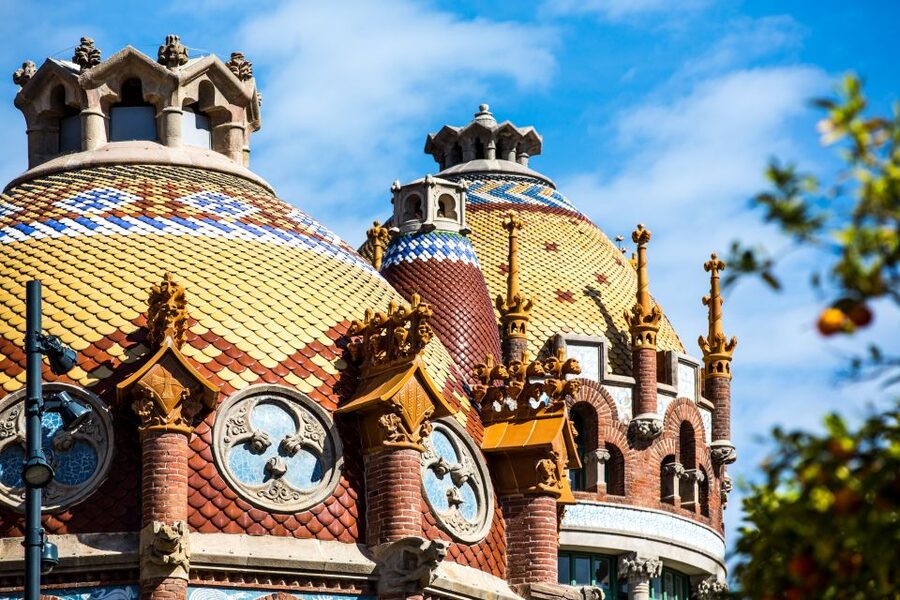
That background changes how you see the decoration. The colored tiles, sculpted flowers, stained glass, and patterned surfaces are not random extras. They helped create a more humane setting for people who might otherwise have spent long periods in bleak institutional rooms.
I find that idea one of Sant Pau’s greatest strengths. You are looking at art, but you are also looking at an attempt to improve public health through architecture. The complex was built for charitable care and welfare, which gives its beauty a serious purpose.
Sant Pau also makes a smart companion to the Sagrada Família. The two sights are close enough to combine in one part of your Barcelona day, but Sant Pau usually feels less hectic. If you have already seen Gaudí’s great church, this is a chance to compare two major Modernista visions without treating Barcelona’s architecture as a one-architect show.
More Gaudí days in Barcelona:
- Barcelona: Park Güell and Gaudí House Museum Entry Ticket
★ 4.5 · 6,326 reviews - Barcelona: La Pedrera Night Experience
★ 4.4 · 4,633 reviews - Barcelona: Gaudi’s Casa Vicens Skip-the-Line Entrance Ticket
★ 4.7 · 3,449 reviews
The main entrance and the first courtyard
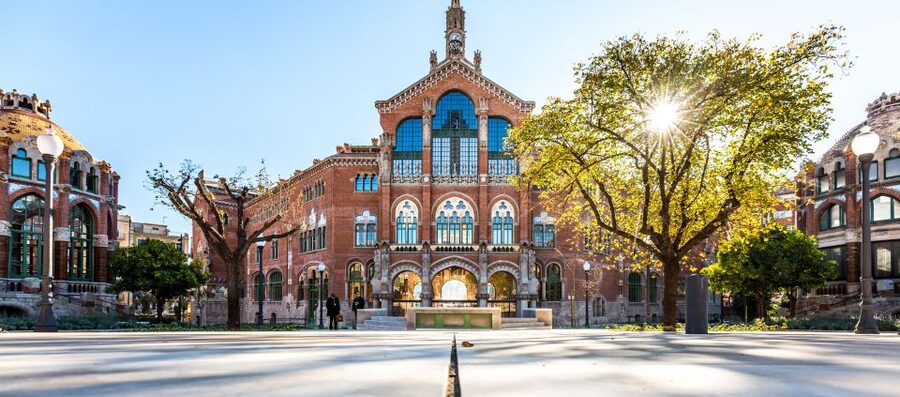
Begin at Calle Sant Antoni Maria Claret, 167. The first impression comes from the scale of the complex, but do not rush straight through the entrance. Look upward and across the façade before you move on. Sant Pau rewards attention to details above eye level.
The central entrance area introduces the hospital’s ceremonial side. Sculpture and decorative stonework give the building a sense of importance, suitable for an institution intended to serve the whole city. Yet the complex soon opens into courtyards and gardens, making it feel less like one enormous block and more like a planned garden city.
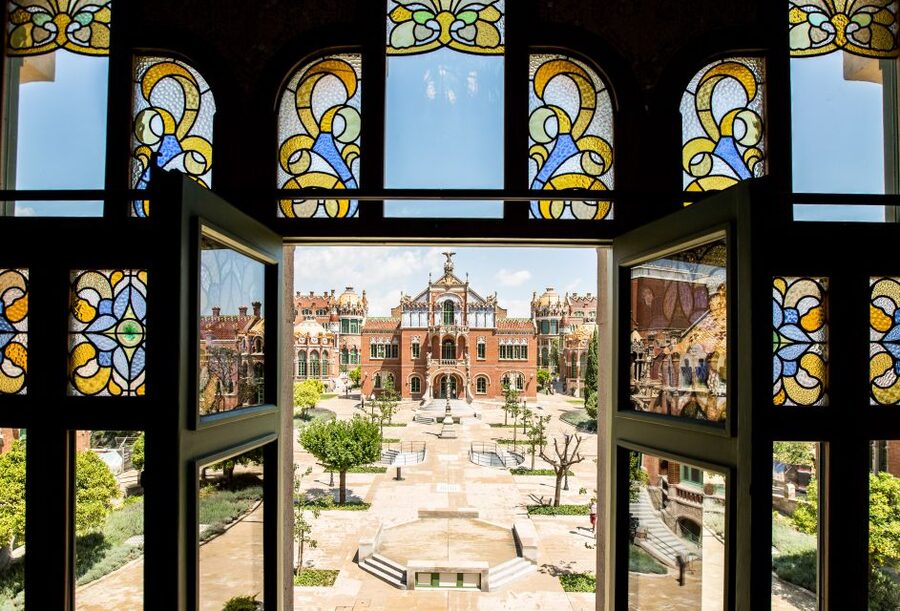
That layout is important. Instead of placing every ward inside one dense building, the hospital used separate pavilions connected by underground routes. Patients could receive care in distinct buildings, while staff and supplies could move through the passages below.
The front buildings offer some of the most photographed views, but the side façades are worth your time too. Walk around the edges of the main structures to find mural mosaics and decorative work that are easy to miss if you only admire the central courtyard.
A useful habit here is to look in three directions: across the gardens, toward the rooflines, and down at the tile work. Many people focus on the large forms and miss the small ceramic and sculpted touches that make Sant Pau feel so carefully made.
Gardens designed for recovery
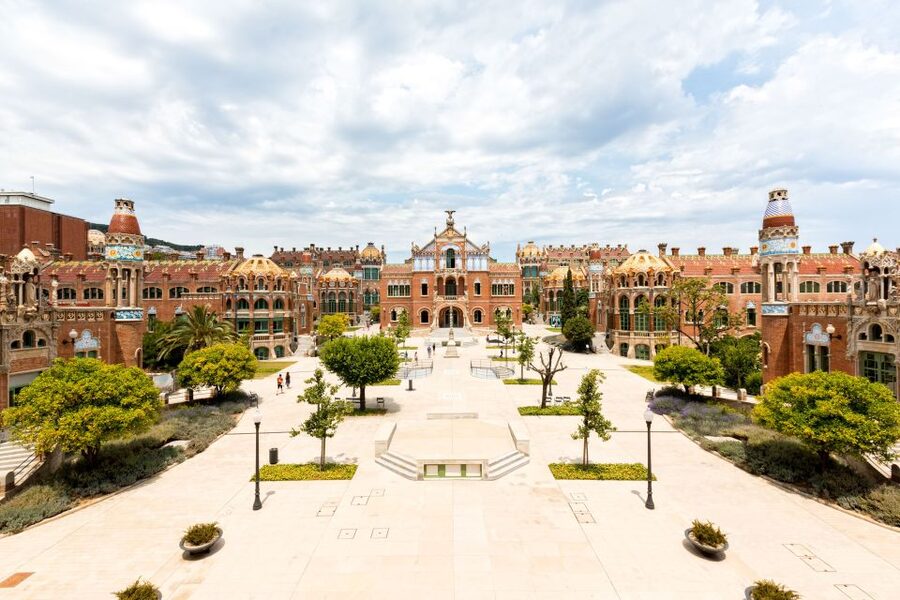
The gardens are not just pretty open space between buildings. They were part of the hospital’s original health plan. Fresh air, daylight, greenery, and a pleasant setting were seen as aids to recovery, especially at a time when medical treatment had fewer tools than it does today.
You can stroll between the pavilions and take in how each building relates to the next. The garden layout also gives you changing views of the architecture. From one angle, Sant Pau feels formal and symmetrical. From another, the separate pavilions create a more relaxed village-like setting.
The outdoor areas are a welcome break from Barcelona’s busy streets. They are also useful on a hot day, since the open grounds provide room to slow down instead of moving from one crowded interior to another. Several people have found the courtyard a comfortable place to sit and take in the details.
Do not treat the gardens as a quick crossing point. Pause long enough to notice how the decoration shifts from one pavilion to the next. Look for color, carved plant forms, and the relationship between the buildings and the paths.
The grounds are also one reason Sant Pau can suit different kinds of visitors. An architecture enthusiast can study the façades. A family can move through the open spaces at an easier pace. Someone interested in hospitals and public care can think about how the setting was meant to affect patients.
Inside the pavilions and former hospital rooms
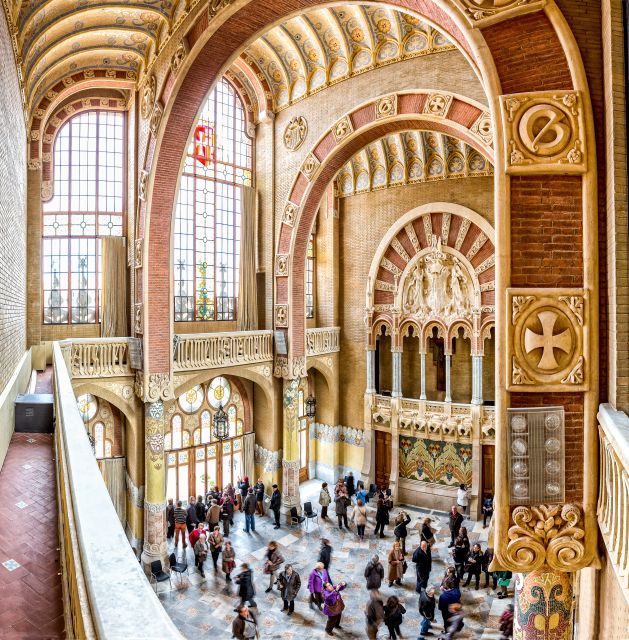
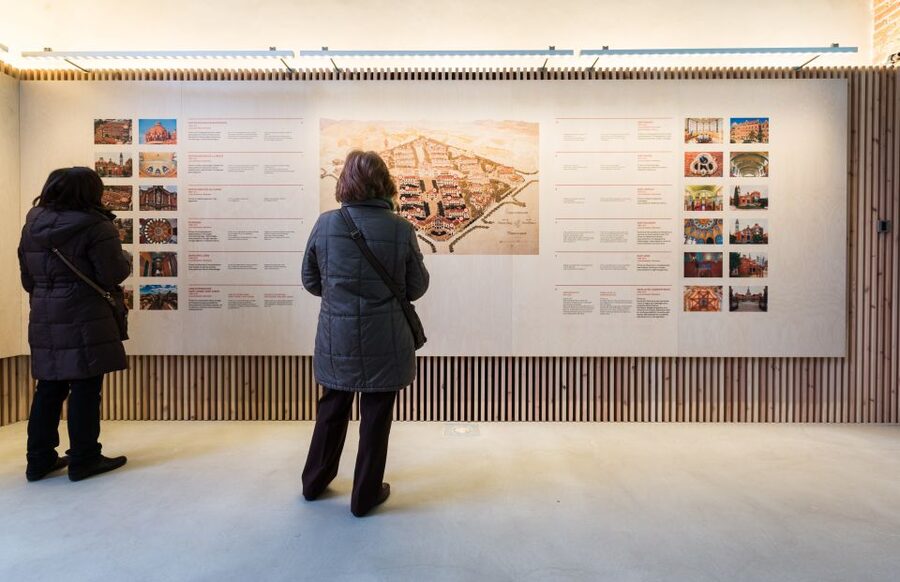
The restored interiors help keep Sant Pau from becoming an architecture-only visit. You can see how the hospital functioned and how its rooms were arranged. One display presents a hospital room as it was set up in 1932, giving you a more direct connection to the institution’s later working life.
Historic medical instruments add another layer. They show that this was a real hospital, not a decorative fantasy built to look old. The contrast can be striking: elegant tilework and stained glass on one side, practical medical equipment and patient beds on the other.
I think this is where medical workers, nurses, and anyone interested in healthcare will gain the most. Sant Pau shows how hospital design, nursing, administration, sanitation, and treatment all fit together. It also makes you consider how recently these beautiful rooms were used for ordinary medical care.
The displays explain the institution’s charitable role and its concern for people with limited means. That context matters. Without it, the site can look like an ornate palace. With it, you see the complex as a large public project built around care.
Some visitors have wished that more buildings were open. That is a fair limitation to keep in mind. Sant Pau is a large site, but your ticket does not mean every part of the former hospital is available to enter. The open sections still offer plenty to see, though the visit can leave you curious about the pavilions that remain closed.
A few more Barcelona options worth an hour of your trip
- Barcelona: Park Güell Admission Ticket
★ 4.4 · 76,534 reviews - Barcelona: Casa Batlló Entry with Self-Audioguide Tour
★ 4.7 · 25,359 reviews - Barcelona: 24 or 48-Hour Hop-On Hop-Off Bus Tour
★ 4.4 · 20,872 reviews - Barcelona: Park Guell Guided Tour with Skip The Line Entry
★ 4.7 · 17,563 reviews
Underground passages, mosaics, and stained glass
The underground passageways are one of Sant Pau’s most distinctive features. They linked the separate hospital pavilions and helped keep movement between buildings practical and protected from the weather.
Walking through these routes gives you a different sense of the complex. Above ground, the hospital presents gardens, façades, and sunlight. Below ground, the passages explain how the institution operated as one connected system.
The passages also contain decorative elements, including sculpture, mosaics, and stained glass. This is a good place to slow down, since the changing light can make the materials look different from the bright exterior work.
The underground sections may be especially interesting if you like the working side of historic buildings. You are not simply seeing a grand corridor. You are seeing the infrastructure that allowed a large hospital to function across several pavilions.
The site’s former hospital rooms and underground routes create a useful balance. The exterior gives you the wow factor, while the interior spaces explain the daily purpose of the place. Together, they make Sant Pau easier to remember than a monument you only view from a single courtyard.
What a self-guided visit feels like
This ticket is designed for independent exploring. You can move at your own pace rather than staying with a fixed group, and the visit is usually straightforward once you enter.
Allow at least 1.5 hours for the main route. If you read every panel, study the mosaics, stop in the courtyards, and spend time with the medical displays, plan closer to two hours. That extra time is worthwhile because many of the best details are high on the walls, around the sides of buildings, or below ground.
A printed pamphlet can be enough for visitors who prefer to keep moving. If you want a fuller explanation of Domènech i Montaner’s design and the hospital’s development, an audio guide is worth considering. The admission does not include a guided tour, and one independent visitor specifically wished for more help interpreting the site.
There is also a short explanatory video in a small room. It may not be immediately obvious, so look for it rather than assuming you have seen everything after the main displays. A clearer introduction to the hospital’s past would help some visitors, particularly those who want the medical story to receive as much attention as the architecture.
Signage has been a weak point for some people, especially outdoors. I recommend checking the map or pamphlet before leaving each pavilion so you know where the next section lies. Sant Pau is large enough that a little orientation saves time.
How the $21 ticket earns its keep
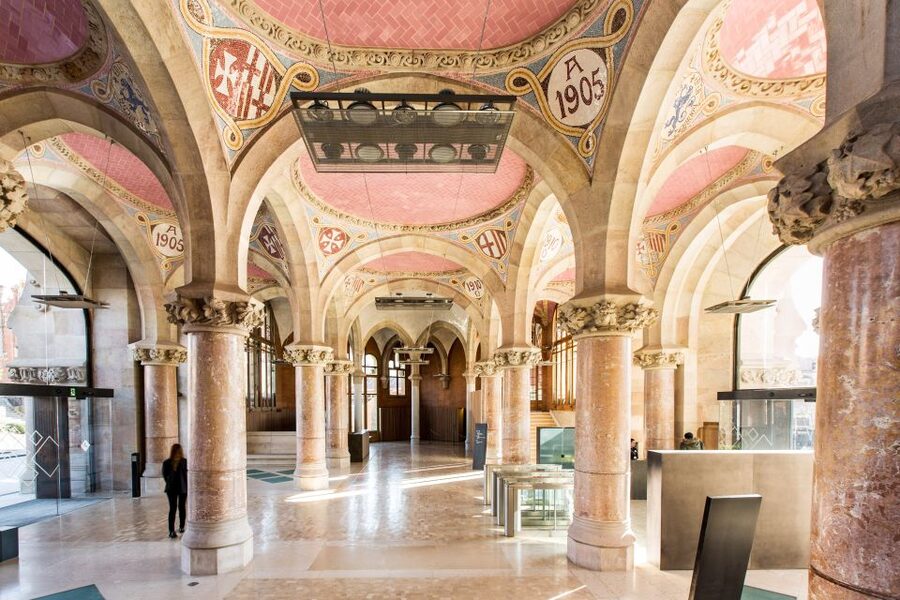
At $21 per person, Sant Pau is not a throwaway stop, but it offers more than a single façade or a brief photo visit. Your admission covers the restored complex, including the pavilions, gardens, connected passages, decorative arts, and hospital displays.
The value is strongest if you care about architecture, design, public health, or Barcelona’s social past. You are getting a broad visit rather than a short look at one room. The setting also gives you breathing space, which can matter after several packed city attractions.
The value is weaker if you only want a quick Modernista photo. In that case, you might feel that the ticket costs more than the time you plan to spend. Sant Pau rewards curiosity, so schedule it when you can give it a proper hour and a half rather than squeezing it between unrelated stops.
Compared with Barcelona’s most famous attractions, Sant Pau can feel like a calmer use of part of your sightseeing budget. It is also a useful choice for repeat visitors who have already seen the major Gaudí sites and want a different architectural story.
Tickets are flexible in practical ways. You can reserve now and pay later, and cancellation is available up to 24 hours before the visit for a full refund. The ticket is valid for one day, with current starting times checked through availability.
Children under 12 are admitted free, but they must attend with a parent or guardian. Visitors over 65 can enter free on the first Sunday of the month. The complex is wheelchair accessible.
When to visit and how to get there
An early start can improve the visit. Arriving around 9:30 in the morning may give you quieter courtyards and more room to examine the buildings without feeling hurried. This is especially helpful if you want photographs or plan to read the displays.
Sant Pau is near a metro station, making it simple to pair with other parts of Barcelona. The nearby metro also offers a direct route to the airport, which can make the site useful on a departure day if your schedule and luggage allow enough time.
Small lockers are available, and carry-on-sized bags have been stored there. Do not assume that large luggage will fit. If you are visiting before a flight, confirm your timing carefully and leave enough margin for the airport.
Cafés are available outside the complex, but there is no café inside the attraction according to the available information. Bring water or plan a stop nearby, particularly in warm weather. Smoking, pets, alcohol, and drugs are not allowed on the site.
Who will appreciate Sant Pau most
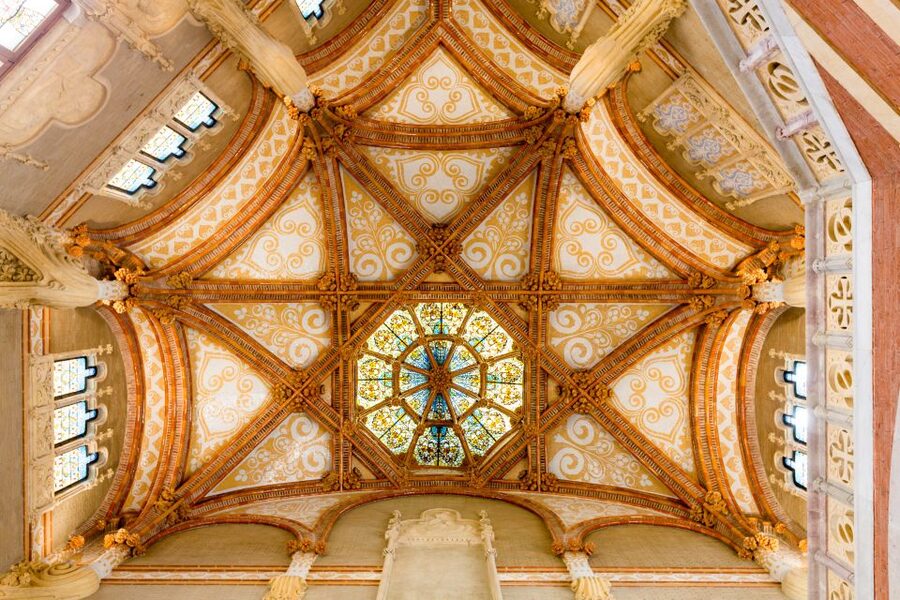
I would put Sant Pau high on the list for anyone who enjoys Barcelona’s architecture but wants more than the usual Gaudí circuit. The complex offers color, shape, open space, and a clear civic purpose.
It is especially suitable for:
- People working in medicine, nursing, public health, or science
- Visitors who enjoy historic hospitals and changing medical practices
- Architecture and photography enthusiasts
- Families who prefer open courtyards to tightly packed indoor sights
- Repeat visitors looking for a quieter cultural stop
- Anyone who wants a substantial visit close to the Sagrada Família
Children may enjoy the large buildings and gardens, though the historical displays will appeal most to older children and adults. If your group is mainly interested in interactive entertainment, Sant Pau may feel too quiet and text-based.
You should also allow for uneven interest within your group. One person may study every mosaic while another is ready to leave after the first pavilion. The self-guided format helps because you do not have to follow one fixed pace.
Should you book the Sant Pau ticket?
Book it if you want to understand how Barcelona’s Modernisme served a real public purpose. The architecture is spectacular, but the hospital rooms, medical tools, gardens, and tunnels give the visit substance.
I would not book it as a five-minute photo stop. Give Sant Pau at least 1.5 hours, look around the side façades, keep your eyes up, and seek out the underground passages and explanatory video. If you want more context, add the audio guide.
For $21, this is a strong choice for an architecture-minded day in Barcelona, particularly when paired with the nearby Sagrada Família. It offers beauty, social history, and a calmer setting than many headline attractions. If you prefer a guided experience, note that no guide is included and choose a separate tour if detailed interpretation matters to you.
FAQ
Where is Sant Pau Recinte Modernista located?
The entrance is at Calle Sant Antoni Maria Claret, 167, 08025 Barcelona, in Catalonia, Spain.
How long should I allow for the visit?
The visit is described as lasting about 1.5 hours. If you want to explore slowly, read the displays, and study the gardens and decorative details, allowing about two hours is sensible.
Is a guided tour included?
No. The ticket includes entrance to Sant Pau Recinte Modernista, but not a guided tour. An audio guide may be available as an additional option.
Is Sant Pau wheelchair accessible?
Yes, the activity is wheelchair accessible.
Can children visit Sant Pau?
Yes. Children aged 11 and under are permitted to attend, and admission is free for participants under 12. A parent or guardian must be present.
Are there any free admission offers for older visitors?
Visitors over 65 can receive free access on the first Sunday of the month.
Can I cancel my booking?
Yes. You can cancel up to 24 hours in advance for a full refund. You can also reserve now and pay later, subject to the booking terms.
Just added around Barcelona
- GoCar Full Day Tour★ 4.0 · 6 reviews
- Sagrada Familia and Barcelona Highlights: Private Guided 4-Hour Driving Tour★ 5.0 · 6 reviews
- Barcelona: Highlights & Gems Private Tour with Tapa & Drink★ 3.9 · 6 reviews
- Gothic Quarter and Born District: Photographic Workshop★ 5.0 · 6 reviews
- Gobbi Yacht Rental in Barcelona 9 Pax 2/4/8hs★ 5.0 · 6 reviews
- Barcelona: Gothic Quarter & La Sagrada Familia Private Tour★ 4.9 · 6 reviews
- Private Sailboat Ride at Sunset from Sitges★ 5.0 · 6 reviews
- Barcelona: Private Tour of Casa Batllo with Reserved Access★ 3.5 · 6 reviews
Gaudi Tours, compared.
Park Güell and Gaudí House Museum Entry Ticket
Read our review →
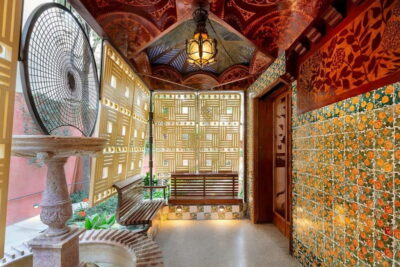
Gaudi’s Casa Vicens Skip-the-Line Entrance Ticket
Read our review →
Sagrada Familia, Modernism, and Old Town Tour
Read our review →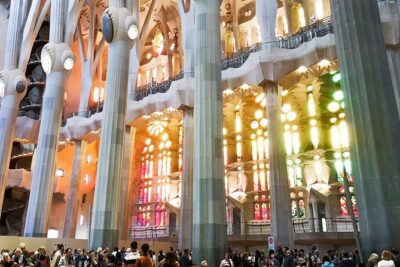
Sagrada Familia & Gaudi Tour Private or Small Group with Tickets
Read our review →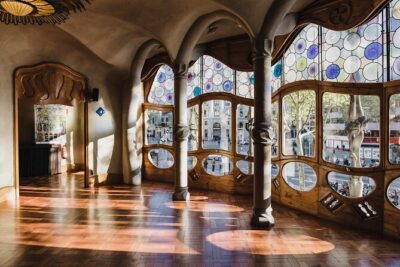
Complete Gaudi Tour: Casa Batllo, Park Guell & Sagrada Familia
Read our review →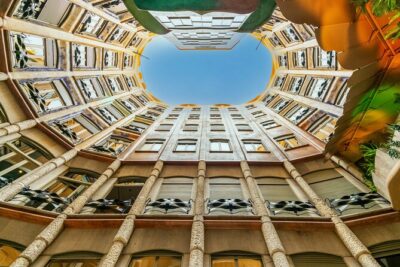
La Pedrera-Casa Mila Admission Ticket with Audioguide
Read our review →
Park Güell: Guided Tour with Optional Gaudí Experience Entry
Read our review →Browse the lists this tour appears in