
Reviewed · TAPAS AND FOOD TOURS
Barcelona: Seafood Paella ★Maestro★ & Tapas & Sangria
Barcelona’s paella tradition comes alive in a small, hands-on class where you help prepare one communal meal rather than watching a chef work from the sidelines. You’ll make seafood paella, pan con tomate with ham, sausages, and cheese, plus fresh-fruit sangria, while learning the stories and customs behind each dish.
I like the family-recipe angle and the way the class brings strangers together around one pan. I also like its Sarrià setting, a quieter part of Barcelona with attractive streets, local shops, and gourmet food stops. The main consideration is timing: two hours goes quickly, and coffee or dessert is not included.
In This Review
- Key points at a glance
- Starting in Sarrià, Barcelona’s quieter food quarter
- The market lesson: choosing ingredients, not just eating them
- Pan con tomate and tapas set the table
- Making sangria with fresh fruit
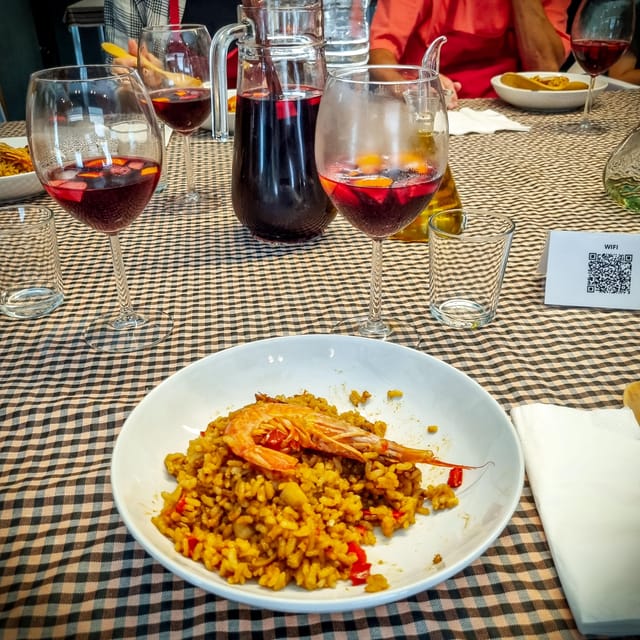
- The main event: a shared seafood paella
- The chefs make the lesson personal
- A communal table, with room for families and solo visitors
- Is $71 a fair price?
- Who should book this cooking class?
- Final verdict: book it for the lesson, not just the lunch
- FAQ
- How long does the Barcelona paella class last?
- What dishes are included?
- Is the cooking class taught in English?
- Are children allowed to participate?
- Can dietary needs and food allergies be accommodated?
- Is the activity wheelchair accessible?
Key points at a glance
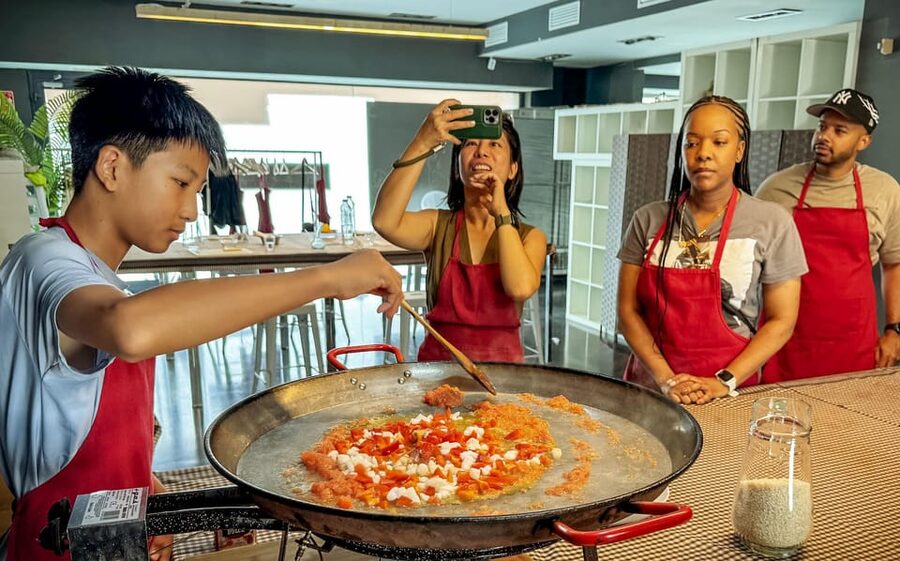
- Cook one communal seafood paella: You work as a group, just as paella is traditionally shared with family and friends.
- Learn more than a recipe: The chef explains ingredients, Catalan food traditions, tapas, and practical cooking tips, including how to get a crisp bottom.
- Make sangria from fresh fruit: The sangria workshop gives you a second recipe you can repeat at home.
- Taste a full Spanish spread: Pan con tomate, ham, sausages, cheese, seasonal tapas, paella, and wine are part of the meal.
- Meet in Sarrià: The class takes place in an intimate gastronomic space in an attractive neighborhood away from Barcelona’s busiest center.
- Good for families and solo visitors: Children are welcome, and the communal format makes it easy to share the experience with others.
Starting in Sarrià, Barcelona’s quieter food quarter
The meeting point is in the Sarrià neighborhood, in an intimate gastronomic space used for the class. Sarrià gives you a different side of Barcelona. Instead of the heavy foot traffic around the Gothic Quarter or La Rambla, you’ll find quieter streets, small shops, restaurants, and gourmet food businesses.
I would arrive a little early. The exact meeting point can be difficult to spot, so allow extra time to get oriented. Once you find the space, the setting is described as clean, bright, and inviting, with enough warmth for a social meal rather than a formal demonstration.
The neighborhood itself adds value. This is not simply a cooking room dropped into the middle of a sightseeing district. You can walk through Sarrià before or after class, browse local products, and explore its food scene. The meeting area also offers access to views toward Collserola Park, giving you another reason to make time for the neighborhood.
The experience is also promoted with a visit to the exclusive Sarrià Market, where you learn how to choose fresh and tasty ingredients. Confirm the exact market portion and timing when you book, since the supplied details emphasize both the market visit and the gastronomic space. That distinction matters if the market is a main reason you are choosing this class.
More paella classes in Barcelona:
- Barcelona: Paella Cooking Experience & Boqueria Market Tour
★ 4.8 · 3,661 reviews - Barcelona Paella Cooking Class with Market Visit, Tapas & Sangria
★ 5.0 · 2,531 reviews - Barcelona Interactive Spanish Cooking Experience
★ 4.5 · 2,155 reviews
The market lesson: choosing ingredients, not just eating them
A market visit can make a cooking class much more useful. You learn to look at the products before they reach the pan, and you begin to understand why freshness matters in a short seafood recipe.
The focus here is on selecting seasonal ingredients for paella, tapas, and sangria. You might learn which seafood and vegetables suit the dish, how local products are chosen, and how the ingredients fit into Spanish cooking. The experience is designed to turn shopping into part of the lesson rather than treating food as something that simply appears in the kitchen.
This section may appeal most to people who want to repeat the meal at home. One participant even bought a paella pan after the class to cook for family during Christmas. That is a useful clue about the practical nature of the instruction: you are not only eating a Barcelona specialty, you are being shown how to recreate it.
The market visit is still a relatively brief part of a two-hour experience. If you want a long, detailed food market tour followed by a full cooking school session, this may feel compact. The real focus is the cooking and shared meal.
Pan con tomate and tapas set the table
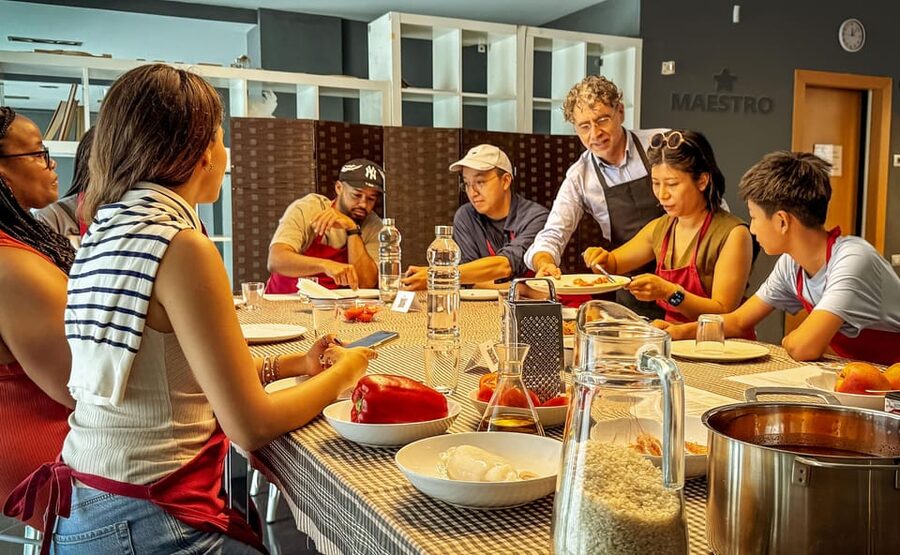
The class begins with simple Spanish food that depends on good ingredients rather than complicated technique. Pan con tomate, or bread with tomato, is served with ham, sausages, and cheese. Seasonal tapas are also included.
This opening spread helps you understand an important part of Spanish dining: food is often shared, placed in the middle of the table, and enjoyed slowly with conversation. You are not just waiting for the paella to finish cooking. The tapas create time to meet the other people in the class and learn how several small components work together.
The chef also explains the background of tapas and the place of pan con tomate in local food culture. That context is useful because it turns a familiar-looking snack into part of a wider meal tradition. You’ll see how a few basic items can form a generous table when paired with conversation and a drink.
The tapas selection is seasonal, so the exact items may vary. Coffee and dessert are not included. If you want a final sweet course, plan to have it elsewhere in Sarrià after the class.
Making sangria with fresh fruit
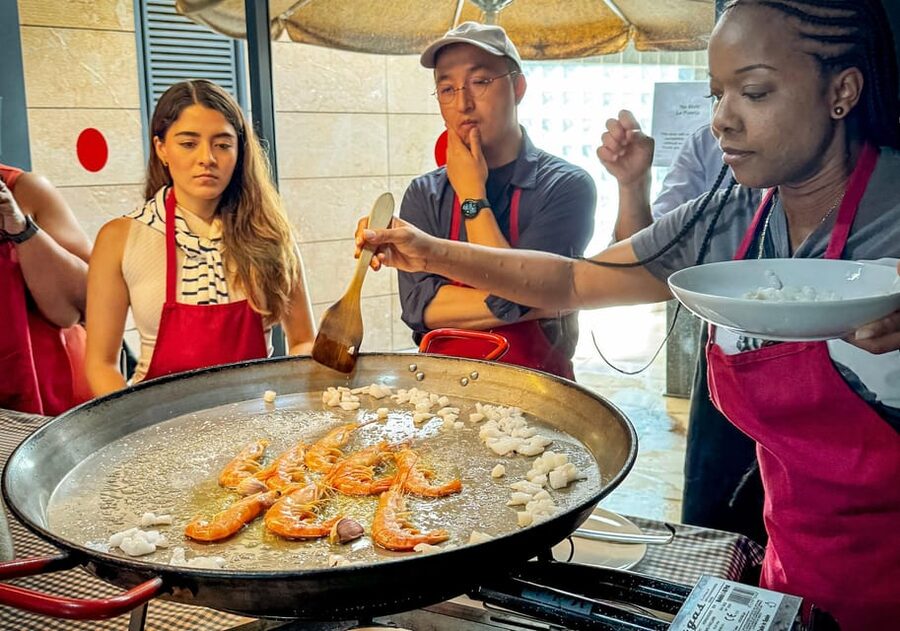
The sangria workshop is one of the more social parts of the experience. You prepare a fruity wine punch with fresh fruit, rather than simply receiving a glass poured by the staff.
The recipe is explained from scratch, and the chef covers the ingredients and preparation. Several people who took the class found this especially useful because the sangria instructions were clearer and more detailed than those in other cooking classes. You’ll leave with a method you can use at home, not just a drink you enjoyed in Barcelona.
Sangria also gives solo visitors an easy way to join the group. Cooking can sometimes leave one person standing at the edge of the work area, but mixing a shared drink naturally creates conversation. The class is built around that kind of participation.
You should remember that alcohol is part of the experience. If you have dietary or other needs, contact the provider in advance. The class can accommodate dietary requests when arranged ahead of time, but seafood is used in the cooking.
More tapas crawls around Barcelona:
- Montserrat Half-Day Tour with Tapas and Gourmet Wines
★ 5.0 · 7,359 reviews - Montserrat & Cogwheel Train, Gourmet Wine Tasting & Tapas/Lunch
★ 5.0 · 6,290 reviews - Barcelona Tapas and Wine Experience Small-Group Walking Tour
★ 5.0 · 5,804 reviews - Montserrat with Black Madonna & Medieval Winery with Tapas/Lunch
★ 5.0 · 5,209 reviews
The main event: a shared seafood paella
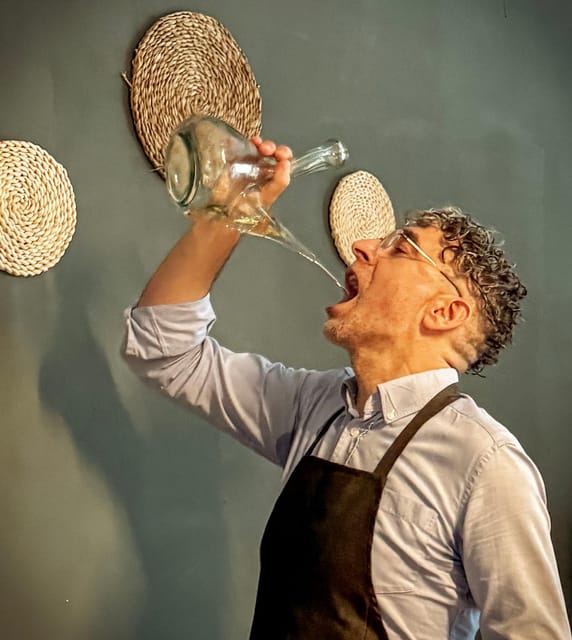
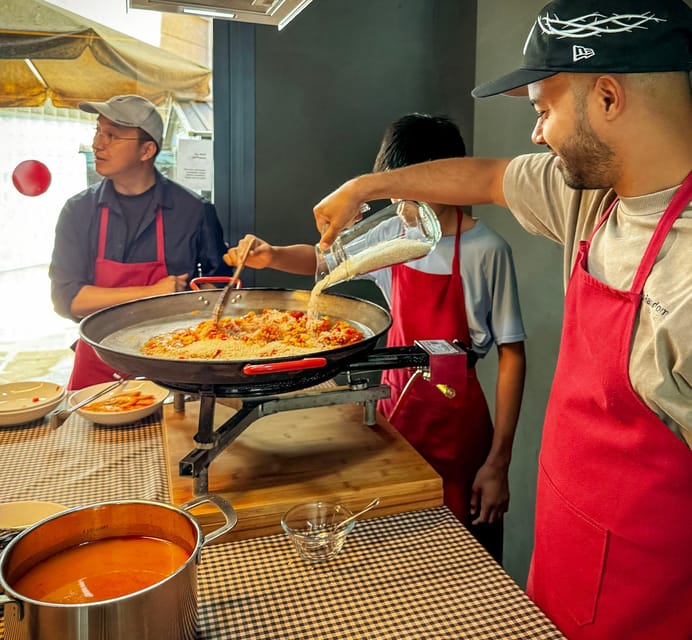
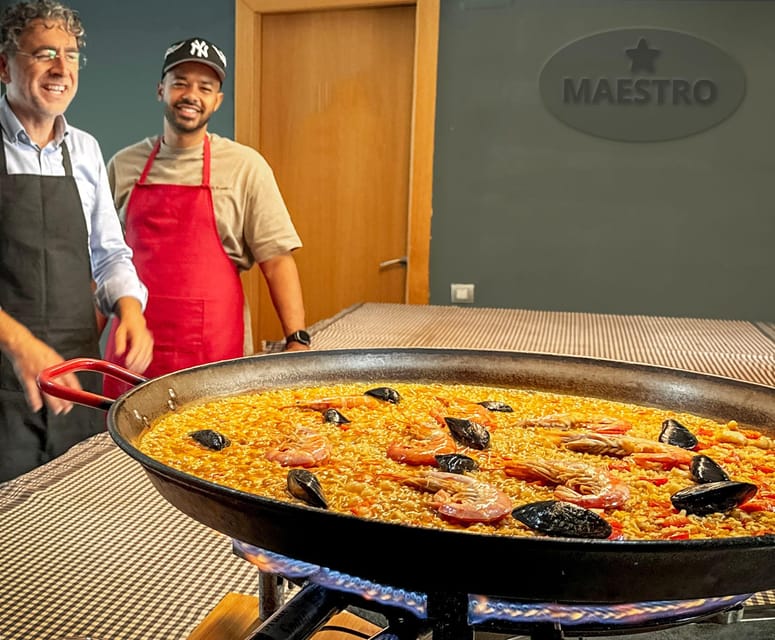
The center of the class is the seafood Mediterranean paella. You prepare it together under the chef’s direction, working through the ingredients and cooking stages as a group.
This communal format is important. You do not each receive an individual pan or separate dish. Instead, everyone contributes to one paella, then sits down to share the finished meal. That mirrors the social role of paella in Spain, where the food is meant to bring family and friends to the same table.
The chef guides you through the process step by step. You may help with preparing ingredients, managing the cooking, and watching the rice develop. The class also covers the history and cultural meaning of paella, along with the role of the dish in Catalan and Spanish food traditions.
One useful tip centers on the socarrat, the prized crisp layer of rice at the bottom of the pan. The chef explains how to work toward that texture, which is often the detail that separates a merely good paella from an excellent one. This is the sort of practical instruction you can use later, especially if you buy a paella pan or try the recipe in a home kitchen.
The finished dish is seafood-based, so it is not a good fit for anyone avoiding seafood. Dietary adjustments may be possible if requested in advance, but the class uses seafood as a core ingredient.
The chefs make the lesson personal
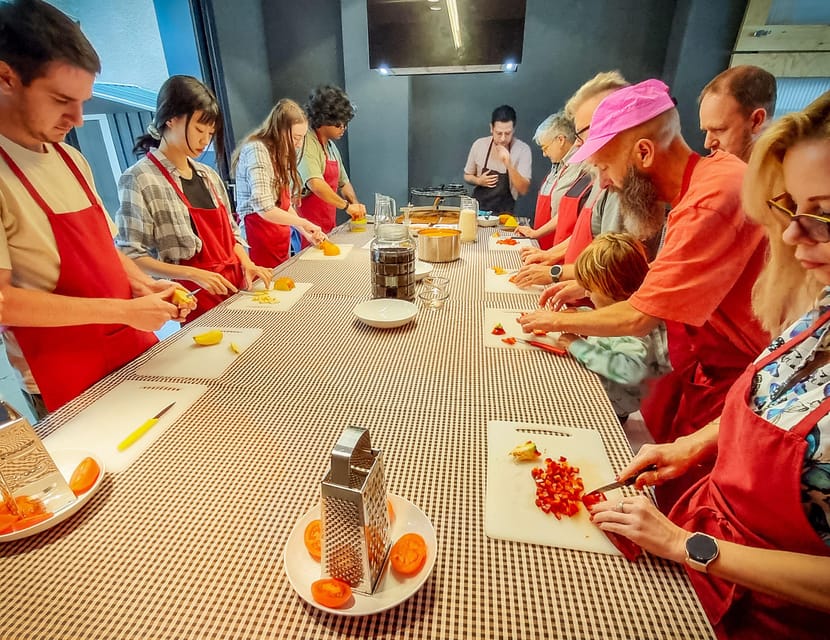
The teaching style can vary by session, but the class has featured chefs and hosts including Eladi, Oriol, Francesca, Jordy, and Martin. Eladi is especially associated with explaining the meaning of paella, the history of its ingredients, and the way food brings people together.
Francesca has been described as personable and welcoming, while Oriol is noted for guiding the group carefully through the paella process. Martin’s approach included making sure everyone understood each stage. These details suggest that the class depends heavily on the individual chef, but the format consistently calls for active instruction rather than a passive cooking show.
The strongest part of the teaching is its connection to personal stories and Catalan food traditions. You may hear about the chef’s own background, local customs, and the reasons certain ingredients are used. That gives the meal a sense of place without turning the class into a lecture.
English and Spanish are available. If you want to ask detailed cooking questions, choose the language in which you can follow instructions most easily.
A communal table, with room for families and solo visitors
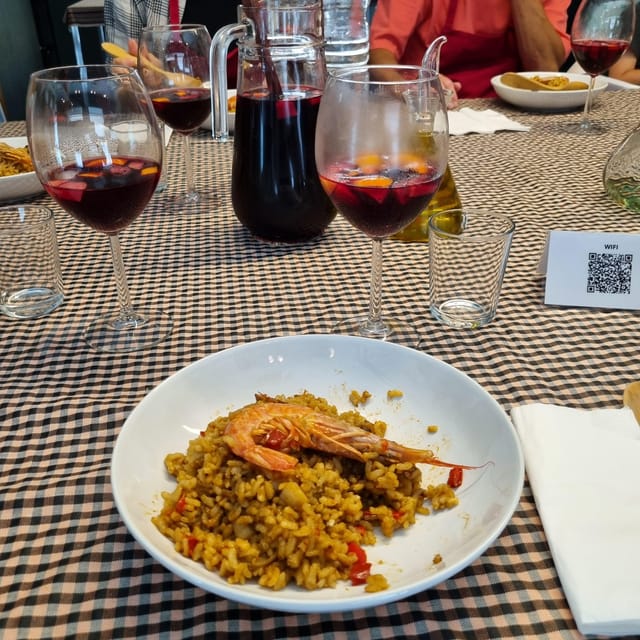
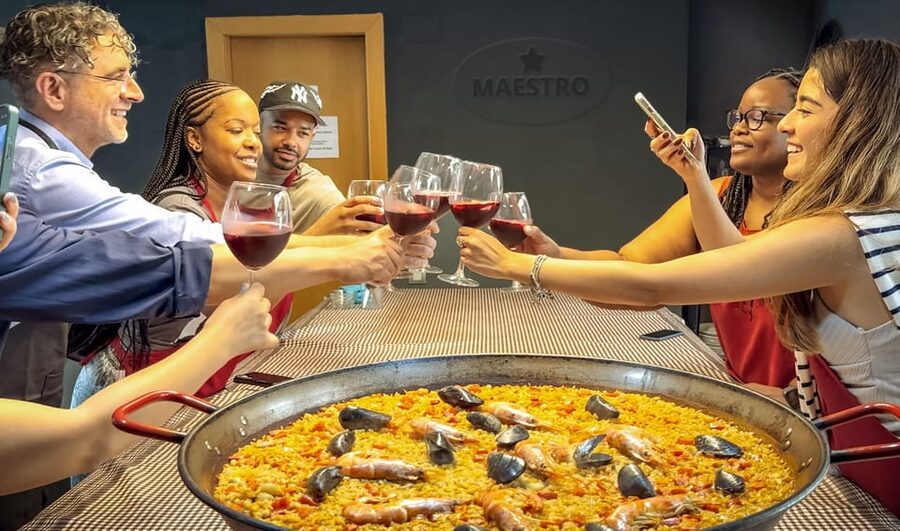
After the cooking, everyone eats together. This is where the two-hour schedule becomes more than a lesson. You share the paella, tapas, and sangria with the people who helped prepare them.
The group atmosphere suits solo visitors particularly well. You arrive alone but have a natural reason to talk with everyone around you. The class also works for couples, groups of friends, and families. Children are welcome, and children as young as eight have taken part in preparing ingredients and cooking beside the chef.
Families should note that the group format is a strength, but it also means children are part of a shared activity rather than receiving a private lesson. Adults who want a quiet, highly technical cooking session may prefer a different format.
The communal meal also adds a cultural lesson. Paella is not presented as a single plated restaurant dish. It is treated as something made together, placed at the center of the table, and eaten in company. That idea is one of the most valuable parts of the experience.
Is $71 a fair price?
At $71 per person, this is not the cheapest way to eat paella in Barcelona. It is a fair price if you value instruction, food, drinks, and a social experience in one package.
The fee includes the interactive class, professional chef instruction, ingredients, cooking equipment, tapas, seafood paella, sangria preparation, and recipes for home use. You are also paying for the time and planning involved in selecting ingredients, preparing the meal, and teaching the group.
The value is strongest if you want to learn. A restaurant meal might cost less, but it would not show you how to choose ingredients, build the dish, prepare sangria, or aim for the crisp rice at the bottom. The included recipes also extend the experience beyond your time in Barcelona.
The value is weaker if you mainly want a quick meal. Two hours is enough for a focused class and shared dinner, but not enough for a long market exploration, elaborate tapas menu, dessert, and coffee. Those extras are not included.
Free cancellation up to 24 hours before the start and a reserve-now, pay-later option make the booking fairly flexible. The activity is wheelchair accessible, but you should still contact the provider ahead of time about food allergies or other dietary requirements.
Who should book this cooking class?
I would recommend it to anyone who wants food to be part of the cultural experience, not just a meal between sightseeing stops. It is especially well suited to:
- Families looking for an activity children can actively join
- Solo visitors who want an easy social evening
- Couples and friends who enjoy cooking together
- People who want a paella recipe they can repeat at home
- First-time visitors who want local food context
- Anyone interested in Catalan stories and Spanish dining customs
I would be more cautious if you do not eat seafood, dislike group activities, or want a long market tour. You can request dietary adjustments in advance, but seafood remains central to the class. You should also expect to share the work and the table with other people.
Final verdict: book it for the lesson, not just the lunch
Book this experience if you want to learn how paella, tapas, and sangria fit into Spanish social life. The best parts are the family-style cooking, the chef’s practical guidance, the fresh-fruit sangria, and the chance to sit down with the people who helped make the meal.
The Sarrià setting is another plus, especially if you want to see a quieter neighborhood and walk among local shops before or after class. Just allow time to find the meeting point, confirm the market portion, and remember that dessert and coffee are not part of the price.
For a two-hour food experience at $71, I see good value for hands-on instruction and a complete shared meal. If you want to return home able to prepare seafood paella properly, this is the kind of Barcelona activity worth fitting into your schedule.
FAQ
How long does the Barcelona paella class last?
The experience lasts two hours. Check the available start times when booking.
What dishes are included?
You prepare seafood Mediterranean paella, pan con tomate with ham, sausages, and cheese, seasonal tapas, and fresh-fruit sangria.
Is the cooking class taught in English?
Yes. Instruction is available in English and Spanish.
Are children allowed to participate?
Yes. Children are welcome, and the activity is designed so families can prepare and cook the dishes together.
Can dietary needs and food allergies be accommodated?
Dietary needs may be accommodated if requested in advance. Seafood is used in the class, so contact the provider ahead of time about allergies or restrictions.
Is the activity wheelchair accessible?
Yes, the activity is listed as wheelchair accessible.
Just added around Barcelona
- GoCar Full Day Tour★ 4.0 · 6 reviews
- Sagrada Familia and Barcelona Highlights: Private Guided 4-Hour Driving Tour★ 5.0 · 6 reviews
- Barcelona: Highlights & Gems Private Tour with Tapa & Drink★ 3.9 · 6 reviews
- Gothic Quarter and Born District: Photographic Workshop★ 5.0 · 6 reviews
- Gobbi Yacht Rental in Barcelona 9 Pax 2/4/8hs★ 5.0 · 6 reviews
- Barcelona: Gothic Quarter & La Sagrada Familia Private Tour★ 4.9 · 6 reviews
- Private Sailboat Ride at Sunset from Sitges★ 5.0 · 6 reviews
- Barcelona: Private Tour of Casa Batllo with Reserved Access★ 3.5 · 6 reviews
Tapas and Food Tours, compared.
Montserrat Half-Day Tour with Tapas and Gourmet Wines
Read our review →
Montserrat & Cogwheel Train, Gourmet Wine Tasting & Tapas/Lunch
Read our review →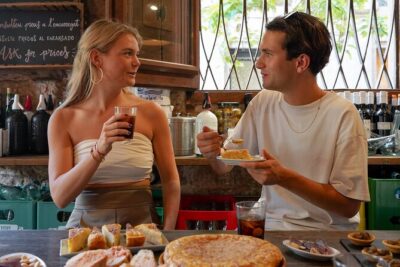
Barcelona Tapas and Wine Experience Small-Group Walking Tour
Read our review →
Montserrat with Black Madonna & Medieval Winery with Tapas/Lunch
Read our review →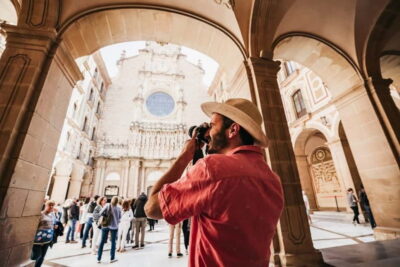
Montserrat and Winery Tour with Tapas or Lunch
Read our review →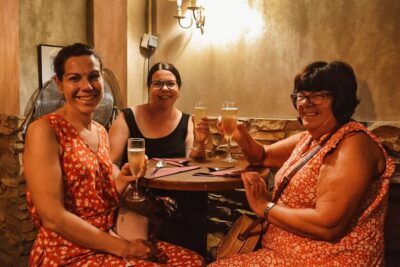
Tapas Walking Tour with Food, Wine, and History
Read our review →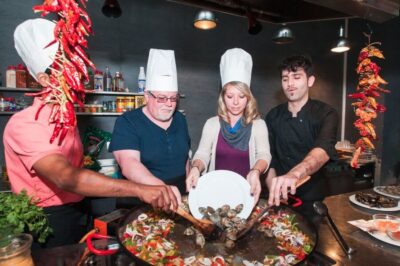
Paella Cooking Experience & Boqueria Market Tour
Read our review →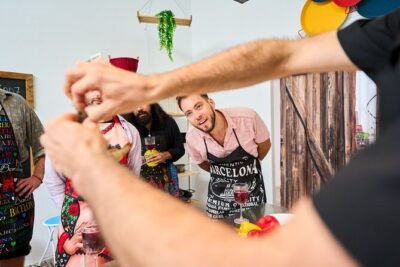
Barcelona Paella Cooking Class with Market Visit, Tapas & Sangria
Read our review →Browse the lists this tour appears in