
Reviewed · DRINKING TOURS
Bean to Bar Chocolate Workshop in Barcelona
The most interesting part of this Barcelona chocolate workshop happens before the chocolate looks like chocolate. At Kina Chocolates, you handle a cocoa pod, roast cacao beans, peel them, grind the nibs, and turn them into cocoa paste. It is a small, hands-on lesson in how much work sits behind a single bar.
I like the real bean-to-bar process and the generous tasting element, which includes cocoa-based drinks and chocolate from different growing regions. I also like the warm, personal teaching style of guides such as Oscar, Renee, and Franklin. The one consideration is that this is a guided workshop rather than a free-form confectionery class, so you learn and participate at each stage but do not independently produce every part of a finished bar.
In This Review
- Key points at a glance
- Starting with a cocoa pod at Kina Chocolates
- Roasting and peeling the cacao beans
- Grinding cacao into cocoa paste
- Cacao drinks and chocolate from different regions
- Making your own chocolate bar
- What makes the teaching work
- Cocoa farmers and the bean-to-bar idea
- Is $47 a fair price?
- Practical details before you book
- Who should book this chocolate workshop?
- Should you book the Kina Chocolates workshop?
- FAQ
- Where does the Bean to Bar Chocolate Workshop take place?
- How long is the workshop?
- How much does the workshop cost?
- What languages are available?
- How many people can join the workshop?
- Do I make chocolate during the workshop?
- Is the workshop suitable for teenagers?
- What should I do if I have an allergy or intolerance?
Key points at a glance
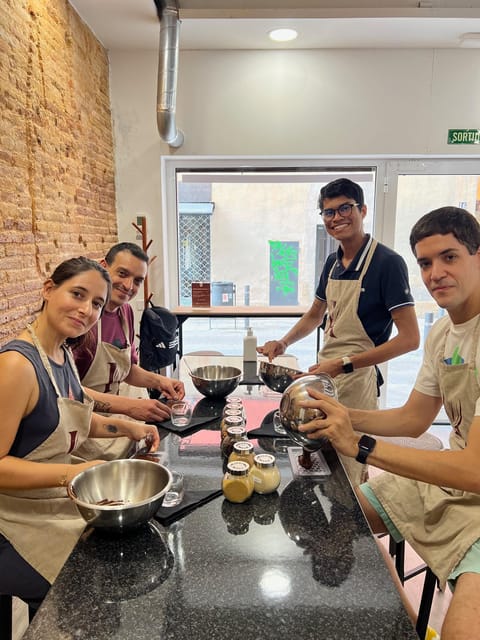
- You work with whole cacao beans: Roast, peel, grind, and make cocoa paste by hand.
- The workshop lasts two hours: That is enough time for practical work, tasting, and chocolate background without taking up a full day.
- You make a bar to take home: Your own chocolate bar is the useful souvenir, though Barcelona heat can make transport tricky.
- Groups are limited to eight: The small format gives you a better chance to ask questions and take part.
- Adults and teenagers can join: Families with children around ten and older have found the balance of education and activity appealing.
- The lesson goes beyond sweets: Cocoa farming, ancient chocolate traditions, geography, and fair treatment of producers are part of the discussion.
Starting with a cocoa pod at Kina Chocolates
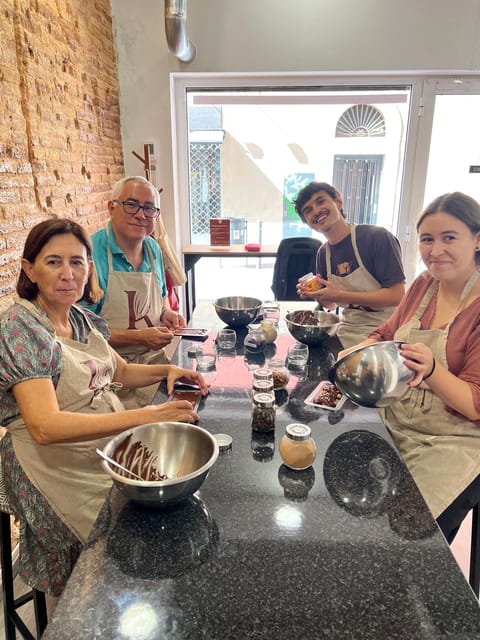
The meeting point is Local Kina Chocolates, a cozy artisan shop in Barcelona. This is not a large visitor center with rows of machines and polished exhibits. The small setting makes the class feel closer to a working chocolate shop, where the ingredients and tools are within reach.
Your guide begins with the cocoa plant and the pod itself. You learn how cacao is grown and what happens in the fields before the beans leave producing communities. That opening matters because it gives context to everything that follows. Chocolate is not simply a sweet made in a factory. It starts as a fruit, and the useful work begins long before roasting.
The teaching is available in Spanish and English. Sessions have been led by people including Oscar, Renee, and Franklin. Their styles vary, but the strongest feature of the workshop is the enthusiasm for the subject. Oscar is often described as playful and eager to answer questions, while Renee brings a clear, friendly approach to the process. Franklin is also noted for making the subject easy to follow.
Because the group is capped at eight people, you are not lost in a crowd. That is especially helpful during the practical stages, when you need to see the beans closely and take your turn with the tools.
A few more Barcelona options worth an hour of your trip
- Barcelona: Nougat and Chocolate Museum Tour with Tasting
★ 4.5 · 232 reviews - Family Private Tour: Churros, Hot Chocolate & Games in Barcelona
★ 5.0 · 79 reviews - Barcelona: Churros, Hot Chocolate, and Games Family Tour
★ 4.8 · 66 reviews
Roasting and peeling the cacao beans
The workshop moves quickly from explanation to action. You roast the cacao beans, then peel them to reveal what is inside. It is a simple step, but it changes how you think about the finished product. A bar of chocolate hides a long chain of physical work, and here you handle part of that chain yourself.
Peeling the roasted beans is not the sort of task you would book a class to avoid. It is part of the point. You get a feel for the texture and smell of the cacao, rather than tasting only a polished product. The session uses your senses in sequence: look at the pod, touch the beans, smell the roasted cacao, then taste the results.
You also get to try different parts and forms of the cocoa bean. Cocoa nibs, bean shells, and other by-products help show that cacao can become more than a standard chocolate bar. A cocoa bean shell tea is available in the shop, and some people choose to buy extra chocolate or ingredients afterward, but shopping is not the focus of the class.
This is a good place to set expectations. You will not be left alone with a recipe and asked to produce professional chocolate from scratch. The instructor guides the stages, explains what is happening, and lets you take part. If you want a highly technical pastry course, this may feel too introductory. If you want to understand the raw material through touch and taste, the format works well.
Grinding cacao into cocoa paste
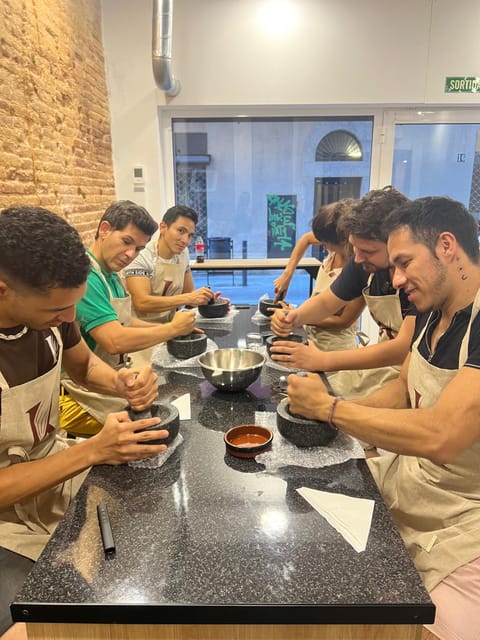
After roasting and peeling, you grind the cacao. This is one of the workshop’s most satisfying stages because the beans begin to change form in front of you. What started as a hard, dry bean becomes a thick cocoa paste.
The guide explains the main steps while you work, so the practical activity does not become a lesson without substance. You learn how cacao is processed and how the bean-to-bar approach differs from the mass-market chocolate most people eat every day.
The class also gives you a way to compare flavors. Beans from different climates and growing regions can taste different, and the tasting helps you notice those changes. The aim is not to turn you into a professional chocolate judge in two hours. It is to make you more alert to flavor, sweetness, texture, and the character of the cacao itself.
I find this part particularly useful for anyone who buys chocolate based only on the percentage printed on the wrapper. The workshop explains that chocolate is shaped by the beans, how they are processed, and what is added. That does not mean every expensive bar will suit your taste, but it does give you a better basis for choosing chocolate.
Cacao drinks and chocolate from different regions
The workshop is not only about making a bar. You prepare several cocoa-based drinks and taste chocolate connected to different cacao-growing areas. These samples widen the experience and keep the two-hour session from becoming repetitive.
The drinks are a fun reminder that cocoa has a long history of use in forms other than modern candy. The lesson covers chocolate traditions from ancient times, as well as the ways people consume cocoa today. You get a sense of how the ingredient has changed across time and place.
The tasting is also where the workshop becomes more than a craft activity. You are asked to notice flavors and textures as the guide explains them. Some people arrive thinking of chocolate mainly as a sugary treat and leave with a new interest in cacao itself.
The amount of independent tasting and making can vary with the group. One useful expectation is that the workshop places a strong emphasis on learning, tasting, and guided participation. You will make your own bar, but the session is not designed around each person manufacturing a complete batch from raw bean to finished product alone.
Same corner of Catalonia, a completely different day:
- Barcelona: Park Güell Admission Ticket
★ 4.4 · 76,534 reviews - Barcelona: Casa Batlló Entry with Self-Audioguide Tour
★ 4.7 · 25,359 reviews - Barcelona: 24 or 48-Hour Hop-On Hop-Off Bus Tour
★ 4.4 · 20,872 reviews - Barcelona: Park Guell Guided Tour with Skip The Line Entry
★ 4.7 · 17,563 reviews
Making your own chocolate bar
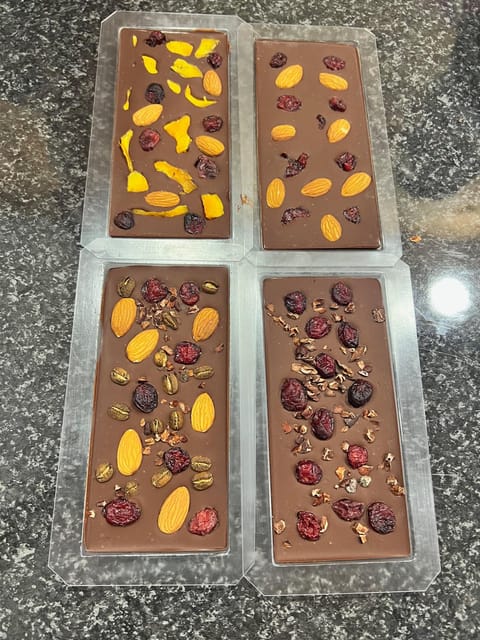
The final hands-on reward is your own chocolate bar to take home. After working through the earlier stages, this part feels more meaningful than simply receiving a sample. You have seen and handled the raw ingredient, so the finished bar represents the full lesson.
The bar is a personalized souvenir, and the workshop also provides an apron and hat during the activity. You receive a certificate and a written summary of the workshop, which is useful if you want to remember the steps later or explain them to someone at home.
Pack the bar with some care, especially during a hot Barcelona day. One participant found that the heat affected the chocolate before it could be enjoyed later. That is not a flaw in the workshop, but it is a practical reminder that handmade chocolate may not travel as easily as a sealed souvenir from a supermarket shelf.
The shop also sells its own chocolate, caramel cacao beans, and cocoa-related products. Buying something afterward is optional. The workshop itself is presented as a lesson rather than a sales pitch, which lets you focus on the process.
What makes the teaching work
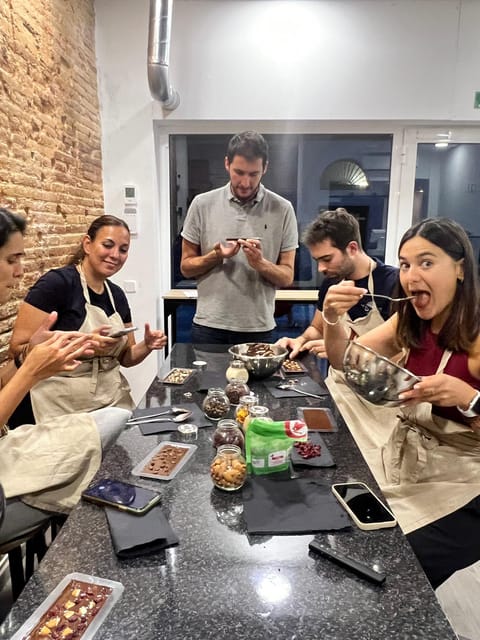
The guides are a major part of the experience. Oscar is described as passionate, funny, and very well informed about the subject. Renee is praised for being engaging, clear, and welcoming. Franklin is also noted for his insight and willingness to answer questions.
That range of feedback points to an important strength: the workshop depends on human explanation, not just equipment. Cocoa cultivation, fermentation, production, ancient traditions, and farmer livelihoods can become dry topics. Here they are tied to objects you can hold and food you can taste.
The small group helps. With no more than eight participants, questions are easier to handle and the practical stages feel personal. A guide can also adjust the pace to the people in the room. Families with children and teenagers have found the activity approachable, while adults without much interest in formal classes can still follow the lesson.
The tone is lively rather than academic. Some guides use humor and small surprises to keep the group involved. That makes the workshop a better fit for curious beginners than for someone seeking a formal professional qualification.
Cocoa farmers and the bean-to-bar idea
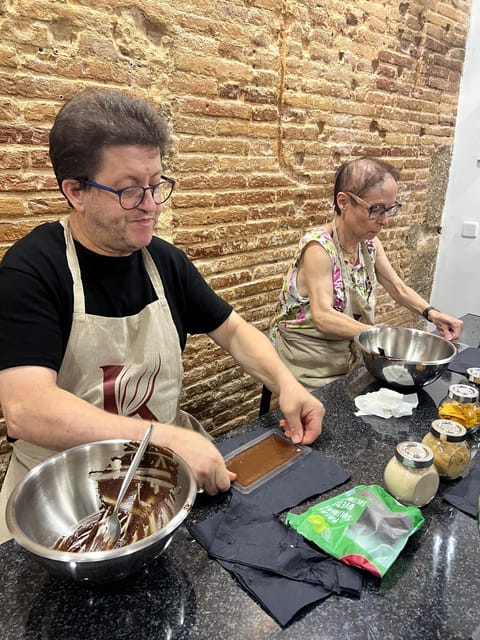
The workshop gives attention to the people who grow cacao. You discuss how local cocoa-producing communities live and why fair treatment matters in the supply chain. This is one of the more valuable parts of the class because it connects the product in your hand to the people responsible for its first stage.
The bean-to-bar movement focuses on traceability and closer attention to the origin and quality of cacao. The workshop explains that process in accessible terms. You learn why the source of the beans matters and how chocolate makers can make better choices about ingredients and producer relationships.
I appreciate that this subject is not treated as a decorative extra. It changes the way you look at chocolate afterward. The class can leave you more aware of the labor behind cacao and more interested in small producers and artisan chocolate.
Keep the claims in proportion, though. A two-hour workshop cannot explain every issue in global cocoa production. What it can do is give you a clear starting point, then connect that subject to the beans, drinks, and chocolate in front of you.
Is $47 a fair price?
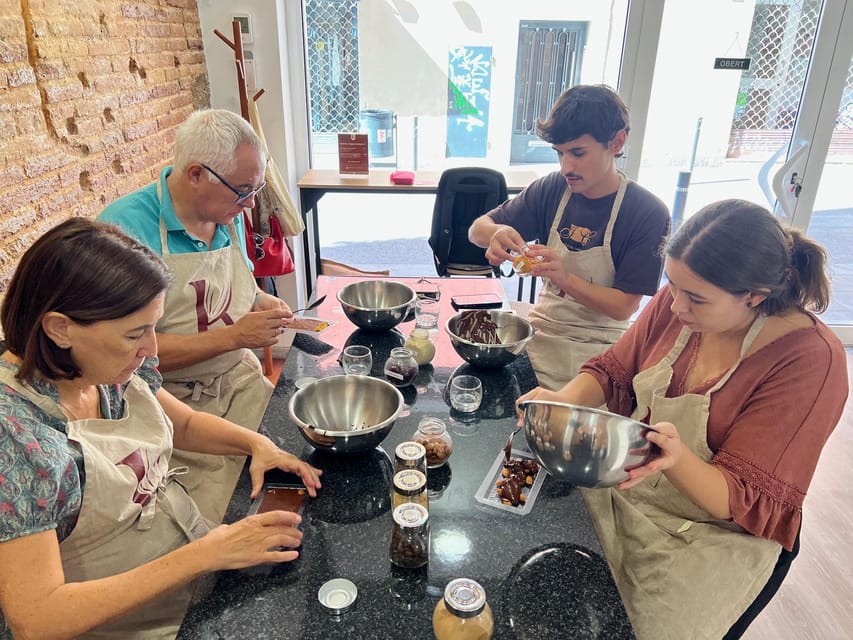
At $47 per person, the workshop is not the cheapest food activity in Barcelona. It is also more substantial than a simple tasting. For two hours, you receive instruction, materials, utensils, apron, hat, samples, cocoa-based drinks, your own chocolate bar, a certificate, and a written workshop summary.
The price makes the most sense if you value participation. You are paying for access to the raw ingredients and for someone to explain the process while you work. If you only want to eat chocolate, a shop visit will cost less and give you more control over what you buy.
I see the workshop as good value for chocolate fans, families, and people looking for an indoor activity with a clear beginning and end. It is also a useful choice on a rainy day, when a two-hour class can replace another planned sight. The small group and personal instruction add to the value.
For families, consider the age and attention span of your children. The activity is aimed at adults and teenagers, and several families have found it suitable for children around ten or older. Younger children may enjoy the tasting and hands-on work, but the discussion of farming and processing may be more than they want.
Practical details before you book
The workshop runs for two hours, with starting times depending on availability. You meet at Local Kina Chocolates in Catalonia, and the class is offered in Spanish or English. Some material may be presented in its original language, so ask the provider if you need a specific language throughout.
The activity is wheelchair accessible. You should tell the provider about allergies or food intolerances in advance so the workshop can be adapted where possible. That is especially important for a food activity involving cacao and tasting.
The group limit is eight people. I would book ahead if you want a particular time or are arranging a family visit, since a small class has fewer spaces than a standard city tour.
Cancellation is free up to 24 hours before the activity for a full refund. You can also reserve now and pay later, which helps if your Barcelona schedule is still shifting.
Who should book this chocolate workshop?
I would choose this for a chocolate lover who wants to understand the ingredient rather than simply sample finished sweets. It is also a strong pick for families with older children, couples looking for a shared activity, and anyone who enjoys food workshops with a social and educational side.
The workshop suits curious beginners best. You do not need previous chocolate-making experience, and the guide takes you through the process in order. You will get your hands dirty in a mild, manageable way, then finish with a bar of your own.
I would hesitate if you want a quiet tasting with no instruction, or a professional course focused on tempering, recipes, and advanced confectionery technique. This class is broader. It covers cultivation, history, processing, tasting, drinks, producer communities, and a guided bar-making activity.
Should you book the Kina Chocolates workshop?
Yes, if you want a distinctly hands-on Barcelona food experience. The strongest reasons are the chance to roast, peel, and grind real cacao beans, the friendly teaching from guides such as Oscar and Renee, and the link between chocolate flavor and cocoa farming.
The main limitation is simple: you are taking part in a guided demonstration and workshop, not running a complete chocolate factory at your table. At $47, that is still a fair trade for two focused hours, multiple tastings, practical work, and a personalized bar to take home.
Book it if you want to leave Barcelona knowing more than which chocolate tastes good. You will leave with a better sense of where cacao begins, what it takes to turn bean into bar, and why a small handmade chocolate can be worth paying attention to.
FAQ
Where does the Bean to Bar Chocolate Workshop take place?
The workshop takes place at Local Kina Chocolates in Catalonia, Spain.
How long is the workshop?
The activity lasts two hours.
How much does the workshop cost?
The listed price is $47 per person.
What languages are available?
The workshop is offered in Spanish and English. Some content may be shown in its original language.
How many people can join the workshop?
It is a small-group activity limited to eight participants.
Do I make chocolate during the workshop?
Yes. You roast, peel, and grind cacao beans, make cocoa paste, and prepare your own chocolate bar to take home.
Is the workshop suitable for teenagers?
Yes. The activity is designed for adults and teenagers, and the practical format has also worked well for families with children around ten years old and older.
What should I do if I have an allergy or intolerance?
Tell the provider about your allergies or intolerances in advance so the workshop can be adapted where possible.
More Workshops in Barcelona
- Barcelona Paella Cooking Class with Market Visit, Tapas & Sangria
★ 5.0 · 2,531 reviews - Barcelona: Cocktail Master Class by Mixologist with Tapas
★ 4.7 · 959 reviews - Barcelona: Paella Cooking Class with Market Visit and More
★ 4.9 · 711 reviews - Paella Cooking Class with Professional Chef: Four Course Dinner
★ 5.0 · 561 reviews
Just added around Barcelona
- GoCar Full Day Tour★ 4.0 · 6 reviews
- Sagrada Familia and Barcelona Highlights: Private Guided 4-Hour Driving Tour★ 5.0 · 6 reviews
- Barcelona: Highlights & Gems Private Tour with Tapa & Drink★ 3.9 · 6 reviews
- Gothic Quarter and Born District: Photographic Workshop★ 5.0 · 6 reviews
- Gobbi Yacht Rental in Barcelona 9 Pax 2/4/8hs★ 5.0 · 6 reviews
- Barcelona: Gothic Quarter & La Sagrada Familia Private Tour★ 4.9 · 6 reviews
- Private Sailboat Ride at Sunset from Sitges★ 5.0 · 6 reviews
- Barcelona: Private Tour of Casa Batllo with Reserved Access★ 3.5 · 6 reviews
Drinking Tours, compared.

Unique Sunset Sailing Tour with Tapas & Open Bar
Read our review →
Barcelona Sailing: Light Snacks & Open Bar with Private Option
Read our review →
Barcelona Sensational Sunset Tour with Open Bar and Snacks
Read our review →
El Born and Gothic Quarter Wine & Tapas Bar Tour
Read our review →
Barcelona Sunset Cruise with Light Snacks and Open Bar
Read our review →


2-Hour Sailing Tour in Barcelona with Open Bar & Snacks
Read our review →Browse the lists this tour appears in