Reviewed · TOURS
Crimes the tour through the Dark Side of Barcelona
Barcelona’s darkest stories are written into ordinary streets. This two-hour walk links crimes, executions, prisons, war, religious violence, and old neighborhood misery across El Raval, the Gothic Quarter, and El Born. You move from La Rambla to Plaça de Sant Pere, seeing a Barcelona that rarely appears on a postcard.
I like two things right away. First, the route uses crime as a doorway into broader history, so you learn about poverty, political conflict, religion, and changing city life rather than hearing a string of grisly tales. Second, Cristina Belenguer brings a lively, well-researched style to the walk, with a knack for connecting obscure corners to major events.
The main drawback is the price: $254.95 per person for about two hours is a serious spend for a walking tour. It makes the most sense for a private group that values a specialist guide, not for someone seeking a cheap introduction to Barcelona.
In This Review
- Key points at a glance
- Why crime makes a useful key to Barcelona’s past
- La Rambla and the first crime story
- El Raval, misery, and the Vampire of Raval
- Queen Amalia prison and the cost of punishment
- Sant Pau del Camp and the violence of 985
- Plaça George Orwell and the Spanish Civil War
- Roman walls and Barcelona’s first documented crime
- Plaça de l’Àngel and public executions
- Allada-Vermell and a family tragedy
- Wheat prices and unrest in 1789
- Portal Nou and the mystery of Benvingut Funes
- Plaça de Sant Pere and the final war story
- What the guide adds to the experience
- Is $254.95 per person a fair price?
- Who should book this Barcelona crime tour?
- Should you book it?
- FAQ
- Where does the tour start?
- Where does the tour end?
- How long does the experience last?
- How much does the tour cost?
- Is this a private tour?
- Who guides the tour?
- What neighborhoods does the route cover?
- What is included in the price?
- Are snacks included?
- Can I cancel for a full refund?
Key points at a glance
- A 12-stop route through three old Barcelona districts: Start on La Rambla and finish at Plaça de Sant Pere.
- History beyond famous architecture: Stories cover the Roman colony of Barcino, medieval executions, the Spanish Civil War, and 20th-century crimes.
- A specialist guide-led experience: Cristina Belenguer is associated with the tour and is praised for clear storytelling and strong historical preparation.
- Private participation: Only your group takes part, with the published small-group capacity listed as up to 20 people.
- A walk for repeat visitors: The route is especially useful if you already know Barcelona’s headline sights and want less familiar streets.
- Practical format: The tour lasts about two hours, uses a mobile ticket, and includes a licensed guide but no snacks.
Why crime makes a useful key to Barcelona’s past
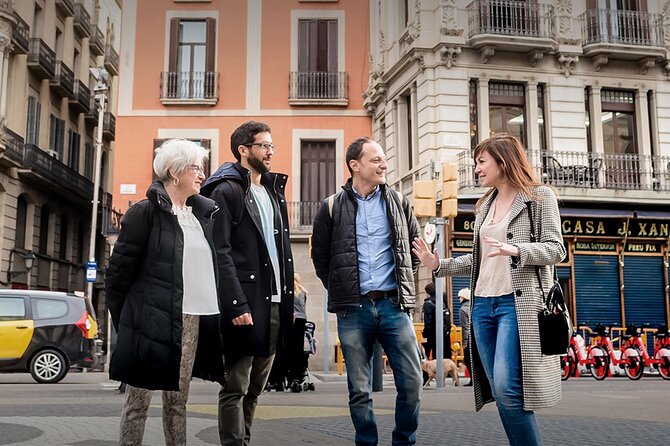
This is not simply a ghost walk. The crimes provide a thread that takes you through very different periods of the city’s past.
At one stop, you are dealing with early Barcelona and the Roman colony. At another, you hear about a prison, a wheat-price protest, or violence during the Spanish Civil War. The result is a rough portrait of how power, poverty, religion, and fear shaped daily life.
That wider frame is the best reason to book. If you want only dramatic murder stories, parts of the tour may feel too historical. If you enjoy seeing how a city changed through its difficult moments, the route has much more to offer.
The tone also matters. The material includes executions, war crimes, mistreatment in prison, and violent deaths. This is not a light family stroll built around amusing anecdotes. You should be comfortable with serious and sometimes disturbing subjects.
A few more Barcelona options worth an hour of your trip
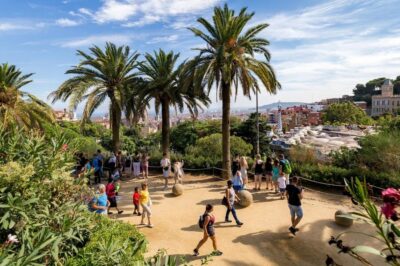
- Barcelona: Park Güell Admission Ticket
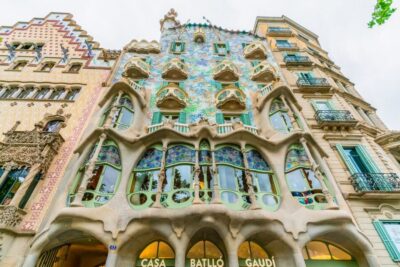
★ 4.4 · 76,534 reviews - Barcelona: Casa Batlló Entry with Self-Audioguide Tour
★ 4.7 · 25,359 reviews - Barcelona: 24 or 48-Hour Hop-On Hop-Off Bus Tour
★ 4.4 · 20,872 reviews
La Rambla and the first crime story
The walk begins near Le Méridien Barcelona at La Rambla 111, on Carrer del Pintor Fortuny. The guide starts with the former Hotel Manila and the first real crime discussed on the route.
This opening gives you an immediate sense of the tour’s method. A familiar address becomes the starting point for a story about Barcelona’s criminal past. Instead of treating La Rambla as a shopping and sightseeing corridor, the guide asks you to picture the people, buildings, and events that came before the current street scene.
The meeting point is easy to locate in central Ciutat Vella, and the tour begins in a part of town most people will already visit. You should arrive ready to walk, since the route continues through old streets rather than staying near the starting address.
El Raval, misery, and the Vampire of Raval
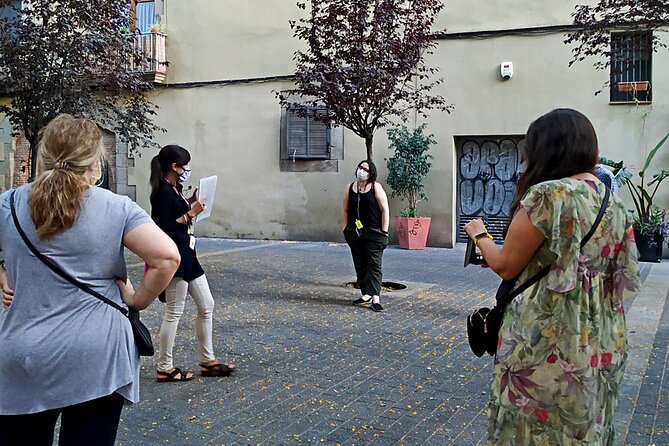
The next stops move into El Raval, where the tour puts crime into a social setting.
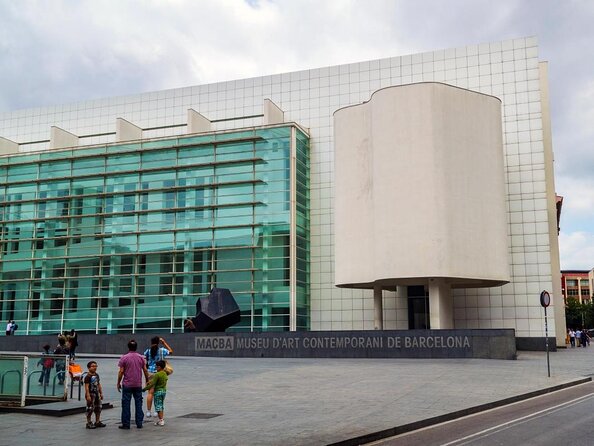
At MACBA, the Museu d’Art Contemporani de Barcelona, you hear about the building’s former life as a convent and the misery found in the Raval quarter during the early 1900s. The contrast is sharp. The modern art museum represents present-day Barcelona, while the surrounding area once carried very different associations.
This is one of the route’s most useful turns. The guide does not present historic crime as isolated bad behavior. The stories are tied to crowded living conditions, hardship, and the social pressures of the district.
On Carrer de Joaquín Costa, 29, the subject becomes Enriqueta Martí, known as the Vampire of Raval. The stop identifies the apartment building where she lived, giving the story a precise setting rather than leaving it as a vague legend.
You should expect a narrative that sits somewhere between documented history and the supernatural reputation attached to Martí. The route’s appeal comes partly from this mix, but it also means you may want to separate established facts from later folklore as you listen.
Queen Amalia prison and the cost of punishment
At Carrer de la Reina Amàlia, the guide explains that the square once held Queen Amalia prison.
The focus here is on living conditions inside the prison and on notable prisoners. This stop shifts attention away from individual crimes and toward the punishment system itself. You get a sense of how confinement affected people and how public memory preserves certain prisoners more than others.
For me, this is the kind of stop that gives the walk weight. Crime tours can become a parade of villains. A prison story brings in the institutions that decided who was dangerous, how people were treated, and what the city considered justice.
The stop is outdoors, and admission is free. Since the former prison is no longer functioning as the attraction itself, the guide’s explanation carries most of the experience. If you prefer entering historic interiors, this walk will feel more interpretive than museum-based.
Same corner of Catalonia, a completely different day:
- Barcelona: Park Guell Guided Tour with Skip The Line Entry
★ 4.7 · 17,563 reviews - Barcelona in 1 Day: Sagrada Familia, Park Guell,Old Town & Pickup
★ 5.0 · 13,541 reviews - Barcelona Aquarium: Entry Ticket
★ 4.3 · 13,335 reviews - Barcelona: Sagrada Familia Skip-the-Line Entry Ticket & Tour
★ 4.8 · 12,789 reviews
Sant Pau del Camp and the violence of 985
The Old Monastery of Sant Pau del Camp introduces a much earlier chapter. The guide explains war crimes committed in 985 during an invasion of Barcelona and later connects that period to Plaça de Sant Pere, where an old convent was also affected.
These stories remind you that Barcelona’s dark past did not begin with modern criminals. War, invasion, and religious institutions were part of the city’s dangers long before modern policing or courts.
Sant Pau del Camp also gives the route architectural and religious context. You are not only hearing about violence. You are seeing a former convent tied to a period when Barcelona’s survival depended on forces far beyond the control of ordinary residents.
The two-hour format means the guide must keep each stop focused. You will not receive a full medieval history course, but you will get several sharp entry points into periods that standard city walks often pass over.
Plaça George Orwell and the Spanish Civil War
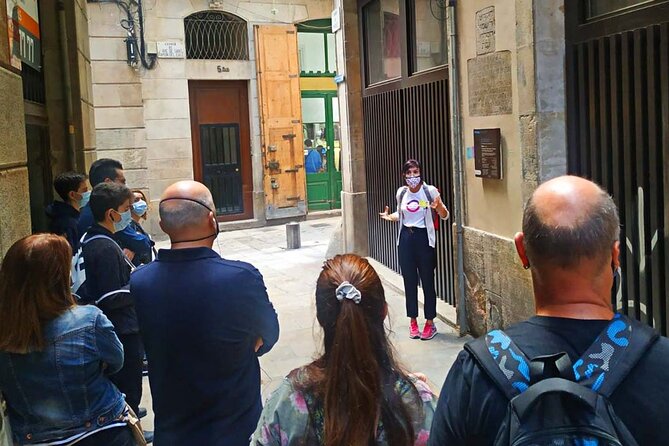
Plaça George Orwell brings the route into the 20th century and the Spanish Civil War. The guide discusses crimes committed during the conflict and explains the importance of George Orwell’s Homage to Catalonia.
This stop works especially well for readers who know Orwell’s book or want a physical setting for its account of Barcelona. The square itself is a modern urban space, but its name points to the city’s political memory and to Orwell’s experience of the war.
The subject is serious and politically charged. You should expect more than a simple good-versus-bad tale. Civil war stories involve competing loyalties, violence by different sides, and a city under pressure.
The tour’s ability to move from medieval war crimes to the 1930s shows its broad range. It is less about one period than about how violence leaves marks across centuries.
Roman walls and Barcelona’s first documented crime
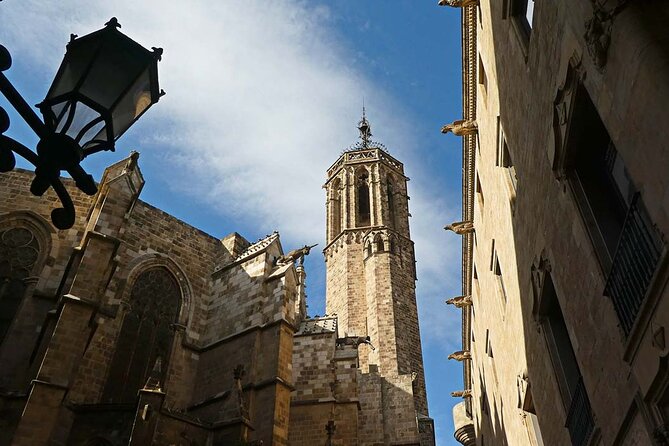
At the Muralla Romana, you reach the borders of ancient Barcino, the Roman colony that became Barcelona.
The guide explains the city’s Roman beginnings and discusses what is presented as the first documented crime in Barcelona’s history. This is a fine example of how the tour uses a physical remnant to frame a story. The wall gives you a clear sense of the small colony’s original limits, while the crime story suggests that disorder is as old as urban life itself.
You also get a break from the darker modern material. Roman history provides scale and perspective, helping you see Barcelona as a city built in layers rather than as a single medieval or modern creation.
Because this is a walking route through active city streets, you should expect to listen outdoors, sometimes with normal urban noise around you. A small private group helps, but it is still wise to stay close to the guide.
Plaça de l’Àngel and public executions
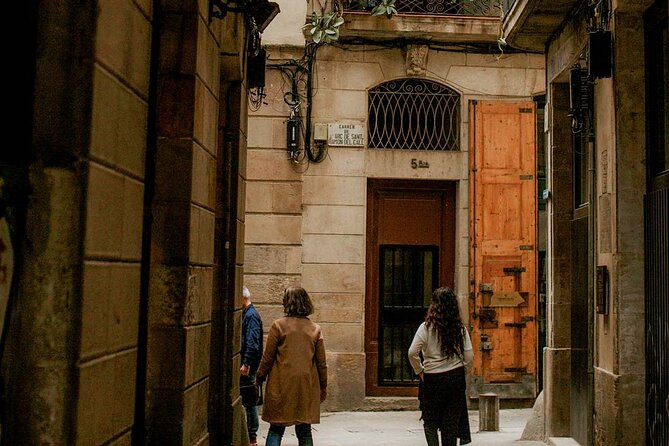
Plaça de l’Àngel once served as the main square of Barcelona’s old town, and many executions took place there.
The guide describes the different methods used, turning a busy modern square into a place of public punishment. This is likely one of the more graphic sections of the walk, so it may not suit young children or anyone who prefers crime history without gruesome detail.
The stop also shows how public spaces once served several roles at once. A square could be a meeting place, market area, political center, and execution ground. That layered use is easy to miss when you simply cross it on the way to another sight.
I appreciate that the tour places these stories in the city itself. You are not looking at a display behind glass. You are standing where public life and public violence once shared the same space.
Allada-Vermell and a family tragedy
Carrer de l’Allada-Vermell brings the route to a tragic family case from 1934, when one family member was lost in a terrible incident.
The supplied description gives only the broad outline, so the guide’s telling is important here. You should expect the story to unfold through the street setting and the historical circumstances rather than through a large monument or preserved crime scene.
This kind of stop illustrates the route’s offbeat character. You pass through a street you might otherwise overlook, then learn that it holds a painful local story. The effect is less about spectacle and more about changing how you notice the older neighborhoods.
Wheat prices and unrest in 1789
At Plaça de Sant Agustí Vell, the guide discusses a demonstration against the price of wheat in 1789.
This is another valuable change of pace. The subject is not a sensational murder but public anger over food costs. It shows how economic hardship can become a source of unrest and how the price of a basic staple can affect the whole city.
For you, this stop adds social history to the crime theme. It also helps explain why a good dark-history walk should include protests and institutional failures, not just individual wrongdoing.
Plaça de Sant Agustí Vell is part of the route through the old city, so the walk continues to reward close attention to small squares and side streets. Comfortable shoes matter more than any special equipment.
Portal Nou and the mystery of Benvingut Funes
At Carrer del Portal Nou, the guide tells the story of Benvingut Funes, who was killed in 1936 in an especially savage way. His death remains a mystery in Barcelona.
This is one of the route’s clearest mystery stories. The unresolved nature of the case leaves room for questions, but it also calls for a careful guide. You should listen for the difference between what is documented and what remains uncertain.
The 1936 date places the case close to the beginning of the Spanish Civil War, adding another layer to a period already marked by political violence. The stop helps connect private tragedy with the wider instability of Barcelona at the time.
Plaça de Sant Pere and the final war story
The route finishes at Plaça de Sant Pere, near the old convent, with further discussion of the terrible war crimes that affected nuns in 985.
Ending here gives the walk a strong historical circle. You begin with crime in a central modern district and finish with violence tied to an early medieval invasion and religious life.
The end point is near the Arc de Triomf and Urquinaona metro stops, which makes it practical for continuing your evening. It is not the same place as the starting point, so you should plan for a short walk to public transportation after saying goodbye.
What the guide adds to the experience
The guide is central here. Cristina Belenguer is repeatedly identified with the route, and her approach is described as energetic, clear, and strongly prepared. The best part of her work appears to be the way she ties separate stories to the streets around you.
That matters because many stops have no admission fee and little visible signage explaining the crime. The value comes from interpretation, pacing, and context rather than from access to a special site.
The tour is listed as a private activity, meaning only your group participates, with a maximum group size of 20 also noted. You should confirm the exact group arrangement at booking, but the private format suggests a more direct chance to ask questions and hear the story clearly.
A mobile ticket keeps the logistics simple. The walk requires a moderate level of physical fitness, and you should be prepared for roughly two hours on foot through old city streets.
Is $254.95 per person a fair price?
At $254.95 per person, this is expensive compared with a standard group walking tour. You are paying for a specialist subject, a licensed guide, and a private experience rather than for entrance tickets or food.
That price can make sense for a small family group, a pair of history fans, or people who want a custom-feeling walk led by a guide with strong local command. It is harder to justify if you are traveling alone, watching your budget, or visiting Barcelona for the first time.
The tour includes no snacks and no paid admissions. That is not a problem, since the stops are public streets, squares, walls, and exterior sites, but it means the cost rests almost entirely on the guide’s storytelling.
You may also want to compare the price with the value of your own interests. If you already know the Sagrada Família, Gothic Quarter, and main Gaudí sights, this route gives you a different reason to walk through the city. If this is your first afternoon in Barcelona, I would put the classic sights first.
Who should book this Barcelona crime tour?
I would recommend it to you if you enjoy:
- Local crime stories tied to real streets
- Political and religious history
- The Spanish Civil War and Orwell
- Unusual routes through familiar districts
- Private guiding and the chance to ask questions
- Serious subjects presented through storytelling
It is also a good choice for Barcelona residents who think they know the old city. The route reaches corners that a standard sightseeing circuit can skip, and it encourages you to look again at places you may have crossed many times.
I would be more cautious if you want a cheerful orientation walk, dislike graphic history, or need a fully seated activity. The tour also may not be the best value for a budget-conscious person booking alone.
Free cancellation is available if you cancel at least 24 hours before the start time. Changes or cancellations inside that window are not refunded, and a minimum number of participants is required for the experience to operate.
Should you book it?
Book this tour if you want Barcelona told through crime, conflict, prisons, executions, and overlooked streets rather than through Gaudí alone. The route is unusual, the subject reaches from Roman Barcino to the 20th century, and Cristina’s guiding style appears to be the main reason the experience works.
Skip it if $254.95 feels too high for two hours, or if you want entrance to historic buildings and museums. For the right audience, this is a memorable way to see El Raval, the Gothic Quarter, and El Born with fresh eyes. For everyone else, Barcelona offers cheaper ways to get its basic history.
FAQ
Where does the tour start?
It starts at Le Méridien Barcelona, La Rambla 111, on Carrer del Pintor Fortuny, 4-6, in Ciutat Vella.
Where does the tour end?
The tour ends at Plaça de Sant Pere in Barcelona, near the Arc de Triomf and Urquinaona metro stops.
How long does the experience last?
The walking tour lasts approximately two hours.
How much does the tour cost?
The listed price is $254.95 per person.
Is this a private tour?
Yes. The activity is described as private, with only your group participating. A maximum group size of 20 is also listed.
Who guides the tour?
The experience includes a licensed tour guide. Cristina Belenguer is the guide associated with the route.
What neighborhoods does the route cover?
The route passes through El Raval, the Gothic Quarter, and El Born, beginning on La Rambla and ending at Plaça de Sant Pere.
What is included in the price?
A licensed tour guide is included.
Are snacks included?
No. Snacks are not included.
Can I cancel for a full refund?
Yes, if you cancel at least 24 hours before the experience start time. Cancellations within 24 hours are not refunded.
Just added around Barcelona
- GoCar Full Day Tour★ 4.0 · 6 reviews
- Sagrada Familia and Barcelona Highlights: Private Guided 4-Hour Driving Tour★ 5.0 · 6 reviews
- Barcelona: Highlights & Gems Private Tour with Tapa & Drink★ 3.9 · 6 reviews
- Gothic Quarter and Born District: Photographic Workshop★ 5.0 · 6 reviews
- Gobbi Yacht Rental in Barcelona 9 Pax 2/4/8hs★ 5.0 · 6 reviews
- Barcelona: Gothic Quarter & La Sagrada Familia Private Tour★ 4.9 · 6 reviews
- Private Sailboat Ride at Sunset from Sitges★ 5.0 · 6 reviews
- Barcelona: Private Tour of Casa Batllo with Reserved Access★ 3.5 · 6 reviews
Tours, compared.
Park Guell Guided Tour with Skip The Line Entry
Read our review →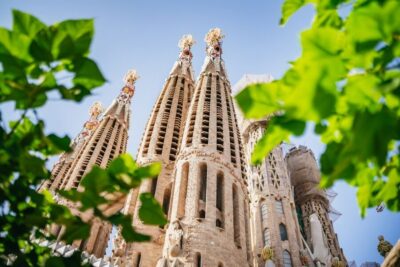
Sagrada Familia Skip-the-Line Entry Ticket & Tour
Read our review →
FC Barcelona Museum “Barça Immersive Tour” Ticket
Read our review →

Montserrat Half-Day Tour with Tapas and Gourmet Wines
Read our review →
Park Guell Guided Tour with Skip the Line Ticket
Read our review →