
Reviewed · MUSEUMS
Girona: Museum of Cinema Entry Ticket
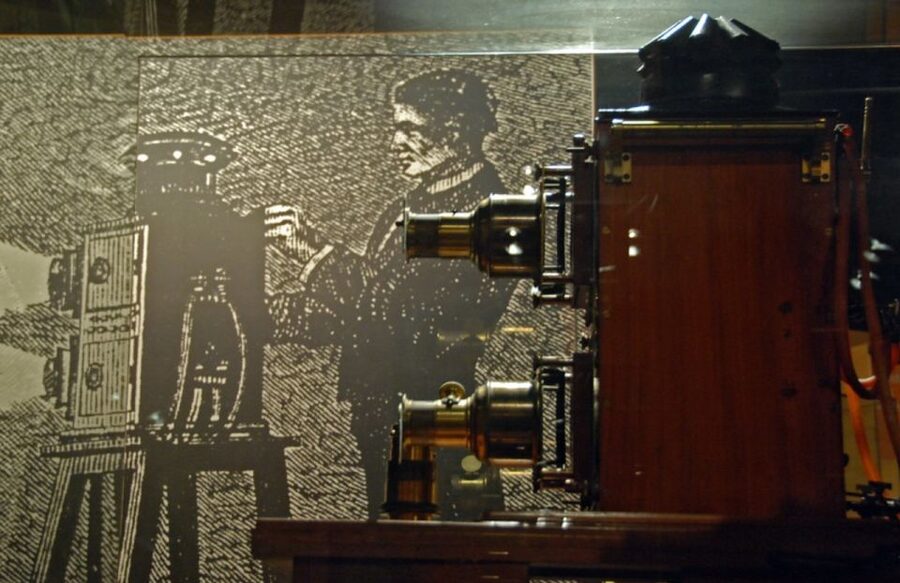
The most fascinating part of Girona’s Museum of Cinema is that it begins before cinema existed. Instead of rushing straight to film reels, you follow the clever optical toys, shadow shows, projection devices, and other inventions that taught people how to make still images appear to move. Tomàs Mallol’s collection gives this story a physical, hands-on feel.
I like the museum’s clear path from early image-making to the birth of cinema, and I like that families are not treated as an afterthought. The displays include interactive elements, and an eight-year-old can find plenty to do. The main drawback is that the free audioguide uses a web link, so it may take a little patience to get working on your phone.
In This Review
- Key points to know before you go
- Girona’s House of Waters sets the scene
- Your first lesson is cinema before cinema
- The Tomàs Mallol Collection brings the story to life
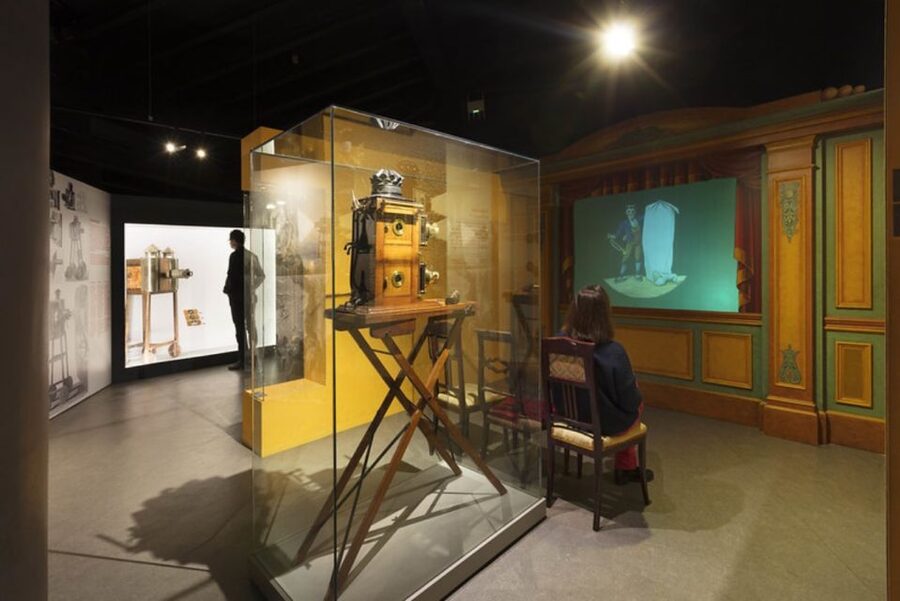
- Interactive displays help children keep pace
- The audioguide adds useful detail, with one small catch
- The library adds a quieter side to the museum
- Temporary exhibitions give repeat visits a reason
- Is the $8 ticket good value?
- Access and planning notes for a one-day visit
- Who will enjoy the Museum of Cinema most?
- Should you book the Girona Museum of Cinema?
- FAQ
- Where is the Museum of Cinema located?
- What does the ticket include?
- How long is the ticket valid?
- How much does admission cost?
- Is the museum wheelchair accessible?
- What languages are available?
- Can I cancel my booking?
Key points to know before you go
- See nearly 8,000 pre-cinema objects: The collection explains how moving pictures developed before the first cinematograph.
- Visit the Tomàs Mallol Collection: This large group of cinematic and pre-cinematic devices forms the heart of the museum.
- Expect more than glass cases: Interactive displays help children and curious adults understand how old image tricks worked.
- Use the free web audioguide: Extra information is available online, though one visitor had trouble getting it to function.
- Read or listen in several languages: Brochures are offered in English, French, Catalan, and Spanish.
- Pay $8 for a full museum day: The ticket covers the permanent and temporary exhibitions, but check free-admission dates before booking.
Girona’s House of Waters sets the scene
The Museum of Cinema occupies Girona’s former water company headquarters, a late nineteenth-century building known as the House of Waters. That setting gives the visit a useful sense of place. You are not entering a modern entertainment complex designed to imitate a movie theater. You are entering an old civic building now devoted to the science, craft, and culture of visual shows.
The museum is a permanent, non-profit institution. Its purpose is public education and participation, so the tone is more thoughtful than flashy. You can take your time, read the panels, and look closely at objects that explain how people represented images before film.
The museum grew from the City of Girona’s purchase of Tomàs Mallol’s collection in 1994. That detail matters because the visit is built around a real collection assembled by a person with a strong interest in cinema and its technical beginnings. You are seeing objects with a story, not just a general display about famous movies.
The ticket is valid for one day, and the entry includes both the permanent exhibition and any temporary exhibition on display. That makes it easy to fit the museum into a day in Girona without worrying about a short timed visit. Starting times depend on availability, so check the schedule before you set your plans.
More Girona days from Girona:
- Girona & Costa Brava Small-Group Tour with Pickup from Barcelona
★ 5.0 · 6,955 reviews - Montserrat, Girona & Costa Brava Guided Day Trip from Barcelona
★ 5.0 · 5,128 reviews - Girona & Dali Museum Small Group Tour with Pick-up from Barcelona
★ 5.0 · 2,965 reviews
Your first lesson is cinema before cinema
The museum’s main idea is simple and very effective: cinema did not appear out of nowhere in 1895. Long before the cinematograph, people were fascinated by shadows, perspective, light, and the illusion of movement.
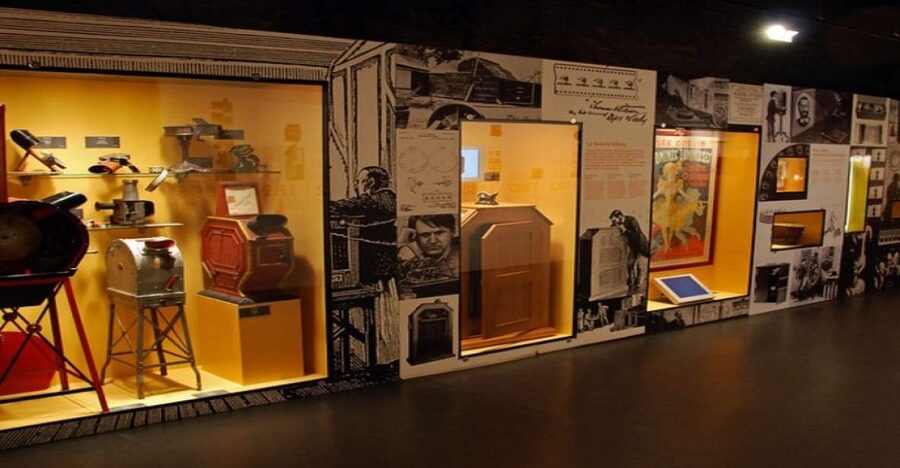
As you move through the collection, you can expect to encounter objects that show how these ideas developed. The museum’s nearly 8,000 pre-cinematic objects help explain the steps that came before modern film. You might find devices that projected images, created optical effects, or made a sequence of still pictures seem alive.
This approach gives the visit more meaning than a display of old cameras alone. You learn why the moving image needed several different inventions and experiments. The process involved artists, inventors, showmen, and audiences who were willing to be fooled for a few delightful seconds.
I especially like this order of presentation because it makes the final arrival of cinema feel earned. By the time you reach the cinematograph and the technical process that led to it, you have a reason to understand its importance. The museum is showing you the long road to film rather than presenting 1895 as a sudden miracle.
The Tomàs Mallol Collection brings the story to life
The central collection is the Tomàs Mallol Cinema Collection, a group of cinematic and pre-cinematic devices gathered by Tomàs Mallol. It gives the museum its identity and provides the objects needed to tell the story in a direct way.
Old image devices can look mysterious if you do not know what they were made to do. Here, the surrounding explanation helps connect each object to the larger story of visual entertainment. You are not only looking at equipment. You are working out how a person in an earlier period might have used light, lenses, pictures, and movement to create an effect.
The collection is also a reminder that cinema is both an art and a technical process. One display may raise questions about design and craftsmanship, while another points to the mechanics needed to project or animate an image. That balance suits visitors who enjoy history, but it also works for people who simply like knowing how things function.
The museum’s mission includes conservation, research, interpretation, and exhibition. You can feel that balance in the visit. It is not only a place to preserve old objects, and it is not only a place to entertain children. It tries to explain why the objects matter.
Interactive displays help children keep pace
A museum about optical devices could easily become a quiet parade of unfamiliar machines. The interactive parts prevent that from happening. Families can expect activities designed for adults and children, with enough participation to make the subject easier to grasp.
An eight-year-old can enjoy the visit, which is useful information for parents planning a day in Girona. The displays give children something to do while the adults read more of the background. I would still allow time for the family to move at its own pace, since the museum’s value comes from both the hands-on moments and the explanations around them.
Adults should not assume the interactive material is only for children. Seeing an image work in front of you often explains an old optical trick faster than a long paragraph. If you are interested in photography, animation, theater, or film, these demonstrations can make the technical side feel less remote.
The museum aims at a broad local and international audience. That shows in the combination of objects, written information, and activities. You can approach the visit as a family outing, a cultural stop between Girona’s other sights, or a more focused look at the origins of cinema.
More museums and sites in Girona:
- From Barcelona: Girona, Figueres, Dalí Museum, and Cadaqués
★ 4.7 · 1,928 reviews - From Barcelona: Girona and Dalí Museum Small-group Day Tour
★ 4.7 · 1,592 reviews - Girona and Dali Museum Full Day tour from Barcelona
★ 4.5 · 996 reviews - From Barcelona: Girona Guided Tour & Dalí Museum in Figueres
★ 4.5 · 339 reviews
The audioguide adds useful detail, with one small catch
A free audioguide is available through the museum’s website. It can give you more information than the exhibition panels, which is helpful if you want a fuller explanation without reading every label.
The guide is accessed online, so bring a charged phone and be ready to use the web link provided with the ticket information. This is not the same as receiving a separate audio device at the entrance. One person had trouble getting the guide to work, so I would not make it the only way you plan to understand the exhibition.
The printed brochure is available in English, French, Catalan, and Spanish. That makes the museum easier to use for international visitors, especially if your Spanish or Catalan is limited. French-language information is specifically useful for visitors who are more comfortable reading French than Castilian Spanish.
If the audio does not load, the visit should still make sense through the displays and brochure. I would try the audioguide at the start, then continue with the printed information rather than spending too long troubleshooting your phone.
The library adds a quieter side to the museum
The museum also has a library with more than 4,000 titles. The supplied information does not describe a regular visitor program for browsing or research, so you should not assume that the library works like a casual public reading room during your visit.
Still, its presence tells you something about the institution. The museum is not only collecting machines and staging displays. It also supports the study of cinema and visual culture. For anyone interested in film history, the library strengthens the museum’s role as a center for research as well as public exhibitions.
You may not spend much time with this part of the institution, but it helps explain the museum’s wider purpose. The collections are meant to be conserved, studied, interpreted, and shared with the public.
Temporary exhibitions give repeat visits a reason
Your entry ticket includes the permanent exhibition and the temporary exhibition. The temporary display will change over time, so the exact subject is not specified here. That is worth checking if you have a particular interest in a filmmaker, period, technology, or visual art.
The permanent section is the dependable reason to visit. It covers the long development of moving images and the Tomàs Mallol Collection. The temporary section can add a fresh angle and may make the museum worthwhile for a second visit if you return to Girona.
Because your ticket is valid for one day, you can take a break and return later that same day if the opening schedule allows. The information provided does not specify the exact daily hours, so confirm them before relying on a return visit.
Is the $8 ticket good value?
At $8 per person, this is a reasonably priced cultural stop. The ticket covers a permanent collection, a temporary exhibition, an informative brochure, and access to a free web audioguide. You are paying for more than a quick room of old projectors.
The value is strongest if you enjoy museums that explain how something developed. The visit connects technical invention with entertainment and art, and the collection is large enough to give the subject real depth. Families also get more for the price because the interactive displays can keep younger children involved.
I would be more cautious if you expect a conventional cinema museum focused mainly on famous films, actors, or movie memorabilia. This experience is about the origins and mechanics of the moving image. You will see devices and explanations rather than a greatest-hits display of popular cinema.
There is one practical money-saving point. A French-language visitor who booked a Sunday entry found that the museum was free on the first Sunday of the month. Since free-admission rules can change, check Girona’s current policy before paying for a ticket on that date. It would be frustrating to pay $8 when the same visit may be available at no cost.
Access and planning notes for a one-day visit
The building is prepared for people with reduced mobility, and the activity is listed as wheelchair accessible. That makes the museum a practical choice for visitors who need an accessible cultural attraction in Girona.
The ticket lasts one day rather than covering a guided tour with a fixed route or strict group timetable. You can plan around the rest of your day, though you should check available starting times and opening details before booking.
No transportation is included or described. Plan this as a museum entry in Girona, not as a complete city tour. You will need to arrange your own route to the House of Waters.
Free cancellation is available up to 24 hours in advance, and you can reserve now while paying later. These terms are useful if your Girona plans may shift, but they do not replace checking the museum’s opening hours and free-entry dates.
Who will enjoy the Museum of Cinema most?
I would recommend this museum to anyone curious about how pictures began to move. It is a good match for families, since the interactive sections give children a way into a subject that might otherwise seem technical.
It also suits adults who like design, photography, old machinery, theater, animation, and the history of film. The visit has enough explanation to reward careful attention, but you do not need specialist knowledge before entering.
Language support makes it practical for international visitors. Brochures are available in four languages, and the audioguide offers another layer of information through the museum website. French speakers in particular should find the printed information useful.
I would skip it only if your schedule is extremely tight or your main interest is modern movie memorabilia. The museum’s appeal lies in early visual experiments and the technical path toward cinema, not in celebrity culture.
Should you book the Girona Museum of Cinema?
Book it if you want an affordable, accessible museum that explains the origins of moving images with real objects and interactive displays. The $8 price is fair, especially with the temporary exhibition and online audioguide included.
Families should give it serious thought, since the visit can work for adults and children at the same time. Before paying, check whether your date falls on a free first Sunday of the month. If you prefer a more detailed visit, use the audioguide, but keep the brochure as a dependable backup.
FAQ
Where is the Museum of Cinema located?
The museum is in Girona, Catalonia, inside the former headquarters of the city’s water company, a late nineteenth-century building known as the House of Waters.
What does the ticket include?
The ticket includes entry to the permanent exhibition and the temporary exhibition. An informative brochure and access to a free web audioguide are also included.
How long is the ticket valid?
The ticket is valid for one day. Exact starting times depend on availability, so check the schedule before booking.
How much does admission cost?
The listed price is $8 per person. Check current free-admission rules before booking, since the first Sunday of the month may be free.
Is the museum wheelchair accessible?
Yes. The building is prepared for people with reduced mobility, and the activity is listed as wheelchair accessible.
What languages are available?
The informative brochure is available in English, French, Catalan, and Spanish. The free audioguide is accessed online through the museum website.
Can I cancel my booking?
Yes. You can cancel up to 24 hours in advance for a full refund. A reserve-now, pay-later option is also available.
Just added around Girona
- Besalú, Banyoles Lake & Volcanic Castellfollit from Girona★ 5.0 · 6 reviews
- Dalí & Wine | Premium Private Tour with Coastal or Girona Add-On★ 5.0 · 6 reviews
- Private Andorra or Pyrinees Ski / Snowboard Tour Day trip★ 5.0 · 6 reviews
- From Girona: Dalí Museum and Girona Small Group Tour★ 4.8 · 7 reviews
- City Explorer: Girona Private Day Trip★ 5.0 · 7 reviews
- Dalí Triangle & Cadaqués Day-Trip From Girona★ 5.0 · 7 reviews
- Olot: Espai Cràter Volcanology Center Entry Ticket★ 4.7 · 7 reviews
- Private tour: Dali Museum and Girona from Barcelona★ 5.0 · 7 reviews
Museums, compared.

FC Barcelona Museum “Barça Immersive Tour” Ticket
Read our review →
Park Güell and Gaudí House Museum Entry Ticket
Read our review →
Girona & Dali Museum Small Group Tour with Pick-up from Barcelona
Read our review →

Dali Museum, House & Cadaques Small Group Tour from Barcelona
Read our review →Browse the lists this tour appears in