

Reviewed · GUIDED
Guided Tour at Catalonia’s Royal Academy of Medicine
The most striking part of this visit is the 18th-century anatomical amphitheater, a curved neoclassical room built by Ventura Rodríguez for surgical training. This is not a standard museum stop. You are entering a working place of medical education, where architecture, surgery, and Barcelona’s past meet in one compact visit.
I like the chance to see Spain’s last surviving anatomical amphitheater, and I like that the tour connects the building to figures such as Pere Virgili, Antoni de Gimbernat, and Santiago Ramón y Cajal. The main drawback is the short 50-minute format, plus steps inside the building, so anyone who needs a fully step-free visit should check the details before booking.
In This Review
- Key points to know
- Why this small academy matters in Barcelona
- Entering the anatomical amphitheater
- The scientists connected to the academy
- Finding the site on Carme Street
- What the 50-minute tour feels like
- The first X-ray experiment in Spain
- Is $16 good value?
- Practical points about access and comfort
- Who will enjoy this most
- How to make the most of the visit
- Should you book the Royal Academy of Medicine tour?
- FAQ
- Where is Catalonia’s Royal Academy of Medicine?
- How long does the guided tour last?
- How much does the tour cost?
- What languages are available for the live tour?
- Which languages are available for the audioguide?
- What is the main highlight of the visit?
- Is the academy wheelchair accessible?
- Can I cancel for a full refund?
Key points to know
- An 18th-century operating classroom: See the anatomical amphitheater designed by Ventura Rodríguez for training surgeons.
- A rare medical site: This is described as the last anatomical amphitheater remaining in Spain and one of Europe’s oldest.
- A Barcelona science landmark: Learn where the first X-ray experiment in Spain took place.
- Three live-guide languages: Tours are offered in Spanish, Catalan, and English.
- Seven-language audio support: Audioguides are available in Chinese, English, French, German, Russian, Spanish, and Catalan.
- A short, focused visit: The tour lasts 50 minutes and costs $16 per person.
Why this small academy matters in Barcelona

Barcelona has no shortage of grand churches, art museums, and modernist buildings. The Royal Academy of Medicine offers a different view of the city. Its story is tied to the development of surgery and medical teaching, and its setting beside Barcelona’s first and main hospital gives the visit useful context.
You are not simply walking through an old building. You are seeing a place created for a very practical purpose: teaching surgeons. That makes the visit especially worthwhile if you are interested in the history of medicine, old scientific institutions, or the way architecture shaped education.
The building is one of Barcelona’s important neoclassical works. Its appearance matters because the design was not decorative only. The anatomical amphitheater was arranged so students could observe surgical demonstrations and anatomical instruction. Even without a medical background, you can understand how the room’s form supported teaching.
I would not treat this as a replacement for Barcelona’s major museums. It is too brief and specialized for that. Instead, think of it as a compact stop that adds a less familiar side of the city to your sightseeing day.
A few more Barcelona options worth an hour of your trip
- Barcelona: Park Güell Admission Ticket
★ 4.4 · 76,534 reviews - Barcelona: Casa Batlló Entry with Self-Audioguide Tour
★ 4.7 · 25,359 reviews - Barcelona: 24 or 48-Hour Hop-On Hop-Off Bus Tour
★ 4.4 · 20,872 reviews
Entering the anatomical amphitheater
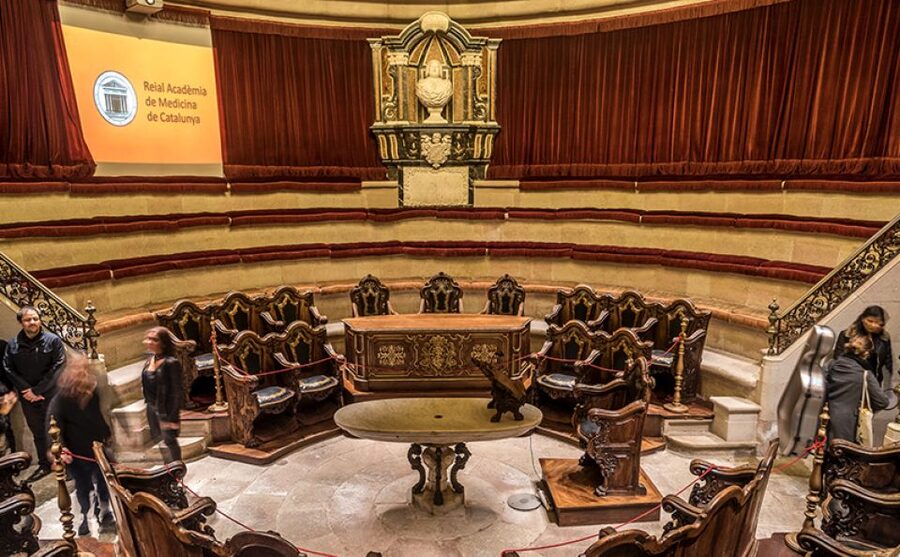
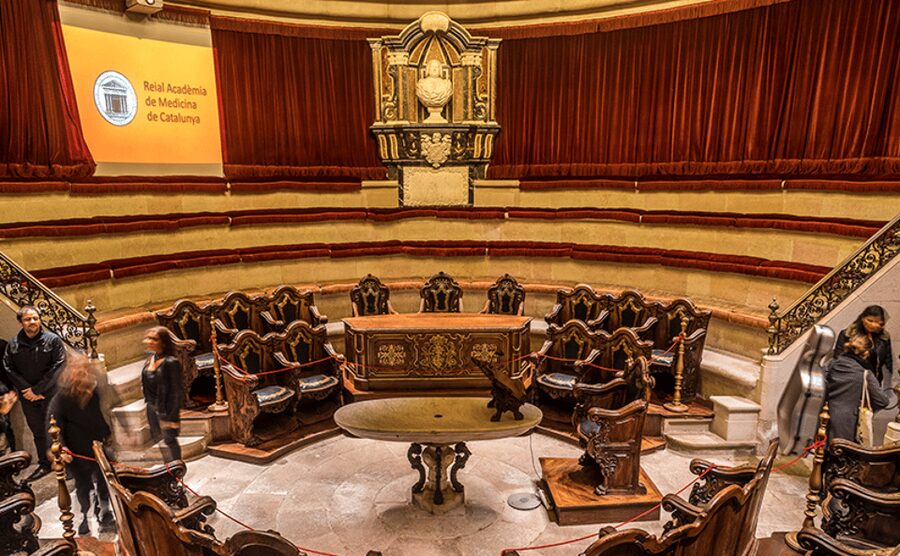
The amphitheater is the clear centerpiece. Built by Ventura Rodríguez in the 18th century, it was intended to train surgeons at a time when direct observation was a central part of medical education.
The room gives the tour its sense of place. You can look at the structure not only as historic architecture, but also as a classroom designed around sightlines and instruction. The connection between the shape of the room and its medical purpose is one of the most useful things for a guide to explain.
The academy describes this as the last anatomical amphitheater still remaining in Spain and one of the oldest in Europe. That makes the stop unusual even for people who have already visited Barcelona’s main historic sights. You are seeing a rare surviving medical teaching space rather than a recreated display.
The subject can be serious. Some people will find the medical setting fascinating, while others may prefer lighter cultural attractions. The information provided also says the activity is not suitable for people with pre-existing medical conditions, so consider your own comfort before reserving.
The scientists connected to the academy
The academy’s story is linked with several important names in Spanish medical science. Pere Virgili and Antoni de Gimbernat are associated with the development of surgery, while Santiago Ramón y Cajal is one of the major scientific figures connected with the growth of modern medical research.
You should not expect a long academic lecture on each person during a 50-minute visit. The value is in seeing how the building fits into a wider period of change. Medicine was becoming more organized, surgery was being taught in formal settings, and institutions such as this helped move medical practice forward.
For medical students, the academy has obvious appeal. One of the available language options specifically makes the visit practical for an international audience, and the short running time makes it easy to fit between other Barcelona plans.
You do not need to know anatomy or medical history in advance. The building itself gives you a starting point, while the guide or audioguide can provide the historical framework. If you enjoy connecting a room to the people who used it, this is where the visit earns its $16 price.
Finding the site on Carme Street
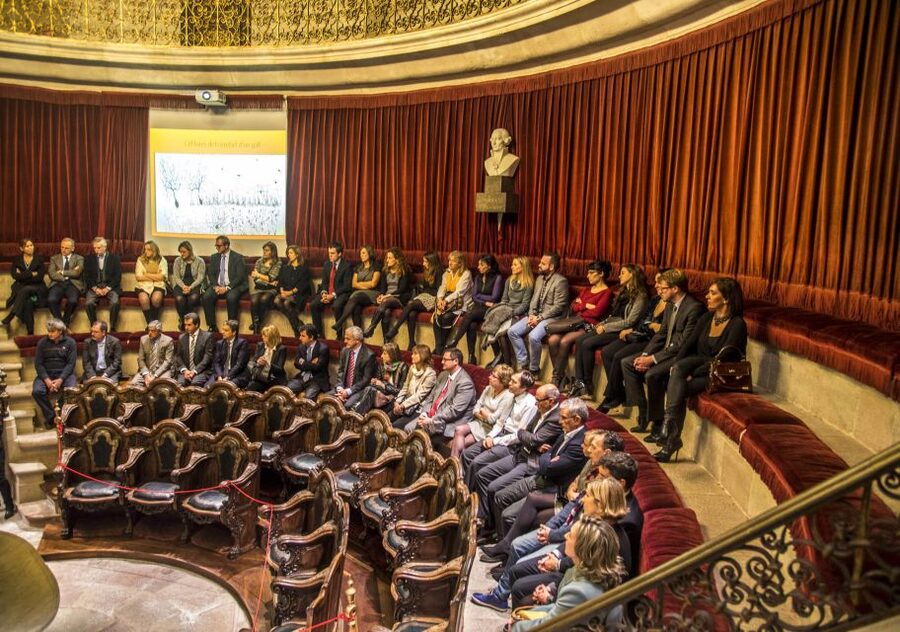
The Royal Academy of Medicine is at Carme Street number 47, in Barcelona’s 08001 district. It is located next to the city’s first and main hospital, which helps explain why this area became associated with medical training and care.
The meeting point is the academy itself. You need your confirmation email from Sternalia before the tour begins. The main door remains closed between tours, and the guide opens it again about five to 10 minutes before the next start time.
That timing is worth taking seriously. Do not assume that a closed door means you are at the wrong place or that you can enter early. Arriving with your confirmation email ready and waiting for the guide is the sensible plan.
The supplied information does not give a group size, so I would not book this expecting a private tour. The format is a scheduled guided visit, and the experience may feel more or less personal depending on the group at your chosen time.
Same corner of Catalonia, a completely different day:
- Barcelona: Park Guell Guided Tour with Skip The Line Entry
★ 4.7 · 17,563 reviews - Barcelona in 1 Day: Sagrada Familia, Park Guell,Old Town & Pickup
★ 5.0 · 13,541 reviews - Barcelona Aquarium: Entry Ticket
★ 4.3 · 13,335 reviews - Barcelona: Sagrada Familia Skip-the-Line Entry Ticket & Tour
★ 4.8 · 12,789 reviews
What the 50-minute tour feels like
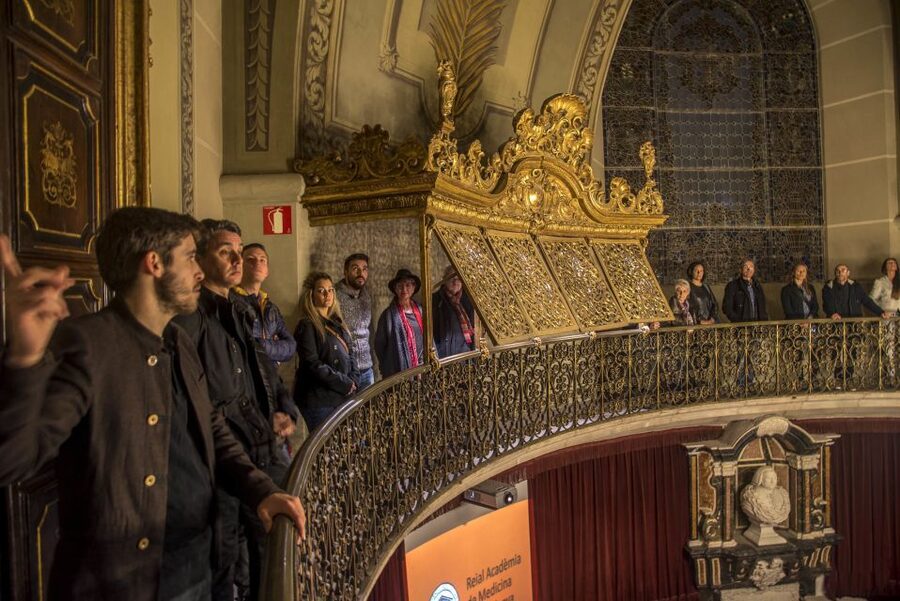
Fifty minutes is enough for a clear introduction to the building and its main spaces, but not enough for a slow museum visit. The tour is best for you if you prefer one strong subject presented in a focused way.
The visit begins with the academy and its place in Barcelona’s medical past. From there, attention turns to the anatomical amphitheater, its neoclassical design, and its role in surgical training. The guide then places the room within the work of connected scientists and the broader development of medicine.
You also walk through the academy’s halls. This part matters because it gives you more than a single-room visit. Still, the amphitheater remains the main attraction, so do not expect a large collection of separate galleries or a long list of exhibits.
The tour includes a live guide in Spanish, Catalan, or English. An audioguide is also included, with options in Chinese, English, French, German, and Russian, as well as Spanish and Catalan. If you understand one of the live-tour languages, I would generally choose the guide, since a person can connect the room to your questions and the group’s interests. The audioguide is useful if your preferred language is not available for the live tour.
The first X-ray experiment in Spain
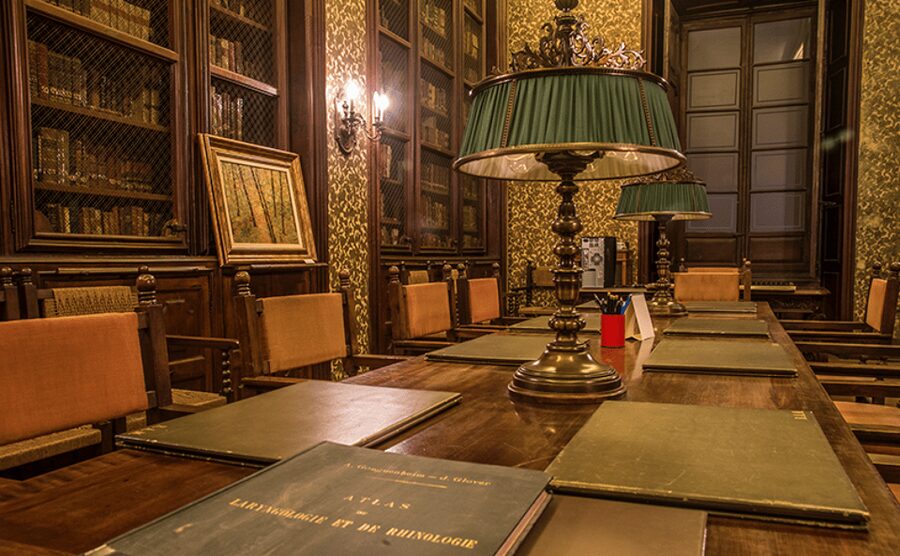
One of the most unusual facts connected with the academy is that Spain’s first X-ray experiment took place here. That detail gives the visit a clear bridge between older surgical teaching and newer medical technology.
The academy is therefore not only about 18th-century architecture. Its story continues into the period when new scientific tools began to change what doctors could see and how they worked. The X-ray connection gives you a reason to pay attention even if old buildings alone are not enough to hold your interest.
The supplied details do not specify the exact room or provide a full account of the experiment, so you should treat this as one of the historical points explained during the visit rather than a separate exhibit with a guaranteed demonstration.
Is $16 good value?
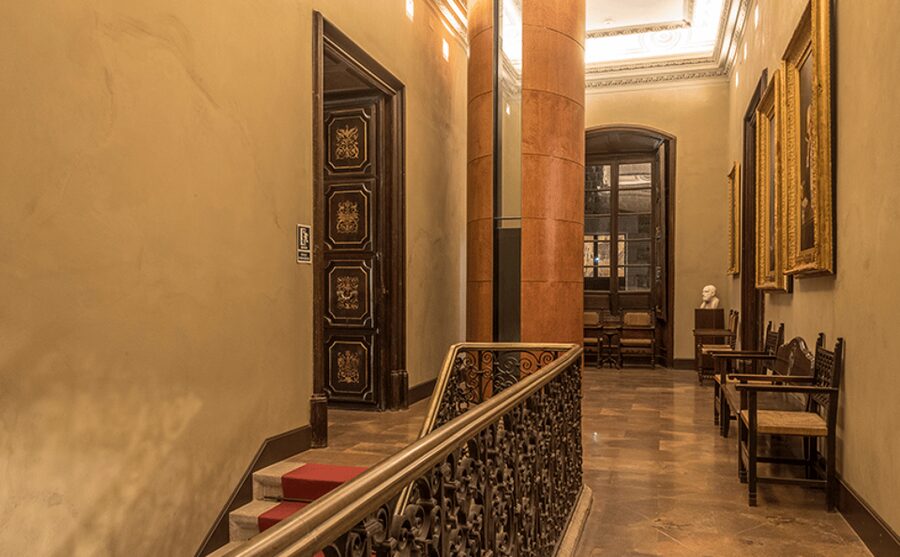
At $16 per person, this is a reasonably priced specialist visit. The ticket includes admission, a guided tour, and an audioguide. For a central Barcelona stop lasting 50 minutes, the cost is modest, especially if you have a real interest in medical history or historic architecture.
Value depends on your expectations. If you want a large museum with many rooms, objects, and hours of independent browsing, this will feel too small. If you want access to a rare building with an expert-led explanation, the price makes more sense.
I see the tour as a good add-on rather than the main event of a day in Barcelona. Its short length means you can pair it with other nearby sightseeing, but the academy is specialized enough that you should choose it for the subject, not simply because it is inexpensive.
The high rating of 4.9 from 23 reviews fits the experience’s strengths: a distinctive room, a clear historical purpose, and strong guide-led presentation. The feedback also gives one useful personal detail. A guide named Alex received specific praise, so if Alex leads your departure, you can expect a guide who has made a strong impression on past participants. You should not assume he will lead every tour.
Practical points about access and comfort
The tour is listed as wheelchair accessible, but the same information warns that there are steps during the visit. Those two details need to be considered together. If you use a wheelchair or have difficulty with stairs, contact the provider before booking so you can confirm which areas are accessible on your chosen tour.
Comfortable clothing is recommended. That is simple advice, but it matters if you plan to combine this stop with a full day of walking around central Barcelona.
Alcohol and drugs are not allowed. The academy is a formal medical and historic institution, so normal respectful behavior is expected.
The visit is not considered suitable for people with pre-existing medical conditions. The anatomical subject matter may be uncomfortable for some people, and you should make your own decision based on your health and tolerance for medical themes.
Free cancellation is available up to three days before the tour for a full refund. Check the available start times before you commit, since this is a scheduled 50-minute activity and the entrance is not open continuously between departures.
Who will enjoy this most
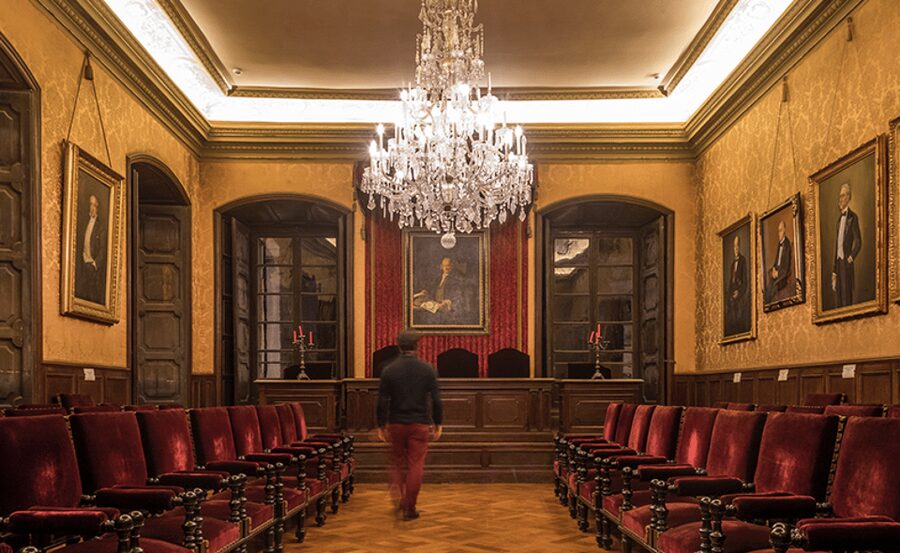
I would recommend the academy to medical students, people working in health care, and anyone who enjoys the history of science. The combination of surgical training, old architecture, and the first X-ray experiment in Spain gives the visit more substance than its short duration suggests.
It also suits repeat visitors to Barcelona who have already seen the major sights and want a more unusual stop. The site offers a different kind of local history, one based on education, medicine, and scientific change rather than royal power or religious art.
Families with older children may find the subject interesting, but the academy is not presented as a children’s attraction. Younger children may get little from a guided explanation of surgical training and medical research.
I would be cautious about booking if you dislike anatomical subjects, need a completely step-free route, or want a long self-guided visit. The short duration is a benefit for some people, but a limitation for anyone looking for a full museum experience.
How to make the most of the visit
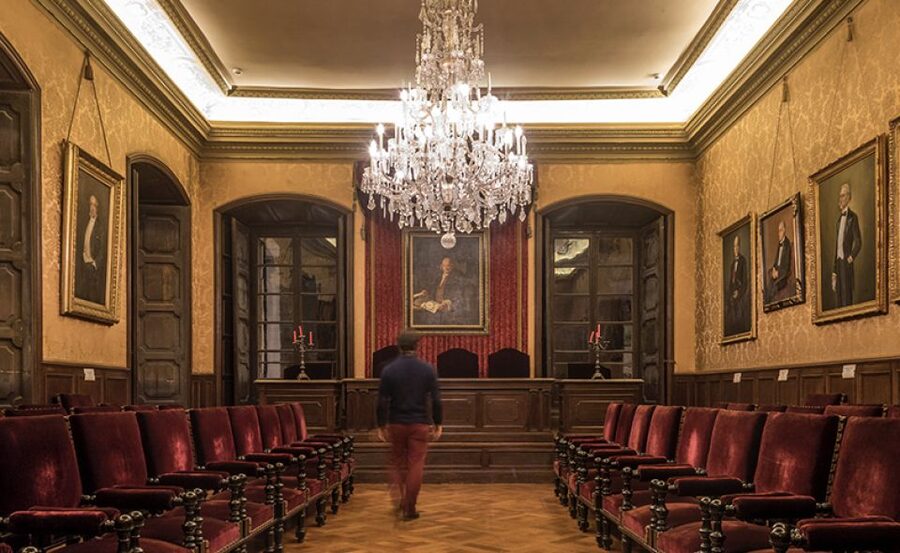
Read the confirmation email before leaving for the academy, and have it ready at the door. Since the entrance stays closed between tours, arrive in time to wait for the guide to open it five to 10 minutes before departure.
Choose your language carefully. Live tours are available in Spanish, Catalan, and English, while the audioguide adds Chinese, French, German, and Russian. If you prefer to learn at your own pace, confirm how the audioguide will be used when you arrive.
Give the amphitheater your full attention. It is the most distinctive room, and the guide’s explanation of its purpose will help you see why its design matters. Look beyond decoration and consider how the space was used to teach surgery.
If you have a medical background, listen for the links to Pere Virgili, Antoni de Gimbernat, and Santiago Ramón y Cajal. If you do not, focus on the larger story: how formal medical institutions helped move surgery and scientific research into a new era.
Should you book the Royal Academy of Medicine tour?
Book it if you want a short, affordable, specialist experience in Barcelona and the idea of an 18th-century surgical amphitheater appeals to you. The rare surviving room, the academy’s scientific connections, and the first X-ray experiment in Spain give this visit a clear identity.
Skip it if you want a broad museum, dislike medical subjects, or cannot manage steps without confirming access first. For the right audience, $16 buys a memorable look at a side of Barcelona that most sightseeing plans leave out. The 50-minute length keeps the commitment small, while the guide-led format gives the building much more meaning than a quick look at its rooms would provide.
FAQ
Where is Catalonia’s Royal Academy of Medicine?
The academy is at Carme Street number 47, Barcelona, 08001, next to Barcelona’s first and main hospital.
How long does the guided tour last?
The tour lasts 50 minutes.
How much does the tour cost?
The listed price is $16 per person.
What languages are available for the live tour?
The live guide can conduct the tour in Spanish, Catalan, or English.
Which languages are available for the audioguide?
The audioguide is available in Chinese, English, French, German, Russian, Spanish, and Catalan.
What is the main highlight of the visit?
The main highlight is the anatomical amphitheater built by Ventura Rodríguez in the 18th century for surgical training.
Is the academy wheelchair accessible?
The activity is listed as wheelchair accessible, but there are steps during the visit. Confirm the access arrangements with the provider if stairs are a concern.
Can I cancel for a full refund?
You can cancel up to three days in advance for a full refund.
Just added around Barcelona
- GoCar Full Day Tour★ 4.0 · 6 reviews
- Sagrada Familia and Barcelona Highlights: Private Guided 4-Hour Driving Tour★ 5.0 · 6 reviews
- Barcelona: Highlights & Gems Private Tour with Tapa & Drink★ 3.9 · 6 reviews
- Gothic Quarter and Born District: Photographic Workshop★ 5.0 · 6 reviews
- Gobbi Yacht Rental in Barcelona 9 Pax 2/4/8hs★ 5.0 · 6 reviews
- Barcelona: Gothic Quarter & La Sagrada Familia Private Tour★ 4.9 · 6 reviews
- Private Sailboat Ride at Sunset from Sitges★ 5.0 · 6 reviews
- Barcelona: Private Tour of Casa Batllo with Reserved Access★ 3.5 · 6 reviews
Guided, compared.

Park Guell Guided Tour with Skip The Line Entry
Read our review →

Park Guell Guided Tour with Skip the Line Ticket
Read our review →

Montserrat, Girona & Costa Brava Guided Day Trip from Barcelona
Read our review →

Sagrada Familia Guided Tour with Tower Access
Read our review →