
Reviewed · FLAMENCO AND GUITAR SHOWS
Guitar Legends Hall: Entrance to the Immersive Rock Museum
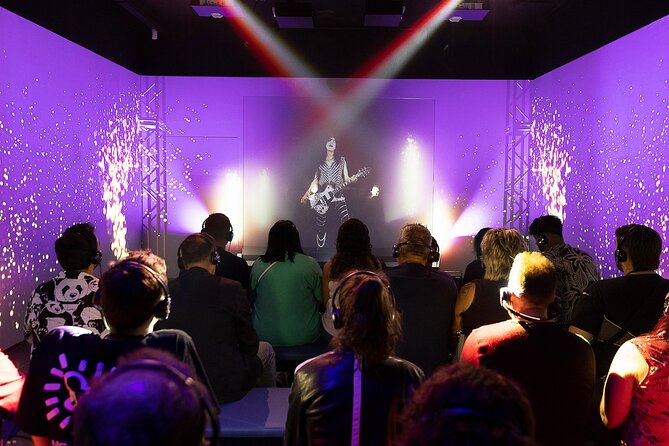
Rock history gets a full theatrical treatment at Guitar Legends Hall, where guitars lead you from smoky blues beginnings to giant stadium shows. Instead of rows of cases and dry labels, you move through eight themed rooms with projections, lights, music, interactive displays, and a final concert featuring holograms of rock legends.
I like the clear journey through time, especially the way the 1950s, 1960s festivals, and the MTV era each get their own setting. I also like the freedom to spend an hour or several hours here, using the audio guide in four languages at your own pace. The main drawback is focus: if electric guitars and rock music do not interest you, the theatrical effects may not carry the visit on their own.
In This Review
- Key points to know before you go
- From blues bar to electric guitar history
- The 1960s arrive through festival culture
- Record stores, albums, and the 1970s and 1980s
- MTV and the rise of music videos
- A VIP room with the feel of a concert
- Projections and lights in the garage
- Hologram legends bring the visit to a close
- How long to allow and how the audio guide helps
- Price, location, and practical planning
- Who will enjoy Guitar Legends Hall most
- Should you book this Barcelona rock museum?
- FAQ
- Where is Guitar Legends Hall located?
- How much does admission cost?
- How long does the visit take?
- Is an audio guide included?
- Is transportation included?
- Can I cancel or change my ticket?
Key points to know before you go
- Eight rooms trace rock’s changing sound and style, from blues and early electric guitars to music videos and arena concerts.
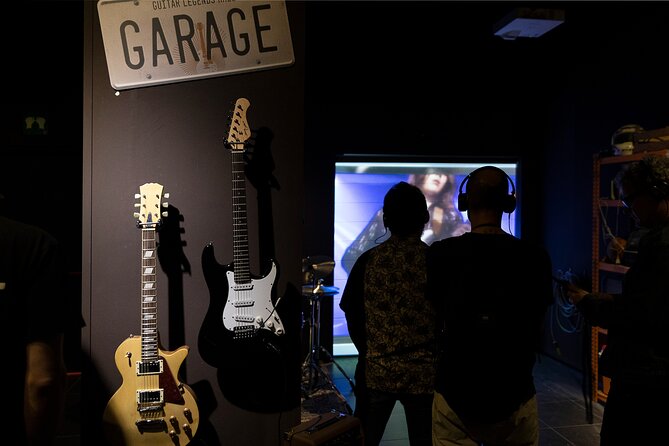
- Interactive displays add more than static exhibits, with projections, lights, and spaces designed to feel like a bar, record store, garage, and VIP room.
- The final hologram concert is the big visual finish, though the experience suits rock fans best.
- An audio guide in four languages is included, so you can explore without joining a scheduled group tour.
- The central Barcelona location is easy to reach, at Carrer de la Portaferrissa 16 in Ciutat Vella.
- The advertised price is $21.69 per person, a reasonable deal if you spend close to two hours exploring the rooms.
From blues bar to electric guitar history
Your visit begins with the roots of rock. The first room presents a blues bar where blues changes into rock, giving you a simple musical starting point before the display moves into famous guitars and performers.
That setup matters because rock did not appear from nowhere. The electric guitar became a central voice by building on earlier blues traditions, and this opening room gives you a sense of that change without requiring a music degree. You can follow the story through the instruments, the sound, and the room design.
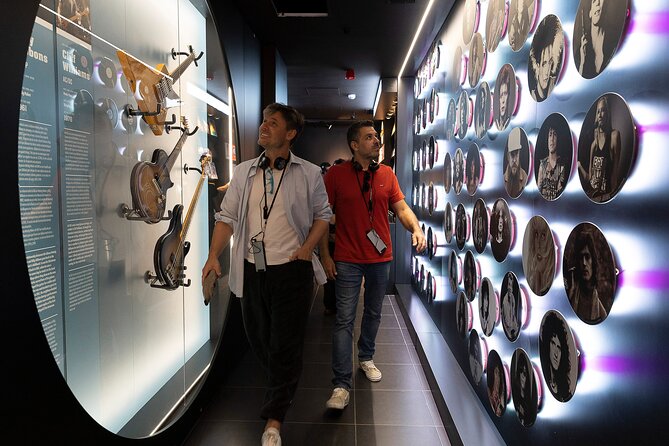
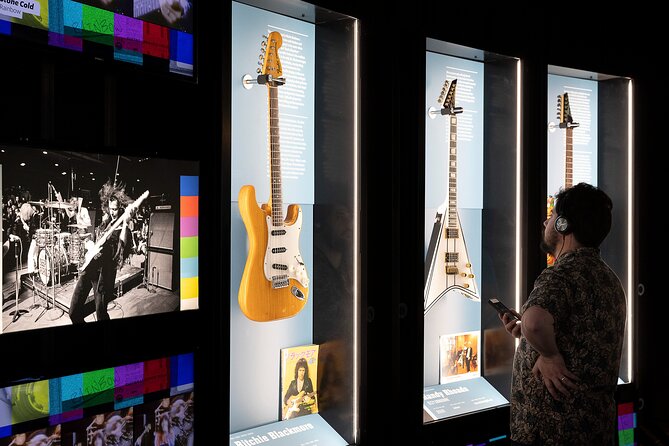
The second space moves into the 1950s, with iconic guitars and period programs. This is likely to be one of the strongest rooms for visitors who want to see the objects connected to early rock rather than only watch projections.
A review of the visit described a large number of guitars, along with information about the instruments and their musicians. That is useful to keep in mind: the guitars are not just decoration. The displays connect them to the people who played them and to the early use of the electric guitar.
If you already know the major names and models, you may move quickly through the text. If you are less familiar with the subject, the audio guide should help give the instruments a place in the larger story.
More flamenco and guitar nights:
- Barcelona: Tablao Flamenco Cordobes Show and Drink in Rambla
★ 4.6 · 3,822 reviews - Barcelona: Palau de la Música Self-Guided Tour
★ 4.6 · 3,603 reviews - Barcelona: Palau de la Música Guided Tour
★ 4.7 · 3,273 reviews
The 1960s arrive through festival culture
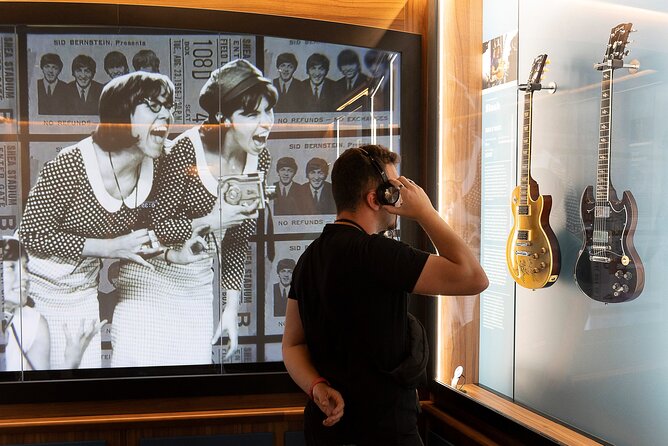
The third room shifts the focus from individual instruments to the wider music scene of the 1960s. You relive the age of music festivals, a period when rock became tied to youth culture, public gatherings, changing fashion, and new social attitudes.
This room is useful because it widens the visit beyond guitars. The museum’s own approach treats the instrument as a thread through twentieth-century culture, with television, clothing, and social trends woven into the story of music.
You might find this section more atmospheric than object-heavy. The point is not only to identify a famous guitar. It is to understand how rock grew from a style of music into a public culture with its own look and sense of occasion.
The audio guide can make a difference here. I would listen rather than rush through the room, especially if you want context about why festivals mattered. The displays are meant to be seen, but the historical links may be easier to follow through the spoken material.
Record stores, albums, and the 1970s and 1980s
The fourth space takes you into a record store from the 1970s and 1980s. This is a smart change of setting. A guitar on a wall tells you about an object, while a record store shows how people found, bought, and talked about music.
For anyone who remembers browsing albums, the room may bring back the physical side of music before streaming and digital playlists. For younger visitors, it offers a look at a music culture built around records, covers, shelves, and personal discovery.
This is also where the visit can feel less like a standard museum. Each room uses a familiar place to explain a period. The effect is easy to grasp, even if you are not a serious rock historian.
The limitation is that a recreated setting can never provide the full range of a real period record store. You are getting a compact presentation, not a working shop with a vast collection. Still, the room helps break up the sequence of cases and labels, and it gives the period its own character.
MTV and the rise of music videos
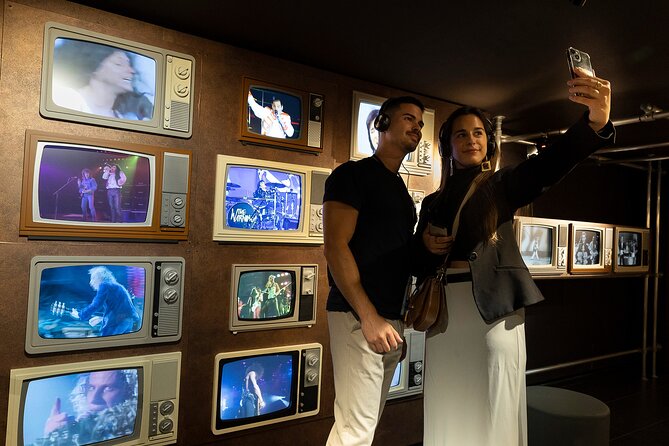
The fifth room looks at music videos and MTV. This marks a major shift in how artists reached the public. Rock was no longer heard only on the radio or at a concert. It was also watched on television, with image, clothing, editing, and performance becoming part of the music.
This section should appeal to visitors who care about pop culture as much as instruments. It explains why the visual side of rock became so important and why certain artists became known for a complete image, not only for their sound.
I like the decision to include MTV because it keeps the visit from becoming a simple parade of famous guitars. It shows how technology changed the way music was presented and remembered.
The room may be less satisfying if you hoped for a large collection of original video equipment or detailed artist biographies. The available information points to an immersive presentation rather than a technical archive. Think of it as a visual chapter in the story, not a specialist broadcast museum.
More games across Barcelona:
- Barcelona: FC Barcelona Museum “Barça Immersive Tour” Ticket
★ 4.4 · 10,944 reviews - IKONO Barcelona: Immersive Experience
★ 4.5 · 1,596 reviews - Camp Nou Immersive Tour F.C.Barcelona Museum: Open Date Ticket
★ 4.0 · 1,307 reviews - Barcelona: Interactive Art Installation by IKONO
★ 4.2 · 748 reviews
A VIP room with the feel of a concert
The sixth space tries to recreate the energy of a rock concert from a VIP room. Here, the emphasis moves toward performance and atmosphere.
This should be a good pause in the visit. After seeing the development of instruments, festivals, record shops, and music videos, you get a sense of what rock is like as a live event. The room is designed to make you feel close to the action without placing you in a real crowd.
The VIP setting also hints at the changing scale of rock. What began in small clubs grew into major concerts with special access, stage spectacle, and large audiences. You get that idea through the design rather than through a long written explanation.
Keep your expectations measured. This is an exhibit area, not a live concert with a band in front of you. The value comes from the sound, visuals, and setting, especially if you enjoy theatrical museum displays.
Projections and lights in the garage
The seventh room places music in a garage, using projections and lights to build the atmosphere. The garage is an apt setting for a genre associated with rehearsal spaces, young bands, and the early stages of playing together.
This room may be especially appealing to children, teens, and adults who enjoy interactive visual displays. One direct account of the visit praised the interactive elements and found it easy to spend a couple of hours in the museum. That matches the role of this room: it gives you something to watch and react to, rather than asking you to read every label.
The tradeoff is that projections and lighting can feel more like entertainment than preservation. If you want a quiet museum visit centered on original documents, this may not be your favorite section. If you want to see rock presented as sound, motion, and attitude, it fits the larger plan.
Hologram legends bring the visit to a close
The eighth space is an immersive concert with holograms of rock legends. It serves as the grand finish, bringing together the themes of performance, technology, and spectacle.
This final room is likely to be the most memorable part for many visitors because it turns the story into a show. You are no longer only looking at instruments or period settings. You are watching a concert-style presentation built around famous performers.
There is also a useful distinction here. A hologram show can suggest the scale and drama of a rock concert, but it is not the same as seeing a living artist perform. You should book this for the visual experience and the connection to rock culture, not as a substitute for a real concert.
The ending also explains the museum’s modern approach. Guitar Legends Hall uses the past, but it presents that past through current technology. Some people will find that lively and memorable. Others may prefer more original objects and less staged presentation.
How long to allow and how the audio guide helps
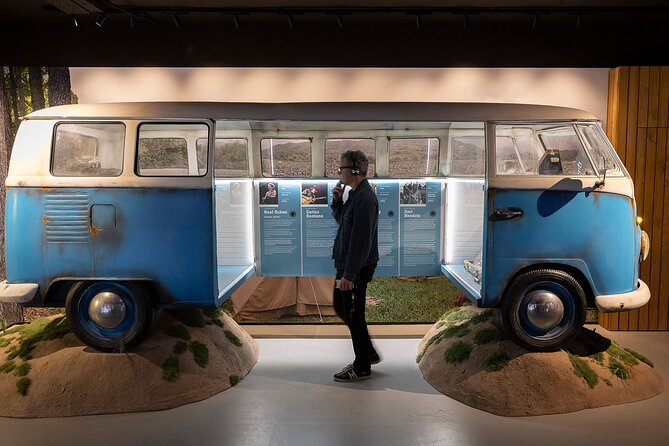
The stated visit time ranges from one to ten hours, which is unusually broad. In practical terms, I would allow about two hours if you want to enjoy the eight spaces without racing, though the flexible format lets you make a shorter visit or stay much longer.
A one-hour visit would suit a quick look at the main rooms and the final concert. Two hours gives you time for the audio guide and interactive displays. Spending up to ten hours is possible according to the stated duration, but the value of such a long stay will depend on how closely you listen, how much you enjoy repeating interactive features, and how much time you want in each period.
The audio guide is included and available in four languages. The supplied details do not name all four languages, so check the current language options when booking if that matters to you. The activity is offered in English, but that does not necessarily mean every audio option is limited to English.
I would use the guide selectively. Listen fully in the rooms that interest you most, then move at your own pace through displays that feel familiar. This keeps the visit from becoming a long audio assignment.
Price, location, and practical planning
The price is listed at $21.69 per person. For that amount, you get museum admission and the audio guide, with no separate transport included.
The value is strongest if you enjoy interactive museums and spend around two hours inside. You are paying for eight different settings, a guided story of rock, visual effects, and a hologram concert, rather than for a traditional collection alone.
The value is weaker if you only want to see guitars in display cases. In that case, the theatrical rooms may feel like extra decoration. Before booking, decide if you want a music museum, a multimedia show, or a blend of the two. Guitar Legends Hall is clearly built for the blend.
The entrance is at Carrer de la Portaferrissa 16, in Barcelona’s Ciutat Vella. It is near public transportation, and the activity starts and ends at the same meeting point. There is no transport service included, so you make your own way there and back.
The location makes this easy to pair with a day in the old center. Since the visit is flexible and does not involve a long ride or a fixed route through the city, it can work as a break between other sights. I would avoid squeezing it into a ten-minute gap. The displays reward a little time, especially if you want to use the guide.
The experience is limited to a maximum of 10 participants, according to the supplied details. That small limit should make the rooms easier to navigate than a large organized group, although the visit itself is designed for individual pacing rather than a named guide leading you from room to room.
Confirmation is provided at booking. Service animals are allowed, and most people can take part. The ticket is non-refundable and cannot be changed, so choose your date carefully before paying.
Who will enjoy Guitar Legends Hall most
I would recommend this to rock fans and electric guitar enthusiasts first. The collection of guitars, stories about musicians, and explanation of the instrument’s early development give you plenty to examine.
It also suits anyone interested in twentieth-century popular culture. The rooms cover more than music: festivals, record shops, television, fashion, social trends, and concert culture all appear in the journey.
Families may appreciate the mix of projections, lights, interactive displays, and holograms. The visit does not depend entirely on reading long panels, although the audio guide adds useful detail for adults and older children.
You may want to skip it if you prefer formal museums with a quiet, object-first approach. The experience is staged, visual, and theatrical. The guitars are important, but so are the room designs and special effects.
The Spanish-language review supplied with the experience makes the point clearly: it is particularly good for people who are fans of rock and electric guitar, but it can also be read as a trip through wider twentieth-century culture. That is the fairest way to judge it. Your enjoyment will depend less on knowing every musician and more on liking the way music connects with changing technology and society.
Should you book this Barcelona rock museum?
Book Guitar Legends Hall if you want an entertaining, self-paced look at rock that combines real guitars with recreated settings, projections, lights, and holograms. The $21.69 price is fair for a two-hour visit, especially if you enjoy interactive displays and want an indoor activity in central Barcelona.
Skip it if your main goal is a serious archive of rare instruments or a live performance. The strongest parts are the clear time-based route, the interactive presentation, and the final concert effect. Go with those expectations, and this is a lively way to spend part of a day in Ciutat Vella.
FAQ
Where is Guitar Legends Hall located?
It is located at Carrer de la Portaferrissa 16, Ciutat Vella, 08002 Barcelona, Spain.
How much does admission cost?
The listed price is $21.69 per person. Museum entrance and the audio guide are included.
How long does the visit take?
The stated duration is approximately one to ten hours. Many visitors may find one to two hours enough for the eight rooms, depending on how closely they use the audio guide and interactive displays.
Is an audio guide included?
Yes. An audio guide in four languages is included with admission.
Is transportation included?
No. Transport is not included. The activity begins and ends at the meeting point, and the museum is near public transportation.
Can I cancel or change my ticket?
No. The experience is non-refundable and cannot be changed for any reason.
More Museums Worth an Hour
- Barcelona: Park Güell and Gaudí House Museum Entry Ticket
★ 4.5 · 6,326 reviews - Barcelona: Picasso Museum Skip-the-Line Guided Tour
★ 4.5 · 3,355 reviews - Girona & Dali Museum Small Group Tour with Pick-up from Barcelona
★ 5.0 · 2,965 reviews - Moco Museum Barcelona Banksy & More
★ 4.6 · 2,340 reviews
Just added around Barcelona
- GoCar Full Day Tour★ 4.0 · 6 reviews
- Sagrada Familia and Barcelona Highlights: Private Guided 4-Hour Driving Tour★ 5.0 · 6 reviews
- Barcelona: Highlights & Gems Private Tour with Tapa & Drink★ 3.9 · 6 reviews
- Gothic Quarter and Born District: Photographic Workshop★ 5.0 · 6 reviews
- Gobbi Yacht Rental in Barcelona 9 Pax 2/4/8hs★ 5.0 · 6 reviews
- Barcelona: Gothic Quarter & La Sagrada Familia Private Tour★ 4.9 · 6 reviews
- Private Sailboat Ride at Sunset from Sitges★ 5.0 · 6 reviews
- Barcelona Private Gothic Quarter Tour with Flamenco Show★ 5.0 · 6 reviews
Flamenco and Guitar Shows, compared.

Tablao Flamenco Cordobes Show and Drink in Rambla
Read our review →


Tablao Flamenco Cordobes on Rambla Barcelona with Dinner Option
Read our review →
Flamenco Show with Dinner at Tablao de Carmen
Read our review →

Flamenco Night at Tablao Cordobes in Barcelona
Read our review →Browse the lists this tour appears in