
Reviewed · CRAFT AND CERAMIC WORKSHOPS
Intensive Ceramic Handbuilding Course
Barcelona is a fine place to learn ceramics, but this is not a quick souvenir workshop. You spend five consecutive mornings at Taller Gingell, building skills and a small body of work under Wendy’s guidance. The course covers handbuilding, sculpting, mold making, and glaze or underglaze testing, with time to follow your own ideas.
I like the small class size of up to eight, which gives you room to ask questions and get hands-on help. I also like that the course includes clay, tools, an apron, and kiln firings, so you can arrive with ordinary clothes and a willingness to work. The main drawback is the time commitment: five four-hour classes are a serious part of your Barcelona schedule, and shipping finished work costs extra if you cannot collect it yourself.
In This Review
- Key points before you book
- Five mornings at a Barcelona ceramics studio
- What you learn during the first two hours
- The hands-on studio time is the real value
- A small class with room for personal attention
- Choosing projects and firing up to five pieces
- What is included in the $612.78 price
- Fitting the course into your Barcelona plans
- What the teaching style seems to offer
- The atmosphere and the small human details
- Who should book this intensive course
- Should you book Taller Gingell’s five-day course?
- FAQ
- How long is the Intensive Ceramic Handbuilding Course?
- What time does the course start?
- Is previous ceramics experience required?
- What materials and equipment are included?
- How many pieces can each student have kiln fired?
- Is shipping included for finished ceramics?
Key points before you book
- Five four-hour classes: Attend Monday through Friday for 20 hours of instruction and studio work.
- Personal teaching from Wendy: The first two hours of each class introduce techniques, followed by individual construction and advice.
- Suitable for beginners and experienced makers: No previous ceramics experience is needed, but you can also use the week to expand existing skills.
- Up to five pieces fired: Each student may select as many as five items for kiln firing.
- A friendly, flexible studio: You can bring your own project ideas, or ask Wendy and Eric for suggestions and direction.
- Everything needed for making is provided: Clay, modeling tools, aprons, kiln firings, and WiFi are included.
Five mornings at a Barcelona ceramics studio
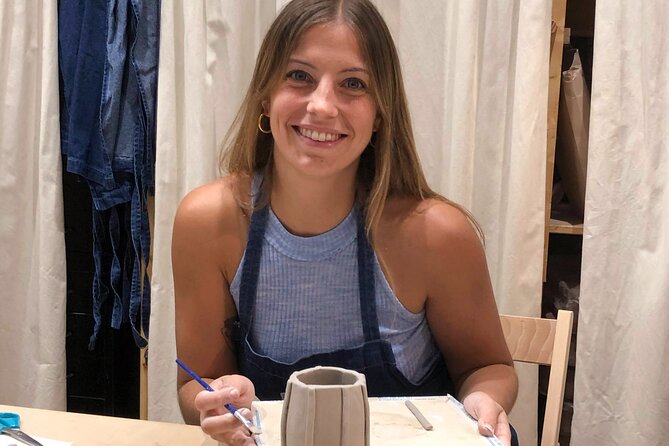
The course begins at 10:00 a.m. at Carrer de Salvà, 71, in Barcelona’s Sants-Montjuïc district. From there, you return to the same studio each day for a four-hour class.
That repeated setting matters. A short pottery activity often gives you just enough time to make one object before the clock runs out. Here, you get several days to understand the material, make mistakes, adjust your method, and try again. I find that useful for anyone who wants more than a single holiday craft project.
The schedule is structured but not rigid. During the first two hours, Wendy introduces particular techniques. The remaining two hours are for your own construction, with dedicated instruction as you work. You are not simply watching a demonstration, then left alone with a lump of clay.
The course is offered in English and Spanish, based on your preference. That is especially helpful when learning small hand movements, joining methods, and clay terminology. Ask for your preferred language when you book or arrive so the teaching fits you from the start.
More maker workshops in Barcelona:
- Ceramic Tiles Small Group Workshop in Barcelona
★ 5.0 · 336 reviews - Guided Gaudí’s Trencadís Mosaic Workshop in Barcelona
★ 4.8 · 259 reviews - Artisan Ceramic Cup Experience
★ 5.0 · 195 reviews
What you learn during the first two hours
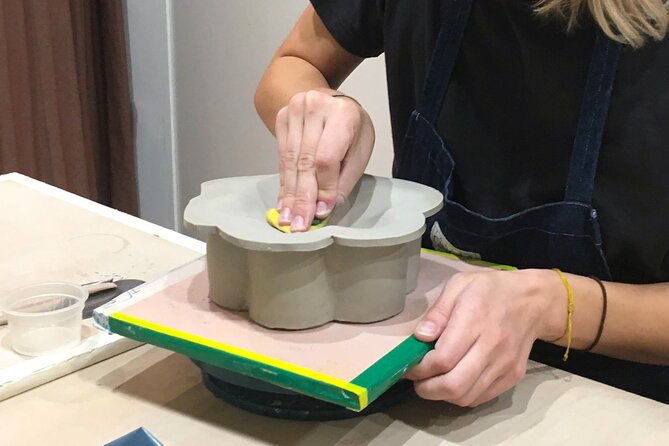
Handbuilding is the main subject. These are the methods used to create both practical objects and sculptural forms, so the skills can take you in several directions.
The exact project sequence can depend on your interests and level. The course description points to essential handbuilding techniques, while the teaching also allows room for sculpting, mold making, and testing glazes and underglazes. That gives you a useful mix of basics and experimentation.
If you are new to clay, the first sessions provide a clear starting point. You can learn how to shape a form, build it up by hand, and make design choices without needing a pottery background. The aim is not to produce a perfect object on the first attempt. It is to help you understand what the clay can do.
If you already make ceramics, you can use the week differently. Bring a project idea, test a new construction method, or ask for help with a form you have struggled to make. One participant used the time to work on a teapot, vase, cup, and ceramic stamps, all in a personal style. The course is a better fit for that sort of focused practice than for someone seeking a quick introduction between museum visits.
The hands-on studio time is the real value
The second half of every class is individual construction. This is where the course earns its intensive label.
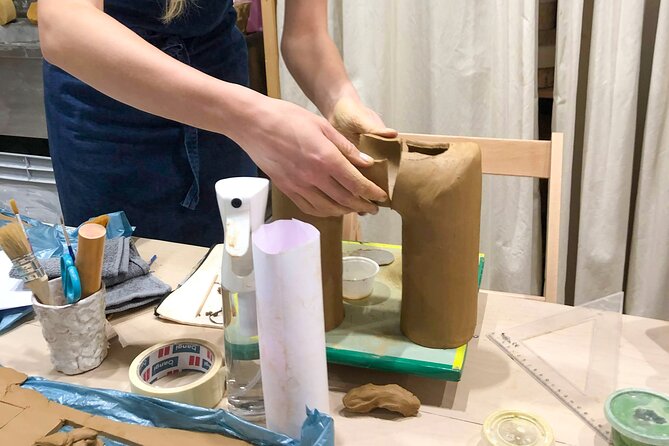
You get time to make actual pieces, not just practice small exercises. Wendy can watch how you work, suggest ways to improve, and help you deal with the usual problems that appear once your own design is in front of you. The feedback is particularly useful when a project becomes more ambitious than the basic example.
The instructors also appear willing to support unusual ideas. If you want to build something extravagant, you are encouraged to try rather than pushed toward a standard shape. If you arrive without a plan, Wendy and Eric can offer ideas.
I like this balance. Complete beginners need a clear demonstration and a manageable first project. More experienced makers need freedom. A group course that provides only one of those can feel frustrating. This one is designed to leave space for both.
The studio atmosphere is described as calm, friendly, and inspiring, with ceramics around you and a well-equipped working area. That does not mean the work is effortless. Clay can be messy, and handbuilding requires patience. Still, a comfortable studio and close instruction make it easier to stay with a piece when it is not behaving as expected.
A small class with room for personal attention
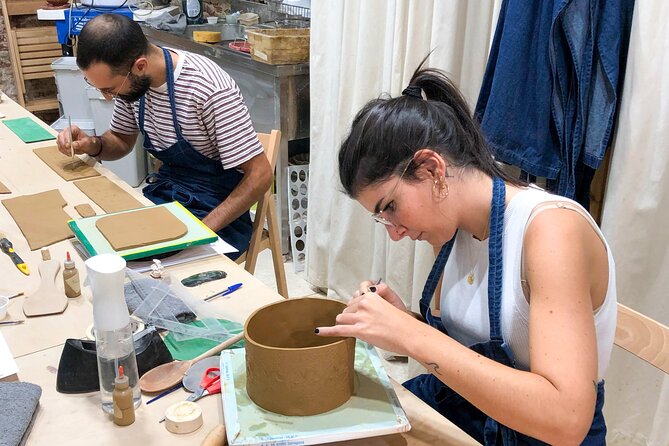
The maximum class size is eight participants. That is small enough to make questions practical, especially during the individual construction periods.
Class size is one of the most important details in a practical course. With eight people or fewer, Wendy can follow your progress instead of delivering one talk and moving on. The teaching team, Wendy and Eric, is also involved in the studio environment, and the course has been praised for careful explanations and close attention to each person’s work.
The class can suit a solo booking, a pair of friends, or a couple looking for a creative date idea. Group discounts are available, so it is worth checking the price if you are booking with companions.
The social side is another part of the appeal. You work beside other people for five days, which gives the course a more natural rhythm than a one-off class. You may make friends, compare projects, and see different ways of approaching the same material. That said, the main focus remains studio work, not organized sightseeing or a packed social program.
A few more Barcelona options worth an hour of your trip
- Barcelona: Park Güell Admission Ticket
★ 4.4 · 76,534 reviews - Barcelona: Casa Batlló Entry with Self-Audioguide Tour
★ 4.7 · 25,359 reviews - Barcelona: 24 or 48-Hour Hop-On Hop-Off Bus Tour
★ 4.4 · 20,872 reviews - Barcelona: Park Guell Guided Tour with Skip The Line Entry
★ 4.7 · 17,563 reviews
Choosing projects and firing up to five pieces
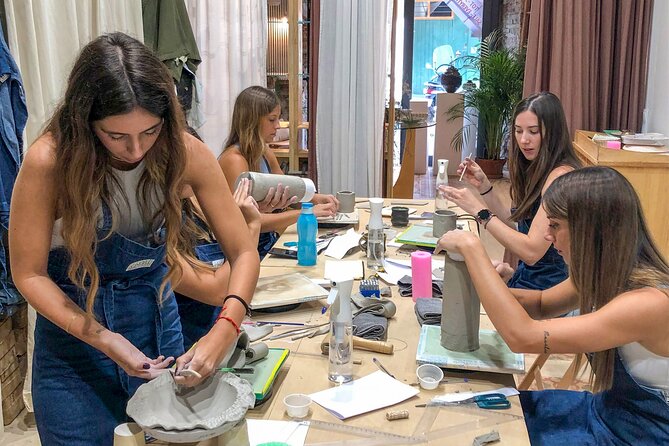
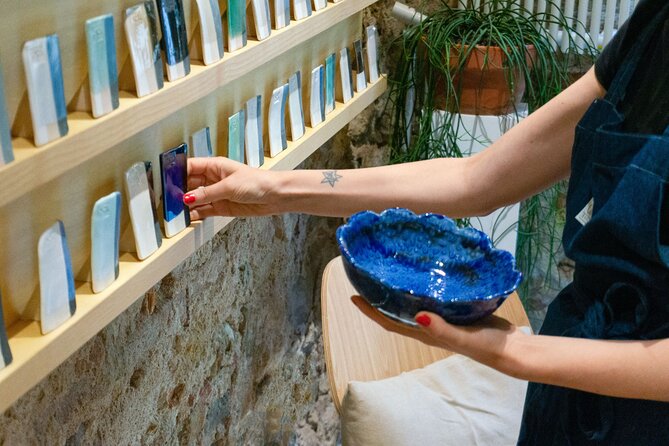
Each student can select up to five items for kiln firing. This is a generous allowance for a five-day course, but it does not mean every experiment will be ready or survive the firing process. Ceramic work must dry and be fired carefully, and the final stage takes place after the making sessions.
The course includes kiln firings, which is a major practical benefit. You do not have to find a separate ceramics service or figure out how to fire your work in an unfamiliar city.
Some people have collected pieces a few days later, including work that was bisque fired and packed for the journey home. The information provided does not promise a set collection time, glazing schedule, or international delivery service, so ask the studio how and when your work will be ready.
Shipping is not included. If you are flying home soon after the class, this deserves attention before you book. Finished ceramic pieces need careful packing, and the extra shipping charge may affect the total cost. If you can return to Barcelona later, collection may be simpler, but the course information does not guarantee that option or state how long pieces are held.
What is included in the $612.78 price
The listed price is $612.78 per person. For five days and 20 hours of teaching, that works out to about $122.56 per scheduled class hour, before considering the included materials and firing.
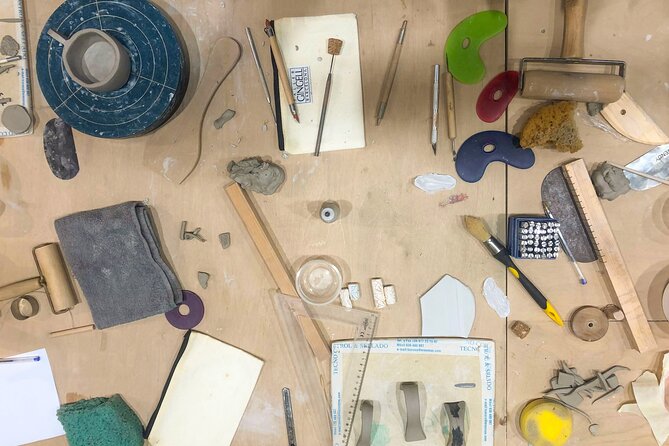
That is not a casual drop-in class price. You are paying for a full week of instruction, studio access, clay, ceramic modeling tools, an apron, kiln firings, and WiFi. The small class limit also matters because the course is built around personal advice rather than a large demonstration.
I see the strongest value for someone who would otherwise pay for several separate workshops. You receive continuity, which lets one lesson feed into the next. You also leave with actual pieces instead of only a technique demonstration.
The price is harder to justify if you have only a short stay in Barcelona or mainly want a fun activity for an afternoon. In that case, a shorter workshop would use less of your schedule. Here, the course is for a person who wants concentrated learning and dedicated making time.
Group discounts may help if you are booking with friends. The price does not include shipping, and the course does not describe meals, accommodation, or local transportation as included. Plan for those separately.
Fitting the course into your Barcelona plans
The class starts at 10:00 a.m. and runs for about four hours each weekday. Since it takes place Monday through Friday, you need to protect five mornings in a row.
That still leaves afternoons and evenings for Barcelona, which is why the course can work well alongside sightseeing. You can spend part of the day in the studio and use the rest for the city. The course itself does not list guided visits or named sightseeing stops, so do not book it expecting a tour with scheduled landmarks.
The location is near public transportation, making the daily trip more manageable. Your booking confirmation arrives at the time of booking, and the meeting point is both the start and end point. Service animals are allowed, and most people can participate, but anyone with specific mobility or access needs should confirm details before booking because no further accessibility information is provided.
Arrive ready to work. You do not need to bring special equipment. Aprons, clay, and tools are supplied. Comfortable clothes that can tolerate studio work are still sensible, even though the apron offers protection.
What the teaching style seems to offer
Wendy is the main named teacher, and the course is built around her 20 hours of instruction. Eric is also part of the studio team and helps create the friendly working environment.
The strongest feature of the teaching is close guidance. You are shown a technique, then given time to use it while the instructor follows your progress. Suggestions are offered as your piece develops, rather than only at the end.
That approach is useful for beginners because it prevents small errors from becoming major problems. It also suits experienced makers who want another pair of eyes on structure, form, or surface treatment.
The course can be shaped around your interests. One student explored sculpting, handbuilding, mold making, and glaze and underglaze testing within the week. That does not mean every participant will complete all those areas, but it shows the range available when you communicate your goals clearly.
I would arrive with two or three project ideas, not a fixed list of five finished objects. Clay can change your plans. A flexible approach gives Wendy room to recommend a better technique or help you simplify a design that is too ambitious for the available time.
The atmosphere and the small human details
A good ceramics course is not only about technique. You spend 20 hours in the same room, so the tone matters.
The studio is described as pleasant, calm, and well equipped. Wendy and Eric are known for being attentive and encouraging. Small details help too: filtered water is available, and you are reminded to stay hydrated during the work sessions.
The team also takes photos during the process in at least some course sessions. That can be a nice record of your work as it changes from raw clay to finished object. It is not listed as a formal inclusion, so treat it as a possible extra rather than a guaranteed part of every booking.
The open atmosphere should not be confused with a completely self-directed studio rental. You receive teaching and suggestions throughout the day. At the same time, you are not forced to copy one model. That middle ground is the reason the course can work for different skill levels.
Who should book this intensive course
I would recommend it most strongly to:
- A beginner who wants a proper foundation rather than a one-hour craft activity
- An experienced ceramic maker who wants focused studio time and fresh instruction
- A solo visitor looking for a creative way to spend five mornings in Barcelona
- Friends or couples who want a shared project, with group discounts worth checking
- Anyone who likes making functional or sculptural objects in their own style
I would think twice if you have only one or two free days. The schedule is fixed across five consecutive weekdays, and missing sessions would reduce the value of the course.
I would also ask about finished-piece collection or shipping before booking if you are leaving Barcelona immediately after the class. The work is part of what makes the price worthwhile, but shipping is an extra cost and the arrangements are not detailed.
The experience has a five-star rating from 18 reviews, with 100 percent recommending it. The praise centers on Wendy and Eric’s patience, clear teaching, flexible project support, and the pleasant studio atmosphere. Those are the areas I would use to judge the course, rather than expecting a sightseeing tour.
Should you book Taller Gingell’s five-day course?
Book it if you want to spend a meaningful part of your Barcelona visit learning handbuilding and making several personal pieces. The five-day structure, small class, included materials, and kiln firings make it far more useful than a quick pottery stop.
Skip it if you want a short activity, a guided city tour, or a guaranteed finished package shipped home without extra planning. You must commit five mornings and account for shipping if needed.
For the right person, this is a practical creative course with enough time to build confidence. Bring ideas, leave room for surprises, and ask about collection details before paying. That is the best way to get full value from the week.
FAQ
How long is the Intensive Ceramic Handbuilding Course?
The course lasts five consecutive days, Monday through Friday. Each day includes one four-hour class, for about 20 hours of teaching and studio work.
What time does the course start?
Classes start at 10:00 a.m. The activity begins and ends at Carrer de Salvà, 71, Sants-Montjuïc, Barcelona.
Is previous ceramics experience required?
No. The course is suitable for all levels, and no prior ceramics experience is necessary.
What materials and equipment are included?
Clay, ceramic modeling tools, an apron, kiln firings, and WiFi are included. You do not need to bring special equipment.
How many pieces can each student have kiln fired?
Each student can select up to five items for kiln firing.
Is shipping included for finished ceramics?
No. Shipping, if desired, is not included in the price. Ask the studio about collection and shipping arrangements before booking if you will not be able to take the pieces home yourself.
Just added around Barcelona
- GoCar Full Day Tour★ 4.0 · 6 reviews
- Sagrada Familia and Barcelona Highlights: Private Guided 4-Hour Driving Tour★ 5.0 · 6 reviews
- Barcelona: Highlights & Gems Private Tour with Tapa & Drink★ 3.9 · 6 reviews
- Gothic Quarter and Born District: Photographic Workshop★ 5.0 · 6 reviews
- Gobbi Yacht Rental in Barcelona 9 Pax 2/4/8hs★ 5.0 · 6 reviews
- Barcelona: Gothic Quarter & La Sagrada Familia Private Tour★ 4.9 · 6 reviews
- Private Sailboat Ride at Sunset from Sitges★ 5.0 · 6 reviews
- Barcelona: Private Tour of Casa Batllo with Reserved Access★ 3.5 · 6 reviews
Craft and Ceramic Workshops, compared.
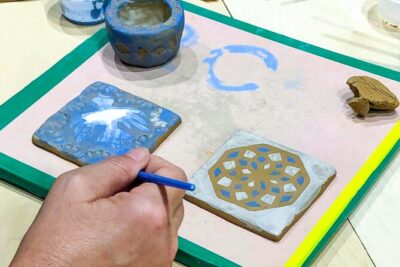
Ceramic Tiles Small Group Workshop in Barcelona
Read our review →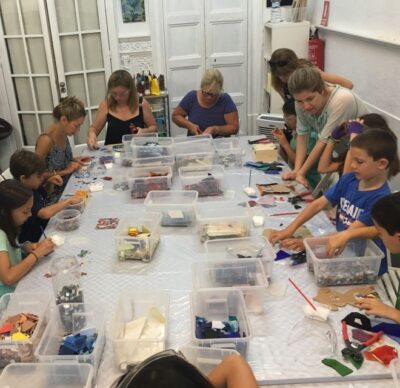
Guided Gaudí’s Trencadís Mosaic Workshop in Barcelona
Read our review →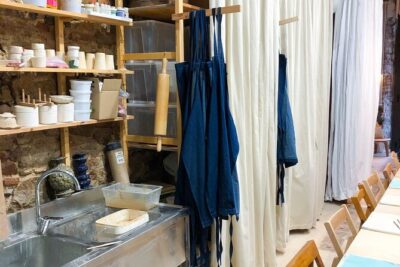
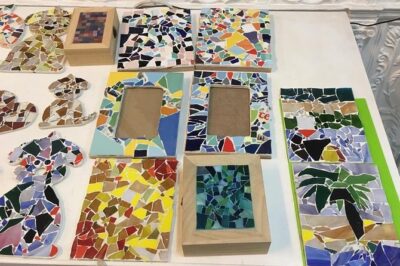
Guided Gaudí Trencadís Mosaic Workshop in Barcelona 2 Hours
Read our review →
Guided Gaudí Mosaic Workshop for Children in Barcelona 1 Hours
Read our review →
Browse the lists this tour appears in