
Reviewed · PHOTOGRAPHY SESSIONS
KBr Fundación MAPFRE – Photography Exhibitions
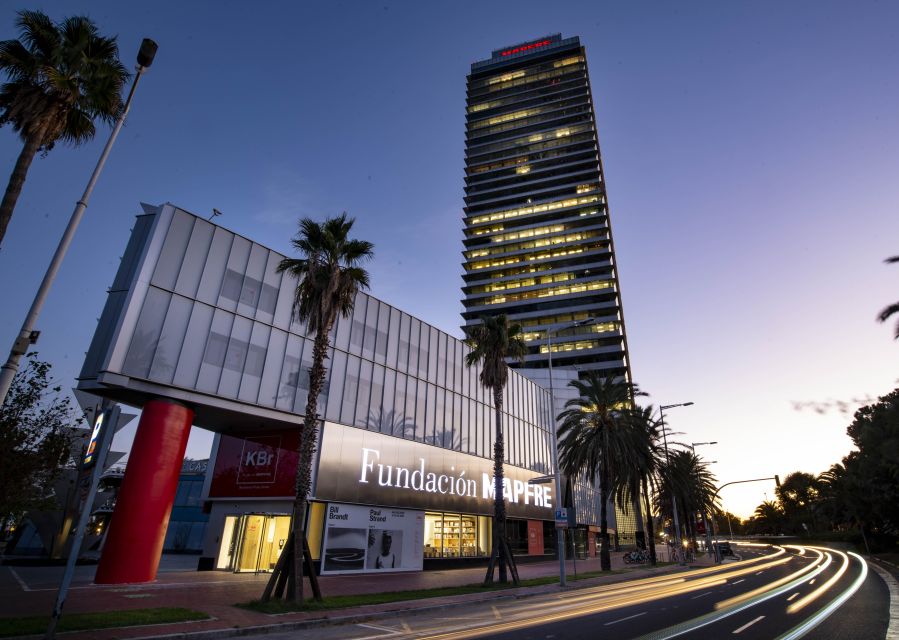
KBr Fundación MAPFRE gives you a focused look at photography rather than a huge museum day. The current program pairs Walker Evans: Now and Then, organized by David Campany, with a show devoted to Spanish photographer Carlos Pérez Siquier. Together, they move from 20th-century American documentary photography to Spain’s changing social and visual culture.
I like the low $5 price, which makes this an easy addition to a Barcelona day, and I like the free audio guide, available in English, Catalan, and Spanish. The main caution is practical: one booking in February 2026 was affected by a closure, so check the center’s current opening status before setting out and keep your cancellation terms in mind.
In This Review
- Key points to know before you go
- Why KBr is worth an hour or two in Barcelona
- Entering the Port Olímpic photography center
- Walker Evans, from American streets to Polaroid experiments
- Pérez Siquier and the changing face of Spanish photography
- Using the free audio guide without losing your focus
- How much time should you allow?
- Price, booking flexibility, and one important caution
- Who will get the most from this visit?
- Should you book KBr Fundación MAPFRE?
- FAQ
- Where is KBr Fundación MAPFRE located?
- How much does admission cost?
- What exhibitions are on view through May 24, 2026?
- Who organized the Walker Evans exhibition?
- What languages are available for the audio guide?
- How do I access the audio guide?
- Do I need mobile data to use the audio guide?
- Do I need to bring headphones?
- Is the center wheelchair accessible?
- What are the opening hours?
Key points to know before you go
- Two exhibition spaces: See Walker Evans in the temporary exhibition area, then explore Pérez Siquier’s work from the Fundación MAPFRE Collections.
- Walker Evans from the 1920s to the 1970s: Follow his career from early photographs to his later Polaroid experiments.
- A close look at Spanish photography: Pérez Siquier’s series La Chanca, Informalisms, and The Beach trace his move from black-and-white to color.
- Free audio guide: Scan the QR code in the room and listen in English, Catalan, or Spanish using your phone and headphones.
- Easy Port Olímpic stop: The center is in Barcelona’s Port Olímpic area, making it a natural cultural break near the waterfront.
- Accessible visit: The center is wheelchair accessible, with food and swimwear not allowed inside.
Why KBr is worth an hour or two in Barcelona
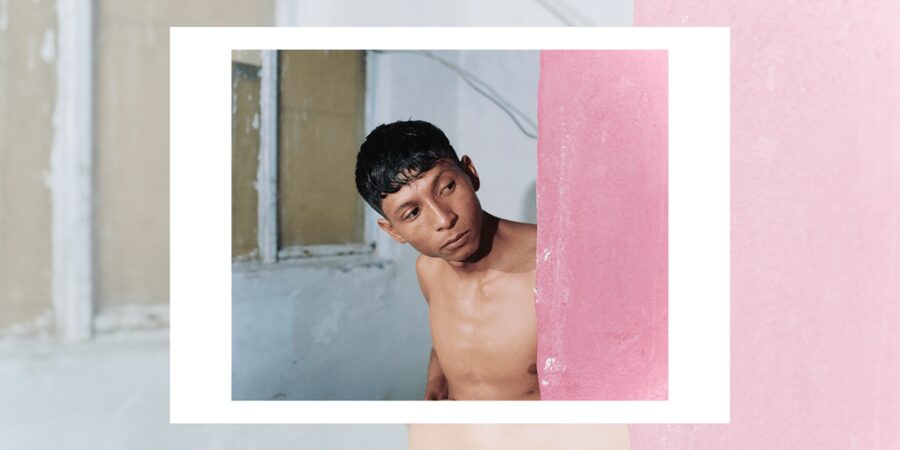
KBr Fundación MAPFRE is for you if photography helps you see ordinary places differently. This is not a museum built around famous paintings or grand rooms. Its appeal comes from the way a photograph can turn a street corner, a beach, a shopfront, or an unfamiliar face into something worth studying.
The current pairing is especially useful because the two photographers work in very different settings. Walker Evans observed the United States with a cool, direct eye. Pérez Siquier worked mainly in Spain, using both black-and-white and color to record a society in transition. You get two distinct ways to think about documentary photography in one visit.
The center’s $5 entry fee is excellent value if you already enjoy photography. It is also a sensible choice when you want a quiet cultural stop without committing half a day to a large museum. The visit is valid for one day, and the ticket includes both exhibitions and the audio guide.
The one limitation is scale. If you want a long, full-day attraction with cafés, multiple collections, and a packed program, KBr may feel brief. Its strength is concentration. You can take your time with the pictures without having to cover a vast building.
A few more Barcelona options worth an hour of your trip
- Barcelona E-Bike Photography Tour
★ 5.0 · 843 reviews - Costa Brava: Kayak, Snorkel, Photos, Lunch, Beach & Cliff Jump!
★ 5.0 · 508 reviews - Barcelona: Sunrise Paddleboarding with Instructor and Photos
★ 4.8 · 391 reviews
Entering the Port Olímpic photography center
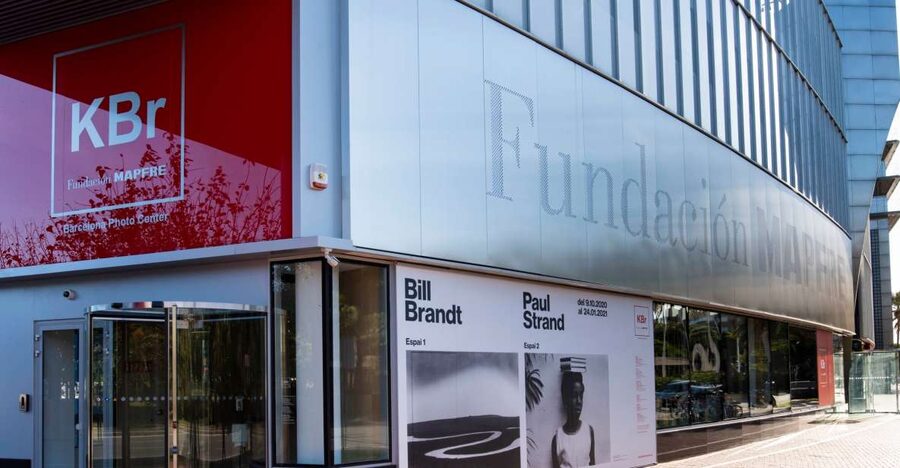
You present your voucher at the ticket desk, then enter the photography center in Barcelona’s Port Olímpic area. The location gives you a change of pace from the city’s older streets and major art museums. Plan it as a stand-alone stop or pair it with time around the port.
The building has two exhibition spaces. That matters because the visit feels like a planned conversation between different bodies of work, not a single room of unrelated photographs. You can move from Evans’s American subjects to Pérez Siquier’s Spanish subjects and compare how each photographer uses framing, distance, light, and repetition.
Opening hours change by season:
- From October 1 to March 31, the center is open Tuesday through Sunday and holidays from 11 a.m. to 7 p.m.
- From April 1, it is open Tuesday through Sunday and holidays from 11 a.m. to 8 p.m.
Monday is not listed as an opening day, so avoid planning your visit then. The published information gives the spring and summer start date but does not state an end date for the longer hours, so check availability when booking.
The center is wheelchair accessible. Food is not allowed, and swimwear is not appropriate inside, a useful reminder if you are combining the visit with time near the waterfront.
Walker Evans, from American streets to Polaroid experiments
Walker Evans: Now and Then covers a long career, from the 1920s to the 1970s. Evans is important because he helped shape documentary photography as an art form. His pictures often look plain at first glance, but the restraint is part of the point. He watched how people lived, how cities changed, and how popular culture appeared in everyday signs and objects.
The exhibition includes iconic images and key projects, along with work from different periods of his career. You can expect a progression rather than a narrow show focused on one famous series. Early photographs are placed alongside later experiments, including Evans’s use of a Polaroid in the 1970s.
That time span lets you watch his methods change. His interest in ordinary people and places remains, but the tools and visual choices shift. The result is a useful lesson in how a photographer can keep asking similar questions across decades without producing the same kind of image again and again.
One photograph listed with the exhibition is Broadway from 1930. Its credit connects the work with the Walker Evans Archive at The Metropolitan Museum of Art and a private collection in San Francisco. Even without knowing the full story behind each image, details like this show the range of material brought together for the exhibition.
I would give Evans’s section enough time to look twice at photographs that seem simple. A quick pass can make them appear dry. A slower look reveals how carefully he places people, buildings, printed words, and empty space within the frame.
The exhibition is particularly good for you if you like documentary work, American social history, or photographs that avoid theatrical effects. It may be less satisfying if you prefer bright, heavily staged images or a show built around a single dramatic theme.
Pérez Siquier and the changing face of Spanish photography
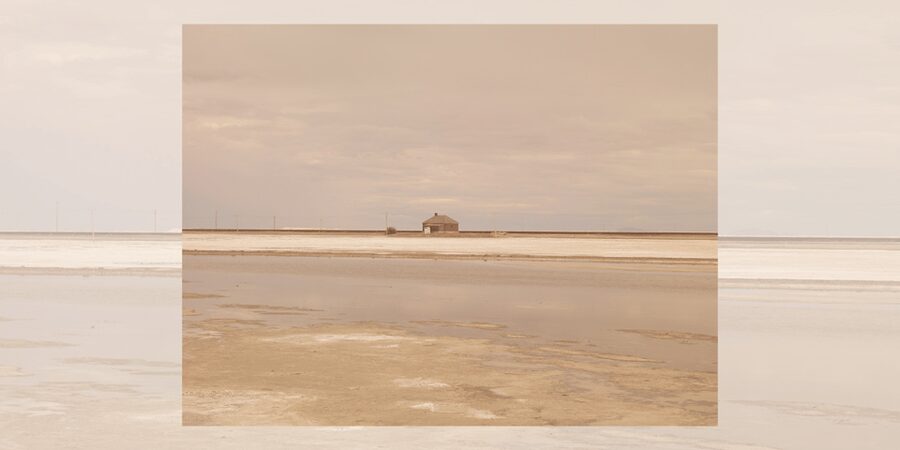
The second exhibition focuses on Carlos Pérez Siquier, who was born in Almería in 1930 and died in 2021. He played an important role in modern Spanish photography and helped expand the idea of what photography could be in Spain.
Pérez Siquier co-founded the Agrupación Fotográfica Almeriense and the magazine AFAL. These projects supported new photographic voices at a time when the medium was still fighting for recognition as an artistic discipline. His work developed from his home city, Almería, and often combines social observation with a poetic or ironic touch.
The exhibition brings together works added to the Fundación MAPFRE photography collection since 2022. Its three main bodies of work are La Chanca, Informalisms, and The Beach. Taken together, they show how Pérez Siquier moved from black-and-white photography toward color.
La Chanca is central to understanding his early work. The series looks at a neighborhood in Almería and reflects social conditions through close observation rather than heavy explanation. You may find yourself paying attention to textures, expressions, walls, clothing, and the way people occupy shared spaces.
Informalisms shifts the emphasis toward visual form. The title points you toward surfaces, shapes, and less literal ways of reading a photograph. This section can help you see Pérez Siquier not only as a recorder of social change, but also as an artist interested in visual experiments.
The Beach brings color to the front. Beaches can look cheerful and casual, yet Pérez Siquier uses them to examine behavior, appearance, and public life. The images can invite a smile, then make you pause and consider what they say about the people and society in front of the camera.
A photograph identified with the show is Marbella from 1974. Its credit is attributed to Pérez Siquier and VEGAP, Barcelona. The work fits the exhibition’s larger story of Spain changing in its public spaces, habits, and visual culture.
This section should appeal to you if you want to understand Spanish photography beyond the usual modernist names. It also rewards anyone interested in the move from monochrome to color. The change is not just technical. It affects mood, attention, and the way social details register in the image.
More museums and sites in Barcelona:
- Barcelona: FC Barcelona Museum “Barça Immersive Tour” Ticket
★ 4.4 · 10,944 reviews - Barcelona: Park Güell and Gaudí House Museum Entry Ticket
★ 4.5 · 6,326 reviews - Barcelona: Picasso Museum Skip-the-Line Guided Tour
★ 4.5 · 3,355 reviews - Girona & Dali Museum Small Group Tour with Pick-up from Barcelona
★ 5.0 · 2,965 reviews
Using the free audio guide without losing your focus
The standard ticket includes an audio guide. You access it through a QR code available in the exhibition room, and it is offered in English, Catalan, and Spanish.
You need a phone with mobile internet, though free Wi-Fi is available inside if you do not have mobile data. Bring your own headphones. Headphones are required so the audio does not disturb other people, and the center sells jack-type headphones for €1 at the ticket desk if needed.
This is a helpful inclusion at such a low admission price. Photography exhibitions can sometimes leave you guessing about dates, methods, or artistic purpose. The audio guide gives you a route into the work without requiring a scheduled tour or a private guide.
There is a small tradeoff. Using your phone means you need enough battery, a working connection, and headphones. You may also need to wait if you buy the €1 pair at the desk. Charge your phone before arrival and bring your own wired or compatible headphones if you have them.
I suggest looking at each room briefly before starting the audio. That way, you form your own first impression before the commentary directs your attention. For photographs by Evans and Pérez Siquier, that first reaction can be useful. You may notice something different after hearing the background.
How much time should you allow?
The ticket is valid for one day, but no fixed visit length is stated. I would treat KBr as a flexible one to two-hour stop, depending on how closely you study photographs and how much of the audio guide you use.
A short visit can work if you are fitting the center between other plans. At $5, you do not need to justify a long stay to get value from the ticket. You can see both exhibitions, choose a few photographs to study, and leave with a clear sense of each photographer.
Give yourself more time if you enjoy reading wall text, listening to the audio guide, or comparing the two exhibitions. Evans’s long career and Pérez Siquier’s movement between black-and-white and color both reward a slower pace.
The center is not described as a guided group tour, so your timing is largely your own. That suits independent visitors who prefer to stop when something catches their eye rather than follow a fixed schedule.
Price, booking flexibility, and one important caution
The listed price is $5 per person. For two substantial photography exhibitions, an audio guide in three languages, and access to a wheelchair-accessible center, that is a strong cultural value in Barcelona.
The low price also makes KBr easy to add to a day that already includes the Port Olímpic area. You do not need to build an entire itinerary around it. If you are unsure about your interest in photography, the modest cost lowers the risk.
You can reserve now and pay later, and free cancellation is available up to 24 hours in advance for a full refund. These terms give you room to adjust your plans, but read the booking conditions attached to your reservation carefully.
There is one operational warning worth taking seriously. A visitor with a February 6, 2026 booking arrived to find the exhibition closed and had difficulty obtaining a refund. This appears to be an individual problem rather than a reason to dismiss the center, but it is a good reason to check the venue’s current status before leaving your hotel. Save your voucher and confirmation details as well.
The overall score is 3.4 from seven ratings, a small sample that should not carry too much weight. The available comments praise the modern, well-kept space and the quality of the photography, while the closure problem points to the need for a little advance checking.
Who will get the most from this visit?
KBr is a good choice for:
- People who enjoy documentary photography and social observation
- Visitors interested in Walker Evans or modern American photography
- Anyone wanting a stronger introduction to Spanish photography
- Couples or solo visitors looking for a quiet cultural stop
- Budget-conscious museumgoers
- Visitors who appreciate audio content in English, Catalan, or Spanish
- Anyone using a wheelchair and looking for an accessible art space
It may not be your best pick if you want a large museum, a live guide, or an attraction with many different art forms. The visit is specifically about photography, and the experience depends on your willingness to look closely.
Families with older children may find the images useful for conversation, especially when comparing Evans’s United States with Pérez Siquier’s Spain. The supplied information does not state a child ticket policy or special family program, so check those details before booking for a family group.
Should you book KBr Fundación MAPFRE?
I would book this if you want an affordable, thoughtful art stop in Barcelona and have at least a passing interest in photography. The pairing of Walker Evans and Carlos Pérez Siquier gives you more than a quick display of famous pictures. It lets you compare two photographers who found meaning in ordinary life, but did so in different countries and with different visual tools.
The best reason to go is the contrast. Evans takes you from early 20th-century American documentary work to late Polaroid experiments. Pérez Siquier takes you from Almería’s black-and-white social record to the sharper color and public life of The Beach.
Book with a simple plan: check the opening status, bring headphones, charge your phone, and allow enough time for both rooms. At $5, KBr is an easy yes for photography fans and a sensible choice for anyone seeking a calm cultural break near Port Olímpic.
FAQ
Where is KBr Fundación MAPFRE located?
It is in the Port Olímpic area of Barcelona, in Catalonia, Spain.
How much does admission cost?
The listed price is $5 per person.
What exhibitions are on view through May 24, 2026?
The program includes Walker Evans: Now and Then and Pérez Siquier. Fundación MAPFRE Collections.
Who organized the Walker Evans exhibition?
The Walker Evans exhibition is organized by David Campany.
What languages are available for the audio guide?
The free audio guide is available in English, Catalan, and Spanish.
How do I access the audio guide?
You scan a QR code available in the exhibition room using a mobile device.
Do I need mobile data to use the audio guide?
An active mobile internet connection is needed, but free Wi-Fi is available inside the center.
Do I need to bring headphones?
Yes. Headphones are required, and you can bring your own or buy jack-type headphones for €1 at the ticket counter.
Is the center wheelchair accessible?
Yes, the KBr Fundación MAPFRE Barcelona Photo Center is wheelchair accessible.
What are the opening hours?
From October 1 to March 31, it is open Tuesday through Sunday and holidays from 11 a.m. to 7 p.m. From April 1, it is open Tuesday through Sunday and holidays from 11 a.m. to 8 p.m.
Just added around Barcelona
- GoCar Full Day Tour★ 4.0 · 6 reviews
- Sagrada Familia and Barcelona Highlights: Private Guided 4-Hour Driving Tour★ 5.0 · 6 reviews
- Barcelona: Highlights & Gems Private Tour with Tapa & Drink★ 3.9 · 6 reviews
- Gothic Quarter and Born District: Photographic Workshop★ 5.0 · 6 reviews
- Gobbi Yacht Rental in Barcelona 9 Pax 2/4/8hs★ 5.0 · 6 reviews
- Barcelona: Gothic Quarter & La Sagrada Familia Private Tour★ 4.9 · 6 reviews
- Private Sailboat Ride at Sunset from Sitges★ 5.0 · 6 reviews
- The Essence of Priorat | Private Wine Tour from Barcelona★ 5.0 · 6 reviews
Photography Sessions, compared.

Kayak, Snorkel, Photos, Lunch, Beach & Cliff Jump!
Read our review →
Sunrise Paddleboarding with Instructor and Photos
Read our review →
✅ Barcelona: Sightseeing Professional Photoshoot Session
Read our review →
Browse the lists this tour appears in