
Reviewed · TAPAS AND FOOD TOURS
Made in Catalonia, Barcelona with Culinary Backstreets
Barcelona’s Catalan identity comes through most clearly at the table, and this five-and-a-half-hour walk gives you a full morning and early afternoon of eating, strolling, and learning. You begin with coffee and traditional pastries, then work through markets, shops, and local establishments in and around Gràcia.
I like the small maximum of seven people, which gives guides such as Ivan, Senem, Pamela, and Lynda room to explain what you are eating and adjust the experience to the group. I also like the range: breakfast, market tastings, snacks, local drinks, lunch, and dessert give you a much fuller picture than a quick stop at one food hall.
The main thing to consider is the amount of walking. You will be on your feet for hours, and the early 9 a.m. start may not suit anyone who prefers a slow holiday morning.
In This Review
- Key points at a glance
- Why this food walk feels different from a market stop
- Starting with coffee and pastries near Gràcia
- Mercat de la Boqueria: Barcelona’s famous market in context
- Mercat de la Llibertat and the everyday market experience
- Passeig de Gràcia and the Catalan table
- What you may eat and drink
- The guides make the difference
- Price, timing, and practical value
- Who should book Made in Catalonia
- Should you book it?
- FAQ
- Where does the tour start?
- What time does the tour begin?
- How long does the experience last?
- Where does the tour end?
- How many people can join the tour?
- Which markets are included?
- Is food included?
- Can I cancel for a refund?
Key points at a glance
- A full Catalan eating day: Start with coffee and pastries, then continue through savory tastings, drinks, lunch, and dessert.
- Three very different settings: See Mercat de la Boqueria, Mercat de la Llibertat, and the streets and shops around Passeig de Gràcia.
- A close look at Gràcia: The tour focuses heavily on this former village district and its everyday food culture.
- A group capped at seven: You get more time for questions and a better chance to speak directly with your guide.
- Seasonal choices may be possible: Depending on the day, you might be offered specialties such as snails or mushrooms.
- Plan for a long walk: Comfortable shoes are essential, and the tour requires good weather.
Why this food walk feels different from a market stop
Many Barcelona food outings give you a short taste of La Boqueria, a few facts, and a quick move to the next attraction. This experience takes a broader view. Food is the thread, but the real subject is how Catalans shop, eat, run neighborhood businesses, and preserve local habits.
You are not simply handed a plate. The guide explains what belongs to Catalan cooking and how it fits into daily life. That makes the food easier to understand, especially if you are unfamiliar with the difference between a dish designed for local routines and one created mainly for visitors.
The route also moves beyond the most famous central market. La Boqueria is an important first stop, but Mercat de la Llibertat and the Gràcia neighborhood offer a more local frame. You see public markets as working places, not just photo stops.
The group size matters here. With no more than seven people, a guide can answer questions, explain unfamiliar foods, and keep the group together without the feel of a large procession. Several guides have been praised for combining food knowledge with a warm, easy-going manner, so the social side should feel relaxed rather than formal.
More tapas crawls around Barcelona:
- Montserrat Half-Day Tour with Tapas and Gourmet Wines
★ 5.0 · 7,359 reviews - Montserrat & Cogwheel Train, Gourmet Wine Tasting & Tapas/Lunch
★ 5.0 · 6,290 reviews - Barcelona Tapas and Wine Experience Small-Group Walking Tour
★ 5.0 · 5,804 reviews
Starting with coffee and pastries near Gràcia
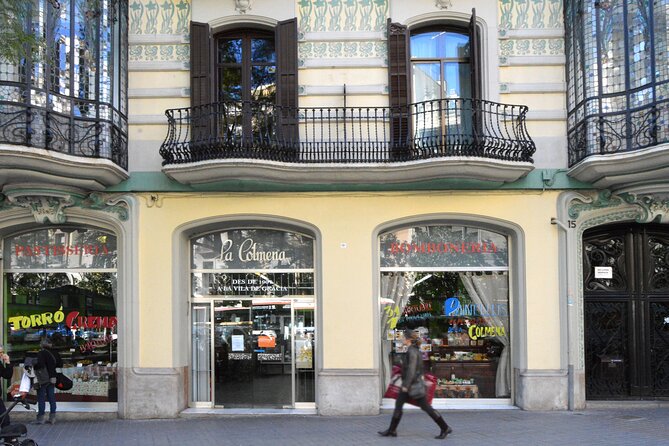
The day begins at 9 a.m. at Plaça de Gal·la Placídia, 30, in Gràcia. Your first food is coffee and traditional pastries in a sweets shop that has been operating for a century. That is a smart opening: you begin with a simple Catalan breakfast before moving into more varied market foods.
This first stop gives the guide a chance to set the tone. You can expect an introduction to local eating habits, the neighborhood, and the idea that breakfast is not just fuel but part of the social rhythm of the city. The old sweets shop also provides a sense of continuity that a modern café cannot match.
If you are used to eating a large breakfast, keep your expectations in check. This is the first of many tastings, not the meal that carries you through the whole morning. Pace yourself from the beginning, since the tour continues for hours.
Mercat de la Boqueria: Barcelona’s famous market in context
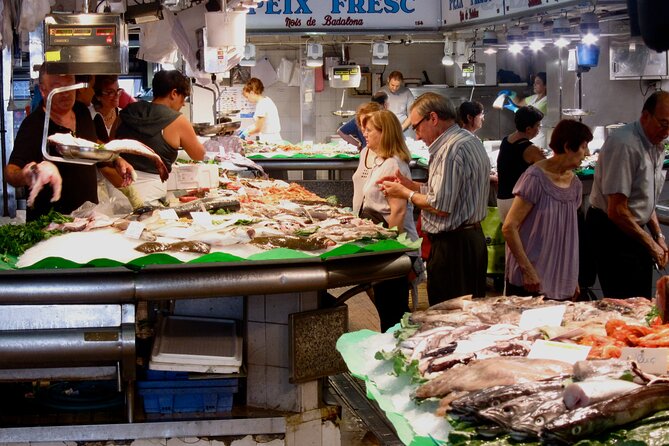
The route includes Mercat de la Boqueria, Barcelona’s best-known public market. Its fame means you will encounter more activity and more visitors here than at the smaller market later in the day. That can make it feel less intimate, but it also gives you a chance to see one of the city’s major food landmarks with a guide who can explain what matters.
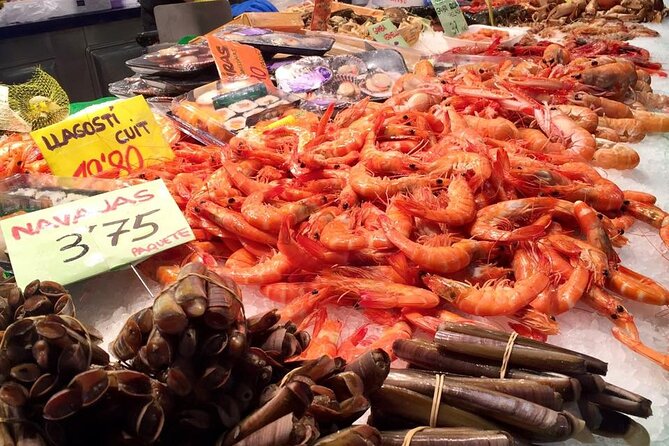
The useful part is not simply walking past colorful stalls. You eat your way through the market while learning about the ingredients and food traditions tied to Catalonia. The guide helps turn a crowded market into a readable place, pointing out the difference between a product meant for everyday local cooking and something displayed mainly for quick consumption.
The itinerary allows about two hours for this opening market section, including the earlier pastry stop. That is enough time to slow down, taste several items, and ask questions rather than rush through with a single snack.
La Boqueria can be visually exciting, but it is also a place where prices and quality vary from stall to stall. The benefit of going with Culinary Backstreets is that your guide directs the stops instead of leaving you to guess. You are paying for access to the route, the tastings, and the explanation around them.
Mercat de la Llibertat and the everyday market experience
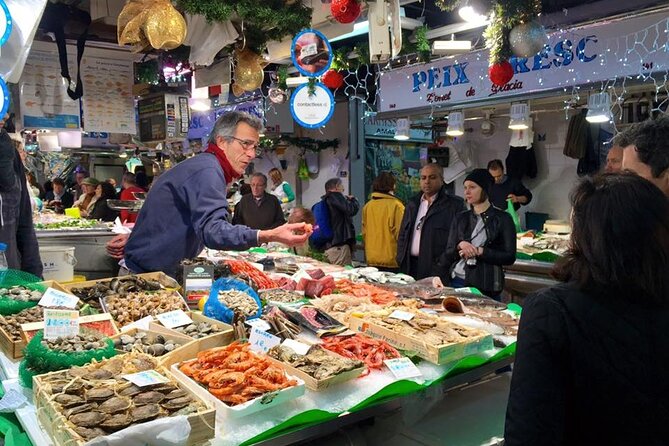
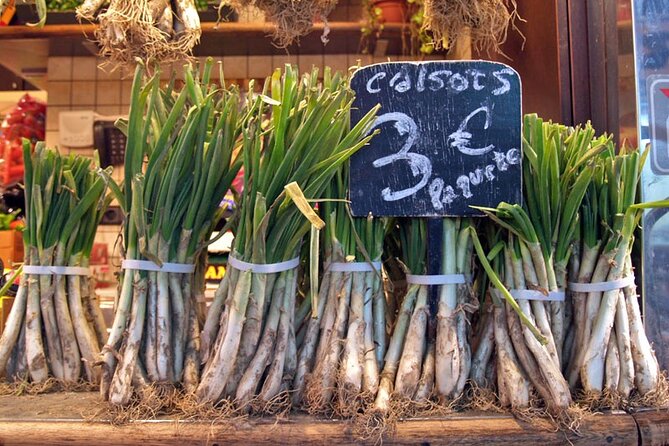
The second market, Mercat de la Llibertat, changes the mood. It is less famous than La Boqueria and offers a closer look at a neighborhood public market. You stop to meet vendors and taste their offerings, which gives the market a human scale.
This is one of the strongest parts of the experience for anyone who wants Barcelona beyond its postcard sights. A market like this shows how food fits into local errands and household routines. You get a better sense of Catalan life by seeing where people buy food than by hearing a general lecture about regional identity.
The planned time here is about an hour. That is long enough to make several stops without turning the market into a long shopping trip. The guide’s role is especially useful when a product or preparation is unfamiliar, since you can ask before deciding what to try.
The exact foods depend on availability and the day’s route. That uncertainty is part of the appeal, but it also means you should not book this expecting a fixed menu. The tour promises a series of tastings, not a published list of every dish.
A few more Barcelona options worth an hour of your trip
- Barcelona: Park Güell Admission Ticket
★ 4.4 · 76,534 reviews - Barcelona: Casa Batlló Entry with Self-Audioguide Tour
★ 4.7 · 25,359 reviews - Barcelona: 24 or 48-Hour Hop-On Hop-Off Bus Tour
★ 4.4 · 20,872 reviews - Barcelona: Park Guell Guided Tour with Skip The Line Entry
★ 4.7 · 17,563 reviews
Passeig de Gràcia and the Catalan table
The tour also brings you around Passeig de Gràcia, one of Barcelona’s major avenues, while focusing on the surrounding food culture and the Gràcia neighborhood. The emphasis is not only on the grand architecture and polished shops associated with the avenue. Instead, the guide uses local food stops to explain the area’s daily life.
Across roughly a dozen places, the experience moves from rustic to refined. That range is important. You may see how a traditional product appears in a simple neighborhood setting, then compare it with a more polished presentation elsewhere.
The food is presented as part of Catalan culture, not as an isolated tasting exercise. You learn about regional cooking, local customs, and the Catalan character of the neighborhood without reducing the subject to political arguments. That makes this a good choice if you want cultural context but prefer to receive it through ordinary life and food.
The experience lasts about five and a half hours, so it functions as both a food tour and a substantial part of your day. You will likely need only a light meal before starting, since breakfast and many tastings come early. Still, do not assume every stop will feel like a full restaurant course. The day is built around a succession of bites and meals.
What you may eat and drink
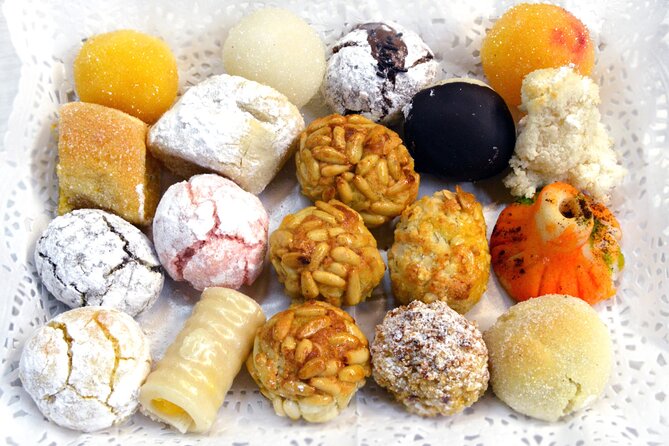
The food begins with pastries and coffee, then expands through market offerings, local drinks, snacks, and larger tastings. The experience includes breakfast, lunch, and snacks, so you should finish feeling that you have eaten a broad cross-section of Catalan food rather than sampled one narrow specialty.
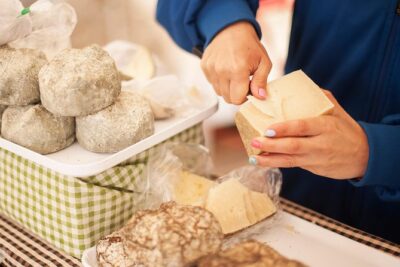
The seasonal element can make the day more interesting. One guide, Pamela, asked about trying seasonal specialties such as snails and mushrooms, then adjusted the experience to suit the group’s interests. That suggests some flexibility, though you should not assume every seasonal item will be available on your date.
You may also encounter foods outside your usual comfort zone. That can be a strength if you enjoy trying unfamiliar things, and the small group makes it easier to ask what something is before tasting it. If you have a strong dislike of certain foods, tell the guide early so expectations are clear.
Dietary details are not provided, so you should ask about restrictions before booking or as soon as your reservation is confirmed. The tour is built around many stops, which may offer some choice, but no specific substitutions are promised.
The guides make the difference
The named guides associated with this experience include Ivan, Senem, Pamela, and Lynda. Their approaches vary, but the common thread is a focus on food, history, and local culture rather than a rushed checklist of sights.
Ivan is described as friendly and easy-going, with a strong ability to connect local cuisine to Barcelona’s past. Senem has been praised for her enthusiasm and food knowledge, while Pamela is noted for her attention to seasonal specialties and group preferences. Lynda is credited with explaining both the neighborhood and the foods being eaten.
That matters because a food tour can become a string of anonymous bites if the guide does not supply context. Here, the guide is meant to explain why the food matters, introduce local places, and help you understand Gràcia as a lived-in district.
Guide quality can always vary by date, and you may not receive one particular person. Still, the experience is designed around a local guide, not a recorded commentary or a standard bus route.
Price, timing, and practical value
At $160 per person, this is not a bargain food crawl. It is a premium small-group outing, and you should compare it with the cost of several meals, market tastings, and a half-day of guiding in Barcelona.
The value is strongest if you would otherwise spend the morning guessing where to eat. You receive food throughout the tour, a local guide, access to a carefully chosen group of markets and establishments, and cultural explanation over about five and a half hours. The seven-person limit also keeps the experience personal.
The price is less compelling if you mainly want one large lunch or a short introduction to La Boqueria. You could spend less by visiting one market independently, but you would lose the long route through Gràcia and the guide’s interpretation of Catalan food culture.
The 9 a.m. start is useful for fitting the tour into a first full day in Barcelona. It gives you an early orientation to Gràcia and leaves the rest of the afternoon open. It also means you should arrive ready to walk and eat soon after meeting the guide.
The tour ends back at the meeting point. It is near public transportation, and most people can take part, but the long walking time is the main physical consideration. Wear comfortable shoes, and remember that this is an outdoor walking experience that requires good weather.
Confirmation arrives within 48 hours, subject to availability. You can cancel for a full refund up to 24 hours before the start time. If poor weather or an insufficient number of bookings forces cancellation, you are offered another date or a full refund.
Who should book Made in Catalonia
I would choose this for a first or second visit to Barcelona if you want food to help explain the city. It suits solo visitors particularly well because the small group gives you an easy way to meet people, while the steady movement keeps the day from feeling awkward or overly social.
It is also a good match for couples, families with older children, and anyone who prefers neighborhood life to a parade of major landmarks. The guide’s stories give the walk substance, and the range of food makes it appealing even if you already know the basics of Spanish cooking.
You should think twice if you dislike long walks, need a guaranteed menu, or want a late start. The tour asks you to be open to unfamiliar foods and to accept that market offerings can change.
Should you book it?
Book Made in Catalonia if you want a half-day food and culture experience, not merely a market tasting. The strongest reasons are the small group, the time spent in Gràcia, the mix of famous and less-known markets, and the chance to try seasonal Catalan specialties.
At $160, it makes sense when you value guidance and several included eating stops. If your priority is a cheap meal or a quick look at La Boqueria, choose a simpler option. If you want to understand Barcelona through its neighborhood food habits, this is a thoughtful and filling way to start your visit.
FAQ
Where does the tour start?
It starts at Plaça de Gal·la Placídia, 30, in the Gràcia district of Barcelona.
What time does the tour begin?
The tour starts at 9 a.m.
How long does the experience last?
It lasts approximately 5 hours and 30 minutes.
Where does the tour end?
The activity ends back at the meeting point.
How many people can join the tour?
The group has a maximum of seven people.
Which markets are included?
The tour includes Mercat de la Boqueria and Mercat de la Llibertat.
Is food included?
Yes. The experience includes Catalan breakfast, lunch, snacks, and tastings, including coffee and traditional pastries at the start.
Can I cancel for a refund?
Yes. You can cancel at least 24 hours before the start time for a full refund. Cancellations or changes made less than 24 hours before the start time are not refunded.
Just added around Barcelona
- GoCar Full Day Tour★ 4.0 · 6 reviews
- Sagrada Familia and Barcelona Highlights: Private Guided 4-Hour Driving Tour★ 5.0 · 6 reviews
- Gothic Quarter and Born District: Photographic Workshop★ 5.0 · 6 reviews
- Gobbi Yacht Rental in Barcelona 9 Pax 2/4/8hs★ 5.0 · 6 reviews
- Barcelona: Highlights & Gems Private Tour with Tapa & Drink★ 3.9 · 6 reviews
- Barcelona: Gothic Quarter & La Sagrada Familia Private Tour★ 4.9 · 6 reviews
- Private Sailboat Ride at Sunset from Sitges★ 5.0 · 6 reviews
- Barcelona: Private Tour of Casa Batllo with Reserved Access★ 3.5 · 6 reviews
Tapas and Food Tours, compared.
Montserrat Half-Day Tour with Tapas and Gourmet Wines
Read our review →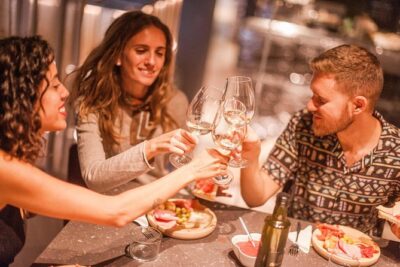
Montserrat & Cogwheel Train, Gourmet Wine Tasting & Tapas/Lunch
Read our review →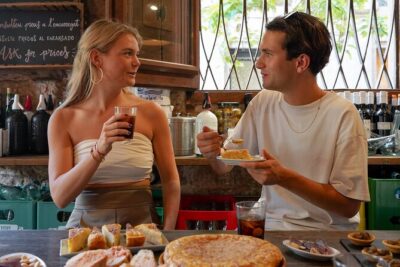
Barcelona Tapas and Wine Experience Small-Group Walking Tour
Read our review →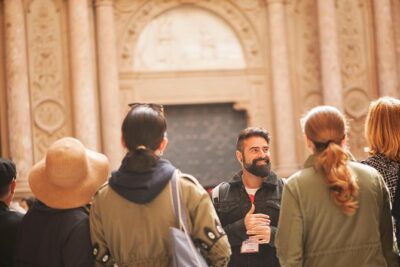
Montserrat with Black Madonna & Medieval Winery with Tapas/Lunch
Read our review →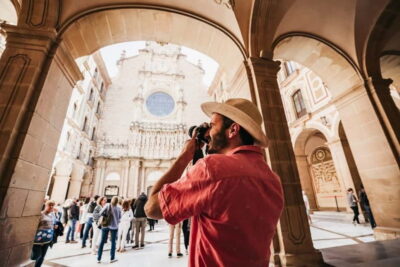
Montserrat and Winery Tour with Tapas or Lunch
Read our review →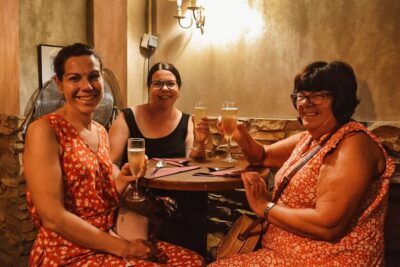
Tapas Walking Tour with Food, Wine, and History
Read our review →
Paella Cooking Experience & Boqueria Market Tour
Read our review →
Barcelona Paella Cooking Class with Market Visit, Tapas & Sangria
Read our review →Browse the lists this tour appears in