Reviewed · TICKETS
Món Sant Benet Monastery Tickets
Món Sant Benet turns a 1,000-year-old monastery into an atmospheric journey through Catalonia’s past. Voices, household sounds, and projected images bring the old walls to life as you move through the church, cloister, wine cellar, and monastic cells.
I like the way the visit connects medieval art with everyday life, rather than treating the monastery as a pile of old stones. I also like the clear audio guide, offered in four languages, and the chance to add a fine meal at one of the site’s three restaurants.
The main drawback is its location, about 68 kilometers from Barcelona, so you need to plan the trip rather than squeeze it into a quick city sightseeing day. The visit itself lasts about 1.5 hours, and the dining options cost extra.
In This Review
- Key points to know before you go
- Why Món Sant Benet is more than a medieval church
- Arriving at La Fàbrica and starting the visit
- The church and cloister: the architectural heart
- The wine cellar and monastic cells
- Hearing Catalonia’s story through the museum
- Why the Romanesque focus matters
- The restaurant choice: make more of the visit
- Is the $18 price good value?
- Accessibility, languages, and booking flexibility
- Who will enjoy Món Sant Benet most?
- Should you book Món Sant Benet?
- FAQ
- Where is Món Sant Benet located?
- How far is Món Sant Benet from Barcelona?
- How long does the monastery visit last?
- What does the ticket include?
- Which audio-guide languages are available?
- Is Món Sant Benet wheelchair accessible?
- What parts of the monastery can I see?
- Are meals included in the ticket?
- Does Món Sant Benet have a Michelin-starred restaurant?
- Can I cancel my reservation?
Key points to know before you go
- A 1,000-year-old setting: See the church, cloister, wine cellar, and monastic cells at Món Sant Benet.
- Catalonia through sound and images: The museum uses voices, daily noises, and visual scenes to explain social change over the last millennium.
- Romanesque art in context: The visit suits anyone interested in Catalan medieval art, especially Romanesque architecture.
- Four audio-guide languages: Choose Catalan, English, Spanish, or French for the self-guided visit.
- A meal can extend the outing: Three restaurants are on site, including Michelin-starred L’Ó, but meals are not included.
- Simple booking flexibility: You can cancel up to 24 hours before the visit for a full refund and reserve without paying immediately.
Why Món Sant Benet is more than a medieval church
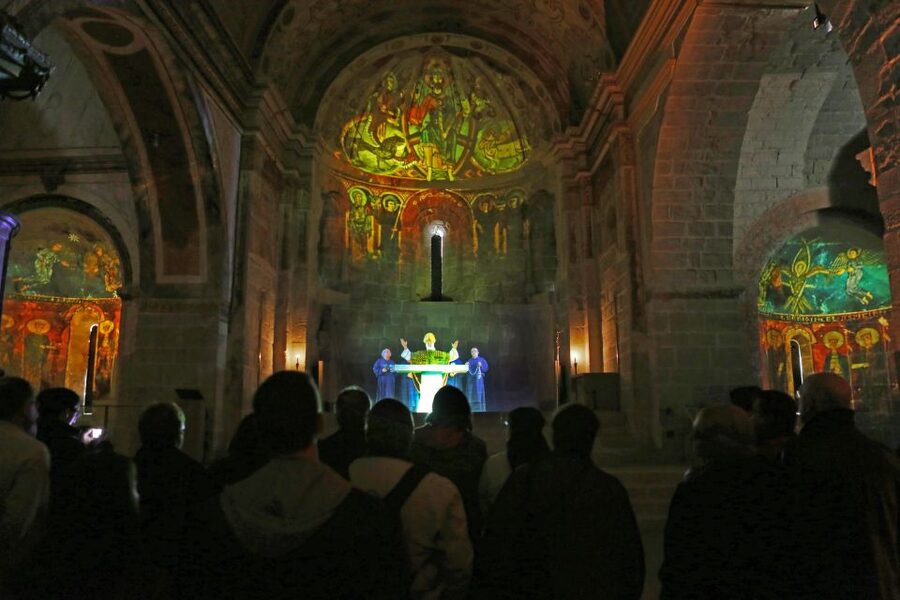
Many monastery visits ask you to admire stonework, read a few labels, and imagine the people who once lived there. Món Sant Benet takes a different route. Its museum presentation uses recorded voices, ordinary sounds, and images from the past to suggest how the complex functioned and how Catalan society changed over roughly 1,000 years.
That approach matters because a monastery was not only a religious building. It was also a place of work, routine, storage, worship, and social power. You get a better sense of those connected lives here than you would from architecture alone.
The experience is described as an emotive journey through key moments in Catalan history. That does not mean you should expect a long academic lecture. Instead, the visit gives you a guided structure for looking at the rooms and understanding why they mattered.
If you are especially interested in Catalan Romanesque art, this is a strong match. The visit is also suitable if your knowledge of Catalonia is limited, since the museum sets the monastery within a wider story of regional change.
A few more Barcelona options worth an hour of your trip
- Barcelona: Park Güell Admission Ticket
★ 4.4 · 76,534 reviews - Barcelona: Casa Batlló Entry with Self-Audioguide Tour
★ 4.7 · 25,359 reviews - Barcelona: 24 or 48-Hour Hop-On Hop-Off Bus Tour
★ 4.4 · 20,872 reviews
Arriving at La Fàbrica and starting the visit
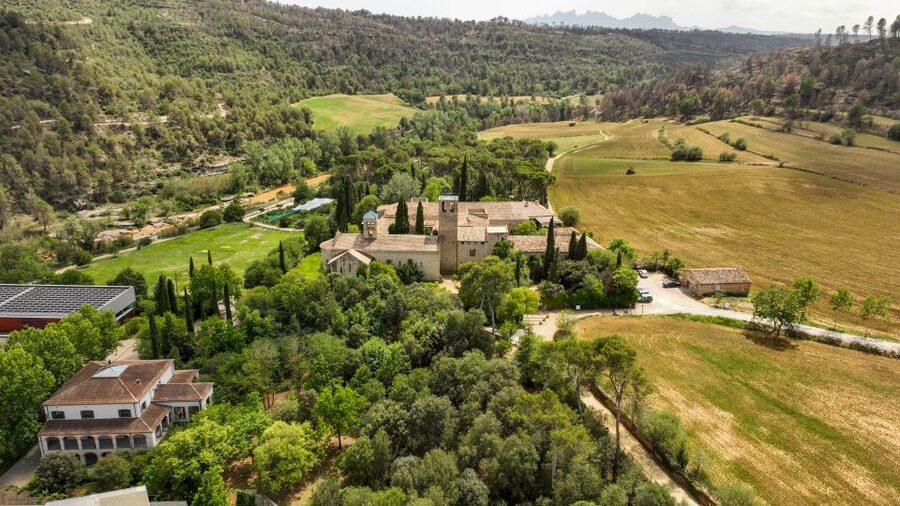
Your starting point is La Fàbrica, the reception area of Món Sant Benet on Camí de Sant Benet in Sant Fruitós de Bages. The activity begins and ends at this same meeting point, which keeps the visit straightforward once you arrive at the complex.
Check the available starting times when you book. The listed duration is 1.5 hours, so you can plan the monastery visit with reasonable precision, though you should leave extra time if you want to eat at one of the restaurants afterward.
Because the site is about 68 kilometers from Barcelona, it works best as a planned half-day outing or as part of a wider visit to the Sant Fruitós de Bages area. The available information does not specify a transport service or transfer from Barcelona, so you should arrange your own way to the reception point.
The church and cloister: the architectural heart
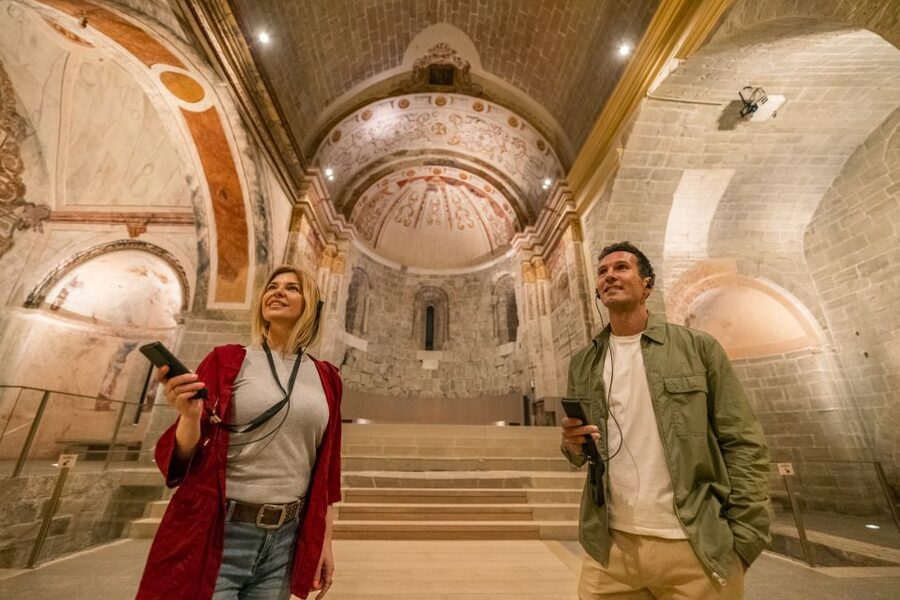
The church is one of the principal features of the visit. Here, the architecture gives you the clearest sense of the monastery’s religious purpose, while the museum material helps explain how worship fitted into the larger life of the community.
The cloister is another key stop. Cloisters are often the most memorable part of a medieval monastery because they join movement, silence, decoration, and practical daily use in one space. At Món Sant Benet, it forms part of a visit that links Romanesque art with the social story of Catalonia.
Take your time looking at the structure rather than rushing from one audio point to the next. The sound and image effects are designed to add atmosphere, but the physical details of the monastery still deserve your attention.
The exact pace depends on how closely you listen and how long you spend examining each room. If you are visiting with children or anyone who prefers a quick museum visit, the 1.5-hour format gives the outing a manageable shape.
The wine cellar and monastic cells
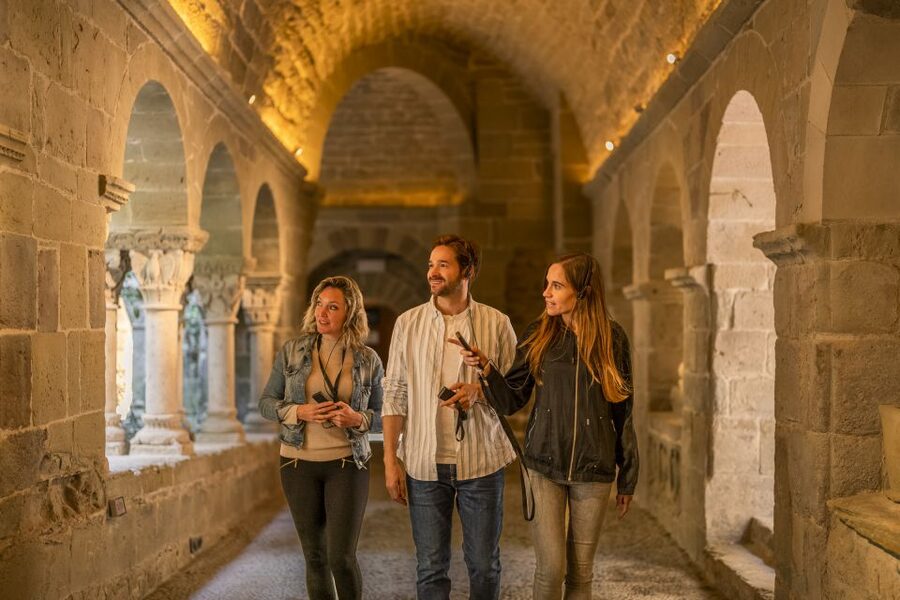
The wine cellar shows a practical side of monastery life. It shifts your attention from worship and decoration to the work needed to keep a large religious complex operating.
This is one of the useful strengths of the visit: you are not confined to the most polished or ceremonial spaces. The cellar helps you think about food, drink, storage, labor, and the material routines behind religious life.
The monastic cells provide another change in scale. After the church and cloister, these rooms bring the story back to individual life and the private spaces used by members of the community.
The visit includes the cells in the Montserrat gallery. That detail is worth noting when you compare this experience with a standard church tour. You are seeing several kinds of space, from public religious areas to working rooms and more personal quarters.
Same corner of Catalonia, a completely different day:
- Barcelona: Park Guell Guided Tour with Skip The Line Entry
★ 4.7 · 17,563 reviews - Barcelona in 1 Day: Sagrada Familia, Park Guell,Old Town & Pickup
★ 5.0 · 13,541 reviews - Barcelona Aquarium: Entry Ticket
★ 4.3 · 13,335 reviews - Barcelona: Sagrada Familia Skip-the-Line Entry Ticket & Tour
★ 4.8 · 12,789 reviews
Hearing Catalonia’s story through the museum
The museum is built around the social evolution of Catalonia over the last millennium. That broad span gives the monastery a useful role as a starting point for understanding how religious institutions connected with the wider region.
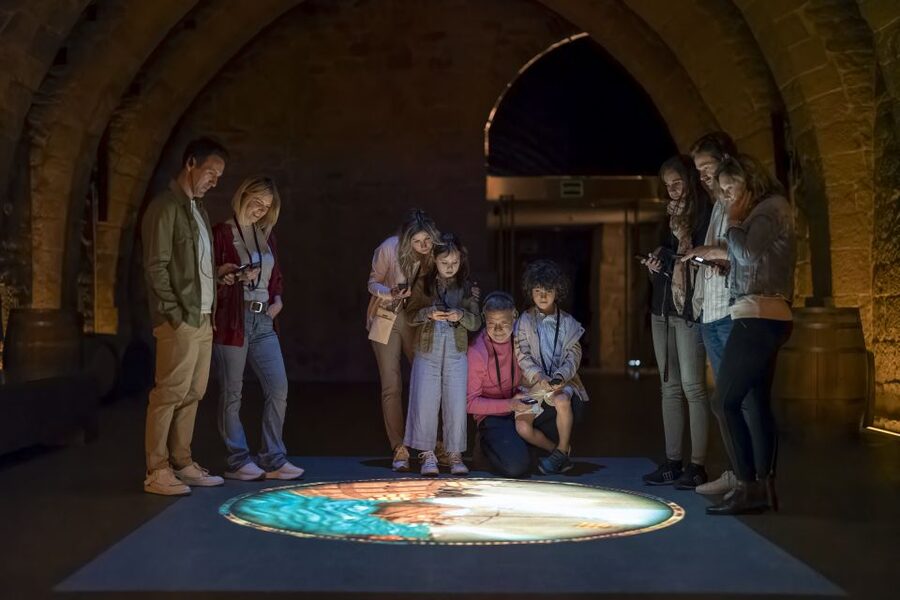
You will hear voices and everyday noises from the past as you move through the complex. Images also appear between the old walls, creating a presentation that is more sensory than a traditional audio tour.
I like this format for a site where the original residents are long gone. A bare room can be hard to interpret, but sound and visual scenes help you picture the human activity that once filled it. At the same time, you should know that the experience leans toward atmosphere and storytelling, not only dates, architectural terms, or formal art analysis.
The audio guide is available in Catalan, English, Spanish, and French. That makes the visit easier to follow for international visitors and gives you control over the pace. You can listen as you walk rather than remain with a fixed group or depend on a live guide.
No individual guide names are provided, and this is an audio-guided entrance rather than a tour led by a named person. If you prefer asking questions in real time, that difference may matter. If you like moving independently, the audio format is likely to suit you better.
Why the Romanesque focus matters
One of the strongest reasons to choose Món Sant Benet is its connection to Catalan Romanesque art. The monastery gives you actual architectural spaces to look at while the museum explains their place in a larger story.
You do not need to be an art specialist to appreciate this. The cloister and church offer a visual introduction to medieval forms, while the audio presentation helps connect what you see with how the monastery operated.
The experience can be particularly useful if you are building a wider Catalonia itinerary around Romanesque sites. It gives you cultural context before or after seeing other medieval churches and monuments.
Still, do not book it expecting a full survey of every Romanesque monument in Catalonia. The focus remains Món Sant Benet and the development of life around this monastery. That narrower focus is a virtue if you want one site explained properly, but less useful if you are seeking a broad art-history course.
The restaurant choice: make more of the visit
Món Sant Benet has three restaurants, including the Michelin-starred L’Ó. None of the dining options is included in the $18 entrance price, so treat lunch or dinner as a separate decision.
This is a practical advantage if you want to turn the monastery into a longer outing. You can visit the museum, then stay for a meal instead of rushing back to Barcelona immediately.
L’Ó will appeal to diners looking for a more formal fine-dining experience. The other two restaurants provide a wider choice, although the available details do not specify their menus or prices. Check those details separately before you commit to a restaurant booking.
The dining option also changes how you should plan your time. The monastery visit is only 1.5 hours, but a meal can extend the day considerably. If you want to eat on site, check restaurant availability rather than assuming a table will be open after your museum entry.
Is the $18 price good value?
At $18 per person, the ticket is reasonably priced for a 1.5-hour cultural visit with an audio guide. You are paying for access to a substantial historic complex, a museum presentation, and several distinct spaces rather than only entry to a single church.
The value is strongest if you appreciate interpretation. The church and cloister might justify a short stop for architecture lovers, but the audio effects and social-history presentation give you more to take away from the visit.
The price does not cover food at the restaurants, and you should also account for the cost and time of reaching Sant Fruitós de Bages from Barcelona. For someone already in the area, $18 is easier to justify than for someone making a long journey solely for a 90-minute visit.
I would compare it with the rest of your day, not just with other museum ticket prices. If you want a focused cultural stop followed by a good meal, the combined outing can offer solid value. If you want a packed Barcelona itinerary with no travel outside the city, this may feel like too much effort for the duration.
Accessibility, languages, and booking flexibility
The activity is wheelchair accessible, an important practical point for anyone who needs step-free access or is choosing an outing for a mixed-mobility group. The provided information does not give detailed access notes for each room, so contact the provider if you need specifics about routes within the monastery.
The audio guide is offered in Catalan, English, Spanish, and French. Select the language that lets you pay attention to both the narration and the building around you.
You can reserve now and pay later, which helps if you are arranging a trip with several moving parts. Free cancellation is available up to 24 hours in advance for a full refund.
Those terms are useful, but they do not remove the need to check the starting time. Since the visit has set availability, choose a time that leaves room for arrival at La Fàbrica and any meal you plan to have afterward.
Who will enjoy Món Sant Benet most?
I would recommend this experience to you if you enjoy old buildings but want more than a quick photograph. The sound, voices, and images make the monastery easier to understand, especially if you do not already know much about Catalan religious history.
It also suits art lovers with an interest in Romanesque architecture. The church and cloister give you the visual material, while the museum places it within a wider story.
Families and mixed-age groups may appreciate the 1.5-hour length and the changing presentation. The experience is not described as a children’s tour, so younger children who need constant activity may not connect with every section.
Food-focused visitors have another reason to come. The three restaurants, with L’Ó offering Michelin-starred dining, make it possible to pair the cultural visit with a more polished meal.
I would be less enthusiastic if your main goal is a long, traditional guided tour led by a historian. This is an audio-guided museum experience, and the emphasis is on sensory storytelling, architecture, and social history rather than live discussion.
Should you book Món Sant Benet?
Book it if you want a carefully shaped look at medieval Catalonia, enjoy Romanesque art, or like the idea of pairing a monastery visit with fine dining. The strongest features are the atmospheric use of sound and images, the range of spaces from church to wine cellar, and the chance to understand how the monastery fitted into Catalan life.
Think twice if you will be traveling a long way from Barcelona for this visit alone. The ticket is fair, but the location and 1.5-hour duration make the outing more worthwhile when combined with a meal or another stop in the area.
For the right itinerary, Món Sant Benet offers a thoughtful and accessible change of pace from Barcelona’s crowded sights. It gives you history you can see, hear, and place within real rooms, without demanding a full day.
FAQ
Where is Món Sant Benet located?
Món Sant Benet is in Sant Fruitós de Bages in Catalonia, Spain. The reception and meeting point is La Fàbrica, on Camí de Sant Benet.
How far is Món Sant Benet from Barcelona?
The monastery is approximately 68 kilometers, or 42 miles, from Barcelona.
How long does the monastery visit last?
The activity lasts about 1.5 hours. Check the available starting times when booking.
What does the ticket include?
The ticket includes audio-guided entrance to Món Sant Benet.
Which audio-guide languages are available?
The audio guide is available in Catalan, English, Spanish, and French.
Is Món Sant Benet wheelchair accessible?
Yes, the activity is listed as wheelchair accessible.
What parts of the monastery can I see?
The visit includes the church, cloister, wine cellar, and cells in the Montserrat gallery.
Are meals included in the ticket?
No. You can eat at one of the three restaurants at your own expense.
Does Món Sant Benet have a Michelin-starred restaurant?
Yes. The site includes L’Ó, a Michelin-starred restaurant.
Can I cancel my reservation?
Yes. You can cancel up to 24 hours in advance for a full refund. You can also reserve now and pay later.
Just added around Barcelona
- GoCar Full Day Tour★ 4.0 · 6 reviews
- Sagrada Familia and Barcelona Highlights: Private Guided 4-Hour Driving Tour★ 5.0 · 6 reviews
- Barcelona: Highlights & Gems Private Tour with Tapa & Drink★ 3.9 · 6 reviews
- Gothic Quarter and Born District: Photographic Workshop★ 5.0 · 6 reviews
- Gobbi Yacht Rental in Barcelona 9 Pax 2/4/8hs★ 5.0 · 6 reviews
- Private Sailboat Ride at Sunset from Sitges★ 5.0 · 6 reviews
- Barcelona: Gothic Quarter & La Sagrada Familia Private Tour★ 4.9 · 6 reviews
- Barcelona: Private Tour of Casa Batllo with Reserved Access★ 3.5 · 6 reviews
Tickets, compared.
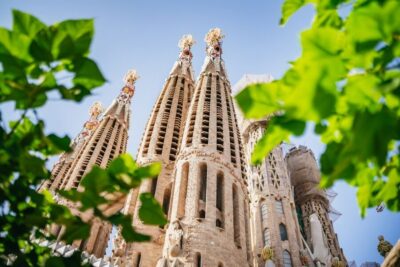
Sagrada Familia Skip-the-Line Entry Ticket & Tour
Read our review →
FC Barcelona Museum “Barça Immersive Tour” Ticket
Read our review →
Park Guell Guided Tour with Skip the Line Ticket
Read our review →
Park Guell and Sagrada Familia Tour with Skip the Line Tickets
Read our review →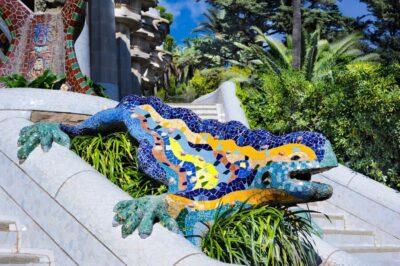
Park Güell and Gaudí House Museum Entry Ticket
Read our review →