
Reviewed · FLAMENCO AND GUITAR SHOWS
Palau de la Musica Catalana Admission Ticket with Audioguide
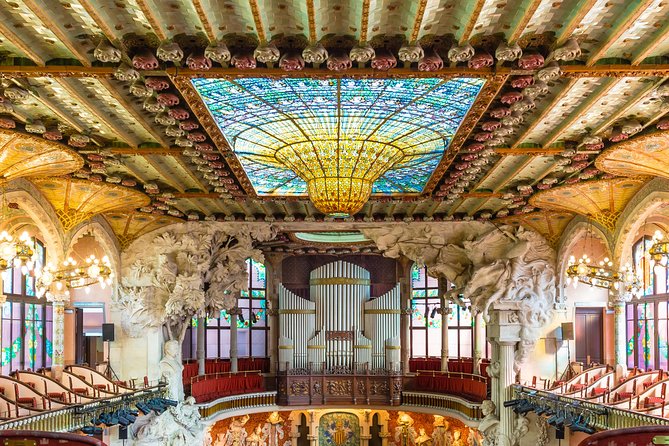
The great draw here is the concert hall itself, a dazzling Modernisme interior by Lluís Domènech i Montaner. Look up and you’ll find stained glass, flowers, palms, fruit, sculpted figures, mosaics, and a ceiling that turns daylight into part of the design. I like the chance to step onto the stage and the freedom to explore without being tied to a live guide.
I also like the compact 50-minute visit, which fits neatly into a day of sightseeing, and the audio app’s mix of narration, photographs, music, video, and a 360-degree concert view. The main drawback is simple: this is a phone-based tour, not a guided visit, and the audio setup can be confusing without your own earbuds or headphones.
In This Review
- Key points to know before you go
- Why the Palau de la Música Catalana deserves your time
- Entering at C/ Palau de la Música, 4-6
- The entrance stairs and Sala Millet
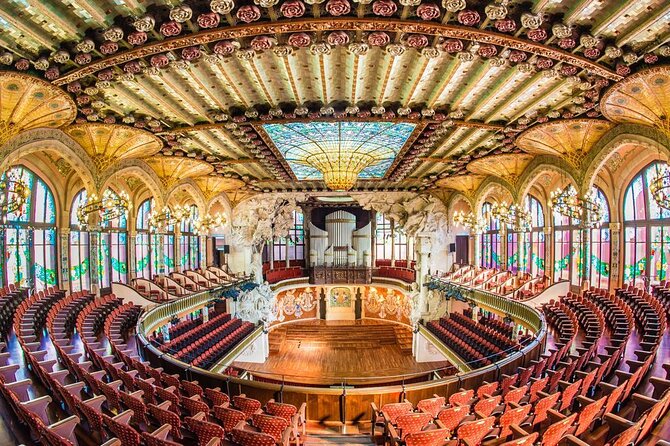
- The main hall, stained glass, and organ
- The balcony and the stage
- How the mobile audio guide works
- How much time should you allow?
- The café, restrooms, and a useful pause
- Who will get the most from this ticket?
- Is $28.96 good value?
- Should you book the Palau de la Música visit?
- FAQ
- Where does the Palau de la Música admission visit begin?
- Where does the activity end?
- How long does the visit take?
- Is there a live guide?
- What does the audio guide include?
- Are headphones provided?
- What does the admission ticket include?
- Is food included?
- Can I cancel the booking?
Key points to know before you go
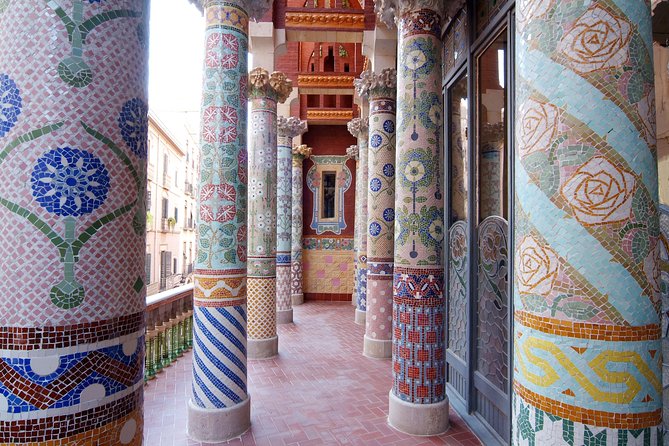
- The hall is the main event: The stained glass, organ, balconies, pillars, and sculptural details reward slow looking.
- Your phone replaces the guide: The tour uses a downloadable audio guide with images, music, video, and 360-degree material.
- Bring headphones: They make it easier to hear the narration while viewing the images on your screen.
- Plan on about 50 minutes: You can move at your own pace, though access to parts of the building may vary.
- A rehearsal or organ performance can add magic: If music is being played, the room’s acoustics give the visit extra life.
- The price is reasonable for architecture lovers: At $28.96 per person, the ticket is best value if you care about design, music, and Barcelona’s Modernisme tradition.
Why the Palau de la Música Catalana deserves your time
Barcelona has no shortage of famous architecture, but the Palau de la Música Catalana gives you a different kind of Antoni Gaudí-era experience. It is not a private house, park, or church. It is a working concert hall designed around music, and that purpose shapes every surface.
Lluís Domènech i Montaner created a building that feels almost like a three-dimensional catalogue of symbols. Flowers suggest growth. Palms and fruit bring nature indoors. Sculpted figures and musical references remind you that this is a temple for performance, not simply a pretty room.
I like that the visit gets you close to the details. You are not limited to a distant view through a doorway. The route takes you through the entry stairs, into the Sala Millet, around the hall, and up toward the stage where major musicians have performed.
The Palau is also a UNESCO World Heritage site, which helps explain the ticket price. You are paying for access to a protected architectural landmark, not just a quick look at a concert venue. At $28.96, it is more expensive than wandering through an ordinary historic building, but it compares well with other major Barcelona attractions if architecture is high on your list.
More flamenco and guitar nights:
- Barcelona: Tablao Flamenco Cordobes Show and Drink in Rambla
★ 4.6 · 3,822 reviews - Barcelona: Palau de la Música Self-Guided Tour
★ 4.6 · 3,603 reviews - Barcelona: Palau de la Música Guided Tour
★ 4.7 · 3,273 reviews
Entering at C/ Palau de la Música, 4-6
The visit begins at the Palau de la Música Catalana, C/ Palau de la Música, 4-6, in Barcelona’s Ciutat Vella. The activity ends at the same location, so you do not need to arrange a separate return transfer.
You show your mobile ticket at the entrance near your scheduled visit time. There is staff in the lobby, but this is not a personal tour with a guide leading your group from room to room. The staff can help with entry and, when needed, with the audio app, but you should arrive ready to manage the tour on your own phone.
The meeting point can feel less obvious than expected, especially when several groups are gathering nearby. Keep your confirmation open and look for the Palau entrance rather than searching for a separate tour representative. The experience provider is the Palau itself.
The building is close to public transportation, though access conditions can change. One visitor found a nearby rail station under construction and had a longer walk from the main plaza. That kind of problem is temporary, but it is a good reason to allow extra time in Barcelona’s narrow central streets.
The entrance stairs and Sala Millet
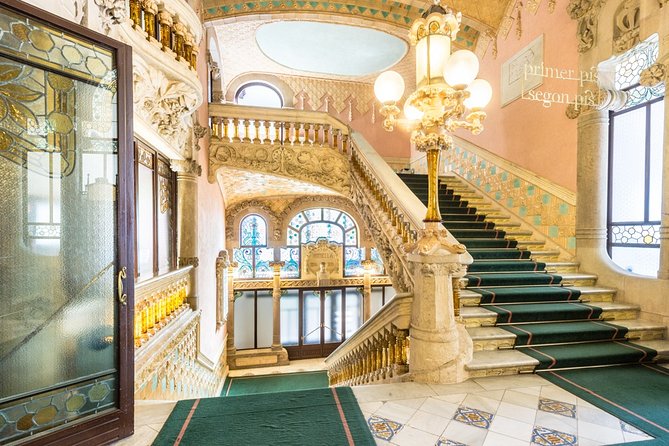
The first part of the route introduces the building’s grand scale. The entry stairs are not plain functional steps. They form part of the spectacle, preparing you for a hall where decoration continues from floor to ceiling.
Next comes Sala Millet, described as a kind of Modernisme encyclopaedia. It is a useful stop because it gives you time to notice the vocabulary of the building before reaching the main auditorium. Look for the repeated natural forms and the way ornament is used to connect architecture with music and Catalan identity.
The audio guide adds narration, images, music, and video. This is helpful when the app works properly, since the screen can show details that are hard to identify from the room alone. I recommend downloading or opening the guide before you reach the busiest part of the entrance process, then checking that your phone volume and headphones work.
Some visitors found the application difficult to connect or said it stopped during the route. Staff helped in several cases, but you should not count on a fast technical fix if the building is busy. Bring your own earbuds or headphones, since they are not included.
The main hall, stained glass, and organ
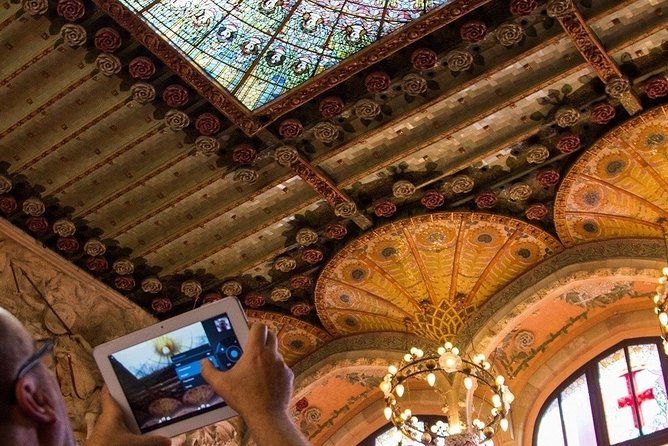
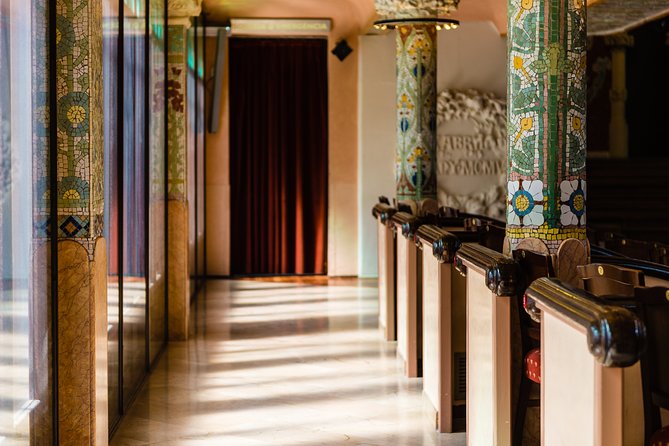
The auditorium is the reason to book this visit. Its color, light, and decoration are far more striking than the exterior suggests. The central stained-glass ceiling creates the feeling of a huge skylight, while the surrounding balconies, pillars, mosaics, and sculpted forms keep your eyes moving.
I would give yourself time here beyond simply following the audio prompts. Stop in the seats, look toward the ceiling, then turn around and study the balconies. The room is designed to be seen from several angles, so rushing through it reduces much of the value.
The organ is another strong point. If it is played during your visit, even briefly, you get a better sense of why this room was built as a musical instrument as much as an auditorium. Several people happened to hear the organ or a rehearsal, and the live sound made the architecture feel less like a museum display and more like a working performance space.
A rehearsal may be visible or audible, but it is not guaranteed. Treat it as an extra, not as part of the ticket promise. If you want a full concert, you need to arrange that separately.
A few more Barcelona options worth an hour of your trip
- Barcelona: Park Güell Admission Ticket
★ 4.4 · 76,534 reviews - Barcelona: Casa Batlló Entry with Self-Audioguide Tour
★ 4.7 · 25,359 reviews - Barcelona: 24 or 48-Hour Hop-On Hop-Off Bus Tour
★ 4.4 · 20,872 reviews - Barcelona: Park Guell Guided Tour with Skip The Line Entry
★ 4.7 · 17,563 reviews
The balcony and the stage
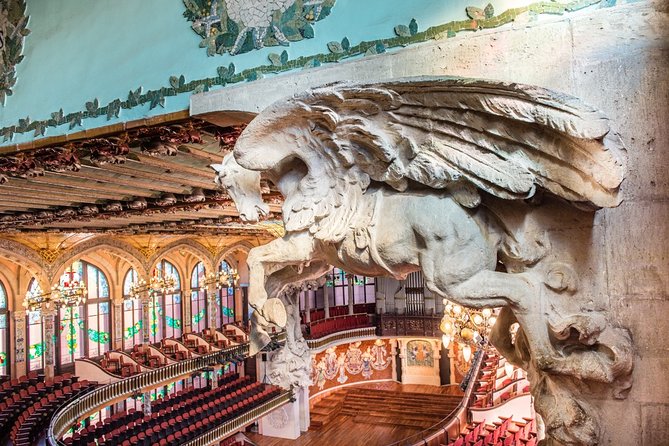
The balcony gives you one of the best photo angles in the building. From there, you can take in the hall’s curves, stained glass, ornament, and relationship between the stage and audience. If a tour group is filling the balcony, patience helps. A short wait may give you a clearer view.
The route also allows you to go up toward the stage, a detail that makes this ticket more engaging than a simple foyer visit. You can imagine the room from the performer’s side and see how the auditorium frames the audience.
Access can vary by day. One visit included the upper level but found the lower level blocked off, so you should not assume every corner will always be open. Concert preparation, rehearsals, maintenance, or crowd control may alter the route.
That flexibility is part of visiting a working concert venue. You may get a less complete circuit than expected, but you may also hear a pianist or organist practicing. The tradeoff is worthwhile for many music fans, though it can frustrate anyone expecting a perfectly fixed museum route.
How the mobile audio guide works
The audio guide is accessed through your phone using a four-digit code found with the booking information. The route is self-guided, so you can stop for photographs, replay a section, or move ahead when a room is crowded.
The format suits independent visitors. You do not have to keep pace with a group, and you can spend longer with the pillars or ceiling if those details interest you. I also like that the content is not limited to spoken history. Music, images, video, and the 360-degree concert material give you several ways to understand the space.
The phone-only system is also the experience’s weakest link. Without headphones, you may need to hold the phone near your ear, which makes it hard to view the photographs at the same time. In a quiet room, the sound may be adequate, but you should not assume it will be easy to hear in every area.
Bring charged headphones and make sure you know how to adjust the volume before entry. If the app fails, you can still enjoy the architecture, but you will lose much of the historical and musical context included in the ticket.
How much time should you allow?
The official visit lasts about 50 minutes. That is enough to see the principal spaces without turning the experience into a half-day commitment. I would allow a little extra time around the appointment for entry, app setup, photographs, and any delays.
The compact length makes this easy to combine with other sights in Ciutat Vella. You can schedule it between meals, shopping, or another central Barcelona visit. The downside is that a 50-minute route leaves little room if the audio application takes 20 minutes to install or if part of the building closes early.
Check the time carefully and arrive promptly. A delayed start can cut into the period you have inside, particularly if the building needs to close or prepare for another event. One person had less than 30 minutes because of an audio problem and a fixed departure time.
The maximum group size is 55 people, although the self-guided format means you may not move as one large unit. The atmosphere can still change quickly when several groups reach the balcony or main hall together.
The café, restrooms, and a useful pause

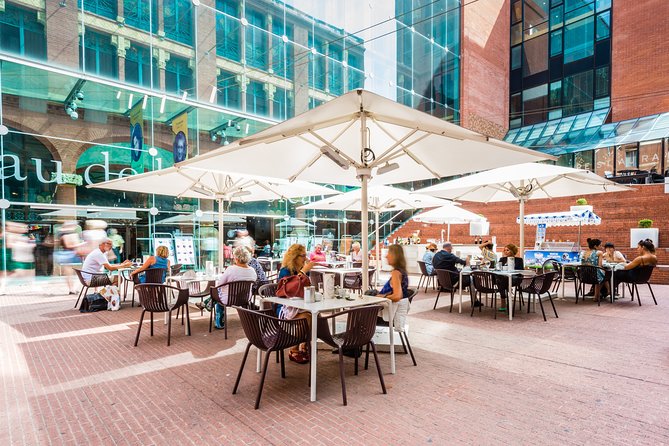
The Palau has a café that can be entered from the street, so you do not need a ticket simply to stop there. It also has restrooms and an outdoor seating area with tables and umbrellas.
That makes the café a handy place to pause before or after the visit. A croissant and coffee can turn the building into a pleasant short stop rather than another rushed attraction. There is also a gift shop for the usual souvenirs.
Do not build your whole schedule around eating there, since the ticket does not include food or drinks. Think of these facilities as useful extras. They are especially convenient if you are visiting with someone who wants a break while you take a closer look at the architecture.
Who will get the most from this ticket?
I would choose this visit if you enjoy architecture, music, photography, or Barcelona’s Modernisme style. The building rewards anyone who likes examining materials and symbols rather than simply checking off a famous address.
It also works well for independent visitors who dislike fixed guided groups. You can move at your own pace and sit quietly in the hall while listening to the narration. The audio content is described as clear and easy to follow, though some people found it too brief or less detailed than a live guide.
If you want a deep explanation of Domènech i Montaner’s design choices, a human guide may suit you better. The app gives structure and useful context, but it cannot answer questions or adjust its pace to your interests.
Families and most sightseeing visitors can participate, and service animals are allowed. The main practical concern is comfort with smartphone technology. If you do not enjoy downloading apps or troubleshooting audio, the building itself is still worth seeing, but the ticket’s full value depends on using the guide.
Is $28.96 good value?
At $28.96 per person, this is not a bargain basement attraction. Still, the ticket includes entry to a UNESCO-listed building, access to the principal interior spaces, and a multimedia audio guide. For someone interested in Barcelona’s architecture, that is a fair price for a short, central visit.
The value rises if you take time with the details and use the musical material. The value falls if you cannot get the app working, arrive during a restricted route, or expect a full concert. A live performance would offer a different experience and should be considered separately if music is your main reason for coming.
The average booking time is 17 days ahead, so advance planning is sensible during busy periods. Free cancellation is available if you cancel at least 24 hours before the start time. Within 24 hours, the payment is not refunded, and late changes are not accepted.
Should you book the Palau de la Música visit?
Book it if the idea of sitting beneath a stained-glass ceiling, studying carved flowers and pillars, and hearing the organ or a rehearsal appeals to you. The beautiful auditorium and close access to the stage make this one of Barcelona’s strongest short architecture visits.
Skip it if you want a personal guide, a guaranteed performance, or a completely effortless audio system. If you do book, bring headphones, allow time for entry, and keep your schedule flexible enough to enjoy the hall even if the app or route is imperfect.
FAQ
Where does the Palau de la Música admission visit begin?
It begins at Palau de la Música Catalana, C/ Palau de la Música, 4-6, Ciutat Vella, 08003 Barcelona, Spain.
Where does the activity end?
The visit ends back at the meeting point at the Palau de la Música Catalana.
How long does the visit take?
The visit lasts approximately 50 minutes.
Is there a live guide?
No. This is a self-guided audio tour accessed on your own mobile phone.
What does the audio guide include?
It includes explanations, images, music, video, and a 360-degree view connected with a concert night.
Are headphones provided?
No. Headphones are not included, so bring your own earbuds or headphones.
What does the admission ticket include?
It includes admission to the Palau de la Música Catalana and access to the mobile audio guide.
Is food included?
No. Food and drinks are not included, though the building has a café and outdoor seating area.
Can I cancel the booking?
Yes. You can receive a full refund if you cancel at least 24 hours before the experience start time. Cancellations within 24 hours are not refunded.
Just added around Barcelona
- GoCar Full Day Tour★ 4.0 · 6 reviews
- Sagrada Familia and Barcelona Highlights: Private Guided 4-Hour Driving Tour★ 5.0 · 6 reviews
- Barcelona: Highlights & Gems Private Tour with Tapa & Drink★ 3.9 · 6 reviews
- Gothic Quarter and Born District: Photographic Workshop★ 5.0 · 6 reviews
- Gobbi Yacht Rental in Barcelona 9 Pax 2/4/8hs★ 5.0 · 6 reviews
- Barcelona: Gothic Quarter & La Sagrada Familia Private Tour★ 4.9 · 6 reviews
- Private Sailboat Ride at Sunset from Sitges★ 5.0 · 6 reviews
- Barcelona: Private Tour of Casa Batllo with Reserved Access★ 3.5 · 6 reviews
Flamenco and Guitar Shows, compared.

Tablao Flamenco Cordobes Show and Drink in Rambla
Read our review →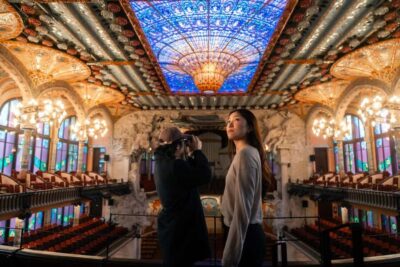

Tablao Flamenco Cordobes on Rambla Barcelona with Dinner Option
Read our review →
Flamenco Show with Dinner at Tablao de Carmen
Read our review →

Flamenco Night at Tablao Cordobes in Barcelona
Read our review →Browse the lists this tour appears in