
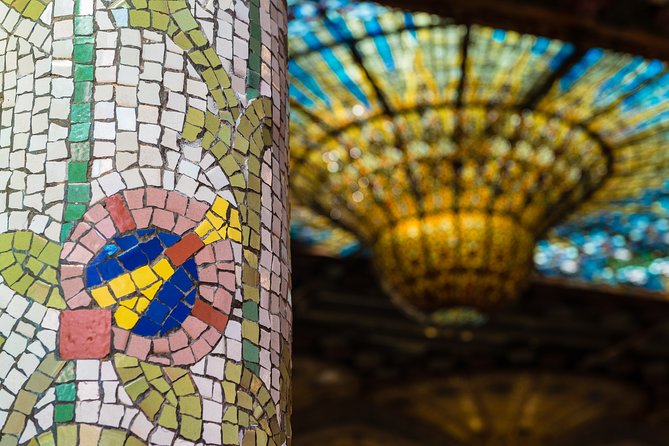
Reviewed · FLAMENCO AND GUITAR SHOWS
Palau de la Musica Catalana Guided Tour
Barcelona has grand churches, Gaudí houses, and crowded museums. Yet the Palau de la Música Catalana may be the city’s most delightful surprise. Its concert hall is a riot of stained glass, floral mosaics, sculpted figures, glazed tiles, and warm color. The one-hour guided visit explains how all those details work together, rather than leaving you to simply admire a pretty room.
I especially like the small group limit of 15 and the opening 15-minute film, which gives the building a useful setting before you start climbing stairs. I also like the price, about $26.60, for access to a UNESCO-listed interior that you might otherwise miss. The main drawback is the short duration: a fast guide, or a guide whose English is less clear, can make the hour feel rushed.
- The Concert Hall is the grand finale, with stained-glass arches and an inverted-dome skylight.
- The 15-minute film explains the building’s origins and early-20th-century Barcelona.
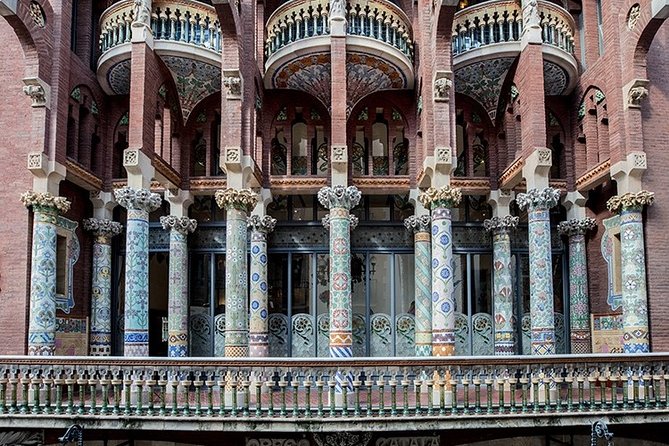
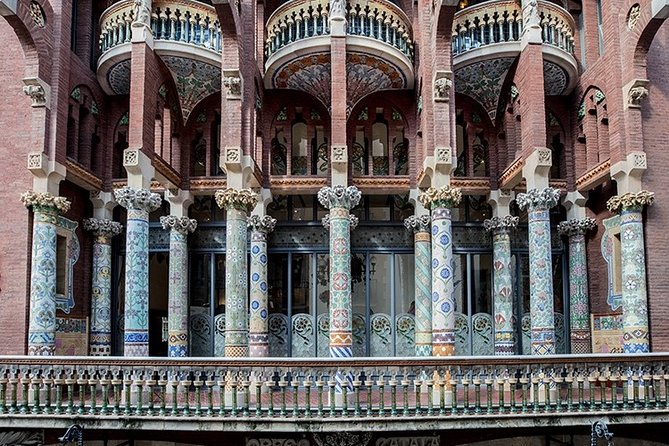
- Lluís Millet Hall opens onto a balcony colonnade decorated with flower mosaics.
- The staircases are part of the attraction, with elaborate tilework and glass balusters.
- Groups are capped at 15 people, making it easier to hear the guide.
- Prebooking matters, since popular time slots can fill, and the average booking lead time is about 29 days.
In This Review
- Why This Music Hall Deserves an Hour
- Meeting at the Palau in La Ribera
- The Rehearsal Hall and the 15-Minute Film
- Climbing the Tiled Staircases
- Lluís Millet Hall and Its Flower Mosaics
- The Concert Hall: The Tour’s Big Moment
- How Much Information Do You Get?
- Price, Timing, and Overall Value
- Who Should Book This Visit?
- Helpful Tips Before You Go
- Should You Book the Palau de la Música Tour?
- FAQ
- How long does the Palau de la Música Catalana guided tour last?
- What is included in the tour price?
- Is the tour offered in English?
- How large is the tour group?
- Where does the tour begin?
- Where does the tour end?
- Do I need to book in advance?
- Is food or drink included?
- Can I cancel for a full refund?
Why This Music Hall Deserves an Hour
The Palau de la Música Catalana was designed as a working concert hall, not a quiet palace built only for display. That matters. You are looking at decoration that was meant to support music, performance, and civic life.
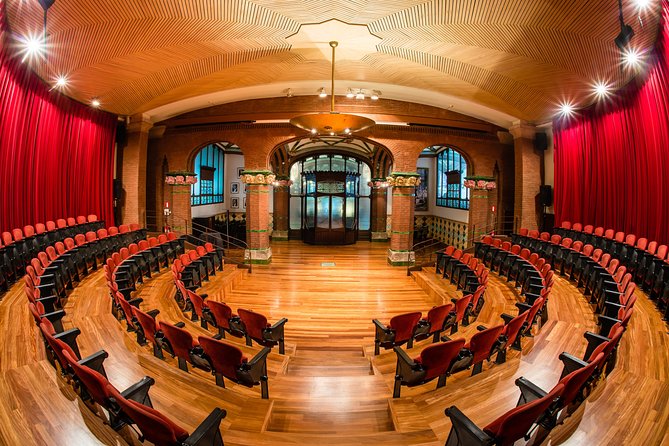
The building is one of Barcelona’s finest examples of Catalan Modernisme, the local form of Art Nouveau. The design was led by architect Lluís Domènech i Montaner, while artists including Eusebi Arnau, Pau Gargallo, Lluís Bru, and Antoni Rigalt contributed sculpture, mosaics, and stained glass.
I like the way the tour connects these names to things you can actually see. Instead of giving you a long lecture about architecture, the guide points toward the sculpted stage details, the tiled surfaces, the nature motifs, and the glasswork overhead.
The tour is conducted in English and lasts about one hour. That makes it easy to fit before lunch, between attractions, or ahead of an evening performance. It also means you should not expect a slow, highly detailed architectural study. This is a focused introduction.
Meeting at the Palau in La Ribera
The meeting point is the Palau de la Música Catalana, at C/ Palau de la Música, 4-6, in Barcelona’s Ciutat Vella. The attraction is near public transportation, and the tour ends back at the same general location.
Allow a little time to find the correct entrance. One useful practical detail is that the meeting area may be inside, behind the bar, rather than directly outside as some booking directions suggest. Check your confirmation carefully and arrive early enough to avoid a last-minute scramble.
You select a departure time when booking. That flexibility is helpful in Barcelona, where a morning visit to one landmark can easily run long. The tour also includes a mobile ticket, so you do not need to collect a paper voucher.
The ticket is described as skip-the-line admission, which removes one possible delay. Still, the best reason to book ahead is not just the queue. The Palau has limited tour capacity, and the popular time slots can fill.
More flamenco and guitar nights:
- Barcelona: Tablao Flamenco Cordobes Show and Drink in Rambla
★ 4.6 · 3,822 reviews - Barcelona: Palau de la Música Self-Guided Tour
★ 4.6 · 3,603 reviews - Barcelona: Palau de la Música Guided Tour
★ 4.7 · 3,273 reviews
The Rehearsal Hall and the 15-Minute Film
The visit begins in the Rehearsal Hall of the Orfeó Català. The foundation stone was laid here in 1905, giving the room a direct connection to the building’s beginnings.
Before the walking portion, you watch a roughly 15-minute audio-visual presentation. It covers the construction of the Palau and the social setting of early-20th-century Barcelona. I find this a smart use of time because the building can otherwise feel like a flood of beautiful surfaces with no clear order.
The film gives you a basic timeline and explains why the Palau mattered to Catalan musical and cultural life. Once you move into the decorated rooms, you have a better idea of what you are seeing and why the project was important.
The film is also the least active part of the experience. If you have only one day in Barcelona and prefer constant movement, 15 minutes seated indoors may feel long. For most people, though, it improves the rest of the visit.
Climbing the Tiled Staircases
From the Rehearsal Hall, the group heads toward the elaborate staircases leading to the second floor. These are not plain routes between rooms. Their undersides are covered with decorative tiles, and the stair rails use unusual glass balusters beneath marble banisters.
This is a good place to slow your eyes down. Look under the stairs, not just ahead. The Palau’s design rewards attention to surfaces that many people would normally ignore.
The stairway also gives you a sense of how the building’s decoration works from different angles. The tiles, marble, glass, and light change as you climb. A guide can point out details that are easy to miss, especially if the group is moving at the pace of the schedule.
There are stairs involved, so this section may be less comfortable for anyone who has trouble climbing. The supplied information says most people can participate and that service animals are allowed, but it does not provide a detailed mobility-access statement. If stairs are a concern, contact the provider before booking.
Lluís Millet Hall and Its Flower Mosaics
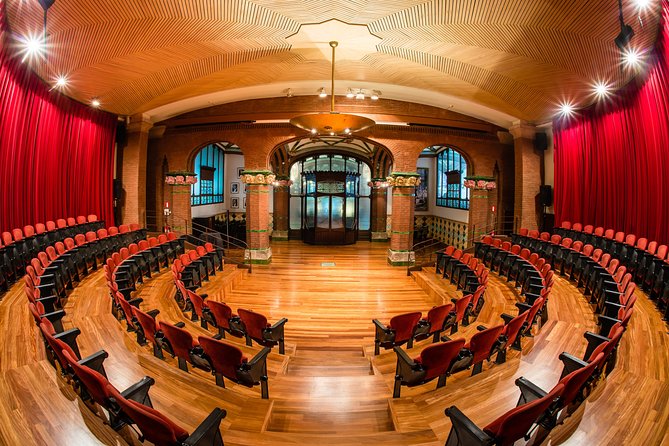
At the top, you enter the Lluís Millet Hall. Its floor-to-ceiling windows look toward the balcony colonnade on the main façade.
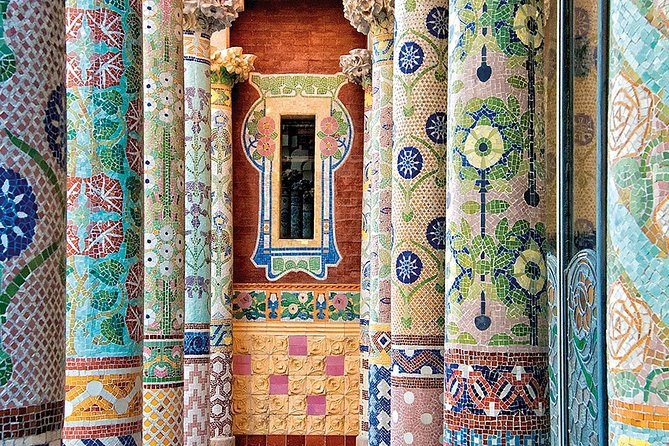
This room is lighter and more open than the concert auditorium. The columns outside are covered in mosaics depicting flowers, a clear tribute to nature. The floral decoration is a good example of the Modernisme love of organic forms. It is not decoration added as an afterthought. Nature shapes the visual language of the building.
The windows make this a fine photo stop, although the room can feel brief if the guide has to keep the group moving. Take a moment to look both outward and inward. The balcony colonnade is one of the easiest places to understand how the Palau combines architecture with color.
This is also where the tour’s small size helps. With no more than 15 people, you have a better chance of hearing the explanation and getting close enough to inspect the mosaics. A larger crowd would make the narrow interior less pleasant.
A few more Barcelona options worth an hour of your trip
- Barcelona: Park Güell Admission Ticket
★ 4.4 · 76,534 reviews - Barcelona: Casa Batlló Entry with Self-Audioguide Tour
★ 4.7 · 25,359 reviews - Barcelona: 24 or 48-Hour Hop-On Hop-Off Bus Tour
★ 4.4 · 20,872 reviews - Barcelona: Park Guell Guided Tour with Skip The Line Entry
★ 4.7 · 17,563 reviews
The Concert Hall: The Tour’s Big Moment
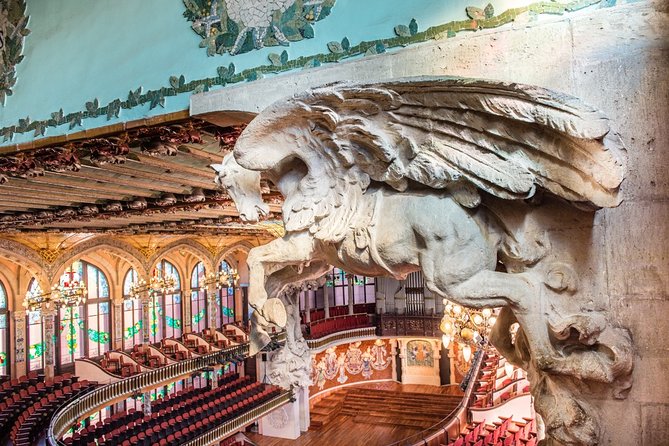
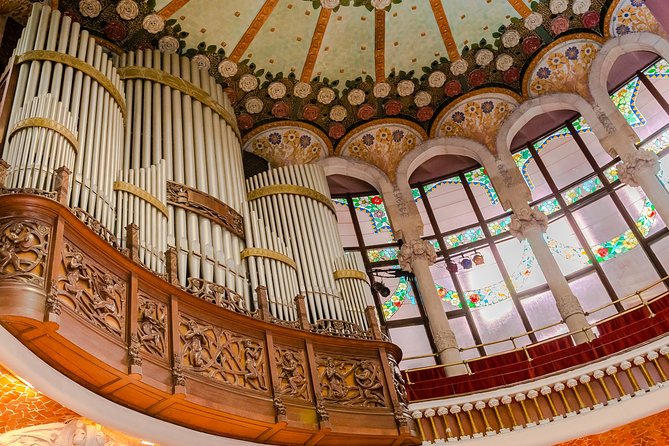
The Concert Hall is the main event. You enter beneath huge panes of stained glass set into arched sections along the walls. Above you is the hall’s famous skylight, shaped like an inverted dome.
The effect is theatrical even when the room is empty. The skylight draws your gaze upward, while the stained glass changes the quality of the natural light. Sculptures and decorative elements surround the stage, and the guide explains the work of artists such as Eusebi Arnau, Pau Gargallo, Lluís Bru, and Antoni Rigalt.
I like that the tour does not treat the room as a collection of unrelated ornaments. You learn how the architecture was planned for music, including singing and orchestral performances. The organ is another memorable feature, with nearly 3,000 pipes. On some visits, you may be lucky enough to hear it played or see musicians rehearsing.
A rehearsal is not guaranteed, so do not book the tour expecting a concert. But an organist, vocalist, or other performer practicing can add a genuine working-life glimpse to the visit.
Some tours may include a view from the stage or a chance to sit near the front, depending on access and what is happening in the hall. These details are not guaranteed, but they help explain why the Palau feels like an active venue rather than a sealed museum.
The acoustics are part of the room’s appeal. You may hear how the hall carries singing and orchestral sound, but the guided visit is not an acoustics demonstration with a set performance. The emphasis remains on architecture, decoration, and design.
How Much Information Do You Get?
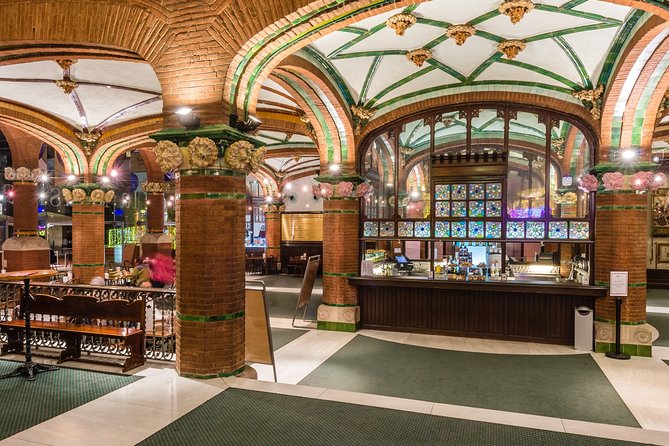
The guide is central to the experience. A good guide makes the building easier to read, explaining why the mosaics use nature motifs, how the concert hall was designed, and who created the sculpture and stained glass.
The audio equipment is intended to help. The small earpiece hooks behind your ear, and you can adjust the volume. If the sound is too quiet, ask the guide or staff to help you set it at the start. One complaint about the tour involved a guide speaking quickly and mechanically, with no explanation of the earpiece volume. That is a useful reminder to speak up early if you cannot hear.
Most impressions of the guiding are positive, with praise for clear explanations, friendly manners, and strong knowledge of the building. English ability can vary, so the experience may depend somewhat on the individual guide assigned to your departure.
The tour can also finish a little short of the advertised hour. That is not a major problem when the guide leaves time to look around, but it is worth knowing if you expect a full 60-minute lecture.
Price, Timing, and Overall Value
At about $26.60 per person, this is not Barcelona’s cheapest indoor stop. It is still a fair price for a guided visit to a UNESCO World Heritage-listed building, especially since admission and the audio-visual presentation are included.
The value is strongest if you appreciate architecture but do not know much about Catalan Modernisme. The guide gives you context, identifies the artists, and directs your attention to details that would be easy to miss on a self-guided walk.
The value is weaker if you only want to peek into the concert hall and leave. The visit takes about an hour, includes a 15-minute film, and follows a set route through several rooms. You are paying for interpretation as well as entry.
Because the Palau is also a concert venue, you can consider pairing the tour with a later performance if one fits your plans. The tour itself does not include food, drinks, or a concert ticket. Some people have enjoyed having a drink or meal at the Palau, but those costs are separate.
Free cancellation is available if you cancel at least 24 hours before the start time. Changes or cancellations made less than 24 hours ahead are not accepted for a refund.
Who Should Book This Visit?
I would recommend this tour to first-time visitors who want more than another exterior photo of Barcelona’s Modernisme buildings. It is especially suitable for anyone who enjoys stained glass, tilework, sculpture, music, or the way a building is engineered for sound.
It also suits a tight schedule. An hour is enough to see the main rooms without consuming half a day. Families and mixed-interest groups may find the short format easier than a long museum visit.
You should think twice if your Barcelona plan is already packed with Gaudí interiors and historic buildings. The Palau is different, but another architectural tour may feel repetitive if you are exhausted.
Music lovers should pay particular attention to the Concert Hall and organ. Even without a performance, the tour explains how the room was designed for voices and orchestras. If you can add a live concert later, the building will make more sense as a place for music, not just a beautiful shell.
Helpful Tips Before You Go
- Book your preferred time in advance. The experience is often reserved about 29 days ahead, and spaces can fill.
- Arrive early, especially since the meeting point may be inside near the bar rather than directly outside.
- Bring your mobile ticket and check the departure time carefully.
- Ask for help with the earpiece before the film or walking tour begins.
- Look beneath the staircases, not only at the main rooms.
- In the Concert Hall, look up at the inverted-dome skylight, then study the stained-glass arches and stage sculpture.
- Do not count on hearing a rehearsal or the organ. Those moments can happen, but they are not listed as a guaranteed part of the tour.
- Use the tour as an introduction. If you want more time inside, check whether a concert or another visit fits your schedule.
Should You Book the Palau de la Música Tour?
Yes, if you want a short, focused introduction to one of Barcelona’s most distinctive interiors. The building itself is the reason to go, but the guide and opening film turn a beautiful visit into a more understandable one.
At $26.60, the tour is good value for people who enjoy architecture, music, and decorative art. The main caution is pace. Ask for help with the audio equipment, arrive at the right entrance, and keep your expectations realistic about the one-hour format.
I would not make it the only cultural stop in Barcelona, but I would gladly add it between larger attractions. The Palau’s mosaics, glass, organ, and extraordinary ceiling provide a welcome change from the city’s better-known Gaudí sights.
FAQ
How long does the Palau de la Música Catalana guided tour last?
The tour lasts approximately one hour, including the visit through the main rooms and the 15-minute audio-visual clip.
What is included in the tour price?
The price includes a local guide, the 15-minute audio-visual clip, and admission to the Palau de la Música Catalana.
Is the tour offered in English?
Yes. The experience is offered in English.
How large is the tour group?
The group has a maximum of 15 people.
Where does the tour begin?
The meeting point is the Palau de la Música Catalana at C/ Palau de la Música, 4-6, in Barcelona’s Ciutat Vella.
Where does the tour end?
The activity ends back at the meeting point, near the Palau’s exit.
Do I need to book in advance?
Advance booking is sensible because spaces can fill, and the experience is booked on average about 29 days ahead.
Is food or drink included?
No. Food and drinks are not included in the tour price.
Can I cancel for a full refund?
Yes, if you cancel at least 24 hours before the experience starts. Cancellations or changes made less than 24 hours in advance are not accepted for a refund.
Just added around Barcelona
- GoCar Full Day Tour★ 4.0 · 6 reviews
- Sagrada Familia and Barcelona Highlights: Private Guided 4-Hour Driving Tour★ 5.0 · 6 reviews
- Barcelona: Highlights & Gems Private Tour with Tapa & Drink★ 3.9 · 6 reviews
- Gothic Quarter and Born District: Photographic Workshop★ 5.0 · 6 reviews
- Gobbi Yacht Rental in Barcelona 9 Pax 2/4/8hs★ 5.0 · 6 reviews
- Barcelona: Gothic Quarter & La Sagrada Familia Private Tour★ 4.9 · 6 reviews
- Private Sailboat Ride at Sunset from Sitges★ 5.0 · 6 reviews
- Barcelona: Private Tour of Casa Batllo with Reserved Access★ 3.5 · 6 reviews
Flamenco and Guitar Shows, compared.

Tablao Flamenco Cordobes Show and Drink in Rambla
Read our review →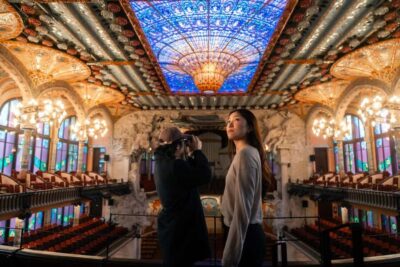

Tablao Flamenco Cordobes on Rambla Barcelona with Dinner Option
Read our review →
Flamenco Show with Dinner at Tablao de Carmen
Read our review →
Flamenco Night at Tablao Cordobes in Barcelona
Read our review →Browse the lists this tour appears in