Reviewed · BARCELONA TOURS
Stories, Legends and Mysteries of Barcelona
Barcelona’s old center becomes far more interesting when you stop treating it as a parade of handsome buildings. This two-hour walk follows the city’s stranger stories, from devil pacts at Plaça del Pi to Santa Eulalia’s martyrdom, Roman funeral customs, and the scars left by the Spanish Civil War.
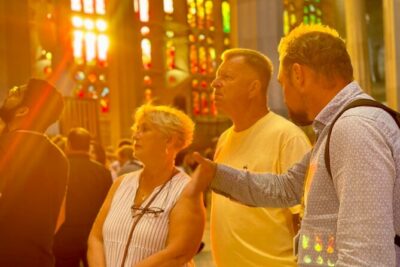
I like the focused small-group format, capped at 10 people, and the way guide Ivan Stabile uses pictures and expressive storytelling to make the past easier to follow. I also like the price: at $23, you get a substantial introduction to Barcelona’s Gothic quarter without committing half a day or paying museum-tour prices.
The main consideration is the subject matter. This is a history-and-legends walk, not a relaxed architecture stroll, and some stories involve executions, martyrdom, death, and wartime destruction. The information also says the tour is wheelchair accessible while listing it as unsuitable for people with mobility impairments, so you should confirm the route’s practical suitability before booking.
In This Review
- Key points to know before you book
- Why Barcelona’s legends work best on foot
- Plaça del Pi and the city’s darker folklore
- Santa Eulalia, martyrdom, and the power of a city symbol
- Roman funeral customs beneath the medieval city
- The Ponte del Bisbe and a legend in stone
- Plaça Sant Felip Neri and the marks of war
- Plaça del Rei and an attempted royal assassination
- What Ivan Stabile adds to the walk
- Is $23 a fair price for two hours?
- Practical details for a smoother walk
- Who should book this Barcelona experience?
- Should you book Stories, Legends and Mysteries of Barcelona?
- FAQ
- How long does the tour last?
- Where does the tour begin?
- Where does the tour end?
- What languages are available?
- Who leads the tour?
- How many people can join the group?
- What does the tour focus on?
- Which places are discussed during the walk?
- What should I bring?
- Can I cancel the booking?
Key points to know before you book
- Stories rather than standard sightseeing: The walk uses legends, odd customs, and dramatic events to explain familiar Barcelona corners.
- A small group of no more than 10: You should have a good chance to hear Ivan clearly and ask questions.
- A two-hour route through the historic center: The walk begins at Carrer d’Estruc and Carrer de Fontanella and ends there.
- Stops with real historical weight: Plaça del Pi, the Ponte del Bisbe, Plaça Sant Felip Neri, and Plaça del Rei all receive special attention.
- English and Spanish guiding: Ivan Stabile leads the tour in either language, depending on the selected departure.
- A low-cost, flexible booking: The price is $23 per person, with free cancellation up to 24 hours before the start.
Why Barcelona’s legends work best on foot
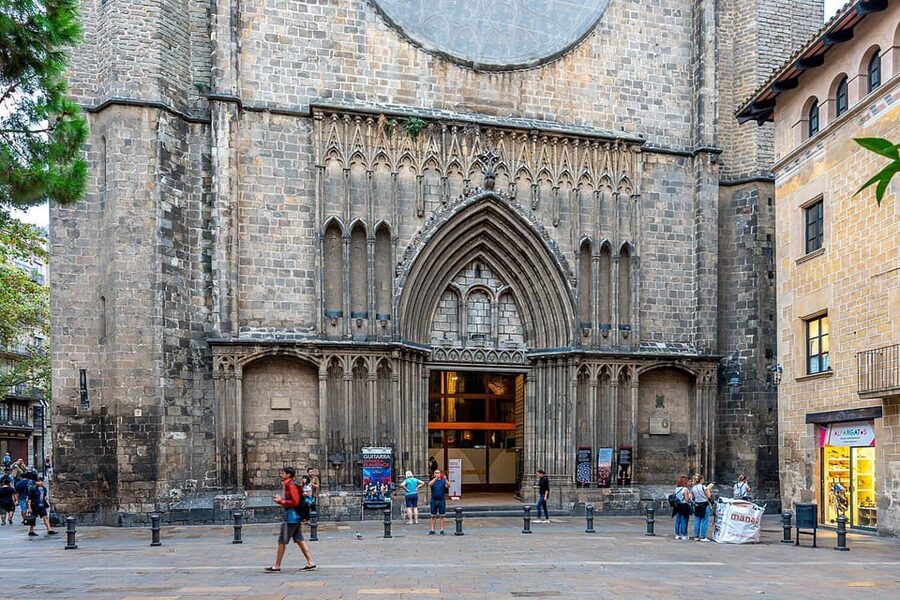
Barcelona is full of grand sights, but its smaller spaces often carry the strongest stories. A narrow lane, a bridge, or a quiet square can explain more about the city’s fears and beliefs than another quick look at a church façade.
That is the central idea here. You are not simply moving from monument to monument while hearing dates and construction details. You are following a narrative about how people understood danger, faith, death, violence, and power.
The tour begins at the intersection of Carrer d’Estruc and Carrer de Fontanella. This is a useful location in the city center, and it gives the walk an immediate sense of place rather than starting at a generic bus stop. Arrive early and look for Ivan in black clothing, the identifying detail provided for the meeting.
With only 10 participants, the format should feel more like a guided conversation than a large walking procession. That matters on streets where it can be hard to gather a big group around one speaker. It also gives you a better chance to ask about a particular legend or request clarification when the history gets complicated.
A few more Barcelona options worth an hour of your trip
- Barcelona: Park Güell Admission Ticket
★ 4.4 · 76,534 reviews - Barcelona: Casa Batlló Entry with Self-Audioguide Tour
★ 4.7 · 25,359 reviews - Barcelona: 24 or 48-Hour Hop-On Hop-Off Bus Tour
★ 4.4 · 20,872 reviews
Plaça del Pi and the city’s darker folklore
One of the early themes is the pact with the devil associated with Plaça del Pi. Stories like this are valuable because they show how people once explained misfortune, ambition, and unusual events through supernatural forces.
You should not expect every tale to be presented as proven fact. The appeal is in hearing how legends became attached to real places and how those stories helped give a neighborhood its character. A good guide draws the line between documented events and local tradition while still telling both with energy.
The square also helps set the tone for the rest of the walk. You begin with a familiar public space, then start looking at it through a less comfortable lens. Instead of asking only what a building is, you are encouraged to ask what happened there, what people believed, and which stories survived.
This is where Ivan’s style matters. His explanations are described as expressive and passionate, and he uses visual material to help make the past clear. That can be especially useful when a story involves people, places, or buildings that have changed over time.
Santa Eulalia, martyrdom, and the power of a city symbol
Santa Eulalia is one of the key figures in the tour. Her story brings together faith, courage, and the harsh treatment of martyrs. The route includes the place connected with her being thrown in a barrel, an arresting detail that gives the legend a physical location.
This is more than a sensational anecdote. Barcelona has long used saints and martyrs as part of its civic identity, and Santa Eulalia’s story helps explain why religious figures appear so often in the city’s symbols and stories.
The tour also addresses her bravery and martyrdom. You will hear a version of Barcelona that is shaped not just by rulers and architects, but by people remembered for standing firm under persecution.
Expect the tone to become darker at this point. The subject includes suffering and death, so the walk may not be right for young children or anyone looking for light entertainment. The stated age restrictions exclude children under 10, 11, and 12 in different parts of the information, so the safest reading is to confirm the current minimum age before booking for a child.
Roman funeral customs beneath the medieval city
Barcelona’s story did not begin in the medieval Gothic quarter. The tour reaches further back by discussing funeral rituals in Roman society.
This part adds useful context because Roman customs help explain how death was handled in an urban society. Funeral practices were not only private matters. They were shaped by social rules, public display, belief, and the relationship between the living and the dead.
You may already know Barcelona as a Roman foundation, but a discussion of funeral rituals gives that ancient layer a human scale. Instead of hearing only that the Romans were here, you get a sense of how their society dealt with one of life’s most serious events.
The value of this stop depends on the guide’s ability to connect a broad historical subject to the exact streets around you. Ivan’s use of detailed explanations and pictures should help keep the material grounded. If you enjoy history but prefer stories about daily customs to lists of emperors, this portion should be one of the more useful parts of the walk.
Same corner of Catalonia, a completely different day:
- Barcelona: Park Guell Guided Tour with Skip The Line Entry
★ 4.7 · 17,563 reviews - Barcelona in 1 Day: Sagrada Familia, Park Guell,Old Town & Pickup
★ 5.0 · 13,541 reviews - Barcelona Aquarium: Entry Ticket
★ 4.3 · 13,335 reviews - Barcelona: Sagrada Familia Skip-the-Line Entry Ticket & Tour
★ 4.8 · 12,789 reviews
The Ponte del Bisbe and a legend in stone
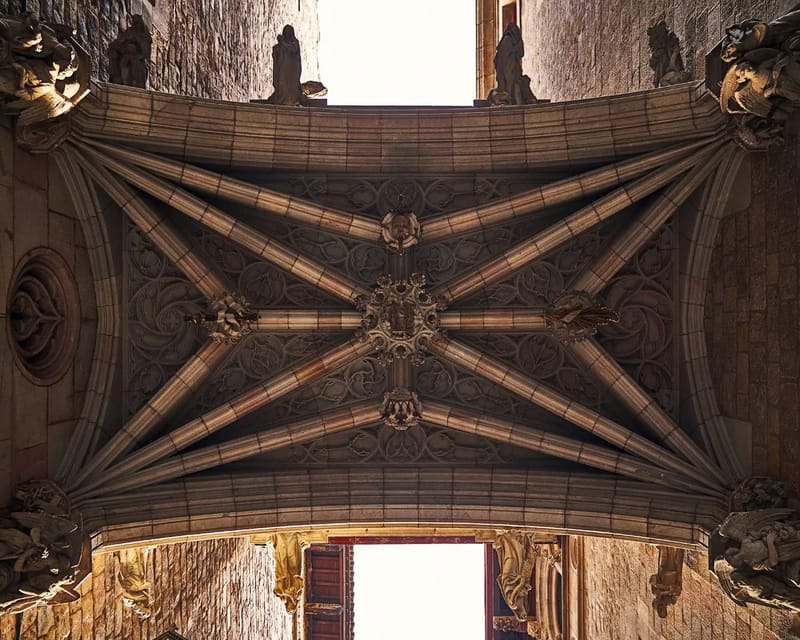
The Ponte del Bisbe is one of Barcelona’s most recognizable Gothic-quarter features. Its covered passage creates a dramatic view and naturally attracts cameras, but the tour gives you a reason to look beyond the composition of the photograph.
Here Ivan tells a legend connected with the bridge. The supplied details do not reveal the full story, which is probably best. You can experience it as a discovery rather than arriving with the ending already explained.
This stop shows how the walk differs from a standard city orientation. A typical guide might point out the bridge, explain its appearance, and move on. Here, the bridge becomes a setting for a tale that adds suspense and curiosity to the architecture.
You should also expect this part of the route to be popular with other people in the area. The small group helps, but the old center can still be tight and busy. Wear shoes that are comfortable for uneven city streets and stay close enough to hear the guide when the group moves through narrow passages.
Plaça Sant Felip Neri and the marks of war
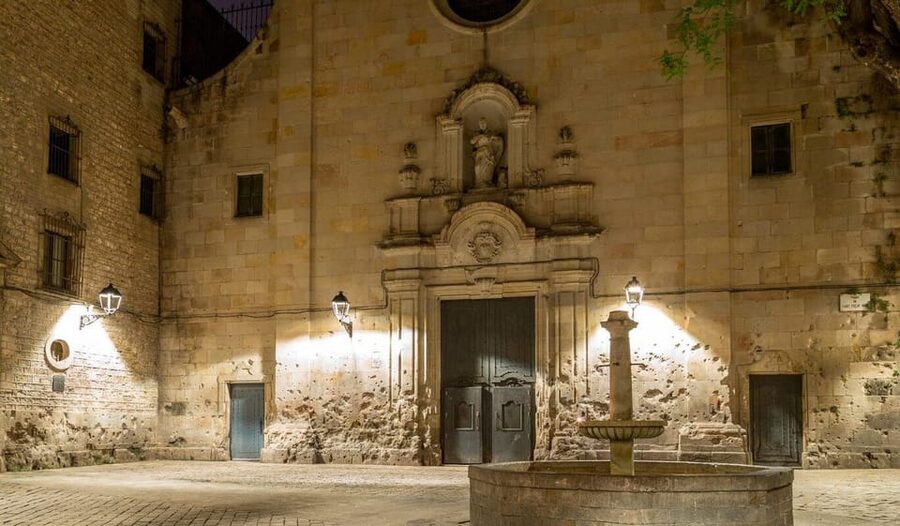
Plaça Sant Felip Neri is one of the most emotionally serious stops. The square carries visible traces of the bombing it suffered during the Spanish Civil War, and the architecture still records that violence.
This is an important counterweight to the legends. Barcelona’s mysterious side is not only about devils, saints, or old rituals. It also includes documented events that left physical scars on the city and lasting pain for its people.
The square’s quiet character can make the story especially powerful. You are not being shown a battlefield or a formal war museum. You are standing in an ordinary urban space where the damage remains part of the surroundings.
I appreciate that the route includes this kind of history. It prevents the tour from turning Barcelona into a collection of spooky tales. The result is a more honest picture of the city, where folklore and historical trauma sit close together.
If you prefer to keep your sightseeing cheerful, take note of the tone before booking. The story of the bombing may be difficult, but it is also one of the stops that gives the walk real weight.
Plaça del Rei and an attempted royal assassination
Plaça del Rei brings the tour into the world of royal power and political danger. Here you hear about the assassination attempt on the Catholic King, another story that makes the medieval city feel less static.
A square that now looks like a formal historic setting was once tied to decisions, rivalries, and personal threats. Learning about the attempt changes the way you read the surrounding buildings. You begin to picture the space as a place where authority was displayed and challenged.
This stop also broadens the tour’s subject matter. The route is not limited to religious legends or ghostly folklore. It includes political history and the risks faced by powerful figures.
The exact balance between verified history and legend will depend on how Ivan presents each account. His passion is a strength here, especially for dramatic material, but you should still listen for the difference between an event supported by historical records and a story shaped by later tradition.
What Ivan Stabile adds to the walk
The guide can make or break a storytelling tour. The information here points to Ivan Stabile as a guide who is expressive, prepared, and deeply interested in the city’s past.
He uses pictures during the walk, which is a practical advantage. Historical stories can be hard to picture when streets and buildings have changed. A visual reference can help you understand what a place may once have looked like or identify the people involved.
His manner is also described as entertaining rather than dry. That matters during a two-hour walk with several serious subjects. A guide who can shift between Roman customs, religious stories, wartime history, and royal intrigue keeps the route from feeling like one long lecture.
You should still expect a spoken walking tour, not a theatrical performance. The appeal comes from the content, the guide’s delivery, and the places themselves. If you want extensive time inside monuments, this is not that kind of experience.
Is $23 a fair price for two hours?
At $23 per person, the tour offers good value if you want context and storytelling rather than admission to a major attraction. The fee covers a professional live guide, a planned route, and explanations at several historic locations.
You are also paying for selection. Barcelona has far more legends and historical episodes than can fit into one afternoon. A guide saves you the work of finding the relevant corners and connecting them into a coherent story.
The small group improves the value. A 10-person maximum is not private touring, but it is intimate enough to feel personal. You are less likely to lose the guide’s voice or spend the entire walk trying to see over taller people.
The main limit is the fixed two-hour format. It gives you an introduction, not a full study of Barcelona’s legends. You might leave with new questions and a desire to explore further, which is a good outcome, but do not expect every mystery to be explained.
The reserve-now-and-pay-later option also helps if your schedule is still changing. Free cancellation is available up to 24 hours before the start, giving you some protection if your plans shift.
Practical details for a smoother walk
The tour begins and ends at the intersection of Carrer d’Estruc and Carrer de Fontanella. Since the activity returns to its starting point, you can plan the walk without arranging a separate pickup or finding your way back from an unknown neighborhood.
Starting times vary, so check availability for the date you want. Arrive in good time. The meeting instruction is specific, and Ivan will be wearing black clothing, but arriving late could mean missing the opening story or struggling to catch up with the group.
Comfortable shoes are important. Even without a detailed route map, a two-hour historic-center walk means you should dress for walking rather than for a formal evening out. Comfortable clothes are also recommended.
The tour is offered in English and Spanish. Select the language that lets you follow subtle distinctions between documented history, local legend, and interpretation.
The information describes the activity as wheelchair accessible, but it also says it is not suitable for people with mobility impairments. Those statements do not fully agree. If you use a wheelchair, walker, or have difficulty with uneven streets, ask the provider to confirm the exact route and conditions before paying.
The activity is not suitable for babies under 1 year, and several age limits are listed for children and older participants. It is also marked as unsuitable for people over 70, 80, and 95 in different entries. Because these details conflict, confirm the current restrictions when you book.
Who should book this Barcelona experience?
I would choose this walk if you enjoy history told through people and place. It suits first-time visitors who want more than a checklist of monuments, as well as returning visitors who have already seen the main sights and want a different way to read the Gothic center.
It is especially good for curious adults, history fans, and anyone drawn to legends that are tied to real streets. The compact format also works well if you have limited time in Barcelona or want a guided activity that leaves the rest of the day free.
You may want to skip it if you dislike walking, prefer only cheerful sightseeing, or want a tour devoted to architecture and art history. The route includes difficult material about martyrdom, death, political violence, and the Civil War.
For families, check the age policy carefully. The subject matter is mature, and the supplied restrictions do not give one clear minimum age. For anyone with mobility concerns, confirm accessibility rather than relying on the general wheelchair-accessible label.
Should you book Stories, Legends and Mysteries of Barcelona?
Book it if you want Barcelona to feel like a city of layered stories rather than a row of photo stops. For $23, the two-hour route gives you several memorable themes, a small group, and a guide who brings clear enthusiasm to the material.
I would particularly recommend it after you have seen a few major monuments. The stories about Plaça del Pi, Santa Eulalia, the Ponte del Bisbe, Plaça Sant Felip Neri, and Plaça del Rei will give familiar parts of the city a new meaning.
Go in ready for a serious tone and plenty of walking. If that sounds appealing, Ivan Stabile’s focused storytelling tour is a worthwhile, modestly priced way to meet Barcelona’s stranger and more human side.
FAQ
How long does the tour last?
The walking tour lasts two hours.
Where does the tour begin?
It begins at the intersection of Carrer d’Estruc and Carrer de Fontanella in Barcelona.
Where does the tour end?
The activity ends back at the meeting point.
What languages are available?
The live guide offers the tour in English and Spanish.
Who leads the tour?
The experience provider and guide is Ivan Stabile.
How many people can join the group?
The group is limited to 10 participants.
What does the tour focus on?
It focuses on Barcelona’s legends, mysteries, historical events, curiosities, and lesser-known stories connected with the city’s historic center.
Which places are discussed during the walk?
The tour includes stories connected with Plaça del Pi, the Ponte del Bisbe, Plaça Sant Felip Neri, Plaça del Rei, and the place associated with Santa Eulalia being thrown in a barrel.
What should I bring?
Bring comfortable shoes and comfortable clothes.
Can I cancel the booking?
Yes. You can cancel up to 24 hours in advance for a full refund. You can also reserve now and pay later.
Just added around Barcelona
- GoCar Full Day Tour★ 4.0 · 6 reviews
- Sagrada Familia and Barcelona Highlights: Private Guided 4-Hour Driving Tour★ 5.0 · 6 reviews
- Barcelona: Highlights & Gems Private Tour with Tapa & Drink★ 3.9 · 6 reviews
- Gothic Quarter and Born District: Photographic Workshop★ 5.0 · 6 reviews
- Gobbi Yacht Rental in Barcelona 9 Pax 2/4/8hs★ 5.0 · 6 reviews
- Barcelona: Gothic Quarter & La Sagrada Familia Private Tour★ 4.9 · 6 reviews
- Private Sailboat Ride at Sunset from Sitges★ 5.0 · 6 reviews
- Barcelona: Private Tour of Casa Batllo with Reserved Access★ 3.5 · 6 reviews
Barcelona Tours, compared.
Park Guell Guided Tour with Skip The Line Entry
Read our review →
Barcelona in 1 Day: Sagrada Familia, Park Guell,Old Town & Pickup
Read our review →
Sagrada Familia Skip-the-Line Entry Ticket & Tour
Read our review →
FC Barcelona Museum “Barça Immersive Tour” Ticket
Read our review →