
Reviewed · SEGWAY TOURS
Barcelona: 2-Hour Segway Tour
Barcelona’s Gothic Quarter and waterfront make a fine pair for a Segway tour. You begin among narrow medieval lanes, then glide toward the open harbor, Olympic Port, Arc de Triomf, and Ciutadella Park. In two hours, you cover far more ground than you would on foot, without being sealed inside a bus.
I like the careful practice session and the small groups, capped at six people. Guides such as Natasha, Kadir, Nuno, and Leo have been praised for making beginners feel safe, stopping for photos, and adding easy-to-follow stories about the city. The main drawback is physical: two hours can leave your feet, knees, or back tired, and busy streets may make the ride feel tense until you gain confidence.
In This Review
- Key points to know before booking
- Why a Segway works well in Barcelona
- Starting in the Gothic Quarter
- From Columbus Monument to Port Vell
- France Station and the Olympic Port
- Arc de Triomf and the 1888 exhibition grounds
- Ciutadella Park’s sculptures, waterfall, and parrots
- El Born on the way back
- The guides make the difference
- Is $29 good value for two hours?
- Who should book this Barcelona Segway tour?
- Should you book it?
- FAQ
- Where does the Barcelona Segway tour start and finish?
- How long is the tour?
- How much does the tour cost?
- Is training included?
- What sights does the tour visit?
- What languages can the guide speak?
- How many people are in the group?
- What is the minimum age for riding a Segway?
- What should I bring, and are there restrictions?
Key points to know before booking
- A real beginner lesson comes first: You get free practice time before leaving the starting point, and the guide adjusts the pace to your ability.
- The route links old Barcelona with the sea: Expect the Gothic Quarter, Columbus Monument, Port Vell, Olympic Port, and Ciutadella Park in one outing.
- The group stays small: With no more than six participants, the guide can keep an eye on new riders and help with crossings.
- Ciutadella Park adds a playful touch: The route includes the Arc de Triomf, the park’s monumental waterfall, and possible encounters with its resident parakeets.
- You get useful photo stops: Guides have taken pictures and videos for participants at selected spots, though this should be treated as a helpful extra rather than a promised service.
- Check the age and weight rules: Segway riders must be at least 16 and under 243 pounds, or 110 kilograms. Children under 16 may use an e-bike instead, but children under 13 are not suitable for this activity.
Why a Segway works well in Barcelona
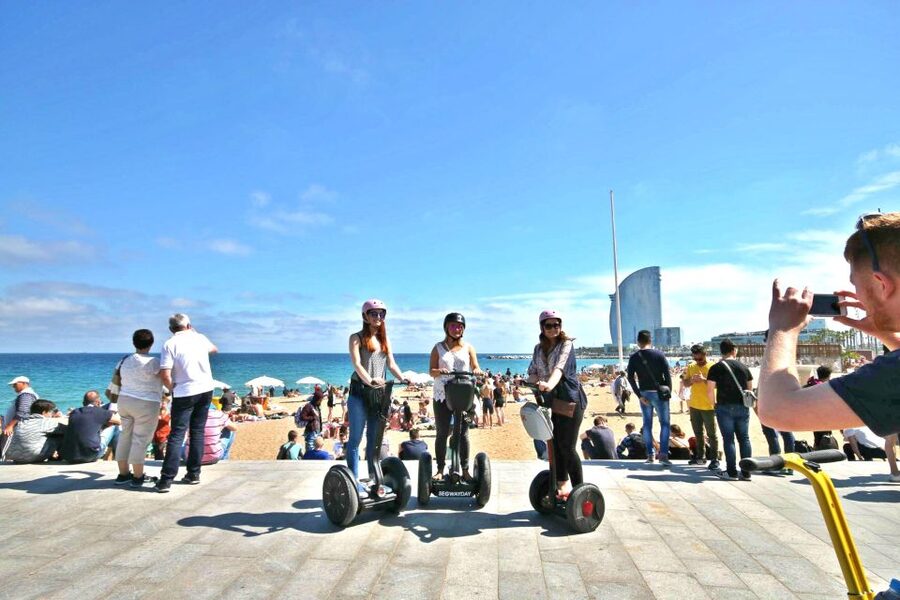
Barcelona is a city of grand avenues, tight old lanes, waterfront promenades, and scattered sights. Walking gives you the best contact with the Gothic Quarter, but it takes time to connect that district with Port Vell, the Olympic Port, and Ciutadella Park. A Segway fills that gap nicely.
You stand rather than sit, and the vehicle responds to your body movements. Lean forward gently and you move ahead. Shift your weight back and you slow down. The basic controls are simple, but the first few minutes can feel odd. That is why the training period matters more than it might appear in the booking details.
The guide gives you time to practice before the group sets off. Several guides have been singled out for patience with first-time riders, including Kadir, Natasha, and Ilaria. One particularly useful pattern is the guide checking in during the ride, not just at the start. That lets you say if the pace feels too quick or if you need another pause.
The tour is limited to six participants. That matters in a city where you need to cross roads, avoid pedestrians, and keep the group together. A smaller group also makes it easier for the guide to explain a building or sculpture without shouting across a line of riders.
Still, a Segway is not a quiet sightseeing platform. You need to watch the pavement, other people, bicycles, and traffic. The route can change if city traffic requires it. If you want a slow, stop-and-stare tour with long visits inside monuments, choose a walking tour instead. If you want to connect many outdoor sights in a short time, this is a strong option.
More Segway spins around Barcelona:
- Barcelona Segway Tour
★ 5.0 · 680 reviews - Barcelona Segway Tour
★ 4.7 · 630 reviews - Barcelona: City Highlights Guided Segway Tour
★ 4.9 · 624 reviews
Starting in the Gothic Quarter
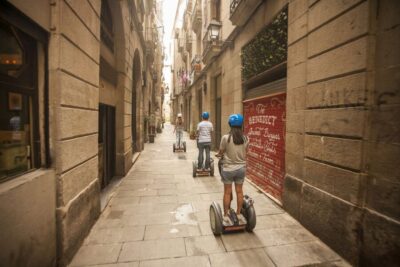
The tour begins at Carrer d’En Rull 2, in the old city. After the lesson, you roll into the Gothic Quarter, where narrow streets and irregular lanes give Barcelona a very different feel from the broad avenues of the Eixample.
The first section is less about ticking off major monuments and more about getting comfortable. You learn how the Segway handles in a confined urban setting, with the guide leading you through the old district at a manageable pace. The short listed ride through the quarter suggests a quick orientation rather than a long historical stop.
You then reach Plaza de la Merce and the Basilica of Our Lady of Mercy. The basilica gives the route a religious and local character before it opens toward the waterfront. Your guide supplies the stories, and the multilingual format is useful if your group includes Spanish, English, French, German, or Russian speakers.
The Gothic Quarter is the part of the tour where riders should be most alert. Tiny streets are atmospheric, but they do not offer much room for error. Keep your movements smooth and avoid trying to hurry simply because the group is moving on.
From Columbus Monument to Port Vell
The route continues toward Paseo de Colom and the Columbus Monument. This is where Barcelona’s old center begins to meet its harbor. The monument is an easy landmark and a natural photo stop, with the broad waterfront making a welcome change after the Gothic Quarter’s tight lanes.
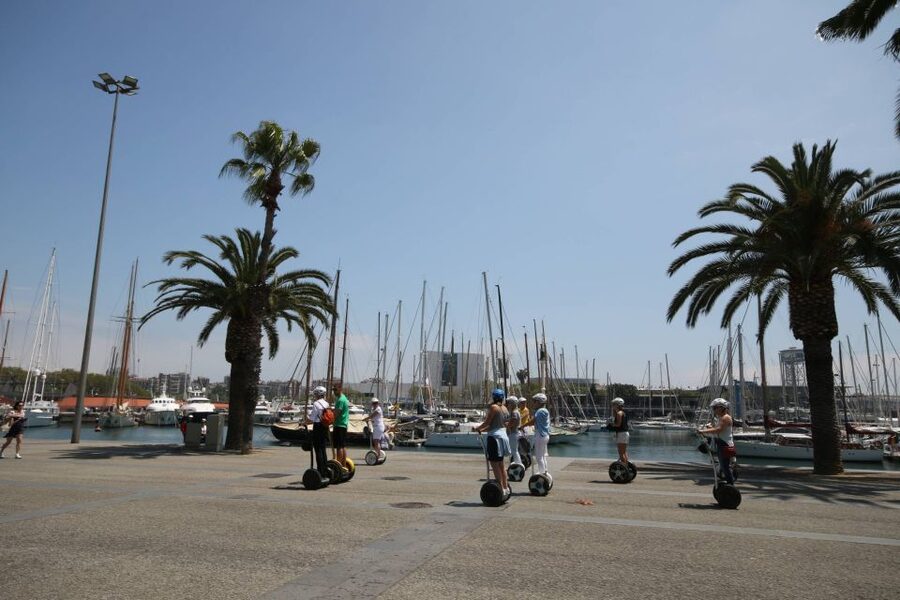
From there, you reach Port Vell. The harbor is one of the tour’s clearest visual shifts. You move from medieval streets to open water, boats, promenades, and modern Barcelona. The itinerary includes a look at the yachts moored here, including some of the city’s most expensive vessels.
Do not expect a detailed yacht tour or an extended harbor visit. The value is in seeing the relationship between the old city and the port in one continuous ride. You also get a sense of Barcelona as a maritime city, not only a destination for Gaudi buildings and Gothic alleys.
The route includes El Cap de Barcelona, the large sculpture by Roy Lichtenstein near the waterfront. Its bold, comic-book style is hard to miss, and it gives you a useful contrast with the historic buildings seen earlier. This is one of the tour’s best examples of how Barcelona places modern public art beside older city spaces.
Your guide usually stops to explain what you are seeing, rather than riding past every landmark with a quick name. That helps you remember the city’s visual contrasts after the tour ends.
France Station and the Olympic Port
After Port Vell and El Cap de Barcelona, you pass Estació de França, or France Station. The station is part of the city’s transport story and adds another architectural pause to the route. You do not need to be a railway enthusiast to appreciate the change in scale from the old quarter to this grand civic setting.
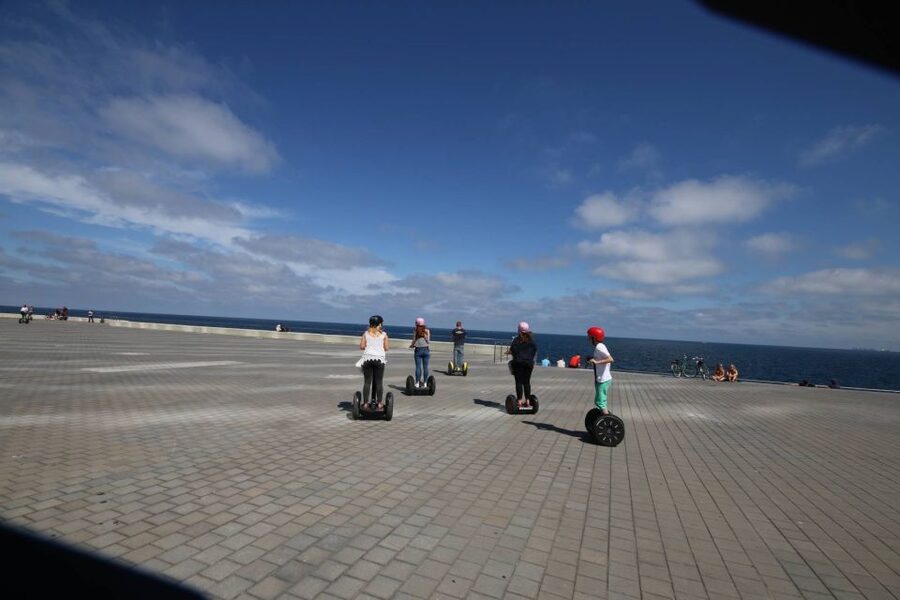
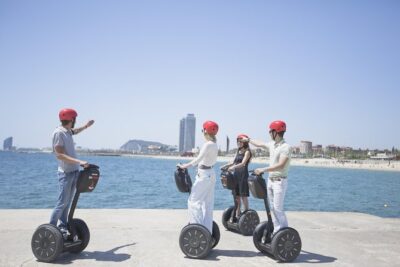
The route then heads toward Vila Olimpica and the Olympic Port. This area reflects Barcelona’s major waterfront renewal around the 1992 Olympic Games. The open space makes riding easier than in the Gothic Quarter, and it gives you room to enjoy the sea-facing side of the city.
The Olympic Port is one of the longer stops on the route. You have time to look around and take pictures, while the guide explains the area and the city’s Olympic connection. For many people, this is the point where the ride feels less like a sightseeing checklist and more like a pleasant city excursion.
The waterfront section can also be affected by traffic and pedestrian flow. The route may be adjusted, so do not treat every stop as an absolute promise in a fixed order. The main idea remains consistent: old Barcelona, harbor Barcelona, and the Olympic waterfront in one loop.
A few more Barcelona options worth an hour of your trip
- Barcelona: Two-Hour Midday or Sunset Sailing Cruise
★ 4.8 · 1,732 reviews - Barcelona: 2-Hour City Sights Guided Segway Tour
★ 4.9 · 453 reviews - Barcelona: 2-Hour Sailboat Tour with Snacks and Drinks
★ 4.8 · 357 reviews - Barcelona: Jewish Quarter 2-Hour Walking Tour
★ 4.8 · 333 reviews
Arc de Triomf and the 1888 exhibition grounds
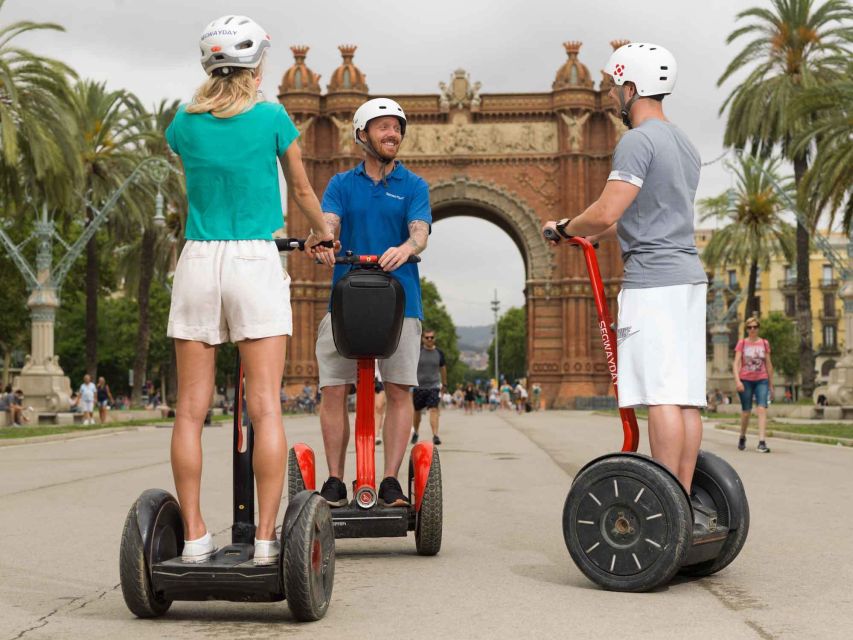
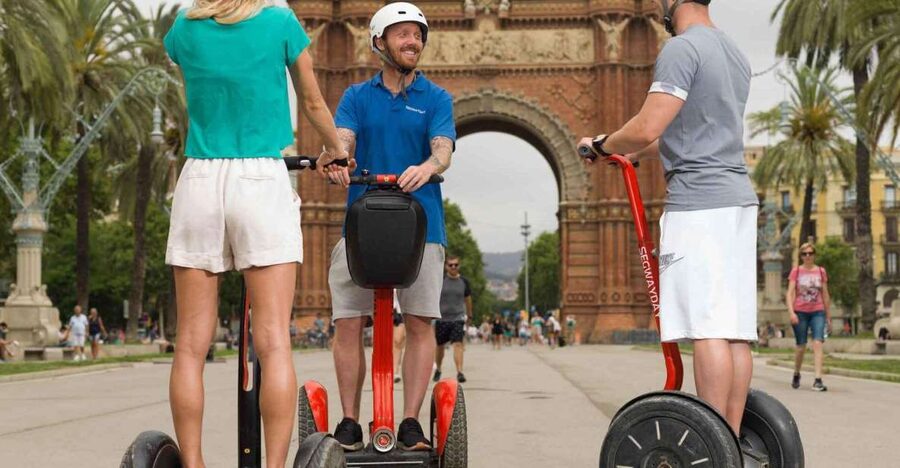
The ride turns inland toward the Arc de Triomf. Unlike the Paris arch that inspired its name, Barcelona’s version was built as the main entrance to the 1888 Barcelona Universal Exposition. Its red-brick construction and decorative details make it one of the city’s most recognizable outdoor monuments.
This is a particularly good photo stop. You can stand beside the Segways, take pictures of the arch, and hear how it relates to the exhibition grounds. The route gives the arch about 15 minutes, one of the longest pauses listed, so you are not simply gliding past it.
The broad approach also offers a break from the more demanding sections of the ride. If you were nervous in the Gothic Quarter, you should feel more settled by now. The guide can still help with stopping and turning, but the surroundings are less cramped.
From the Arc de Triomf, the tour heads into Parc de la Ciutadella. This was another major setting for the 1888 exhibition and remains one of Barcelona’s most pleasant central parks. The park combines paths, sculptures, formal spaces, and large civic buildings, giving you a softer change of pace after the traffic and harbor.
Ciutadella Park’s sculptures, waterfall, and parrots
Ciutadella Park is where the tour’s sightseeing and fun factor meet. You see the Castell dels Tres Dracs, a striking modernist building linked to the old exhibition grounds, then continue to the Cascada Monumental, the park’s monumental waterfall.
The waterfall is a good place to stop and look closely. It is not merely a fountain passed on the way to somewhere else. The surrounding sculpture and architecture reward a few minutes of attention, and your guide can add context without requiring you to spend an entire afternoon in a museum.
The route also passes the Parliament of Catalonia. This gives the park a civic role as well as a recreational one. You are not entering the parliament, but seeing it helps explain why the park contains more than gardens and paths.
One unusual detail from the tour is the chance to feed the park’s resident parakeets. Guides including Kadir have provided seeds, allowing participants to hold out their hands as the birds approach. This is not the main reason to book the tour, and it may depend on the day and the guide, but it gives the park stop a memorable, lighthearted moment.
Keep your expectations sensible about wildlife. The guaranteed part is the park visit, not a bird-feeding session. Still, this small extra shows the kind of local touch that can make a short tour feel more personal.
El Born on the way back
The final section leads through El Born and past the Mercat del Born. The market building is notable even if you only see it from the outside. Its iron structure and broad interior reflect the district’s older commercial life, while the surrounding streets now form one of the city’s best-known areas for food, shops, and evening activity.
The route also passes the Delegació del Govern a Catalunya and Font del Geni Català. These stops are shorter, but they keep the return journey tied to Barcelona’s civic buildings and public sculpture rather than turning into a simple ride back to the office.
You finish again at Carrer d’En Rull 2. Because the tour covers several districts, it works well near the start of a Barcelona visit. You get a broad orientation, then can return later to the Gothic Quarter, El Born, Port Vell, or Ciutadella Park for a slower look.
Do not expect to fully understand every neighborhood in two hours. The tour gives you a useful map in your head, not a substitute for exploring each area on foot.
The guides make the difference
The strongest part of this experience is the guiding. Natasha has been praised for adapting to weather, adding time when a start was shifted, taking pictures, and keeping new riders calm. Kadir has received similar praise for instruction, safety checks, local stories, and taking videos.
Other guides named by participants include Nuno, Leo, Dara, Carlos, Ali, and Ilaria. The repeated pattern is clear: the guide is expected to teach first, watch the group, and explain the sights in an easy, lively way.
That matters because a Segway tour can go wrong if the guide focuses only on speed. Here, the best sessions appear to balance movement with regular stops. One guide even made the experience playful with music and dancing on the Segway, although you should not count on that specific flourish.
Guides may also offer practical suggestions for the rest of your time in Barcelona. Treat those tips as a useful bonus, especially if this is your first visit and you want ideas for food or nearby sights.
Is $29 good value for two hours?
At $29 per person, this is a fairly accessible way to cover a broad slice of Barcelona. The fee includes the Segway, helmet, guide, insurance, free practice time, and storage for personal belongings. You are paying for instruction and local orientation as much as for the vehicle.
The value is strongest for a small group that wants to see outdoor sights quickly. A group of four or six can cover the harbor, Olympic Port, Arc de Triomf, Ciutadella Park, and El Born without arranging separate transport between them.
It is less valuable if you already know this part of Barcelona well or prefer long visits at individual monuments. You will not spend enough time at each stop for a full museum-style explanation, and the ride itself takes up part of the two-hour schedule.
The published rating is 4.9 from 216 reviews, with praise focused on guide quality, beginner support, safety, photo help, and the amount seen in two hours. That pattern matches the practical strengths of the tour: it is not a specialist architecture lecture, but it is a lively way to get oriented.
Who should book this Barcelona Segway tour?
I would recommend it to adults and older teenagers who enjoy active sightseeing and want a broad first look at Barcelona. It is especially useful for couples, small friend groups, and families with eligible riders who might lose patience on a traditional walking tour.
It also suits first-time Segway riders. The training session is not a token demonstration, and several guides have helped nervous participants build confidence before entering busier streets.
You should think twice if you have back, knee, or foot concerns. One rider found two hours long enough to cause aches, and that is a fair warning. Pregnant women, people over 243 pounds or 110 kilograms, and children under 13 are not suitable for this activity.
Wear comfortable shoes. You need to remain balanced and alert, and unsuitable footwear could make the ride harder than it needs to be.
Cancellation is flexible, with a full refund available when you cancel at least 24 hours ahead. You can also reserve and pay later, which helps if your Barcelona schedule is still shifting.
Should you book it?
Book this tour if you want a fun city overview, can manage two hours standing, and like the idea of mixing history, public art, parks, and waterfront views. The small group, patient instruction, and guides such as Natasha and Kadir add real value for beginners.
Skip it if your priority is entering major monuments, lingering over architecture, or moving at a very slow pace. For everyone else, $29 buys a practical introduction to several parts of Barcelona, with enough stories and photo stops to help you decide where to return on foot.
FAQ
Where does the Barcelona Segway tour start and finish?
The tour starts and returns to Carrer d’En Rull 2, 08002 Barcelona.
How long is the tour?
The activity lasts two hours.
How much does the tour cost?
The listed price is $29 per person.
Is training included?
Yes. You receive free training time before the tour begins, so you can practice riding and stopping before entering the city streets.
What sights does the tour visit?
The route includes the Gothic Quarter, Basilica of Our Lady of Mercy, Columbus Monument, Port Vell, El Cap de Barcelona, France Station, Vila Olimpica, Olympic Port, Arc de Triomf, Ciutadella Park, Castell dels Tres Dracs, Cascada Monumental, Parliament of Catalonia, El Born, and the Delegació del Govern a Catalunya.
What languages can the guide speak?
Live guides are available in Spanish, English, French, German, and Russian.
How many people are in the group?
The tour is limited to six participants.
What is the minimum age for riding a Segway?
The minimum age to ride a Segway is 16. Children under 16 may join on an e-bike instead, but children under 13 are not suitable for this activity.
What should I bring, and are there restrictions?
Comfortable shoes are recommended. The activity is not suitable for pregnant women or people over 243 pounds, or 110 kilograms. A helmet, insurance, storage for personal belongings, the Segway, and the guide are included.
Just added around Barcelona
- GoCar Full Day Tour★ 4.0 · 6 reviews
- Sagrada Familia and Barcelona Highlights: Private Guided 4-Hour Driving Tour★ 5.0 · 6 reviews
- Barcelona: Highlights & Gems Private Tour with Tapa & Drink★ 3.9 · 6 reviews
- Gothic Quarter and Born District: Photographic Workshop★ 5.0 · 6 reviews
- Gobbi Yacht Rental in Barcelona 9 Pax 2/4/8hs★ 5.0 · 6 reviews
- Barcelona: Gothic Quarter & La Sagrada Familia Private Tour★ 4.9 · 6 reviews
- Private Sailboat Ride at Sunset from Sitges★ 5.0 · 6 reviews
- Barcelona: Private Tour of Casa Batllo with Reserved Access★ 3.5 · 6 reviews
Segway Tours, compared.


Browse the lists this tour appears in