
Reviewed · WALKING TOURS
Barcelona: Jewish Quarter 2-Hour Walking Tour
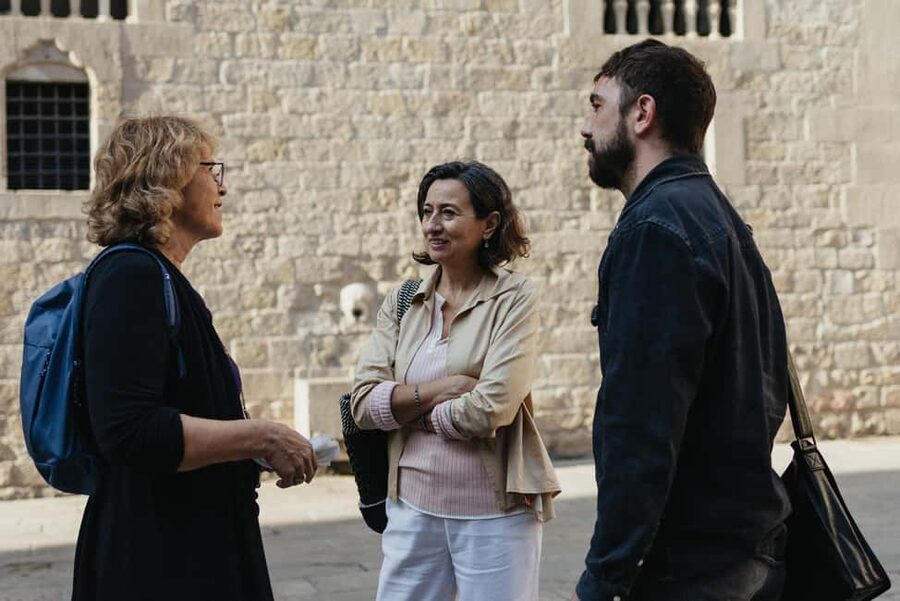
Barcelona’s Jewish past is easy to miss. Behind the Gothic Quarter’s Roman walls and narrow medieval lanes, you’ll find traces of a community that helped shape the city for centuries. This tour brings those traces together, from Sinagoga Mayor Barcelona, described as Spain’s oldest synagogue, to the ruins of the Old Synagogue linked with Shlomo Ben Adret. I like the compact route and the chance to visit places you could easily walk past without a guide. I also like the six-person limit, which gives you room to ask questions and keeps the walk from turning into a history lecture shouted over a crowd.
The main consideration is that this is a history-focused walking tour, not a broad sightseeing tour of Barcelona. Some sites are ruins or locations rather than complete buildings, and the entrance fee to the Synagogue Museum is not included. The Old Synagogue may also be closed at times, so you should book this for the story and setting, not a guarantee of access to every interior.
In This Review
- Key points at a glance
- Why Barcelona’s Jewish quarter takes patience
- Starting at Plaça Sant Jaume
- Sinagoga Mayor Barcelona and the oldest surviving story
- Four synagogue sites in the city center
- The medieval mikve and a Jewish alchemist’s house
- The Roman walls and the narrow medieval lanes
- What the guides add to the experience
- A tour that works for family history
- Is $76 a fair price?
- Who should book this walk?
- Should you book the Jewish Quarter tour?
- FAQ
- Where does the Barcelona Jewish Quarter tour begin?
- Where does the tour end?
- How long does the walking tour last?
- What language is the tour conducted in?
- How many people can join the group?
- Is the tour wheelchair accessible?
- Is hotel pickup included?
- Is the Synagogue Museum entrance fee included?
- Which historic sites are included?
- Can I cancel for a refund?
Key points at a glance
- Sinagoga Mayor Barcelona: Visit a synagogue presented as Spain’s oldest and learn how the building fits into Barcelona’s medieval Jewish quarter.
- Four synagogue locations: Trace the sites of four synagogues in the city center, including the ruins of the Old Synagogue.
- Medieval mikve: See the site of a historic Jewish ritual bath, a rare and unusual detail in a city tour.
- Gothic Quarter lanes: Walk through tight streets near the Roman walls, where small architectural clues reveal the former Jewish neighborhood.
- Small-group format: With no more than six participants, you can hear the guide clearly and shape the discussion with questions.
- English-speaking guides: Guides including Edu, Ella, Lilach, Alan, and Kate bring different personal styles to the same historical route.
Why Barcelona’s Jewish quarter takes patience
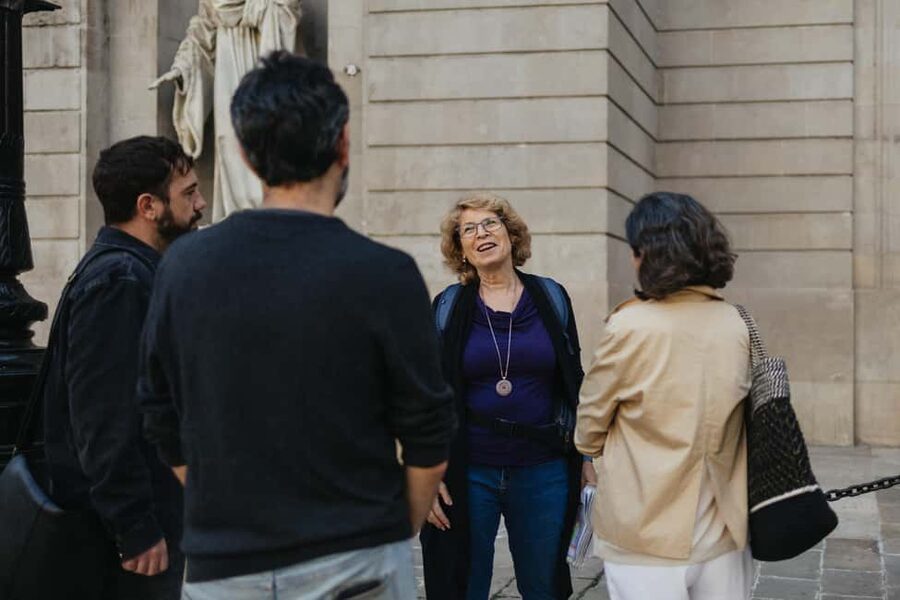
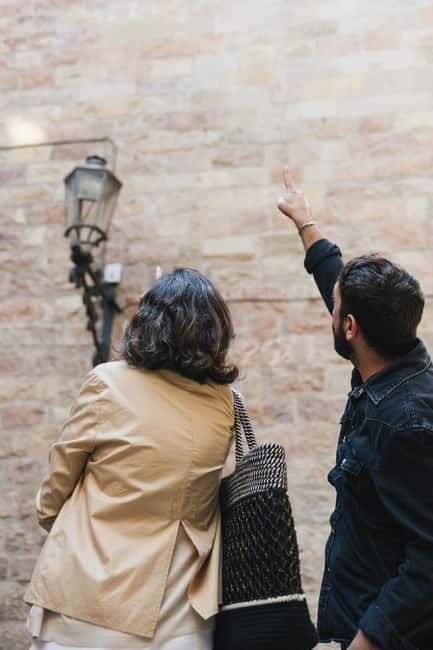
The Jewish Quarter is not a single preserved district with grand signs and a fully rebuilt medieval street plan. It is a small area within the Gothic Quarter, and much of its story survives in fragments. A doorway, a wall, a former house, or a half-hidden architectural detail can carry more meaning than a polished monument.
That makes a guide especially useful. On your own, you might see old stone lanes and Roman masonry without knowing which details connect to Jewish Barcelona. The tour gives those details a timeline, beginning with the arrival of Jewish communities in Spain, traditionally linked here to the period after the destruction of the Second Temple in Jerusalem in 70 CE.
Your guide explains how the Jewish population grew in Barcelona and became important in civic, political, and spiritual life. The story is not presented as a simple tale of uninterrupted prosperity. You’ll hear about periods of relative peace, followed by the violent attack of 1391 that brought a devastating end to the community’s presence in Spain.
That historical shift is central to the walk. It explains why the tour often feels like an act of recovery. You are not just looking at old buildings. You are piecing together the remains of a community that was once a major part of city life and was later forced out or destroyed.
More walking tours in Barcelona:
- Barcelona Tapas and Wine Experience Small-Group Walking Tour
★ 5.0 · 5,804 reviews - Barcelona: Tapas Walking Tour with Food, Wine, and History
★ 4.8 · 4,261 reviews - Barcelona Tapas Walking Tour: Food, Wine & History
★ 4.5 · 1,928 reviews
Starting at Plaça Sant Jaume
The tour begins at Plaça Sant Jaume, next to the Alcampo store. This is a practical meeting point in the center of the Gothic Quarter, though you should allow enough time to find the exact spot in the busy square.
From here, the walk moves into the old city streets. The route is short enough to cover in two hours, but the amount of information can be substantial. Guides have used historic maps, photographs, and mockups of earlier buildings to help explain how the neighborhood looked in the medieval period.
That visual material can make a big difference. Barcelona’s Jewish quarter has changed so much that a modern street view alone does not always make the past clear. A map can show where the quarter sat beside the Roman walls, while an architectural reconstruction can help you picture buildings that no longer survive.
The small group is another practical advantage at the start. With a maximum of six people, you should be able to stay close to the guide and ask about family history, religious customs, architecture, or Barcelona’s wider medieval society without holding up a large crowd.
Sinagoga Mayor Barcelona and the oldest surviving story
The visit to Sinagoga Mayor Barcelona is the centerpiece of the tour. It is presented as Spain’s oldest synagogue, and the experience gives you a physical place to connect with the Jewish community’s long presence in Barcelona.
The synagogue is important not only because of its age. It helps you understand how a place of worship also functioned as part of a community’s daily life. Your guide places the building within the surrounding Jewish quarter and explains how the nearby lanes and houses related to the religious center.
You should know that the Synagogue Museum entrance fee is not included in the tour price. The walking tour itself is included, but you may need to pay separately if you want to enter the museum. Check the current arrangements when booking, since access and opening conditions can affect what you see inside.
This is also one place where the guide’s storytelling matters more than the size of the building. The tour is not selling a giant cathedral-like interior. Instead, it gives you a close look at a small historic site and explains its place in the city’s Jewish past.
Four synagogue sites in the city center
One of the more useful parts of the walk is the search for four synagogue locations in central Barcelona. These sites help show the scale and organization of the medieval community.
Not every location is likely to look like a functioning synagogue today. Some are ruins, some are identified through historical evidence, and some may be represented by surviving fragments rather than complete structures. That can disappoint anyone expecting four grand interiors, but it is also what makes the walk feel like urban archaeology.
The guide connects the sites to the surrounding streets and explains how the Jewish quarter developed near the old Roman walls. You’ll move through the area with a sharper eye, noticing how much of medieval Barcelona remains under later changes.
The Old Synagogue, associated with Shlomo Ben Adret, is a key stop. Its ruins offer a direct link to the intellectual and religious life of the community. One point to keep in mind is that access can vary. At least one participant found the Old Synagogue closed, so treat this as a possible viewing of the ruins and site rather than an absolute promise of an open interior.
A few more Barcelona options worth an hour of your trip
- Barcelona: Two-Hour Midday or Sunset Sailing Cruise
★ 4.8 · 1,732 reviews - Barcelona: 2-Hour City Sights Guided Segway Tour
★ 4.9 · 453 reviews - Barcelona: 2-Hour Sailboat Tour with Snacks and Drinks
★ 4.8 · 357 reviews - 2-Hour Sailing Tour in Barcelona with Open Bar & Snacks
★ 5.0 · 318 reviews
The medieval mikve and a Jewish alchemist’s house
The medieval mikve is one of the tour’s most distinctive stops. A mikve is a ritual bath, and seeing its historic site adds a personal and religious dimension to the walk that ordinary city sightseeing rarely provides.
Your guide explains what the mikve meant within Jewish life and why its survival matters. It is a reminder that the quarter was not simply a cluster of homes. It had institutions, religious practices, and shared spaces that supported a functioning community.
The route also includes the ruins of a house owned by a Jewish alchemist. This stop broadens the story beyond synagogue life. It gives you a glimpse of Jewish involvement in skilled work, learning, and the practical life of medieval Barcelona.
The remains are valued for both their history and their art and architecture. You will need to bring some imagination, since ruins do not always explain themselves. This is where the guide’s use of maps, images, and clear descriptions can turn scattered stonework into a meaningful stop.
The Roman walls and the narrow medieval lanes
The walk through the Gothic Quarter is part of the experience, not just a way to move between stops. The narrow alleys date back to the Middle Ages, and the Roman walls help define the older shape of the city.
You’ll be walking on uneven historic streets and stopping often to listen. The total duration is only two hours, but the route is still a walking tour, so comfortable shoes make sense. The activity is listed as wheelchair accessible, though you may want to discuss your specific needs when booking because historic quarters can contain tight lanes and old paving.
The pace has been adjusted for older participants and people with walking difficulties. Guides have paused when needed and helped participants move comfortably through the route. That care is especially useful in a small group, where the guide can respond to the pace of the people actually on the tour.
Rain is another small practical issue. One guide, Alan, was especially attentive to participant safety in wet weather. Check the forecast and carry suitable protection, since the experience takes place outdoors for much of its two hours.
What the guides add to the experience
The guide can make or break a history walk, and the feedback about the guiding is unusually consistent. Edu is repeatedly described as personable, clear, flexible, and deeply informed about the area. He has contacted participants before the tour, adjusted his pace, and made room for questions from adults and teenagers alike.
Ella is another frequently praised guide. Her approach combines Barcelona and Catalan history with the Jewish story, which helps place the quarter in a wider setting. She has been described as thorough, warm, and easy to follow.
Lilach brings an engaging style and has a strong command of the history of Jewish life in Spain. Alan has used maps and visual reconstructions to explain older versions of the city. Kate is also described as well informed and pleasant company.
You cannot select a specific guide from the information provided, so book for the route and subject rather than for one particular person. Still, the range of guide styles is encouraging. The most valued qualities are clear English, patience, an easy conversational manner, and the ability to answer questions without losing the thread of the story.
A tour that works for family history
This experience can be especially meaningful if you are researching Jewish ancestry or trying to understand a family connection to Spain. The guide can help turn a name, date, or vague family story into a clearer picture of the society in which people lived.
You should not expect the tour to provide genealogical research. Its purpose is to explain Barcelona’s Jewish community and show you the relevant sites. But the combination of streets, buildings, maps, and historical context can help you understand what your ancestors’ city may have been like.
It also works well for families with older children and teenagers. The two-hour length is manageable, and the small group allows the guide to keep the conversation flexible. Edu has been praised for making the subject work for participants aged 15 and 17, combining information with conversation rather than delivering a formal speech.
For a general visitor, the tour offers a different view of Barcelona. You may already have seen the city’s major churches, plazas, and Gaudí buildings. This walk adds a quieter story, one that is still visible but easy to overlook.
Is $76 a fair price?
At $76 per person, this is not the cheapest way to spend two hours in Barcelona. The value depends on how much help you want interpreting the city rather than simply looking at it.
The price includes a live, English-speaking guide and a small group limited to six people. That group size matters. A private tour for two or four people can feel much more personal than a large group, and you have a better chance of asking follow-up questions or adjusting the pace.
The price does not include entry to the Synagogue Museum. Hotel pickup is also not included, though pickup is listed as an optional €30 service. Since the meeting point is already in the city center, most people will likely find it more sensible to meet at Plaça Sant Jaume rather than pay for pickup.
I consider the tour good value if Jewish history, medieval Barcelona, or family heritage is a real interest. If you want a general introduction to the Gothic Quarter, you may find a broader city walking tour more useful. This tour spends its time on a specific subject and does not try to cover every major Barcelona sight.
You can reserve now and pay later, and cancellation is free up to 24 hours before the tour for a full refund. Those terms make it easier to fit into a changing Barcelona schedule.
Who should book this walk?
I would choose this tour if you enjoy history that survives in small pieces. It suits people who want to understand how a community lived, worshipped, worked, and disappeared, rather than only seeing famous buildings.
It is also a good choice for:
- People with Jewish family connections or an interest in Spanish Jewish history
- Visitors who want a focused Gothic Quarter experience
- Families with older children and teenagers
- People who prefer small groups and plenty of time for questions
- Visitors who appreciate a patient walking pace
- Anyone who has already seen Barcelona’s main sights and wants a less familiar subject
I would think twice if you dislike walking, have no interest in religious or medieval history, or expect four complete synagogue interiors. The route includes ruins, sites, and historical clues, so the reward comes from the explanation as much as from what remains.
Should you book the Jewish Quarter tour?
Book it if you want a careful, human explanation of Barcelona’s Jewish past and like the idea of reading the city through its surviving fragments. The two-hour route is focused, the group is very small, and guides such as Edu, Ella, Lilach, and Alan have shown the patience and clarity needed for a subject that can be difficult to see at first glance.
Before booking, confirm the synagogue access arrangements and budget separately for the Synagogue Museum entrance. If the Old Synagogue happens to be closed, the tour can still work, but you should be comfortable with seeing some sites from the outside or as ruins.
For $76, you are paying for interpretation, access to a specialist route, and a more personal format than a standard city walk. If that sounds like the Barcelona you want to discover, this is a worthwhile addition to your plans.
FAQ
Where does the Barcelona Jewish Quarter tour begin?
The tour begins in Plaça Sant Jaume, next to the Alcampo store.
Where does the tour end?
The activity ends back at the meeting point in Plaça Sant Jaume.
How long does the walking tour last?
The tour lasts two hours. Starting times depend on availability.
What language is the tour conducted in?
The tour is conducted in English with a live English-speaking guide.
How many people can join the group?
The group is limited to six participants.
Is the tour wheelchair accessible?
Yes, the activity is listed as wheelchair accessible.
Is hotel pickup included?
No. Hotel pickup is not included. It is available as an optional service for €30.
Is the Synagogue Museum entrance fee included?
No. The entrance fee to the Synagogue Museum is separate from the walking tour.
Which historic sites are included?
The route includes Sinagoga Mayor Barcelona, the site of a medieval mikve, the ruins of the Old Synagogue associated with Shlomo Ben Adret, the remains of a Jewish alchemist’s house, and the locations of four synagogues in central Barcelona.
Can I cancel for a refund?
Yes. You can cancel up to 24 hours in advance for a full refund. You can also reserve now and pay later.
Just added around Barcelona
- GoCar Full Day Tour★ 4.0 · 6 reviews
- Sagrada Familia and Barcelona Highlights: Private Guided 4-Hour Driving Tour★ 5.0 · 6 reviews
- Barcelona: Highlights & Gems Private Tour with Tapa & Drink★ 3.9 · 6 reviews
- Gothic Quarter and Born District: Photographic Workshop★ 5.0 · 6 reviews
- Gobbi Yacht Rental in Barcelona 9 Pax 2/4/8hs★ 5.0 · 6 reviews
- Barcelona: Gothic Quarter & La Sagrada Familia Private Tour★ 4.9 · 6 reviews
- Private Sailboat Ride at Sunset from Sitges★ 5.0 · 6 reviews
- Barcelona: Private Tour of Casa Batllo with Reserved Access★ 3.5 · 6 reviews
Walking Tours, compared.

Barcelona Tapas and Wine Experience Small-Group Walking Tour
Read our review →
Tapas Walking Tour with Food, Wine, and History
Read our review →
Barcelona Tapas Walking Tour: Food, Wine & History
Read our review →

Gothic Quarter Ghosts and Legends Walking Tour
Read our review →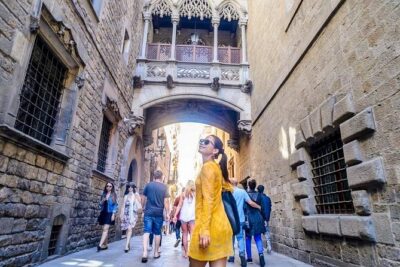
Barcelona Helicopter, Sailboat & Old Town Private Walking Tour
Read our review →

Helicopter Flight, Boat Ride, and Walking Tour
Read our review →Browse the lists this tour appears in