
Reviewed · GOTHIC QUARTER WALKING TOURS
Barcelona: Old Town and Gothic Quarter Walking Tour
Barcelona’s oldest streets tell the city’s story one stone at a time. This walk begins at Plaça de Sant Jaume, where Roman Barcelona first took shape, then threads through medieval lanes, grand churches, La Rambla, and La Boqueria Market before ending in El Born.
I like the clear sweep of the route: Roman remains, medieval power, Catalan Gothic architecture, food, and modern street life all fit into one outing. I also like the small maximum of 15 people, which gives guides such as Alba, Joris, Nilo, and Isabel room to answer questions and keep the group together. The main drawback is simple: this is a long city walk, often lasting 2.5 to 4 hours, with little time to linger inside each landmark.
In This Review
- Key points at a glance
- Starting at Barcelona’s political heart
- Roman walls and the Pati Llimona baths
- Gothic Quarter lanes and Plaça del Rei
- La Rambla and the changing face of Barcelona
- La Boqueria, Barcelona’s great market stop
- Plaça Reial and the route toward El Born
- Santa Maria del Mar and Catalan Gothic design
- What the guide adds to the walk
- Is $21 a good value?
- Who should book this Barcelona walk?
- Should you book the Old Town and Gothic Quarter tour?
- FAQ
- How long does the Barcelona Old Town and Gothic Quarter tour last?
- What language is the tour offered in?
- How much does the tour cost?
- Where does the tour start?
- Where does the tour finish?
- What places are included on the route?
- Is this a private tour?
- Are children allowed on the tour?
- What should I bring?
- Can I bring luggage or a large bag?
- Can I cancel the booking?
Key points at a glance
- Roman Barcelona comes first: Begin at Plaça de Sant Jaume and see sections of one of the world’s best-preserved Roman walls.
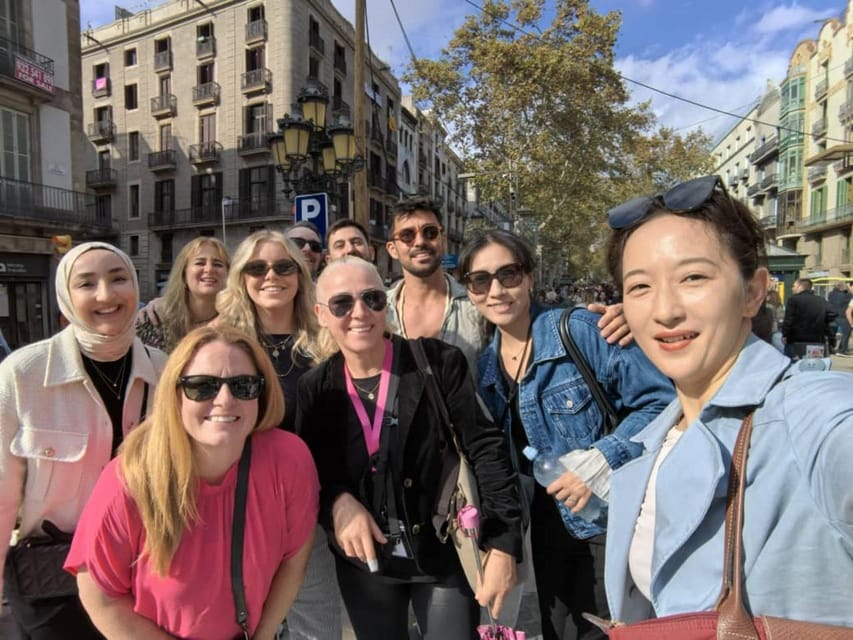
- La Rambla is part of the route: You pass flower stalls, street performers, outdoor cafés, and the entrance to La Boqueria.
- La Boqueria adds a food stop: More than 300 stalls sell local produce and Catalan specialties, though the market can be crowded.
- Catalan Gothic architecture gets proper attention: The walk includes Barcelona Cathedral and Santa Maria del Mar.
- The group stays small: A maximum of 15 participants makes questions and guide interaction easier.
- It ends in El Born: You finish on Passeig del Born, well placed for more sightseeing, cafés, and shops.
Starting at Barcelona’s political heart
The tour starts at the Movistar Centre, though the precise meeting point can vary with the option you book. Check your confirmation closely, then arrive ready to walk. Large bags and luggage are not allowed, so bring only what you need for a few hours.
The first major setting is Plaça de Sant Jaume. Today, it is the political center of Catalonia, framed by important government buildings. Your guide explains how the square sits over the old Roman Forum and how this same patch of ground has remained central to civic life for more than 2,000 years.
That opening gives the walk a useful shape. Instead of seeing old stones as isolated ruins, you begin to understand Barcelona as a city built in layers. Roman planning, medieval power, Catalan identity, and present-day public life all meet here.
Guides are a major part of the experience. Alba is praised for combining local stories with historical facts, while Joris is known for answering questions and adjusting his explanations to the group. Other named guides include Nilo, Isabel, Ane, Steven, Laura, and José Carlos. The individual style may vary, but the strongest pattern is clear: the tour depends on lively storytelling rather than a dry list of dates.
More Gothic Quarter walks:
- Barcelona in 1 Day: Sagrada Familia, Park Guell,Old Town & Pickup
★ 5.0 · 13,541 reviews - Barcelona all included: Sagrada, Park Güell, Montjuic & Gothic
★ 5.0 · 2,169 reviews - Barcelona: Sagrada Familia, Modernism, and Old Town Tour
★ 4.7 · 1,621 reviews
Roman walls and the Pati Llimona baths
The Roman section continues along ancient walls that remain unusually well preserved. You can see how the early city was protected and begin to picture the much smaller settlement that came before modern Barcelona.
The Roman baths at Pati Llimona add a more human note. Walls can feel abstract, but baths point to daily life: washing, socializing, and the routines of a Roman town. Your guide uses the site to explain what ancient Barcelona may have felt like beyond its official buildings and defenses.
This is one of the tour’s strongest features because the city’s Roman remains are easy to miss when you explore alone. You might pass a wall or ruin without understanding its age or purpose. A guide gives those fragments a place in the larger story.
The setting also shows the practical challenge of an Old Town walk. Streets are narrow, surfaces can be uneven, and the route includes plenty of standing. Comfortable shoes matter more here than fashionable ones. If rain arrives, the stone streets can become less pleasant, so sensible footwear and light weather protection are useful.
Gothic Quarter lanes and Plaça del Rei
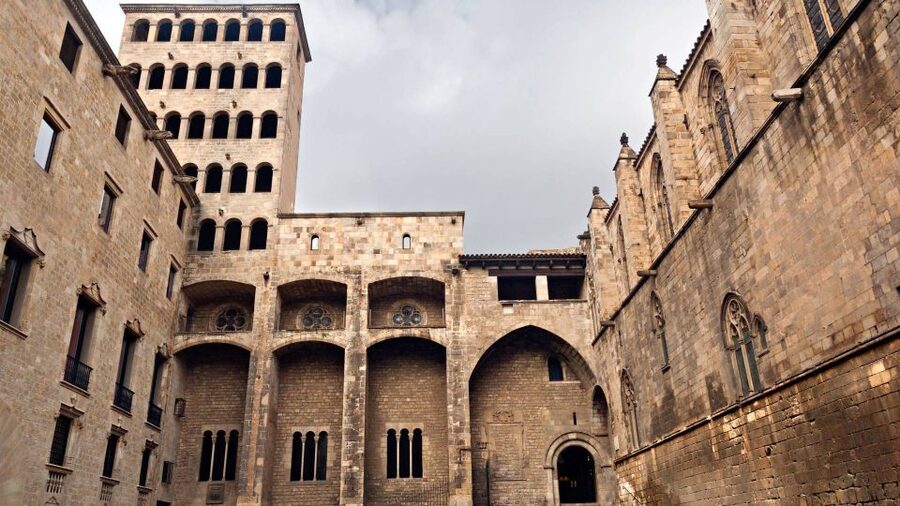
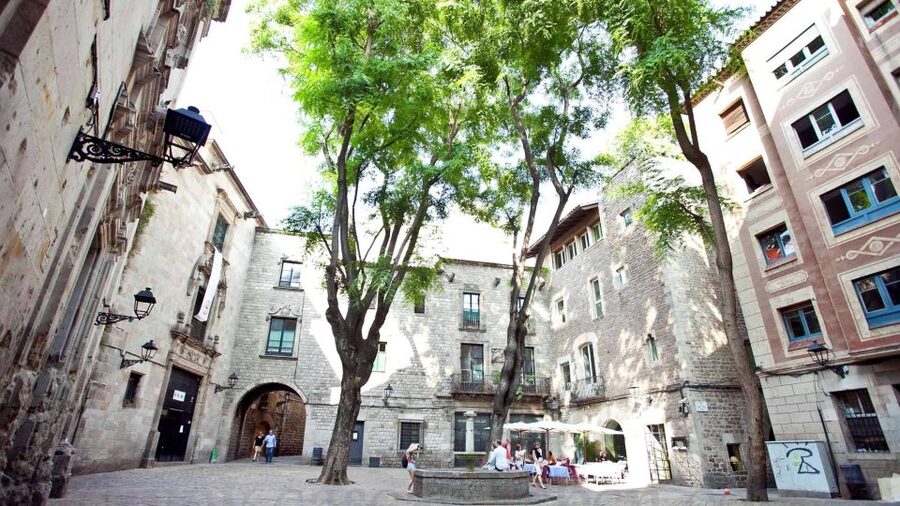
The Gothic Quarter is not one single monument. It is a web of lanes, courtyards, churches, squares, and later buildings gathered around the medieval core. The walk lets you experience that maze while your guide points out the details you might otherwise walk past.
Plaça del Rei is a key stop. It contains the Palace of the Viceroy and the Palau Reial, buildings tied to royal and political power. The square also carries the famous story of Christopher Columbus being received by Ferdinand and Isabella after his voyage to the Americas.
This part of the walk works best when you listen for the connections between architecture and power. Barcelona’s medieval center was not only a pretty collection of stone buildings. It was a place where rulers made decisions, ceremonies took place, and Catalan political life developed.
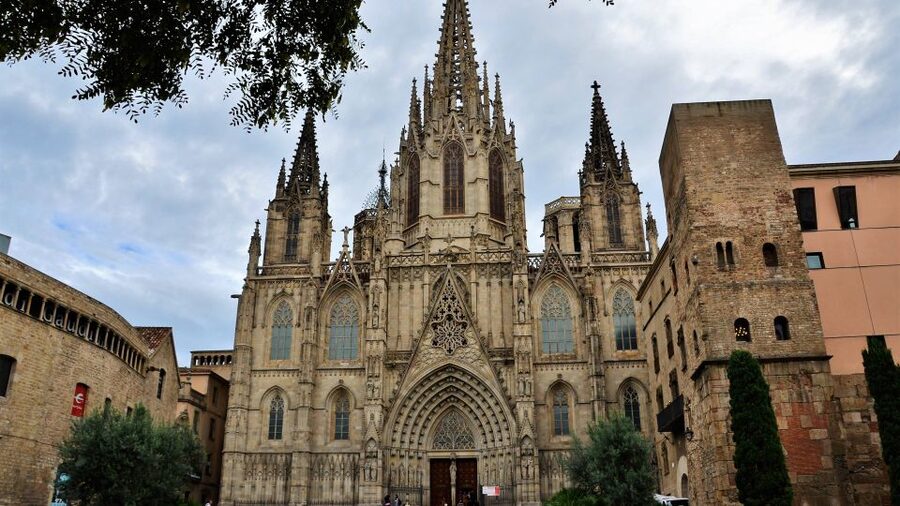
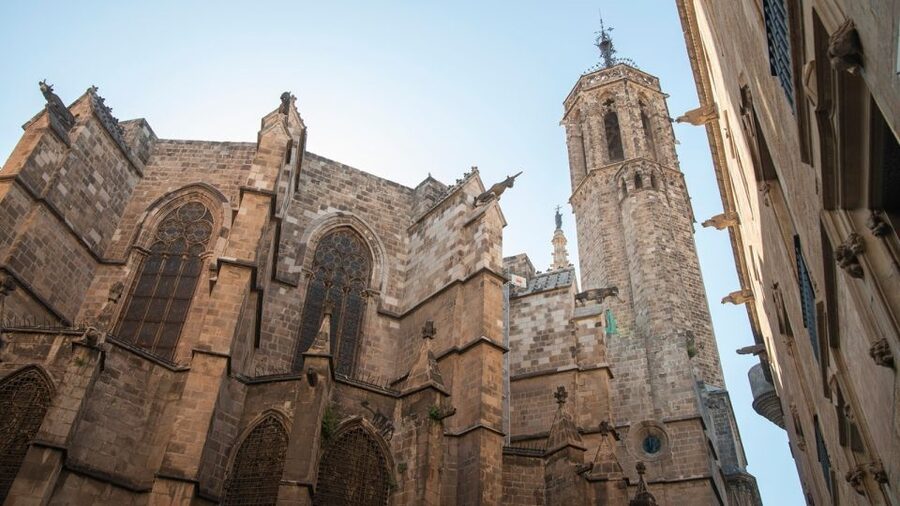
Barcelona Cathedral appears along the route, usually as a sight to admire rather than a guaranteed extended interior visit. That distinction matters. If you want a slow look at every chapel, stained-glass window, or cloister detail, plan a separate visit. On this tour, the cathedral serves as a major architectural landmark within a broader walk.
The advantage is range. You see more of the quarter in one morning or afternoon. The tradeoff is depth. The guide must keep moving so the group can reach La Rambla, La Boqueria, El Born, and the later stops.
La Rambla and the changing face of Barcelona
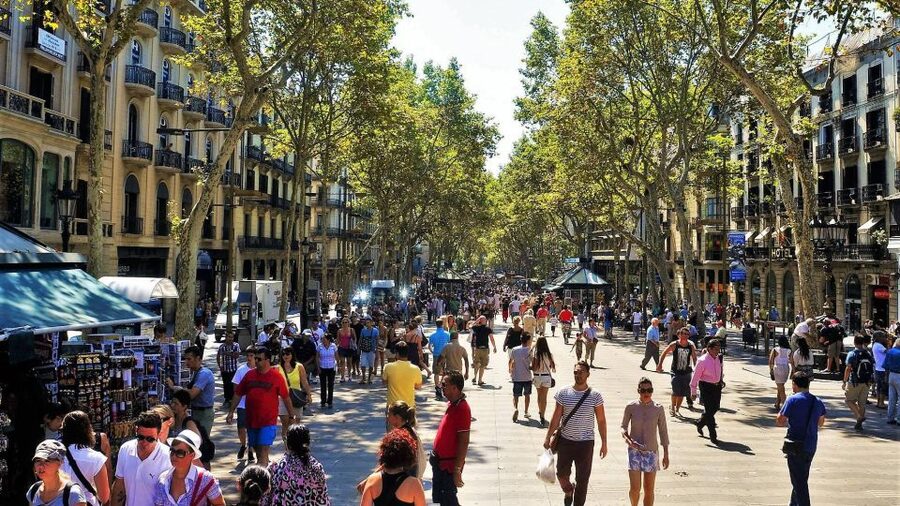
La Rambla gives the tour a change of pace. After the enclosed lanes of the Gothic Quarter, you step onto Barcelona’s famous boulevard, lined with flower stalls, cafés, eateries, performers, and constant foot traffic.
The route passes along La Rambla rather than treating it as a long stop. That is sensible. The boulevard is best understood as a public stage, not as a monument requiring a lengthy lecture. Your guide can explain its place in city life while you watch the performers, browse the stalls, and move toward the market.
Keep your attention on your belongings here. One guide, Alba, is specifically praised for taking care of group safety and belongings, but good personal habits still matter. Carry your wallet securely and avoid leaving phones or bags unattended at cafés or market counters.
La Rambla can feel touristy, and prices at the most obvious cafés are not always the best in town. The value of seeing it with a guide is not that it becomes quiet or local. It is that you learn how this famous street fits into the city, then receive practical suggestions about where to eat or what to skip afterward.
More walking tours in Barcelona:
- Barcelona Tapas and Wine Experience Small-Group Walking Tour
★ 5.0 · 5,804 reviews - Barcelona: Tapas Walking Tour with Food, Wine, and History
★ 4.8 · 4,261 reviews - Barcelona Tapas Walking Tour: Food, Wine & History
★ 4.5 · 1,928 reviews - Barcelona: Tapas Food Crawl Walking Tour with Tastings
★ 4.9 · 1,798 reviews
La Boqueria, Barcelona’s great market stop
La Boqueria is one of the tour’s most appealing stops for anyone interested in food. More than 300 stalls offer local products, produce, prepared foods, and other Catalan specialties. Even a short walk through the market gives you a sense of the color, smells, and pace of Barcelona’s food culture.
Your guide provides context and helps you know what you are seeing. That can make a crowded market easier to read. Rather than wandering past unfamiliar ingredients, you can ask questions and connect the food to local habits.
The market is also a practical place to pause, but do not expect a leisurely meal to be built into the tour. The schedule covers several districts and landmarks, so the market visit is part of the walking program. If something catches your eye, note it and return later with time to browse.
Crowds are the main concern. La Boqueria is popular, and the narrow aisles can feel packed. The guide’s role is useful here because a small group is easier to manage than a large crowd. Still, keep your bag close and be prepared to move at the group’s pace.
Plaça Reial and the route toward El Born
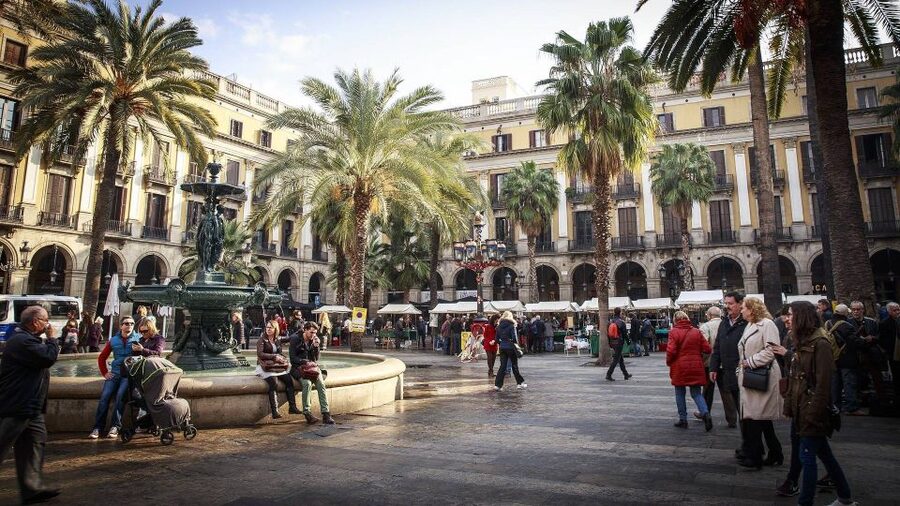
The tour continues to Plaça Reial, one of the most recognizable squares near La Rambla. It offers a more open setting after the tight Gothic streets, with cafés and architectural details worth a look.
From there, the route heads toward El Born. This district has a different mood from the Gothic Quarter, with trendy cafés, boutique shops, lively streets, and a strong connection to Barcelona’s older commercial life. The change helps you see that the Old Town is not a single preserved museum. People still live, eat, shop, and socialize among the historic buildings.
The itinerary also passes the Palace of Catalan Music. The route lists it as a sight to pass by, so you should not assume that an interior tour or concert is included. Its appearance adds another layer to Barcelona’s artistic identity, but you will need a separate ticket if you want a full visit.
The final destination is Passeig del Born. This is a useful ending point because you are not dropped far from the city center. You can continue exploring El Born, stop for food, or use the area as a base for the rest of your day.
Santa Maria del Mar and Catalan Gothic design
Santa Maria del Mar, also called the Cathedral of Saint Mary of the Sea, is one of the architectural high points of the walk. The church is among the finest examples of Catalan Gothic design, and your guide explains how it was built in an unusually short period.
That construction story gives the building extra meaning. You are not only looking at pointed arches and stone columns. You are learning about the planning, labor, and engineering required to create a large medieval church in a busy port district.
The church is also a good contrast with Barcelona Cathedral. Seeing both helps you compare two important Gothic buildings rather than treating each as a separate photo stop. The guide can point out differences in setting, scale, and design while linking both to Catalonia’s medieval period.
Again, the listed route indicates a pass-by visit. If you have a particular interest in church interiors, check what your chosen departure includes and make time for an independent visit later.
What the guide adds to the walk
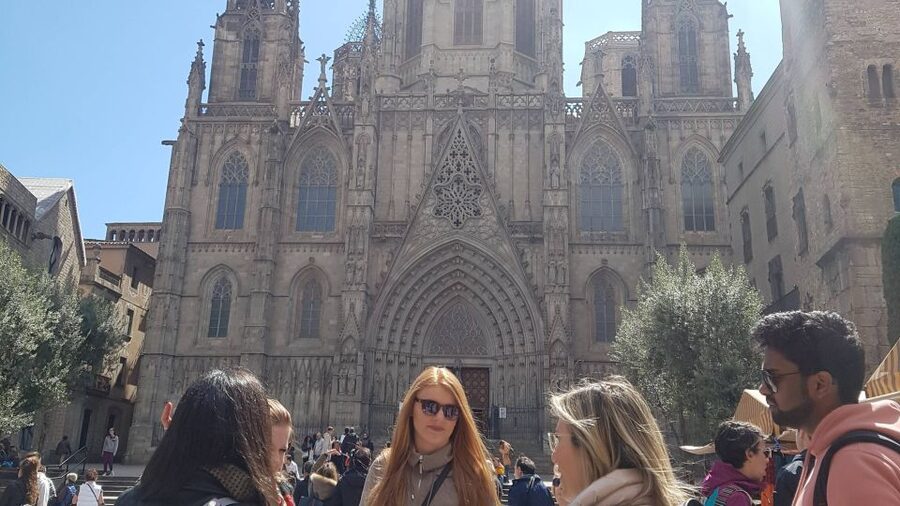
The best guides make this tour more than an efficient route through famous sights. They give you ways to notice Barcelona. Steven has been praised for using humor, puzzles, and small visual details such as dragons and a double-tailed mermaid. José Carlos is noted for asking what the group wanted to understand, then shaping the walk around those interests.
That kind of interaction matters in a quarter filled with details. You might spot carved animals, symbols, or unusual architectural decorations, but you need someone to tell you why they matter or invite you to look for them. Good storytelling also helps children and adults stay engaged during the longer stretches between major landmarks.
Several guides, including Alba, Ane, Laura, Nilo, and Isabel, are also praised for restaurant suggestions. These recommendations are a useful bonus, especially if this is your first visit. Ask at the end about food, nearby sights, and places to return to, but remember that advice can differ by guide.
The tour is offered in English and Spanish. A private group option is available if you want a more tailored pace or a walk focused on your own interests. The standard small group has a maximum of 15 people, a good middle ground between personal contact and a reasonable price.
Is $21 a good value?
At $21 per person, this is a strong-value introduction to central Barcelona. You get a guide, a route through several historic districts, and explanations that would be difficult to recreate from a map alone.
The price is especially fair if you are new to Barcelona and want a framework for later sightseeing. In a few hours, you cover Roman remains, medieval squares, Gothic churches, La Rambla, La Boqueria, Plaça Reial, El Born, and the Palace of Catalan Music from the outside.
The tour does not include personal expenses, food, attraction admission, or a promised extended visit inside each church. That keeps the cost down, but you should budget separately if you want to eat at the market or return to a landmark.
I would take this early in a Barcelona visit. It gives you useful orientation and helps you decide where to spend more time. If you already know the Old Town well, the value will depend on the guide and on your interest in Roman and medieval history.
Who should book this Barcelona walk?
You should consider it if you want:
- A first look at Barcelona’s Old Town without planning every turn yourself
- Roman and medieval context, not just photo stops
- A compact route that combines history, architecture, food, and street life
- A small group where you can ask questions
- Local suggestions for restaurants and later sightseeing
- A walking experience rather than a bus-based overview
It suits couples, solo visitors, families with older children, and anyone who likes history explained in plain language. Children under 2 can join free, though the length and walking pace may be tiring for very young children.
I would be more cautious if you have limited mobility, dislike crowded streets, or want guaranteed indoor access to every church and palace. The activity requires comfortable walking shoes, does not allow large bags or luggage, and may last up to four hours depending on the option and schedule.
You can cancel up to 24 hours before the activity for a full refund, and reserve now while paying later. Those terms make it easier to fit the walk into a changing itinerary.
Should you book the Old Town and Gothic Quarter tour?
I would book it if this is your first or second visit to Barcelona and you want the city’s oldest districts to make sense. The strongest reasons are the small group, the broad route, and the guides’ ability to mix dates with stories, humor, architecture, and food advice.
Choose it early in your stay, wear comfortable shoes, and keep your bag light. Do not expect a slow museum tour or a long market lunch. Expect a well-paced introduction to Barcelona’s Roman foundations, medieval center, Catalan Gothic churches, and modern street life, with enough local guidance to help you plan the rest of your visit.
FAQ
How long does the Barcelona Old Town and Gothic Quarter tour last?
The tour is described as lasting 2.5 hours, with available options listed from 2.5 to 4 hours. Check the available departure option for the exact duration.
What language is the tour offered in?
The tour is offered with a live guide in English or Spanish.
How much does the tour cost?
The listed price is $21 per person.
Where does the tour start?
The starting point is listed as the Movistar Centre, but the meeting point may vary depending on the option booked.
Where does the tour finish?
The tour finishes at Passeig del Born, 08003 Barcelona, Spain.
What places are included on the route?
The route includes the Gothic Quarter, La Rambla, La Boqueria, Plaça Reial, Barcelona Cathedral, El Born, Santa Maria del Mar, and the Palace of Catalan Music. It also covers Roman remains and the Pati Llimona baths.
Is this a private tour?
A private group option is available. The standard tour is a small group with a maximum of 15 participants.
Are children allowed on the tour?
Yes. Children under 2 years old can join for free.
What should I bring?
Bring comfortable shoes. The tour is a long walking experience through historic streets.
Can I bring luggage or a large bag?
No. Luggage and large bags are not allowed.
Can I cancel the booking?
Yes. You can cancel up to 24 hours in advance for a full refund. A reserve-now, pay-later option is also available.
Just added around Barcelona
- GoCar Full Day Tour★ 4.0 · 6 reviews
- Sagrada Familia and Barcelona Highlights: Private Guided 4-Hour Driving Tour★ 5.0 · 6 reviews
- Barcelona: Highlights & Gems Private Tour with Tapa & Drink★ 3.9 · 6 reviews
- Gothic Quarter and Born District: Photographic Workshop★ 5.0 · 6 reviews
- Gobbi Yacht Rental in Barcelona 9 Pax 2/4/8hs★ 5.0 · 6 reviews
- Barcelona: Gothic Quarter & La Sagrada Familia Private Tour★ 4.9 · 6 reviews
- Private Sailboat Ride at Sunset from Sitges★ 5.0 · 6 reviews
- Barcelona: Private Tour of Casa Batllo with Reserved Access★ 3.5 · 6 reviews
Gothic Quarter Walking Tours, compared.
Barcelona in 1 Day: Sagrada Familia, Park Guell,Old Town & Pickup
Read our review →
Barcelona all included: Sagrada, Park Güell, Montjuic & Gothic
Read our review →
Sagrada Familia, Modernism, and Old Town Tour
Read our review →
Barcelona Gothic Quarter Tapas & Taverns Food & Wine Tour
Read our review →
Gothic Quarter Ghosts and Legends Walking Tour
Read our review →
Barcelona Helicopter, Sailboat & Old Town Private Walking Tour
Read our review →
Barcelona Old Town & Gothic Quarter Small Group Tour
Read our review →
Barcelona e-Bike Tour: Gaudí & Old Town Small Group
Read our review →Browse the lists this tour appears in