
Reviewed · HISTORICAL TOURS
Barcelona: 3-Hour Esoteric, Spiritual & Historical Tour
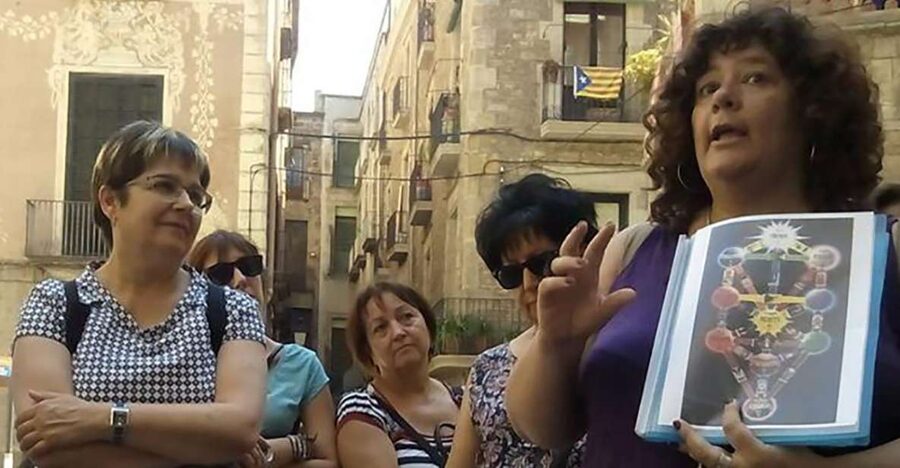
Barcelona’s Gothic Quarter has a second story beneath its familiar Roman walls and medieval lanes. This three-hour walk with Sandra Burela looks for that less obvious layer: Templars, Kabbalists, Freemasons, alchemy, dragons, and the symbols built into the city’s churches and streets.
I like the small group, limited to eight, and Sandra’s unusual mix of Barcelona history and Western esotericism. I also like that the tour encourages questions and can give you a new way to read the city for the rest of your stay. The drawback is clear: if you want a conventional sightseeing walk focused on major monuments, this may feel too specialized and interpretive.
In This Review
- Key points to know before booking
- Barcelona’s second story begins in the Gothic Quarter
- Roman Barcino, Jupiter, and the oldest layer of the city
- The medieval city and the old Jewish call
- Templars and the symbols of the cathedral
- An esoteric basilica and a touch of alchemy
- Freemasonry, the city plan, and Gaudí
- What makes Sandra Burela’s guiding style useful
- Three hours, eight people, and a price of $88
- Practical advice for the walk
- Who should book this Barcelona tour?
- Should you book it?
- FAQ
- Where does the tour meet?
- How long does the experience last?
- What language is the tour in?
- How large is the group?
- Who guides the tour?
- What subjects does the tour cover?
- What should I bring?
- Can I cancel the booking?
Key points to know before booking
- Roman and medieval Barcelona in one walk: Follow the story from ancient Barcino through the medieval city and its Jewish quarter.
- Symbols in plain sight: Look for Templar and Masonic details in and around the Gothic cathedral.
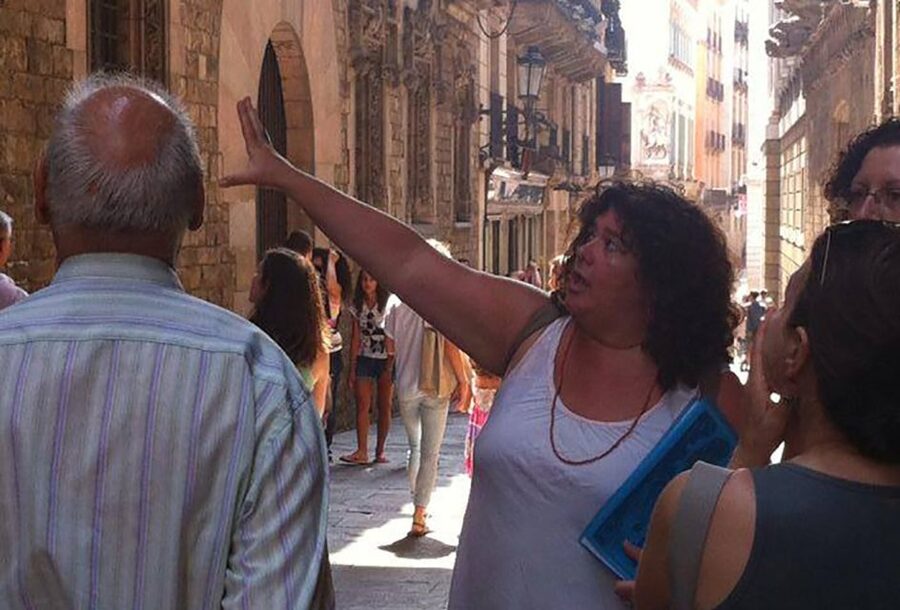
- A specialist guide: Sandra Burela leads the tour and connects architecture, religion, philosophy, and esoteric traditions.
- Small-group format: With no more than eight people, questions and conversation are part of the experience.
- A different look at Gaudí and Barcelona: The tour asks how Freemasonry, alchemy, and spiritual ideas may relate to the city’s later architecture.
- Plan for a lot of walking: Wear comfortable shoes, carry belongings safely, and bring water in summer.
Barcelona’s second story begins in the Gothic Quarter
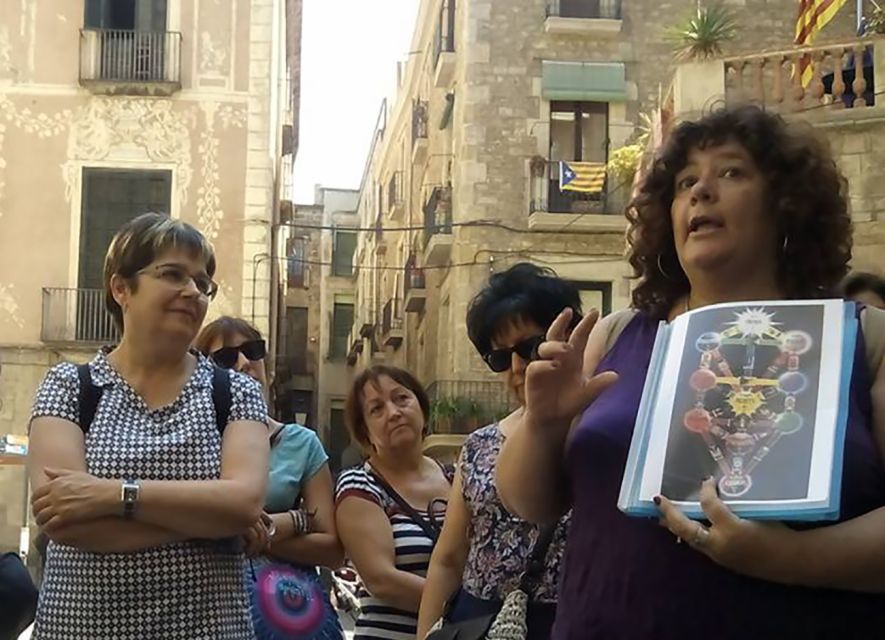
This is not a tour that simply points at old buildings and recites dates. Sandra uses the Gothic Quarter as a kind of open-air text, asking you to notice symbols, placement, religious ideas, and the groups that shaped Barcelona over 2,000 years.
You begin at Plaça Catalunya, in front of Zurich Cafe. Find the guide beside the newsstand between the two metro entrances. From there, the route heads toward the old center, where modern Barcelona gives way to narrow streets, medieval churches, and fragments of Roman Barcino.
I like this starting point because Plaça Catalunya is easy to reach and familiar to almost everyone. It also creates a useful contrast. You start in a busy modern square, then move into an older city where Roman walls, Christian buildings, Jewish history, and later architectural ideas overlap.
The tour is conducted in English. Its small size matters here. Esoteric subjects can become vague or overly grand in a large group, but a maximum of eight people leaves room to stop, ask what a symbol means, and discuss how a particular idea developed.
A few more Barcelona options worth an hour of your trip
- Barcelona: Tapas Walking Tour with Food, Wine, and History
★ 4.8 · 4,261 reviews - Barcelona Tapas Walking Tour: Food, Wine & History
★ 4.5 · 1,928 reviews - Barcelona: 2.5-Hour Bike or E-Bike Historical Tour
★ 4.5 · 1,262 reviews
Roman Barcino, Jupiter, and the oldest layer of the city
Barcelona’s spiritual story reaches back to the Roman period. The tour connects modern streets with ancient Barcino and with a temple dedicated to Jupiter, giving you a sense of how sacred places and civic life have shared the same ground over time.
You will not be looking at Roman remains in isolation. Sandra places them within the wider story of Mediterranean movement, explaining how Romans, Visigoths, merchants, sailors, counts, Jews, and people from other parts of the Mediterranean passed through these streets.
That broader view is one of the tour’s strengths. Barcelona can sometimes seem to jump from Roman ruins straight to Gaudí, with the centuries between treated as a blur. Here, the emphasis is on continuity: old beliefs, symbols, and power structures leaving traces in the city that came later.
The esoteric approach also asks you to consider how people gave meaning to buildings and places. A temple, church, street plan, or carved figure could carry more than one message. Some meanings were public and religious. Others were reserved for particular groups or traditions.
You should come ready to listen rather than expect a museum-style display. The tour is about interpretation as much as physical remains. If you enjoy connecting ideas across time, this section gives the rest of the walk a useful foundation.
The medieval city and the old Jewish call
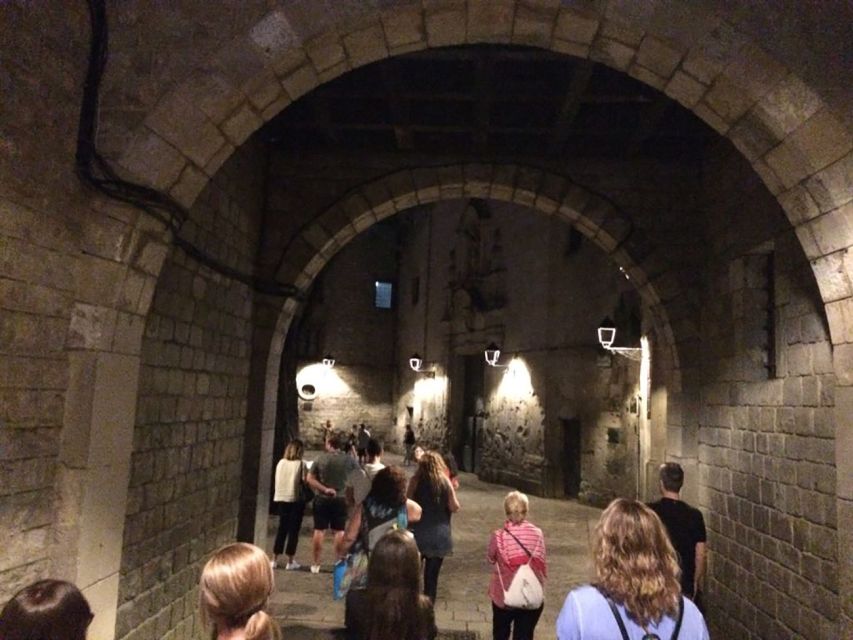
The Gothic Quarter is the natural setting for the medieval part of the tour. Its lanes preserve the feeling of a compact city, even though modern Barcelona surrounds it on every side.
Sandra introduces the old Jewish call, the Catalan term for a Jewish quarter, and explains the importance of Catalonia in the development of Kabbalah. The focus includes famous rabbis and Kabbalist schools, bringing attention to a part of Barcelona’s past that many standard city walks pass over quickly.
This is especially valuable if your picture of medieval Barcelona is limited to counts, churches, and stone lanes. Jewish communities were part of the city’s intellectual and commercial life, and the tour presents their spiritual traditions as an important piece of the city’s story.
The Kabbalistic material may be the most demanding section for anyone new to the subject. You will hear ideas that require concentration, particularly if you are not already familiar with Jewish mysticism or medieval religious thought. Sandra’s role is important here because she explains the historical development instead of treating Kabbalah as a decorative mystery theme.
I would book this tour partly for that correction in perspective. It does not reduce the Jewish quarter to a photo stop. It gives you a way to think about the people, schools, and ideas associated with the area.
Templars and the symbols of the cathedral
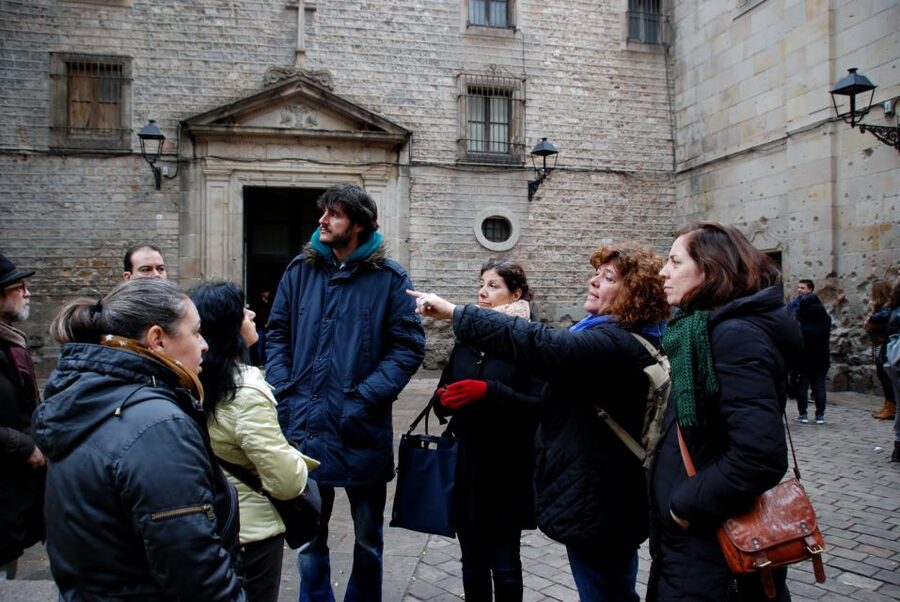
The tour then turns to the Knights Templar and the traces they are said to have left in Barcelona. You will hear about the Templars in relation to the city’s medieval religious and political world and look for their remains.
The Gothic cathedral is a central point for examining Templar and Masonic symbols. The point is not simply to collect secret signs. Sandra relates the symbols to the broader Western esoteric tradition and explains how later groups, including Freemasons, have been associated with symbolic architecture and ritual meaning.
This part should appeal to anyone who likes looking closely at stonework. Once you know what to look for, a church is no longer just a grand room for worship. Carvings, figures, geometry, and placement can prompt questions about the people who commissioned, built, or interpreted them.
At the same time, keep your expectations measured. The tour presents an esoteric reading of Barcelona, so it is not the place to demand that every theory be treated as settled academic fact. The value lies in learning how these traditions have been understood and how their symbols appear in the city’s visual language.
I appreciate that distinction. A good specialist walk should expand your view without asking you to accept every mysterious connection uncritically. Ask questions. The small group makes that practical.
Same corner of Catalonia, a completely different day:
- Barcelona: Park Güell Admission Ticket
★ 4.4 · 76,534 reviews - Barcelona: Casa Batlló Entry with Self-Audioguide Tour
★ 4.7 · 25,359 reviews - Barcelona: 24 or 48-Hour Hop-On Hop-Off Bus Tour
★ 4.4 · 20,872 reviews - Barcelona: Park Guell Guided Tour with Skip The Line Entry
★ 4.7 · 17,563 reviews
An esoteric basilica and a touch of alchemy
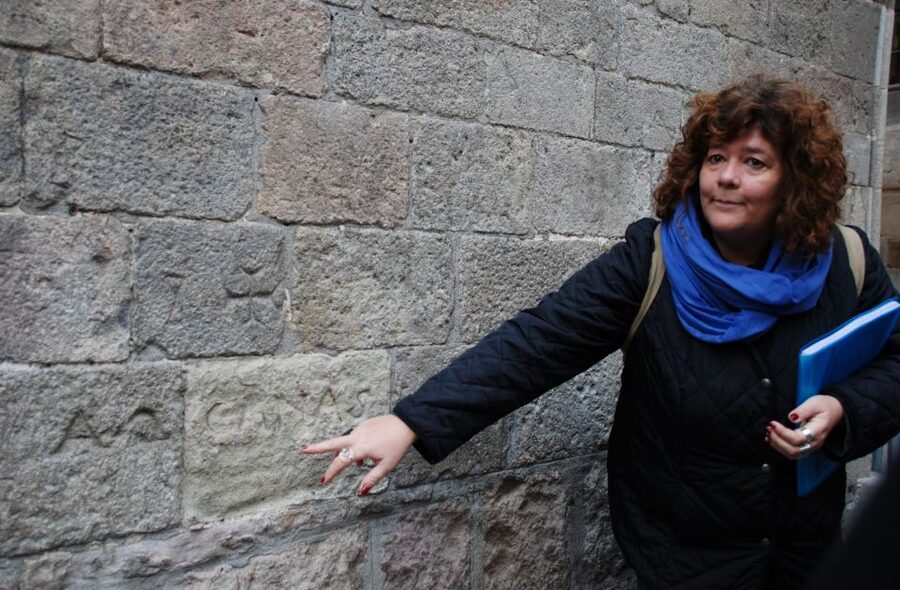
Another part of the walk focuses on an esoteric basilica, with attention to alchemical ideas and spiritual symbolism. The supplied information does not name the basilica, so you should not book expecting a specific church interior or a guaranteed entry.
What you can expect is a reading of religious architecture through another lens. Sandra connects the building and its imagery with the Western esoteric tradition, showing how Christian spaces can also be discussed in relation to hidden knowledge, transformation, and symbolic practice.
Alchemy is useful here because it is often misunderstood as a hunt for gold. In the context of this tour, it relates to a wider symbolic tradition, one concerned with transformation and the relationship between material and spiritual life.
This stop will work best if you enjoy ideas and visual detail. You might find yourself paying more attention to figures and ornaments that you would normally pass without a second glance. If you prefer a straightforward architectural explanation, the interpretive approach may be more than you want.
That balance is worth keeping in mind throughout the walk. The tour is not a standard basilica visit with a fixed list of dates. It is an invitation to consider how buildings can carry several layers of meaning at once.
Freemasonry, the city plan, and Gaudí
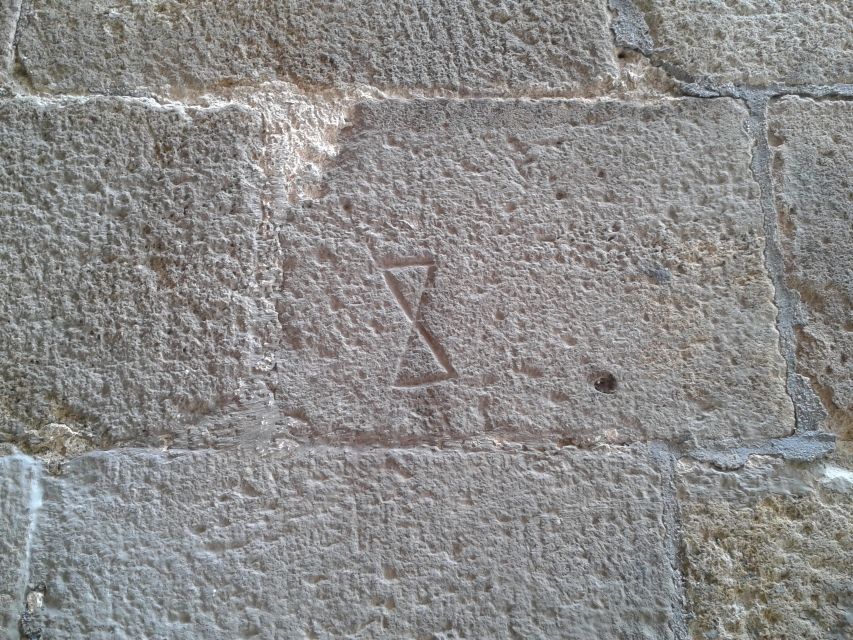
The tour carries the story into 19th-century Barcelona and the world of Freemasonry. It raises the question of whether modern Barcelona was designed by a Freemason and asks about Gaudí’s possible relationship with Freemasonry.
Those questions are part of the tour’s appeal, but they also signal its style. You are being encouraged to investigate connections among architecture, social organizations, symbolism, and spiritual thought. This is less about receiving a final answer and more about seeing Barcelona through a set of questions.
Gaudí is often presented through his distinctive shapes, religious vision, and natural forms. This walk adds another possible frame by considering esoteric ideas and symbolic traditions around his work. You should treat the discussion as a specialist interpretation, not as a replacement for a standard Gaudí tour or a formal architectural study.
The same applies to the claim about Barcelona’s modern design and Freemasonry. Sandra’s expertise is in Western esotericism and Barcelona, so she can provide historical context and explain why the idea matters. If you are strongly interested in proving or disproving a particular theory, use the walk as a starting point for further reading.
I like this portion because it links the medieval city to the modern one. The tour does not leave mystery behind with the Templars. It follows symbolic thinking into later architecture, mystery schools, and the city’s changing identity.
What makes Sandra Burela’s guiding style useful
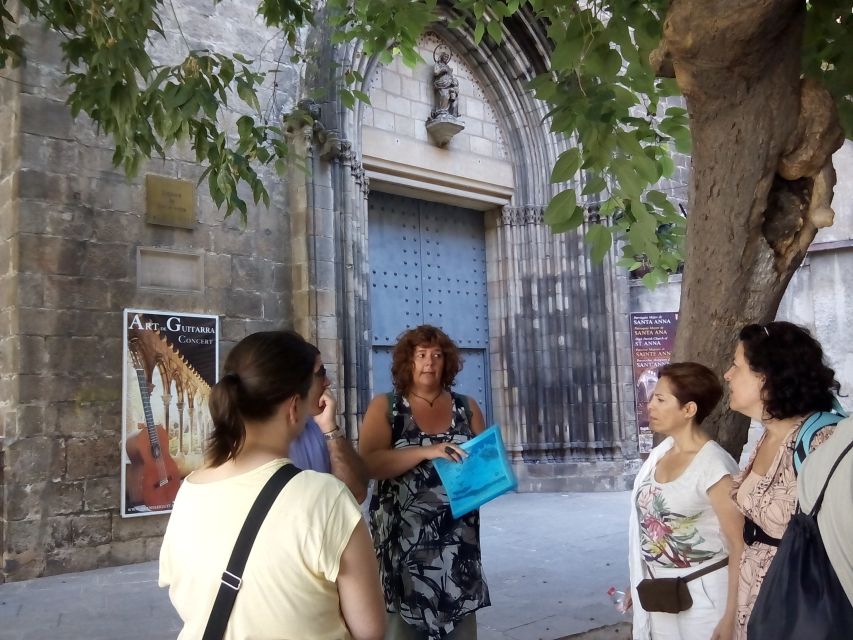
Sandra Burela is the key to this experience. Her work combines Barcelona history with study of Western esoteric traditions, and the tour depends on her ability to explain both without losing the thread.
You can expect a guide who invites questions and adjusts the discussion to the interests of the group. One account describes her asking what the participants hoped to learn, then shaping the conversation around those interests. That is exactly the sort of flexibility that helps on a specialist walk.
Her style also includes humor and warmth. Those qualities matter because three hours of symbols, religious movements, medieval communities, and philosophical ideas could become heavy. Her enthusiasm keeps the walk conversational rather than academic in the dry sense.
The strongest praise centers on her passion, clarity, and ability to connect apparently separate subjects. She links streets to architecture, architecture to belief systems, and belief systems to Barcelona’s political and social past.
You do not need prior knowledge of esotericism. The tour suits beginners who want a clear introduction, as well as people already familiar with astrology, Kabbalah, or other esoteric subjects. If you already study these fields, bring questions. The experience becomes more rewarding when you use the time for discussion rather than waiting for a fixed lecture.
Sandra also provides useful resources after the tour. That is a practical benefit if the walk sparks your interest and you want to continue learning after you leave Barcelona.
Three hours, eight people, and a price of $88
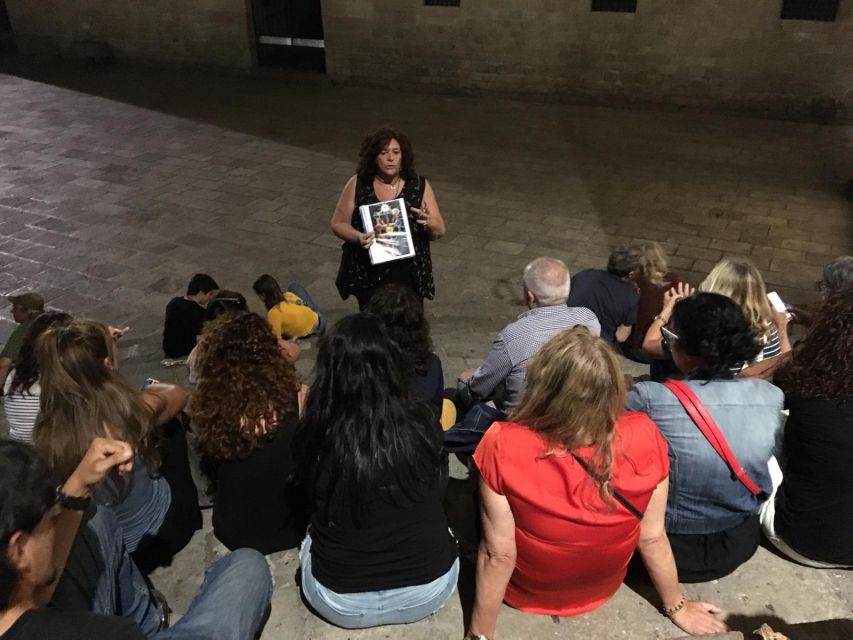
The price is $88 per person for three hours. That is more than a basic city orientation walk, but the comparison is not quite fair. You are paying for a specialist subject, a small group, and a guide who brings together several fields that are rarely covered in one standard tour.
The value depends on your interests. If you want a broad introduction to Barcelona’s main sights, use your budget elsewhere. If you are curious about Templars, Kabbalah, Freemasonry, alchemy, or symbolic architecture, the focused format makes the price easier to justify.
A group capped at eight is another part of the value. You should have a better chance to hear clearly, examine details, and ask follow-up questions than you would on a large city walk. Several hours of conversation can also make this feel more personal than a standard scripted route.
The three-hour length is both an advantage and a warning. It gives Sandra enough time to move from Roman Barcelona through the medieval Jewish quarter and onward to modern architecture. But the subject is broad, and you will receive many ideas in a short period.
One participant wished the tour lasted longer. I understand that reaction, but the fixed three-hour format is probably helpful for most visitors. You receive a substantial introduction without giving up an entire day. Consider leaving some quiet time afterward if you want to sort through the connections.
Practical advice for the walk
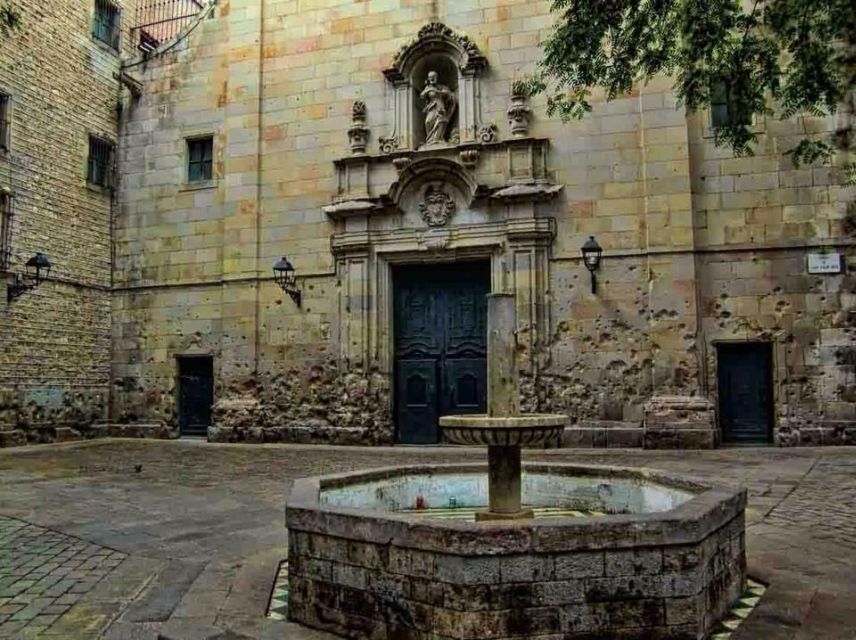
Meet Sandra at the Zurich Cafe on Plaça Catalunya. Look beside the newsstand located between the two metro entrances. This detail matters because Plaça Catalunya has several meeting points and can be confusing when it is busy.
Wear comfortable walking shoes. The route moves through the Gothic Quarter, where old streets and extended walking are part of the setting. Bring water in summer, and carry your belongings in a secure way.
The tour is offered in English and uses a live guide rather than an audio device. You should be prepared to walk, listen, and look closely. The experience is not built around sitting in one location or visiting a series of formal exhibits.
Free cancellation is available up to 24 hours before the start for a full refund. You can also reserve and pay later, which is useful if you are still arranging your Barcelona schedule.
Who should book this Barcelona tour?
I would choose this walk if you want to see the Gothic Quarter through more than its postcard surfaces. It suits curious independent-minded people who enjoy history, religious ideas, architecture, symbolism, and long conversations.
It is also a good choice for a repeat visit. If you have already seen the cathedral and wandered the old Jewish quarter, Sandra’s approach may give familiar places a new purpose. You will still walk through known streets, but you will be looking for different clues.
People with an existing interest in astrology or esoteric studies should find plenty to discuss. Beginners are welcome too, provided they enjoy asking questions and following an idea across several centuries.
I would not make this your only Barcelona tour if you are visiting for the first time. Pair it with a conventional introduction to the city, or take it early in your stay and use its ideas to guide later walks through the Gothic Quarter.
Should you book it?
Book this tour if you want Barcelona’s less familiar stories and you enjoy a guide-led conversation rather than a simple list of sights. Sandra Burela’s specialty, the group size, and the mix of Roman, Jewish, Templar, Masonic, Kabbalistic, and modern themes give the walk a clear identity.
Skip it if esotericism feels too speculative or if you want a fast, mainstream introduction to Barcelona. For the right audience, $88 buys more than three hours of walking. It gives you a set of questions that can change how you read the city’s streets, churches, and symbols for the rest of your visit.
FAQ
Where does the tour meet?
Meet in front of Zurich Cafe at Plaça Catalunya. The guide waits next to the newsstand between the two metro entrances.
How long does the experience last?
The tour lasts three hours.
What language is the tour in?
The live tour is conducted in English.
How large is the group?
The group is limited to eight participants.
Who guides the tour?
Sandra Burela leads the experience. She specializes in the Western esoteric tradition and Barcelona.
What subjects does the tour cover?
The walk covers Roman Barcino, medieval Barcelona, the old Jewish call, Kabbalah in Catalonia, the Templars, Freemasonry, Masonic and Templar symbols, alchemy, Gaudí, and Western esoteric spirituality.
What should I bring?
Wear comfortable walking shoes and use a secure way to carry your belongings. Bring a bottle of water in summertime.
Can I cancel the booking?
You can cancel up to 24 hours in advance for a full refund. You can also reserve now and pay later.
Just added around Barcelona
- GoCar Full Day Tour★ 4.0 · 6 reviews
- Sagrada Familia and Barcelona Highlights: Private Guided 4-Hour Driving Tour★ 5.0 · 6 reviews
- Barcelona: Highlights & Gems Private Tour with Tapa & Drink★ 3.9 · 6 reviews
- Gothic Quarter and Born District: Photographic Workshop★ 5.0 · 6 reviews
- Gobbi Yacht Rental in Barcelona 9 Pax 2/4/8hs★ 5.0 · 6 reviews
- Barcelona: Gothic Quarter & La Sagrada Familia Private Tour★ 4.9 · 6 reviews
- Private Sailboat Ride at Sunset from Sitges★ 5.0 · 6 reviews
- Barcelona: Private Tour of Casa Batllo with Reserved Access★ 3.5 · 6 reviews
Historical Tours, compared.
Tapas Walking Tour with Food, Wine, and History
Read our review →
Barcelona Tapas Walking Tour: Food, Wine & History
Read our review →
Barcelona Erotic Museum – Explore Art, History & Fun
Read our review →
Andorra Original History and Sightseeing Tour (Private, Pickup)
Read our review →
Tarragona and Sitges Small Group Tour – Roman History & Culture
Read our review →
Girona History and Legends Tour Small Group from Girona
Read our review →Browse the lists this tour appears in