
Reviewed · HISTORICAL TOURS
Tarragona and Sitges Small Group Tour – Roman History & Culture
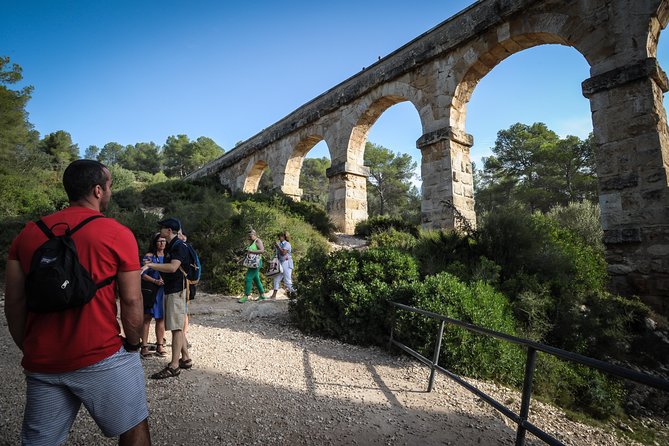
Tarragona gives this day trip its real punch. You can walk across the 1st-century BC Pont del Diable aqueduct, then follow Roman walls, a circus, and an amphitheater through a living Catalan city. Later, Sitges shifts the mood to beaches, whitewashed lanes, cafes, and shops.
I like the small-group minivan because it keeps the day personal and avoids the feel of a large coach tour. I also like the mix of ancient sites and open seaside time. The trade-off is a long day with plenty of walking, and three hours in Sitges may feel too long if Roman ruins are your main reason for booking.
In This Review
- Key points to know before you book
- Why this Barcelona day trip works
- Meeting near Palau de la Música
- Pont del Diable, the aqueduct you can cross
- Tarragona’s Roman city beneath modern streets
- The amphitheater and the Mediterranean view
- Roc de Sant Gaieta, a quick coastal pause
- Three hours to choose your Sitges afternoon
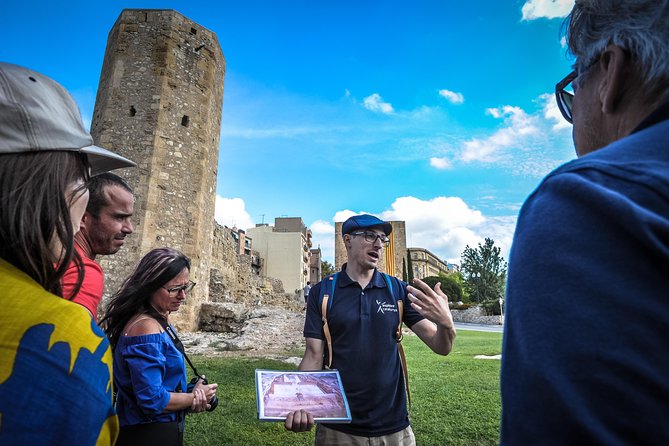
- What the guide adds to the day
- Who should book this tour
- Is the Tarragona and Sitges tour worth booking?
- FAQ
- Where does the tour begin?
- Where does the tour end?
- Is hotel pickup included?
- Is the tour offered in languages other than English?
- Are meals and attraction entry fees included?
- Can I swim in Sitges?
Key points to know before you book
- Walk across a nearly 2,000-year-old aqueduct: The Pont del Diable is the day’s most memorable photo stop, and you can cross the top on foot.
- See Tarragona as a city, not just an archaeological park: Roman walls, the cathedral, forum, circus, and amphitheater appear among modern streets.
- Expect a relaxed coastal pause at Roc de Sant Gaieta: This tiny shoreline community takes only about 20 minutes, but it breaks up the drive nicely.
- Choose your own Sitges afternoon: You get time for lunch, boutiques, cafes, side streets, beaches, or a quick swim.
- Benefit from a guide-led history walk: Guides including Sergio, Rod, Xavier, Stephen, Jordi, and Henrique have been praised for clear explanations and useful local suggestions.
- Plan for a full 10.5-hour day: Meet near Palau de la Música at 8:15 to 8:30 a.m. and return to central Barcelona around 7 to 7:15 p.m.
Why this Barcelona day trip works
Barcelona can easily fill several days, but its nearby coast and Roman past deserve attention. This outing gives you both without asking you to plan train schedules, local buses, and separate tickets.
The format is especially useful if you want historical context. Tarragona is not presented as a pile of disconnected stones. Your guide links the aqueduct to the old Roman water system, explains the city walls, points out the forum and circus, and helps you understand how Roman remains fit into today’s Tarragona.
You then move to Sitges, a former fishing village that became fashionable in the late 19th century. The contrast is the point. Morning is about empire, stone, and public spectacle. Afternoon is about the Mediterranean, lunch, shopping, and a slower pace.
At $119.48 per person, the tour is not the cheapest way to reach Tarragona. You are paying for round-trip transport, an English-speaking professional guide, and a smaller vehicle for a long day outside Barcelona. Food, drinks, museum and monument entry fees, hotel transfers, and personal beach expenses are extra.
For many visitors, that is fair value. The route covers several places in one day, and the guide adds meaning to sites that can be hard to read on your own. If you are comfortable organizing regional transport and prefer to spend a whole day in Tarragona, independent travel may offer more time at the Roman monuments.
More Sitges escapes:
- Tarragona and Sitges Tour with Small Group and Hotel Pick Up
★ 5.0 · 1,211 reviews - From Barcelona: Tarragona & Sitges Full Day Tour with Pickup
★ 4.8 · 428 reviews - Montserrat Monastery with Easy Hike & Sitges Tour from Barcelona
★ 5.0 · 179 reviews
Meeting near Palau de la Música
The day begins at the operator’s office at C/ Palau de la Música, 1, close to the famous concert hall in central Barcelona. Arrive around 8:15 a.m. for the 8:30 departure. You can use the restroom and perhaps grab a quick coffee before leaving.
The van heads out through Barcelona’s Eixample district. During the roughly 90-minute drive to Tarragona, your guide gives a short introduction to Barcelona and the region, then you have time to rest.
Hotel pickup is not included, so allow extra time to reach the meeting point. The tour ends at Plaça de Catalunya, although the exact drop-off can vary with traffic and group size. It may also finish at Arc de Triomf, about a 10-minute walk from the office.
Transport is by air-conditioned minivan. That matters on a 10.5-hour day, though space will naturally be more limited than on a full-size coach. The published information describes the group as small, with one section listing a maximum of 15 people and another listing a maximum of 8. If the exact group size matters to you, confirm it before booking.
Pont del Diable, the aqueduct you can cross
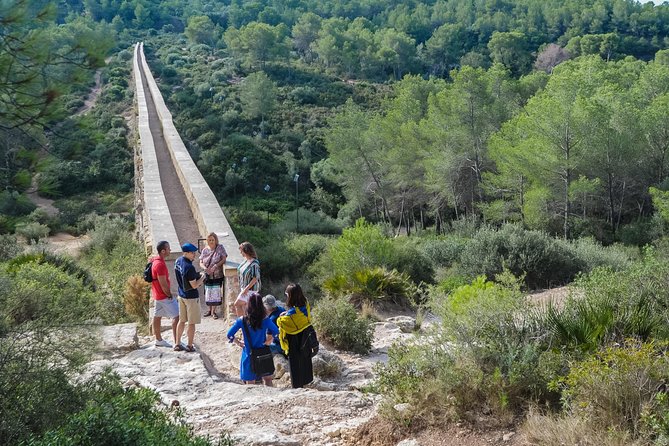
At about 10 a.m., you reach the Pont del Diable, also called the Les Ferreres Aqueduct. It was built in the 1st century BC as part of Tarragona’s Roman water supply system and remains in remarkably good condition.
This is more than a roadside picture stop. You can walk across the top from one side to the other. Standing on stones placed nearly 2,000 years ago gives the site a physical impact that photographs cannot match.
The stop lasts about 40 minutes. That is enough for the walk and pictures, but not enough for a long exploration. One useful tip: wear shoes with a secure grip and bring sun protection. The tour is built around getting out of the van, and suitable footwear is specifically recommended.
I would make this one of your priorities. Several people found the aqueduct to be the highlight and wished they had even more time there. The short visit is the main limitation, especially if ancient engineering interests you.
Tarragona’s Roman city beneath modern streets
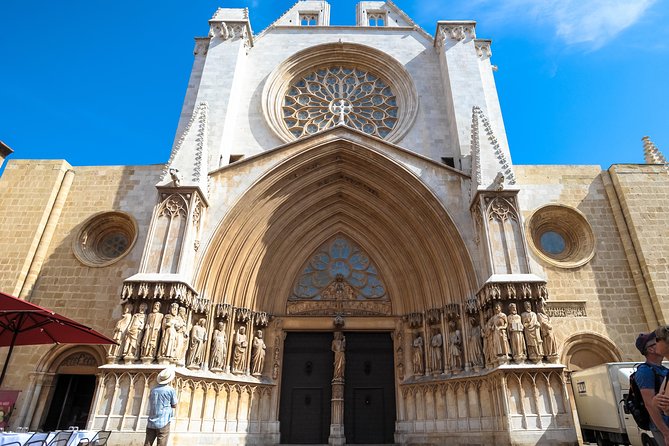
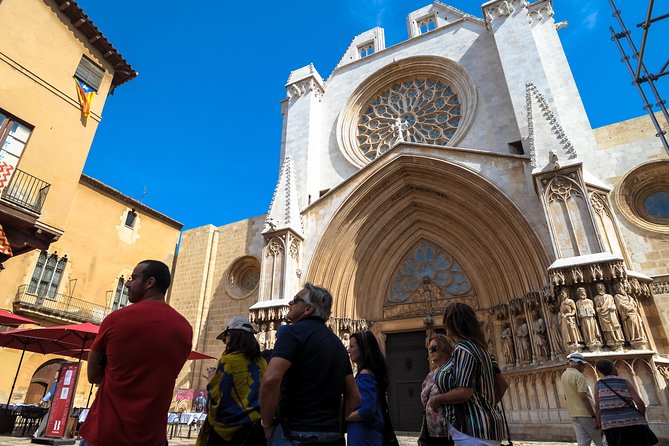
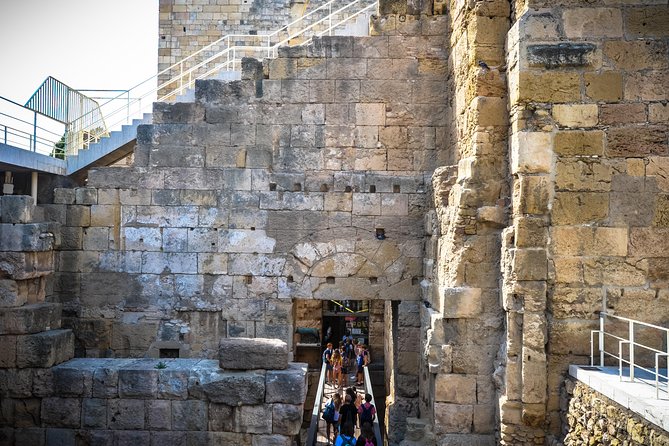
Around 11 a.m., you enter Tarragona’s old quarter through a narrow opening in the ancient walls. Tarragona was once the Roman capital of this part of the Iberian Peninsula, and the city still makes that past easy to feel.
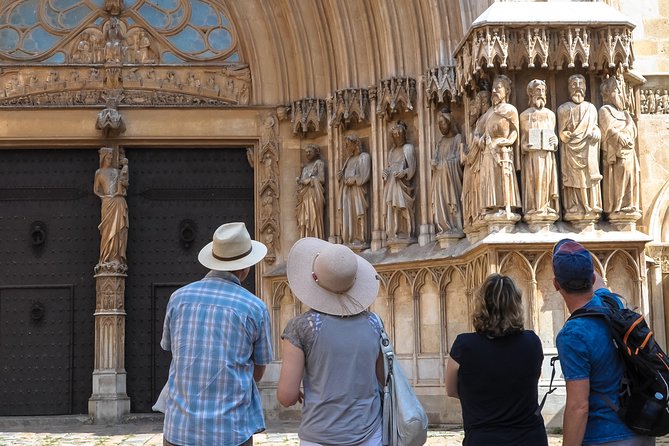
The walk begins along the Archaeological Walkway, where surviving stone walls frame the old city. You pass the medieval hospital and continue toward the cathedral. Depending on the day, a Sunday antique market may be taking place nearby, adding a present-day layer to the old quarter.
From the cathedral, the route descends through historic streets toward the Roman Forum and Circus. This is one of Tarragona’s strongest features: the ancient remains are woven into the city rather than fenced off in a distant archaeological field.
The Roman Circus once hosted chariot races. Today, part of it is tucked beneath ordinary urban buildings, and you can walk through underground passageways that once held the stands. Plaça de la Font occupies part of the circus area and is now one of the old quarter’s popular squares.
Your guide’s role matters here. Without explanation, it can be hard to picture the scale and purpose of the circus. Guides such as Sergio, Rod, Xavier, and Henrique have been praised for making the history clear, lively, and easy to follow. The best guides also use the free time well, pointing you toward places worth seeing before the next meeting time.
More Tarragona trips:
- House of Illusion Magic Show with Drinks
★ 4.5 · 719 reviews - Tarragona: Roman Heritage Guided Walking Tour
★ 4.7 · 261 reviews - Half Day Cycling Tour from Salou
★ 5.0 · 190 reviews - Guided Tour of Roman Tarragona
★ 5.0 · 108 reviews
The amphitheater and the Mediterranean view
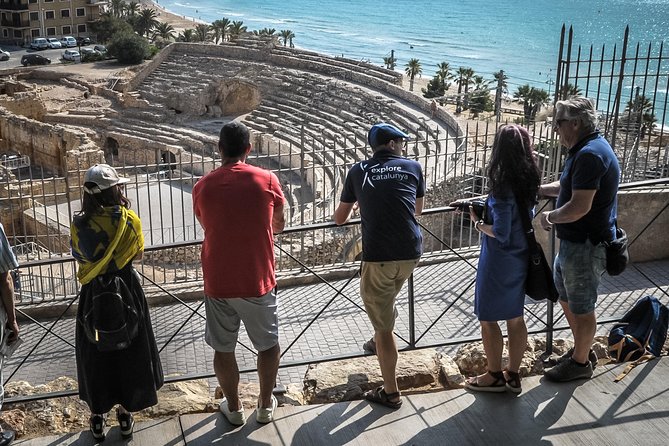
The Tarragona walk ends with a view over the Roman amphitheater and the sea. The setting is powerful: ancient stone, open water, and the remains of a place built for public combat.
A Christian church was later built in the middle of the amphitheater stage using blocks from the Roman structure. That detail helps explain how Tarragona changed over centuries. The site is not frozen in one period. Roman, medieval, and modern layers share the same ground.
The Tarragona portion lasts about two hours. It includes a guided walk through the old quarter and Roman remains, but entry to museums and monuments is not included. The supplied details also describe the main stops as free, so ask your guide what can be entered during your visit and what requires an added ticket.
This timing creates a choice. If you want a broad taste of Tarragona, two hours gives you a useful overview. If you are passionate about Roman archaeology, you may want to stay longer inside the circus or amphitheater. One person specifically preferred more Tarragona time and less Sitges time. That is the clearest warning for history-focused visitors.
Roc de Sant Gaieta, a quick coastal pause
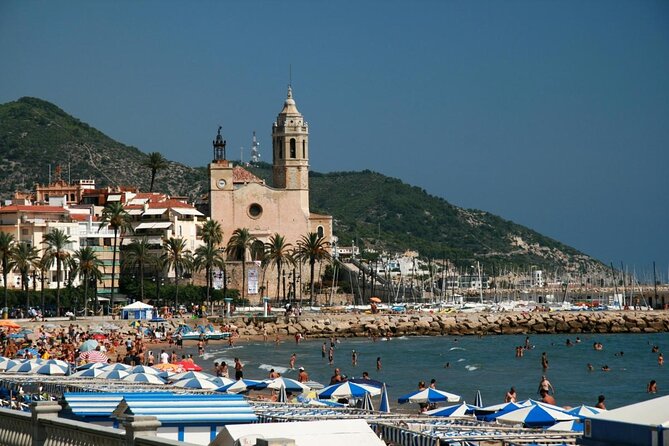
At about 1:30 p.m., the minivan stops at Roc de Sant Gaieta on the way to Sitges. This small settlement sits on a rocky shoreline and is known for its tiny white houses and unusual seaside character.
You have about 20 minutes here. That is enough to stroll between the buildings, take pictures, and enjoy a short break after the Tarragona walk. It is not a major sightseeing stop, and you should not expect a long visit.
Still, I like its place in the schedule. It gives you a quick look at a quieter coastal community before the more active afternoon in Sitges. It also prevents the day from becoming nothing but ruins and paved streets.
Three hours to choose your Sitges afternoon
You arrive in Sitges around 2:30 p.m. and leave at about 5:30 p.m. This is your least structured stop, which is useful after a morning of guided history.
Sitges has a long sandy beach, whitewashed former fishermen’s houses, shaded side streets, boutiques, cafes, and bars. You can wander through the old streets, walk the seafront, stop for lunch, or browse shops. The town has 17 beaches, and you may have time for a quick swim if conditions and your schedule allow.
Bring a swimming costume and beach towel if you want to enter the Mediterranean. Sun protection is also important. The tour does not include food or drinks, so lunch is your responsibility. Sitges offers choices for different tastes and budgets, but a waterfront meal can take a large portion of your free time.
That timing point matters. One account described a two-hour restaurant stop on a busy Sunday, leaving less room for exploring. If you want to see shops and swim, eat efficiently and keep an eye on the meeting time. If a long lunch is part of your ideal day, Sitges gives you room for it.
The town can also feel crowded on popular Sundays. That does not erase its charm, but it changes the mood. You may prefer the side streets to the busiest beachfront areas.
Sitges is a good match for you if you want variety. It is less satisfying if your main goal is an extended study of Roman Tarragona. The tour deliberately divides the day between history and leisure, so know which half matters most to you.
What the guide adds to the day
The strongest part of this experience is the guide-led storytelling. Names associated with particularly well-received outings include Sergio, Rod, Xavier, Stephen, Jordi, and Henrique. Their styles differ, but the repeated strengths are clear: solid historical explanations, patience with questions, good driving, punctuality, and practical suggestions during free time.
A good guide helps you see why the Roman Circus appears under a modern square, how the aqueduct served Tarragona, and why the amphitheater’s later church matters. You also get a short overview of Barcelona as you leave the city, which adds useful regional context.
The group format makes questions easier than they would be on a large coach. The published capacity is small, though the stated maximum varies between 8 and 15 people. Either way, the minivan format should feel more intimate than a standard big-bus excursion.
The experience operates in English only. Most people can take part, but it is not recommended for children aged four and under. You should be ready for walking, outdoor sun, uneven historic areas, and a full day away from your hotel.
Who should book this tour
I would choose this trip if you want to see beyond Barcelona without spending your holiday planning transport. It suits couples, families with older children, history fans who also want beach time, and anyone who enjoys a guide’s explanation more than reading signs alone.
It is also a useful choice if you want a gentle introduction to Tarragona. You get the aqueduct, old quarter, forum, circus, cathedral area, and amphitheater view in one outing, then finish with a coastal town.
I would hesitate if you want a slow archaeological visit. The aqueduct stop is short, the Tarragona walk covers a lot of ground, and Sitges takes three hours. An independent Tarragona day could give you more time inside the monuments.
The cancellation terms are practical: you can receive a full refund if you cancel at least 24 hours before the start time. If the minimum number of participants is not reached, the operator offers another date or a full refund.
Is the Tarragona and Sitges tour worth booking?
For $119.48, this is a solid full-day outing if you value convenience, guiding, and variety. The Roman aqueduct and Tarragona walk are the strongest reasons to go, while Sitges supplies the lighter finish with beaches, food, and shopping.
Book it if you want an easy route to two very different places and like having a guide connect the Roman remains to the modern city. Skip it, or choose a Tarragona-only option, if you already know you want every available minute among the ancient monuments.
Pack comfortable shoes, sun protection, water, and a beach towel. Arrive ready for a long day, and the mix of Roman stone and Mediterranean coast can make a welcome change from Barcelona’s city streets.
FAQ
Where does the tour begin?
The tour begins at C/ Palau de la Música, 1, in Ciutat Vella, near Palau de la Música. Check in around 8:15 a.m. for the 8:30 departure.
Where does the tour end?
The usual end point is Plaça de Catalunya around 7 to 7:15 p.m. Depending on traffic and group size, it may instead end at Arc de Triomf, about a 10-minute walk from the office.
Is hotel pickup included?
No. You must make your own way to the central Barcelona meeting point, and hotel drop-off is not included.
Is the tour offered in languages other than English?
No. This experience operates in English only.
Are meals and attraction entry fees included?
No. Food and drinks are not included. Museum and monument entrance fees in Tarragona are also excluded.
Can I swim in Sitges?
Yes. You have free time in Sitges and may swim if you wish. Bring a swimming costume and beach towel, along with suitable clothing, footwear, and sun protection.
More Historical Tours in Barcelona
- Barcelona: Tapas Walking Tour with Food, Wine, and History
★ 4.8 · 4,261 reviews - Barcelona Tapas Walking Tour: Food, Wine & History
★ 4.5 · 1,928 reviews - Barcelona: 2.5-Hour Bike or E-Bike Historical Tour
★ 4.5 · 1,262 reviews - Barcelona Erotic Museum – Explore Art, History & Fun
★ 4.4 · 450 reviews
Just added around Barcelona
- GoCar Full Day Tour★ 4.0 · 6 reviews
- Sagrada Familia and Barcelona Highlights: Private Guided 4-Hour Driving Tour★ 5.0 · 6 reviews
- Gothic Quarter and Born District: Photographic Workshop★ 5.0 · 6 reviews
- Gobbi Yacht Rental in Barcelona 9 Pax 2/4/8hs★ 5.0 · 6 reviews
- Barcelona: Highlights & Gems Private Tour with Tapa & Drink★ 3.9 · 6 reviews
- Barcelona: Gothic Quarter & La Sagrada Familia Private Tour★ 4.9 · 6 reviews
- Private Sailboat Ride at Sunset from Sitges★ 5.0 · 6 reviews
- Barcelona: Private Tour of Casa Batllo with Reserved Access★ 3.5 · 6 reviews
Historical Tours, compared.

Tapas Walking Tour with Food, Wine, and History
Read our review →
Barcelona Tapas Walking Tour: Food, Wine & History
Read our review →

Barcelona Erotic Museum – Explore Art, History & Fun
Read our review →
Andorra Original History and Sightseeing Tour (Private, Pickup)
Read our review →
Girona History and Legends Tour Small Group from Girona
Read our review →
Browse the lists this tour appears in