
Reviewed · HISTORICAL TOURS
Tarragona: Roman Heritage Guided Walking Tour
Tarragona’s Roman past is not tucked away in one museum. It is built into the city, with ancient walls beside modern streets, Circus vaults beneath the historic center, and an amphitheater facing the Mediterranean. This two-hour walk gives you a useful route through that Roman story, ending with one of the city’s best views.
I especially like the Circus vaults, where you can picture chariot races under the streets, and the seaside Amphitheater, where Roman entertainment met a dramatic natural setting. The main caution is time: two hours is enough for a strong introduction, but one recent assessment found the tour too short for its amount of material. A large, noisy departure can also make it harder to follow every explanation.
In This Review
- Key points at a glance
- Starting beside Tarragona’s oldest Roman walls
- Seeing Roman Tarraco inside the modern city
- Entering the Circus vaults beneath the streets
- Using the city model to rebuild ancient Tarragona
- Watching 3D images before the Amphitheater
- Finishing at the seaside Amphitheater
- What $17 buys you in practical terms
- Weather, footwear, and access
- Who will get the most from this Roman walk
- Should you book the Tarragona Roman Heritage Guided Walking Tour?
- FAQ
- Where does the tour meet?
- How early should I arrive?
- How long does the tour last?
- What languages are available?
- Is entrance to the Circus included?
- Does the tour visit the Amphitheater?
- What Roman sites are covered?
- Is the activity wheelchair accessible?
- What should I bring?
- Can I bring luggage or a large bag?
- Can I cancel for a refund?
- Do I have to pay when I reserve?
Key points at a glance
- Roman walls beside the meeting point: Begin with some of the oldest Roman walls outside Italy and learn why Tarragona was chosen as Rome’s base in Iberia.
- Circus vault entrance included: Go below the modern city into the spaces that once supported the Roman chariot-racing complex.
- Ancient Tarraco explained with a model: A large city model helps you see how Roman buildings fit together.
- 3D audiovisual presentation: Watch a visual reconstruction before visiting the Amphitheater.
- Sea views from the Amphitheater: The final stop combines Roman history, gladiatorial spectacle, and an open Mediterranean setting.
- Two-hour format for $17: A low-cost introduction, especially useful if you want orientation before exploring more on your own.
Starting beside Tarragona’s oldest Roman walls
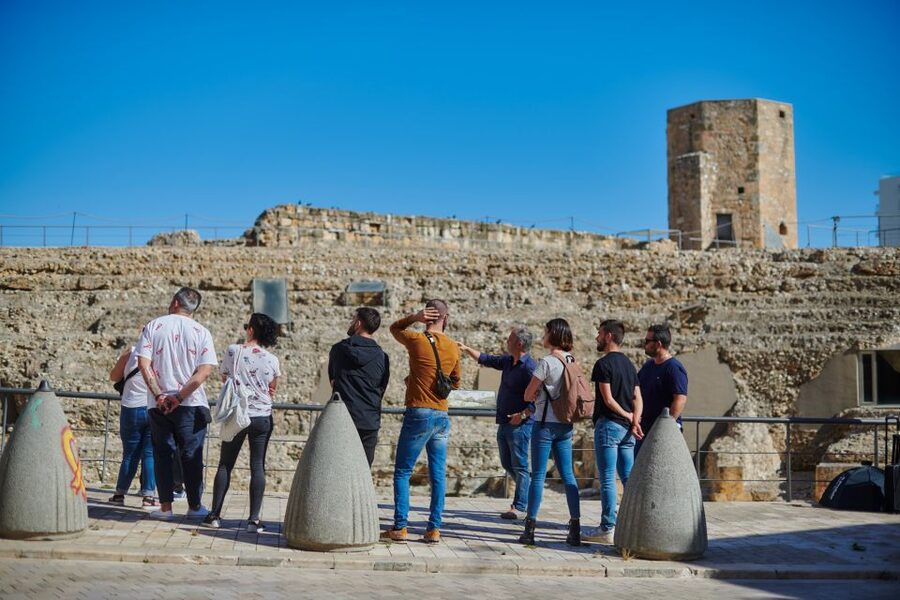
Your meeting point is the Itinere office next to the Roman walls. Arrive 10 minutes early, since the first explanation begins close to the departure point and you do not want to join after the group has moved on.
The walls are an excellent opening stop. They are described as the oldest Roman walls outside Italy, which gives Tarragona an important place in the Roman story. Your guide explains why Rome chose this hill beside the Mediterranean as its gateway to the rest of the peninsula.
That location matters. Tarragona was not simply a small settlement with a few Roman ruins. It was selected for its position, and the walls help you understand the city as a planned Roman center with military and political importance. You get the basic map in your head before the walk moves into the modern streets.
Official city guides lead the tour in Catalan or Spanish. If you understand either language, you can expect the tour to focus on explanation rather than just pointing out stones. Guide Adrià received especially warm praise for clear, easy-to-follow talks and for his affection for Tarragona. The quality of the guide matters here because the ruins are often woven into ordinary buildings, and the story is not always obvious from what you see.
Wear comfortable shoes. The experience is on foot, and even a short route through an old city can feel tiring if your footwear is poor. Large bags and luggage are not allowed, so this is not a good activity to schedule while carrying your main suitcase.
More Guided Tours in Tarragona
- Guided Tour of Roman Tarragona
★ 5.0 · 108 reviews - Tarragona: Ebro River Guided Kayaking Tour to Miravet
★ 4.7 · 43 reviews - Tarragona Cathedral Entrance + Audio Guide (WebApp)
★ 4.5 · 36 reviews
Seeing Roman Tarraco inside the modern city
The walk continues through Tarragona’s historic center, where ancient structures share space with today’s houses, streets, and squares. This is one of the tour’s most useful features. You are not looking at Roman remains in isolation. You are learning how the old city survives underneath and around the modern one.
That mix can be exciting, but it also requires imagination. Some sites are not presented as wide-open ruins. The guide has to explain what once occupied the space, how buildings were used, and how the Roman plan relates to the streets around you. Pay attention to the connections between each stop rather than expecting every monument to look complete.
A large city model makes this part easier. The guide uses it to show how Tarragona looked in Roman times and to explain the purpose of its buildings. For me, this kind of model is more valuable than another list of dates. It lets you see the whole arrangement at once: the walls, public buildings, entertainment spaces, and the city’s position on the hill.
The model also helps younger visitors and anyone who finds Roman archaeology hard to picture. You can compare the model with the streets you have just walked, which turns separate fragments into a more coherent plan.
Still, there is a practical limit. The tour covers several major ideas in two hours, and there may not be much time for long questions at every stop. One Spanish-language assessment described the route as complete but too short and suggested three hours instead. If you want detailed archaeological discussion, plan to return to the sites after the tour or choose a longer experience.
Entering the Circus vaults beneath the streets
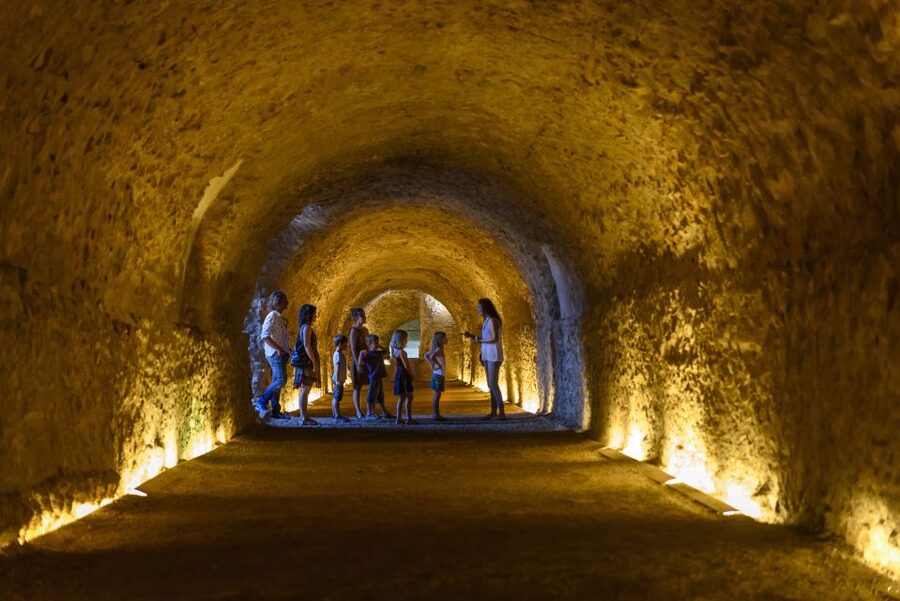
The Circus is the tour’s most unusual stop. Entrance is included, so you go inside the vaults rather than viewing the Roman complex only from outside.
Roman circuses were built for chariot racing, and the underground spaces supported the structure above. In the vaults, the modern city feels far away. Your guide uses the setting to explain how the racing complex worked and to help you imagine the noise, speed, and public drama of race day.
The attraction here is not only the surviving masonry. It is the contrast between the hidden vaults and the busy city above. Tarragona’s Roman remains are often folded into the fabric of everyday life, and the Circus shows that clearly.
The Circus section is also a good reason to take the guided route instead of walking around independently with only a map. A casual visitor may see a tunnel or stone passage without understanding its purpose. The guide supplies the missing structure: what the space supported, why it mattered, and how it fitted into the larger Roman city.
Because the entrance is included in the $17 price, this stop adds solid value. You are not paying only for a general orientation walk. You also receive access to a Roman interior that gives the city’s entertainment district a physical sense of scale.
Using the city model to rebuild ancient Tarragona
The large model is more than a visual extra. It is the point where the tour’s separate pieces begin to make sense together.
Roman Tarragona, known historically as Tarraco, had buildings designed for civic life, administration, religion, transport, and public entertainment. The guide explains the functions of the structures shown in the model, allowing you to see how the city operated rather than treating the ruins as decorative leftovers.
This is particularly helpful if you are visiting Tarragona for only a day. You can quickly learn which surviving areas belong to the same Roman plan and why the modern streets often follow an older pattern. After the tour, you may look at a wall or street corner with a better sense of its place in the city.
The model also breaks up the walking. You get a pause from looking down at stonework and a chance to absorb the wider picture. Since the tour moves at a fairly brisk pace, use this stop to ask a focused question if the guide allows time.
The experience is delivered in Catalan or Spanish, not English according to the provided details. That is the single biggest booking consideration for many international visitors. If you do not understand either language, the model and the monuments may still be interesting, but you will miss much of what makes this a guided history tour.
More Tarragona trips:
- Tarragona and Sitges Tour with Small Group and Hotel Pick Up
★ 5.0 · 1,211 reviews - House of Illusion Magic Show with Drinks
★ 4.5 · 719 reviews - From Barcelona: Tarragona & Sitges Full Day Tour with Pickup
★ 4.8 · 428 reviews - Tarragona and Sitges Small Group Tour – Roman History & Culture
★ 4.5 · 339 reviews
Watching 3D images before the Amphitheater
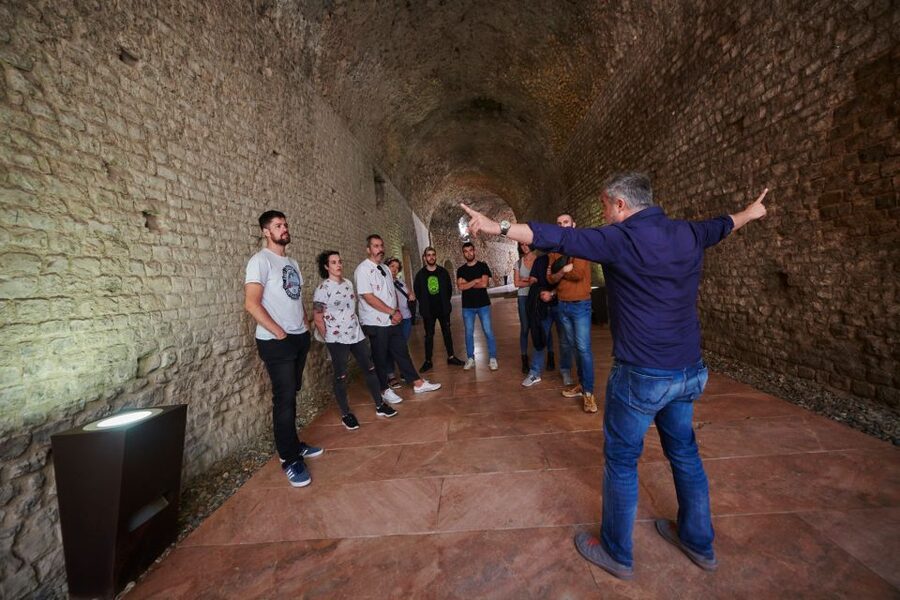
Before the final outdoor stop, you watch an audiovisual presentation with 3D images. The presentation shows Tarragona in a reconstructed form, helping you imagine how the Roman buildings looked and how the city functioned.
This visual step is useful because ancient sites can be difficult to read when only foundations or partial walls remain. The 3D images give the guide a way to explain the lost parts without relying entirely on verbal description. A German-language assessment singled out the video about Tarragona as a particularly enjoyable part of the visit.
Do not expect a long film presentation to replace the walk. It is a bridge between the city model and the Amphitheater. You first learn the layout, then see a visual reconstruction, then visit one of the main surviving venues. That sequence gives the final stop more meaning.
The audiovisual portion may also appeal to children or anyone who prefers visual learning. It adds variety to a route that otherwise includes walls, streets, vaults, and stone remains. If you are choosing between a simple self-guided stroll and this tour, the film is one of the features that makes the guided experience feel more structured.
Finishing at the seaside Amphitheater
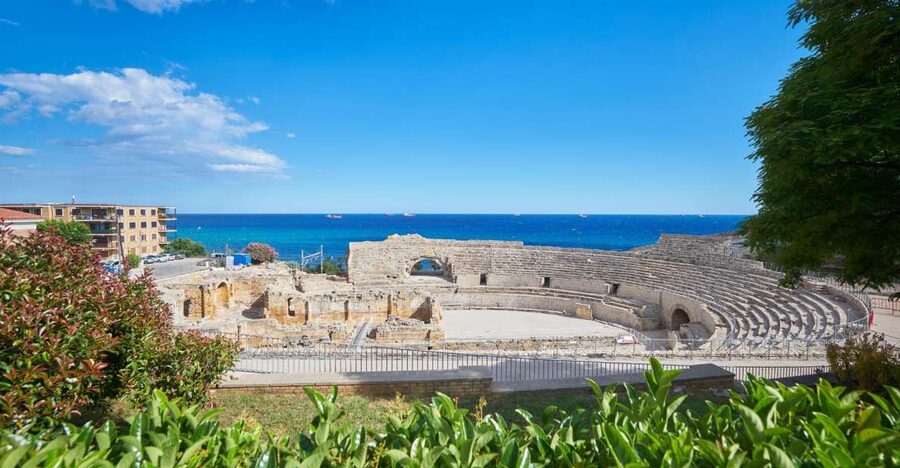
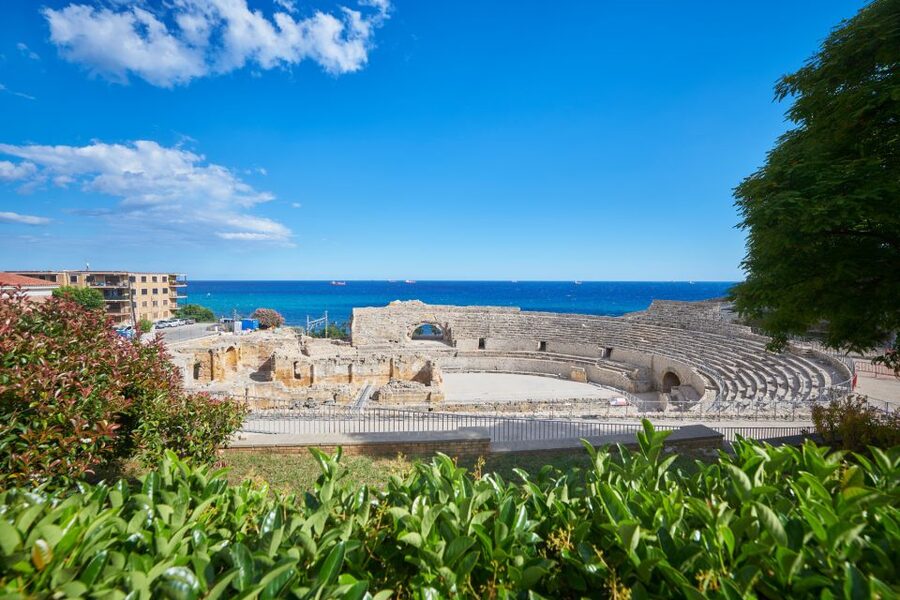
The Amphitheater is the natural finale. It sits by the sea, giving you open views as well as Roman ruins. The setting immediately separates it from the more enclosed Circus vaults and the urban streets of the historic center.
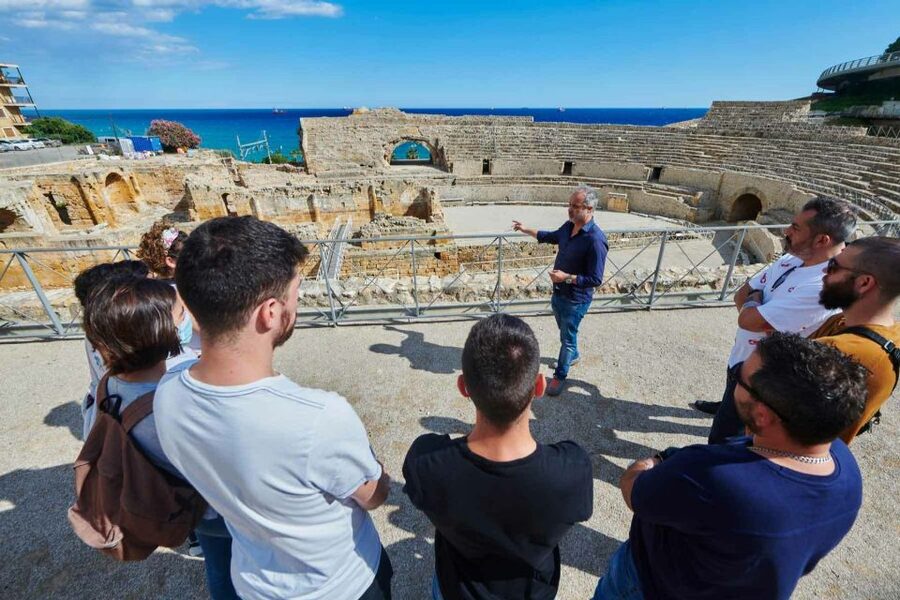
Here, the guide explains gladiator fights and the hunting of wild beasts. These events were designed as public spectacles, and the Amphitheater helps you understand the scale and setting of that entertainment. The tour also covers the site’s story through the present day, so you are not left with only a snapshot of its Roman use.
The views are a major part of the appeal. You can look across the surviving stadium toward the Mediterranean, linking the city’s Roman position with its modern coastal identity. It is a strong place for photographs, though the value is not only scenic. The sea helps explain why Tarragona’s location mattered to Rome in the first place.
The Amphitheater is also where the tour’s themes come together. You have seen the defensive walls, understood the city plan, entered the Circus, and watched a reconstruction. Now you are standing in a large public venue where political power, engineering, entertainment, and violence all met.
The stop can feel short if you want time to study every section. The two-hour schedule has to keep the group moving, and the route covers a lot. If the Amphitheater is your priority, note the details during the explanation and consider returning later if the site is open for further visits under your plans.
What $17 buys you in practical terms
At $17 per person, this is a modestly priced introduction to Tarragona’s Roman core. The price includes a guided city walk and entry to the Circus, which makes the value stronger than a basic orientation stroll with no admission included.
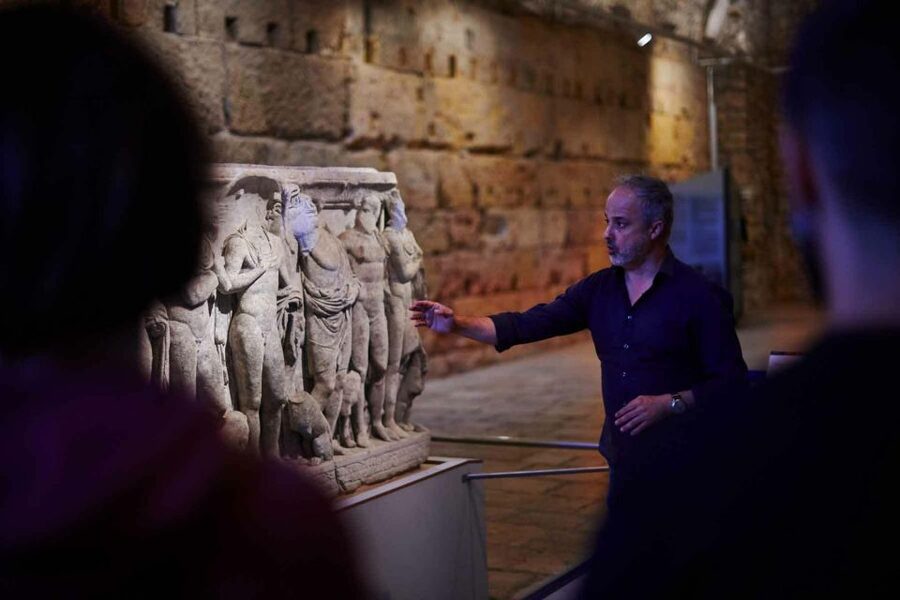
I would see it as a way to get the framework of the city. You pay for a guide who connects the walls, streets, vaults, model, audiovisual display, and Amphitheater into one story. That can save you time, especially if Tarragona is one stop in a larger Catalonia trip.
The price does not guarantee a private or small-group atmosphere. One busy departure reportedly had three groups of about 20 people leaving at the same time. Noise and crowding made it difficult for one participant to follow the guide, and staggered start times were suggested as a possible improvement.
That does not mean every departure will feel crowded. It does mean you should arrive early, stay near the guide, and speak up if you cannot hear. A larger group can also make street crossings, photographs, and questions slower.
The tour’s overall rating is 4.7 from 261 reviews, with several high marks for guide Adrià’s clear and warm delivery. The feedback is not uniformly perfect, though. One assessment gave the experience three stars because the explanation was hard to follow amid noise, while another found the two-hour timing too short. Those points are useful because they identify the real risks: language, crowd size, weather, and pace.
Weather, footwear, and access
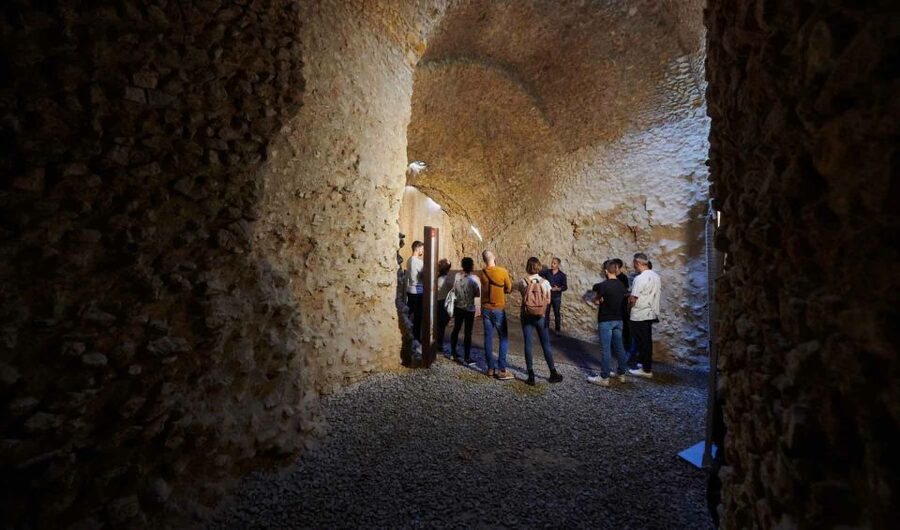
Comfortable shoes are essential. You will walk through the city and enter the Circus vaults, so sandals with poor support or stiff new shoes could make the route less pleasant.
Rain can affect the experience. One January group completed the tour during heavy rain and found it acceptable, but poor weather clearly makes an outdoor Roman walk less comfortable. The Amphitheater and the sea views are best appreciated when you can pause outside without worrying about getting soaked.
The activity is wheelchair accessible. That is an important practical advantage, though the supplied details do not explain the exact route conditions inside every monument. If you use a wheelchair, confirm the current access arrangements when booking, especially for the Circus vaults.
You cannot bring luggage or large bags. Store those before arriving at the Itinere office, since this is designed as a sightseeing walk rather than a transfer activity.
Cancellation is free up to 24 hours before the start time, and you can reserve now and pay later. These terms help if your Tarragona plans depend on weather or a changing day schedule. Starting times vary, so check availability for the date you want.
Who will get the most from this Roman walk
I would recommend this tour to a first-time visitor who wants to understand Tarragona quickly. It gives you the city’s main Roman landmarks in a sensible sequence, and the model plus 3D presentation make the remains easier to read.
It also suits families and mixed-interest groups. The chariot-racing vaults, gladiator stories, animal hunts, and 3D images provide clear hooks for younger visitors, while the walls and city plan give adults useful context.
History fans may enjoy it as a foundation rather than a final word. The route introduces the major monuments but does not provide the time for a long specialist examination of each one. If you want detailed archaeology, inscriptions, or extended time at every site, the short schedule may frustrate you.
Choose carefully if you need English. The stated guide languages are Catalan and Spanish. For an international visitor who understands neither, an English option would be important, but it is not listed here.
Should you book the Tarragona Roman Heritage Guided Walking Tour?
Book it if you want a low-cost, well-organized introduction to Tarragona’s Roman center, especially if you value a local guide, the Circus vault entrance, the city model, and the seaside Amphitheater. The route gives you the basic story without requiring a full day.
Guide Adrià is a particularly good sign if he is leading your departure. His explanations have been praised as clear, warm, and easy to understand, and his pride in Tarragona comes through in the way he presents the city.
Think twice if you need English, dislike group walks, or want plenty of time at each monument. Two hours moves quickly, and a crowded departure or heavy rain can reduce the pleasure. For most visitors who understand Catalan or Spanish, though, $17 is a fair price for a focused Roman orientation with one included monument entrance and an excellent final view.
FAQ
Where does the tour meet?
Meet at the Itinere office next to Tarragona’s Roman walls.
How early should I arrive?
Arrive 10 minutes before the activity begins.
How long does the tour last?
The guided walking tour lasts two hours.
What languages are available?
The live guide conducts the tour in Catalan or Spanish.
Is entrance to the Circus included?
Yes. Entrance to the Circus is included in the activity price.
Does the tour visit the Amphitheater?
Yes. The route finishes at the Amphitheater beside the sea.
What Roman sites are covered?
The tour includes the Roman walls, the historic center with its Roman monuments, the Circus vaults, and the Amphitheater.
Is the activity wheelchair accessible?
Yes, the activity is listed as wheelchair accessible.
What should I bring?
Bring comfortable shoes for the walking route.
Can I bring luggage or a large bag?
No. Luggage and large bags are not allowed.
Can I cancel for a refund?
Yes. You can cancel up to 24 hours in advance for a full refund.
Do I have to pay when I reserve?
No. The reserve now and pay later option lets you hold a place without paying immediately.
More City Walks
- Tarragona Walking Tour: An Audio Guide to Tarraco
★ 4.5 · 23 reviews - Barcelona Tapas and Wine Experience Small-Group Walking Tour
★ 5.0 · 5,804 reviews - Barcelona: Tapas Food Crawl Walking Tour with Tastings
★ 4.9 · 1,798 reviews - Barcelona: Gothic Quarter Ghosts and Legends Walking Tour
★ 4.7 · 1,443 reviews
More Historical Tours in Tarragona
- Barcelona: Tapas Walking Tour with Food, Wine, and History
★ 4.8 · 4,261 reviews - Barcelona Tapas Walking Tour: Food, Wine & History
★ 4.5 · 1,928 reviews - Barcelona: 2.5-Hour Bike or E-Bike Historical Tour
★ 4.5 · 1,262 reviews - Barcelona Erotic Museum – Explore Art, History & Fun
★ 4.4 · 450 reviews
Just added around Tarragona
- Barcelona: Tarragona & Sitges Guided Day Trip with Transfers★ 5.0 · 7 reviews
- Tour monastery Poblet with hotel pickup★ 5.0 · 7 reviews
- Private Transfer from Tarragona Cruise Terminal to Barcelona★ 3.0 · 7 reviews
- From Barcelona: Private Full-Day Tarragona and Sitges Tour★ 4.9 · 8 reviews
- Tarragona Culinary Experience: Olive Oil & Iberian Ham Delight★ 5.0 · 8 reviews
- Tarragona: Southern Delta Birdwatching Private Tour★ 5.0 · 8 reviews
- Entry ticket | Fundació Mas Miró – Mont-roig del Camp★ 4.2 · 10 reviews
- Birdwatching in the Ebro Delta★ 5.0 · 10 reviews
Historical Tours, compared.

Tapas Walking Tour with Food, Wine, and History
Read our review →
Barcelona Tapas Walking Tour: Food, Wine & History
Read our review →
Barcelona Erotic Museum – Explore Art, History & Fun
Read our review →
Andorra Original History and Sightseeing Tour (Private, Pickup)
Read our review →
Tarragona and Sitges Small Group Tour – Roman History & Culture
Read our review →
Girona History and Legends Tour Small Group from Girona
Read our review →Browse the lists this tour appears in