
Reviewed · SITGES TOURS
Tarragona and Sitges Tour with Small Group and Hotel Pick Up
Tarragona gives you a little Rome without the crowds, while Sitges brings the day back to the Mediterranean with sandy beaches, old streets, and a relaxed art-town mood. The contrast makes this 10-hour day trip far more interesting than a simple ruins excursion.
I like the hotel pickup and the small vehicle, which save you from sorting out regional trains or rental-car parking. I also like the guides’ personal touch. Eduardo, Diego, Miquel, Ramon, Luis, and Lluís are repeatedly praised for their history, humor, safe driving, and willingness to adjust the pace. The main drawback is simple: this is a walking-heavy day over cobbles, steps, and hills, so it can be tiring if your knees or hips are not at their best.
In This Review
- Key points at a glance
- Why Tarragona and Sitges work as a pair
- Starting with Barcelona pickup and the Costa Dorada drive
- The Pont del Diable aqueduct: Roman engineering in the woods
- Tarragona old town, the forum, and the Roman walls
- Tarragona’s amphitheater and circus
- Mercat Central and daily Tarragona
- Sitges: old streets, Modernist style, and San Sebastian Beach
- Guide quality and the value of a small group
- Walking, weather, and what to bring
- Who should book this Barcelona day trip?
- Final call: a strong value for an active day
- FAQ
- Where does the tour pick me up?
- When does pickup take place?
- How large is the tour group?
- Is the tour offered in English?
- Are meals and drinks included?
- Is entrance to Tarragona’s Roman sites included?
- Can I cancel for a full refund?
Key points at a glance
- Roman Tarragona first: See the Pont del Diable aqueduct, ancient walls, amphitheater, circus, forum area, and old town.
- A maximum of eight people: The small group allows more questions and a less rushed feel than a large coach tour.
- Three hours in Sitges: Walk the historic center, see Casa Bacardi and the church of Sant Bartomeu and Santa Tecla, then enjoy San Sebastian Beach.
- Pickup and drop-off in Barcelona: Your guide collects you at a city hotel or apartment between roughly 8 and 9 a.m.
- A useful old-and-new contrast: Tarragona brings Roman and medieval sights, while Sitges offers Modernist buildings, seaside terraces, shops, and music.
- Good value for a full day: At $120.29 per person, transport, a professional local guide, and two Tarragona entrances are included, but meals and drinks are extra.
Why Tarragona and Sitges work as a pair
Barcelona can easily fill several days, but this excursion gives you two very different Catalan towns in one outing. Tarragona is about empire, stone, and archaeology. Sitges is about the sea, Modernist architecture, cafés, and an easy holiday atmosphere.
That pairing matters. If you spend the entire day looking at ruins, your attention may fade by late afternoon. Here, the mood changes after Tarragona. You trade Roman walls for narrow seaside lanes and ancient engineering for beach views.
The tour costs $120.29 per person. I consider that fair if you value convenience and guiding. A train and local sightseeing could cost less, but you would need to plan connections, find the sites, arrange entrance tickets, and navigate both towns yourself. The small group and Barcelona pickup add real value, especially for a first visit.
The current score is 4.9 from 1,211 ratings, with 96 percent recommending the experience. That lines up with the strongest pattern in the feedback: guides who explain the sites clearly, drive well, answer questions, and make the day feel personal.
More Sitges escapes:
- From Barcelona: Tarragona & Sitges Full Day Tour with Pickup
★ 4.8 · 428 reviews - Tarragona and Sitges Small Group Tour – Roman History & Culture
★ 4.5 · 339 reviews - Montserrat Monastery with Easy Hike & Sitges Tour from Barcelona
★ 5.0 · 179 reviews
Starting with Barcelona pickup and the Costa Dorada drive
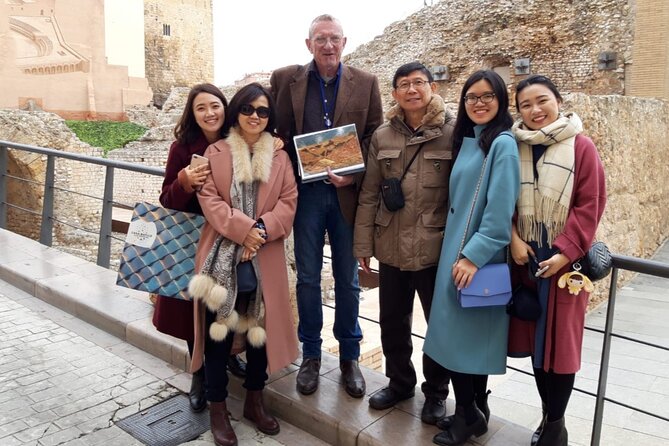
Your guide picks you up from a hotel or apartment within Barcelona city. You must provide the exact accommodation address, even if it is not shown among the preset choices. The specific pickup time, guide’s name, and phone number are sent through the booking system the day before.
Pickup usually takes place between 8 and 9 a.m. From there, the air-conditioned vehicle heads south. Along the way, you may get a quick orientation to central Barcelona, passing areas such as Catalunya Square, Barcelona Cathedral, Passeig de Gracia, and Gaudí’s Casa Batlló and La Pedrera.
This opening view is not a full Barcelona sightseeing tour. Think of it as a useful introduction while you leave the city. The advantage is comfort and simplicity. You do not have to report to a distant meeting point, and the return drop-off is included at your Barcelona hotel or apartment.
With eight people or fewer, the vehicle is much easier for conversation than a large bus. Guides such as Eduardo and Diego are often praised for clear pickup communication and smooth driving. That may sound minor, but on a 10-hour day, a calm driver and a comfortable ride matter.
The Pont del Diable aqueduct: Roman engineering in the woods
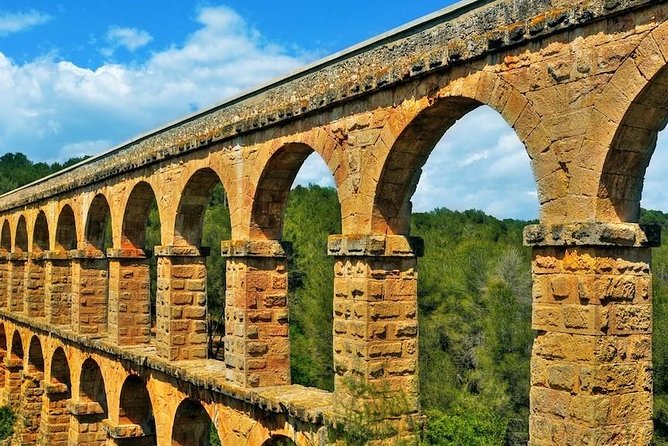
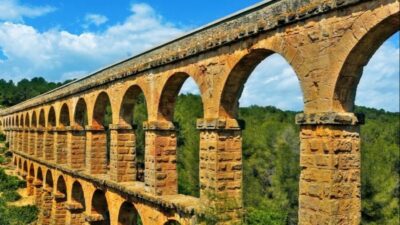
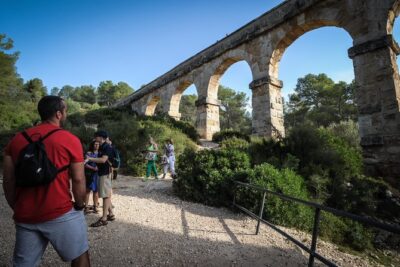
The first Tarragona-area stop is the Pont del Diable, or Devil’s Bridge, an aqueduct about 217 meters long and 26 meters high. It once carried water to Tarraco and remained in use until the 18th century.
You spend about 30 minutes here. That is enough time for photographs and a guide’s explanation, though not enough for a long independent walk around the area. The bridge sits among woodlands, which gives you a different setting from the urban ruins later in the day.
This is one of the tour’s best opening stops because it makes Roman engineering tangible. You are not simply looking at a broken column. You are looking at a structure built to solve a practical problem, and the scale becomes clear when you see it crossing the space above you.
Wear shoes with a firm sole. The day includes uneven ground at several archaeological sites, and the aqueduct stop adds another outdoor surface before the city walking begins.
Tarragona old town, the forum, and the Roman walls
In Tarragona, the guide leads you through the old town for about an hour and a half. Narrow cobbled streets and shaded squares connect the Roman and medieval layers of the city.
The route includes the ancient city walls, among the oldest surviving construction from Roman Tarragona. You also see the area around the Roman Forum and pass Tarragona Cathedral, a National Monument and protected cultural site.
The pleasure here is not only in the individual monuments. Tarragona’s center lets you see how later streets grew around an earlier military and civic settlement. Your guide’s storytelling helps connect the stones to public life, government, religion, and entertainment.
The walking can be demanding. Expect cobbles, stairs, and some uphill and downhill sections. One guest with a sore hip and another with a knee problem skipped two areas for safety, even though guide Luis allowed extra rest time. Another guide, Miquel, was praised for accommodating limited mobility, but this is still not a low-effort outing.
A quick stop at the Castellers monument adds a distinctly Catalan note. The sculpture depicts a human tower, a local tradition in which people climb onto one another to form a living structure. The monument contains 219 figures, rises 11 meters, and weighs about 12 tons. It is a memorable way to understand a tradition that is still part of Catalan identity.
More Tarragona trips:
- House of Illusion Magic Show with Drinks
★ 4.5 · 719 reviews - Tarragona: Roman Heritage Guided Walking Tour
★ 4.7 · 261 reviews - Half Day Cycling Tour from Salou
★ 5.0 · 190 reviews - Guided Tour of Roman Tarragona
★ 5.0 · 108 reviews
Tarragona’s amphitheater and circus
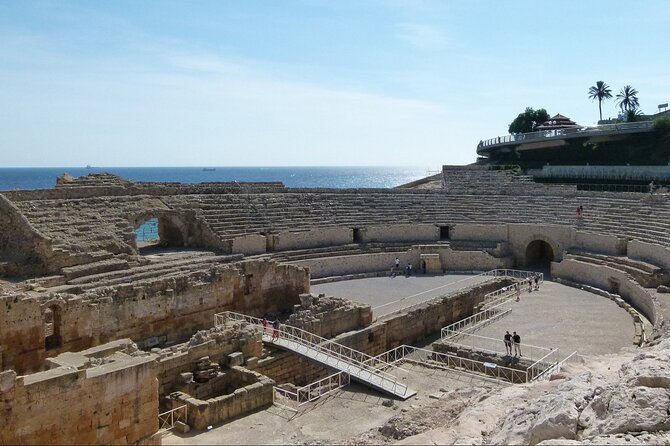
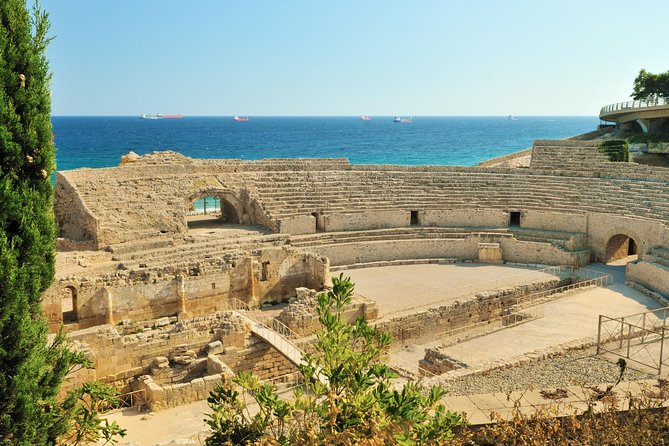
The Roman amphitheater is one of the day’s central sights. Cut into the hillside above the beach, it dates from the early second century AD and was used for gladiator contests and public executions.
You have about 90 minutes in this part of the visit, including the amphitheater and related Roman remains. Entrance to the amphitheater and the Roman circus is included, so you do not have to manage separate admissions during the tour.
The amphitheater’s location is especially striking. Unlike an inland ruin surrounded only by streets, it sits beside the Mediterranean, with the hillside and shore shaping the view. You can picture the practical Roman design: spectators seated on the slope, events taking place below, and the city pressing around the arena.
The Roman circus was used for public events, including chariot racing. It helps explain the size and importance of Tarraco, which was not a minor outpost but a major city in Roman Hispania.
This is also where the tour can feel most physical. Steps and uneven surfaces are part of the archaeological setting. You should not expect every area to be flat, paved, or easy to reach. If you need frequent rests, tell the guide early rather than trying to keep pace silently.
Mercat Central and daily Tarragona
The Mercat Central de Tarragona provides a welcome change after the ruins. The market occupies a Modernist building from 1915, just off Rambla Nova, and the visit lasts about an hour.
This stop gives you a look at ordinary city life rather than only grand monuments. Fresh and seasonal products from the surrounding rural area fill the market, and the building itself is worth noticing for its early 20th-century design.
Food is not included in the tour, so the market area may be a useful place to consider lunch or a snack. Some guides recommend local restaurants, and one guide arranged a tapas experience. Another guided group was taken to a restaurant offering a full meal with a drink and dessert at a very good price.
Those food stops are guide-dependent, not guaranteed features. Plan to pay separately, and tell your guide if you have dietary needs or prefer a quick meal. The market visit is valuable even if you do not eat there, since it breaks up the archaeology with a more local, present-day scene.
You also pass the National Archaeological Museum of Tarragona and see the Tarraco Model, a scale model showing the city in the second century BC at its greatest extent. The museum visit is described as a pass-by rather than a scheduled interior visit, so do not book this tour expecting museum time.
Sitges: old streets, Modernist style, and San Sebastian Beach
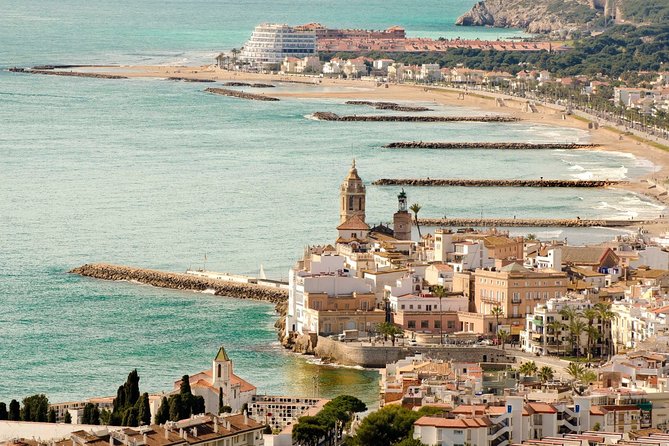
After Tarragona, the tour heads up the coast to Sitges. You get about three hours for the town and beach, with roughly an hour specifically set aside for Playa de Sitges.
Sitges began as a fishing town and later became known as a health destination because of its position between the sea and mountains. Today, it is associated with art, music, restaurants, independent shops, and a relaxed seaside culture.
The walking tour takes you through the old center and its less obvious corners. Casa Bacardi is one of the architectural highlights, with an explanation of the Bacardi family and the building’s connection to the town. You may also have time for a cocktail made by professional bartenders, but drinks are not included.
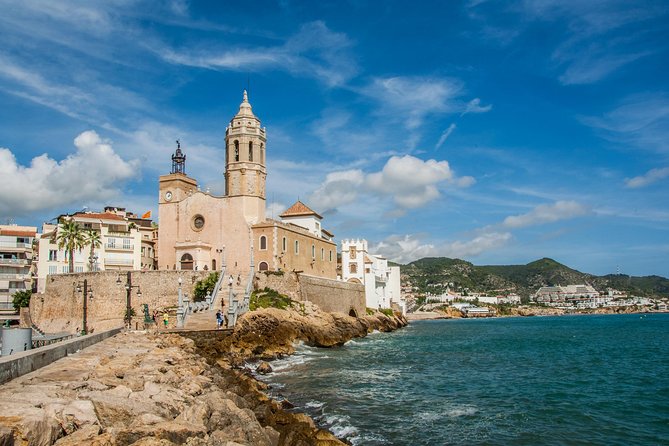
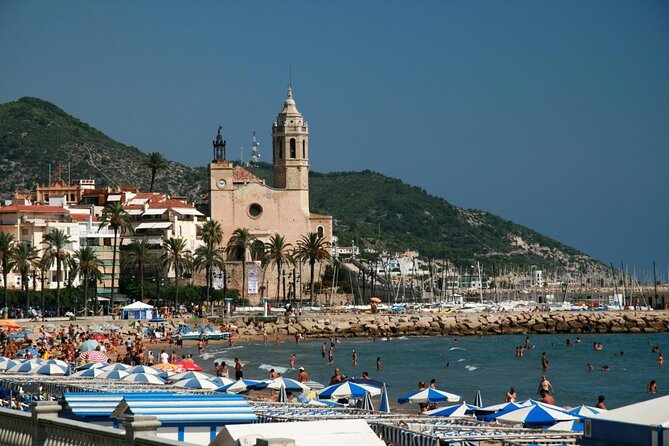
The church of Sant Bartomeu and Santa Tecla is Sitges’ main visual marker. Built in the 17th century, it sits prominently above the waterfront and offers some of the best photo views in town.
San Sebastian Beach gives you time to slow down. On a sunny day, you can sit on a beachside terrace, admire the Mediterranean, or swim in the sea if time and conditions allow. The tour description calls the beach one of Europe’s best urban beaches, but the practical point is simpler: it is right beside the town, so you get seaside time without a separate transfer.
Do not count on a long swimming session. Sitges includes a walking tour, historical stops, free time, and the return to Barcelona. In cooler months, beach time becomes more about the view and atmosphere. Winter can be a good period for the archaeological part of the trip because there are fewer visitors, though the weather may not suit swimming or outdoor dining.
Guide quality and the value of a small group
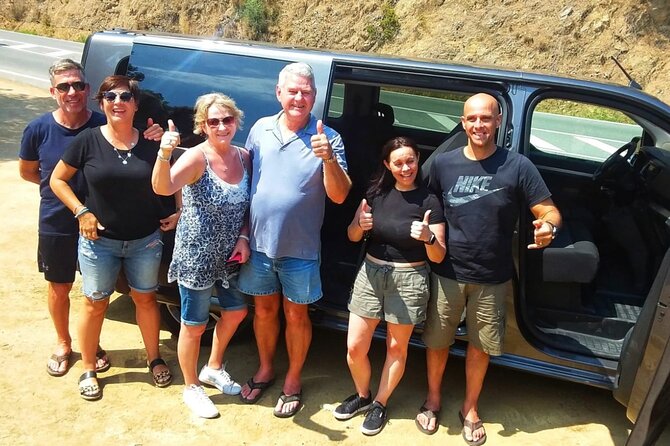
The guide can make or break a day with this much driving and walking. The most praised guides include Eduardo, Diego, Miquel, Ramon, Luis, and Lluís. Their strengths are not limited to facts. They are described as friendly, funny, patient, punctual, and attentive to personal needs.
Eduardo is especially noted for combining Roman and regional history with humor, handling bathroom breaks, recommending food, and helping with an unexpected personal issue. Diego is praised for clear communication, easy conversation, safe driving, and a strong grasp of local culture. Miquel receives praise for an easygoing pace and restaurant advice.
The maximum group size is eight. On some departures, the group may be smaller, and one booking became a private tour because of the number of participants. That cannot be promised, but the small-group format gives you a better chance to ask questions and request a short rest or food stop.
I would not choose this tour only for personalized sightseeing if you dislike guided schedules. You still move through a planned day, and the two towns require steady time management. The benefit is that you see far more than you likely would by improvising a Tarragona and Sitges day trip from Barcelona.
Walking, weather, and what to bring
The tour lasts about 10 hours, with substantial time on foot. You will encounter cobblestones, stairs, hills, archaeological surfaces, and city streets. Comfortable walking shoes are essential, and anyone with knee, hip, or balance concerns should discuss limitations with the guide at the start.
Bring water and money for food and drinks. Neither is included. A swimsuit may be useful on a hot day, but beach time depends on the schedule and weather.
The tour runs in English. Confirmation arrives at booking, and the tour is near public transportation, though the included pickup means you do not need to use it for the start. Most people can participate, but the walking conditions deserve honest attention.
Who should book this Barcelona day trip?
I would recommend it to you if Barcelona is your base and you want Roman sites, coastal scenery, and a small-town afternoon without renting a car. It suits couples, solo visitors, families with older children, and anyone who prefers a guide to explain what they are seeing.
It is also a good choice for families with history-minded teenagers. One 13-year-old became interested in Roman life during the visit, and a 17-year-old enjoyed the stories and historical detail. That is a useful sign that the guides can make archaeology accessible rather than dry.
I would hesitate if you want a slow beach day, a long restaurant lunch, or a completely flat route. Sitges is only part of the day, and Tarragona demands stamina. If your main goal is swimming, choose a beach-focused outing instead.
Final call: a strong value for an active day
This tour earns its price through convenience, guiding, and variety. You get Barcelona pickup, an air-conditioned vehicle, a small group, two Tarragona admissions, a Roman aqueduct, several ancient sites, a market, a historic seaside town, and beach time in one long day.
Book it if you want a guided look at Catalonia beyond Barcelona and are comfortable walking on uneven ground. Skip it if stairs are a serious problem or if you would rather spend the day at one site. For most active visitors, the combination of Tarragona’s Roman remains and Sitges’ Mediterranean ease makes this one of the more useful full-day trips from Barcelona.
FAQ
Where does the tour pick me up?
Pickup is available from any hotel or apartment within Barcelona city. You need to provide the full address when booking.
When does pickup take place?
Pickup takes place between 8 and 9 a.m. The exact time, guide’s name, and telephone number are sent through the booking system the day before departure.
How large is the tour group?
The group has a maximum of eight participants.
Is the tour offered in English?
Yes. The tour is offered in English.
Are meals and drinks included?
No. Food and drinks are not included in the price. Some guides may recommend local restaurants or food stops, but you pay for those separately.
Is entrance to Tarragona’s Roman sites included?
Entrance to the Tarragona amphitheater and the Roman circus is included. The tour also visits or passes other Roman sites, including the aqueduct and city walls.
Can I cancel for a full refund?
Yes. You can cancel up to 24 hours before the experience begins for a full refund. Cancellations or changes made less than 24 hours before the start time are not accepted for a refund.
Just added around Barcelona
- From Barcelona: Montserrat Private Day Trip With Pickup★ 5.0 · 6 reviews
- Barcelona: 2/4/8 hours or 1 day bike rental★ 5.0 · 6 reviews
- Besalú, Banyoles Lake & Volcanic Castellfollit from Girona★ 5.0 · 6 reviews
- Barcelona: Local Tapas and Drinks Sailing Adventure Tour★ 5.0 · 6 reviews
- Sitges: Sailboat trip + walking tour and wine cellar tour★ 3.7 · 6 reviews
- Barcelona: Sagrada Família and Park Güell Guided Tour★ 4.7 · 6 reviews
- Comfortable E-Fatbike High-Lights Tour Barcelona★ 5.0 · 6 reviews
- La Tomatina Day Trip from Barcelona with Ticket & Party Access★ 5.0 · 6 reviews
Sitges Tours, compared.
Tarragona and Sitges Small Group Tour – Roman History & Culture
Read our review →
Montserrat Monastery with Easy Hike & Sitges Tour from Barcelona
Read our review →
Bike Tour and Winery Visit with Free Hotel Pick Up.
Read our review →
2 Wineries Small Group Tour with Free Hotel PickUp from Sitges
Read our review →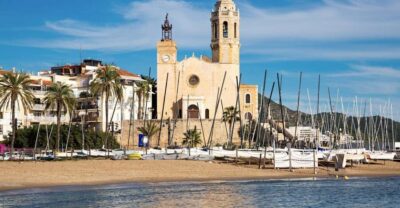

Sitges & Montserrat Monastery Tour with Easy Hike
Read our review →Browse the lists this tour appears in