
Reviewed · WALKING TOURS
Tarragona Walking Tour: An Audio Guide to Tarraco
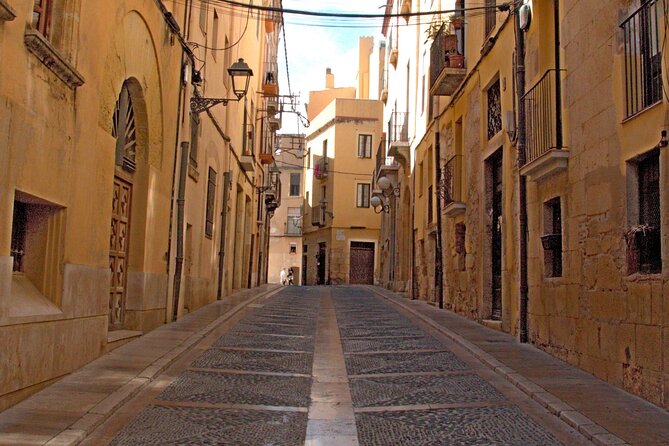
Tarragona’s Roman past is spread across the modern city, and this self-guided GPS walk gives you a practical way to connect the pieces. You begin above Miracle Beach, pass the amphitheater and ancient circus, then finish near the Central Market after roughly 3 to 4 hours of walking.
I like the freedom to pause whenever you wish, and I like that the tour works offline with maps, audio, and directions. The narrator keeps the explanations short and engaging, according to the available feedback. The trade-off is that you must bring your own smartphone and headphones, and GPS can be a little less exact on small streets.
In This Review
- Key points to know before you book
- Why this walk works for seeing Roman Tarragona
- The amphitheater and Miracle Beach views
- The unfinished cathedral and Tarragona’s later story
- Roman chariot racing at the ancient circus
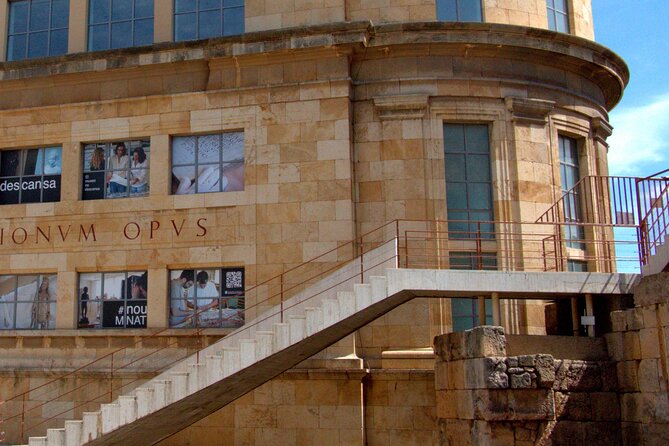
- Museums and artifacts from ancient Tarraco
- Medieval defenses, the city gate, and changing Tarragona
- The civic heart of ancient Tarraco
- An iron magnate’s palace and the city’s private wealth
- Finishing at Tarragona’s Roman forum
- How the audio format affects your visit
- Timing, cost, and who will enjoy it most
- Should you book the Tarragona audio walk?
- FAQ
- Where does the Tarragona walking tour start?
- Where does the tour end?
- How long does the walking tour take?
- What language is the audio guide offered in?
- Is this a guided group tour?
- Do I need to bring my own phone and headphones?
- Can I use the tour offline?
- Are attraction entry fees included?
- Can I pause the tour?
- Can I cancel for a full refund?
Key points to know before you book
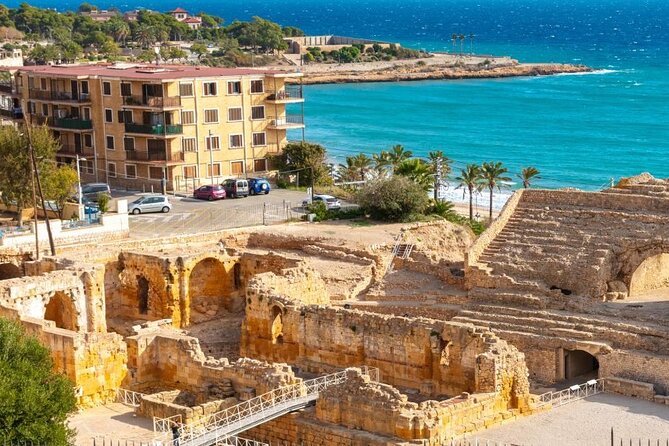
- Start above Miracle Beach: Begin at Balcón del Mediterráneo, where the Mediterranean view gives you a clear sense of Tarragona’s setting.
- Follow Roman entertainment in sequence: The route links the amphitheater and circus, two major reminders of how ancient Tarraco spent its leisure time.
- Use your own pace: Pause the audio for photos, coffee, or an attraction visit, then continue when ready.
- Expect an English audio guide: There is no live guide or group schedule. You follow directions through the VoiceMap app or tour system.
- Finish at Mercat Central: The walk ends at Tarragona’s Central Market, a useful place to continue exploring or stop for food.
- Plan for extra admission costs: Entry to museums and attractions mentioned along the route is not included in the $14.99 price.
Why this walk works for seeing Roman Tarragona
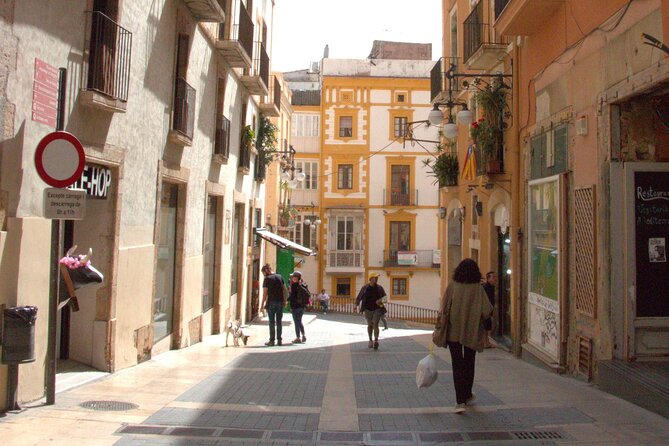
Tarragona is not a one-site Roman city. Its remains sit beside streets, terraces, churches, markets, and later houses. That can make independent sightseeing feel scattered. This route helps you see the ancient city as a connected place rather than a set of unrelated ruins.
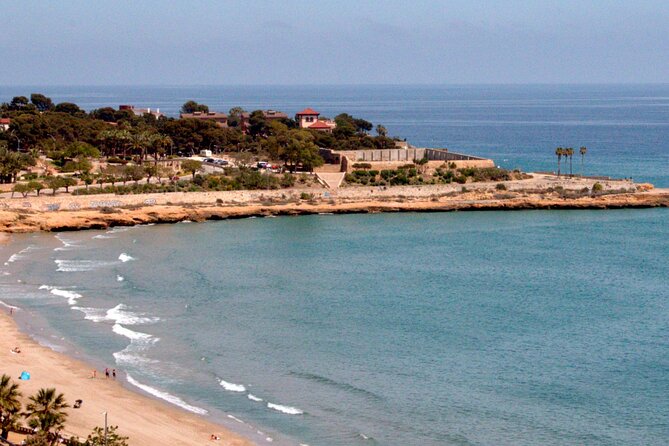
The walk begins at Balcón del Mediterráneo on Passeig de les Palmeres. That is a fitting opening point. You look over Miracle Beach and the Mediterranean before turning toward the remains of Tarraco, the Roman city that once held an important place in the Roman world.
I like starting with a view instead of a museum wall. The sea helps you understand why Tarragona mattered, while the elevated terrace gives you a calm place to get your bearings. The first stop also gives the tour a pleasant beginning before the route turns to archaeology and city streets.
At $14.99 per person, the main value is structure. You are paying for directions, recorded explanations, GPS positioning, maps, and the ability to replay the tour later. If you want a live guide who can answer questions, this is not the right format. If you want a low-cost introduction that lets you control the pace, it is a sensible option.
More Guided Tours in Tarragona
- Tarragona: Roman Heritage Guided Walking Tour
★ 4.7 · 261 reviews - Guided Tour of Roman Tarragona
★ 5.0 · 108 reviews - Tarragona: Ebro River Guided Kayaking Tour to Miravet
★ 4.7 · 43 reviews
The amphitheater and Miracle Beach views
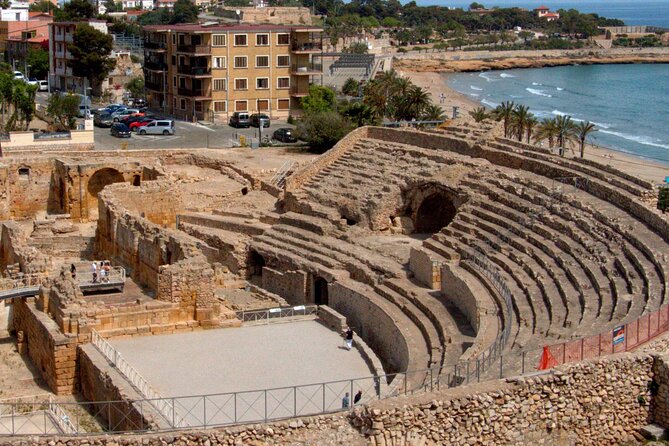
The Roman amphitheater is one of the route’s major early sights. Here, you can picture the public spectacles that once took place beside the sea. The setting makes the site especially memorable because the ancient stonework and modern Mediterranean view share the same frame.
The audio is useful here because the bare remains may not immediately explain how the space worked. A short spoken account can help you picture the events and crowds that once filled the arena. The tour does not require you to join a timed group, so you can pause the track while looking around.
Entry fees are not included. That matters if you plan to go inside every attraction rather than view sites from the route. The tour can still provide value without paid admissions, but your total cost will rise if you add museums and monument tickets.
The opening section also sets the tone for the whole walk. You are not simply moving from one ticket booth to another. You are walking through a modern city where Roman remains appear in several different settings.
The unfinished cathedral and Tarragona’s later story
The route next passes Tarragona’s cathedral, described here as unfinished and linked with the city since 1348. This stop broadens the story beyond Roman Tarraco. Tarragona’s identity did not end when Roman rule faded, and the cathedral gives you a clear reminder of the city’s medieval and religious life.
I appreciate this change of period. A Roman-focused walk can become repetitive if every stop is another wall or foundation. The cathedral adds a different scale and mood, while the date helps place it in the long timeline of Tarragona’s past.
Because the route passes the cathedral rather than promising admission, you should check your own priorities. If you want to explore the interior, you will need to handle that separately, since attraction entry is not part of the tour. The audio guide gives context as you pass, but it cannot replace time spent inside a major building.
This is also a point where the self-guided format works well. You can stop the narration, look carefully at the exterior, and resume when you are ready. No group is waiting for you to finish a photograph or listen to a longer explanation.
Roman chariot racing at the ancient circus
The ancient circus is one of the most important stops for understanding everyday public entertainment in Tarraco. This was the place to imagine Roman chariot racing, with speed, noise, competition, and serious public interest packed into a purpose-built venue.
The amphitheater and circus serve different purposes, and the route’s inclusion of both gives you a better picture of Roman city life. One site evokes arena spectacles. The other brings racing and mass entertainment into the story. Together, they make Roman Tarragona easier to picture.
The explanations are reported to be fairly brief, which I see as a strength for a walking tour. Short sections keep the route moving and leave room for you to look rather than stare at your phone. The drawback is that anyone wanting a long academic lecture may find the narration too limited.
You can also pause between sections. That is useful at a large archaeological site, where you may want extra time to study the remains or simply take in the setting. The tour is designed to work around your attention span, not the other way around.
More Tarragona trips:
- Tarragona and Sitges Tour with Small Group and Hotel Pick Up
★ 5.0 · 1,211 reviews - House of Illusion Magic Show with Drinks
★ 4.5 · 719 reviews - From Barcelona: Tarragona & Sitges Full Day Tour with Pickup
★ 4.8 · 428 reviews - Tarragona and Sitges Small Group Tour – Roman History & Culture
★ 4.5 · 339 reviews
Museums and artifacts from ancient Tarraco
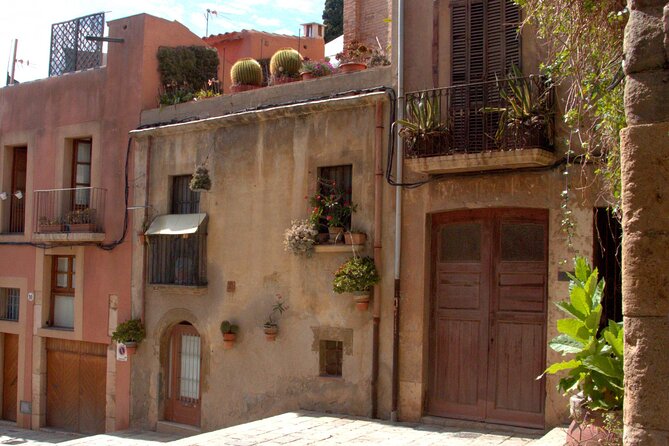
The route includes a stop focused on artifacts and exhibits that explain Tarragona’s ancient past and its role in Roman history. This is the point where objects can add detail to the large outdoor ruins.
Stone walls show scale and layout. Museum pieces can show the smaller evidence of daily life, public culture, and administration. The audio helps connect those pieces, but admission to the museum or other attractions is not included.
If you decide to enter, give yourself more time than the basic 3 to 4 hour estimate. That duration describes the walking experience approximately, and extended museum visits will naturally lengthen your day. You can also keep the route moving and return to an attraction later if the timing suits you.
The tour’s unlimited lifetime use is helpful here. You can listen before your visit to understand the route, use it on the day, and replay parts afterward. You also have a virtual playback option, so the audio can function like a small audiobook even when you are not in Tarragona.
Medieval defenses, the city gate, and changing Tarragona
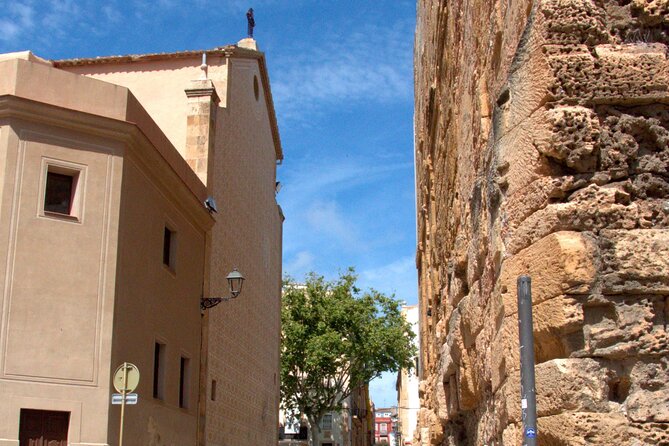
The route then turns toward a historical tower that once formed part of Tarragona’s defenses. This stop adds a medieval layer to the walk and shows how the city continued to protect and organize itself long after the Roman period.
You also pass through an ancient city gate. A gate is more than a photogenic opening in a wall. It helps you imagine how movement was controlled, where goods and people entered, and how the city beyond the defenses may have felt in medieval times.
These stops are especially useful because they prevent you from treating Tarragona as a Roman theme park. The city changed over centuries, and its defenses reflect later needs. I like that the route keeps those layers together instead of presenting only the most famous Roman monuments.
GPS accuracy may be less exact on narrow streets. The available feedback points to small inaccuracies, so you should watch the map and listen for the next direction rather than relying on the phone’s position alone. If the route appears to pause or shift slightly, do not panic. A careful look at the map should help you regain the line.
The civic heart of ancient Tarraco
Another stop brings you to the center of ancient Tarraco, where civic and social activity took place in Roman times. This part of the route helps explain that the city was not only about arenas and monuments. It also needed places for public business, meetings, and daily administration.
That context gives the earlier stops more weight. Chariot racing and amphitheater spectacles were public entertainment, but Roman cities also depended on civic spaces. Here, you can think about the people who governed, traded, argued, and conducted ordinary business in the same urban world.
A self-guided walk has a small advantage at sites like this. You can take a moment to understand the layout instead of rushing through a guide’s set timetable. The audio provides a narrative path, while the physical remains give you room to form your own impression.
You should not expect every feature to be fully reconstructed. Ancient forums and civic areas often require imagination. The route’s spoken explanations are there to bridge that gap, but the experience still rewards visitors who enjoy piecing together partial remains.
An iron magnate’s palace and the city’s private wealth
The route also passes an opulent palace associated with an iron forge mogul. This stop shifts attention from public Roman monuments to private wealth in Tarragona’s later story.
The contrast is useful. Ruins and civic buildings tell you how a city functioned in public, while a grand private residence suggests how prosperity could shape personal life. You get a glimpse of status, taste, and the sort of home a successful industrial figure could occupy.
This is one of the route’s more unusual stops because it is not simply another Roman ruin. It helps you see Tarragona as a city with several historical chapters. If your interest is limited to ancient Rome, you may spend less time here. If you enjoy architecture and social history, it adds welcome variety.
Again, the audio format lets you choose your level of attention. Listen closely, pause to examine the building, or continue at a faster pace if you are focused on the Roman sites.
Finishing at Tarragona’s Roman forum
The walk ends at a Roman forum, where you can reflect on the role of public space in ancient Tarraco. The forum connects naturally with the earlier civic stop, bringing the story back to governance, commerce, and the business of running a city.
Ending at the forum gives the route a useful shape. You begin with the Mediterranean view, pass through entertainment and later history, and finish with the machinery of Roman civic life. It is not just a parade of ruins. The stops form a broad picture of how the city looked, played, worshipped, defended itself, and conducted public affairs.
The official end point is Mercat Central, Tarragona’s Central Market, at Plaça de Corsini. The market is a practical finish because you are not left at an isolated archaeological site. You can continue around the city from there, and the market provides a natural pause after several hours on foot.
The tour’s listed opening hours run all day, every day, because this is an independent outdoor audio experience rather than a scheduled entrance. You still need to consider the opening times of any paid attraction you plan to enter.
How the audio format affects your visit
You receive directions to the starting point at Balcón del Mediterráneo, and the tour begins when you reach the correct location. You do not need to meet a guide or wait for a group. Only your own party participates, which makes this a private experience in the practical sense.
You need to bring a smartphone and headphones. Offline access to the audio, maps, and geographic data is included, so you can use the tour without depending on a constant connection. Download or prepare the material before setting out if you want the smoothest start.
The narrator’s sections are not very long, based on the available feedback. That suits you if you prefer clear explanations followed by time to look around. It may disappoint you if you want a detailed question-and-answer session or a guide who can adjust the story to your interests.
The GPS is described as generally easy to follow, with minor issues in small streets. I would keep the map visible at turns and use the audio as a guide rather than treating the GPS dot as perfect. The ability to pause is important here, especially if you stop for photos, food, or an attraction visit.
Timing, cost, and who will enjoy it most
The $14.99 price is reasonable for a self-guided route covering major Roman and historic stops. You are not paying for personal attention, but you are getting a prepared circuit, directions, commentary, offline data, and lifetime access. That can be better value than buying a short live tour if you prefer independence.
The 3 to 4 hour estimate gives you enough time for a relaxed walk, but it does not guarantee leisurely visits inside every site. Add admission fees and extra time if you plan to enter museums or monuments. The route works best when you treat it as a framework for a half-day in Tarragona.
I would choose this for:
- Independent visitors who dislike fixed departure times
- Couples, families, or small private groups who want to stay together
- Anyone interested in Roman entertainment, civic life, and later Tarragona
- Visitors who want an English introduction without paying for a private live guide
- People comfortable navigating with a smartphone
I would choose a live guide instead if you want questions answered on the spot, detailed specialist commentary, or help adapting the route to changing interests. The audio cannot notice that you are fascinated by one building and bored by another.
The tour is recommended by 96 percent of users and has a 4.7 rating from 23 reviews. Those figures suggest strong satisfaction, especially with the ability to walk at an individual pace and the narrator’s engaging, compact explanations. The sample is not huge, so I would use the rating as a useful signal rather than a guarantee.
Free cancellation is available up to 24 hours before the local start time. Changes or cancellations inside that period are not accepted for a refund, so keep that cutoff in mind when planning your day.
Should you book the Tarragona audio walk?
Book it if you want a low-cost, flexible introduction to Tarraco and are happy to guide yourself. The route covers the essential Roman themes, adds medieval and later history, and finishes in a useful central location.
Skip it if you need a live expert, extensive site admissions included, or perfect turn-by-turn GPS accuracy on every narrow street. For most independent visitors, the combination of short narration, offline maps, lifetime access, and freedom to pause makes $14.99 a fair way to meet Tarragona’s past on your own terms.
FAQ
Where does the Tarragona walking tour start?
It starts at Balcón del Mediterráneo, Passeig de les Palmeres, Tarragona, Spain.
Where does the tour end?
The tour ends at Mercat Central, also called Tarragona’s Central Market, at Plaça de Corsini.
How long does the walking tour take?
The approximate duration is 3 to 4 hours.
What language is the audio guide offered in?
The tour is offered in English.
Is this a guided group tour?
No. It is a private self-guided activity for your own group, using GPS directions and recorded audio.
Do I need to bring my own phone and headphones?
Yes. A smartphone and headphones are not included, so you must bring your own.
Can I use the tour offline?
Yes. Offline access to the audio, maps, and geographic data is included.
Are attraction entry fees included?
No. Entry fees for museums and attractions mentioned along the route are not included.
Can I pause the tour?
Yes. The self-guided format lets you explore at your own pace and pause between sections.
Can I cancel for a full refund?
Yes, if you cancel at least 24 hours before the experience’s local start time. Cancellations made less than 24 hours before the start time are not refunded.
More Self-Guided Tours in Tarragona
- Tarragona Cathedral Entrance + Audio Guide (WebApp)
★ 4.5 · 36 reviews - Tarragona Scavenger Hunt and Highlights Self Guided Audio Tour
★ 4.5 · 15 reviews - Barcelona: Palau de la Música Self-Guided Tour
★ 4.6 · 3,603 reviews - Casa Batllo Admission Ticket with Intelligent Audio Guide
★ 4.5 · 3,168 reviews
More City Walks
- Barcelona Tapas and Wine Experience Small-Group Walking Tour
★ 5.0 · 5,804 reviews - Barcelona: Tapas Walking Tour with Food, Wine, and History
★ 4.8 · 4,261 reviews - Barcelona Tapas Walking Tour: Food, Wine & History
★ 4.5 · 1,928 reviews - Barcelona: Tapas Food Crawl Walking Tour with Tastings
★ 4.9 · 1,798 reviews
Just added around Tarragona
- Barcelona: Tarragona & Sitges Guided Day Trip with Transfers★ 5.0 · 7 reviews
- Tour monastery Poblet with hotel pickup★ 5.0 · 7 reviews
- Private Transfer from Tarragona Cruise Terminal to Barcelona★ 3.0 · 7 reviews
- From Barcelona: Private Full-Day Tarragona and Sitges Tour★ 4.9 · 8 reviews
- Tarragona Culinary Experience: Olive Oil & Iberian Ham Delight★ 5.0 · 8 reviews
- Tarragona: Southern Delta Birdwatching Private Tour★ 5.0 · 8 reviews
- Entry ticket | Fundació Mas Miró – Mont-roig del Camp★ 4.2 · 10 reviews
- Birdwatching in the Ebro Delta★ 5.0 · 10 reviews
Walking Tours, compared.

Barcelona Tapas and Wine Experience Small-Group Walking Tour
Read our review →
Tapas Walking Tour with Food, Wine, and History
Read our review →
Barcelona Tapas Walking Tour: Food, Wine & History
Read our review →

Gothic Quarter Ghosts and Legends Walking Tour
Read our review →
Barcelona Helicopter, Sailboat & Old Town Private Walking Tour
Read our review →

Helicopter Flight, Boat Ride, and Walking Tour
Read our review →Browse the lists this tour appears in