
Reviewed · TARRAGONA TOURS
Entry ticket | Fundació Mas Miró – Mont-roig del Camp
Mas Miró gives you something the larger Miró museums cannot: a look at the farmhouse and original studio where Joan Miró worked, lived, welcomed friends, and drew ideas from the countryside around Mont-roig del Camp. The garden and quiet rural setting help explain why this place mattered so much to him.
I like the clear link between the building and Miró’s art, and I like that the ticket includes more than the house itself. You can use the audio guide in Spanish, Catalan, French, English, or German, then follow the route through Mont-roig and Miami. The main drawback is that some displays may feel sparse, especially for children, and the visit can seem short if you expect a museum packed with paintings.
In This Review
- Key points to know
- Why Mas Miró matters to Miró’s story
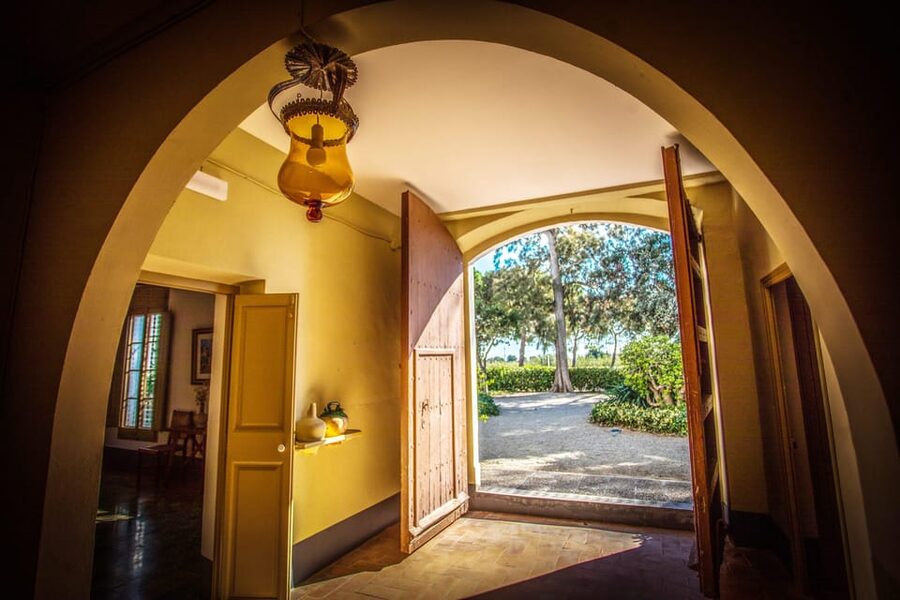
- Entering the farmhouse and garden
- The original studio is the main reason to go
- How the audio guide shapes the one-hour visit
- Following The Emotional Landscape of Miró
- What families should expect
- Accessibility, languages, and practical value
- Who will enjoy Mas Miró most
- Should you book Fundació Mas Miró?
- FAQ
- How long is the Fundació Mas Miró experience?
- What does the ticket include?
- Which languages are available for the audio guide?
- Is Fundació Mas Miró wheelchair accessible?
- Can I cancel the booking?
- Can I reserve now and pay later?
Key points to know
- See Miró’s real working studio, a personal space tied directly to his creative life.
- Walk through the farmhouse and garden rather than viewing the artist only through gallery walls.
- Use the five-language audio guide to connect the rooms with Miró’s life and work.
- Continue beyond Mas Miró with the route through Mont-roig and Miami, called The Emotional Landscape of Miró.
- Families get a digital game, though the activity may not hold every child’s attention.
- Wheelchair access is available, and the foundation is designed to welcome people with different disabilities.
Why Mas Miró matters to Miró’s story
The Fundació Mas Miró completes a three-part picture of Joan Miró’s life and work. The other two parts are the Fundació Joan Miró in Barcelona and the Fundació Miró Mallorca. Those museums help you see his art as finished work. Mas Miró helps you see the setting and habits behind it.
This is not primarily a gallery visit. You should come expecting rooms, domestic spaces, a garden, and the studio where Miró worked. The value lies in the connection between the place and the artist. Mont-roig del Camp was not just a backdrop. It was a source of ideas, shapes, colors, and memories that influenced his work.
I find that useful because Miró’s art can seem mysterious when you meet it only in a museum. At Mas Miró, the foundation presents the farmhouse and surrounding area as part of the story. You get a more personal view of the artist, including his links with family, friends, neighbors, artists, and local farmers.
The foundation also places strong importance on land and nature. That fits the way Miró viewed Mas Miró as a place of welcome. The farmhouse was used by people close to him, but it also belonged to the wider community around it. The result is a visit that feels more intimate than a standard art exhibition.
More Tarragona trips:
- Tarragona and Sitges Tour with Small Group and Hotel Pick Up
★ 5.0 · 1,211 reviews - House of Illusion Magic Show with Drinks
★ 4.5 · 719 reviews - From Barcelona: Tarragona & Sitges Full Day Tour with Pickup
★ 4.8 · 428 reviews
Entering the farmhouse and garden
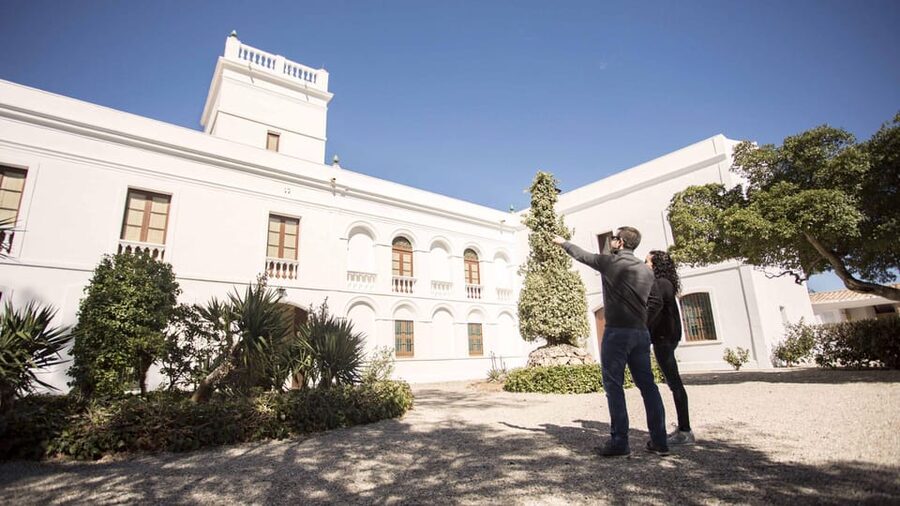
Your visit begins with the farmhouse and its grounds. The garden matters because it gives you a sense of the setting that shaped Miró’s connection to Mont-roig. Instead of moving straight from ticket desk to framed artwork, you encounter the place as a home and workplace.
The farmhouse contains several areas where you can follow Miró’s story. The audio guide adds background as you move through them, and the five language choices make the experience practical for an international audience. English, French, German, Spanish, and Catalan are available.
Give yourself time to look at the spaces before rushing to the next audio stop. The appeal here is not only the information delivered through your headphones. It is also the feeling of seeing a working environment, with domestic rooms and personal surroundings that help put the artist’s career in context.
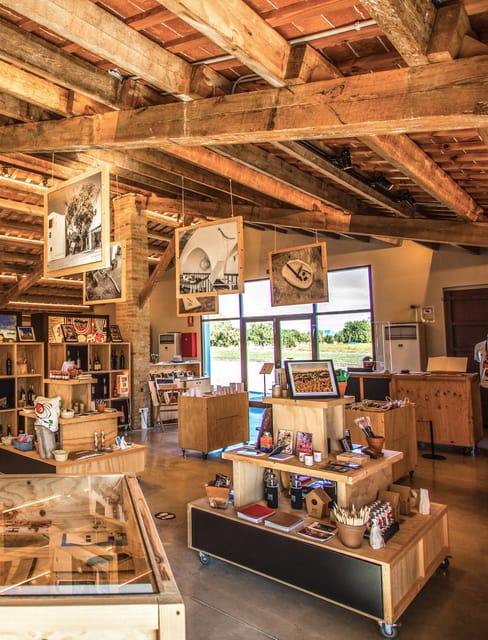
You should also adjust your expectations. Mas Miró is not presented as a large museum filled with major works. One weakness is that certain objects and rooms may not have their own clear labels beside them. Instead, you may need to use the printed material or audio guide to understand what you are seeing.
That can be frustrating if you prefer the quick museum format, where every bed, room, or object is labeled on the spot. It is especially worth keeping in mind if you are visiting with children. A little preparation about Miró before arrival may help younger visitors understand why the farmhouse matters.
The original studio is the main reason to go
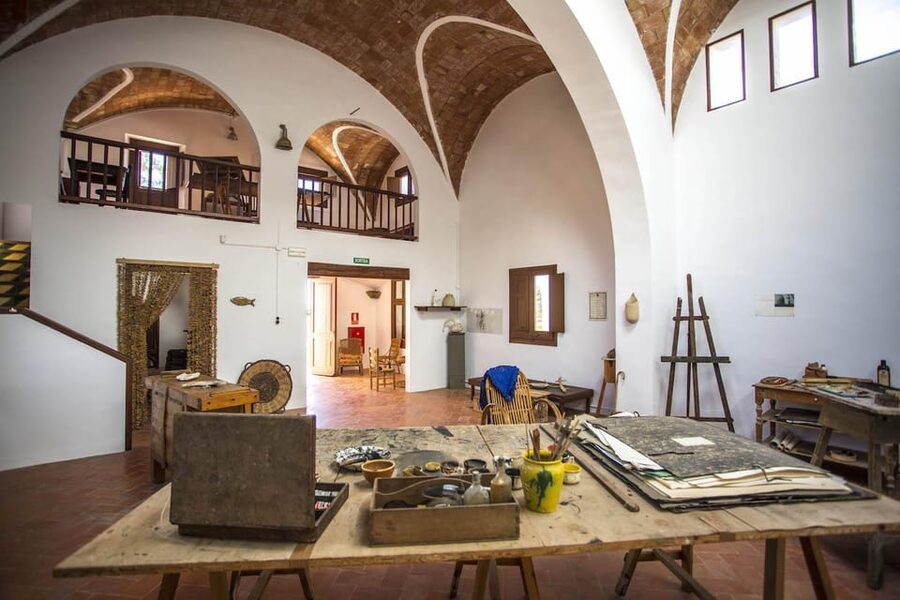
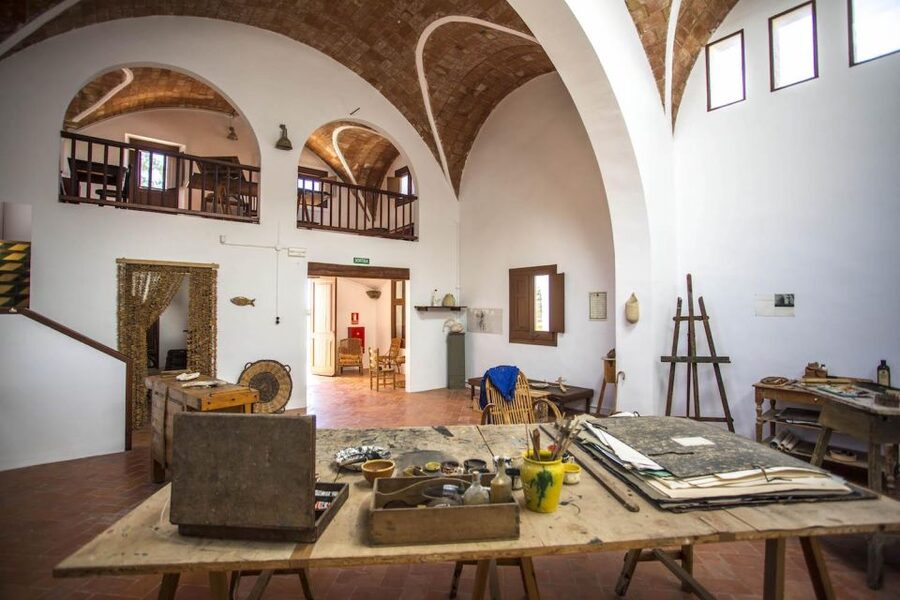
The working studio is the strongest part of the visit. This is the place where Miró created, and it gives the experience a direct link to his work that a general museum cannot copy.
I would make the studio your main focus. Listen carefully to the audio guide, then look at the room itself without trying to rush through it. The point is not to count paintings or collect a long list of objects. The point is to picture Miró returning to this space, working within the surroundings that influenced him.
The studio also changes the way you think about the artist’s process. In Barcelona or Mallorca, you see selected works presented for public viewing. At Mas Miró, you see the private and practical side of art-making. That difference is valuable for anyone interested in how an artist worked, not just what the final pieces look like.
Still, you should not book this expecting a full collection of original Miró paintings. The foundation’s purpose is to connect his life and work to this site. If your priority is a broad survey of his art, the major foundations in Barcelona or Mallorca may offer a fuller museum experience.
For a first visit to the Miró world, though, Mas Miró adds something the bigger collections cannot. It gives the artist a sense of place.
How the audio guide shapes the one-hour visit
The ticket is valid for one hour, and the free audio guide is included. That makes the visit easy to plan, especially if you are fitting Mas Miró into a day around Mont-roig del Camp.
The audio tour is described as detailed, so you should allow enough time to listen rather than treating it as background noise. The guide is available in five languages, which is one of the experience’s most useful features. It lets you take the visit at your own pace instead of relying on a scheduled spoken tour.
A one-hour visit is enough for a focused look at the farmhouse, studio, garden, and main points in Miró’s story. It may feel tight if you want to study every space slowly and then complete the outdoor route as well. The included route through Mont-roig and Miami is an added part of the ticket, but do not assume you can fully explore every part of it within the same one-hour visit.
The best approach is to treat the indoor visit as the core experience. Then use the route through Mont-roig and Miami as an extra way to see the places connected with Miró. If your schedule is tight, the studio and farmhouse deserve priority.
The audio guide also helps solve a weakness in the presentation. Since not every object may have a label directly beside it, the spoken explanation gives you more context than a quick look around would provide. I would use the guide fully, especially if you are not already familiar with Miró’s life.
A few more Tarragona options worth an hour of your trip
- Skip the Line: MónNatura Delta de l’Ebre Entrance Ticket
★ 4.5 · 28 reviews - Barcelona: Park Güell Admission Ticket
★ 4.4 · 76,534 reviews - Barcelona Aquarium: Entry Ticket
★ 4.3 · 13,335 reviews - Barcelona: Sagrada Familia Skip-the-Line Entry Ticket & Tour
★ 4.8 · 12,789 reviews
Following The Emotional Landscape of Miró
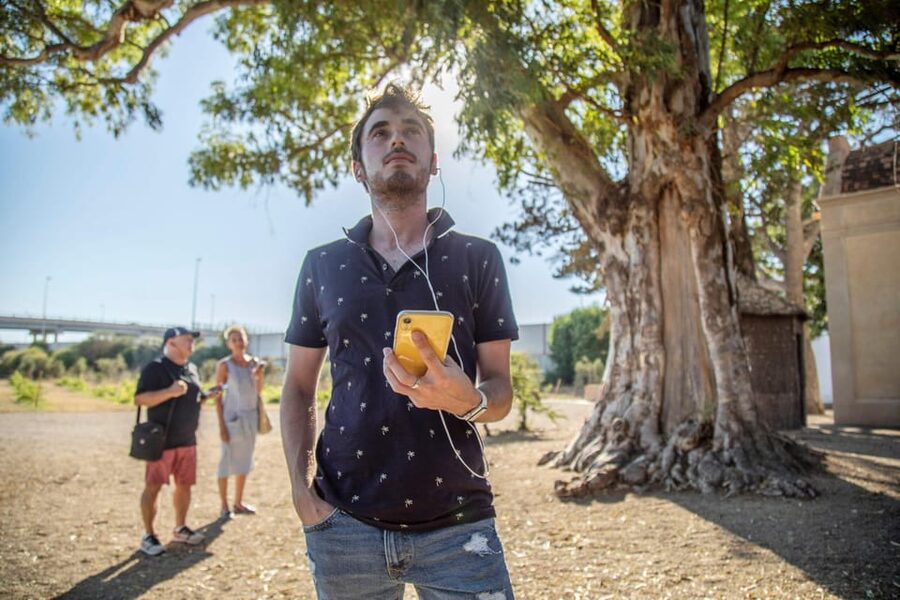
The ticket includes an itinerary through Mont-roig and Miami called The Emotional Landscape of Miró. Here, landscape is meant literally: the route connects the artist with the scenery and territory around Mas Miró.
This extension is important because the foundation’s purpose is not limited to preserving a building. It wants you to understand the relationship between Miró, Mont-roig, and the natural setting around the farmhouse. The route gives you a chance to move from the intimate interior to the wider area that influenced his work.
You should think of this as a companion experience, not simply another museum room. The farmhouse tells you where Miró worked and spent time. The outdoor itinerary helps you consider how the nearby land became part of his artistic world.
The supplied information does not give a precise route length, transport plan, or exact number of stops, so plan with some flexibility. You may find it works best as a separate walk or drive during your time in the area rather than as something to squeeze into the one-hour farmhouse visit.
That uncertainty is worth noting when planning your day. The ticket clearly includes access to the route, but the one-hour duration applies to the booked experience and should not be treated as a promise that you can see every related point at leisure.
What families should expect
Families can use the digital game included with the ticket. That is a useful idea because the farmhouse is built around rooms, history, and artistic context rather than a large collection of interactive displays.
The game may give children a reason to look closely and follow the visit. But I would not book Mas Miró solely for the children’s activity. A young audience may find the experience slow, particularly if they do not already know who Miró was or why the farmhouse is important.
The best family visit will include a little explanation before arrival. Tell children that they are seeing the real place where an artist worked, not a modern art museum with activities in every room. Point out the garden, the studio, and the idea that the surrounding countryside helped shape Miró’s imagination.
The digital game itself has received mixed reactions. It may work well for some children, but it will not be a highlight for every family. If your children need constant hands-on entertainment, the farmhouse could feel quiet and underfilled.
For adults interested in Miró, the family feature is a welcome extra. It does not change the character of the visit, but it gives parents a tool for making the rooms more engaging.
Accessibility, languages, and practical value
Mas Miró is wheelchair accessible and is intended to welcome people with different disabilities. That makes the site more usable than many historic farmhouses, where older construction can create barriers. The available information does not give detailed specifications for every room or route, so you may want to confirm any particular access need before booking.
The audio guide comes in Spanish, Catalan, French, English, and German. That is a strong practical point, since the experience depends on context rather than visual spectacle alone. You can choose the language that lets you get the most from the details.
One booking account also indicates that a dog was allowed on the grounds. Since this is not stated as a general official rule, confirm the current policy before bringing your pet, especially if you need access inside the farmhouse.
At $11 per person, the ticket is reasonably priced for a one-hour visit that includes the audio guide, farmhouse, garden, studio, the Mont-roig and Miami route, and the family digital game. The value depends on what you want. It is good value if you care about Miró’s working environment and the connection between art and place.
It is less compelling if you expect a large collection of paintings, polished museum-style labeling, or a long indoor program. Some areas may feel cared for less consistently than you would expect, and a few spaces may benefit from clearer signs and closer maintenance.
The free cancellation option up to 24 hours before the visit also makes the booking less risky. You can reserve now and pay later, which helps if your Spain itinerary is still changing.
Who will enjoy Mas Miró most
I would recommend Mas Miró to people who already like Joan Miró, visitors building a wider picture of his work, and anyone who prefers studios and historic homes to crowded art galleries. It is also a good choice if you are spending time in the Mont-roig del Camp area and want to understand why this place mattered to the artist.
The visit suits adults who enjoy quiet observation. You will get more from it if you listen to the audio guide, read the supporting material, and take time with the studio and garden.
It can work for families, but set expectations carefully. The digital game is included, yet the visit remains centered on the farmhouse and Miró’s story. Children who enjoy drawing, unusual buildings, or learning how artists work may respond well. Others may lose interest.
The site also works for visitors who want an accessible cultural stop. The wheelchair-accessible policy and multilingual audio guide remove two common barriers, although individual access questions should be checked in advance.
Should you book Fundació Mas Miró?
Book it if you want the personal side of Joan Miró: the farmhouse, the garden, the original studio, and the Mont-roig setting that helped shape his work. At $11, the ticket offers solid value for a focused one-hour visit, especially because the audio guide and outdoor route are included.
Skip it if your main goal is to see a large number of Miró paintings or a highly interactive family museum. The displays may feel modest, labels are not always placed beside every object, and the children’s game will not suit everyone.
My practical advice is simple: make the studio your priority, use the audio guide, and allow extra time if you plan to follow the route through Mont-roig and Miami. Mas Miró is not a substitute for Barcelona or Mallorca, but it adds the personal setting those museums cannot provide.
FAQ
How long is the Fundació Mas Miró experience?
The activity is listed as valid for one hour. The ticket also includes the route through Mont-roig and Miami, so you may need additional time if you plan to explore that itinerary fully.
What does the ticket include?
It includes the visit to Mas Miró with a free audio guide, the itinerary through Mont-roig and Miami called The Emotional Landscape of Miró, and access to a digital game for families.
Which languages are available for the audio guide?
The audio guide is available in Spanish, Catalan, French, English, and German.
Is Fundació Mas Miró wheelchair accessible?
Yes. The foundation is wheelchair accessible and is designed to welcome people with different disabilities.
Can I cancel the booking?
You can cancel up to 24 hours in advance for a full refund.
Can I reserve now and pay later?
Yes. The booking option allows you to reserve your place and pay later, so you do not need to pay at the time of reservation.
Just added around Tarragona
- Barcelona: Tarragona & Sitges Guided Day Trip with Transfers★ 5.0 · 7 reviews
- Tour monastery Poblet with hotel pickup★ 5.0 · 7 reviews
- Private Transfer from Tarragona Cruise Terminal to Barcelona★ 3.0 · 7 reviews
- From Barcelona: Private Full-Day Tarragona and Sitges Tour★ 4.9 · 8 reviews
- Tarragona Culinary Experience: Olive Oil & Iberian Ham Delight★ 5.0 · 8 reviews
- Tarragona: Southern Delta Birdwatching Private Tour★ 5.0 · 8 reviews
- Birdwatching in the Ebro Delta★ 5.0 · 10 reviews
- From Barcelona: Private Half-Day Tarragona Tour with Pickup★ 4.7 · 11 reviews
Tarragona Tours, compared.

Tarragona and Sitges Tour with Small Group and Hotel Pick Up
Read our review →

Tarragona and Sitges Small Group Tour – Roman History & Culture
Read our review →

The Grape Escape! Cycling in Beautiful Scenery with Wine Tasting
Read our review →Browse the lists this tour appears in