
Reviewed · TARRAGONA TOURS
Skip the Line: MónNatura Delta de l’Ebre Entrance Ticket
MónNatura Delta de l’Ebre turns a vast wetland into something you can understand in an hour or two. You move from fresh water to salt water, see how the Delta was shaped, and watch birds resting in the Alfacada lagoon through fixed telescopes. I especially like the full-scale salt-pan recreation and the chance to try traditional punts, shallow boats once used across the Delta.
I also like that the experience works for families and serious birdwatchers alike. The facilities are well kept, part of the interpretation area is air conditioned, and advance booking helps you avoid a ticket queue. The main drawback is simple: this is not a full guided birding excursion by default, and birds can be far away even with the telescopes. Bring sunscreen and mosquito protection.
In This Review
- Key points to know before you go
- Why MónNatura belongs on a Delta de l’Ebre day
- Fresh water, salt water, and the making of the Delta
- The full-scale salt pan is the star exhibit
- The Alfacada lagoon and its bird observatory
- Fishing traditions at the landing stage
- How long to allow, and how to use your time
- Opening dates and practical planning
- Who will get the most from this ticket
- Is the $12.05 admission good value?
- Should you book MónNatura Delta de l’Ebre?
- FAQ
- Where is MónNatura Delta de l’Ebre located?
- How long does the visit take?
- What does the admission ticket include?
- Are food and drinks included?
- Is transportation included?
- Can children visit?
- Can I cancel for a full refund?
Key points to know before you go
- Salt pans you can walk through: See the only full-scale recreation of a Delta salt pan open to the public.
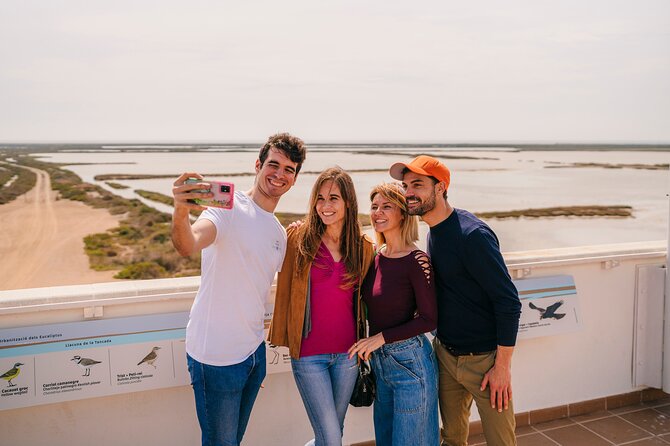
- Birdwatching from shelter: Use telescopes at the partially enclosed observatory to look for flamingos, terns, waders, herons, avocets, and gulls.
- Traditional fishing on display: Study casting nets, dredging nets, and eel and shrimp nets near the landing stage.
- Punts add a hands-on touch: Step aboard the Delta’s traditional shallow-water boats.
- Good for families: The exhibits are designed to explain the wetland in an accessible, entertaining way.
- Plan for a short visit: Allow roughly one to two hours, with no transportation, food, or drinks included.
Why MónNatura belongs on a Delta de l’Ebre day
The Delta de l’Ebre can be hard to grasp from a roadside viewpoint. It is a broad wetland shaped by water, salt, farming, fishing, and seasonal bird movements. MónNatura gives you a clear starting point before you explore the surrounding area on your own.
The project opened in 2012 in the Tancada lagoon. Its focus is not just wildlife. The site connects three parts of Delta life: salt production, birds, and traditional fishing. That combination makes the visit more useful than a simple bird lookout.
I like the way the center gives you both explanation and direct observation. You can learn how the Delta formed over centuries, then look across a lagoon and see the living result. The visit is compact enough to fit between other stops, but it offers enough variety to keep the hour from feeling like a quick museum pass.
The advertised admission price is $12.05 per person. That is fair value if you want a structured introduction to the area, especially since you get access to the salt-pan recreation, interpretation displays, bird observatory, traditional boats, and outdoor exhibits. It is less compelling if your only goal is to see large numbers of close-up birds, since wildlife sightings depend on distance, season, and conditions.
More Tarragona trips:
- Tarragona and Sitges Tour with Small Group and Hotel Pick Up
★ 5.0 · 1,211 reviews - House of Illusion Magic Show with Drinks
★ 4.5 · 719 reviews - From Barcelona: Tarragona & Sitges Full Day Tour with Pickup
★ 4.8 · 428 reviews
Fresh water, salt water, and the making of the Delta
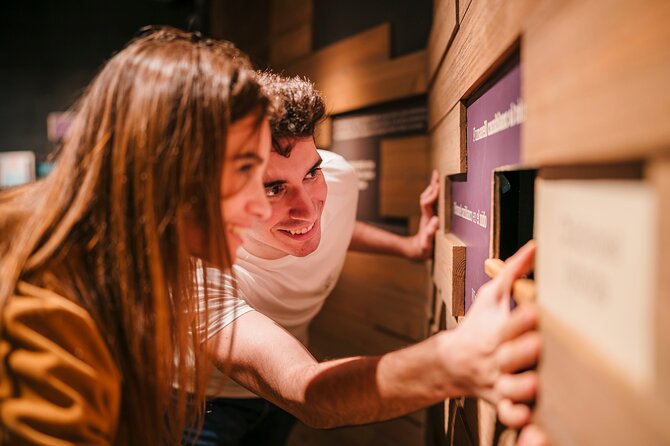
The first part of the visit helps you understand the basic character of the Delta. You move through the story of fresh water and salt water, two forces that shape the area’s plant and animal life.
An audiovisual presentation explains how the Delta developed over time and shows the changing seasons of a typical year. This matters because the place does not look or behave the same way all year. The presentation gives you a useful frame for what you see outside, especially if this is your first visit to the region.
The explanations are suitable for a general audience, including children. Several guided visits have been led by staff members such as Paula, Ramón, Alba, Victor, María, and Max, and guided versions have included both natural interpretation and answers to questions. Do not assume those guides are included with the basic admission ticket. The listed ticket includes entry only.
The indoor section also helps on a hot day. Part of the center is air conditioned, which gives you a break before you head outside. Still, most of the appeal comes from the open-air areas, so you should dress for sun and insects.
The full-scale salt pan is the star exhibit
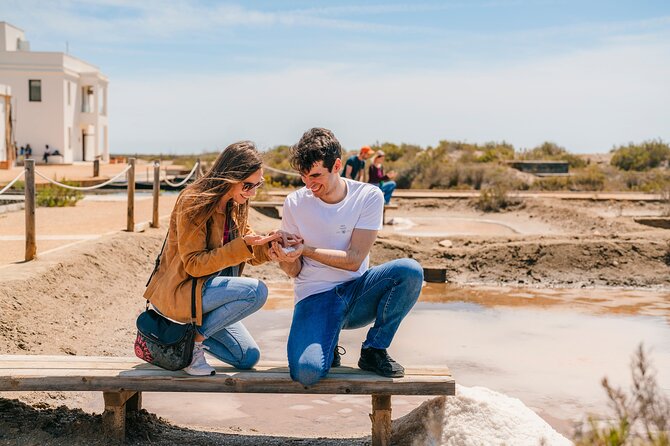
Salt is one of the Delta’s defining resources, and MónNatura makes the process easy to picture. The site includes the only full-scale recreation of one of the Delta’s salt pans open to the public.
You can see how shallow water and evaporation connect with salt production. The exhibit also introduces the saline plants that survive in this difficult environment. These plants are not just decorative. They show how living things adjust to salty conditions, and they help explain why different parts of the wetland support different species.
The old Sant Antoni salt pans add another place to look for birds. Waders, terns, avocets, and gulls may be seen in this area. The salt-pan setting gives the birdwatching a practical context, since you are not simply checking off species. You are seeing how water levels and salt affect where birds feed and rest.
I would give this section time instead of rushing straight to the observatory. If you understand the salt system first, the plants, pools, and birds make more sense. This is also a good part of the visit for children because the physical setting is easier to grasp than a long written display.
The Alfacada lagoon and its bird observatory
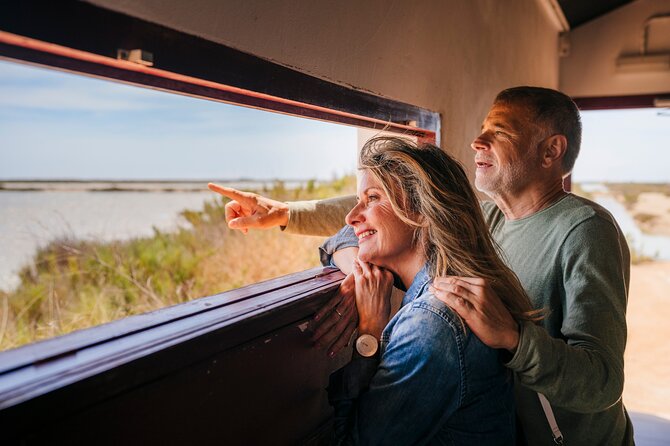
The partially enclosed bird observatory overlooks the Alfacada lagoon. Telescopes are available, and they are the main reason to pause here rather than rely only on your own eyes.
You might see flamingos, terns, waders, herons, avocets, and gulls. The telescopes can reveal birds that look like small marks from a distance. A guided birdwatching visit with Irene, described as a biologist, lasted about an hour and a half and focused on finding birds that are easy to miss without trained help.
The standard ticket does not promise a guide, so your experience may be more self-directed. That is not necessarily a weakness. You can take your time, scan the lagoon, and watch the birds without being rushed. But if bird identification is your main reason for coming, check carefully if a guided option is available on your date.
Keep expectations sensible. Flamingos may be visible but far off, and wildlife is never placed on demand. The telescopes improve your chances of seeing activity, but they cannot guarantee close views. Bring patience, and allow a little extra time if the observatory is busy.
The shelter is particularly useful in strong sun. It gives you a place to watch without standing fully exposed for the entire visit. Sunscreen remains a good idea, since the wider grounds are open and shade is not described throughout the site.
A few more Tarragona options worth an hour of your trip
- Barcelona: Park Guell Guided Tour with Skip The Line Entry
★ 4.7 · 17,563 reviews - Barcelona: Sagrada Familia Skip-the-Line Entry Ticket & Tour
★ 4.8 · 12,789 reviews - Park Guell Guided Tour with Skip the Line Ticket
★ 4.5 · 6,996 reviews - Park Guell and Sagrada Familia Tour with Skip the Line Tickets
★ 5.0 · 6,384 reviews
Fishing traditions at the landing stage
Near the landing stage, MónNatura shifts from natural history to working life. You will see examples of traditional Delta fishing methods, including casting nets, dredging nets, and nets used for eels and shrimp.
These displays show how people have adapted to shallow water and changing channels. They also keep the Delta from being presented as untouched nature. The wetland has supported human activity for generations, and fishing traditions are part of its identity.
You can also go aboard the punts, the traditional means of transport used in shallow water. This is one of the more memorable details for families because it is physical and immediate. You are not just looking at a picture of an old boat. You get a sense of the simple craft once used to move through the wetland.
The ticket includes admission, but the available information does not promise a boat ride or a guided demonstration at a particular time. Treat the punts as an included feature to explore, not as a scheduled cruise. If a specific activity matters to you, confirm the day’s program before setting out.
How long to allow, and how to use your time
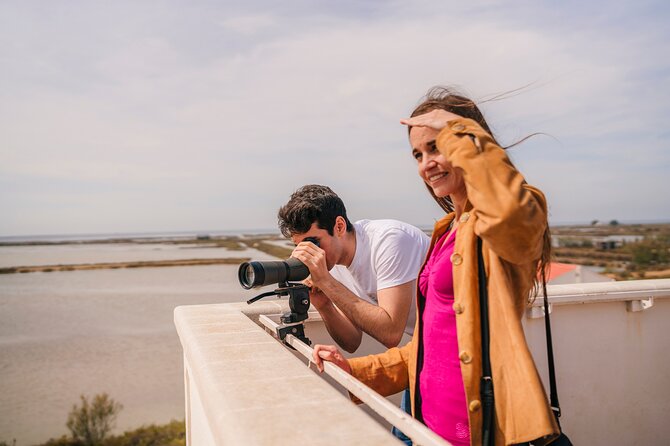
The visit takes about one to two hours. I would allow closer to two hours if you want to read the interpretation material, study the salt pans, use the telescopes, and spend time with the fishing displays.
A brisk visit could cover the main areas in about an hour. That works if you are fitting MónNatura between other Delta stops. Families may need longer because the boats, outdoor spaces, and bird observatory invite pauses.
The attraction is small enough to feel manageable, but it is not simply one room and a viewing platform. The best order is to begin with the introductory material, continue to the salt pans, then spend time at the lagoon and landing stage. This gives you the story of the place before you start looking for wildlife.
Advance admission is useful because it guarantees entry and keeps you from buying a ticket on arrival. The experience is booked an average of 13 days ahead, which suggests that planning ahead is sensible during popular periods. The mobile ticket is convenient, especially if you are already moving around the Delta by car.
Transportation to and from the attraction is not included. Food and drinks are also not included. Plan those parts yourself rather than expecting this ticket to function as a complete outing.
Opening dates and practical planning
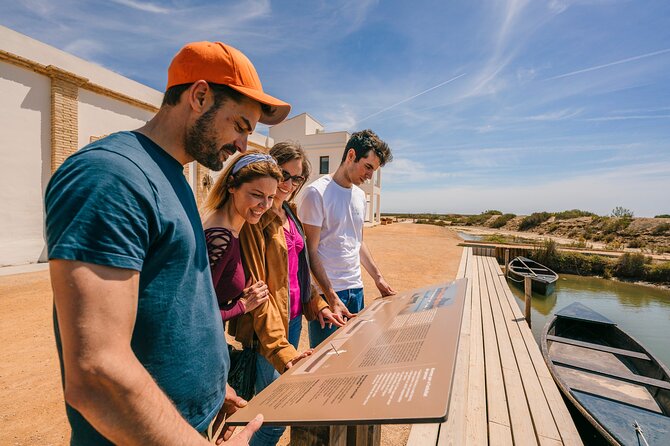
The supplied schedule lists these hours:
- From February 14 to April 11, 2026: Wednesday through Friday, 10:00 a.m. to 2:00 p.m.
- From April 12 to April 21, 2026: Tuesday, 10:00 a.m. to 8:00 p.m.
Those hours are limited, so check your exact date and start time before booking. A ticket is only useful if you can reach the site during its listed opening period.
Children must be accompanied by an adult. Most people can participate, and the maximum group size is 20. That is a modest group limit, though a basic admission visit may not operate like a single guided group.
The site is described as clean, well maintained, and suitable for explanations. Reviews of guided visits also note warm, professional service. Names associated with those visits include Paula, Ramón, Alba, Victor, María, Max, and Irene. Again, the admission ticket alone does not state that one of these guides will be present.
Wear comfortable clothing for outdoor walking. Sunscreen and mosquito protection are specifically useful advice for this wetland setting. You should also carry water, since food and drinks are not included.
Who will get the most from this ticket
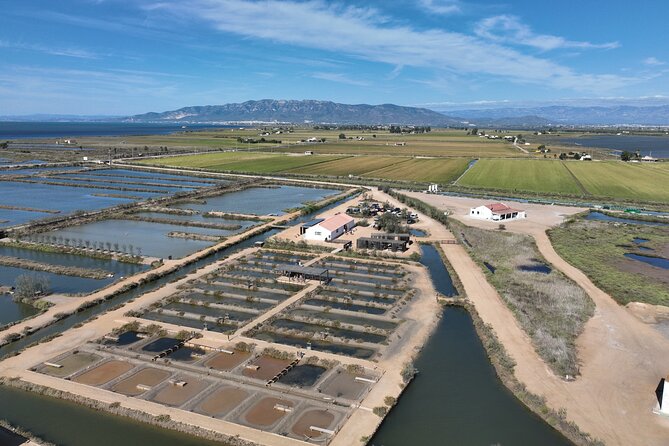
I would recommend MónNatura to families who want an educational stop that does not require a full day. The exhibits give children something to see and do, while the bird observatory and salt pans offer adults a better understanding of the area.
It also suits people with a real interest in birds, especially if you can add a guided birdwatching visit. A biologist-led outing can help you spot birds that you would probably miss alone. Without a guide, you still get the telescopes and designated viewing areas, but you will need to identify species yourself.
This is a good choice if you are already touring the Delta and want context before visiting more wetlands. It is less suitable if you expect a long boat trip, a meal, or transportation from Tarragona. None of those are part of the admission.
The short duration makes it easy to combine with other plans, but the limited opening schedule requires care. Check the date first, then build the rest of your day around it.
Is the $12.05 admission good value?
For $12.05, I see this as an affordable orientation to the Delta rather than a major standalone attraction. The value comes from the mix: a full-scale salt-pan recreation, seasonal interpretation, saline vegetation, fishing equipment, punts, and telescopes overlooking a real lagoon.
The ticket also removes some uncertainty. You book ahead, carry a mobile ticket, and have guaranteed entry rather than arriving to find a purchase line. That matters when your time in the Delta is limited.
The price is harder to justify if you only want to photograph flamingos. Birds may be distant, and sightings vary. In that case, a guided birdwatching option may be worth investigating, provided it is offered separately and fits your schedule.
I would judge the ticket by the whole experience. You are paying for an introduction to the Delta’s natural systems and working traditions, with wildlife watching added in. On that basis, the cost is reasonable.
Should you book MónNatura Delta de l’Ebre?
Book it if you want a compact, family-friendly explanation of the Delta, enjoy wetlands and birds, or need a well-organized stop between other activities. The salt pans and traditional fishing displays give the visit substance, while the observatory and telescopes provide the chance to see flamingos, herons, terns, and other species.
Book early if your date is fixed, particularly because the opening schedule is narrow. Take sunscreen, mosquito protection, and water, and plan your own transportation and food.
Skip it if you want a guaranteed close-up wildlife encounter or a boat tour included in the price. For most people who want to understand this unusual wetland before exploring farther, the $12.05 admission is a sensible buy.
Free cancellation is available if you cancel at least 24 hours before the experience start time. Cancellations or changes made later are not accepted for a refund.
FAQ
Where is MónNatura Delta de l’Ebre located?
It is in the Tancada lagoon area of the Delta de l’Ebre, in Tarragona, Spain.
How long does the visit take?
The visit takes approximately one to two hours.
What does the admission ticket include?
It includes admission to MónNatura Delta de l’Ebre. You can access the salt-pan recreation, interpretation areas, bird observatory, fishing displays, and traditional punts described as part of the site.
Are food and drinks included?
No. Food and drinks are not included.
Is transportation included?
No. Transportation to and from the attraction is not included.
Can children visit?
Yes. Children must be accompanied by an adult.
Can I cancel for a full refund?
Yes, if you cancel at least 24 hours before the experience start time. Cancellations or changes made less than 24 hours before the start time are not accepted for a refund.
Just added around Tarragona
- Barcelona: Tarragona & Sitges Guided Day Trip with Transfers★ 5.0 · 7 reviews
- Tour monastery Poblet with hotel pickup★ 5.0 · 7 reviews
- Private Transfer from Tarragona Cruise Terminal to Barcelona★ 3.0 · 7 reviews
- From Barcelona: Private Full-Day Tarragona and Sitges Tour★ 4.9 · 8 reviews
- Tarragona Culinary Experience: Olive Oil & Iberian Ham Delight★ 5.0 · 8 reviews
- Tarragona: Southern Delta Birdwatching Private Tour★ 5.0 · 8 reviews
- Entry ticket | Fundació Mas Miró – Mont-roig del Camp★ 4.2 · 10 reviews
- Birdwatching in the Ebro Delta★ 5.0 · 10 reviews
Tarragona Tours, compared.
Tarragona and Sitges Tour with Small Group and Hotel Pick Up
Read our review →
Tarragona and Sitges Small Group Tour – Roman History & Culture
Read our review →
The Grape Escape! Cycling in Beautiful Scenery with Wine Tasting
Read our review →Browse the lists this tour appears in