
Reviewed · GAUDI TOURS
Barcelona: Art Nouveau & Gaudí Tour
Barcelona’s Eixample is where Barcelona’s new money turned stone, ceramic, and glass into public theater. On this private walk, you’ll see the palaces of the Golden Square, follow Gaudí’s story, and learn why the city’s broad streets were built after its medieval walls came down.
I like the tour’s strong historical thread and its focus on buildings you can see from the street without spending extra on admission. I also like the relaxed pace, with time for photos, questions, and a bathroom stop. The main consideration is that interiors and museum visits are mostly not included, so you’ll need a separate plan for places such as Palau de la Música or Casa Batlló.
In This Review
- Key points to know before you book
- Why Eixample is Barcelona’s great outdoor architecture lesson
- The Golden Square and the people who paid for it
- Domènech i Montaner and architecture as music
- Gaudí’s hour on Passeig de Gracia
- The Block of Discord and Barcelona’s architectural rivalry
- From political struggle to the 1888 World’s Fair
- The Catalan Renaissance and the city’s contrasts
- What you will and will not see inside
- A relaxed walk, not a race through Barcelona
- What makes the guide important
- Is $212 good value for four people?
- Who should book this Eixample walk?
- Should you book the Barcelona Art Nouveau and Gaudí Tour?
- FAQ
- How long does the Barcelona Art Nouveau and Gaudí Tour last?
- Where is the meeting point?
- What languages are available?
- Is this a private tour?
- Are admission fees included?
- Is the tour wheelchair accessible?
Key points to know before you book
- Eixample tells the story of a city breaking free: Barcelona’s expansion after 1854 explains the broad streets, chamfered corners, and grand apartment blocks.
- The Golden Square is the visual center: Industrialists, aristocrats, and wealthy Catalans hired leading architects to display their fortunes here.
- Gaudí is only part of the story: You’ll also encounter Domènech i Montaner, Puig i Cadafalch, Catalan Modernism, and the wider cultural revival.
- The tour stays mainly outdoors: You admire façades, details, and monuments from streets and squares, with entry fees not included.
- Johannes, or Hannes, leads an engaging history lesson: Recent bookings identify the guide by both names, with praise for his storytelling and links between politics, people, and architecture.
- The private format suits a small group: The $212 price covers up to four people, making the cost more reasonable when shared by a family or group of friends.
Why Eixample is Barcelona’s great outdoor architecture lesson
Start at Plaza de Urquinaona, in front of Theater Borrás, and you’re quickly in the part of Barcelona that changed the city’s future. Eixample means expansion, and that is exactly what happened when the old city walls were torn down in 1854.
For centuries, Barcelona had been tightly packed inside its walls. The old city held rich and poor close together, while disease, poverty, political pressure, and overcrowding shaped daily life. Once the walls disappeared, the empty land between the old city and the town of Gracia offered a chance to build something new.
The planner Ildefons Cerdà imagined a more ordered city. His plan used a grid of broad streets and blocks with cut-off corners. Those angled façades are practical for traffic and visibility, but they also create the distinctive street scenes you’ll notice throughout Eixample.
I like this opening context because it keeps the architecture from becoming a parade of pretty façades. You learn why the neighborhood looks so different from the old city, and why its design carried social and political hopes. Cerdà’s plan was meant to create a healthier, more open city, though later development did not always follow his original ideals.
More Gaudí days in Barcelona:
- Barcelona: Park Güell and Gaudí House Museum Entry Ticket
★ 4.5 · 6,326 reviews - Barcelona: La Pedrera Night Experience
★ 4.4 · 4,633 reviews - Barcelona: Gaudi’s Casa Vicens Skip-the-Line Entrance Ticket
★ 4.7 · 3,449 reviews
The Golden Square and the people who paid for it
The central section of Eixample is often called the Golden Square. This was where industrialists, aristocrats, and Catalans who had made fortunes in South America commissioned ambitious homes.
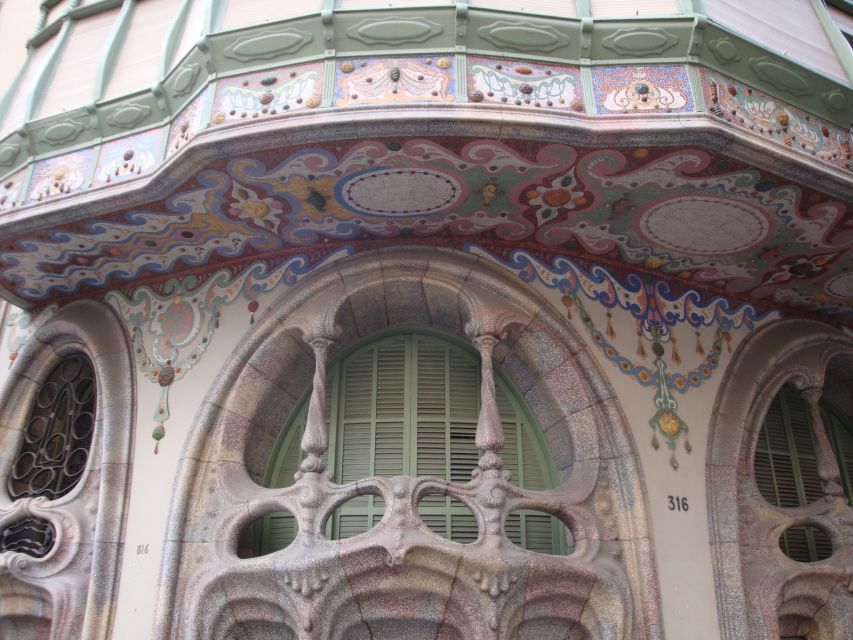
These families had money, influence, and something to prove. Their residences were not modest apartment blocks. They used sculpted stone, colored ceramic, ironwork, stained glass, and unusual shapes to announce their status. The façades could be playful, theatrical, or almost dreamlike.
Your guide helps you read these details rather than simply pointing at them. Look for the way doors, balconies, windows, and roofs are treated as part of a single design. In Modernist Barcelona, decoration was not an afterthought. It reached across the entire building.
The walk also places Catalan Modernism in a wider European setting. You can compare it with German Art Nouveau, the Viennese Secession, and the English Modern Style, but the Catalan movement had its own cultural purpose. It was tied to a revival of Catalan language, identity, literature, music, and visual art.
That wider view is important. Modernism here was not only a style for wealthy homes. It was part of a cultural movement that looked toward a renewed Catalonia.
Domènech i Montaner and architecture as music
One of the tour’s useful themes is the work of Lluís Domènech i Montaner. His Palau de la Música Catalana is a key example of how architecture could express Catalan culture.
The tour does not promise a full interior visit, and entry fees are not included. Still, seeing the building from outside gives you a chance to understand its role in the story. The design pays homage to Catalan folk songs, not merely through a musical venue, but through stone and decoration that act as an allegory.
This is where a good guide makes a real difference. Without explanation, you may see elaborate ornament. With the historical thread, you can connect the building to the Catalan Renaissance and the desire to make local culture visible again.
The route also introduces other leading architects, including Josep Puig i Cadafalch. That matters because Barcelona’s Modernist architecture is often reduced to Gaudí. Gaudí deserves his fame, but the city’s character comes from several competing designers, wealthy patrons, and a broader artistic movement.
Gaudí’s hour on Passeig de Gracia
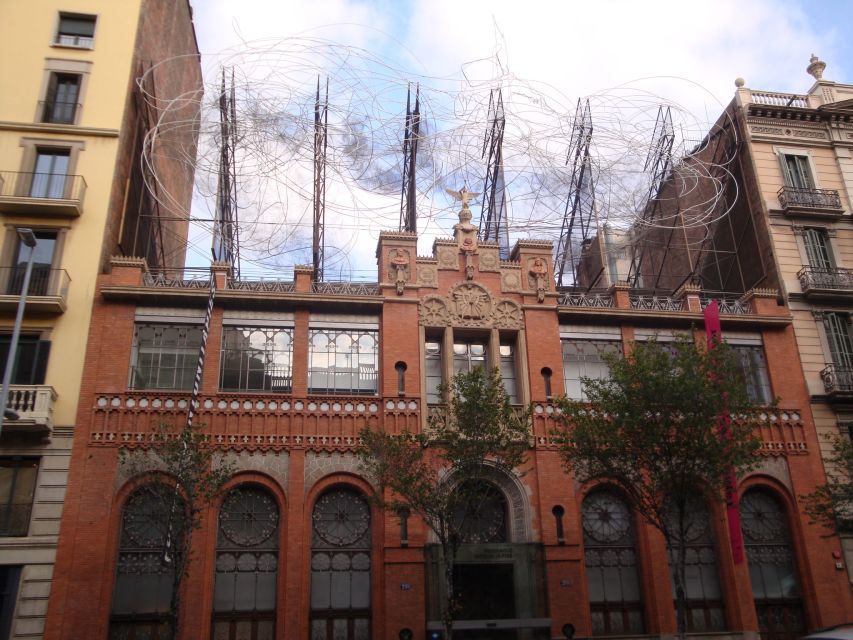
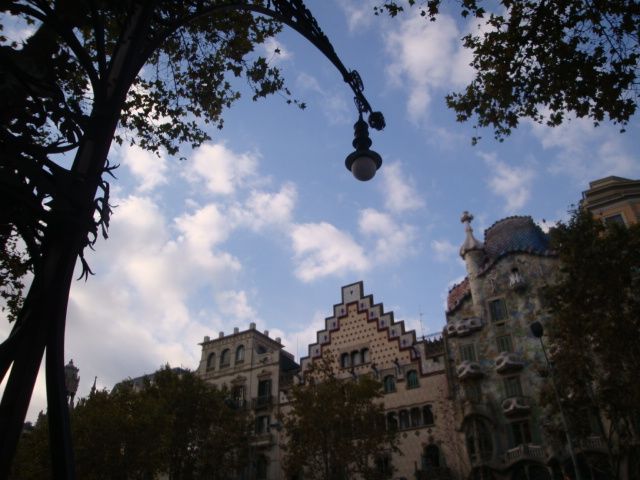
Passeig de Gracia is the tour’s most famous stretch. Once a route between Barcelona and Gracia, it became the grand avenue of the new city. Here, the most powerful families competed for attention, and the façades became a kind of architectural contest.
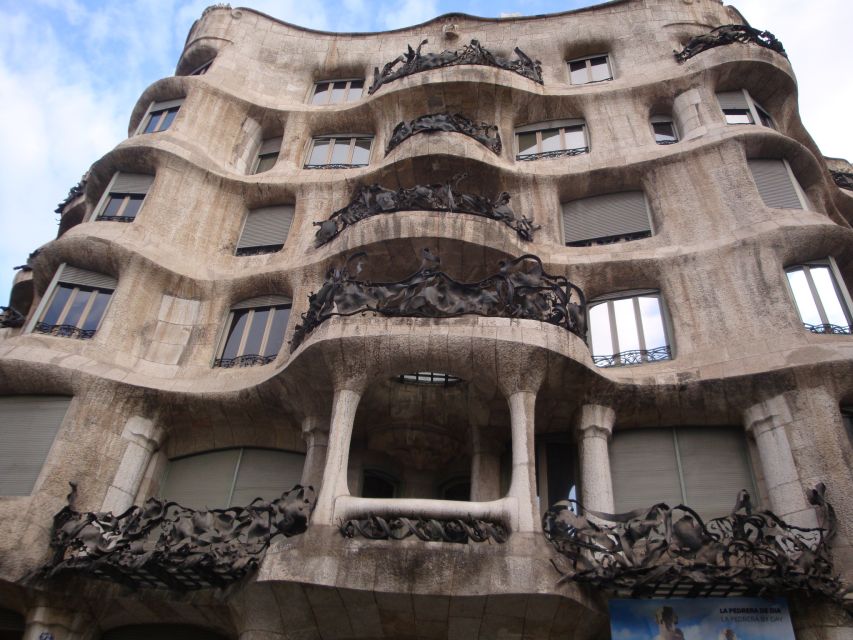
You’ll hear about Gaudí’s work, including Casa Batlló and La Pedrera, also known as Casa Milà. The experience focuses on the exteriors, so plan a separate visit if you want to see the interiors.
Casa Batlló is often read through images of dragons, bones, masks, and shifting color. The tour’s references to a dragon’s den, confetti, and trencadís point to Gaudí’s taste for broken ceramic fragments. This technique creates surfaces that catch the light and make ordinary walls feel alive.
La Pedrera gives the avenue its famous rough stone presence. Its curving façade does not behave like a conventional apartment building. You’ll hear why it earned a comparison to a quarry and how Gaudí created complex forms within a working urban block.
The benefit of seeing these buildings with a guide is scale. You can notice the relationship between one private home and the whole block, rather than viewing each building as an isolated postcard. The drawback is simple: street viewing cannot replace an interior visit. You’ll see the entrance and façade, but not the courtyards, rooms, roof spaces, or exhibitions that require a ticket.
A few more Barcelona options worth an hour of your trip
- Barcelona: Park Güell Admission Ticket
★ 4.4 · 76,534 reviews - Barcelona: Casa Batlló Entry with Self-Audioguide Tour
★ 4.7 · 25,359 reviews - Barcelona: 24 or 48-Hour Hop-On Hop-Off Bus Tour
★ 4.4 · 20,872 reviews - Barcelona: Park Guell Guided Tour with Skip The Line Entry
★ 4.7 · 17,563 reviews
The Block of Discord and Barcelona’s architectural rivalry
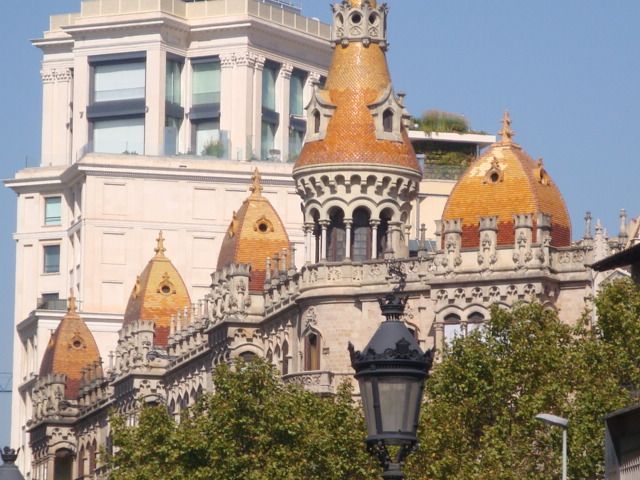
A particularly entertaining part of Passeig de Gracia is the Block of Discord. Several striking buildings sit close together, each with a different architectural personality.
The name reflects the visual clash. Instead of one orderly row, you get competing shapes, colors, balconies, and decorative schemes. The tour presents this as a kind of war of stars on the same street.
It is a good place to slow down. Look upward and compare the buildings side by side. One may feel restrained, another theatrical, another almost organic. You can see how Barcelona’s wealthy patrons used architecture to compete with one another, while the architects pushed their own ideas into public view.
The trencadís decoration is especially worth watching. Broken ceramic pieces were arranged into patterns and surfaces rather than discarded. The result is not neat in the classical sense. It is irregular, colorful, and full of small changes as you move along the pavement.
You’ll also hear surprising cultural connections, including references to Salvador Dalí and the Chupa-Chups empire. These details help show how Barcelona’s creative identity did not stop with Modernism. The tour links architecture to later design, popular culture, and the city’s taste for visual invention.
From political struggle to the 1888 World’s Fair
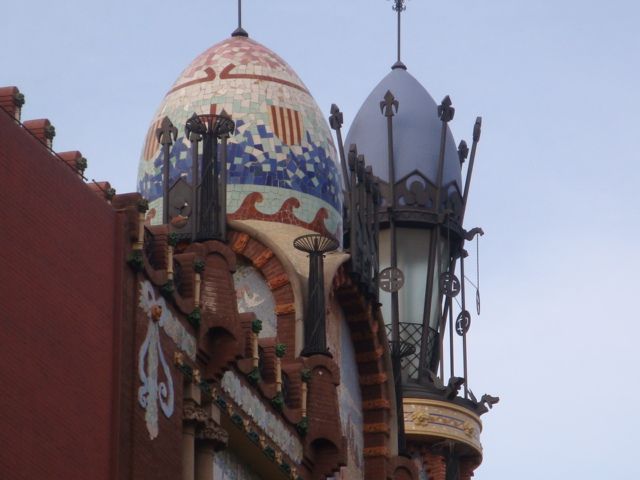
This is not a tour that treats Barcelona’s buildings as decoration without consequences. Its story reaches back to the War of the Spanish Succession and the effects of 1714, then follows the long period in which the city faced political limits imposed from Madrid.
The theme of the enslaved city is strong language, but it points to a real sense of restriction. Barcelona had economic energy and local ambitions, yet its people faced policies they did not control. Local officials had limited room to act unless private wealth filled the gap.
That tension helps explain the city’s building boom. Money became a way to express power, identity, and hope. The Modernist palaces were private homes, but they also formed part of Barcelona’s public image.
The route also touches on the 1888 Barcelona World’s Fair, a moment when the city presented itself as modern and outward-looking. The fair helped Barcelona clean up and reshape parts of itself, reinforcing the idea that architecture could serve as a declaration of arrival.
I find this political background valuable because it gives the tour some weight. You are not only looking at balconies and mosaics. You are watching a city use planning, culture, and private wealth to argue for a better future.
The Catalan Renaissance and the city’s contrasts
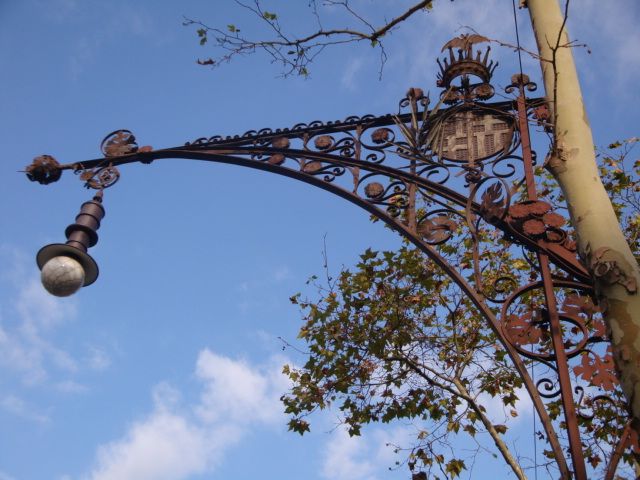
Catalan Modernism began around 1885 as a cultural movement. It reached into literature, music, and visual art, not just building design.
That explains why the tour moves between architects, political events, cultural figures, and urban change. Barcelona can feel like several cities layered together: the medieval core, the planned Eixample, the industrial city, the modern tourist capital, and the Catalan cultural center.
The references to Raval, the industrial barons, and festivals add social contrast. Wealthy families could commission ornate homes in the new district, while working people lived under far less comfortable conditions. The architecture is beautiful, but the money behind it came from an unequal society.
A balanced tour should let you enjoy the artistry without pretending the period was fair. This experience appears designed to do that. It presents the glamour, then brings you back to the political and social pressures that shaped the city.
What you will and will not see inside
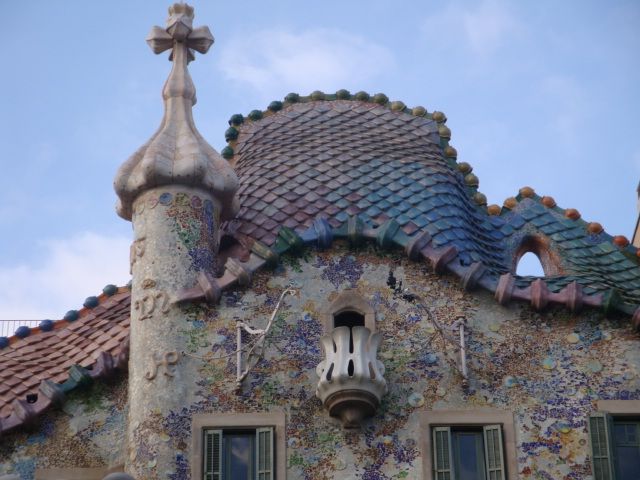
This is primarily a walking and exterior-viewing experience. You will examine buildings from streets and squares, with a few exceptions, but museum visits and interior exploration are not part of the main program.
That arrangement has two advantages. First, the tour keeps moving through the neighborhood instead of using much of the 3.5 hours in one building. Second, you avoid adding several admission costs to an already full morning or afternoon.
There is also a clear limitation. If your main goal is to enter Casa Batlló, climb through La Pedrera, or attend a performance at Palau de la Música, this tour will not replace those visits. Use it as an introduction and orientation, then choose one or two interiors for a separate booking.
The included U-Bahn ticket helps the group manage the route. The meeting point is at Plaza de Urquinaona, in front of Theater Borrás. Since the walk lasts three and a half hours, wear comfortable shoes and keep water handy.
A relaxed walk, not a race through Barcelona
The pace is described as relaxed. You should have time to stop for photos, ask questions, and take a bathroom break without feeling pushed along.
That makes the tour a good fit for visitors who want explanation rather than a rapid checklist. The guide can connect one building to the next, and you have time to look up at details that are easy to miss from a passing bus.
It is also a three-weather tour. It runs in sun, rain, wind, and strong showers. In summer, bring a hat, sunglasses, sunscreen, and water. In winter, a jacket or thin coat should be enough.
The route is wheelchair accessible, but remember that street conditions and crowds can still affect comfort. The important point is that the tour is planned as a city walk, not as an indoor attraction with climate control.
What makes the guide important
The guide is available in German or English. Recent bookings identify Johannes, also referred to as Hannes, as the guide. His strongest quality is the way he links events, people, and architectural styles instead of treating them as separate facts.
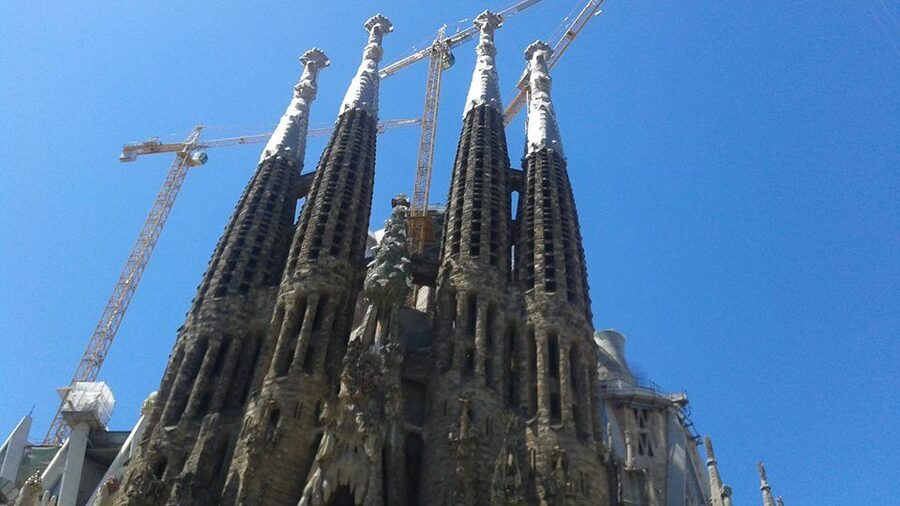
You can expect a tour built around stories: the repercussions of 1714, the removal of the walls, Cerdà’s city plan, the Catalan Renaissance, the World’s Fair, Gaudí’s ideas, and the missing plans for the Sagrada Família.
Several specific themes are unusual enough to keep the walk lively. You may hear about Gaudí and New York, the tricks he used with string, the famous quarry, the problem of having many rooms but no place for a piano, and the turbulent Week of Tragedy.
The strongest praise attached to Johannes describes him as an exceptional storyteller who connects local and political events without needing to stop and search for information. That suggests a guide who can answer questions in the moment and adjust the explanation to the group.
The tour is not meant to be dry architectural instruction. The guide’s style is described as sympathetic and without airs, which is useful when the subject includes complex politics and highly technical design.
Is $212 good value for four people?
The price is $212 per private group of up to four, not $212 per person. With four people, that works out to $53 each. With two people, the cost is $106 each, and a solo booking or couple will need to decide how much a private guide is worth.
For a small group that wants German-language guiding, the value is easier to see. You get a dedicated guide, a 3.5-hour route, historical interpretation, and a subway ticket, without paying separate admission fees during the walk.
The price is less compelling if you only want a quick introduction or plan to spend most of your day inside paid attractions. This tour gives you context and orientation, not entry to Barcelona’s major Modernist monuments.
I would consider it good value for a family or group of friends who want one person to shape the story around their interests. The private format also avoids being tied to the pace or questions of a large public group.
Free cancellation up to 24 hours before the start and reserve-now, pay-later booking make the commitment easier, especially if your Barcelona schedule is still shifting.
Who should book this Eixample walk?
I would choose this tour if you want architecture explained in plain language, enjoy political and cultural background, and prefer a private walk over a crowded group outing.
It suits first-time visitors who have seen pictures of Gaudí but want to understand how his work fits into Barcelona’s wider Modernist movement. It also works well for repeat visitors who have walked Passeig de Gracia before but never had the façades properly explained.
German-speaking visitors have a particularly clear reason to choose it, though English is also available. Families and small groups benefit from the private setup, relaxed pace, and time for questions.
I would skip it if your priority is interior access, museum collections, or a short sightseeing stop. In that case, book individual building visits instead and use the surrounding streets for your own walk.
Should you book the Barcelona Art Nouveau and Gaudí Tour?
Book it if you want to understand why Eixample looks the way it does, not simply photograph its famous buildings. The best part is the connection between urban planning, Catalan identity, private wealth, political frustration, and Modernist design.
The three-and-a-half-hour length gives the subject room to breathe, while the relaxed walking pace keeps it manageable. You’ll see Gaudí, but you’ll also leave with a better sense of Domènech i Montaner, Puig i Cadafalch, Cerdà, and the cultural movement that made Barcelona’s Golden Square so distinctive.
Just plan your interiors separately, bring weather protection, and share the cost with up to three companions if you can. For a small group that values a lively guide and a thoughtful story, this is a strong way to meet Barcelona’s most expressive neighborhood.
FAQ
How long does the Barcelona Art Nouveau and Gaudí Tour last?
The walking tour lasts 3.5 hours.
Where is the meeting point?
Meet at Plaza de Urquinaona, in front of Theater Borrás.
What languages are available?
The tour is offered in German and English.
Is this a private tour?
Yes. It is arranged for a private group of up to four people.
Are admission fees included?
No. Entry fees are not included, and the tour mainly views monuments and buildings from the exterior.
Is the tour wheelchair accessible?
Yes, the activity is listed as wheelchair accessible.
Just added around Barcelona
- GoCar Full Day Tour★ 4.0 · 6 reviews
- Sagrada Familia and Barcelona Highlights: Private Guided 4-Hour Driving Tour★ 5.0 · 6 reviews
- Barcelona: Highlights & Gems Private Tour with Tapa & Drink★ 3.9 · 6 reviews
- Gothic Quarter and Born District: Photographic Workshop★ 5.0 · 6 reviews
- Gobbi Yacht Rental in Barcelona 9 Pax 2/4/8hs★ 5.0 · 6 reviews
- Barcelona: Gothic Quarter & La Sagrada Familia Private Tour★ 4.9 · 6 reviews
- Private Sailboat Ride at Sunset from Sitges★ 5.0 · 6 reviews
- Barcelona: Private Tour of Casa Batllo with Reserved Access★ 3.5 · 6 reviews
Gaudi Tours, compared.
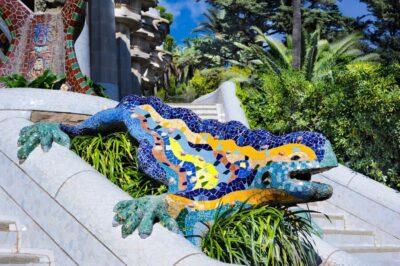
Park Güell and Gaudí House Museum Entry Ticket
Read our review →
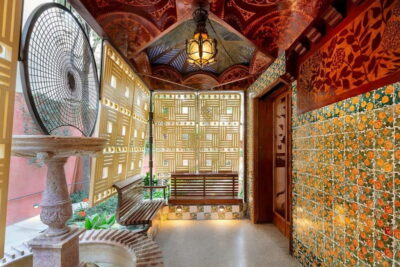
Gaudi’s Casa Vicens Skip-the-Line Entrance Ticket
Read our review →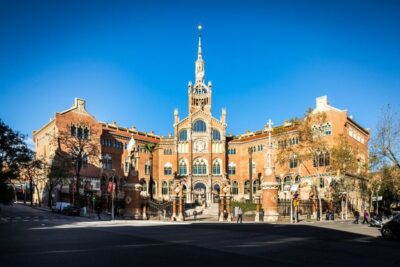

Sagrada Familia, Modernism, and Old Town Tour
Read our review →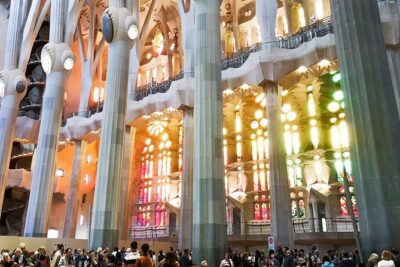
Sagrada Familia & Gaudi Tour Private or Small Group with Tickets
Read our review →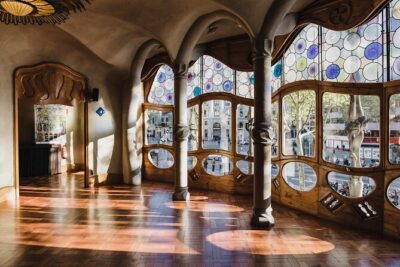
Complete Gaudi Tour: Casa Batllo, Park Guell & Sagrada Familia
Read our review →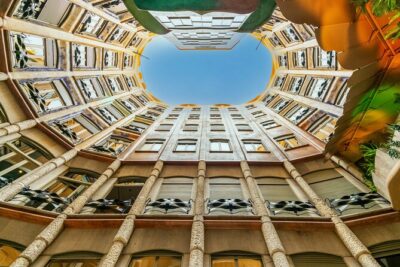
La Pedrera-Casa Mila Admission Ticket with Audioguide
Read our review →Browse the lists this tour appears in