
Reviewed · GAUDI TOURS
Barcelona: Discover Gaudi Architectural Guided Tour
Barcelona’s Gaudí story makes far more sense when you look beyond the famous curves and colored tiles. On this three-hour morning walk, a practicing architect connects Gaudí’s buildings with urban planning, engineering, politics, and the Modernisme period that shaped central Barcelona.
I like the way the tour places Casa Batlló, Casa Milà, and Casa Calvet alongside work by Domènech i Montaner and Puig i Cadafalch. I also like the look at hidden courtyards turned into public gardens, an urban idea you could easily miss on your own. The main limitation is clear: you do not go inside any of the buildings, so this is a lesson in exterior design and city planning rather than an interior visit.
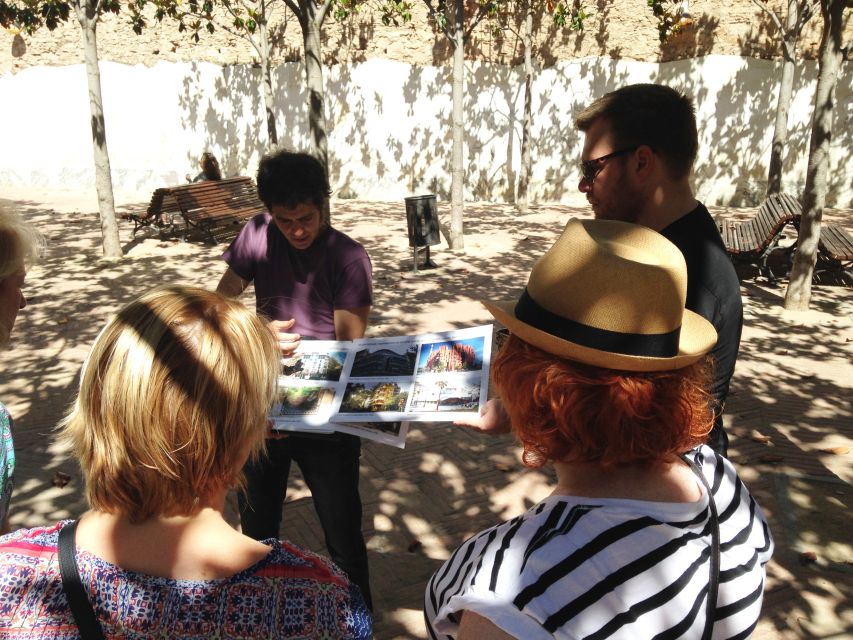
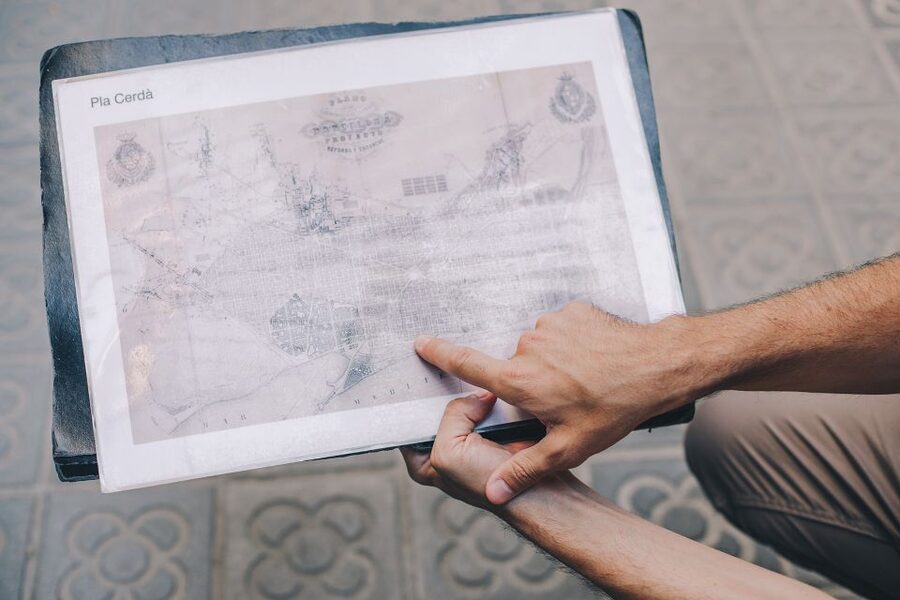
The guides bring different strengths. Pia has led many highly praised walks, while Daniela and Tomasz have also been singled out for their clear, energetic teaching. One useful detail: Tomasz arrived with visual aids, and Pia has used her own plans and images to explain Barcelona’s layout.
In This Review
- Key points to know before you book
- Why this Gaudí walk is different from a standard sightseeing tour
- Meeting at Passeig de Gràcia and Gran Via
- Comparing Casa Lleó Morera and Casa Amatller
- Reading Casa Batlló from the pavement
- Casa Milà and Gaudí’s engineering ideas
- Casa Calvet and the earlier Gaudí
- Courtyards, public gardens, and Barcelona’s urban ideas
- Gaudí, Surrealism, and the road to the Sagrada Família
- What the architect guides add
- Pace, accessibility, and what to bring
- Is $53 a fair price?
- Who should book this walk?
- Should you book Barcelona’s Gaudí Architectural Guided Tour?
- FAQ
- How long does the Gaudí architectural tour last?
- What language is the tour offered in?
- Where does the tour meet?
- Do I go inside the buildings?
- Which Gaudí buildings are included?
- Which other architectural sights are included?
- Is the tour wheelchair accessible?
- What happens if the weather is bad?
- Can I cancel the booking?
Key points to know before you book
- Gaudí’s three residential landmarks: Study Casa Calvet, Casa Batlló, and Casa Milà as stages in the architect’s changing ideas.
- Architecture beyond Gaudí: See Casa Lleó Morera, Casa Amatller, the Antoni Tàpies Foundation, and other Modernisme buildings.
- A city-planning lesson: Learn how Barcelona’s streets, blocks, courtyards, and public spaces developed.
- Architect-led commentary: Guides are practicing architects, and some also teach architecture or work as critics.
- Exterior viewing only: You will not enter the buildings, so pair this walk with a separate interior visit if that matters to you.
- Practical format: The English tour lasts three hours, costs $53 per person, and is wheelchair accessible.
Why this Gaudí walk is different from a standard sightseeing tour

Many Barcelona walks point at Gaudí’s buildings and repeat a few familiar facts. This one aims to teach you how to read the buildings. You look at structure, materials, ornament, social conditions, and the way the city around each building influenced its design.
That distinction matters. Gaudí was not simply making strange-looking houses. His work developed through changes in technology, patronage, religion, and his own changing aims. The guide traces his path from early social concerns toward a more spiritual vision, ending with his reputation as the last great cathedral builder.
You also get a wider view of Barcelona’s Modernisme period. That means Gaudí is not treated as an isolated genius. His buildings are set beside the work of other Catalan architects, allowing you to compare their ideas rather than treating every decorative façade as Gaudí’s work.
I find this approach useful early in a Barcelona stay. Once you understand the city’s architectural language, you can look at buildings in other neighborhoods with more confidence. Several past participants found that the walk helped them appreciate architecture they encountered later, even outside the tour route.
More Gaudí days in Barcelona:
- Barcelona: Park Güell and Gaudí House Museum Entry Ticket
★ 4.5 · 6,326 reviews - Barcelona: La Pedrera Night Experience
★ 4.4 · 4,633 reviews - Barcelona: Gaudi’s Casa Vicens Skip-the-Line Entrance Ticket
★ 4.7 · 3,449 reviews
Meeting at Passeig de Gràcia and Gran Via
The meeting point is beside the sculpture by Joan Brossa, in front of the Comedia Cinema at the intersection of Passeig de Gràcia and Gran Via. This is a central location, but give yourself enough time to identify the sculpture and cinema rather than arriving at the last moment.
The tour begins in one of Barcelona’s most useful settings for understanding urban change. Passeig de Gràcia is not just a grand avenue lined with expensive shops. It helps explain how Barcelona expanded, how the Eixample was planned, and why wealthy families commissioned such elaborate homes.
Your guide uses the street itself as a classroom. Expect discussion of the beginnings of modern urbanism, the way blocks were arranged, and the social goals behind Barcelona’s expansion. The point is not only to admire façades. It is to see the city as a planned response to growth and public health concerns.
This opening context gives the rest of the walk a clear purpose. You begin to understand why grand houses appear side by side, why some courtyards matter, and how architecture reflected both private wealth and public ambitions.
Comparing Casa Lleó Morera and Casa Amatller
One of the strongest parts of the route is the comparison between several major Modernisme façades. Casa Lleó Morera, designed by Domènech i Montaner, and Casa Amatller, designed by Puig i Cadafalch, help show that Barcelona’s architectural flowering was not the work of one person.
The Antoni Tàpies Foundation adds another layer to the walk. It gives you a chance to consider how architectural spaces can be adapted, preserved, or presented to later generations. The tour’s interest is not limited to famous Gaudí details. It also asks you to notice the relationship between a building’s purpose, surface, structure, and place in the city.
Casa Amatller is especially useful for comparison because its façade has a very different character from Gaudí’s work. Your guide can point out how architects used ornament, historic references, and new construction ideas in their own ways. You do not need a background in architecture to follow this. A good guide explains what to look for before asking you to compare.
The strongest guides also adjust their level. Pia has been praised for explaining technical points without letting the walk become a long academic lecture. At the same time, she can answer more specialized questions for people who already care about architecture.
Reading Casa Batlló from the pavement
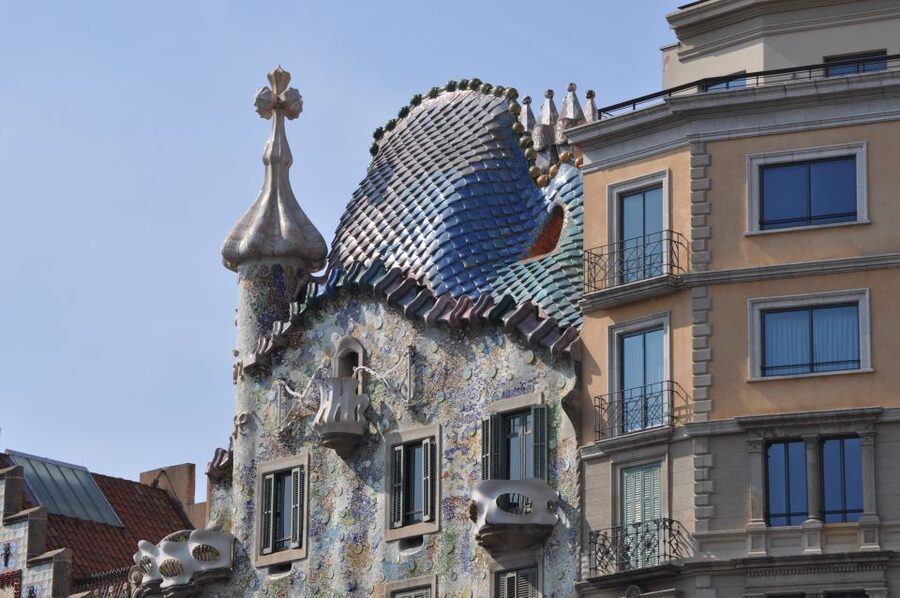
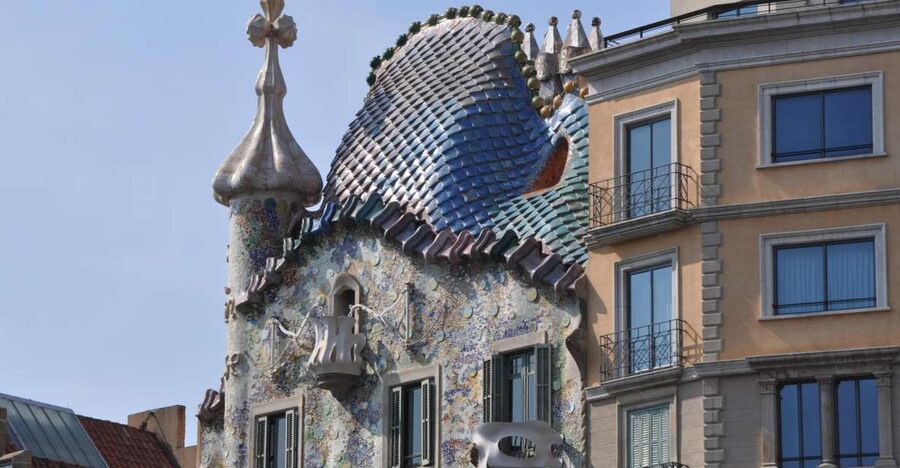
Casa Batlló is one of the tour’s headline sights, and it rewards careful exterior study. Its famous façade can easily become a quick photograph, especially along busy Passeig de Gràcia. An architect’s explanation slows you down and gives meaning to the shapes, colors, windows, balconies, and surface effects.
The valuable question is not simply what the building looks like. It is how Gaudí imagined the project and how visual power can make a building seem almost alive. The guide also places Casa Batlló within Gaudí’s career, helping you see it as a turning point rather than a stand-alone oddity.
Because you remain outside, the visit cannot replace entry to Casa Batlló. You will miss the interior rooms and the chance to study Gaudí’s spaces from within. Still, the exterior lesson can make a later paid visit more rewarding, since you already have a framework for noticing the design choices.
This is a good example of the tour’s overall value. It does not try to give you every possible Gaudí experience in one morning. Instead, it gives you tools that can improve the way you see Barcelona for the rest of your trip.
A few more Barcelona options worth an hour of your trip
- Barcelona: Park Güell Admission Ticket
★ 4.4 · 76,534 reviews - Barcelona: Casa Batlló Entry with Self-Audioguide Tour
★ 4.7 · 25,359 reviews - Barcelona: 24 or 48-Hour Hop-On Hop-Off Bus Tour
★ 4.4 · 20,872 reviews - Barcelona: Park Guell Guided Tour with Skip The Line Entry
★ 4.7 · 17,563 reviews
Casa Milà and Gaudí’s engineering ideas
Casa Milà, often called La Pedrera, brings the discussion toward structure and engineering. Its rolling stone façade and sculptural roofline are easy to admire, but the guide also explains that Gaudí’s buildings were technical achievements, not decoration wrapped around ordinary construction.
That engineering angle has been one of the most praised features of the guiding. Pia, in particular, has explained Gaudí’s technological innovations in a way that connects the practical and the beautiful. You learn to consider how a building carries weight, handles light, and organizes movement, rather than seeing only the finished surface.
Casa Milà also helps trace Gaudí’s growing freedom as a designer. By this point, his work pushes well beyond conventional residential architecture. The guide links that development to his larger artistic and spiritual direction.
Again, the tour stops outside. If you want the courtyards, apartments, roof sculptures, and interior displays, you need a separate admission. That is not a flaw if you book this as an architectural overview, but it is important to know before paying for your Barcelona sightseeing plans.
Casa Calvet and the earlier Gaudí
Casa Calvet gives you a chance to consider an earlier stage of Gaudí’s career. It is less immediately theatrical than Casa Batlló or Casa Milà, which makes it useful as a point of comparison.
Here the guide can show how Gaudí worked within a more conventional residential setting while already developing distinctive details. You see how an architect’s style does not appear fully formed all at once. It grows through commissions, limits, experiments, and changing relationships with patrons.
The walk also places Gaudí’s professional life in a larger story. It covers his first architectural steps with the Sagrada Família, his last commission from Eusebi Güell, and even a project connected with Manhattan. These details broaden the picture of Gaudí beyond the few buildings most people recognize.
For me, this career timeline is one of the best reasons to take the tour. Without it, the buildings can seem like a string of unrelated marvels. With it, you can follow the movement from practical commissions toward the total artistic and spiritual vision of his later years.
Courtyards, public gardens, and Barcelona’s urban ideas
The hidden courtyards are a welcome change from the grand avenues. They show how Barcelona’s blocks were not only collections of private apartments. Their inner spaces also raised questions about light, air, access, and public life.
The tour explains how some courtyards became public gardens. That small detail connects architectural history with daily life. It also brings the discussion back to the quality of a city, not just the fame of its buildings.
This part may be especially useful if you care about urban design. The guides can discuss how planning rules and social ideas shaped the city’s layout, and how later changes aimed to improve quality of life. One past participant valued the way the guide connected architecture with social, political, and environmental questions while keeping the discussion focused.
Do not expect a quiet garden tour. These spaces are part of a larger walking route, and the main emphasis remains architecture. But they provide visual relief and a more human scale after the grand façades of Passeig de Gràcia.
Gaudí, Surrealism, and the road to the Sagrada Família
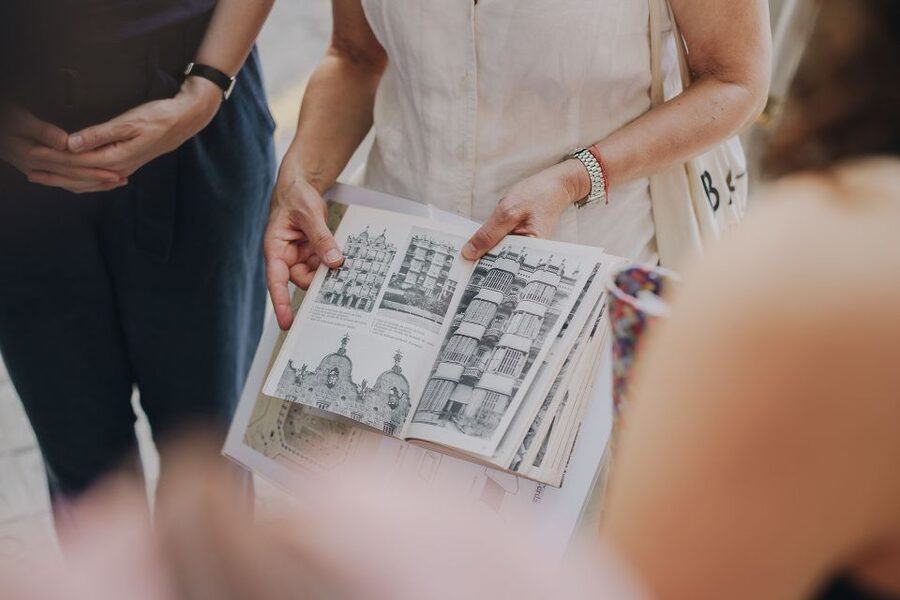
The walk’s larger story is Gaudí’s visual power. His forms later inspired Surrealists, but the guide does not leave the subject at strange shapes and dreamlike decoration. You explore how his imagination grew from structural experiments, religious ideas, and an intense concern with the whole building.
The final stage of Gaudí’s career moves toward the Sagrada Família and the image of Gaudí as a cathedral builder. The tour does not take you inside the basilica as part of this experience, but it explains the direction of his work and the importance of the project in his life.
This context is helpful if you plan to visit the Sagrada Família separately. You will arrive with questions about how Gaudí’s architecture changed over time, how his spiritual goals affected the design, and why the building feels so different from a conventional church.
The discussion can also make Gaudí less of a cartoon character. He was not merely a designer of whimsical houses. He was an architect wrestling with structure, faith, patrons, urban life, and the limits of his period’s technology.
What the architect guides add
The guides are practicing architects, and most are also professors of architecture or critics. That background changes the tone of the walk. You get more than memorized dates, but the experience still remains accessible to people who have never studied architecture.
Pia has received especially strong praise for her clarity, visual aids, and ability to connect Barcelona’s urban layout with its buildings. Daniela has been described as passionate and highly capable, while Tomasz has used visual material to support his explanations and handled a large group with energy.
The exact guide will depend on the date you choose, so book this for the architectural approach rather than for a guaranteed individual. The common strength is the professional perspective. You can ask a basic question about a façade or a more technical question about structure and receive an informed answer.
The best guides also read the group. One account describes a guide handling political and environmental questions without allowing the walk to turn into a personal debate. That balance matters on a three-hour tour. You want room for questions, but you also want to keep moving and see the planned sights.
Pace, accessibility, and what to bring
The entire tour is wheelchair accessible. That is important for a walking route through central Barcelona, though you should still dress for the weather and expect to spend the full three hours outdoors.
Barcelona’s weather is often pleasant, but conditions can change. Bring clothing suitable for the forecast, since tours are cancelled only when weather creates a safety problem. Comfortable walking clothes make sense even on a mild day.
The tour is offered in English and has a live guide. Starting times vary, so check availability when booking. A morning schedule works well because you can use the afternoon for a separate interior visit, a museum, or a slower look at the neighborhoods discussed during the walk.
At the end, you receive an architectural city guide prepared by the local team. It includes suggestions for places to have a drink and additional architecture to see. I would keep it handy, since the best use of this tour is often continuing the lesson on your own.
Is $53 a fair price?
At $53 per person, this is not the cheapest way to see Barcelona’s façades. You are paying for three hours with an architect rather than for entry tickets, transportation, or a large sightseeing package.
The value depends on your interests. If you only want quick photographs of Casa Batlló and Casa Milà, the price may feel high, especially since you do not enter the buildings. If you want to understand why these buildings look the way they do, how Barcelona’s planning shaped them, and how Gaudí fit into a wider movement, the price is easier to justify.
I see it as a strong orientation tour for an architecture-minded visit. It can also save you from wandering past important buildings without recognizing them. The guidebook at the end adds practical value, especially if you want more architecture suggestions after the walk.
The flexible booking terms help if your schedule is unsettled. You can reserve now and pay later, and cancellation is available up to 24 hours before the tour for a full refund.
Who should book this walk?
I would choose this tour if you want:
- A clear introduction to Gaudí’s career and ideas
- Architecture explained by a practicing professional
- More than Gaudí, including Modernisme and urban planning
- A wheelchair-accessible walking experience
- A useful morning activity before visiting interiors on your own
- Context that will improve the rest of your Barcelona sightseeing
I would choose something else if your main goal is entering Casa Batlló, Casa Milà, or other buildings. This experience stays outside, and it does not include admission to the Sagrada Família or any other interior.
Should you book Barcelona’s Gaudí Architectural Guided Tour?
Book it if you want Barcelona’s architecture to make sense, not just look beautiful. The combination of Gaudí, his fellow Modernisme architects, city planning, engineering, and public courtyards gives you a sharper way to see the city.
The strongest reason to go is the guide’s professional viewpoint, with Pia, Daniela, and Tomasz among the instructors who have brought the subject to life for past groups. The strongest reason to hesitate is the exterior-only format.
For $53 and three hours, I think it is a good choice for curious visitors, architecture fans, and anyone planning several Gaudí stops. Pair it with separate interior tickets, and the two experiences complement each other well.
FAQ
How long does the Gaudí architectural tour last?
The tour lasts three hours.
What language is the tour offered in?
The live guided tour is offered in English.
Where does the tour meet?
Meet beside the Joan Brossa sculpture in front of the Comedia Cinema, at the intersection of Passeig de Gràcia and Gran Via.
Do I go inside the buildings?
No. The tour visits the buildings from the outside, and entry tickets are not part of the experience.
Which Gaudí buildings are included?
The route includes Casa Calvet, Casa Batlló, and Casa Milà.
Which other architectural sights are included?
You can see the Antoni Tàpies Foundation, Casa Lleó Morera by Domènech i Montaner, Casa Amatller by Puig i Cadafalch, and hidden courtyards that became public gardens.
Is the tour wheelchair accessible?
Yes. The entire tour is wheelchair accessible.
What happens if the weather is bad?
Bring clothing suitable for all weather. The tour is cancelled only when conditions create a safety threat.
Can I cancel the booking?
Yes. You can cancel up to 24 hours in advance for a full refund. You can also reserve now and pay later.
Just added around Barcelona
- GoCar Full Day Tour★ 4.0 · 6 reviews
- Sagrada Familia and Barcelona Highlights: Private Guided 4-Hour Driving Tour★ 5.0 · 6 reviews
- Barcelona: Highlights & Gems Private Tour with Tapa & Drink★ 3.9 · 6 reviews
- Gothic Quarter and Born District: Photographic Workshop★ 5.0 · 6 reviews
- Gobbi Yacht Rental in Barcelona 9 Pax 2/4/8hs★ 5.0 · 6 reviews
- Private Sailboat Ride at Sunset from Sitges★ 5.0 · 6 reviews
- Barcelona: Gothic Quarter & La Sagrada Familia Private Tour★ 4.9 · 6 reviews
- Barcelona: Private Tour of Casa Batllo with Reserved Access★ 3.5 · 6 reviews
Gaudi Tours, compared.
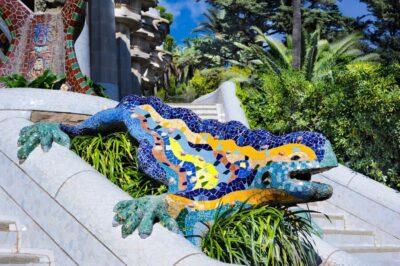
Park Güell and Gaudí House Museum Entry Ticket
Read our review →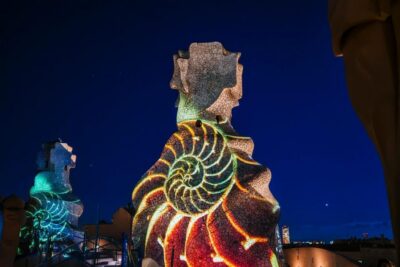
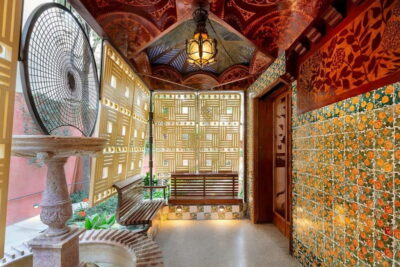
Gaudi’s Casa Vicens Skip-the-Line Entrance Ticket
Read our review →

Sagrada Familia, Modernism, and Old Town Tour
Read our review →
Sagrada Familia & Gaudi Tour Private or Small Group with Tickets
Read our review →
Complete Gaudi Tour: Casa Batllo, Park Guell & Sagrada Familia
Read our review →
La Pedrera-Casa Mila Admission Ticket with Audioguide
Read our review →Browse the lists this tour appears in