
Reviewed · HISTORICAL TOURS
Barcelona El Raval Dark History Walking Tour
Barcelona El Raval Dark History Walking Tour takes you beyond Gaudí and the grand boulevards into a neighborhood shaped by poverty, crime, religion, medicine, industry, art, and nightlife. The stories include the foundling wheel for abandoned babies, the so-called Vampire of the Raval, grim hospital practices, and the district once known for its Chinese clubs.
I like the small maximum of 15 people, which gives the guide room to answer questions and keep the walk conversational. I also like the route itself: it links churches, old medical buildings, social history, and graffiti instead of treating El Raval as a collection of spooky tales.
The main thing to consider is the tone. This is a serious look at murder, abandoned children, autopsies, and hard urban life, so it may not suit anyone seeking a light sightseeing stroll. The walk also ends away from the starting point, at the Three Chimneys Gardens, so plan your next stop from there.
In This Review
- Key points to know before you book
- Why El Raval tells a different Barcelona story
- Starting at Sant Pere Nolasc Mercedaris
- Carrer de Joaquín Costa and the Vampire of the Raval
- The former Santa Creu hospital and medical secrets
- Sant Pau del Camp and a monastery’s violent past
- Avenida del Paralelo and the old Chinese district
- Finishing at the Three Chimneys Gardens
- What the two-hour format feels like
- Is $33.42 a fair price?
- Who should take this Raval walk?
- Booking advice and the final call
- FAQ
- How long is the Barcelona El Raval Dark History Walking Tour?
- Where does the tour start?
- Where does the tour end?
- What places are included on the route?
- How many people can join the tour?
- What is included in the price?
Key points to know before you book
- A six-stop route across El Raval: The walk runs from Plaça de Castella to Plaça de Les Tres Xemeneies, crossing much of the district in about two hours.
- Dark stories with social context: Crime is only one part of the tour, which also covers hospitals, religious institutions, industrial work, nightlife, and street art.
- Small-group format: No more than 15 people can join, a useful size for hearing the guide clearly and asking questions.
- Experienced local guides: Eoghan is praised for his storytelling and city recommendations, while Zeynep, Callum, Andres, and Cal have also led highly rated walks.
- Good for a first look at Raval: The route helps you understand a part of Barcelona that many first-time visitors skip.
- Free cancellation until 24 hours before departure: Changes or cancellations made later are not eligible for a refund.
Why El Raval tells a different Barcelona story
El Raval is not the Barcelona of postcard balconies and polished avenues. It is an old inner-city neighborhood where religious charities, hospitals, factories, theaters, bars, immigrant communities, and working-class homes grew close together. That mixture gives this walk its value.
The title promises darkness, and the tour delivers it. You hear about violent crimes, unwanted infants, autopsies, a notorious female criminal known as the Vampire of the Raval, and the rough nightlife around Avenida del Paralelo. But the best part is the way these stories connect to the city around them.
I would not book this as a substitute for Barcelona’s major sights. You will not visit the Sagrada Família or walk through a Gaudí interior. Instead, you get a local-history lesson that explains how Barcelona developed outside its grand tourist image.
Several guides have led this experience, including Eoghan, Zeynep, Callum, Andres, and Cal. The strongest comments focus on the guides’ warmth, humor, clear explanations, and ability to make a small group feel at ease. Eoghan in particular is noted for strong storytelling, enthusiasm for Raval, and useful suggestions for food and other things to do.
A few more Barcelona options worth an hour of your trip
- Barcelona: Tapas Walking Tour with Food, Wine, and History
★ 4.8 · 4,261 reviews - Barcelona Tapas Walking Tour: Food, Wine & History
★ 4.5 · 1,928 reviews - Barcelona: 2.5-Hour Bike or E-Bike Historical Tour
★ 4.5 · 1,262 reviews
Starting at Sant Pere Nolasc Mercedaris
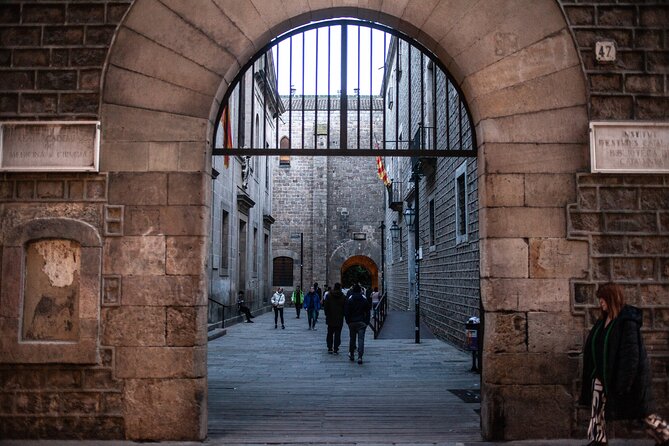
The meeting point is the Parish of Sant Pere Nolasc Mercedaris at Plaça de Castella, 6. This places you near the edge of the old city, within reach of public transportation and close to the first stories of the walk.
Your guide begins with the Fundació Privada Casa de Misericòrdia de Barcelona. The building is connected with Barcelona’s foundling wheel, a discreet system where parents could leave unwanted infants without direct contact. The subject is difficult, but it opens an important window onto poverty, charity, family life, and the limits of social support in earlier Barcelona.
You spend about 20 minutes here, and there is no admission fee. Do not expect a major museum visit or a long indoor stop. The value comes from learning to notice a feature that can be easy to pass without understanding its purpose.
This is a good example of the tour’s method. A doorway or old institution becomes a starting point for a larger story. You are not just looking at façades. You are learning what happened behind them and who depended on them.
Carrer de Joaquín Costa and the Vampire of the Raval
The next stop is Carrer de Joaquín Costa, a street now associated with cafés, shops, and the district’s bohemian side. Here the guide turns to one of Raval’s most infamous figures, the woman remembered as the Vampire of the Raval and often compared with London’s Jack the Ripper.
The story is meant to unsettle you, but it also shows how the tour uses crime to explain place. The street is not presented as a stage set for a horror story. Instead, you hear about the people, conditions, and reputation that helped shape the area’s darker image.
The guide’s delivery matters a great deal at this point. A flat recital of murders would become grim very quickly. A good storyteller gives the facts enough weight while keeping the group engaged, and the strongest feedback about Eoghan highlights exactly that mix of humor, passion, and clear storytelling.
You spend roughly 20 minutes here. Since the stop is on a public street, the experience depends on listening rather than entering a special attraction. Keep your attention on the guide and your surroundings, especially if the street is busy.
The former Santa Creu hospital and medical secrets

At the Royal Academy of Medicine of Catalonia, you encounter the former Hospital de la Santa Creu. The hospital is tied to Barcelona’s medical past and to autopsies that gave the building an especially grim reputation.
This stop broadens the tour beyond sensational crime. Medicine in earlier centuries was not clean, quiet, or private in the modern sense. Hospitals served many functions, and the treatment of bodies after death could be a public and unsettling part of medical study.
You spend about 20 minutes here, with no admission included or required as part of the walk. The guide gives you the setting and the story rather than taking you on an extended museum tour.
I like this section because it gives the dark theme some range. The tour moves from individual crime to institutions that reveal how a whole city handled illness, death, charity, and science. If you are interested in urban history, this may be one of the most useful stops.
More walking tours in Barcelona:
- Barcelona Tapas and Wine Experience Small-Group Walking Tour
★ 5.0 · 5,804 reviews - Barcelona: Tapas Food Crawl Walking Tour with Tastings
★ 4.9 · 1,798 reviews - Barcelona: Gothic Quarter Ghosts and Legends Walking Tour
★ 4.7 · 1,443 reviews - Barcelona Helicopter, Sailboat & Old Town Private Walking Tour
★ 5.0 · 1,395 reviews
Sant Pau del Camp and a monastery’s violent past
Sant Pau del Camp is presented as Barcelona’s oldest church. Its Romanesque character and former monastery role make it one of the route’s most striking religious sites, but the story here is not simply about architecture.
The guide discusses the monastery’s violent past, reminding you that religious buildings were also tied to land, power, conflict, and protection. A quiet church can carry memories of upheaval that are not obvious from its exterior.
The stop lasts around 20 minutes and is free. The information supplied for the tour does not promise a special interior visit, so you should think of this as a guided look at the church and its history rather than a guaranteed admission experience.
This part also gives the walk a welcome change of pace. After stories of crime and autopsies, the church offers a calmer setting, though the history remains severe. It is a useful reminder that Raval’s past cannot be reduced to nightlife and criminals.
Avenida del Paralelo and the old Chinese district
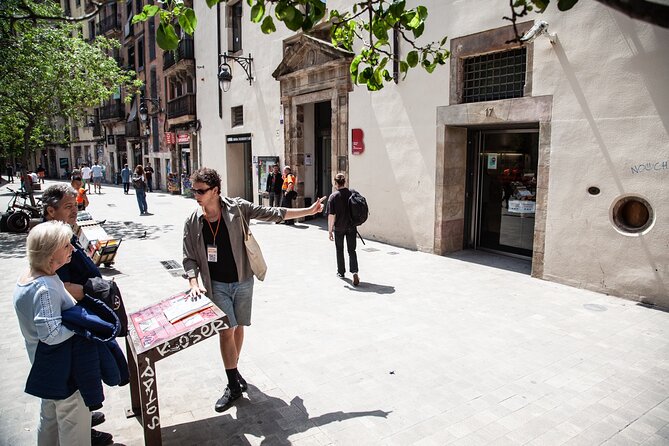
The route then heads toward Avenida del Paralelo, once a major center of Barcelona entertainment. The stop focuses on the Chinese district and the area’s seedier 20th-century nightlife.
The name can be confusing if you expect a modern neighborhood officially marked as Barcelona’s Chinatown. Here, the point is the older social and nightlife history of the area, including the clubs and venues that gave Paralelo its rough reputation.
This section helps explain why El Raval has long attracted artists, performers, newcomers, workers, and people living outside respectable society. The district’s identity was shaped not only by poverty but also by entertainment and freedom from polite convention.
Again, you spend about 20 minutes outdoors, with no admission fee. The route is especially useful if you want to understand the relationship between Raval and the nearby theater district. You also hear about places that are hard to find through standard sightseeing routes.
The guide’s recommendations can be handy here and elsewhere. Eoghan is specifically praised for suggesting places to eat and things to do, while Callum is noted for offering practical neighborhood advice. Ask questions during the walk if you want to turn the tour into a starting point for the rest of your evening.
Finishing at the Three Chimneys Gardens
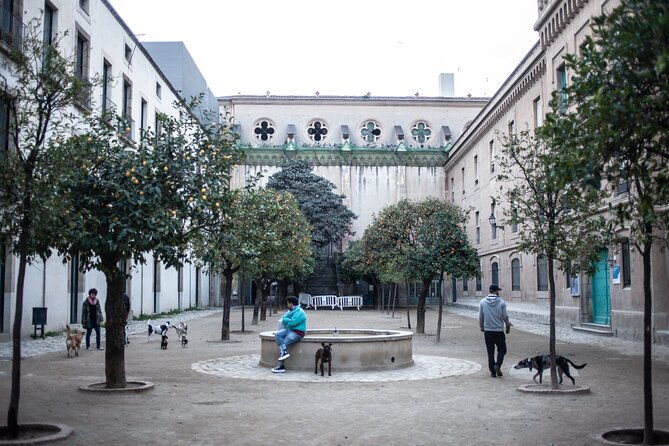
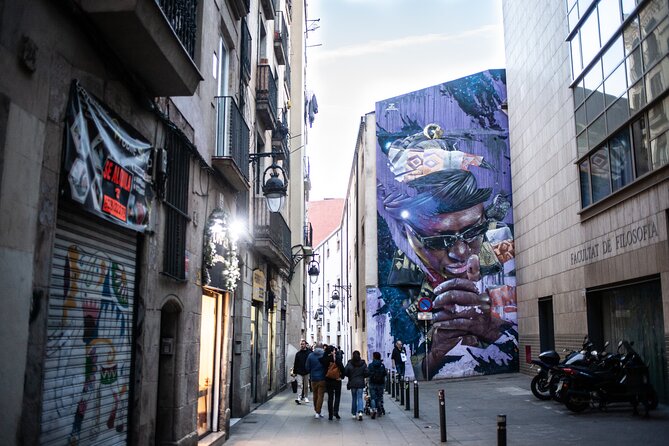
The final stop is the Jardins de les Tres Xemeneies, or Three Chimneys Gardens, on Avenida del Paralelo. The site recalls Barcelona’s industrial past and now serves as an important public space for graffiti and street art.
This is a fitting ending. The route begins with old institutions and disturbing stories, then finishes in a place where contemporary artists use walls and public space to make their mark. The change shows that Raval and its edges are not frozen in their darker past.
You spend about 20 minutes here, and the tour ends at Plaça de Les Tres Xemeneies, at Avenida del Paralelo, 49. That endpoint is worth noting when planning your day. You do not return to the starting point, so arrange your next activity from the Montjuïc or Paralelo side of the city.
For art lovers, this may be the most visually rewarding stop. The garden is described as a strong place for graffiti, but the tour remains focused on history and interpretation rather than a formal art workshop. It is a good place to continue exploring on your own after the guide departs.
What the two-hour format feels like
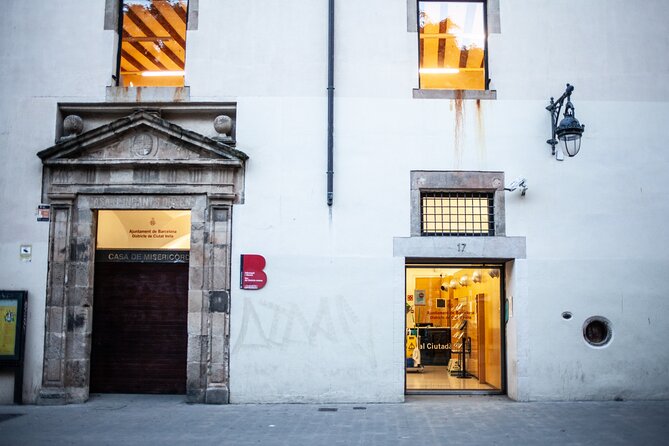
The route divides its six stops into roughly 20-minute sections, giving the walk a clear rhythm. You move, pause for a story, look at the setting, and continue. That structure is helpful in a neighborhood where it would be easy to lose the thread between old buildings and modern businesses.
Two hours is long enough to establish a sense of place without taking over your day. It also means the guide cannot cover every corner of Raval or develop every story at great length. If you want a full architectural study, a detailed museum visit, or a long discussion of Barcelona’s civil history, this is not that kind of tour.
The walking itself is central. Wear comfortable shoes, and remember that the route includes public streets and several changes of location. The tour information says most people can participate, and it operates near public transportation. Service animals are allowed.
A mobile ticket keeps the practical side simple. Lunch is not included, so eat before the walk or plan a meal after it. Since the endpoint is the Three Chimneys Gardens, finishing there may work well if you want to continue toward Paralelo or nearby parts of Montjuïc.
Is $33.42 a fair price?
At $33.42 per person, the tour is not the cheapest way to walk through Raval. You could certainly pass these streets without paying anything. The question is what you would understand without a guide.
The price pays for an experienced local guide and for the research, organization, and storytelling that connect six very different places. Without that context, the foundling wheel is simply an obscure detail, the former hospital is just an old building, and the Three Chimneys Gardens are merely a good place for graffiti.
The small group improves the value. With a limit of 15 people, you have a better chance of hearing the explanations and asking questions than you would on a large city walk. The experience is also recommended by 99 percent of participants and carries a 4.9 rating from 70 reviews, strong figures that suggest reliable delivery, though your experience will still depend partly on the guide assigned that day.
I see the best value for a first or second visit to Barcelona. If you already know Raval well, the stories may still interest you, but the route will offer less discovery. If you have only one day in the city, use that day for Barcelona’s essential sights and choose this walk when you can spare two hours for a more unusual side of town.
Who should take this Raval walk?
I would recommend it to you if you enjoy:
- Crime stories handled with historical context
- Old churches and institutions that are easy to miss
- Neighborhood history rather than landmark collecting
- Small-group walks with time for questions
- Art, nightlife, social change, and urban culture
- A guide who can suggest places to eat and continue exploring
Families can take it, and one family described it as a particularly good shared experience. Still, the subjects are not gentle. Stories about abandoned infants, murder, autopsies, and violent history may be too heavy for young children or anyone who prefers cheerful sightseeing.
The tour also suits solo visitors and couples who want company without joining a huge group. The opening introductions help people get acquainted, according to the experience description given by participants, and guides such as Callum have made a point of keeping everyone involved.
You should be comfortable with a neighborhood that has a gritty reputation. The walk is designed to make Raval understandable, not to pretend every street is polished or tourist-friendly. Several guides have made visitors feel safe and welcome, but normal city awareness still makes sense in any busy urban district.
Booking advice and the final call
This experience is often booked about 21 days ahead, so reserve early if your Barcelona dates are fixed. You receive confirmation at booking, and free cancellation is available up to 24 hours before the start time. Later cancellations and changes are not accepted for a refund, and the tour requires a minimum number of participants, with an alternative date or full refund offered if it is canceled for that reason.
I would book this tour if you want Barcelona explained through its less comfortable stories. It is especially useful near the start of your visit, since the route can help you understand the city’s neighborhoods and give you ideas for food and later stops.
I would skip it if you want grand interiors, famous architecture, or a relaxed walk with no disturbing material. But if you are curious about the city behind the polished center, this two-hour route offers a sharp, memorable look at Raval, from charity and medicine to crime, nightlife, industry, and street art.
FAQ
How long is the Barcelona El Raval Dark History Walking Tour?
The tour lasts approximately two hours. The route includes six stops, with about 20 minutes at each location.
Where does the tour start?
It starts at Parròquia de Sant Pere Nolasc Mercedaris, Plaça de Castella, 6, in Barcelona’s Ciutat Vella district.
Where does the tour end?
The walk ends at Plaça de Les Tres Xemeneies, Avenida del Paralelo, 49, at the Jardins de les Tres Xemeneies.
What places are included on the route?
Stops include Casa de Misericòrdia de Barcelona, Carrer de Joaquín Costa, the Royal Academy of Medicine of Catalonia, Sant Pau del Camp, Avenida del Paralelo, and the Three Chimneys Gardens.
How many people can join the tour?
The group has a maximum of 15 participants.
What is included in the price?
The price includes an experienced local guide and a mobile ticket. Lunch is not included.
Just added around Barcelona
- GoCar Full Day Tour★ 4.0 · 6 reviews
- Sagrada Familia and Barcelona Highlights: Private Guided 4-Hour Driving Tour★ 5.0 · 6 reviews
- Barcelona: Highlights & Gems Private Tour with Tapa & Drink★ 3.9 · 6 reviews
- Gothic Quarter and Born District: Photographic Workshop★ 5.0 · 6 reviews
- Gobbi Yacht Rental in Barcelona 9 Pax 2/4/8hs★ 5.0 · 6 reviews
- Barcelona: Gothic Quarter & La Sagrada Familia Private Tour★ 4.9 · 6 reviews
- Private Sailboat Ride at Sunset from Sitges★ 5.0 · 6 reviews
- Barcelona: Private Tour of Casa Batllo with Reserved Access★ 3.5 · 6 reviews
Historical Tours, compared.

Tapas Walking Tour with Food, Wine, and History
Read our review →
Barcelona Tapas Walking Tour: Food, Wine & History
Read our review →
Barcelona Erotic Museum – Explore Art, History & Fun
Read our review →
Andorra Original History and Sightseeing Tour (Private, Pickup)
Read our review →
Tarragona and Sitges Small Group Tour – Roman History & Culture
Read our review →
Girona History and Legends Tour Small Group from Girona
Read our review →Browse the lists this tour appears in