
Reviewed · GAUDI TOURS
Barcelona & Gaudi. Regular Tour
Barcelona’s Modernist buildings are more than pretty façades. They reflect utopian ideas, bourgeois ambition, religious devotion, anarchism, and the city’s rapid growth. This three-hour walk, led by a practicing architect, gives you that wider story while focusing on Gaudí’s most famous works.
I like the small maximum of 20, which should make it easier to ask questions, and I like that the route includes Casa Calvet and Eixample courtyards, not just the usual postcard stops. The main drawback is simple: you do not go inside any building, so you’ll need separate tickets if you want to see La Pedrera or Casa Batlló from within.
In This Review
- Key points to know before booking
- Why this Barcelona architecture walk works
- Starting at the Monument al Llibre
- Casa Milà, La Pedrera, and Gaudí’s moving stone
- Casa Batlló and Barcelona’s most theatrical façade
- Casa Calvet and the less familiar Gaudí
- The Manzana de la Discordia and a friendly architectural rivalry
- Casa Lleó Morera and Domènech i Montaner
- Casa Amatller and Puig i Cadafalch
- The Antoni Tàpies Foundation as a later contrast
- Eixample courtyards and the city behind the façades
- What the architect guide adds
- Is $54.44 a fair price?
- Who should book this walk?
- Final call: book it for context, not entry tickets
- FAQ
- How long is the Barcelona and Gaudí tour?
- What time does the tour begin?
- Where does the tour start and finish?
- Is the tour offered in English?
- Do I enter Casa Milà, Casa Batlló, or the other buildings?
- How large is the tour group?
Key points to know before booking
- Architect-led perspective: The guide explains design choices, construction, and Modernist ideas from a professional point of view.
- A focused Gaudí route: Casa Milà, Casa Batlló, and Casa Calvet anchor the walk, with other major works along the way.
- More than Gaudí: You’ll also examine work by Domènech i Montaner, Puig i Cadafalch, and Antoni Tàpies.
- Small-group format: The maximum group size is 20, useful in busy central Barcelona.
- Exterior sightseeing only: The tour studies façades and urban settings, but entrance tickets are not part of the experience.
- Easy central meeting point: Begin at the Monument al Llibre on Gran Via de les Corts Catalanes at 10:30 a.m., then return there at the end.
Why this Barcelona architecture walk works
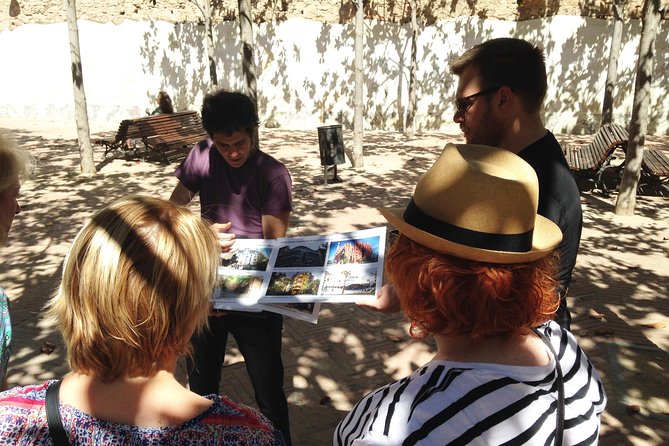
The strength of this experience is its point of view. Instead of treating Gaudí as a solitary genius who produced strange, colorful buildings, the tour places him within Barcelona’s Modernisme movement and the social forces that shaped the city.
That matters because the buildings make more sense when you know what was happening around them. Barcelona’s intellectual and business elite wanted homes that showed taste, wealth, and modern thinking. At the same time, the city was wrestling with utopian socialism, positivist materialism, religious feeling, anarchism, and political conflict.
You will hear how Gaudí’s work moved from social concerns toward a powerful religious vision. The route follows that shift, ending with the idea of Gaudí as the last great cathedral builder. It is a strong way to frame his career, particularly if you already know the bright colors and unusual shapes but want to understand the ideas behind them.
I also like the inclusion of the Spanish Civil War, beatification, and the changing meaning of Gaudí’s public image. These subjects can make an architecture walk feel less like a parade of façades and more like a study of Barcelona itself.
The English tour lasts about three hours. That is long enough to build a useful picture of Modernisme without taking over your entire day. You will be walking between central Eixample sites, so comfortable shoes and attention to the pavement are sensible, though the supplied information says most people can participate.
More Gaudí days in Barcelona:
- Barcelona: Park Güell and Gaudí House Museum Entry Ticket
★ 4.5 · 6,326 reviews - Barcelona: La Pedrera Night Experience
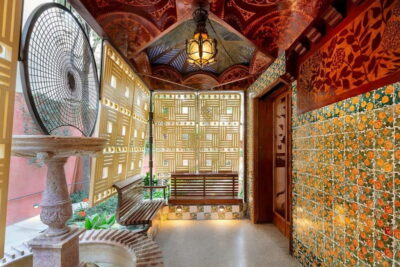
★ 4.4 · 4,633 reviews - Barcelona: Gaudi’s Casa Vicens Skip-the-Line Entrance Ticket
★ 4.7 · 3,449 reviews
Starting at the Monument al Llibre
The meeting point is the Monument al Llibre at Gran Via de les Corts Catalanes, 634, in the Eixample. The start time is 10:30 a.m., and the walk finishes back at the same location.
This is a practical place to begin because the Eixample is the natural setting for many of Barcelona’s best-known Modernist buildings. The district’s broad streets and carefully planned blocks give you a useful contrast with the older, tighter streets of the Gothic Quarter.
Arrive with enough time to identify the meeting point and settle in before the group leaves. Since the group can include up to 20 people, standing close to the guide will help when the pavement is crowded or traffic is noisy.
The route is best understood as a guided reading of the city. You are not simply moving from one ticketed attraction to the next. You are learning how to look at balconies, stonework, windows, rooflines, entrances, and the relationship between neighboring buildings.
Casa Milà, La Pedrera, and Gaudí’s moving stone
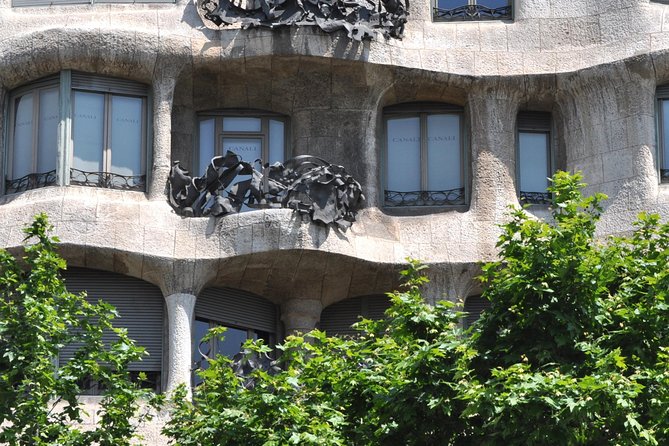
Casa Milà, usually called La Pedrera, is one of the walk’s central stops. Its rippling stone exterior and irregular balconies challenge the usual idea of what an apartment building should look like.
From the street, you can study the way the façade appears to move. The building does not offer the neat symmetry you might expect from a grand urban residence. Instead, its curves suggest a more natural and fluid design language.
An architect guide can help you notice details that are easy to miss when you are standing in front of a famous building with a camera in hand. You may hear how the building fits into Gaudí’s changing approach, and how its design connects with the larger story of his absorption in the divine.
The limitation is important here. This stop is an exterior explanation, not a visit to the rooftop, courtyards, or interior rooms. La Pedrera offers paid admission separately, so decide in advance if you want to return for the inside after the walk.
Casa Batlló and Barcelona’s most theatrical façade
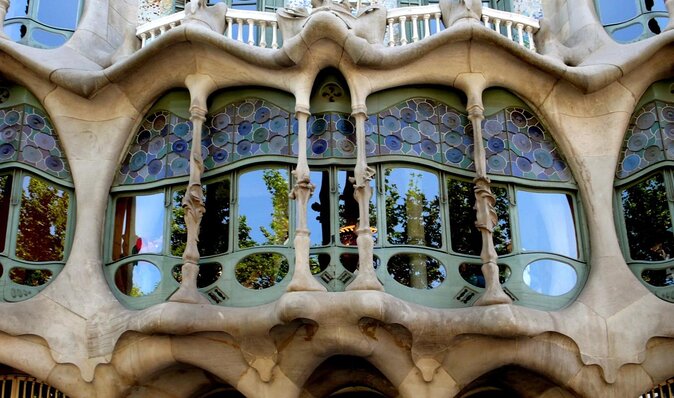
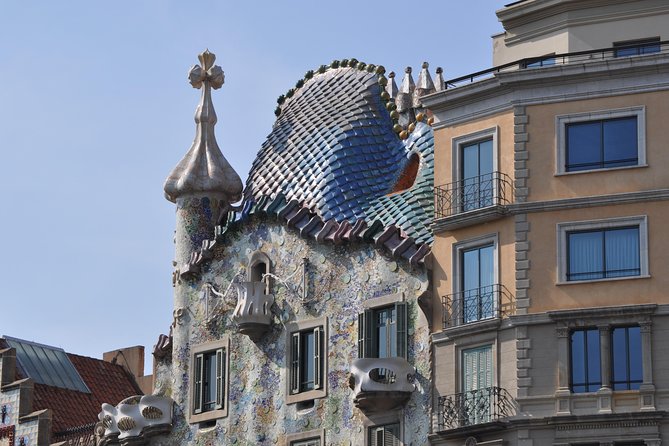
Casa Batlló is one of Barcelona’s most expressive Modernist façades. Its colors, curved surfaces, unusual windows, and skeletal details invite several readings, including natural forms and religious symbolism.
The tour gives you time to place Casa Batlló within the wider group of buildings along Passeig de Gràcia. That setting matters. You are not looking at Gaudí’s work in isolation, but alongside other ambitious residences commissioned by Barcelona’s prosperous elite.
Because the visit remains outside, the guide can focus on how the façade communicates with the street. You can examine the balconies, the surface treatment, the roofline, and the way Gaudí turned a private home into a public display of imagination.
Casa Batlló is also one of the busiest stops on this route. A group of 20 is not tiny, but it is more manageable than a large coach group. Stay close and expect pauses on a public sidewalk rather than a quiet gallery setting.
A few more Barcelona options worth an hour of your trip
- Barcelona: Park Güell Admission Ticket
★ 4.4 · 76,534 reviews - Barcelona: Casa Batlló Entry with Self-Audioguide Tour
★ 4.7 · 25,359 reviews - Barcelona: 24 or 48-Hour Hop-On Hop-Off Bus Tour
★ 4.4 · 20,872 reviews - Barcelona: Park Guell Guided Tour with Skip The Line Entry
★ 4.7 · 17,563 reviews
Casa Calvet and the less familiar Gaudí
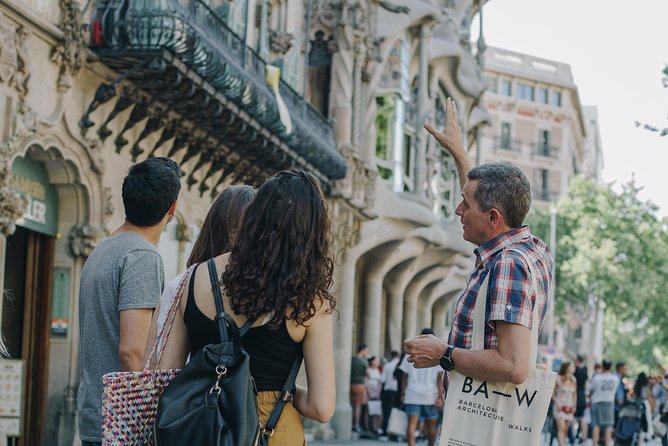
Casa Calvet is a useful counterpoint to La Pedrera and Casa Batlló. It is less immediately theatrical, which makes it valuable on a tour devoted to understanding Gaudí rather than simply collecting his most famous images.
Here, you can consider how Gaudí worked within a more conventional urban commission while still applying his own ideas to ornament, materials, and detail. The stop broadens your sense of his range.
I especially like that Casa Calvet is included. A route made only of La Pedrera and Casa Batlló would show Gaudí’s public image but not enough of his development. Casa Calvet helps connect the famous buildings with the stages between them.
Again, the emphasis is on the outside. If you want a full architectural study of the interior, this tour will not provide it. Its value is in the explanation and the comparison with the other buildings you see during the morning.
The Manzana de la Discordia and a friendly architectural rivalry
The Manzana de la Discordia, or Block of Discord, brings several Modernist architects into one memorable stretch of the Eixample. This is one of the most useful parts of the walk because it lets you compare styles without traveling across the city.
Casa Batlló is part of this group, but it shares the block with important work by other architects. The area helps explain how Modernisme was not a one-man show. Barcelona’s leading architects were working in the same period, responding to similar clients and city pressures in very different ways.
The comparison is particularly helpful for anyone who tends to label every ornate Barcelona building as Gaudí. You will see why Domènech i Montaner and Puig i Cadafalch deserve attention in their own right.
The name of the block adds a little drama, but the real value is visual. You can look from one façade to the next and compare balconies, decoration, structure, and the architects’ attitudes toward history and nature.
Casa Lleó Morera and Domènech i Montaner
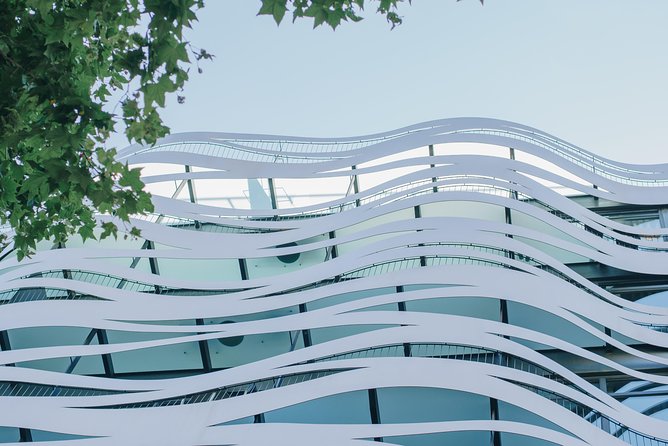
Casa Lleó Morera, designed by Domènech i Montaner, is included in the broader Modernism route. It gives the tour a needed balance, placing Gaudí beside another major figure of the movement.
Domènech i Montaner’s approach helps show that Modernisme could be highly decorative while still being shaped by structure, craft, history, and civic identity. A practicing architect can point out differences that a general city walk might pass over quickly.
You should expect to view the building from the street rather than enter it. The stop works best as part of the comparison around the Manzana de la Discordia, not as a standalone attraction.
Casa Amatller and Puig i Cadafalch

Casa Amatller, by Puig i Cadafalch, adds another voice to the route. Its design helps explain the variety within Barcelona’s Modernist movement and the way architects adapted historic references for modern urban life.
This is where the tour’s social context becomes useful. These buildings were not detached works of art. They were homes and statements commissioned by a prosperous class eager to present itself as cultured, forward-looking, and connected to Barcelona’s identity.
You will not enter Casa Amatller on this tour. Still, its façade provides a strong lesson in how architects used ornament, symbols, and shape to make a residence speak to the street.
The Antoni Tàpies Foundation as a later contrast
The Antoni Tàpies Foundation appears on the route as a point of contrast with the earlier Modernist buildings. It helps connect Barcelona’s architectural story to a later period and reminds you that the city’s interest in art and unusual forms did not end with Gaudí’s generation.
This stop can be especially useful if you want more than a greatest-hits tour of nineteenth and early twentieth-century architecture. It places the older Modernist buildings within a longer artistic conversation.
The experience is still centered on architecture and exteriors, so do not treat this as a museum visit. If you want to see the foundation’s collections, you will need to arrange that separately.
Eixample courtyards and the city behind the façades
One of the most appealing details in the route is the inclusion of some less obvious Eixample courtyards. These spaces help you understand that Barcelona’s famous blocks were designed as more than rows of decorated street fronts.
Courtyards can reveal the difference between the public face of a building and the quieter space behind it. They also give the walk a change of pace. After several major façades, a courtyard helps you think about light, air, density, and how people actually lived in the Eixample.
The exact courtyards visited are not specified, so you should not expect a fixed list of interiors or guaranteed access to every private space. Their presence is best seen as an added feature of the route rather than the main reason to book.
What the architect guide adds
The guide is the key part of this experience. The route is led by practicing architects, so the explanations are intended to go beyond dates, names, and famous anecdotes.
Pia is singled out by name in the available feedback. If Pia leads your walk, expect a guide who brings humor, compassion, and strong enthusiasm to the subject. The praise for her combines precise information about Gaudí with an unusually warm manner, which can make a technical subject easier to follow.
A good architecture guide should help you see cause and effect. Why does a façade curve? Why does a client choose such elaborate decoration? How does a building reflect the politics and beliefs of its period? This tour is designed around those questions.
The guide also covers difficult and sometimes unexpected subjects, including anarchism, the Spanish Civil War, beatification, and the decline of Modernisme. That range gives the tour more substance than a simple introduction to Gaudí’s biography.
The small-group limit of 20 supports this format. You will not have a private lesson, but you should have a better chance to hear the explanation and ask something specific about a building.
Is $54.44 a fair price?
At $54.44 per person, this is not the cheapest way to see Barcelona’s architecture. You can walk along Passeig de Gràcia for free and photograph several façades on your own.
The price makes more sense if you want interpretation. You are paying for about three hours with an architect, a planned route, historical and social context, and a group capped at 20. Since the tour does not include entry tickets, its value depends on how much you want expert explanation rather than interior access.
I would consider it good value for a first visit if Gaudí and Modernisme are high on your list. It can also help you decide which buildings deserve separate admission later. If you already have a strong architecture background and prefer to explore independently, the cost may feel harder to justify.
The experience is offered in English and is booked an average of 41 days ahead. That booking pattern suggests you should not leave it until the last moment if the 10:30 a.m. schedule fits your plans.
Who should book this walk?
I would recommend it to you if:
- You want to understand Barcelona’s architecture in social and political context.
- You enjoy asking why a building looks the way it does.
- You want to compare Gaudí with Domènech i Montaner and Puig i Cadafalch.
- You prefer a small walking group to a large city tour.
- You plan to visit one or more buildings inside later and want help choosing.
- You are happy to spend three hours studying exteriors rather than entering attractions.
It may be less suitable if your main goal is to see interiors, climb La Pedrera’s roof, or spend a long time inside Casa Batlló. It is also not the right choice if you want a quick photo walk with little explanation.
Most people can participate, service animals are allowed, and the meeting point is near public transportation. The tour requires good weather and a minimum number of participants. If poor weather or low demand cancels it, you can choose another date or experience, or receive a full refund.
Final call: book it for context, not entry tickets
Book this Barcelona Architecture Walks experience if you want Gaudí to make more sense. The strongest features are the architect-led commentary, the comparison with other Modernist designers, the small group, and the willingness to discuss Barcelona’s social tensions alongside its beautiful buildings.
Skip it if you only want access to interiors, since none are included. For everyone else, $54.44 buys a focused morning that can turn a string of famous façades into a readable chapter of Barcelona’s past.
FAQ
How long is the Barcelona and Gaudí tour?
The tour lasts approximately three hours.
What time does the tour begin?
It begins at 10:30 a.m.
Where does the tour start and finish?
The meeting point is the Monument al Llibre at Gran Via de les Corts Catalanes, 634, in Barcelona’s Eixample. The tour ends back at the same meeting point.
Is the tour offered in English?
Yes. The experience is offered in English.
Do I enter Casa Milà, Casa Batlló, or the other buildings?
No. The tour examines the buildings from outside, and entry tickets are not included.
How large is the tour group?
The maximum group size is 20 participants.
Just added around Barcelona
- GoCar Full Day Tour★ 4.0 · 6 reviews
- Sagrada Familia and Barcelona Highlights: Private Guided 4-Hour Driving Tour★ 5.0 · 6 reviews
- Barcelona: Highlights & Gems Private Tour with Tapa & Drink★ 3.9 · 6 reviews
- Gothic Quarter and Born District: Photographic Workshop★ 5.0 · 6 reviews
- Gobbi Yacht Rental in Barcelona 9 Pax 2/4/8hs★ 5.0 · 6 reviews
- Barcelona: Gothic Quarter & La Sagrada Familia Private Tour★ 4.9 · 6 reviews
- Private Sailboat Ride at Sunset from Sitges★ 5.0 · 6 reviews
- Barcelona: Private Tour of Casa Batllo with Reserved Access★ 3.5 · 6 reviews
Gaudi Tours, compared.
Park Güell and Gaudí House Museum Entry Ticket
Read our review →
Gaudi’s Casa Vicens Skip-the-Line Entrance Ticket
Read our review →

Sagrada Familia, Modernism, and Old Town Tour
Read our review →
Sagrada Familia & Gaudi Tour Private or Small Group with Tickets
Read our review →
Complete Gaudi Tour: Casa Batllo, Park Guell & Sagrada Familia
Read our review →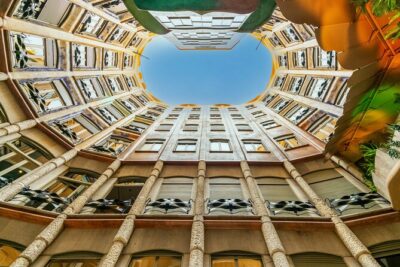
La Pedrera-Casa Mila Admission Ticket with Audioguide
Read our review →Browse the lists this tour appears in