
Reviewed · HISTORICAL TOURS
Barcelona Gracia Neighborhood Local Food & History Tour
Barcelona’s best food tours do more than move you from one plate to the next. This one uses Gracia’s family-run bakeries, bodegas, and market stalls to show you how Catalan food fits into daily life. You’ll begin near Casa Vicens, finish at Casa Milà, and eat enough for breakfast and lunch along the way.
I like the small group cap of 12, which gives guides such as Danny, Raquel, Irene, Norah, Ester, and Victoria room to explain dishes and answer questions. I also like the mix of Catalan staples with a Syrian pastry stop, since it shows how present-day Gracia has grown beyond one culinary tradition. The main drawback is that this is not a good choice for vegans, and vegetarians may find the meat-heavy menu limiting.
In This Review
- Key points at a glance
- Starting at Casa Vicens in Gracia
- A pastry shop with a 1916 family story
- Vermouth and old Barcelona at Cal Pep
- Plaça de la Virreina and a Syrian bakery
- Dried fruit, nuts, and the politics of Catalonia
- Mercat de la Llibertat and a glass of cava
- Catalan tapas lunch at Bar Roure
- Passeig de Gracia and the modernist finale
- What the price includes at $103.34
- Who will enjoy this Gracia food tour most
- Timing, meeting point, and practical planning
- Should you book it?
- FAQ
- How long does the Barcelona Gracia food tour last?
- Where does the tour start?
- Where does the tour end?
- How much food and drink is included?
- Can the tour accommodate dietary restrictions?
- What is the maximum group size?
Key points at a glance
- Twelve or more food tastes: The portions together cover breakfast, snacks, tapas, dessert, and lunch.
- A walk through Gracia: You’ll see Casa Vicens, Plaça de la Virreina, Mercat de la Llibertat, and modernist buildings along the way.
- Local drinks included: Expect vermouth, cava, wine or beer, and other tasting pours, with the published details listing three to four drinks.
- A maximum of 12 people: The small group makes conversation with your guide much easier than on a large bus-style food tour.
- A cross-cultural finish: Mustafa’s Syrian pastries give the tour a useful look at Arab influence on Spanish sweets.
- A morning-to-lunch schedule: The 10 a.m. start and 3.5-hour length make this a substantial first half of the day, not a quick snack walk.
Starting at Casa Vicens in Gracia
Meet at 10 a.m. outside Farmàcia Les Carolines, at Carrer de les Carolines 26, near Casa Vicens. This is a useful starting point because Gaudí’s first major house gives the tour an immediate architectural marker before the eating begins.
You’ll have about 15 minutes to look at Casa Vicens from outside and hear about Gaudí’s early work. Admission is not included, and the tour does not enter the house, so you should visit the interior separately if it is high on your Barcelona list.
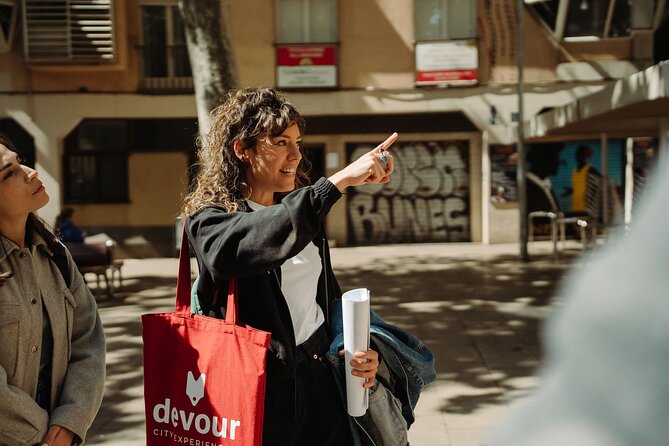
From here, the route moves through Gracia on foot. Gracia was once a separate town before Barcelona expanded around it, and the neighborhood still has a more local scale than the grand avenues farther south. The tour’s appeal comes partly from this change of pace: you are not simply checking off famous sights, but walking between places where residents buy breakfast, drinks, and pantry goods.
The walking matters. You should be comfortable moving at a moderate pace for three and a half hours, with stops for eating and conversation. Wear shoes that can handle city pavement, and avoid scheduling a major museum visit immediately afterward unless you are happy to keep your afternoon flexible.
A few more Barcelona options worth an hour of your trip
- Barcelona: Tapas Walking Tour with Food, Wine, and History
★ 4.8 · 4,261 reviews - Barcelona Tapas Walking Tour: Food, Wine & History
★ 4.5 · 1,928 reviews - Barcelona: 2.5-Hour Bike or E-Bike Historical Tour
★ 4.5 · 1,262 reviews
A pastry shop with a 1916 family story
The first food stop is a third-generation pastry shop that has operated since 1916. It is a short visit, around 10 minutes, but it sets the tone nicely. You begin with a local pastry rather than a generic coffee-and-croissant routine.
A family business with more than a century of operation gives your guide a clear way to talk about continuity in Barcelona’s food culture. The stop is also practical. It eases you into the morning before the larger tastings arrive.
Do not expect a long sit-down here. This is a quick taste, and the full meal comes later. If you have a serious sweet tooth, you may wish the pastry stop lasted longer, but the compact timing helps the tour fit in a market, a bodega, and lunch.
Vermouth and old Barcelona at Cal Pep
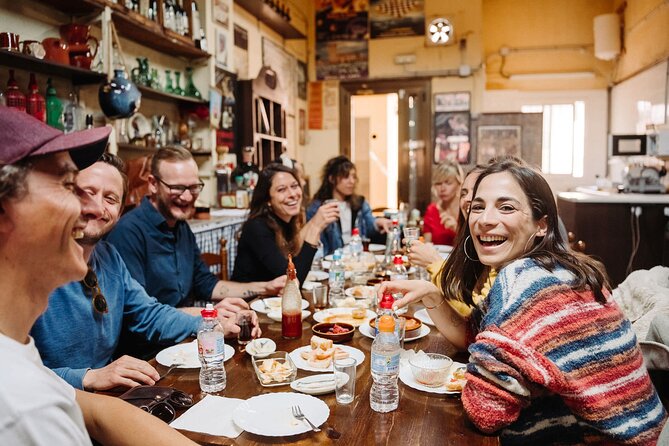
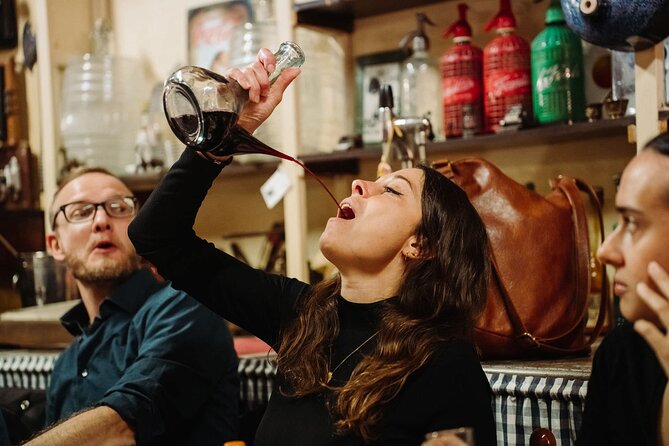
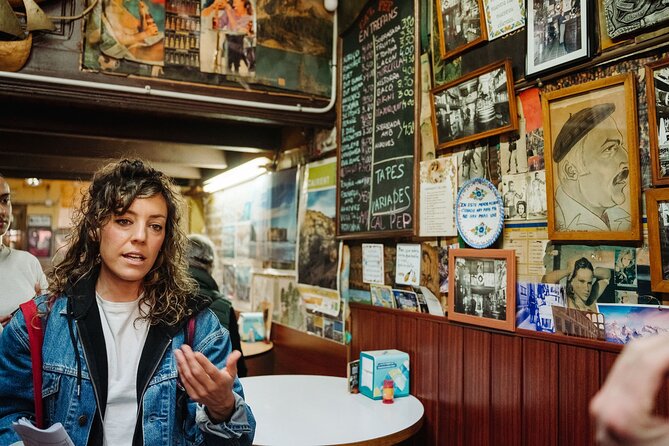
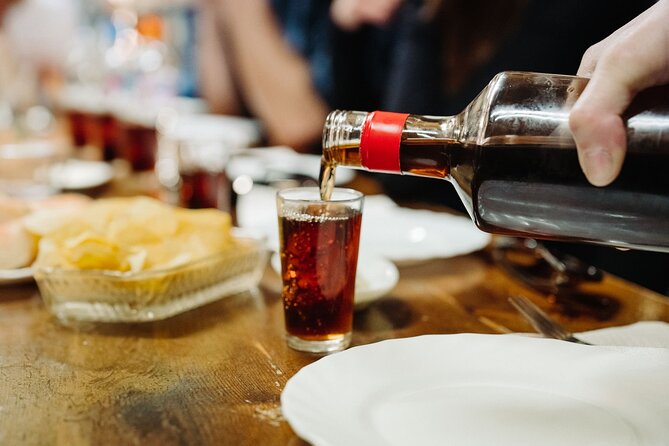
Cal Pep, a traditional bodega dating to 1939, is one of the more atmospheric stops. A bodega is part bar, part neighborhood pantry, and part social room. You’ll have about 35 minutes here for classic Catalan breakfast dishes and a glass of vermouth.
This is where the tour begins to explain how people eat and drink, not just what they consume. Your guide will discuss the local way of drinking wine in Catalonia, giving the stop a cultural purpose beyond sampling another beverage.
The setting should appeal to you if you prefer old neighborhood businesses to polished restaurants. The tradeoff is that bodegas are not designed like spacious modern dining rooms. Conditions may feel compact, and the menu is not built around personal customization. The tour information also warns that most included dishes contain meat, so this is one of the places where vegetarians and pescatarians should ask the guide what can be adjusted.
Plaça de la Virreina and a Syrian bakery
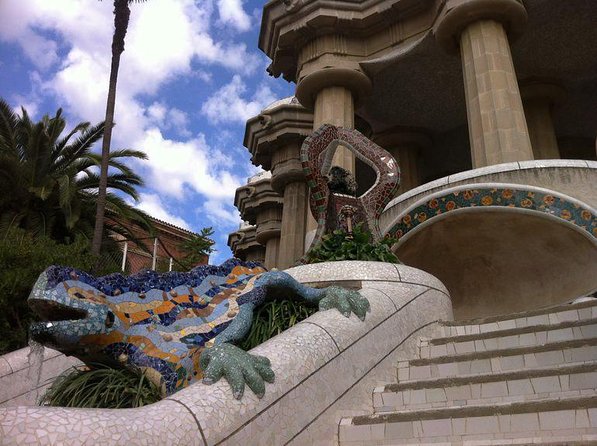
At Plaça de la Virreina, you’ll pause to see the Sant Joan de Gracia church and learn about the square’s connection to the neighborhood. The church also has ties to Gaudí, adding another architectural thread to the morning.
The next stop is Mustafa’s Syrian pastry shop. This is one of the tour’s smartest choices because it keeps Gracia from being presented as a museum of old Catalan customs. Neighborhood food changes as people arrive, open businesses, and add their own traditions.
You’ll pick up homemade pastries to eat later, rather than finishing them immediately. The tour ends by Casa Milà with an explanation of Arab influence on desserts in Spain, so the pastry becomes part of the guide’s larger story.
For me, this stop gives the food tour extra value. You get a taste you might not otherwise seek out, and you see how migration and local life meet in a working district. If you have strict dietary needs, ask ahead of time. Vegetarian, gluten-free for people who are not celiac, non-alcoholic, pescatarian, and pregnancy-friendly options can be arranged, but a replacement is not guaranteed at every stop.
Same corner of Catalonia, a completely different day:
- Barcelona: Park Güell Admission Ticket
★ 4.4 · 76,534 reviews - Barcelona: Casa Batlló Entry with Self-Audioguide Tour
★ 4.7 · 25,359 reviews - Barcelona: 24 or 48-Hour Hop-On Hop-Off Bus Tour
★ 4.4 · 20,872 reviews - Barcelona: Park Guell Guided Tour with Skip The Line Entry
★ 4.7 · 17,563 reviews
Dried fruit, nuts, and the politics of Catalonia
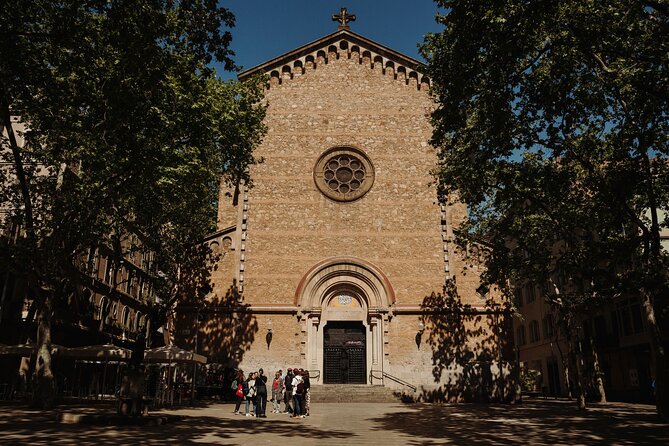
The route continues past more modernist buildings and touches on Catalonia’s independence movement. This part keeps the tour from becoming a string of disconnected snacks. You’ll hear political and regional context while walking, then stop at a dried fruit and nut shop that has been operating for about 150 years.
The tasting here is quick, around 15 minutes. It may seem simple compared with tapas or pastries, but small pantry shops reveal a lot about how food works in a city. Dried fruit and nuts are everyday products, easy to carry, and linked to older shopping habits that have survived beside supermarkets.
This is also a good point to notice the route’s range. In a short distance, you move from Gaudí architecture to a family pastry counter, a bodega, a Syrian bakery, and a long-running specialty shop. You are seeing Gracia through the businesses that give it character.
Mercat de la Llibertat and a glass of cava
Mercat de la Llibertat is the tour’s most colorful public-food stop. The historic market brings together the sounds, smells, and displays of a neighborhood shopping hall, with modernist architecture providing the setting.
You’ll stop at a market stall for a typical aperitivo and a refreshing glass of cava. The 30-minute visit gives you time to look around instead of simply grabbing a bite and leaving.
Markets are especially useful early in a Barcelona visit because they help you understand what local shopping looks like. Here, your guide can point out the difference between a market designed for daily purchases and a tourist attraction built mainly for photographs.
The market can also be the busiest part of the walk. If you dislike crowded food halls, keep your expectations realistic. The tour takes place in a functioning public market, not a quiet tasting room. That is part of its charm, but it also means you may need to stay close to your group.
Catalan tapas lunch at Bar Roure
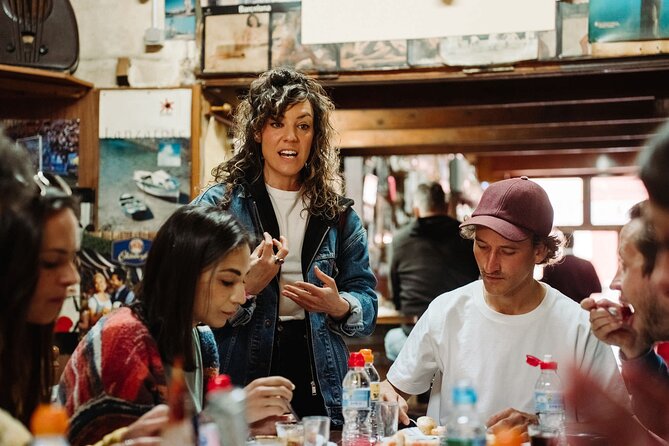
Bar Roure is the main meal stop, with about 35 minutes for homemade Catalan tapas and your choice of wine or beer. By this point, the earlier tastings should have built a useful appetite, although the pastry, bodega dishes, nuts, and market aperitivo mean you will not arrive hungry in the usual lunch-only sense.
The published food details promise at least 10 tastes, while the inclusion list says 12 or more, with enough food for breakfast and lunch. That makes this a substantial food experience rather than a tasting where you leave looking for a sandwich.
The meal is also where the small group matters most. A guide can explain what appears on the table, help with questions about ingredients, and keep the pace comfortable. Guides described in the tour information, including chef Danny and food-focused guides such as Renee, have been praised for explaining Catalan cuisine in an approachable way. Danny’s background as a chef is especially useful if you want more than a list of dish names.
The menu leans heavily toward meat. Vegetarians can be accommodated, but this is not the food tour I would choose if you want a mostly plant-based meal. Vegans are specifically not recommended for this experience.
Passeig de Gracia and the modernist finale
After lunch, the route heads toward Passeig de Gracia, Barcelona’s high-end shopping street. You’ll pass Casa Fuster, a restored modernist mansion now operating as a five-star hotel, then continue toward Casa Milà.
Casa Fuster is an outside view only, with no admission included. It gives your guide another chance to explain how Barcelona’s modernist buildings were not isolated monuments. They form a broad architectural story along streets shaped by the city’s expansion.
The final stop is Casa Milà, also known as La Pedrera, one of Gaudí’s best-known works. Again, the tour does not include entry, but you will stop in front of the building and hear about the direction Gaudí’s career took after Casa Vicens.
You’ll finish by eating the Syrian pastries collected earlier. That small detail gives the walk a satisfying rhythm: you pick up food in Gracia, learn about its cultural setting, and return to it at the end with a better understanding of how Arab traditions have influenced Spanish desserts.
The tour ends in front of Casa Milà at Passeig de Gracia 92. If you want to tour the interior, book a separate admission and allow extra time. The food tour itself gives you architectural context, not entry access.
What the price includes at $103.34
At $103.34 per person, this tour is not cheap for a morning walk, but it includes a considerable amount of food. You get 12 or more tastes, enough overall for breakfast and lunch, plus three listed drinks. The tour overview refers to four drinks, so I would confirm the exact drink count before booking if that detail affects your decision.
You are also paying for the route and the guide’s explanations. The value is strongest if you want someone to connect Catalan cuisine, Gracia’s past, modernist architecture, local politics, and newer immigrant food traditions. If you only want a few tapas and a drink, you can spend less on your own.
The small group cap improves the calculation. With 12 people or fewer, your guide can speak naturally rather than addressing a crowd, and the group can fit into small bodegas and family businesses. The experience is more personal when the group is only three people, as happened on one morning, but you should not assume every departure will be that small.
I would view the price as fair for a meal-sized food tour with drinks and a dedicated guide, especially if you are visiting Barcelona for the first time. It is less appealing for a repeat visitor who already knows Gracia’s restaurants and wants only a focused cooking class or market visit.
Who will enjoy this Gracia food tour most
I would recommend it to you if you want food to be the main doorway into Barcelona. It suits first-time visitors who also want a neighborhood walk, architecture fans who enjoy seeing Casa Vicens and Casa Milà in context, and curious eaters who like family businesses more than formal dining.
It is also a good choice for couples, friends, and solo visitors who enjoy conversation. The English-only format and small group make it easy to ask questions, and guides such as Norah, Ester, Victoria, and Raquel have been singled out for making the walk feel personal and connected to local life.
You should think twice if you are vegan, highly selective about meat, or unable to walk at a moderate pace. The tour can accommodate some dietary needs, including gluten-free diets for people who are not celiac, but there may not be a substitute at every stop.
Pregnant participants and people seeking non-alcoholic drinks can also be accommodated. Still, because drinks are part of the experience, tell the provider in advance rather than waiting until the first bodega.
The route is near public transportation, and mobility assistance or wheelchair arrangements may be possible if you contact the provider’s Guest Experience team. Since this is a walking tour through shops, streets, and food stops, you should discuss your needs before booking.
Timing, meeting point, and practical planning
The 10 a.m. start is well chosen. You begin with pastry and breakfast-style food, move into aperitivo and market tastes, then finish with tapas lunch. You will not need to plan a separate midday meal afterward.
The full experience lasts about three hours and 30 minutes. Hotel pickup and drop-off are not included, so make your own way to Farmàcia Les Carolines at Carrer de les Carolines 26. At the end, you will be outside Casa Milà, which is convenient if you want to continue along Passeig de Gracia or visit the building separately.
The route has several short walking sections between stops. Take public transportation to Gracia with enough time to find the meeting point, and arrive ready to start at 10 a.m. Because the tour includes food at many locations, it is best not to eat a large breakfast beforehand.
Free cancellation is available up to 24 hours before the start time. Within 24 hours, you should assume the payment will not be refunded and changes will not be accepted.
Should you book it?
Book this tour if you want a generous meal paired with local stories, not just a checklist of famous Barcelona sights. The strongest features are the small group, the range of independent food businesses, the vermouth and cava stops, and the contrast between Catalan traditions and Mustafa’s Syrian pastries.
I would skip it if you are vegan or want a tour centered on interiors and formal sightseeing. Casa Vicens, Casa Fuster, and Casa Milà are viewed from outside, and the food menu is firmly rooted in meat-based Catalan cooking.
For most first-time visitors who enjoy eating and walking, the $103.34 price is defensible. You leave near La Pedrera with a full stomach, a better sense of Gracia, and several ideas for where to eat later in your stay.
FAQ
How long does the Barcelona Gracia food tour last?
The tour lasts approximately three hours and 30 minutes. It begins at 10 a.m. and ends in front of Casa Milà.
Where does the tour start?
The meeting point is outside Farmàcia Les Carolines, Carrer de les Carolines 26, Gràcia, Barcelona.
Where does the tour end?
The tour ends in front of Casa Milà, also called La Pedrera, at Passeig de Gracia 92 in Barcelona.
How much food and drink is included?
The tour includes at least 10 food tastes, with the inclusion details specifying 12 or more tastes and enough food for breakfast and lunch. Three drinks are listed as included, while the tour overview refers to four drinks.
Can the tour accommodate dietary restrictions?
Vegetarian, pescatarian, gluten-free for people who are not celiac, non-alcoholic, and pregnancy-related requests can be accommodated. A replacement food is not guaranteed at every stop, and the tour is not recommended for vegans.
What is the maximum group size?
The tour has a maximum of 12 participants and is conducted in English.
Just added around Barcelona
- GoCar Full Day Tour★ 4.0 · 6 reviews
- Sagrada Familia and Barcelona Highlights: Private Guided 4-Hour Driving Tour★ 5.0 · 6 reviews
- Barcelona: Highlights & Gems Private Tour with Tapa & Drink★ 3.9 · 6 reviews
- Gothic Quarter and Born District: Photographic Workshop★ 5.0 · 6 reviews
- Gobbi Yacht Rental in Barcelona 9 Pax 2/4/8hs★ 5.0 · 6 reviews
- Barcelona: Gothic Quarter & La Sagrada Familia Private Tour★ 4.9 · 6 reviews
- Private Sailboat Ride at Sunset from Sitges★ 5.0 · 6 reviews
- Barcelona: Private Tour of Casa Batllo with Reserved Access★ 3.5 · 6 reviews
Historical Tours, compared.
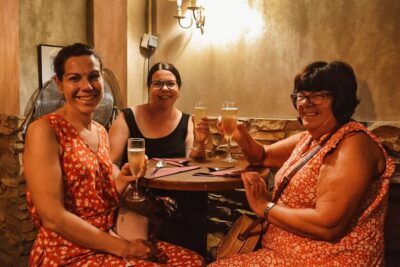
Tapas Walking Tour with Food, Wine, and History
Read our review →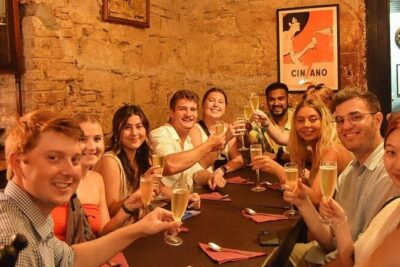
Barcelona Tapas Walking Tour: Food, Wine & History
Read our review →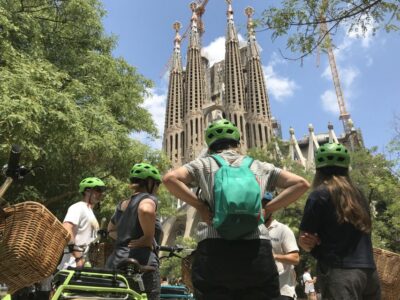
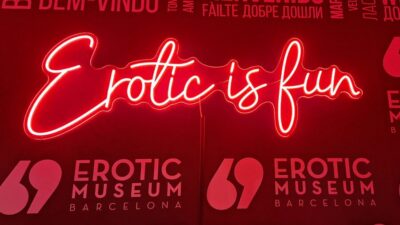
Barcelona Erotic Museum – Explore Art, History & Fun
Read our review →
Andorra Original History and Sightseeing Tour (Private, Pickup)
Read our review →
Tarragona and Sitges Small Group Tour – Roman History & Culture
Read our review →
Girona History and Legends Tour Small Group from Girona
Read our review →Browse the lists this tour appears in