
Reviewed · WALKING TOURS
Barcelona: Marvels of Barcelona Walking Tour
Barcelona’s old town is best understood on foot, where Roman stones, medieval lanes, quiet courtyards, and grand churches appear within a few minutes of one another. This two-hour walk takes you from the ancient Barcino sculpture through the Gothic Quarter to Plaça de Santa Maria, with an English-speaking guide explaining how the city changed over more than 2,000 years.
I like the compact route, which packs major sights such as Barcelona Cathedral and Plaça del Rei alongside less obvious corners such as Plaça Sant Felip Neri. I also like the human touch of the guides, especially Mariah, whose humor, warmth, and enthusiasm received repeated praise. The main consideration is that entry into the cathedral or basilicas is not included, so this is an outside-focused history walk rather than a full church tour.
In This Review
- Key points to know before you book
- Starting with Roman Barcino at Plaça Nova
- Els Quatre Gats and the city’s creative side
- The Kiss of Freedom and Barcelona’s visual stories
- Barcelona Cathedral and the Gothic Quarter
- La Casa de l’Ardiaca and Carrer del Bisbe
- Plaça Sant Felip Neri, a quiet place with a difficult past
- The old Jewish Quarter at MUHBA El Call
- Plaça de Sant Jaume and Plaça del Rei
- Plaça de l’Àngel and the final walk to Santa Maria del Mar
- What the guides add to the route
- Is $22 a fair price for two hours?
- Who should book this Barcelona walking tour?
- Should you book it?
- FAQ
- How long does the Marvels of Barcelona Walking Tour last?
- What language is the tour offered in?
- How much does the tour cost?
- Where does the tour start?
- Where does the tour finish?
- Does the price include entry to Barcelona Cathedral?
- Does the price include entry to Santa Maria del Mar?
- Can I cancel the tour for a full refund?
- Do I have to pay when I reserve?
Key points to know before you book
- Roman Barcelona begins at Barcino: The meeting point places you beside the large Barcino sculpture, a useful introduction to the city’s ancient foundations.
- The route mixes famous and quieter stops: You’ll see Barcelona Cathedral, Plaça del Rei, and Santa Maria del Mar, but also Plaça Sant Felip Neri and the old Jewish Quarter.
- Two hours keeps the pace lively: The tour gives you a strong first look at the old town without taking up half a day.
- Mariah has a particularly engaging style: Her humor, clear explanations, and love of Barcelona are central strengths when she leads the walk.
- Church admission costs extra: The tour covers the outside and historical setting, not entry into cathedrals or basilicas.
- The price is modest for a guided orientation: At $22 per person, you are paying mainly for context, storytelling, and a well-planned route.
Starting with Roman Barcino at Plaça Nova
The walk begins at Plaça Nova, 40, in front of the large sculpture spelling Barcino. Look for the guide holding a yellow Carpe Diem Tours sign. This is a sensible meeting point because the sculpture points directly to Barcelona’s Roman past before the route moves into the medieval city.
You are not simply starting at a random street corner. Barcino was the Roman name for the settlement that developed into Barcelona, and the opening stop gives you a frame for everything that follows. The tour’s central idea is that the city is not one period layered neatly on top of another. Roman foundations, medieval institutions, religious buildings, Catalan traditions, and modern Barcelona all meet in this small part of town.
The meeting details mention two possible starting location options, but the specific instructions identify Plaça Nova, 40, by the Barcino sculpture. Check the exact meeting information when you reserve, then arrive with enough time to find the sign. The activity ends back at the meeting point, which makes it easier to continue sightseeing or return to your hotel afterward.
More walking tours in Barcelona:
- Barcelona Tapas and Wine Experience Small-Group Walking Tour
★ 5.0 · 5,804 reviews - Barcelona: Tapas Walking Tour with Food, Wine, and History
★ 4.8 · 4,261 reviews - Barcelona Tapas Walking Tour: Food, Wine & History
★ 4.5 · 1,928 reviews
Els Quatre Gats and the city’s creative side
The first named stop is Els Quatre Gats, where the guide spends about 10 minutes. This famous Barcelona café is tied to the city’s artistic life and offers a change of mood from Roman and medieval history.
The stop matters because Barcelona’s story is not only about churches, rulers, and old stone. Places connected with artists help explain the city’s creative identity and its attraction for writers, painters, and other cultural figures. Your guide uses anecdotes here to keep the story personal rather than turning the walk into a list of dates.
The exact format is a guided look rather than a meal or café visit. If you are hoping to sit down for coffee, that is not part of the activity. Think of Els Quatre Gats as a short cultural stop that adds variety to the route.
The Kiss of Freedom and Barcelona’s visual stories
Next comes The Kiss of Freedom, with another 10-minute guided stop. The title refers to a large public artwork made from photographs, and it gives the walk a more modern visual marker among the older buildings.
This is one of the route’s useful contrasts. You move from Roman origins and medieval streets to a work that speaks to more recent ideas of freedom and public memory. The guide can connect the artwork to Barcelona’s wider culture, making the route feel like a story of a living city rather than a museum frozen in the past.
The stop also gives you a chance to pause and take photographs. As with most points on a two-hour walking route, the time is limited, so expect explanation and orientation rather than a long art lecture.
Barcelona Cathedral and the Gothic Quarter
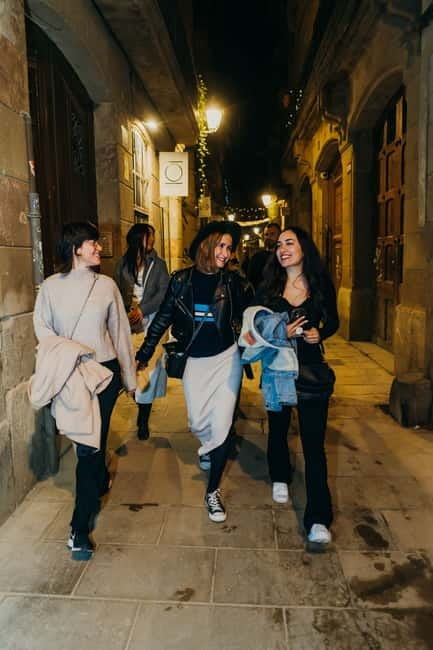
Barcelona Cathedral receives roughly 10 minutes of guided attention. Its tall façade and setting make it one of the major sights on the walk, and it gives you a clear sense of the Gothic Quarter’s scale and character.
The cathedral is important not only for its architecture but also for its place in the old city. A guide can point out details you might otherwise pass without noticing and explain how religious buildings shaped public life in medieval Barcelona. You will gain more from the exterior after hearing the surrounding story.
Admission is not included. That keeps the tour price low, but it also means you should not expect to go inside as part of the group. If the cathedral is a priority for you, plan a separate visit and check opening arrangements independently. The walking tour provides context first, which can make a later interior visit more meaningful.
A few more Barcelona options worth an hour of your trip
- Barcelona: Park Güell Admission Ticket
★ 4.4 · 76,534 reviews - Barcelona: Casa Batlló Entry with Self-Audioguide Tour
★ 4.7 · 25,359 reviews - Barcelona: 24 or 48-Hour Hop-On Hop-Off Bus Tour
★ 4.4 · 20,872 reviews - Barcelona: Park Guell Guided Tour with Skip The Line Entry
★ 4.7 · 17,563 reviews
La Casa de l’Ardiaca and Carrer del Bisbe
La Casa de l’Ardiaca follows, with about 10 minutes of guided explanation. This historic building sits beside the cathedral and adds another layer to the old town’s religious and civic history.
The value here is scale. Barcelona’s most important sights are not separated by long journeys. A doorway, courtyard, arch, or former administrative building may be only a few steps from a major cathedral. With a guide, you can connect these pieces instead of treating each one as an isolated photo stop.
Then the route continues along Carrer del Bisbe, one of the Gothic Quarter’s best-known lanes. Its narrow shape and medieval appearance make it a natural place to discuss how the old city was built and used. The street is popular, so you may find it busy, particularly around the famous bridge. The guide’s commentary helps you look beyond the picture-taking and notice how the lane fits into the quarter’s history.
Plaça Sant Felip Neri, a quiet place with a difficult past
Plaça Sant Felip Neri is one of the most affecting stops. It is smaller and quieter than the grand civic squares, with a church and walls that carry visible marks from the past.
This is the sort of place that can be easy to miss if you follow only the main tourist streets. Its restrained atmosphere creates a pause in the tour, and the guide’s stories give the square emotional weight. You will hear about its history and the events connected with the damage still visible on the walls.
The stop is also a reminder that Barcelona’s old town is not just picturesque. Its stones record conflict, loss, faith, and daily life. I value this kind of stop because it adds balance to the more cheerful stories about cafés, public art, and grand architecture.
The old Jewish Quarter at MUHBA El Call
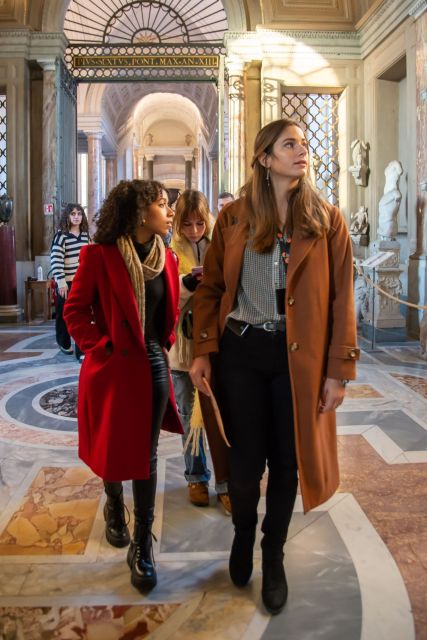
The walk then reaches MUHBA El Call, the site connected with Barcelona’s former Jewish Quarter. This is a key historical stop because it broadens the story beyond the best-known Christian landmarks.
A short route cannot cover every part of Barcelona’s past, but including El Call signals that the old city had several communities and traditions. Your guide can explain the quarter’s place in the city and help you understand the narrow streets as part of a once-active neighborhood, not just an attractive backdrop.
This section is especially useful if you prefer social history to architecture alone. The tour is not only about what buildings look like. It asks who lived here, how communities were organized, and how Barcelona’s identity developed over time.
Plaça de Sant Jaume and Plaça del Rei
Plaça de Sant Jaume receives about 10 minutes of guided attention. This is one of the city’s key public squares and a useful place to discuss civic power, Catalan identity, and the institutions that still give the area political importance.
The square is broad and open compared with the lanes you have just walked. That change helps you see how the medieval city made room for public authority and ceremony. Your guide’s anecdotes are important here because the square can otherwise feel like a quick photograph between narrower streets.
Plaça del Rei follows, also with around 10 minutes. It is one of the most impressive medieval spaces on the route, surrounded by historic buildings and strongly associated with Barcelona’s royal past. The setting gives the guide room to explain how the city connected with the Crown of Aragon and how power was displayed in the old town.
You should expect to hear stories and architectural context rather than enter every building. The price covers the guide, not admissions. Still, the exterior setting is substantial, and this is one of the stops where the route’s medieval theme comes together clearly.
Plaça de l’Àngel and the final walk to Santa Maria del Mar
Plaça de l’Àngel is another short guided stop before the route moves toward Plaça de Santa Maria. It acts as a transition from the central Gothic Quarter toward the area around the Basilica de Santa Maria del Mar.
The square is less likely to be the main reason you book the tour, but it helps you understand how the old streets connect. A good walking route is not just a string of famous monuments. It also shows how the city’s public spaces, lanes, and neighborhoods relate to one another.
The final destination is listed at Plaça de Santa Maria, 1, beside the Basilica de Santa Maria del Mar. This church is one of Barcelona’s most recognizable medieval buildings and gives the tour a strong finish. Its setting links religious history with the working life of the old city and the broader Catalan story.
Again, basilica entry is not included. You will receive an explanation of the building and its setting, but you should arrange a separate interior visit if that is important to you. The activity ends back at the original meeting point rather than at the basilica, so you have a clear return to the place where you started.
What the guides add to the route
The guide is the real reason to choose this activity over following a map. The route itself includes places you can reach on your own, but the meaning between those places is harder to find without local explanation.
The strongest guide style here is warm, funny, and ready for questions. Mariah is specifically praised for making the group feel comfortable from the start, while also explaining Barcelona’s history, architecture, and culture in a clear way. Her approach seems suited to people who want facts without a dry lecture.
The tour also works as a social activity. One account describes people continuing to spend time together afterward, and another points to the walk as a good way to meet interesting people while on a trip. That will depend on the group and guide on your date, but the format encourages conversation more than a private audio guide would.
You should not expect the same guide every time. Mariah is one named guide associated with especially strong feedback, while the general service is provided in English by live local guides. If her name matters to you, do not assume she will lead every departure.
Is $22 a fair price for two hours?
At $22 per person, the tour offers good value if you want a quick, guided introduction to Barcelona’s old town. You are paying for a carefully arranged route through major sights, local stories, and the chance to ask questions as you walk.
The value is strongest for a first visit. Within two hours, you get Roman context, medieval architecture, Catalan civic history, the old Jewish Quarter, public art, and two major religious sites. Arranging that route alone is easy enough, but building the historical connections would take more time and research.
The price does not include cathedral or basilica admission. That is an important limit, especially if you want a full interior visit. I would treat the tour as an orientation and storytelling experience, then decide which buildings deserve a separate ticket.
The tour’s 4.9 rating from 36 reviews points to very strong satisfaction, with praise focused on guide personality, clear information, humor, and the choice of stops. The sample comments repeatedly single out Mariah, although guide assignments can vary. The small number of published ratings means I would use the score as a positive signal, not as a guarantee that every departure will feel identical.
Who should book this Barcelona walking tour?
I would recommend it to first-time visitors who want to understand the Gothic Quarter before exploring it alone. It also suits solo travelers who would like a social activity, couples who prefer stories to a formal museum visit, and anyone with only a short stay in Barcelona.
Families with older children may enjoy the changing subjects and short stops, though the two-hour route still requires steady walking. People mainly interested in entering churches should choose a tour that includes admission or plan extra visits afterward.
You should also choose this walk if you like a guide who adds anecdotes and humor. It is less suitable if you want a private, slow-paced tour with long time inside each monument. The structure is active and efficient, with many stops receiving around 10 minutes.
Book with comfortable shoes and keep your attention on the guide as you move through narrow streets. Plaça Nova, the cathedral area, Plaça Sant Felip Neri, El Call, and Santa Maria del Mar each reward a slower return visit, so note the places you want to explore later.
Cancellation is flexible: you can cancel up to 24 hours before the activity for a full refund. You can also reserve now and pay later, which helps if your Barcelona schedule is still shifting.
Should you book it?
Book this tour if you want a lively two-hour introduction to Barcelona’s oldest quarters, especially if a friendly guide and strong storytelling matter more to you than formal monument entry. The route covers a lot without becoming a half-day commitment, and the mix of famous sights and quieter historical corners is well judged.
Skip it if your main goal is to spend extended time inside Barcelona Cathedral or Santa Maria del Mar. For most visitors, though, $22 is a reasonable price for getting your bearings, learning the city’s long story, and finding several places worth returning to on your own.
FAQ
How long does the Marvels of Barcelona Walking Tour last?
The tour lasts two hours. Starting times vary, so check availability for the date you want.
What language is the tour offered in?
The live guided tour is offered in English.
How much does the tour cost?
The listed price is $22 per person.
Where does the tour start?
The meeting point is Plaça Nova, 40, in front of the large Barcino sculpture. The guide holds a yellow Carpe Diem Tours sign.
Where does the tour finish?
The activity ends back at the original meeting point.
Does the price include entry to Barcelona Cathedral?
No. Entry into cathedrals is not included.
Does the price include entry to Santa Maria del Mar?
No. Entry into basilicas is not included.
Can I cancel the tour for a full refund?
Yes. You can cancel up to 24 hours in advance for a full refund.
Do I have to pay when I reserve?
No. The reserve-now, pay-later option lets you hold a place without paying immediately.
Just added around Barcelona
- GoCar Full Day Tour★ 4.0 · 6 reviews
- Sagrada Familia and Barcelona Highlights: Private Guided 4-Hour Driving Tour★ 5.0 · 6 reviews
- Barcelona: Highlights & Gems Private Tour with Tapa & Drink★ 3.9 · 6 reviews
- Gothic Quarter and Born District: Photographic Workshop★ 5.0 · 6 reviews
- Gobbi Yacht Rental in Barcelona 9 Pax 2/4/8hs★ 5.0 · 6 reviews
- Barcelona: Gothic Quarter & La Sagrada Familia Private Tour★ 4.9 · 6 reviews
- Private Sailboat Ride at Sunset from Sitges★ 5.0 · 6 reviews
- Barcelona: Private Tour of Casa Batllo with Reserved Access★ 3.5 · 6 reviews
Walking Tours, compared.

Barcelona Tapas and Wine Experience Small-Group Walking Tour
Read our review →
Tapas Walking Tour with Food, Wine, and History
Read our review →
Barcelona Tapas Walking Tour: Food, Wine & History
Read our review →

Gothic Quarter Ghosts and Legends Walking Tour
Read our review →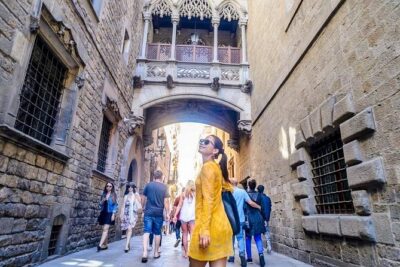
Barcelona Helicopter, Sailboat & Old Town Private Walking Tour
Read our review →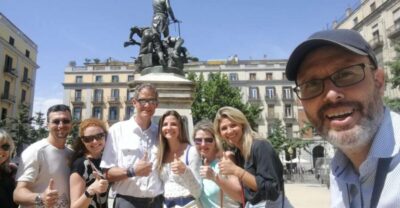

Helicopter Flight, Boat Ride, and Walking Tour
Read our review →Browse the lists this tour appears in