
Reviewed · AUDIO TOURS
Barcelona: Mies van der Rohe Pavilion Ticket and Audio Guide
The Mies van der Rohe Pavilion is a small building with a very large reputation. Designed for the 1929 Barcelona International Exhibition, it was taken apart after the event, then rebuilt on its original site in 1986. Today, you can walk through its quiet rooms and see why this spare little structure changed modern architecture.
I like the calm atmosphere and the chance to study details that are easy to miss in a crowded city. I also like that the audio guide is offered in Spanish, Catalan, English, French, and German. The main drawback is simple: at $10, the ticket may feel expensive if you expect a long visit or a large museum.
In This Review
- Key points to know before you go
- Why this small building matters
- Entering the Pavilion built for 1929
- Listening to the five-language audio guide
- Seeing the structure’s deliberate simplicity
- The reconstructed Pavilion and its unusual story
- A peaceful stop with a short nature trail nearby
- Is $10 a fair price?
- Who will enjoy this visit most?
- Timing, access, and practical planning
- How to get more from the visit
- Should you book the Mies van der Rohe Pavilion?
- FAQ
- What is included in the ticket?
- Who designed the Mies van der Rohe Pavilion?
- Why was the Pavilion built?
- Is the building original?
- What languages are available for the audio guide?
- How long is the ticket valid?
- Is the Pavilion wheelchair accessible?
- Can I cancel the booking?
- Can I reserve now and pay later?
- Are food, drinks, smoking, pets, or tripods allowed?
Key points to know before you go
- A landmark built from restraint: The Pavilion uses clean lines, open space, and a small palette of carefully chosen materials instead of decoration.
- Designed by Mies van der Rohe and Lily Reich: It served as Germany’s national pavilion at the 1929 Barcelona International Exhibition.
- A rebuilt original: The building was dismantled after the exhibition and reconstructed on its original site in 1986.
- Audio guidance in five languages: You can listen in Spanish, Catalan, English, French, or German.
- A short, focused visit: This is best for travelers who enjoy looking closely rather than filling hours with exhibits.
- Check for special installations: Artistic interventions sometimes alter the Pavilion’s appearance.
Why this small building matters
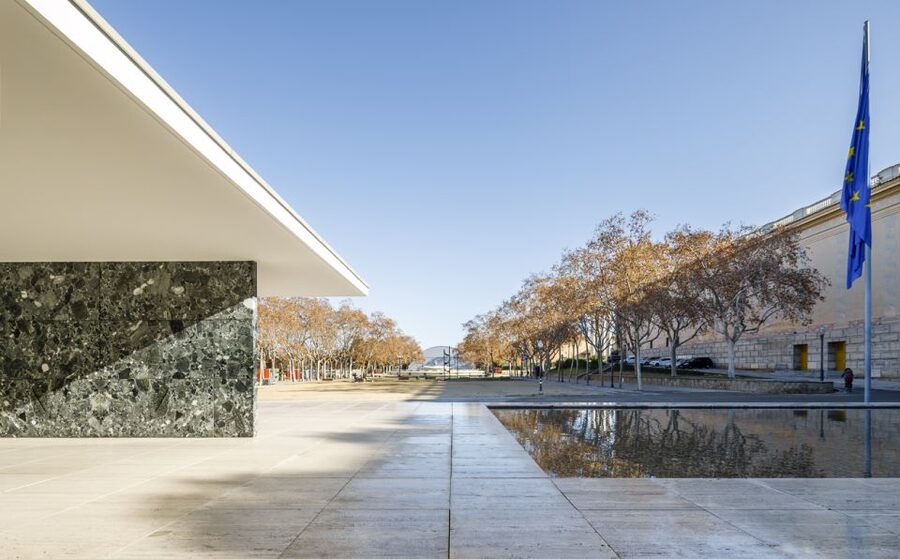
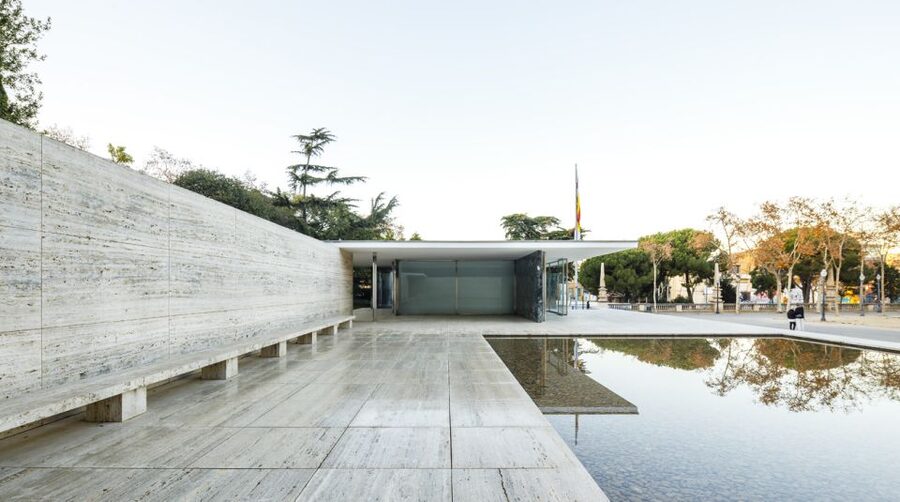
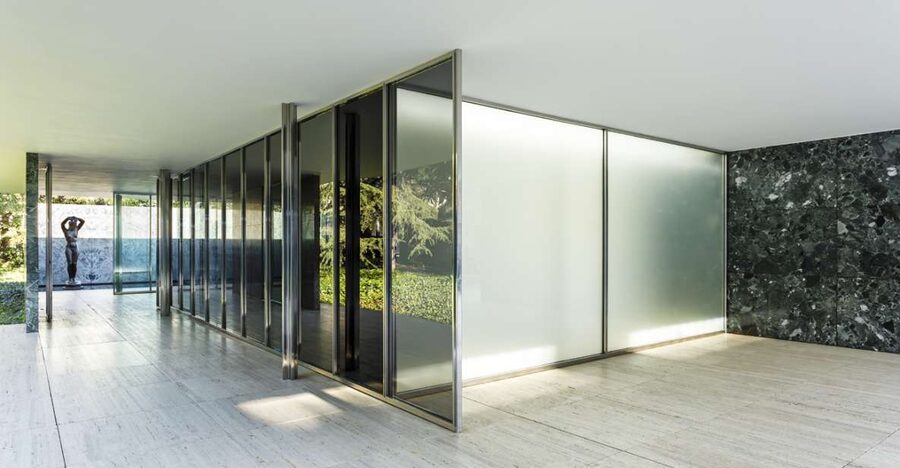
The Pavilion does not try to impress you with size. Its power comes from proportion, space, and material. Walls guide your eye without completely closing off the room. Interior and exterior seem to flow into one another. The result is a building that feels open, controlled, and remarkably quiet.
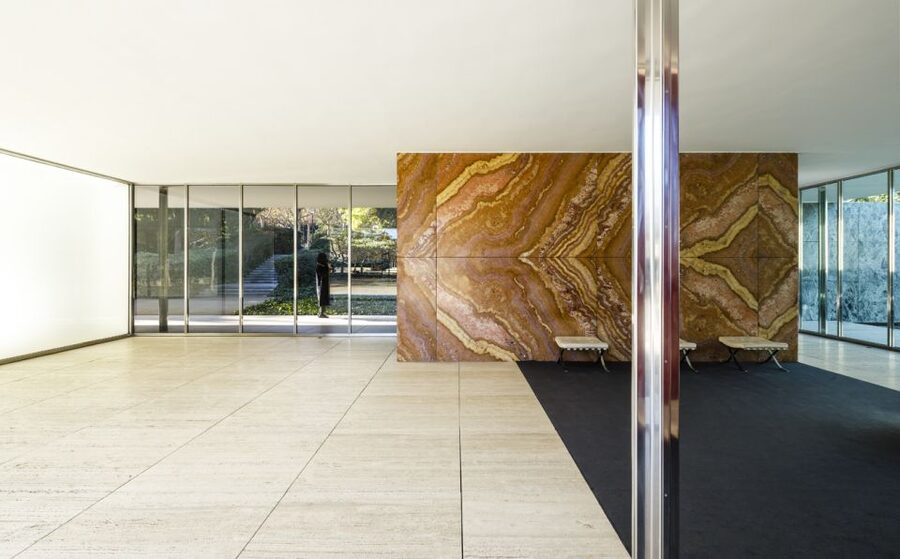
That simplicity is not accidental. Mies van der Rohe and Lily Reich selected materials from several places, including the Alps, Tivoli, Atlas, and Tinos. The stone and other surfaces create contrast without the need for ornament. You may first see a bare room, but a closer look reveals careful choices in color, texture, reflection, and alignment.
I find this is the sort of place that rewards patience. Give it a quick glance and you may wonder why an entrance fee is charged. Slow down, follow the lines of the walls, and pay attention to how the building frames the space around it. The Pavilion becomes less like an empty room and more like a carefully composed architectural idea.
The building also helped lay the groundwork for modern architecture. Its influence reaches beyond Barcelona, particularly in the way later architects treated open plans, structural clarity, and expensive materials as the main visual elements.
A few more Barcelona options worth an hour of your trip
- Barcelona: Palau de la Música Self-Guided Tour
★ 4.6 · 3,603 reviews - Casa Batllo Admission Ticket with Intelligent Audio Guide
★ 4.5 · 3,168 reviews - Barcelona: Montjuïc Cable Car Ticket with Audio Guide
★ 3.9 · 270 reviews
Entering the Pavilion built for 1929
Your visit begins with entry to the Pavilion and access to the included audio guide. There is no long list of rooms or complicated route. You move through the structure at your own pace, studying the relationship between the walls, surfaces, water, and open areas.
The Pavilion was created as the German national pavilion for the 1929 Barcelona International Exhibition. It was not designed as a conventional home or a museum. It was a statement about space, form, and modern design.
That original purpose helps explain its unusual character. You are not walking through a building packed with objects. You are experiencing the building itself. The walls, the materials, and the view through the open sections are the main subjects.
The ticket includes skip-the-ticket-line access, which matters most if you arrive when other people are waiting. Opening hours can change, so check the current schedule before setting out. The booking is valid for one day, with starting times shown according to availability.
Listening to the five-language audio guide
The audio guide adds useful context to a place that can otherwise seem almost too quiet for explanation. It is available in English, Spanish, Catalan, French, and German, so you can hear the architectural story in a language you understand well.
I would use the guide as a prompt, not as background noise. Listen to a section, then pause and look closely at the feature being described. The Pavilion’s value is visual, and rushing through the commentary can make the visit feel like a checklist.
The guide should help you understand three important points:
- Why the Pavilion was designed for the 1929 exhibition
- Why its simplicity became so influential
- Why the building you see today is a reconstruction from 1986
One practical note deserves attention. At least one recent booking experience involved not receiving the audio guides, leaving the visitor unsure how to proceed. That does not appear to be the normal plan, but it is sensible to confirm where and how you collect or activate the guide when you arrive.
Seeing the structure’s deliberate simplicity
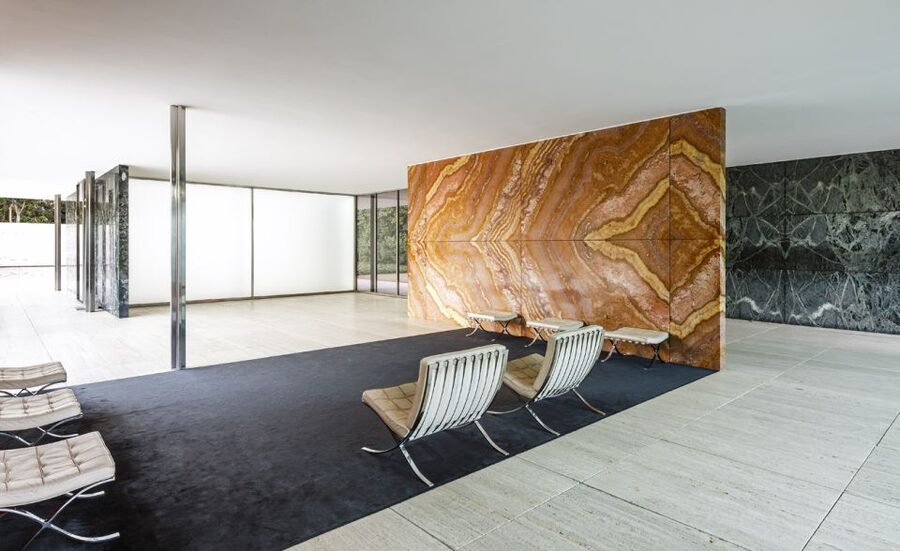
The Pavilion’s design is pared down to a few strong ingredients. Its forms are clean and direct. The materials provide much of the visual interest, while the open arrangement creates a shifting connection between inside and outside.
Look for the way the walls control movement. They do not simply surround a room. They lead your eyes toward another surface, an opening, or a view. A wall may feel solid from one angle and almost weightless from another.
The contrast between materials is equally important. Stone surfaces, glass, and other carefully selected finishes keep the building from becoming flat or dull. The palette is restrained, but it is not plain. The design depends on exact placement and contrast rather than decoration.
This is also why the Pavilion can feel different depending on the time of day and the people around you. Photographers and models sometimes use the site, and they may become part of the visual scene. That can be interesting, especially if you enjoy seeing architecture used as a working backdrop. It can also make the visit feel less private and less still.
Same corner of Catalonia, a completely different day:
- Barcelona: Park Güell Admission Ticket
★ 4.4 · 76,534 reviews - Barcelona: Casa Batlló Entry with Self-Audioguide Tour
★ 4.7 · 25,359 reviews - Barcelona: 24 or 48-Hour Hop-On Hop-Off Bus Tour
★ 4.4 · 20,872 reviews - Barcelona: Park Guell Guided Tour with Skip The Line Entry
★ 4.7 · 17,563 reviews
The reconstructed Pavilion and its unusual story
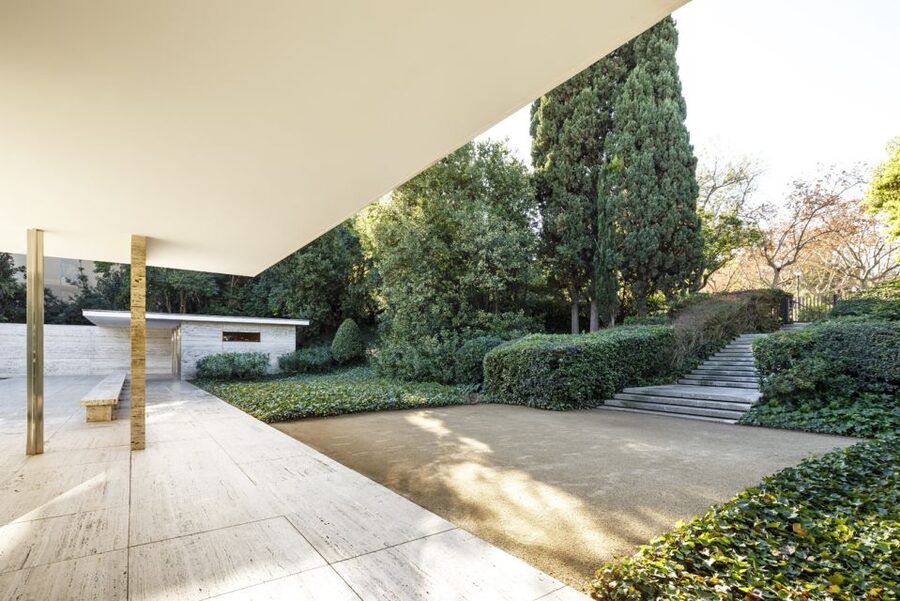
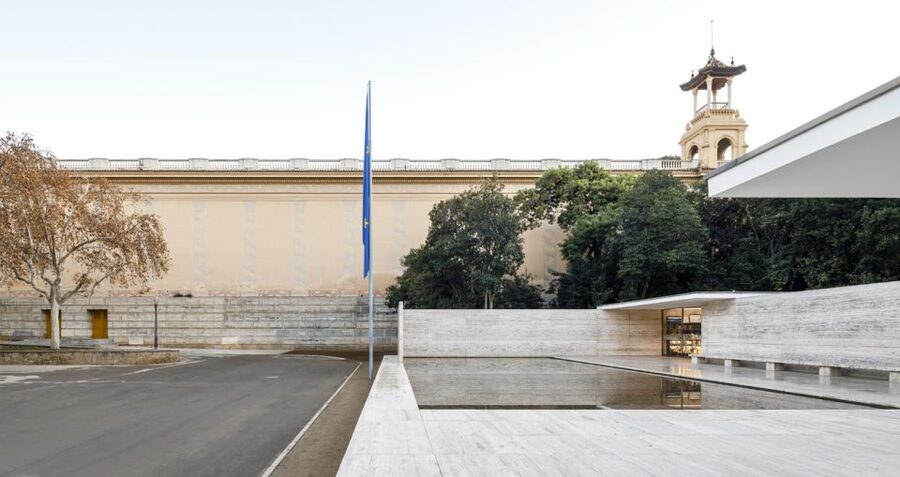
The Pavilion’s history is part of the experience. After the 1929 International Exhibition ended, the original structure was dismantled. The building’s importance was recognized later, and it was reconstructed on its original site in 1986.
That means you are not looking at the original physical materials from 1929 in the simple sense of walking into an untouched historic building. You are seeing a carefully recreated version of a work that had become important enough to bring back.
For me, this makes the visit more interesting, not less. The reconstruction shows how strongly the design continued to matter decades after the exhibition. It also raises a useful question: can a modern building with a short original life still become a historic landmark? The Pavilion answers yes.
The audio guide is especially helpful here. Without context, the reconstruction story is easy to miss. With it, the Pavilion becomes both an architectural work and a record of changing ideas about what deserves to be preserved.
A peaceful stop with a short nature trail nearby
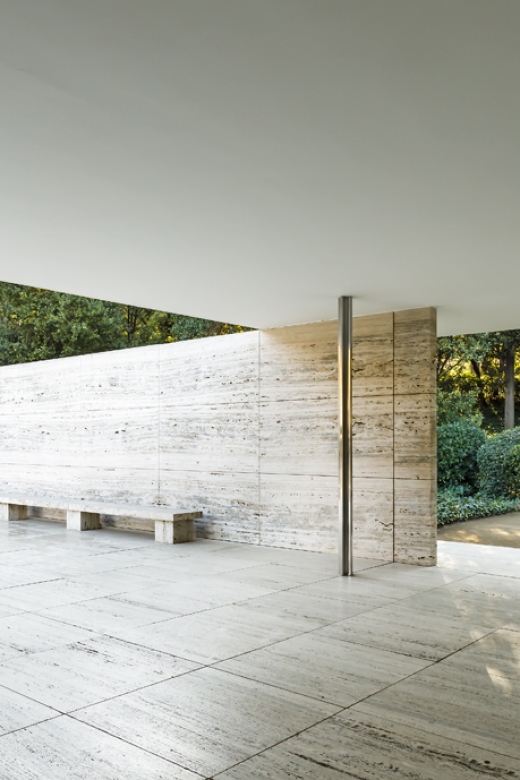
The Pavilion is known for its architecture, but the area around it can also give you a small break from Barcelona’s busier sights. A short nature trail near the site offers an option for stretching the visit beyond the building itself.
Do not treat that trail as part of a guided route or a major attraction. The supplied information only indicates that it is nearby, but it can be useful if you want a little fresh air after studying the Pavilion. It also suits the building’s quiet mood better than a rushed stop between crowded attractions.
The site may not remain visually identical on every visit. Artistic interventions are sometimes installed inside or around the Pavilion. These projects can alter its appearance, so you might see a temporary artistic treatment rather than the structure in its most stripped-back presentation.
That can be a benefit if you enjoy contemporary art. If your main goal is to see the Pavilion in its most familiar form, check for current programming before booking.
Is $10 a fair price?
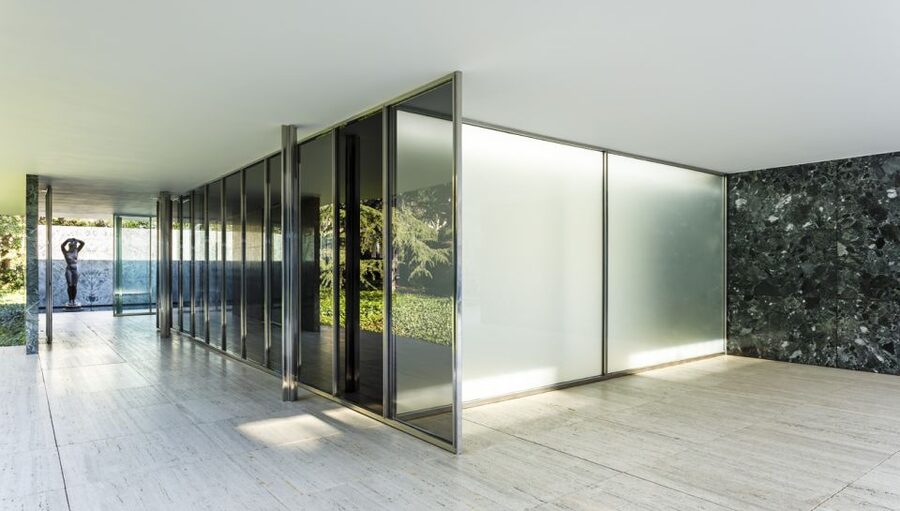
The $10 ticket is reasonable for an architecture enthusiast, design student, or anyone who wants a focused cultural stop. You are paying for access to a major work of modern architecture, an audio guide, and a visit that does not require a full museum afternoon.
The value is less obvious if you measure attractions by size or length. The Pavilion is a compact experience. You may finish the main visit quickly, particularly if you are not interested in architectural details.
I would compare it with the rest of your Barcelona plans. If you already enjoy looking at buildings, materials, and public spaces, this is a useful addition. If you are trying to see only the city’s largest and most famous sights, you may prefer to spend the $10 elsewhere.
There is also a fair criticism behind the occasional complaint that the Pavilion should be free. The building is relatively small, and there are no large collections or extensive displays included with the ticket. The entrance fee makes the most sense when you treat the Pavilion as a landmark in its own right, not as a conventional museum.
Who will enjoy this visit most?
This experience suits you if you like modern architecture, design, photography, or quiet cultural sites. It is also a good choice if you want a short stop that gives you something very different from Barcelona’s more heavily decorated buildings.
It works well for:
- Architecture and design enthusiasts
- Visitors interested in the Modern Movement
- Students and professionals studying buildings
- People who prefer a peaceful, self-guided visit
- Anyone curious about reconstruction and preservation
- Visitors who want an attraction with wheelchair access
It may be less satisfying if you want a long guided tour, many objects to examine, or an attraction filled with historical displays. The audio guide provides explanation, but this remains a self-paced visit centered on one building.
The Pavilion is also not the place for a casual picnic. Smoking, food, drinks, pets, and tripods are not allowed, although assistance dogs are permitted. These rules protect the building and help maintain its uncluttered character.
Timing, access, and practical planning
The activity is valid for one day, and you should check availability for the starting time before booking. Opening hours may change, so do not rely on an old schedule copied into a personal itinerary.
Skip-the-ticket-line entry can make arrival easier, but you should still aim to arrive at the time connected with your booking. One recent experience specifically noted that arriving on time is preferable.
The Pavilion is wheelchair accessible. Since the visit is self-guided, you can generally set your own pace within the available visiting period. That matters because some people will need only a short look, while others may want time to study the materials and listen to every audio segment.
Free cancellation is available up to 24 hours in advance for a full refund. You can also reserve now and pay later, which helps if your Barcelona schedule is still changing.
How to get more from the visit
Do not rush straight from the entrance to the exit. Start by taking in the whole structure, then use the audio guide to revisit the details. I would pay attention to how the walls create separate areas without making the Pavilion feel divided.
Next, look at the materials as a group. Ask yourself which surfaces feel heavy, which feel light, and how the contrast changes as you move. The design is built around these small shifts.
Finally, take a moment to look outward. The connection between the Pavilion and its surroundings is as important as the interior. This interplay between inside and outside is one of the building’s most lasting ideas.
If photographers or models are working during your visit, decide whether they add interest or distraction. They cannot be treated as part of the official experience, but they may affect the mood and the views you get at certain moments.
Should you book the Mies van der Rohe Pavilion?
Book it if you appreciate architecture and want to see a small but influential modernist work with helpful historical context. The five-language audio guide, skip-the-line entry, wheelchair access, and flexible cancellation make the $10 price easier to justify.
Think twice if you want a large attraction or a long afternoon activity. The Pavilion is deliberately minimal, and its appeal depends on your willingness to look closely. For the right visitor, that restraint is the point. For someone expecting a packed museum, it may feel too brief.
My advice is to pair it with nearby plans rather than make it the only event of your day. Give the structure time, listen to the guide, and check whether an artistic intervention is scheduled. If modern architecture interests you, this is a focused and worthwhile stop. If not, save your money for a place with more exhibits and a longer route.
FAQ
What is included in the ticket?
The ticket includes entrance to the Mies van der Rohe Pavilion and an audio guide.
Who designed the Mies van der Rohe Pavilion?
The Pavilion was designed by Mies van der Rohe and Lily Reich.
Why was the Pavilion built?
It served as the German national pavilion for the 1929 Barcelona International Exhibition.
Is the building original?
The original Pavilion was dismantled after the exhibition. It was reconstructed on its original site and reopened in 1986.
What languages are available for the audio guide?
The audio guide is available in Spanish, Catalan, English, French, and German.
How long is the ticket valid?
The ticket is valid for one day. You need to check availability for the available starting times.
Is the Pavilion wheelchair accessible?
Yes, the Pavilion is wheelchair accessible.
Can I cancel the booking?
Yes. You can cancel up to 24 hours in advance for a full refund.
Can I reserve now and pay later?
Yes. The booking option allows you to reserve your place and pay nothing at the time of booking.
Are food, drinks, smoking, pets, or tripods allowed?
Smoking, food and drinks, pets, and tripods are not allowed. Assistance dogs are allowed.
Just added around Barcelona
- GoCar Full Day Tour★ 4.0 · 6 reviews
- Sagrada Familia and Barcelona Highlights: Private Guided 4-Hour Driving Tour★ 5.0 · 6 reviews
- Barcelona: Highlights & Gems Private Tour with Tapa & Drink★ 3.9 · 6 reviews
- Gothic Quarter and Born District: Photographic Workshop★ 5.0 · 6 reviews
- Gobbi Yacht Rental in Barcelona 9 Pax 2/4/8hs★ 5.0 · 6 reviews
- Barcelona: Gothic Quarter & La Sagrada Familia Private Tour★ 4.9 · 6 reviews
- Private Sailboat Ride at Sunset from Sitges★ 5.0 · 6 reviews
- Barcelona: Private Tour of Casa Batllo with Reserved Access★ 3.5 · 6 reviews
Audio Tours, compared.
Casa Batllo Admission Ticket with Intelligent Audio Guide
Read our review →
Montjuïc Cable Car Entry Voucher with Audio Tour on Your Phone
Read our review →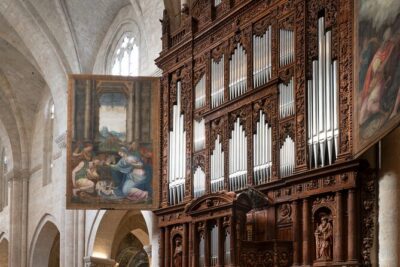
Tarragona Cathedral Entrance + Audio Guide (WebApp)
Read our review →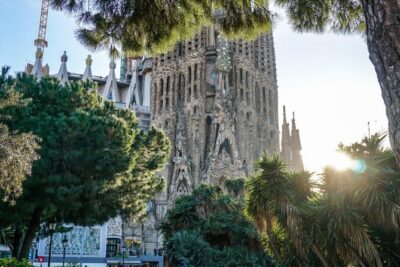
Gaudi and La Sagrada Familia Exterior Self-Guided Audio Tour
Read our review →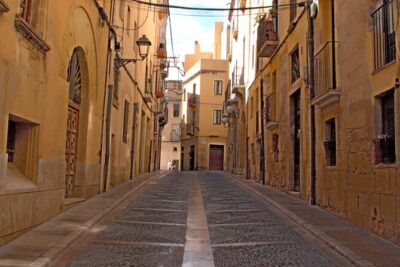
Tarragona Walking Tour: An Audio Guide to Tarraco
Read our review →
Sagrada Familia Skip The Queue With Audio Guide Tour
Read our review →
Tarragona Scavenger Hunt and Highlights Self Guided Audio Tour
Read our review →Browse the lists this tour appears in