
Reviewed · PICASSO MUSEUM TOURS
Barcelona: Small Group Picasso Tour with Picasso Museum
Picasso’s Barcelona begins before you reach the museum. This two-hour small-group walk takes you through the Gothic Quarter, past the café where the young artist exhibited and designed menus, and to his only public artwork. You then enter the Picasso Museum to follow his early work and changing style.
I like the clear link between place and art, especially the stops at Els Quatre Gats and the Architects’ Association Building. I also like the small groups, capped at nine, which give guides such as Olga Escribano, Jorge, Julie, Pilar, and Sylvie room to answer questions. The main drawback is time: one hour in a museum with more than 4,200 works can feel short, and missing the meeting point means missing the walking portion.
In This Review
- Key points to know before booking
- Why Picasso’s Barcelona works best on foot
- Plaça Reial and the first look at Picasso’s city
- Llotja de Mar and Picasso at thirteen
- Els Quatre Gats, Picasso’s bohemian meeting place
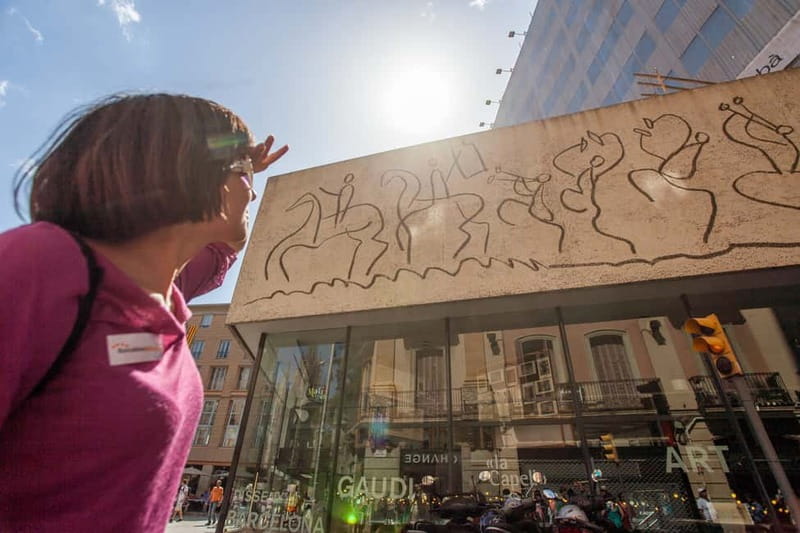
- The Architects’ Association Building and Picasso’s public artwork
- Inside the Picasso Museum for one focused hour
- What the small group changes
- Price, pace, and overall value at $46
- Who should book this Picasso walk
- Meeting point and simple preparation
- Should you book the Picasso Museum walking tour?
- FAQ
- How long does the Picasso Barcelona tour last?
- Where does the tour start?
- Where does the tour finish?
- Is Picasso Museum entry included?
- Does the tour include skip-the-line entry?
- How large is the group?
- What languages are available?
- What places connected to Picasso does the walk visit?
- What should I bring?
- Can I cancel the booking?
Key points to know before booking
- Picasso’s teenage Barcelona: Visit Llotja de Mar, where he entered art training at only 13.
- Els Quatre Gats: See the café tied to his first exhibition and the city’s early modern-art circle.
- Picasso’s public artwork: Stop at the Architects’ Association Building for his only public piece.
- Museum entry included: Spend about an hour with early paintings, the Las Meninas series, ceramics, and engravings.
- Small groups: A maximum of nine people makes discussion easier than on a large city walk.
- Practical setup: Meet at the Tourist Information Point at Plaça de Catalunya, 17-S, and wear comfortable shoes.
Why Picasso’s Barcelona works best on foot
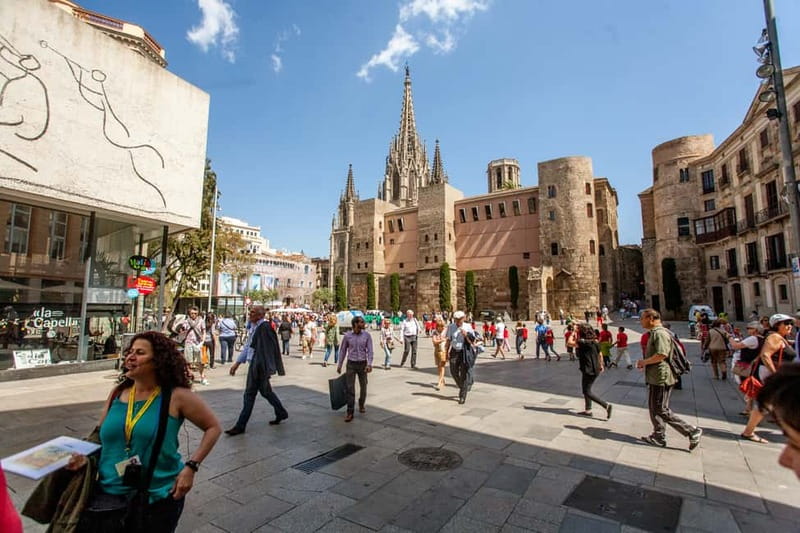
This tour is less about checking off famous paintings and more about putting Picasso in the city that formed him. Barcelona was where he studied, found fellow artists, showed his work, and absorbed the street scenes and café culture that fed his early imagination.
You begin at the Tourist Information Point on Plaça de Catalunya. Look for the entrance at number 17-S, then go down the escalators between two large pillars. This detail matters because Plaça de Catalunya is busy, and a few extra minutes spent finding the correct information point can save you from a stressful start.
From there, the walk leads toward the Gothic Quarter. The streets are busy and sometimes noisy, so headphones are provided for the tour commentary. Bring your own headphones and a charged smartphone as well, since the activity information lists both among the recommended items.
I like this opening because the guide can talk about Picasso while you move through the sort of old-city setting that shaped his teenage years. It also gives you a useful introduction to Barcelona before you reach the museum. The tradeoff is that this is a walking tour on historic streets, so comfortable shoes are not optional advice.
More Picasso Museum visits:
- Barcelona: Picasso Museum Skip-the-Line Guided Tour
★ 4.5 · 3,355 reviews - Picasso Museum Skip-the-Line Guided Tour
★ 4.5 · 1,079 reviews - Picasso Museum and Walking Tour Plus Optional Wine & Food Tasting
★ 5.0 · 596 reviews
Plaça Reial and the first look at Picasso’s city
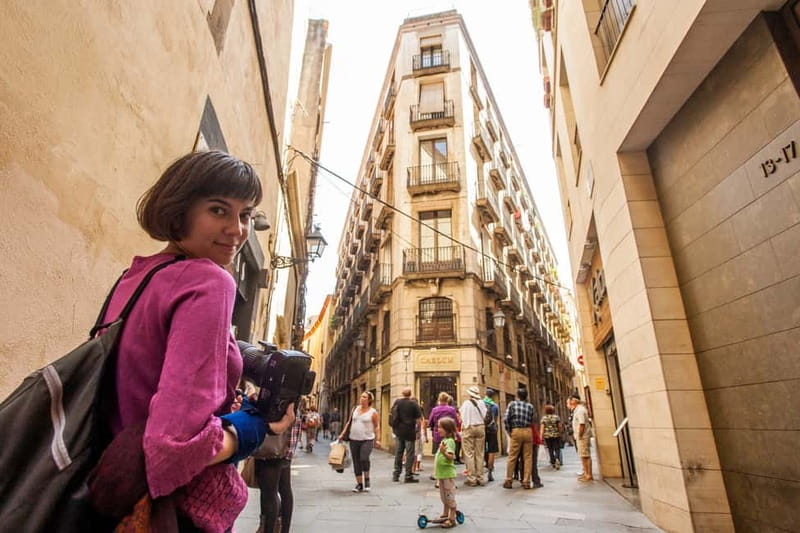
Plaça Reial is one of the first meaningful stops. The square’s café life helps set the scene for the young Picasso, who sketched city activity and absorbed the people, places, and moods around him.
The value here is context. A museum label can tell you when a painting was made, but it cannot show you the streets and social settings that fed Picasso’s early work. On this walk, the guide connects his development to Barcelona’s public life, including the cafés, street scenes, circuses, and less polished corners of the Raval district.
Do not expect a long stop at every location. The Gothic Quarter section lasts about 50 minutes in total, and the pace has to keep moving so the group reaches the museum on time. You get a guided view of the district rather than a leisurely neighborhood exploration.
That balance suits you if you want a focused introduction to Picasso and Barcelona. If your priority is architecture, shopping, or a broad Gothic Quarter history tour, this experience may feel too centered on one artist.
Llotja de Mar and Picasso at thirteen
The route includes Llotja de Mar, the prestigious art academy where Picasso entered at the age of 13. This is one of the strongest historical stops because it shows how early his talent was recognized and how serious his training was before his more radical work became famous.
The story of Picasso often begins with Cubism, but this part of his life reveals something different. He had a strong command of traditional drawing and painting before he began to break familiar rules. Seeing the academy in the story helps you understand that his later experiments were not the product of weak technique.
I especially like this stop for first-time Picasso visitors. It gives you a better way to read the museum’s early works: look for the control, practice, and academic skill beneath the later distortions and bold changes in style.
The tour does not offer a separate extended visit inside Llotja de Mar. Treat it as a place of explanation and atmosphere rather than a full museum admission. The focus remains on Picasso’s connection to Barcelona and on reaching the Picasso Museum for the second half.
Els Quatre Gats, Picasso’s bohemian meeting place
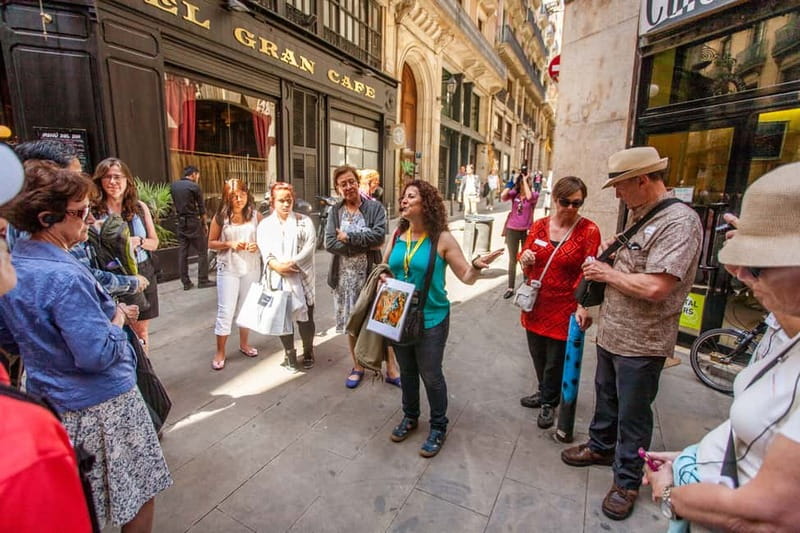
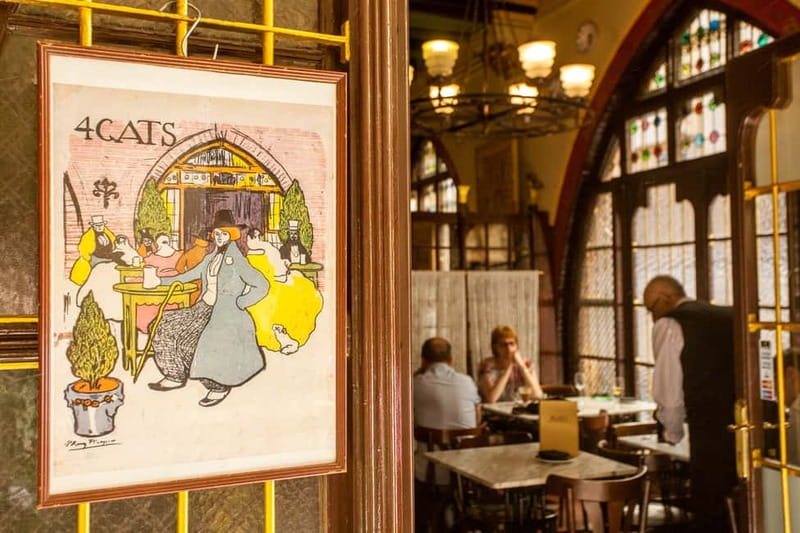
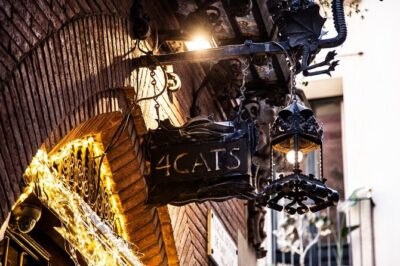
Els Quatre Gats is the walk’s most atmospheric stop. This famous café became a gathering place for Barcelona’s artists and intellectuals, and it was closely tied to Picasso’s early career.
At 18, Picasso held his first exhibition there. He also designed the café’s well-known menu, a small but telling detail that shows how art, friendship, food, and performance mixed in the city’s avant-garde circles.
The guide uses the café to explain Picasso’s friendships with poets, anarchists, and other artists. You also hear how the group gathered to argue, drink, and exchange ideas. That social setting matters because Picasso’s career did not develop in isolation. His work grew alongside a circle of people who challenged one another and helped create the mood of early twentieth-century Barcelona.
The visit is listed as about 10 minutes, so keep your expectations realistic. You may enter or view the site with a short explanation, but this is not a long café break. You are there to connect the place to Picasso’s early exhibition and artistic circle.
For many people, this is the most memorable stop before the museum because it feels personal and concrete. You are not just hearing that Picasso was part of Barcelona’s art scene. You are standing at one of the places where that scene gathered.
More museums and sites in Barcelona:
- Barcelona: FC Barcelona Museum “Barça Immersive Tour” Ticket
★ 4.4 · 10,944 reviews - Barcelona: Park Güell and Gaudí House Museum Entry Ticket
★ 4.5 · 6,326 reviews - Girona & Dali Museum Small Group Tour with Pick-up from Barcelona
★ 5.0 · 2,965 reviews - Moco Museum Barcelona Banksy & More
★ 4.6 · 2,340 reviews
The Architects’ Association Building and Picasso’s public artwork
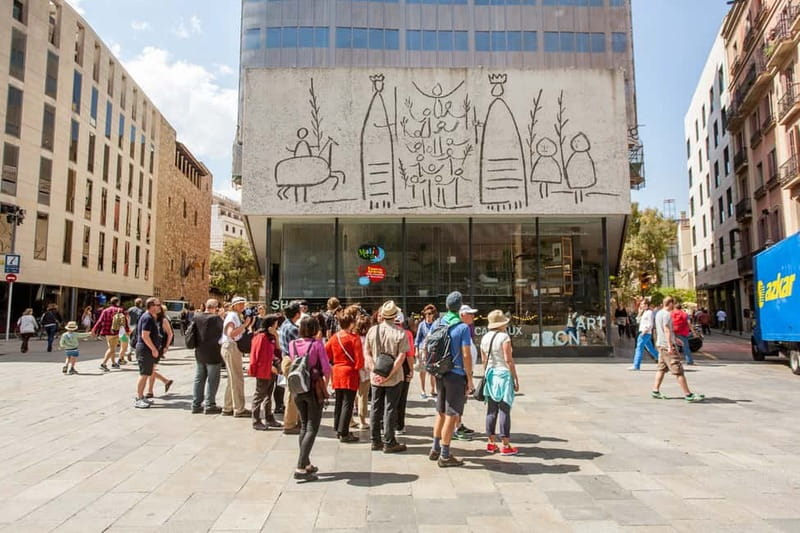
The Architects’ Association Building offers a different kind of Picasso encounter. Here you see his only piece of public art, a frieze on the building that many passersby might miss.
This stop is valuable because it takes Picasso out of the museum. His work is not limited to framed paintings behind glass. The public frieze makes you look at his relationship with the city itself, and it gives the walking portion a clear visual payoff.
I recommend paying close attention to the guide’s explanation here rather than rushing past for a photograph. The point is not simply that Picasso made a work for a building. It is that this public piece links his modern style to Barcelona’s civic and architectural setting.
As with the other street stops, you should expect a short presentation rather than a long period to study the artwork. The tour has only two hours overall, and the museum visit still lies ahead.
Inside the Picasso Museum for one focused hour
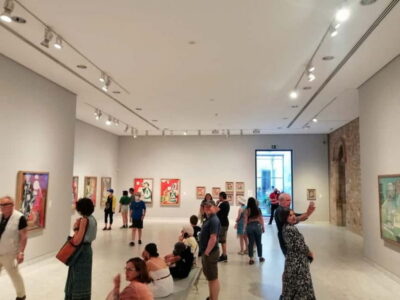
The Picasso Museum is the main event, and the guided visit lasts about an hour. Skip-the-line entry is included, which is important because it removes one of the least useful parts of a museum visit: waiting to get inside.
The museum’s collection contains more than 4,200 works arranged across five Gothic palaces. That setting gives the visit a strong sense of place, but it also creates a time problem. No guide can cover everything in one hour, so the tour has to select works that show Picasso’s development.
You can expect attention to:
- Childhood drawings that show his technical skill
- Early paintings connected to his Barcelona years
- Portraits of lovers and friends
- Ceramics and engravings
- The complete Las Meninas series from 1957
The Las Meninas series is a particularly useful subject for a guided visit. Picasso reworked Velázquez’s famous painting in a radical 1957 series, and seeing the complete group helps you understand how he could take an established masterpiece apart and rebuild it through his own visual language.
A good guide will also explain how Picasso’s style changed alongside events in his life. Guides including Olga Escribano, Olga Eschenko, Ali, Jordi, Jorge, and Catarina have been praised for making those links clear and for bringing personal energy to the subject. Names and assignments can change, of course, but the activity is designed around a live English or French guide rather than a silent museum visit.
The museum portion is not simply a procession from room to room. You get interpretation about why the works look different, what Picasso was trying to do, and how his early training relates to his later inventions. That is the part you cannot easily reproduce with a quick audio guide and a museum map.
Still, one hour is not enough for a complete museum visit. After the guided portion, you may be left to continue exploring on your own, but the time available depends on the day’s schedule. If ceramics, sculpture, or engravings are your main interest, you may want a separate museum visit with more time.
What the small group changes
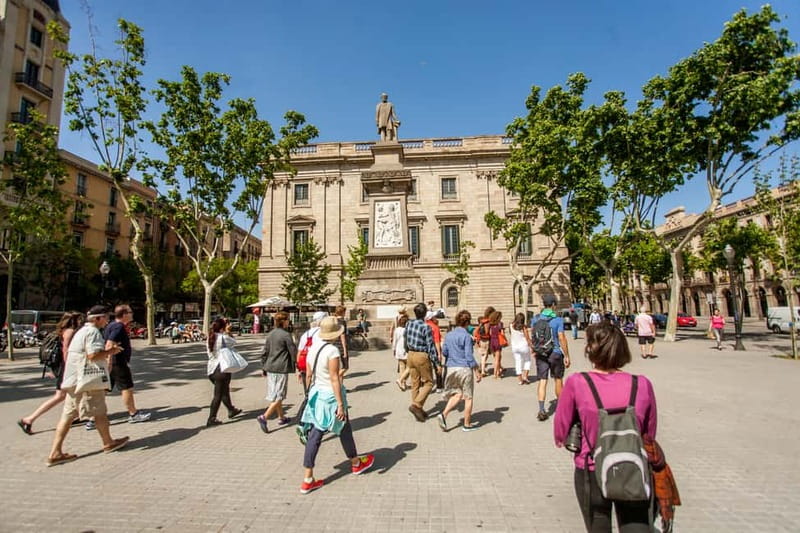
The maximum group size is nine people. That is a real advantage in a crowded old quarter and a museum where it can be hard to hear a guide.
Small groups also make it easier to ask questions about Picasso’s relationships, artistic periods, or Barcelona locations. Several guides have been singled out for clear explanations, lively storytelling, patience, and attention to individual needs. One guide even helped a participant find a bathroom, a modest detail that matters during a tightly timed walking tour.
The audio setup is useful because Barcelona’s streets can be loud. Headphones let you hear the guide without requiring everyone to crowd around. Keep your phone charged, and bring headphones as requested in the tour details.
The group size does not make the route private. You are still following a set schedule and walking with other participants. But nine people is small enough to feel personal, especially compared with a large city tour where questions often disappear into the crowd.
Price, pace, and overall value at $46
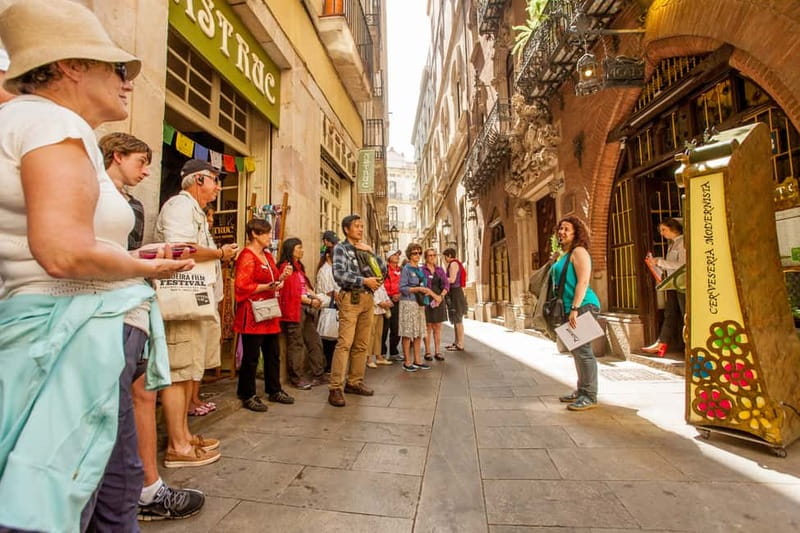
At $46 per person, this tour offers reasonable value if you want both a guided city walk and museum admission. You are paying for a live guide, the bohemian Barcelona route, skip-the-line entry, and a guided hour inside one of Barcelona’s major art museums.
The value is strongest for first-time visitors, Picasso newcomers, and anyone who likes art explained through places. Instead of paying separately for a basic Gothic Quarter walk and then trying to make sense of the museum alone, you get one connected experience.
The value is weaker if you already know Picasso well or plan to spend several hours at the museum. A self-guided museum visit gives you more freedom and more time with less-famous works. You would also be able to linger at Els Quatre Gats or revisit the public artwork at your own pace.
The tour lasts two hours, so it fits neatly into a morning or afternoon. Build in extra time afterward if you want to continue through the museum. The activity information says it finishes at the Museu Picasso, while the meeting details also state that the activity ends back at the meeting point. Confirm the day’s exact end arrangement when booking, especially if you have a timed reservation afterward.
You can cancel up to 24 hours ahead for a full refund, and the reserve-now, pay-later option keeps your plans flexible. Those policies are useful in Barcelona, where weather, museum plans, and crowded sightseeing days can force last-minute changes.
Who should book this Picasso walk
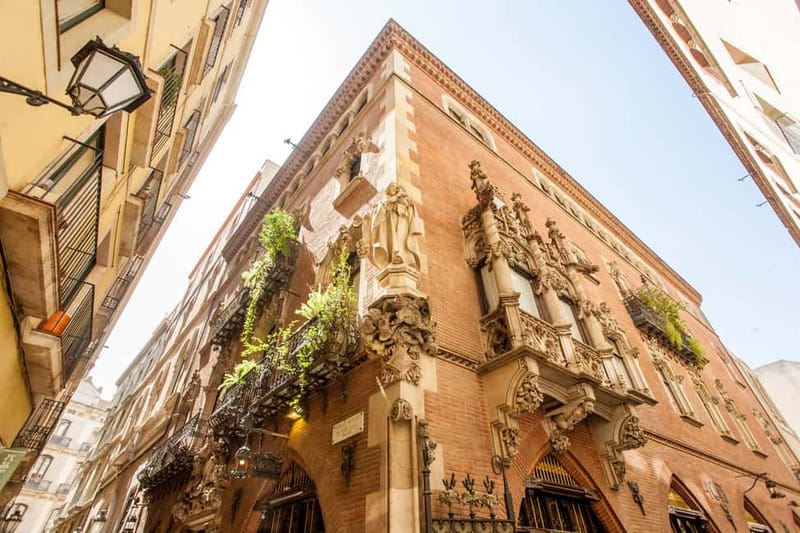
I would choose this tour if you:
- Want Picasso explained through his Barcelona surroundings
- Prefer a guide who connects art with city history
- Are visiting the Picasso Museum for the first time
- Like short walking routes with a focused museum visit
- Value a group capped at nine people
- Want skip-the-line museum entry included
It is especially good for art lovers who do not want a dry lecture. The strongest guides bring stories about Picasso’s youth, friendships, training, and artistic changes into the streets and museum rooms.
I would think twice if you need a wheelchair-friendly route, since the supplied information does not describe accessibility. I would also reconsider if you dislike walking, cannot wear comfortable shoes, or want a full-day museum study.
The tour is not built for deep specialization in every medium. You get a useful introduction to paintings and Picasso’s development, with some attention to ceramics and engravings. For a detailed study of sculpture, ceramics, or the entire collection, plan more museum time beyond the guided hour.
Meeting point and simple preparation
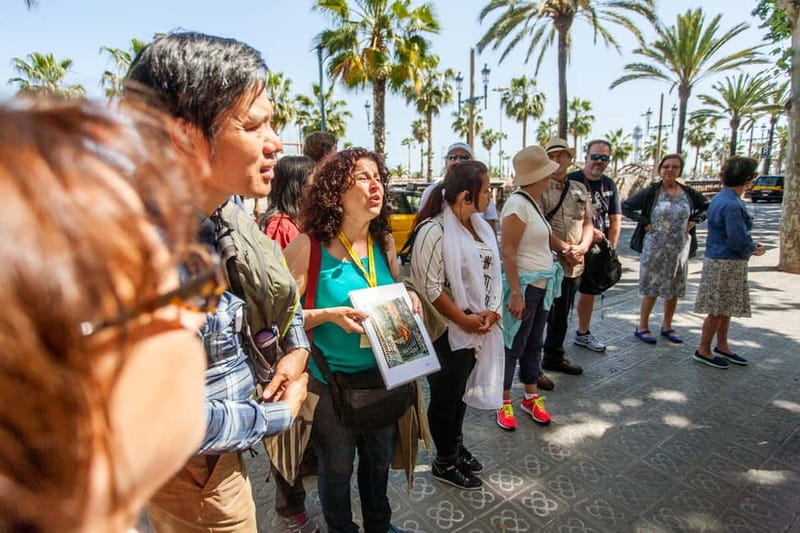
Meet at the Tourist Information Point at Plaça de Catalunya, 17-S. Go down the escalators between the two large pillars to reach the information point.
Arrive early enough to locate it without guessing. One participant missed the meeting point and the first walking section but still found the museum portion excellent. That is an avoidable loss, since the streets are half the reason to book this experience.
Wear comfortable shoes. Leave pets and large bags behind, since they are not allowed. The listed languages are English and French, and an English audio guide is optional. Bring a charged smartphone and headphones.
Should you book the Picasso Museum walking tour?
Book it if you want a compact, well-connected introduction to Picasso’s Barcelona. The route gives you several specific places, not just general background, and the museum hour helps you see how Picasso moved from gifted young student to artist who kept reinventing his work.
The main limitation is the clock. Two hours passes quickly, and the Picasso Museum deserves longer than the guided visit provides. My practical advice is to book this tour for the introduction, then stay on at the museum if your schedule and ticket arrangement allow. At $46, it is a fair choice for a first visit, particularly when a strong guide such as Olga Escribano, Jorge, Julie, or Pilar is leading the group.
FAQ
How long does the Picasso Barcelona tour last?
The activity lasts two hours, including the walking tour and the guided visit to the Picasso Museum.
Where does the tour start?
It starts at the Tourist Information Point at Plaça de Catalunya, 17-S, Barcelona. Use the escalators between two large pillars to reach the information point.
Where does the tour finish?
The itinerary finishes at the Museu Picasso de Barcelona. The meeting information also says the activity ends back at the meeting point, so confirm the exact arrangement for your selected time.
Is Picasso Museum entry included?
Yes. A guided visit to the Picasso Museum and entrance fees are included.
Does the tour include skip-the-line entry?
Yes. Skip-the-ticket-line access is included.
How large is the group?
The group is limited to nine participants.
What languages are available?
Live guides are available in English and French. An English audio guide is also listed as an option.
What places connected to Picasso does the walk visit?
The route includes the Gothic Quarter, Llotja de Mar, Els Quatre Gats, and the Architects’ Association Building, where Picasso’s only public artwork can be seen.
What should I bring?
Bring comfortable shoes, headphones, and a charged smartphone.
Can I cancel the booking?
You can cancel up to 24 hours in advance for a full refund. The reserve-now, pay-later option lets you hold a place without paying immediately.
Just added around Barcelona
- GoCar Full Day Tour★ 4.0 · 6 reviews
- Sagrada Familia and Barcelona Highlights: Private Guided 4-Hour Driving Tour★ 5.0 · 6 reviews
- Barcelona: Highlights & Gems Private Tour with Tapa & Drink★ 3.9 · 6 reviews
- Gothic Quarter and Born District: Photographic Workshop★ 5.0 · 6 reviews
- Gobbi Yacht Rental in Barcelona 9 Pax 2/4/8hs★ 5.0 · 6 reviews
- Barcelona: Gothic Quarter & La Sagrada Familia Private Tour★ 4.9 · 6 reviews
- Private Sailboat Ride at Sunset from Sitges★ 5.0 · 6 reviews
- The Essence of Priorat | Private Wine Tour from Barcelona★ 5.0 · 6 reviews
Picasso Museum Tours, compared.
Picasso Museum and Walking Tour Plus Optional Wine & Food Tasting
Read our review →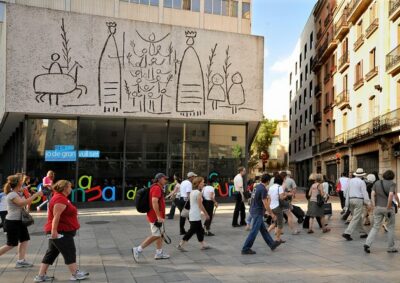
Picasso Small Group Walking Tour with Museum Skip the Line Ticket
Read our review →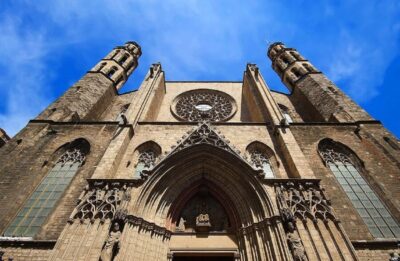
Picasso Museum and Walking Tour Plus Wine Tasting Upgrade
Read our review →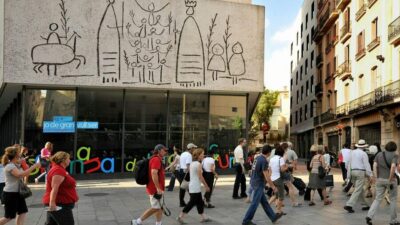
Picasso Walking Tour with Picasso Museum Tickets
Read our review →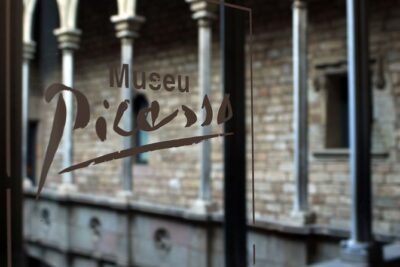
Browse the lists this tour appears in