
Reviewed · PICASSO MUSEUM TOURS
Picasso Museum Guided Tour in Barcelona
Picasso’s Barcelona story comes into focus at the Museu Picasso, where five medieval palaces hold more than 3,500 works. The collection is especially strong in his youth, making this a useful stop for understanding how a gifted student became the artist behind Cubism.
I like two things right away: admission is included, so you avoid arranging a separate museum ticket, and the guided visit gives you a clear path through Picasso’s early years. I also like that you can remain inside after the tour and continue at your own pace.
The weak spot is organization. Finding the meeting point at the Fossar de les Moreres can be tricky, and a few groups have dealt with late starts, unclear directions, or audio equipment that made the guide hard to hear. Arrive early and confirm the exact meeting place before you leave.
In This Review
- Key points to know
- Why Picasso’s Barcelona years matter
- Meeting at the Fossar de les Moreres
- Entering five medieval palaces
- Following Picasso from student to modern master
- Using the extra museum time well
- What the radio guide adds
- Is $43.45 a fair price?
- Who will get the most from this visit?
- Timing, group size, and avoiding a bad start
- The bottom line: book it or go alone?
- FAQ
- Where does the Picasso Museum tour meet?
- Where does the tour end?
- Is museum admission included?
- Is the tour offered in English?
- How large is the group?
- Can I bring a backpack?
Key points to know
- Five historic palaces: The museum occupies buildings dating from the 13th and 14th centuries, not one modern gallery block.
- Picasso’s formative years: The collection gives special attention to his youth and his time in Barcelona from 1895 to 1904.
- English guided visit: A local guide leads the museum tour, with a radio system intended to make listening easier.
- Stay after the tour: Once the guided portion ends, you may continue inside the museum until closing.
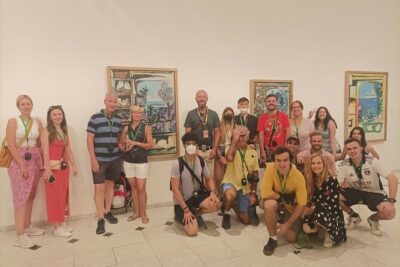
- Smallish group: The maximum group size is 20, though the pace can still feel brisk.
- Backpack warning: Large backpacks are not recommended and must be left at the box office if you bring one.
Why Picasso’s Barcelona years matter
Many people meet Picasso through Cubism, distorted faces, and famous modern paintings. This museum offers a different starting point. You see the artist before the familiar style fully arrives, when he was studying, practicing, copying, testing, and absorbing Barcelona.
Picasso lived and worked in Barcelona from 1895 to 1904. That period matters because it shows an artist in motion. Instead of treating his mature work as a sudden break with the past, you can watch the gradual changes in his technique and ideas.
The collection is known for its large group of early works. That makes the museum a good choice if you want to understand Picasso rather than simply check off a famous name. A guide can point out changes in draftsmanship, subject matter, and mood that are easy to miss when you move quickly from room to room.
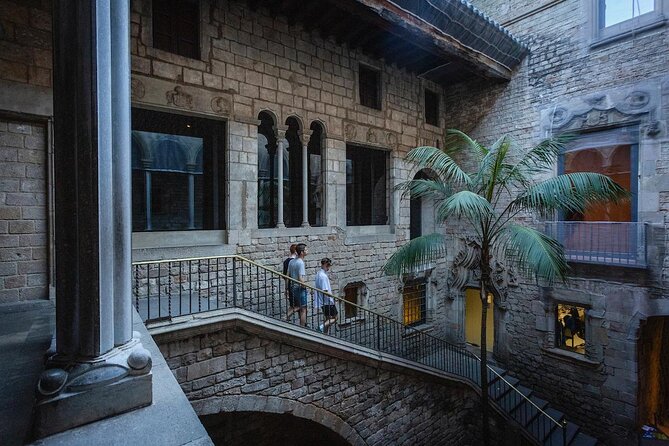
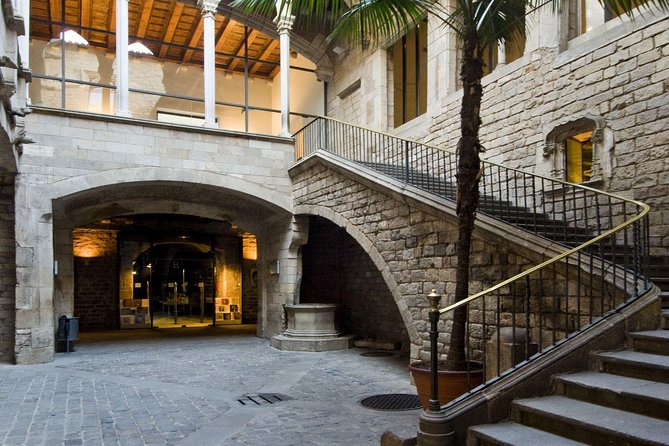
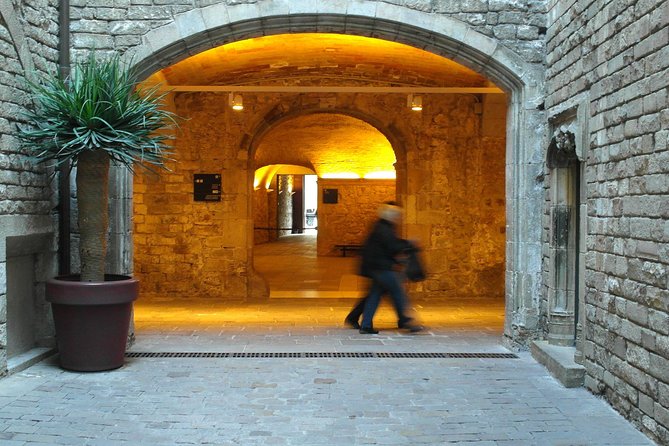
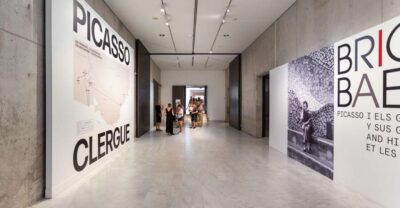
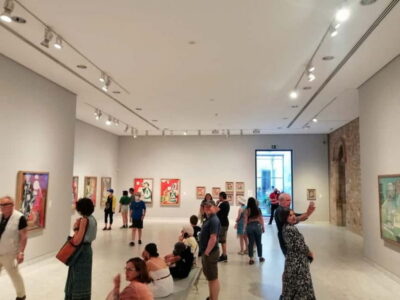
The setting adds another layer. The museum occupies five palaces built between the 13th and 14th centuries. You are not walking through a neutral white-box gallery. Stone walls, courtyards, stairways, and old architectural details shape the visit.
More Picasso Museum visits:
- Barcelona: Picasso Museum Skip-the-Line Guided Tour
★ 4.5 · 3,355 reviews - Picasso Museum Skip-the-Line Guided Tour
★ 4.5 · 1,079 reviews - Barcelona: Small Group Picasso Tour with Picasso Museum
★ 4.5 · 674 reviews
Meeting at the Fossar de les Moreres
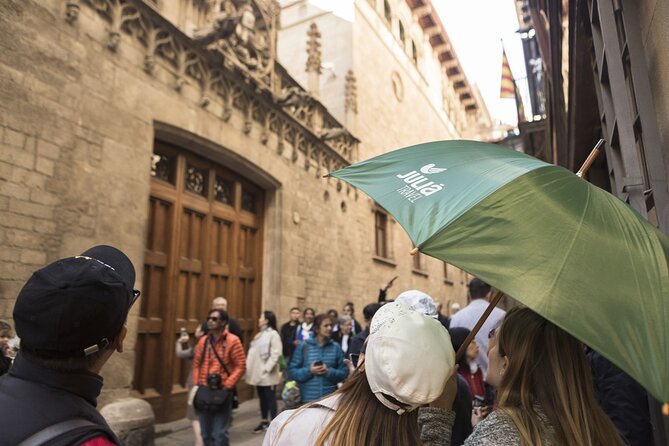
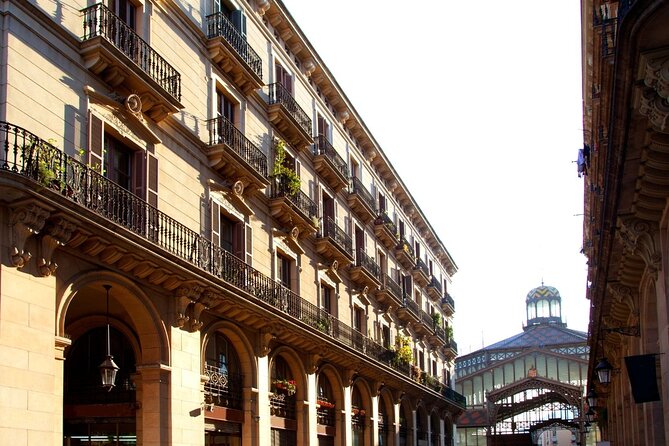
The tour begins at Plaça del Fossar de les Moreres in Barcelona’s Ciutat Vella. From there, the group takes a short walk to Carrer de Montcada, where the museum is located.
This meeting point is close to the museum, but it is not the museum entrance. That distinction is important. Several poor experiences came from confusion over the starting location, including people waiting at the museum instead of at the square. Use the stated meeting point, allow extra time, and look for the tour representative rather than assuming the guide will be standing at the museum door.
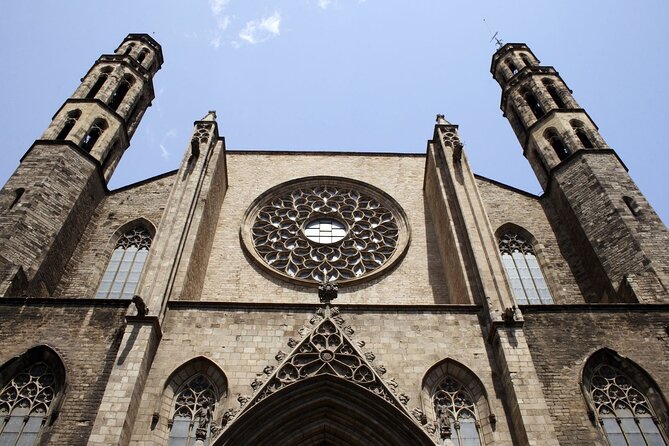
The Fossar de les Moreres is an old memorial site beside Santa Maria del Mar. The short walk through El Born helps set the scene for Picasso’s Barcelona, even though the main focus is the museum. Some versions of the experience have included a longer Born walk, but the core tour described here is the brief walk from the meeting point to the museum.
The operator supplies a radio guide system. In principle, this is helpful in a group because you can hear the guide while standing a short distance away from the art. In practice, the system depends on the guide using the microphone correctly. One poor experience came from the microphone being held too far from the guide’s mouth. If you cannot hear, speak up early rather than trying to follow silently.
Entering five medieval palaces
The Museu Picasso began in one building, the Palau Aguilar, and grew over time to include five connected palaces. The architecture is part of the appeal, but it also affects how the visit feels.
The galleries are not arranged like one straight runway. You move through separate historic buildings, rooms, and passages. That creates character, yet it can also be confusing if you are trying to find particular works on your own.
A guide is most useful here when the tour has a clear route and focuses on selected works. Several guides received high praise for explaining Picasso’s life and placing the paintings in context. Olga, Ann, Olivier, Martha, Raoul, David, and Marc were singled out for warm, clear, or engaging presentations. The exact guide varies, so you should not book based on expecting one particular person.
The best guides appear to make the building and the collection work together. They explain what you are seeing, why it belongs in Picasso’s development, and how Barcelona shaped the young artist. The less successful approach is to rush from room to room or give every object equal attention.
Following Picasso from student to modern master
The guided section lasts about 1 hour 30 minutes, though the overall experience may run closer to two hours depending on the group. The museum visit is designed as a chronological look at Picasso’s artistic evolution, from his youth through his later life.
The early material is the main reason to choose this tour. You can see how much technical skill Picasso had at a young age, then follow the changes that led him away from traditional academic painting. The point is not simply that he became famous. The point is seeing the decisions and experiments that shaped his career.
A strong guide can help you compare works rather than just list dates and titles. You may be asked to notice how Picasso handles a face, a body, a room, or a street at different stages. You may also hear about his father, who was an artist, and how early Picasso began working seriously with art.
The Barcelona period from 1895 to 1904 gives the visit a local anchor. Picasso was not an isolated figure working in a vacuum. The city, its people, its streets, and its artistic circles formed part of his early world.
The main caution is pace. Some guides move quickly, and people can be left behind if the group is not checked after each room. If you want time with every painting, a guided visit may feel hurried. The tour is better suited to getting an organized introduction than to quiet, detailed study of individual works.
More museums and sites in Barcelona:
- Barcelona: FC Barcelona Museum “Barça Immersive Tour” Ticket
★ 4.4 · 10,944 reviews - Barcelona: Park Güell and Gaudí House Museum Entry Ticket
★ 4.5 · 6,326 reviews - Girona & Dali Museum Small Group Tour with Pick-up from Barcelona
★ 5.0 · 2,965 reviews - Moco Museum Barcelona Banksy & More
★ 4.6 · 2,340 reviews
Using the extra museum time well
At the end of the guided tour, you may remain inside the museum until closing. This is one of the best features of the experience, because it softens the usual group-tour problem: the guide sets the pace, but you still get a chance to revisit what caught your attention.
Use the guided portion to build a map of the collection. Then return to rooms or works that went by too quickly. If the guide spent time on paintings that did not interest you, this extra period lets you make your own choices.
That said, do not assume the extra time will always be effortless. One complaint involved personal belongings being locked away, which made remaining in the museum awkward. The stated arrangement allows you to stay, but you should ask the guide or museum staff how bags and belongings are handled before the guided portion ends.
The backpack rule is simple: do not bring one if you can avoid it. If you do carry a backpack, you must leave it at the box office to enter the museum. A small hand-held bag is likely to be less troublesome, but the supplied information specifically warns against backpacks.
What the radio guide adds
The radio system is included and is meant to solve a common museum problem: twenty people cannot all stand close to one guide without blocking rooms or other visitors.
When it works, you can step back, see the artwork, and still follow the explanation. This is especially useful in narrow palace rooms. The maximum group size is 20, so the equipment can make the visit more manageable.
The system is not a substitute for good tour leadership. Keep the receiver close, check that you can hear before the guide starts, and tell the guide promptly if the sound cuts out. The experience depends heavily on the guide’s delivery, and the reviews show a clear range, from warm and engaging to disorganized and difficult to follow.
The English offering is useful if you want help with names, dates, and art terms. The guide is also there to translate and explain, not simply to lead you from door to door. If you already know Picasso well, you may prefer an independent visit with an audio guide or museum materials.
Is $43.45 a fair price?
At $43.45 per person, this is not the cheapest way to enter the Museu Picasso. You are paying for more than admission: an English-speaking local guide, a radio system, and the convenience of a scheduled group visit.
The price makes sense if you value structure and want help connecting the works to Picasso’s life. It can also save time compared with arriving without a ticket and trying to plan the museum on your own. Group discounts may be available, which can improve the value for families or parties booking together.
The value drops if the tour starts late, loses time to poor organization, or simply walks through every room without selecting the most useful works. One especially dissatisfied visitor felt that the museum could be handled independently for less money. That is a fair point for confident museumgoers.
I would compare this tour with the cost and availability of a direct museum ticket before booking. If you are comfortable reading wall labels and making your own route, the guided premium may not be necessary. If you want a first visit shaped by a real person and still want time alone afterward, the price is easier to justify.
Who will get the most from this visit?
This tour suits a first-time Picasso visitor who wants a clear introduction. You do not need a background in art. A good guide can explain why the early paintings matter and help you see links between Picasso’s life and his changing style.
It also suits anyone with limited time in Barcelona. The visit is short enough to fit into a day in Ciutat Vella, and the included admission removes one small planning task. The central location makes it easy to pair with time in El Born, though the supplied experience itself includes only a short walk to the museum.
It is less suitable for children under three, who are not recommended for the tour. It may also frustrate serious art students who want long stretches of silence with selected works. The guide’s pace and route will control the first portion of your visit.
Most people can participate, and service animals are allowed. The practical restriction is the bag policy, not physical access information. Pack light.
Timing, group size, and avoiding a bad start
The tour is booked an average of 47 days ahead, which suggests you should not leave it until the last moment if your Barcelona dates are fixed. The group limit is 20, but that is still large enough for people to spread out in the palace rooms.
Arrive early at the Fossar de les Moreres. This is the single best way to protect the experience. Conflicting directions and late arrivals have caused trouble, and the guide may not be able to wait once the group moves toward the museum.
Keep your booking confirmation available. If you are late, the company may try to reunite you with the group, but that is not something to count on. A missed start can mean buying separate admission and losing the guided portion.
Free cancellation is available up to 24 hours before the local start time. Changes or cancellations inside that 24-hour window are not accepted for a refund, so check your schedule before that deadline.
The bottom line: book it or go alone?
Book this tour if you want a focused introduction to Picasso’s early work, prefer an English-speaking guide, and like the idea of staying inside after the group leaves. The strongest guides, including Olga, Ann, Olivier, Martha, and others praised for clear explanations, can make the collection much easier to understand.
Skip it if you already know Picasso well, dislike group pacing, or are happy to plan your own museum route. The museum itself is the star, and you can see it independently for less if admission is available.
My practical choice would be to book when a first visit, limited time, and art context matter most. Arrive early, bring no backpack, check the radio before the tour begins, and remain afterward for the rooms you want to see again. That approach gives you the best chance of getting both the guide’s context and your own quiet time with Picasso.
FAQ
Where does the Picasso Museum tour meet?
The meeting point is Plaça del Fossar de les Moreres in Ciutat Vella, Barcelona. The group then walks a short distance to the museum.
Where does the tour end?
The guided tour ends at the Museu Picasso Barcelona, at Carrer de Montcada, 15-23. You may remain inside the museum for as long as you like until closing.
Is museum admission included?
Yes. The Picasso Museum admission ticket and guided tour are included in the price.
Is the tour offered in English?
Yes. The experience is offered in English and includes a local guide and a radio guide system.
How large is the group?
The group has a maximum of 20 travelers.
Can I bring a backpack?
Backpacks are not recommended. If you bring one, you must leave it at the box office to enter the museum.
Just added around Barcelona
- GoCar Full Day Tour★ 4.0 · 6 reviews
- Sagrada Familia and Barcelona Highlights: Private Guided 4-Hour Driving Tour★ 5.0 · 6 reviews
- Barcelona: Highlights & Gems Private Tour with Tapa & Drink★ 3.9 · 6 reviews
- Gothic Quarter and Born District: Photographic Workshop★ 5.0 · 6 reviews
- Gobbi Yacht Rental in Barcelona 9 Pax 2/4/8hs★ 5.0 · 6 reviews
- Barcelona: Gothic Quarter & La Sagrada Familia Private Tour★ 4.9 · 6 reviews
- Private Sailboat Ride at Sunset from Sitges★ 5.0 · 6 reviews
- Barcelona: Private Tour of Casa Batllo with Reserved Access★ 3.5 · 6 reviews
Picasso Museum Tours, compared.
Picasso Museum and Walking Tour Plus Optional Wine & Food Tasting
Read our review →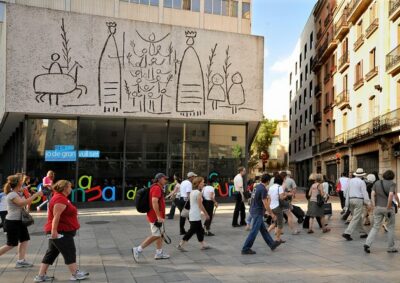
Picasso Small Group Walking Tour with Museum Skip the Line Ticket
Read our review →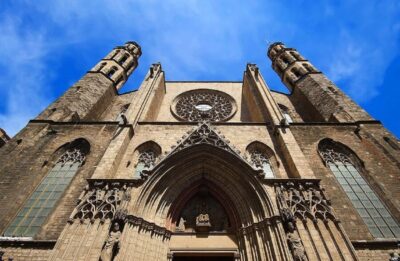
Picasso Museum and Walking Tour Plus Wine Tasting Upgrade
Read our review →
Picasso Walking Tour with Picasso Museum Tickets
Read our review →Browse the lists this tour appears in