
Reviewed · HIDDEN GEMS AND LOCAL WALKS
Explore hidden streets of Barcelona with a local – Private Tour
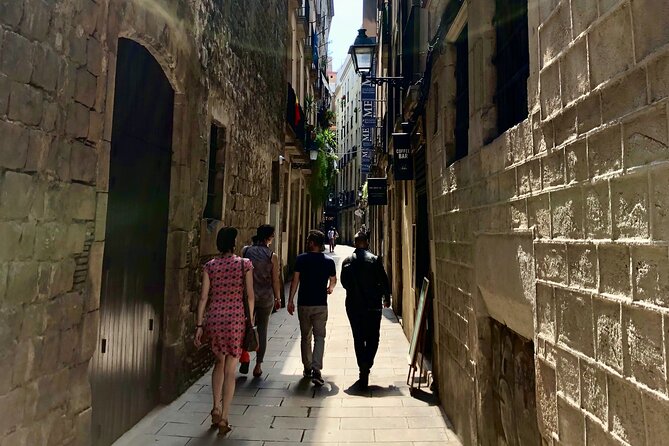
Barcelona reveals itself best on foot, especially in the narrow lanes of El Born and the Gothic Quarter. This private walk links medieval streets, Roman foundations, Modernist architecture, the Picasso Museum area, and quiet squares that are easy to miss when you follow only the main sights.
I like the one-group format, which lets you ask questions and shape the conversation. I also like the route’s mix of major landmarks and lesser-known streets, with guides Christian or Michael providing history, architecture, and practical city advice. The main drawback is that you need to help keep the conversation moving. One guest found the walk somewhat circular and wanted a clearer old-to-new timeline, so this tour suits curious participants who enjoy dialogue.
In This Review
- Key points to know before booking
- A private route through Barcelona’s oldest neighborhoods
- El Born: medieval lanes with plenty to discuss
- Palace of Catalan Music and Barcelona’s Modernist side
- Arc de Triomf: a short stop with a larger story
- Mercat del Born and Passeig del Born
- Picasso Museum area and the old street network
- Correus and the changing face of the city
- Entering the Gothic Quarter and Roman Barcelona
- Plaça de Sant Just and the Roman foundations
- Plaça de Sant Jaume, the city’s historic heart
- Finishing at Plaça Sant Felip Neri
- What the private format is really worth
- Walking comfort, timing, and who should book
- Final call: a good first walk if you join the conversation
- FAQ
- Where does the Barcelona private tour start?
- Where does the tour finish?
- How long does the experience last?
- Is this a private tour?
- Are admission tickets included?
- What languages are offered?
- Can I cancel for a full refund?
Key points to know before booking
- Private for your group: You will not be added to a larger walking party, so the experience can feel more personal and flexible.
- Two historic districts in one walk: El Born and the Gothic Quarter provide the main setting, with Roman, medieval, and Modernist stories along the way.
- Starts near Plaça de Catalunya: The meeting point is Hotel Ohla Barcelona on Via Laietana, a convenient central location.
- Ends at Plaça Sant Felip Neri: You finish in one of the Gothic Quarter’s most atmospheric small squares.
- No paid admissions included: The route passes major sights from the outside, including the Palace of Catalan Music and Picasso Museum.
- Plan for steady walking: You should be comfortable on foot for about two and a half hours over old streets and city pavements.
A private route through Barcelona’s oldest neighborhoods
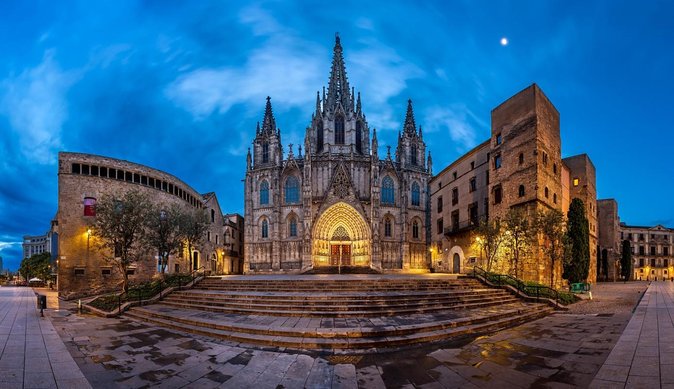
The walk begins at Hotel Ohla Barcelona, on Via Laietana near Plaça de Catalunya. This is a useful starting point because it sits between the newer central city and the older districts toward the sea.
From here, you head into El Born, a medieval neighborhood with a maze of lanes and a strong local feel. The route is not built around entering a long list of museums or monuments. Instead, you read Barcelona through its streets, buildings, squares, and changing neighborhoods.
That approach works well if you are trying to understand how the city fits together. You get the chance to ask why Barcelona was founded where it was, how its old quarters developed, and what different parts of the city mean today.
The tour is listed at about two hours and thirty minutes. The individual stop times add up to more than that, so treat those figures as rough attention points rather than a strict schedule. The experience is a continuous walk, with stops and explanations folded into the route.
More local corners of Barcelona:
- Barcelona 3-hour Bike or E-Bike Tour: Highlights and Hidden Gems
★ 5.0 · 1,429 reviews - Barcelona: El Born and Gothic Quarter Wine & Tapas Bar Tour
★ 4.8 · 674 reviews - Barcelona: El Born Food Walking Tour with Tapas and Drinks
★ 4.9 · 662 reviews
El Born: medieval lanes with plenty to discuss
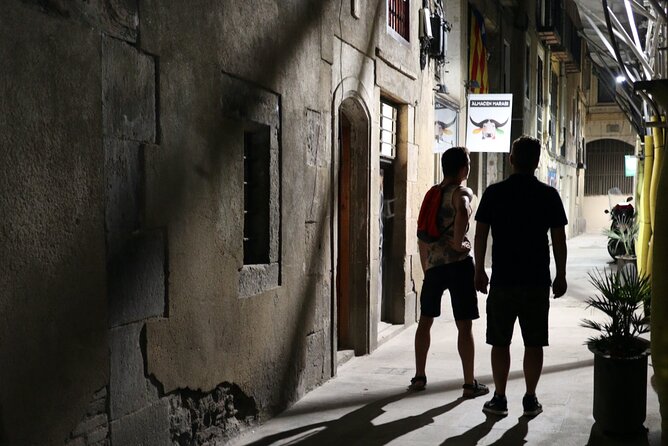
The first major section is El Born, where you spend much of the walk. This neighborhood rewards slow walking. Its small streets can feel confusing at first, but that is part of the point. Your guide helps connect the lanes to Barcelona’s medieval past and to the way the area functions now.
I like having a local guide here because the most useful information is not always printed on a sign. The value comes from asking questions as you go. You can stop to clarify a building’s purpose, ask about local customs, or get advice for the rest of your time in Barcelona.
The private format is especially useful in this part of the route. If your group is interested in architecture, history, food, or daily life, you can steer the conversation in that direction. If nobody asks questions, though, the walk may feel less lively. The provider’s own response to one less positive experience makes this clear: the format expects participation rather than a nonstop lecture.
Palace of Catalan Music and Barcelona’s Modernist side
The Palace of Catalan Music is described as the first major sight on the route. The stop lasts about fifteen minutes, and admission is not included, so you should expect to see and discuss the building from outside rather than take a formal interior visit.
This is a useful contrast with El Born’s medieval streets. Barcelona is famous for Modernist design, and the palace gives the guide a chance to explain that side of the city’s architecture and history. The stop also breaks up the older streets with one of the route’s larger and more visually striking landmarks.
If the palace is high on your Barcelona list, remember that this walking tour is not a substitute for an interior visit. You will need a separate ticket and visit for that. Here, the benefit is context and orientation, not full access.
Arc de Triomf: a short stop with a larger story
The Arc de Triomf is another brief stop, listed at about fifteen minutes. It is presented as a highlight of Modernism with its own legends and historical background.
The arch gives the walk a more open urban setting after the enclosed lanes of El Born. It also helps show how Barcelona’s public spaces changed beyond the medieval core. Your guide can use the monument to connect architecture with the city’s civic story.
Because the stop is short, do not expect an extended architectural lecture or a long photo session. It works better as part of the larger route, especially if you want several periods of Barcelona’s past explained in one outing.
A few more Barcelona options worth an hour of your trip
- Barcelona: Park Güell Admission Ticket
★ 4.4 · 76,534 reviews - Barcelona: Casa Batlló Entry with Self-Audioguide Tour
★ 4.7 · 25,359 reviews - Barcelona: 24 or 48-Hour Hop-On Hop-Off Bus Tour
★ 4.4 · 20,872 reviews - Barcelona: Park Guell Guided Tour with Skip The Line Entry
★ 4.7 · 17,563 reviews
Mercat del Born and Passeig del Born
Mercat del Born is one of the route’s main historic sights. The market building carries a different kind of interest from the palace or arch. It connects history with the everyday life of the neighborhood, making it a good place to consider how El Born has changed over time.
You then continue along Passeig del Born. One specific aim here is to explain what El Born actually means. That small detail is easy to overlook if you simply walk through the district on your own, yet it gives the neighborhood a clearer identity.
This section should appeal to you if you prefer a city tour that explains names, places, and local development rather than ticking off famous monuments. The tradeoff is that some stops may feel familiar or visible from the street. The guide’s added value depends on how much detail and conversation your group wants.
Picasso Museum area and the old street network
The route passes the Picasso Museum while moving through a maze of small streets. Admission is not included, and the museum is treated as a point along the walk rather than a scheduled museum visit.
That is worth knowing before you book. If you want to spend time with Picasso’s work, plan a separate visit. On this tour, the museum matters because of its setting in the old quarter and because it helps place art within Barcelona’s historic center.
The surrounding streets are part of the experience. You get a chance to see how the old district is organized, with tight passages opening into wider spaces and squares. A guide can help you notice the difference between simply getting from one sight to another and understanding why the route takes you through these particular streets.
Correus and the changing face of the city
The Correus building, Barcelona’s major post office, appears later in the walk. It is described as a magnificent building and provides another change of scale and style.
This is one of the more practical parts of the route because it shows how the old city meets grander civic architecture. You are not looking only at churches and medieval walls. You are also seeing public buildings that reflect later periods of Barcelona’s growth.
For me, that mix is one of the tour’s strengths. You can compare a narrow medieval lane, a Modernist landmark, a historic market, and a major civic building within the same outing. The route is less about one perfect chronological sequence and more about showing how layers of the city sit beside one another.
Entering the Gothic Quarter and Roman Barcelona
The walk then moves into the Gothic Quarter, or Barri Gotic. This is where the tour focuses on the place where Barcelona was founded more than 2,000 years ago.
The district has an impressive name, but you should not expect every building you see to date from the Gothic period. The real value is learning how Roman Barcelona, the medieval city, and later rebuilding overlap in the same compact area.
The itinerary gives about one hour and twenty minutes to this part of the walk, though the full route is still approximately two and a half hours. That makes the Gothic Quarter a major section rather than a quick pass-through.
This is also where the guide’s storytelling matters most. If you like asking how the city began, why it grew in this location, and how its central squares developed, you should get a lot from the route. If you prefer a clearly ordered history lesson, tell your guide early. One critical assessment felt the route should have moved from oldest to newest and included more history. That is a fair consideration for anyone who likes a strict timeline.
Plaça de Sant Just and the Roman foundations
Plaça de Sant Just is a small square with roots reaching back to Roman times. The scheduled explanation lasts about fifteen minutes.
Small squares like this are exactly where a local guide can add value. The square may not take long to see, but its age and location help explain the shape of the old city. You can pause, look around, and connect the street plan to the larger story of Barcelona.
This is not a grand viewpoint or a major ticketed attraction. Its appeal is atmosphere and context. I would consider it a strong stop for first-time visitors who want to understand the old center beyond the cathedral and major shopping streets.
Plaça de Sant Jaume, the city’s historic heart
Plaça de Sant Jaume is presented as the heart of Roman Barcelona and the place where you learn why the city was founded here. The stop is listed at about ten minutes.
Its importance is less about the amount of time spent there and more about the explanation. A short talk in the right square can clarify the whole route, especially after you have walked through El Born and the Gothic Quarter.
You will also be in one of the central gathering places of the old city, so it may feel more open and formal than the smaller lanes. This makes it a good point for orientation. If you are still unsure how Barcelona’s oldest districts connect, ask your guide to recap the route here.
Finishing at Plaça Sant Felip Neri
The tour ends at Plaça Sant Felip Neri, a small square in the heart of the Gothic Quarter. The final stop is listed at about ten minutes and is described as full of history and atmosphere.
Ending here is practical. You remain in the old center, rather than being taken back to the starting point, and can continue exploring afterward. You might use the square as a final pause before finding lunch, visiting another sight, or walking back toward Plaça de Catalunya.
Because the route ends in the Gothic Quarter, you should plan your onward directions before setting off. The provided end point is clear, but this is not a loop back to Hotel Ohla Barcelona.
What the private format is really worth
The price is $101.53 per person. For a private tour, that can be reasonable if your group values direct access to a guide and the freedom to ask questions. The value improves when several people share the booking, since the experience is limited to your group and group discounts are available.
You are paying for a guided city walk, not entrance tickets. No admission is included for the Palace of Catalan Music or the Picasso Museum, and the other listed stops are free to view from the route.
I would compare the price with your plans for Barcelona. If you only want a quick list of famous sights, a larger group walk may cost less. If you want a local explanation of El Born and the Gothic Quarter, plus practical travel tips and a conversation tailored to your interests, the private setup makes more sense.
The experience has a 4.9 rating, with 94 percent of participants recommending it. Those figures suggest strong overall satisfaction, but they do not remove the main question: do you enjoy a conversational walk? Christian’s own response describes the format as interactive, while one participant wanted more continuous historical explanation. That difference is important.
Walking comfort, timing, and who should book
You should be able to walk for two and a half hours. The route covers old neighborhoods, and the experience is not designed for sitting or riding between sights.
Most people can participate, and service animals are allowed. The meeting point is near public transportation, which makes Hotel Ohla Barcelona a practical place to reach from other parts of the city.
I would book this for:
- First-time visitors who want a clear introduction to the oldest central districts.
- Couples, families, or friends who prefer a private guide to a large group.
- People who enjoy asking questions about history, architecture, and local life.
- Visitors who want to combine famous sights with smaller streets and squares.
- Anyone who wants practical Barcelona suggestions during the walk.
I would hesitate if you want a tightly scripted lecture, a strictly chronological history, or interior visits to the Palace of Catalan Music and Picasso Museum. The route covers a lot, so depth at every stop is not possible in two and a half hours.
Final call: a good first walk if you join the conversation
Book this private Barcelona walk if you want a broad, personal introduction to El Born and the Gothic Quarter, with Roman foundations, medieval lanes, Modernist buildings, and practical advice in one route. Christian and Michael are presented as experienced guides, but your own participation matters.
The best way to get value is to arrive with questions. Ask for a clear timeline if that helps you, and say which subjects interest you most. You should also plan separate visits if the Palace of Catalan Music or Picasso Museum is a priority.
At $101.53 per person, the tour makes the most sense for a small group splitting the cost. It is a strong choice for orientation and conversation, less so for a formal history course or a ticketed sightseeing day.
FAQ
Where does the Barcelona private tour start?
It starts at Hotel Ohla Barcelona, Via Laietana 49, in the Ciutat Vella district near Plaça de Catalunya.
Where does the tour finish?
It ends at Plaça Sant Felip Neri in the Gothic Quarter.
How long does the experience last?
The tour lasts approximately two hours and thirty minutes.
Is this a private tour?
Yes. Only your group participates, rather than joining a larger public walking group.
Are admission tickets included?
No. Admission is not included for the Palace of Catalan Music or the Picasso Museum. The route also includes several free outdoor sights.
What languages are offered?
The experience is offered in English.
Can I cancel for a full refund?
Yes, if you cancel at least 24 hours before the local start time. Cancellations made less than 24 hours in advance are not refundable, and changes within that period are not accepted.
Just added around Barcelona
- GoCar Full Day Tour★ 4.0 · 6 reviews
- Sagrada Familia and Barcelona Highlights: Private Guided 4-Hour Driving Tour★ 5.0 · 6 reviews
- Barcelona: Highlights & Gems Private Tour with Tapa & Drink★ 3.9 · 6 reviews
- Gothic Quarter and Born District: Photographic Workshop★ 5.0 · 6 reviews
- Gobbi Yacht Rental in Barcelona 9 Pax 2/4/8hs★ 5.0 · 6 reviews
- Barcelona: Gothic Quarter & La Sagrada Familia Private Tour★ 4.9 · 6 reviews
- Private Sailboat Ride at Sunset from Sitges★ 5.0 · 6 reviews
- Barcelona: Private Tour of Casa Batllo with Reserved Access★ 3.5 · 6 reviews
Hidden Gems and Local Walks, compared.
Barcelona 3-hour Bike or E-Bike Tour: Highlights and Hidden Gems
Read our review →
El Born and Gothic Quarter Wine & Tapas Bar Tour
Read our review →
El Born Food Walking Tour with Tapas and Drinks
Read our review →
Barcelona Old Town Tapas Tour: Vermouth, Bites & Hidden Gems
Read our review →
Barcelona Highlights & Hidden Gems Private Tour
Read our review →
Barcelona Food Tour: Tapas, Drinks and Delights with a Local
Read our review →
Barcelona Historical Walking Tour: Gothic Quarter and El Born
Read our review →
Welcome to Barcelona: Private Tour with a Local
Read our review →Browse the lists this tour appears in