

Reviewed · GOTHIC QUARTER WALKING TOURS
Barcelona Historical Walking Tour: Gothic Quarter and El Born
Barcelona’s oldest streets hold more stories than a two-hour walk can fully contain. This tour moves from Els 4 Gats, the artists’ café linked with Picasso and Gaudí, through Roman remains, medieval lanes, Civil War history, and the grand church of Santa Maria del Mar. I like the mix of famous sights and easy-to-miss corners, and I like that a guide helps connect the stones to Barcelona’s political and artistic past.
I also like the compact route. You cover the Gothic Quarter and El Born without giving up a whole day, and guides such as Juan, Lidia, Darren, Vanesa, and Jordan have been praised for their stories, humor, and practical suggestions. The main drawback is pace: with 11 stops planned into roughly two hours, some places receive only a short explanation, and the tour does not include entry to Barcelona Cathedral or Santa Maria del Mar.
In This Review
- Key points to know before you book
- Why this two-hour route works in Barcelona
- Starting at Els 4 Gats with Barcelona’s artists
- Reading Catalan identity in a public artwork
- Barcelona Cathedral and the story of Saint Eulalia
- Roman walls at Casa de l’Ardiaca
- The Bishop’s Bridge and one old superstition
- Plaça de Sant Felip Neri and the city’s scars
- Walking through El Call, Barcelona’s Jewish quarter
- Plaça de Sant Jaume and present-day power
- Royal stories in Plaça del Rei
- Plaça de l’Àngel and the old Wheat Square
- Finishing at Santa Maria del Mar in El Born
- Guide style and group experience
- Who gets the most value from this walk
- Should you book this Gothic Quarter and El Born tour?
- FAQ
- How long does the Barcelona Historical Walking Tour last?
- How much does the tour cost?
- What language is the tour offered in?
- Where does the tour begin?
- Where does the tour end?
- Is admission to Barcelona Cathedral included?
- Is admission to Santa Maria del Mar included?
- What is the maximum group size?
- Can most people participate?
- Can I cancel for a full refund?
Key points to know before you book
- Picasso and Gaudí’s old meeting place: Els 4 Gats gives the tour an artistic opening, with Art Nouveau design and links to Barcelona’s modernist circle.
- Roman Barcelona beneath the present city: Casa de l’Ardiaca reveals sections of the Roman wall and aqueducts in a setting that blends Gothic and Renaissance details.
- A thoughtful look at Catalan identity: El Món Neix en Cada Besada introduces the 1714 defeat and the meaning of La Diada.
- Quiet corners with difficult stories: Plaça de Sant Felip Neri carries visible scars from the Spanish Civil War.
- A useful first-day orientation: The route ends at Santa Maria del Mar, putting you within reach of El Born’s streets, food, and sights.
- A small-group format: The maximum group size is 20, and the walk is offered in English with a mobile ticket.
Why this two-hour route works in Barcelona
Barcelona can feel confusing at first. The old center is a maze of narrow streets, grand squares, church facades, Roman fragments, and modern shops. A guide gives you a clear thread through it, so the Gothic Quarter becomes more than a collection of attractive walls.
The route also shows how several Barcelonas occupy the same ground. You move from Roman Barcino to medieval Christian power, from the old Jewish quarter to royal Barcelona, and then into El Born, where Santa Maria del Mar recalls the city’s seafaring age.
At about $30.25 per person, this is a fair price for a short orientation walk if you want context as well as sightseeing. You are paying for a local guide, a planned route, and stories that can help you notice details you might otherwise pass without seeing. The value is strongest early in your visit, when restaurant, bar, and attraction suggestions can shape the rest of your stay.
The route is not designed as a museum tour. Most stops are viewed from outside, and the listed time at each place is about 10 minutes. That keeps the group moving, but it also means you should not expect a long interior visit or a full architectural lecture at every stop.
More Gothic Quarter walks:
- Barcelona in 1 Day: Sagrada Familia, Park Guell,Old Town & Pickup
★ 5.0 · 13,541 reviews - Barcelona all included: Sagrada, Park Güell, Montjuic & Gothic
★ 5.0 · 2,169 reviews - Barcelona: Sagrada Familia, Modernism, and Old Town Tour
★ 4.7 · 1,621 reviews
Starting at Els 4 Gats with Barcelona’s artists
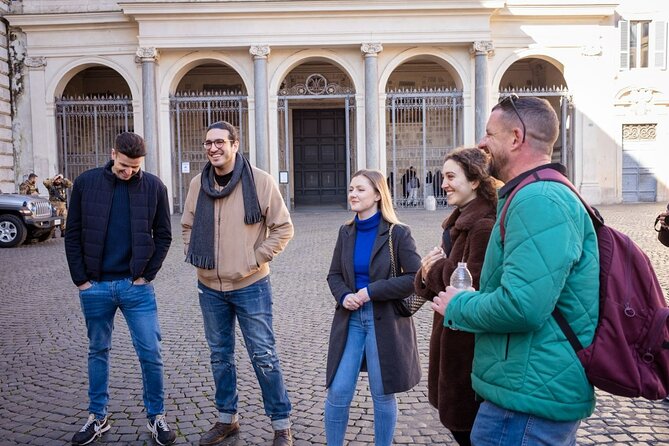
The walk begins at Plaça del Vuit de Març in Ciutat Vella and soon reaches Els 4 Gats. This historic café and restaurant was a gathering place for artists, intellectuals, and modernists. Pablo Picasso and Antoni Gaudí are the names that make the stop especially appealing, but the real pleasure is understanding the café as part of Barcelona’s creative life.
Its Art Nouveau design gives you an early look at the style that shaped much of the city. The stop is brief and admission is free, so you can take in the exterior and hear the story without spending time in a queue.
I would pay attention here to the connection between place and people. It is easy to treat Barcelona’s modernist buildings as isolated works of art. Els 4 Gats helps explain the social world around them, where artists met, argued, ate, and developed ideas.
Reading Catalan identity in a public artwork
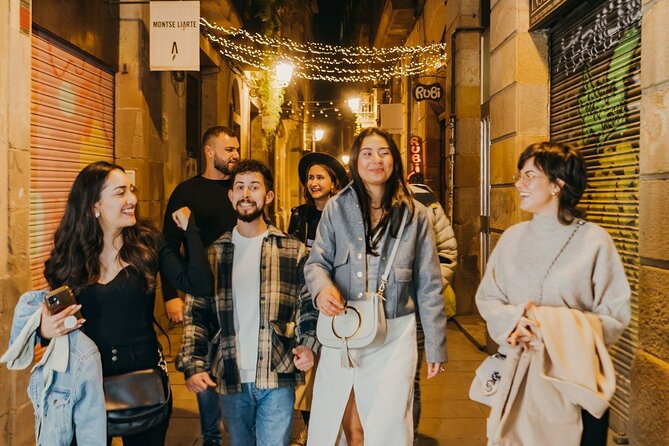
The next stop, El Món Neix en Cada Besada, is a photomosaic created in 2014. Its images relate to the Catalan defeat on September 11, 1714, during the War of Spanish Succession.
That defeat remains important in Catalonia, and it led to the celebration of La Diada, or Catalonia Day. The artwork gives your guide a chance to explain what freedom and identity mean to many people in Barcelona. This is a useful pause because the city’s history is not only about kings, churches, and architecture. It is also about memory, language, political feeling, and the way public places carry modern meaning.
The mosaic can be a quick photo stop, but the explanation is the important part. If you want a purely decorative walking tour, this discussion may feel more political than expected. If you want to understand Barcelona beyond its postcard views, it adds needed context.
Barcelona Cathedral and the story of Saint Eulalia
Barcelona Cathedral sits at the heart of the Gothic Quarter. The church honors Saint Eulalia, the city’s patron saint, who was tortured and killed by the Romans.
The cathedral’s Gothic form gives the group a major architectural landmark after the smaller opening stops. You can expect to hear about the building and its religious importance, but admission is not included. That distinction matters. You can see the cathedral during the walk, then decide later if you want to return and pay for entry on your own.
Ten minutes is enough for an introduction and photographs, not a careful visit. If the cathedral is high on your list, plan another time for the interior rather than trying to fold it into this walk.
More local corners of Barcelona:
- Barcelona 3-hour Bike or E-Bike Tour: Highlights and Hidden Gems
★ 5.0 · 1,429 reviews - Barcelona: El Born and Gothic Quarter Wine & Tapas Bar Tour
★ 4.8 · 674 reviews - Barcelona: El Born Food Walking Tour with Tapas and Drinks
★ 4.9 · 662 reviews - Barcelona Old Town Tapas Tour: Vermouth, Bites & Hidden Gems
★ 5.0 · 627 reviews
Roman walls at Casa de l’Ardiaca
Casa de l’Ardiaca is one of the route’s more unusual stops. The building combines Gothic and Renaissance features and contains the vertical face of the Roman wall and aqueducts.
This is where the city’s layers become easy to picture. Modern Barcelona did not replace Roman Barcino completely. Parts of the earlier city remain built into later structures, and Casa de l’Ardiaca gives you a direct look at that overlap.
The stop is free, but the experience depends on your guide pointing out exactly what you are seeing. Without explanation, Roman masonry in a busy old quarter can look like just another old wall. With the right context, it becomes evidence of how Barcelona grew over many centuries.
The Bishop’s Bridge and one old superstition
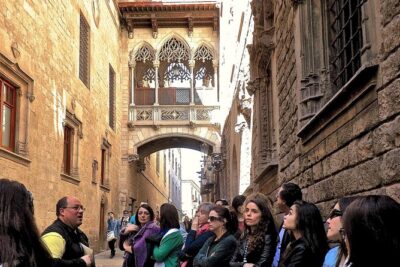
Carrer de Bisbe was an important route through Roman-occupied Barcino, and the Neo-Gothic Pont del Bisbe now makes this one of the most photographed corners of the Gothic Quarter.
The bridge has a legend tied to a superstition. The story is designed to catch your attention, even if you are not usually drawn to local myths. This is a good example of how a guide can make a familiar photo stop more memorable by adding a little mystery.
You should expect other people in the area, since the bridge is a popular sight. The tour does not promise a private photo opportunity. Still, having a guide explain the setting helps you see more than the bridge’s decorated underside.
Plaça de Sant Felip Neri and the city’s scars

Plaça de Sant Felip Neri is one of the quietest and most affecting places on the route. Its history is tied to the Spanish Civil War, and marks on the square still point to its tragic past.
This stop changes the mood. The Gothic Quarter is often sold as a maze of pretty lanes and medieval charm, but Barcelona’s old center also carries pain. Plaça de Sant Felip Neri makes that clear without requiring a long museum visit.
The square is picturesque, which can feel uncomfortable beside its history. That tension is exactly why it deserves a place on the walk. Listen closely to the explanation and allow a moment to look beyond the facade.
Walking through El Call, Barcelona’s Jewish quarter
MUHBA El Call takes you into the former Jewish quarter. Narrow streets and medieval buildings offer a view of Barcelona’s Jewish past, including the old synagogue and local legends.
This section adds another community to the story of the city. The route is not just a parade of Christian churches and royal buildings. It also shows how different groups lived, worked, worshiped, and shaped the old center.
The lanes are narrow, so the group may need to pause or gather closely while the guide speaks. That is part of the character of the quarter, but it can make it harder to hear if the guide’s voice is soft. One negative experience involved a guide who could not be heard, so stay near the guide and speak up early if sound becomes a problem.
Plaça de Sant Jaume and present-day power
Plaça de Sant Jaume is a large civic square surrounded by historic government buildings. It remains a center of political activity, so it links Barcelona’s past with its present administration.
After the smaller lanes of El Call, the open square gives you room to reset and look around. Your guide can explain why this location has carried civic importance over time and how the surrounding buildings fit into Barcelona’s public life.
The square is more about orientation and context than a single dramatic monument. I find it useful because it helps you understand the Gothic Quarter as a living part of the city, not a preserved stage set.
Royal stories in Plaça del Rei
Plaça del Rei has a charming appearance, but its history is darker than the first glance suggests. The square houses the Royal Palace and offers a look at Barcelona’s regal past.
This is one of the places where a short tour can give you a reason to return. The palace and surrounding buildings deserve more time than the walk can offer, but the guide’s introduction can help you decide what deserves a closer visit.
Do not expect a full royal-palace tour here. The stop is free from the street, and the value comes from seeing the setting and hearing the story. It is a good match for someone who wants historical context but does not want to spend an entire day inside museums.
Plaça de l’Àngel and the old Wheat Square
Plaça de l’Àngel was once known as Wheat Square because grain trading took place there. Its current name comes from a heavenly legend.
This is a small but useful example of how street names preserve old city life. Trade, religion, and legend all remain tied to one public space. The stop may not be as visually famous as the cathedral or Bishop’s Bridge, but it helps you notice how Barcelona’s past survives in ordinary urban details.
By this point, you have moved from Roman occupation and medieval communities to trade and civic life. The route keeps adding pieces rather than repeating the same Gothic facade.
Finishing at Santa Maria del Mar in El Born
The tour ends at Basílica de Santa Maria del Mar on Plaça de Santa Maria. This Catalan Gothic church is closely linked to Barcelona’s maritime history and provides a strong finish to the walk.
The church has the scale and beauty many people hope to find in Barcelona. Since admission is not included, you can choose to visit inside later. That is practical, because the end of the tour places you in El Born, an area where you can continue exploring at your own pace.
I like this ending better than finishing at a transport hub. You are left in a historic neighborhood with more streets to walk and places to eat or drink. Guides may also offer suggestions for restaurants, bars, and nearby attractions. Tammy, for example, was praised for sending detailed food and drink advice after the walk, while Juan was noted for sharing useful ideas for the rest of a Barcelona visit.
Guide style and group experience
The guide can shape this tour more than the route itself. Juan has been praised for using an iPad to show historical images and for answering questions with extra facts. Lidia is described as energetic, warm, and funny. Darren has been good at keeping a teenager interested, and Vanesa has worked well with children.
Jordan’s approach includes comedy, while Petra and Sonia have been appreciated for making history lively and easy to follow. These details suggest a tour built around storytelling rather than a rigid recitation of dates.
The group limit is 20 people. That is small enough for a personal feel, though not private. The tour starts on time, and the walk is generally described as easy and relaxed. One morning start was especially useful because the streets were cooler and less busy.
English is the offered language. Bring a phone with your mobile ticket, comfortable shoes, and water. The route is on foot, and most people can take part, but the old center has uneven streets and crowded passages. Stay close enough to hear clearly, especially at the narrow stops.
Who gets the most value from this walk
I would choose this tour for a first morning in Barcelona. It gives you a working map of the old center and introduces enough history to make later independent walks more rewarding.
It also suits families, provided children can manage a two-hour walk and enjoy stories about artists, saints, legends, kings, and old neighborhoods. Vanesa’s ability to engage children and Darren’s success with a teenager suggest that the best guides can adjust their delivery for different ages.
This is a good pick if you have limited time, want to stay outdoors, or prefer a local guide to a large bus. It is less suitable if you want extended church interiors, museum entry, or a slow photography session at every stop.
The 4.9 rating from 217 ratings and 97 percent recommendation rate indicate a strong overall record. Still, the two one-star experiences matter. A cancellation caused serious frustration, and one soft-spoken guide left people unable to hear. These appear to be exceptions, but they are useful reminders to confirm the meeting details and tell the guide promptly if you cannot hear.
Free cancellation is available up to 24 hours before the start time. Changes or cancellations inside that window are not refunded, using local Barcelona time for the cut-off.
Should you book this Gothic Quarter and El Born tour?
Book it if you want a short, story-led introduction to Barcelona’s oldest neighborhoods. The route packs in Roman remains, Catalan identity, Jewish history, Civil War memory, royal Barcelona, and maritime Gothic architecture without demanding a full day.
The best plan is to take it near the start of your stay, preferably in the morning, then use the end point at Santa Maria del Mar to continue exploring El Born. At $30.25, the tour offers solid value for a small-group orientation, especially if your guide is as engaging as Juan, Lidia, Darren, Vanesa, or Jordan.
Skip it if you already know the Gothic Quarter well or want long interior visits. For most first-time visitors, though, this is an efficient way to get your bearings and learn why Barcelona’s oldest streets deserve more than a quick photograph.
FAQ
How long does the Barcelona Historical Walking Tour last?
The tour lasts approximately two hours.
How much does the tour cost?
The listed price is $30.25 per person.
What language is the tour offered in?
The tour is offered in English.
Where does the tour begin?
It begins at Plaça del Vuit de Març in Ciutat Vella, Barcelona.
Where does the tour end?
It ends at Basílica de Santa Maria del Mar, Plaça de Santa Maria, 1, in Ciutat Vella.
Is admission to Barcelona Cathedral included?
No. Admission to Barcelona Cathedral is not included.
Is admission to Santa Maria del Mar included?
No. Admission to Santa Maria del Mar is not included.
What is the maximum group size?
The maximum group size is 20 people.
Can most people participate?
The tour information says most people can participate. It is a walking activity through Barcelona’s old center.
Can I cancel for a full refund?
Yes. You can cancel at least 24 hours before the experience start time for a full refund. Cancellations made less than 24 hours before the start time are not refunded.
More City Walks
- Barcelona Tapas and Wine Experience Small-Group Walking Tour
★ 5.0 · 5,804 reviews - Barcelona: Tapas Food Crawl Walking Tour with Tastings
★ 4.9 · 1,798 reviews - Barcelona: Gothic Quarter Ghosts and Legends Walking Tour
★ 4.7 · 1,443 reviews - Barcelona Helicopter, Sailboat & Old Town Private Walking Tour
★ 5.0 · 1,395 reviews
More Historical Tours in Barcelona
- Barcelona: Tapas Walking Tour with Food, Wine, and History
★ 4.8 · 4,261 reviews - Barcelona Tapas Walking Tour: Food, Wine & History
★ 4.5 · 1,928 reviews - Barcelona: 2.5-Hour Bike or E-Bike Historical Tour
★ 4.5 · 1,262 reviews - Barcelona Erotic Museum – Explore Art, History & Fun
★ 4.4 · 450 reviews
Just added around Barcelona
- Besalú, Banyoles Lake & Volcanic Castellfollit from Girona★ 5.0 · 6 reviews
- From Barcelona: Montserrat Private Day Trip With Pickup★ 5.0 · 6 reviews
- Barcelona: 2/4/8 hours or 1 day bike rental★ 5.0 · 6 reviews
- Barcelona: Local Tapas and Drinks Sailing Adventure Tour★ 5.0 · 6 reviews
- Sitges: Sailboat trip + walking tour and wine cellar tour★ 3.7 · 6 reviews
- Barcelona: Sagrada Família and Park Güell Guided Tour★ 4.7 · 6 reviews
- Comfortable E-Fatbike High-Lights Tour Barcelona★ 5.0 · 6 reviews
- La Tomatina Day Trip from Barcelona with Ticket & Party Access★ 5.0 · 6 reviews
Gothic Quarter Walking Tours, compared.
Barcelona in 1 Day: Sagrada Familia, Park Guell,Old Town & Pickup
Read our review →
Barcelona all included: Sagrada, Park Güell, Montjuic & Gothic
Read our review →
Sagrada Familia, Modernism, and Old Town Tour
Read our review →
Barcelona Gothic Quarter Tapas & Taverns Food & Wine Tour
Read our review →
Gothic Quarter Ghosts and Legends Walking Tour
Read our review →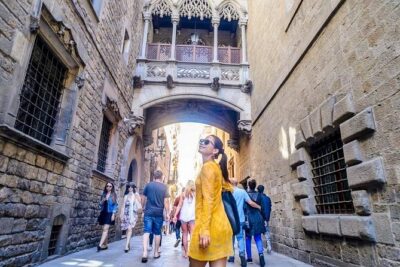
Barcelona Helicopter, Sailboat & Old Town Private Walking Tour
Read our review →
Barcelona Old Town & Gothic Quarter Small Group Tour
Read our review →Browse the lists this tour appears in