
Reviewed · GAUDI TOURS
Sant Pau Recinte Modernista Entrance Ticket in Barcelona
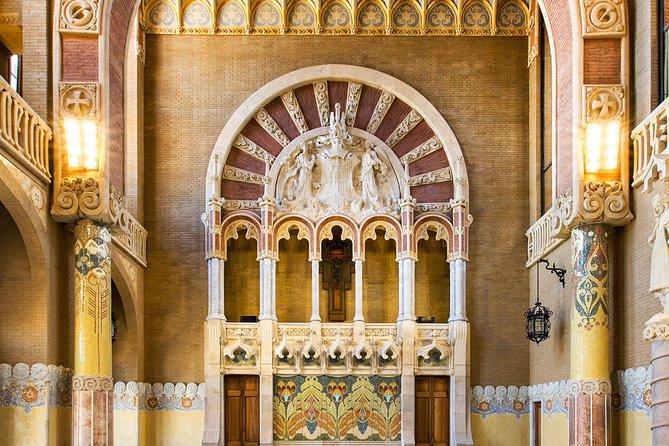
Sant Pau Recinte Modernista is far more than a pretty building. It is a former hospital complex where colorful mosaics, stained glass, underground passageways, and medical history come together in one of Barcelona’s most unusual sightseeing stops. I like the freedom to explore without a tour group, and I like that the restored pavilions give you a quieter change of pace from the city’s major headline attractions. The main drawback is that the self-guided route can be confusing, and the audio guide costs extra.
I also like the practical value of booking ahead. Your mobile ticket helps secure entry, which matters during busy periods, though you may find little or no line at quieter times. Plan on about 1 to 2 hours, and consider paying the additional €4 for the audio guide if you want the hospital’s story to make sense rather than simply admiring the decoration.
In This Review
- Key points to know before visiting Sant Pau
- Why this former hospital deserves your time
- Starting at the Sant Salvador Pavilion
- Following the tunnels beneath the pavilions
- Reading the façades, domes, and mosaics
- The restored Sant Rafael Pavilion and old Surgery Room
- The Lluís Domènech i Montaner Room and Main Hall
- Ending at the Sant Jordi Pavilion
- Is the $21.78 ticket good value?
- Timing, transport, and practical planning
- Who will enjoy Sant Pau most?
- Should you book the Sant Pau entrance ticket?
- FAQ
- What does the Sant Pau Recinte Modernista ticket include?
- Is a guide included?
- How long should I allow for the visit?
- Is the ticket available on a mobile phone?
- Is Sant Pau close to Sagrada Família?
- Can I cancel the booking?
Key points to know before visiting Sant Pau
- A former hospital designed as a work of art: Lluís Domènech i Montaner created a healing complex filled with mosaics, sculpture, stained glass, domes, and gardens.
- The underground tunnels are part of the visit: These passageways once helped connect the separate hospital pavilions.
- Your ticket is self-guided: You receive admission, but no live guide is included.
- The €4 audio guide is worth considering: Several exhibits are translated into English, while the audio narration adds context about the buildings and medical care.
- Allow at least 90 minutes: The complex is large, and rushing means missing small tile details, restored rooms, and the gardens.
- It is close to Sagrada Família: The location makes Sant Pau easy to pair with Barcelona’s most famous Modernisme landmark.
Why this former hospital deserves your time
Barcelona has no shortage of grand Modernisme architecture, but Sant Pau gives you something different from a city palace or private mansion. This was a working hospital, planned around patient care, fresh air, light, gardens, and efficient movement between buildings.
The complex began with the Hospital de la Santa Creu, founded in 1401. The modernist site you visit today was built centuries later, with Lluís Domènech i Montaner guiding the design. The result is a group of pavilions rather than one giant block. That layout made practical sense for a hospital, but it also gave the architect room to create a small architectural world.
I find the contrast especially effective. The buildings look ceremonial, with elaborate tile work and sculpted façades, yet their original purpose was medical. You can still see how design and care were linked. The underground tunnels allowed patients, staff, and supplies to move between pavilions without crossing the gardens.
Sant Pau is also a calmer stop than many Barcelona sights. The grounds and broad spaces give you room to pause, read, and take photographs. It does not have the same constant pressure of a packed landmark, although special events or temporary closures can reduce access on a particular day.
More Gaudí days in Barcelona:
- Barcelona: Park Güell and Gaudí House Museum Entry Ticket
★ 4.5 · 6,326 reviews - Barcelona: La Pedrera Night Experience
★ 4.4 · 4,633 reviews - Barcelona: Gaudi’s Casa Vicens Skip-the-Line Entrance Ticket
★ 4.7 · 3,449 reviews
Starting at the Sant Salvador Pavilion
The visit begins at the Sant Salvador Pavilion, where an exhibition explains the hospital’s story from its founding in 1401 through the 21st century. This is the place to get your bearings before wandering farther into the complex.
The display helps explain why Sant Pau looks the way it does. You are not simply looking at decorative buildings. You are seeing a carefully planned medical setting that changed over time as treatment and hospital practice developed.
On the upper floor, a contemporary installation takes the form of a dragon. It honors Domènech i Montaner and his role in Catalan Modernisme. This is a brief but useful introduction to the architect’s imagination, especially if you know little about Barcelona’s Art Nouveau movement.
The exhibition area also includes an interactive touch table and a video presentation. These features add context without forcing you to join a scheduled group. English information is available, and the material helps make the visit more than a walk through attractive rooms.
Still, do not spend your entire visit here. Sant Pau’s power comes from the combination of the introductory exhibits, the open grounds, the pavilions, and the tunnels. The opening section gives you the framework, then the architecture carries the story forward.
Following the tunnels beneath the pavilions
The underground passages are one of the most memorable parts of the experience. They connect the hospital buildings and show how the complex worked as a practical institution, not just a collection of ornate façades.
The tiled passageways are attractive in their own right. They also give you a sense of movement through the hospital. Patients did not need to be carried across exposed courtyards for every transfer, and staff could move between parts of the institution more efficiently.
I recommend taking your time here. Look at the tile patterns and the way the tunnels relate to the pavilions above. The passageways are not as bright or immediately impressive as the exterior, but they explain the design better than a quick look at the gardens can.
One caution: the route is not always perfectly clear. Signposting has been described as inconsistent, and some people have missed buildings or sections because they were unsure where to go next. Pick up the paper map at entry and check each section as you go. If you are using the audio guide, follow its order rather than making up a route on the spot.
Reading the façades, domes, and mosaics
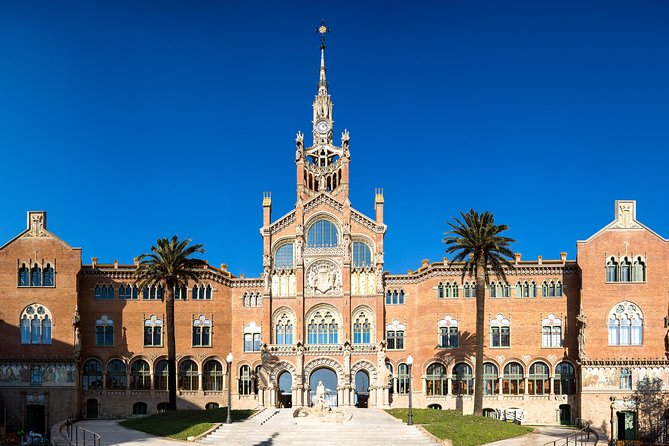
The exteriors are the star for many people. Sant Pau is full of details that reward slow looking: colorful tile work, stained-glass windows, sculpted decoration, frescoes, and tiled roofs.
The design is decorative without being random. Medical symbols, natural forms, religious references, and Catalan artistic traditions appear across the complex. You might notice something new each time you look up, particularly around the domes and upper façades.
The mosaics remain in very good condition in many areas, and the restoration has preserved the buildings’ original character. The gardens and planting soften the hard surfaces, creating a pleasant route between the pavilions.
This is a good place to bring patience rather than a checklist. If you race from one building to the next, you will see the broad picture but miss the small work that makes Sant Pau special. Set aside time for the rooflines, doorway decoration, tiled walls, and stained glass.
The site is also a strong choice if you care about architecture but do not want another crowded indoor museum. You can spend part of the visit outside, move at your own speed, and stop whenever a detail catches your eye.
A few more Barcelona options worth an hour of your trip
- Barcelona: Park Güell Admission Ticket
★ 4.4 · 76,534 reviews - Barcelona: Casa Batlló Entry with Self-Audioguide Tour
★ 4.7 · 25,359 reviews - Barcelona: 24 or 48-Hour Hop-On Hop-Off Bus Tour
★ 4.4 · 20,872 reviews - Barcelona: Park Guell Guided Tour with Skip The Line Entry
★ 4.7 · 17,563 reviews
The restored Sant Rafael Pavilion and old Surgery Room
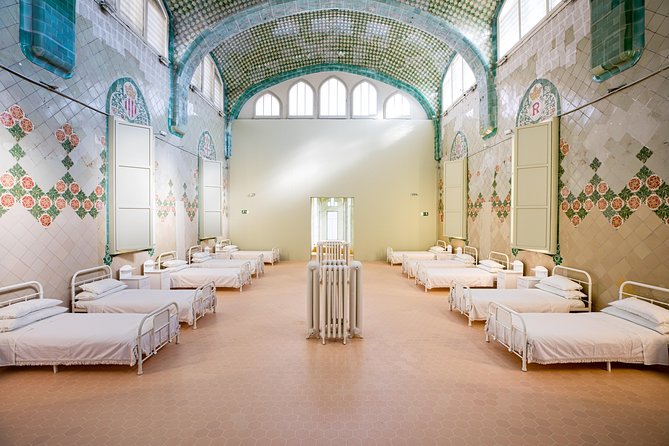
The Sant Rafael Pavilion gives you a clearer sense of hospital life. Its restored spaces show how the institution functioned and help bridge the gap between the grand architecture and the people who used it.
The old Surgery Room is particularly important because it brings the medical purpose of Sant Pau into focus. This was not simply an elegant civic complex. It served patients, doctors, nurses, and families, and it continued as a hospital into the 20th century.
The fact that the site was still used as a hospital in the 1990s makes the visit more immediate. The buildings are historic, but the medical story is not distant in the way an ancient ruin can be. You can connect the ornate rooms and tiled corridors with relatively modern hospital care.
Some displays include old medical equipment. These objects add a human scale to the visit, especially after you have spent time studying the façades. They remind you that the complex was designed around real needs, even when its decoration looks almost theatrical.
If hospitals make you uncomfortable, the experience remains focused on architecture, history, and exhibits rather than graphic medical material based on the information provided. Still, the hospital theme is central, so it is worth knowing that before you buy.
The Lluís Domènech i Montaner Room and Main Hall
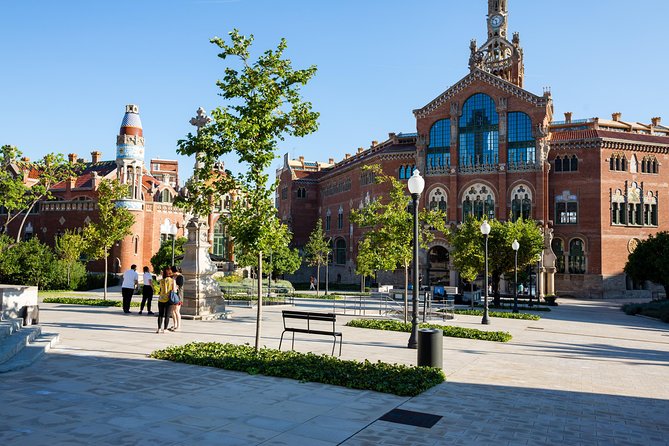
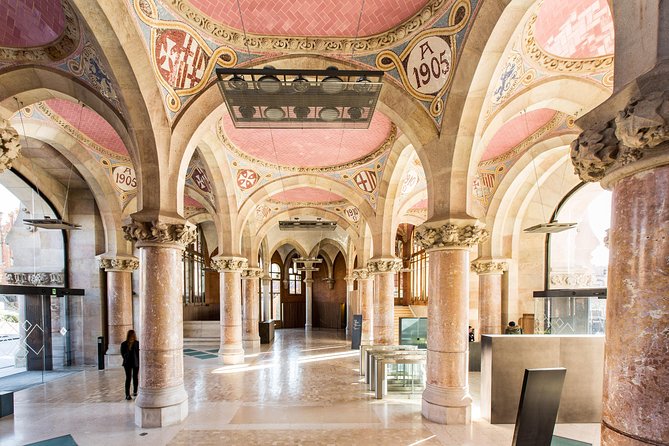
The Lluís Domènech i Montaner Room, Pau Gil Room, and Main Hall show the more formal side of the complex. These spaces help explain the project’s civic importance and the scale of the institution.
The Main Hall is a natural place to pause. After the smaller exhibits and tunnels, its grander proportions help you understand how much ambition went into the hospital plan. The Pau Gil Room adds another layer to the complex’s institutional story.
Do not expect a conventional guided narrative that leads you from one room to the next. The ticket gives you access, not a personal escort. You control the pace, which is excellent for photographers and independent sightseers, but less helpful if you prefer a clear spoken explanation at every stop.
The printed guide can help. An audio guide is also available for €4 at the entrance. I would budget for it if you want to understand the building’s purpose, construction, and medical development. Several people have found the narration worthwhile, while the main criticism of the visit concerns unclear directions and the extra charge for audio.
Ending at the Sant Jordi Pavilion
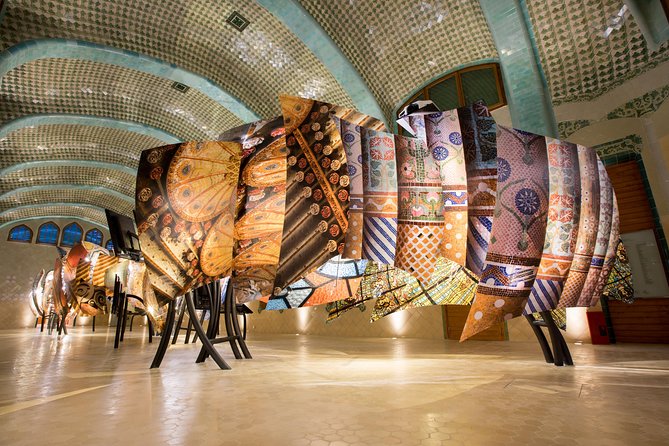
The Sant Jordi Pavilion hosts rotating temporary exhibitions. What you see here can change, so it is best treated as an added feature rather than the main reason to visit.
This final stop gives you a chance to see how Sant Pau continues to function as a cultural site. The temporary displays can add a modern note after the historic rooms and architectural details.
If an exhibition is closed or part of the complex is reserved for an event, your route may feel shorter than expected. Special functions have occasionally blocked access to areas, so it is wise to allow some flexibility in your expectations. The architecture remains the main attraction, but access to every section is not guaranteed on every visit.
Is the $21.78 ticket good value?
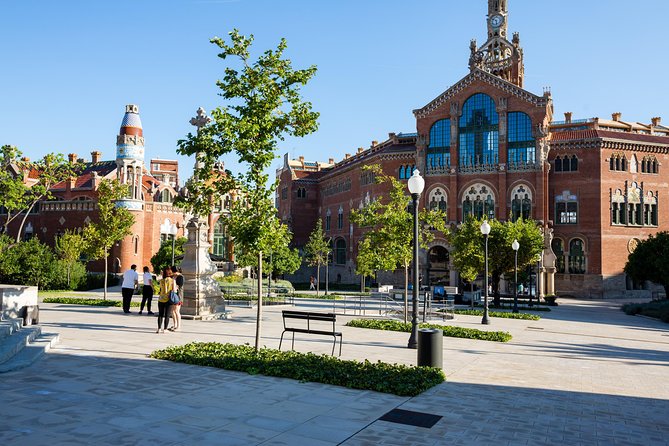
At $21.78 per person, this is not a bargain-basement admission ticket, but Sant Pau offers more than a single room or façade. You are paying to see a substantial modernist complex, its gardens, underground routes, restored pavilions, medical displays, and exhibition areas.
The value improves if you enjoy architecture, design, or social history. You can spend 90 minutes here without feeling that you have seen everything in a hurry, and you may easily stay closer to two hours if you read the displays and study the decoration.
The ticket is less compelling if you only want a quick photograph of an exterior. In that case, the admission may feel high, particularly when the complex is partly closed or hosting a private event.
Booking ahead gives you an important benefit: a better chance of entry during busy periods. The attraction is often booked about 18 days in advance, which suggests that planning is sensible during a popular Barcelona visit. The ticket price is reported as similar to buying directly, while this option offers free cancellation up to 24 hours before the start time.
The audio guide is not included. Add €4 at the entrance if you want more explanation. The paper guide costs nothing extra and can be enough for visitors who mainly want to admire the buildings.
Timing, transport, and practical planning
The visit lasts about 1 to 2 hours, but I would avoid squeezing it into a tight schedule. You need time to check in, find the correct route, read the introductory displays, and move between the pavilions.
Sant Pau is located on Sant Antoni Maria Claret in central Barcelona. It is near public transportation, and the hop-on hop-off bus Green Line stop 12 is directly outside. Its short distance from Sagrada Família makes the two sites easy to combine, though you should leave enough time for both instead of treating Sant Pau as a ten-minute add-on.
You begin at the Administration Pavilion during opening hours. Show the mobile voucher at the front desk. The check-in process is generally simple, and early arrival may sometimes be accepted even when your ticket has a later time, though you should not depend on that as a guarantee.
Most people can take part, and service animals are allowed. The site does include stairs, and access to lifts may not always feel straightforward. If you have bad knees or reduced mobility, ask staff about lift access at the start and use the map to plan a route with fewer stairs.
Barcelona’s heat and rain can affect the outdoor sections. Indoor areas provide some relief, and seating is available in places, but comfortable shoes and water are sensible. Food and drinks are not included.
Who will enjoy Sant Pau most?
I would choose this visit for anyone interested in Catalan Modernisme, architecture, hospital history, or carefully restored historic spaces. It also suits repeat visitors who have already seen Sagrada Família and want a less predictable Barcelona experience.
Families with older children may appreciate the tunnels, domes, and unusual hospital layout. The interactive table and video in the exhibition area can help younger visitors understand what they are seeing, though the amount of reading may not suit every child.
Independent sightseers will like the freedom. You are not tied to a group, a guide’s pace, or a fixed storytelling style. Photographers will find plenty of color and detail, but remember that temporary closures may limit some views.
I would think twice if you dislike self-guided attractions. The route can be poorly marked in places, and the included admission does not come with a live guide. Pay for the audio guide or arrange a guided option if you want a more structured explanation.
Should you book the Sant Pau entrance ticket?
Yes, if you want an architectural visit with a strong medical and social story, not just another ornate Barcelona building. The mosaics, tiled roofs, gardens, tunnels, and restored pavilions justify the time, and the quieter atmosphere can be a welcome break from the city’s busiest sights.
Book ahead if your Barcelona dates are fixed or you are visiting in a busy season. Aim for 90 minutes at minimum, use the paper map, and consider the €4 audio guide. Skip it only if your schedule is extremely tight, you prefer live-guided sightseeing, or the ticket price feels too high for a self-guided visit.
FAQ
What does the Sant Pau Recinte Modernista ticket include?
It includes admission to Sant Pau Recinte Modernista. You can visit the exhibition areas, gardens, underground tunnels, restored pavilions, old Surgery Room, Main Hall, and other included spaces during opening hours.
Is a guide included?
No. The ticket is for self-guided admission. A paper guide is available, and an audio guide can be rented for €4 at the entrance.
How long should I allow for the visit?
Plan on approximately 1 to 2 hours. Allow closer to two hours if you want to read the displays, follow the tunnels, and study the architectural details.
Is the ticket available on a mobile phone?
Yes. The experience provides a mobile ticket, and you can show your voucher at the front desk for entry.
Is Sant Pau close to Sagrada Família?
Yes. Sant Pau is a short distance from Sagrada Família, making it practical to visit both during the same Barcelona sightseeing day.
Can I cancel the booking?
You can cancel for a full refund up to 24 hours before the experience start time. Cancellations or changes made less than 24 hours in advance are not accepted for a refund.
Just added around Barcelona
- GoCar Full Day Tour★ 4.0 · 6 reviews
- Sagrada Familia and Barcelona Highlights: Private Guided 4-Hour Driving Tour★ 5.0 · 6 reviews
- Barcelona: Highlights & Gems Private Tour with Tapa & Drink★ 3.9 · 6 reviews
- Gothic Quarter and Born District: Photographic Workshop★ 5.0 · 6 reviews
- Gobbi Yacht Rental in Barcelona 9 Pax 2/4/8hs★ 5.0 · 6 reviews
- Barcelona: Gothic Quarter & La Sagrada Familia Private Tour★ 4.9 · 6 reviews
- Private Sailboat Ride at Sunset from Sitges★ 5.0 · 6 reviews
- Barcelona: Private Tour of Casa Batllo with Reserved Access★ 3.5 · 6 reviews
Gaudi Tours, compared.
Park Güell and Gaudí House Museum Entry Ticket
Read our review →
Gaudi’s Casa Vicens Skip-the-Line Entrance Ticket
Read our review →

Sagrada Familia, Modernism, and Old Town Tour
Read our review →
Sagrada Familia & Gaudi Tour Private or Small Group with Tickets
Read our review →
Complete Gaudi Tour: Casa Batllo, Park Guell & Sagrada Familia
Read our review →
La Pedrera-Casa Mila Admission Ticket with Audioguide
Read our review →Browse the lists this tour appears in