
Reviewed · CITY TOURS
Shore Excursion: Barcelona City Tour Hop-On Hop-Off
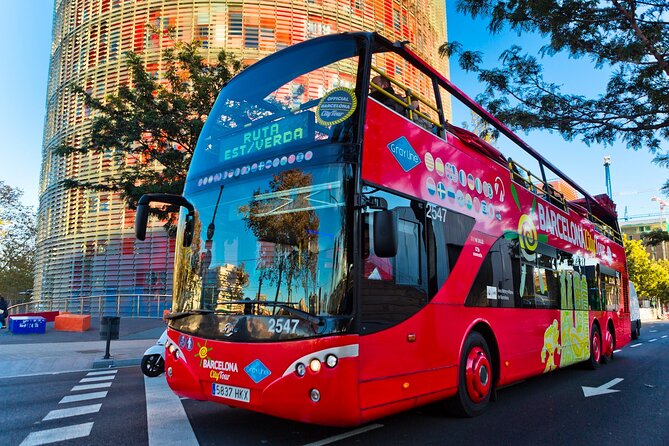
Barcelona’s hop-on hop-off bus gives you a quick view of a city that can feel scattered at first. One route follows the waterfront, Gaudí sights, and northern districts. The other climbs Montjuïc and crosses the western side toward Camp Nou. From the upper deck, you get a useful first look at Barcelona’s grand avenues, beaches, hills, and modernist buildings.
I like the two-route ticket, since it lets you choose between Gaudí and the coast or Montjuïc and the Olympic sites. I also like the sliding roof, a small but useful feature when Barcelona’s sun turns to rain. The catch is time: traffic, queues, and route changes can eat into a cruise day, so this works best as an overview rather than a full sightseeing plan.
- Two routes, one ticket: Cover the East and West routes without buying separate passes.
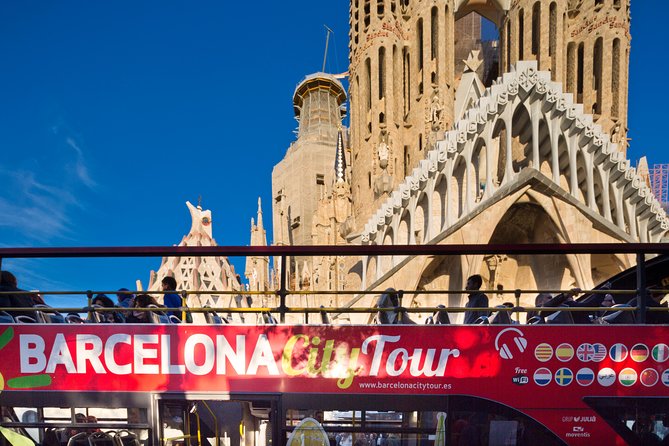
- Gaudí from the bus: See Sagrada Família, Park Güell, La Pedrera, Casa Batlló, and Sant Pau.
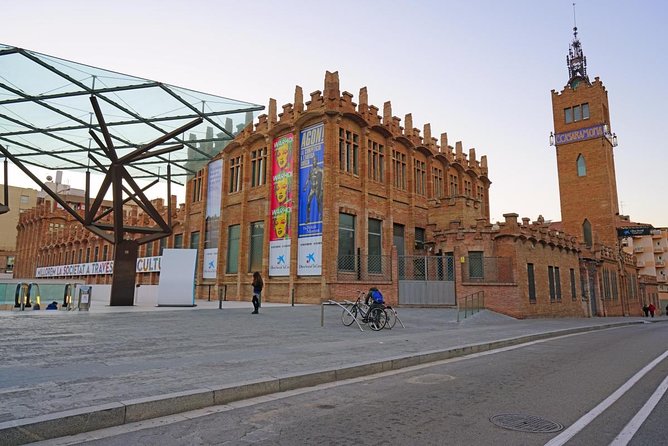
- A full Montjuïc circuit: Pass the Olympic Ring, MNAC, Poble Espanyol, CaixaForum, and Plaça d’Espanya.
- Useful in mixed weather: Open-top buses have sliding roofs and air-conditioning.
- Audio in English: Recorded commentary explains the districts and sights, with a looping system for passengers with auditory disabilities.
- Cruise-day caution: The port stop and city traffic can make a short visit feel rushed.
In This Review
- Two routes that frame Barcelona from coast to hill
- Starting near Pla de Palau and the Barcelona waterfront
- Sant Pau and the long approach to Park Güell
- La Pedrera, Casa Batlló, and the Eixample grid
- Sagrada Família, Nord, and the return to the port
- World Trade Center to Montjuïc
- Camp Nou and the western neighborhoods
- What the bus ride feels like in real use
- Timing, queues, and the cruise ship problem
- Accessibility, pets, and the discount booklet
- Who gets the most from this Barcelona tour
- Should you book the Barcelona City Tour bus?
- FAQ
- How long does the Barcelona hop-on hop-off tour last?
- What are the two routes included?
- Is Sagrada Família included in the ticket?
- Can the bus reach the entrance to Park Güell?
- Is there an English-speaking guide on the bus?
- Can I use the ticket on both routes?
- Are the buses usable in rainy weather?
- Can I cancel for a refund?
Two routes that frame Barcelona from coast to hill
This tour is less about reaching one attraction quickly and more about getting your bearings. Barcelona is compact in its old center, but its headline sights stretch from the waterfront to Park Güell and from the eastern beaches to Montjuïc in the southwest.
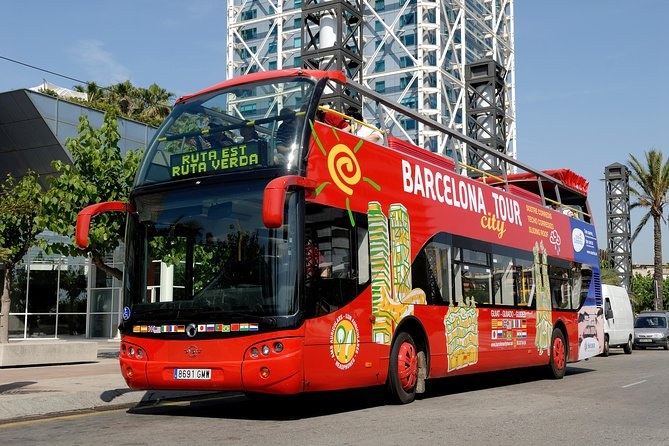
The East Route, often the better first choice, links the old harbor, beaches, modernist architecture, and Gaudí’s major works. The West Route covers the port, Montjuïc, the Olympic zone, Plaça d’Espanya, and Camp Nou before reconnecting with central Barcelona.
The advertised ride lasts about 2 hours and 20 minutes, but that figure is best understood as a continuous circuit. If you get off for Park Güell, Sagrada Família, the Gothic Quarter, or Montjuïc, you will need much longer. Buses run regularly, yet crowded stops can slow the plan.
At $39.65 per person, the value depends on how you use it. A full loop gives you a broad city view without arranging several local buses or taxis. If you ride only a short section and spend most of the day inside one attraction, the price is harder to justify. For a cruise visit, the ticket can pay off when you want a simple orientation and do not want to build a complicated route from scratch.
Starting near Pla de Palau and the Barcelona waterfront
The East Route begins at Pla de Palau, a practical point near the old harbor and central waterfront. From here, the bus moves toward Barceloneta Beach, Port Olímpic, Platja Bogatell, and Platja de la Nova Mar Bella.
These stops show different sides of Barcelona’s shore. Barceloneta is the familiar city beach, close to the older port and central neighborhoods. Port Olímpic reflects the city’s major waterfront redevelopment, while Bogatell and Nova Mar Bella give you a longer view of the beaches beyond the historic center.
You can stay on board for a wide coastal sweep, or get off for a walk. Keep in mind that a beach stop is not a quick photo stop if you want to reach the sand, stroll the promenade, and return in time for the next bus.
The Forum Sport stop takes you farther northeast, toward the modern end of the city. Glòries then brings you back toward a major urban crossroads, where contemporary Barcelona meets the older Eixample grid. This section is useful for understanding the city’s size, but traffic can turn a short ride into a slow one.
More sightseeing bus options:
- Barcelona: 24 or 48-Hour Hop-On Hop-Off Bus Tour
★ 4.4 · 20,872 reviews - Barcelona: City Sightseeing Hop-On Hop-Off Bus Tour
★ 4.4 · 10,061 reviews - City Sightseeing Barcelona Hop-On Hop-Off Bus Tour: 24 or 48-Hour
★ 4.0 · 5,250 reviews
Sant Pau and the long approach to Park Güell
Recinte Modernista de Sant Pau is one of the most rewarding stops on the East Route. The former hospital complex is a major work of Catalan modernism, with decorative facades, gardens, and elaborate architectural details. Even if your main goal is Gaudí, Sant Pau helps you see that Barcelona’s modernist style was larger than one architect.
Park Güell is the route’s most complicated stop. The bus cannot reach the park entrance, so you should expect an uphill walk and stairs after getting off. One useful point is easy to miss: the stop is not right beside the ticketed park area. If you have timed admission, leave a generous margin.
That distance matters on a cruise day. You might spend close to an hour getting off, walking uphill, visiting the park, and returning to the stop. The bus is still useful, but do not treat the stop as door-to-door transport.
Park Güell itself rewards time, especially for Gaudí’s tiled work and the city views. If you already have a ticket for the park, use the bus mainly to reach the area and then plan your return carefully. If you do not have a park ticket, the stop still gives you access to the neighborhood, but the famous interior areas may require separate admission.
La Pedrera, Casa Batlló, and the Eixample grid
The route then reaches La Pedrera, also called Casa Milà, followed by Casa Batlló. These two Gaudí buildings sit along Passeig de Gràcia, one of Barcelona’s grand shopping and architectural avenues.
La Pedrera is known for its curving stone facade and sculptural rooftop. Casa Batlló has a more colorful, dreamlike exterior. You can see both from the street, but the interiors require separate tickets and more time. If you want only photographs, these are easy stops for a short walk. If you want to go inside, you may need to skip other sections of the circuit.
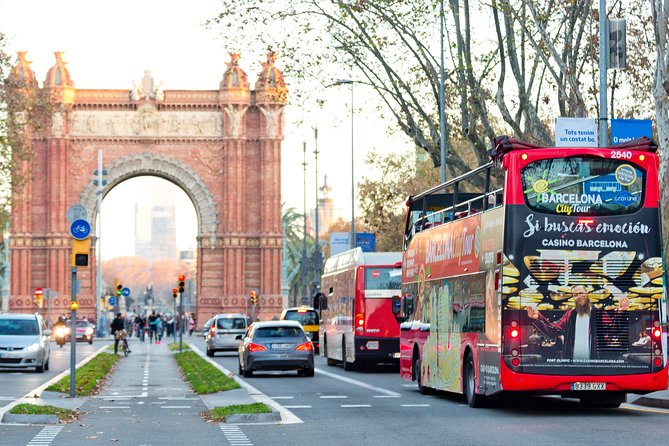
The stop labeled Barcelona City Tour and the nearby Arc de Triomf and Ciutadella Park stops help connect the modernist part of the route with central Barcelona. Arc de Triomf leads toward a broad pedestrian promenade and Ciutadella Park, while the park itself offers a quieter break from the traffic.
This is also where walking often beats riding. The bus gives you the route and commentary, but Barcelona’s central districts are best understood at street level. I would use the bus to reach a chosen area, then walk between nearby sights rather than constantly getting on and off.
Sagrada Família, Nord, and the return to the port
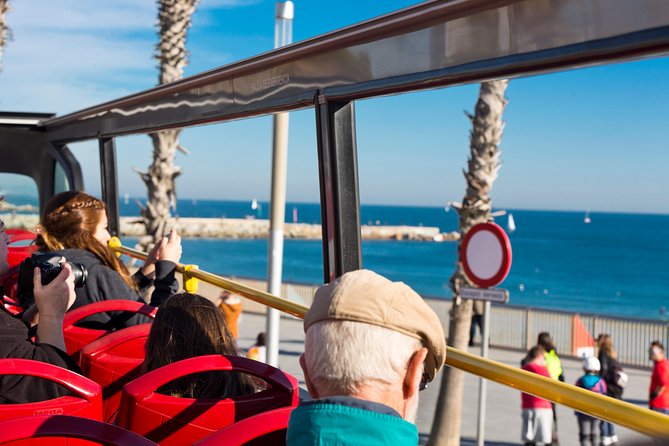
The East and West route information includes several stops around Sagrada Família and the northern city. Sagrada Família is the essential stop for many passengers, but it can also be one of the busiest boarding points. Upper-deck seats may be limited, especially when you arrive after a major attraction has released a crowd.
The church is easy to spot from the surrounding streets, but seeing it from the bus is not the same as visiting inside. If you have a timed entry, allow room for the walk from the stop, security procedures, and the return to the bus. If you only want the exterior, the stop can work well for a short visit.
Barcelona Nord Bus Station and Carrer de la Marina connect the route with transport corridors and the Olympic waterfront. The final return to Port Olímpic and Pla de Palau makes the East Route a natural choice for a broad city circuit.
One route note matters: Plaça de Francesc Macià is subject to cancellation because of public works, with an alternative location used instead. City events, demonstrations, sports events, official ceremonies, and construction can also change the route.
A few more Barcelona options worth an hour of your trip
- Best of Barcelona Shore Excursion & Sagrada Familia Skip the Line
★ 4.5 · 148 reviews - Full-Day Private Guided All Inclusive Barcelona Shore Excursion
★ 5.0 · 18 reviews - Private, guided shore excursion w/ chauffeured vehicle
★ 5.0 · 7 reviews
World Trade Center to Montjuïc
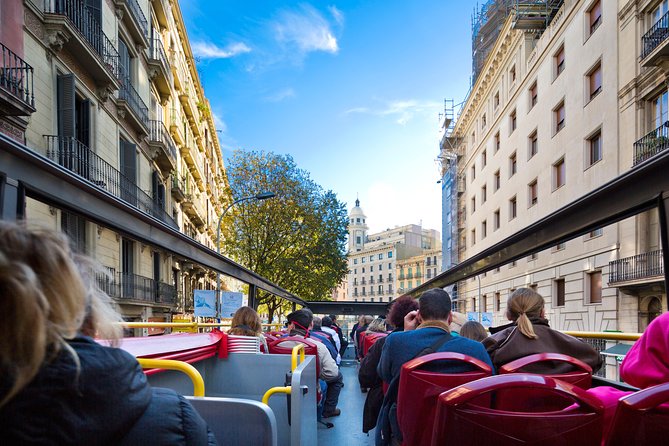
The West Route begins at the World Trade Center, close to the port. This is a logical shore-excursion starting point, but it can be confusing when several buses, cruise passengers, and port traffic converge. Give yourself time to identify the correct Barcelona City Tour vehicle and stop marker.
The route climbs toward Avinguda Miramar and the Miramar Gardens. Montjuïc is one of Barcelona’s best places for broad views over the port and city. The hill also changes the feel of the tour: instead of dense streets and storefronts, you see parks, cultural buildings, Olympic facilities, and open viewpoints.
The Olympic Ring is tied to the 1992 Olympic Games, a turning point in Barcelona’s modern development. The nearby Museu Nacional d’Art de Catalunya, usually called MNAC, occupies the grand Palau Nacional and overlooks Plaça d’Espanya. Poble Espanyol offers architecture and craft displays in a purpose-built village setting, while CaixaForum adds another cultural stop.
Plaça d’Espanya is one of the West Route’s most useful points for independent sightseeing. It connects Montjuïc with the city and gives you access to several nearby landmarks. If you plan to get off here, check the return bus times before leaving, especially late in the day.
Camp Nou and the western neighborhoods
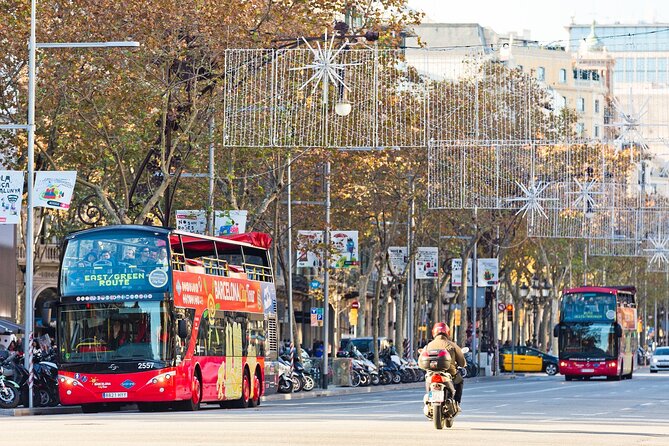
The route continues to Parking Estació de Sants and Spotify Camp Nou, home of F.C. Barcelona. Camp Nou is a major draw for football fans, though the exact visitor experience can be affected by works or event schedules. The bus stop lets you reach the stadium area, but the ride itself does not include stadium admission.
The later stops on Avinguda Diagonal show another side of Barcelona. Diagonal is one of the city’s main arteries, lined with offices, shops, and large buildings. Plaça de Francesc Macià is currently subject to a stop change because of works, so do not rely on an old map alone.
The West Route then reconnects with La Pedrera and continues to Sagrada Família, Barcelona Nord, Carrer de la Marina, Port Olímpic, and Pla de Palau. This overlap is useful. You can switch between the two routes, but allow time for the transfer and do not assume that a waiting bus will have an empty upper deck.
What the bus ride feels like in real use
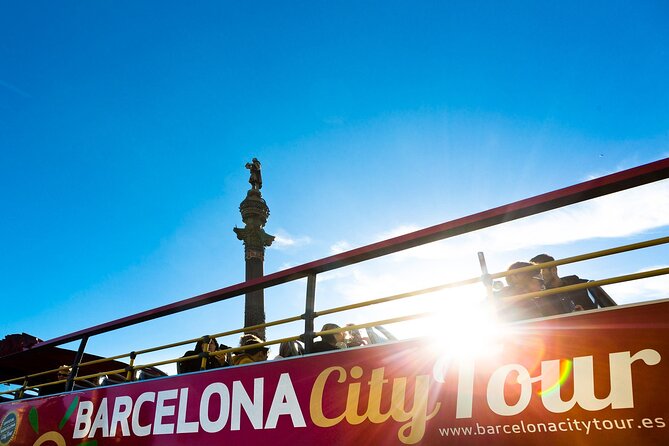
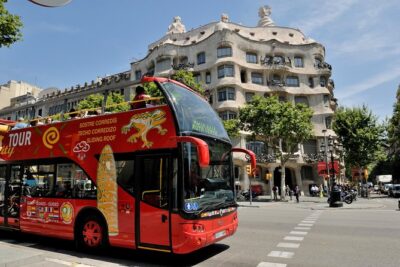
The double-decker coaches are air-conditioned, and the upper deck is open when conditions allow. The sliding roof can protect you from rain, but it does not make poor weather disappear. Water can enter around windows, doors, or stairs during a hard downpour, so the lower deck is the safer choice in wet conditions.
Dress for wind, not just the temperature at street level. On a cool spring day, the upper deck can feel much colder, especially while the bus is moving. A hat, light jacket, and scarf are sensible even when the city feels mild below.
The audio guide is recorded rather than delivered by a live guide. Commentary is available in English, and the system is designed to support passengers with auditory disabilities through a multilingual looping setup. Seats with that system are marked, and passengers who need it have priority.
Audio equipment has not always been reliable. Loose 3.5-millimeter plugs can cause crackling, and narration may not play clearly on every bus. Bring your own headphones if suitable, but do not assume the commentary will match the energy of a live guide. The audio works best as orientation, not as a personal tour.
Timing, queues, and the cruise ship problem
The biggest risk is not the route. It is the clock.
Barcelona traffic can be heavy, and queues at popular stops can be long even outside peak summer. At busy times, a full bus may pass before you can board. A spring-break crowd has produced waits of more than an hour, followed by another long wait when switching routes. That is not typical every day, but it shows why a tight ship schedule and hop-on hop-off buses can be a poor match.
The World Trade Center area can also feel disorganized. If you cannot quickly identify the stop, ask staff to confirm both the route color and direction before boarding. Stop markers are tall and red, which helps, but local residents may not know the sightseeing bus network.
The buses may run until about 7 p.m., but you should not plan to board for the first time near the end of service. You might be far from the port when the final buses stop. Check the day’s operating times and keep a clear return buffer.
The tour is not covered by a worry-free policy, so a missed ship connection is your responsibility. That point alone should make you cautious if your ship leaves soon after the tour ends. On a long port call, the risk is easier to manage.
Accessibility, pets, and the discount booklet
Most people can participate, and service animals are allowed. Pets are permitted only when transported in a properly prepared basket. The audio system includes support for people with auditory disabilities, as noted above.
A discount booklet covers selected attractions, shops, and restaurants. Treat it as a possible bonus rather than a reason to buy the ticket. Its value depends on which places you visit and whether the discounts fit your plans.
The mobile ticket is convenient, but keep the booking confirmation available. One important practical rule is that the QR voucher is used to redeem the ticket, while the issued ticket should be kept during the ride. Losing the ticket can create a problem when boarding again.
Who gets the most from this Barcelona tour
I would choose this bus if you want a broad first look at Barcelona, have limited mobility, are visiting for the first time, or want to connect distant districts without planning several transfers. Families can also benefit from the simple format, especially when everyone wants to see different parts of the city.
It suits a long port call better than a short one. You can ride one complete route, get off once or twice, and still keep control of your return. A two-day ticket would be better for a stay focused on sightseeing, but the price and duration given here describe a single excursion ticket.
I would be less keen on it if your main goal is one timed visit to Park Güell or Sagrada Família. In that case, direct transport and a carefully timed return may be more efficient. The bus is also a weak choice in heavy rain, extreme crowds, or a port day with several ships competing for seats.
Should you book the Barcelona City Tour bus?
Book it if you want a city overview with very little route planning and can allow extra time for traffic and queues. The two routes cover an impressive spread, from Barceloneta and Port Olímpic to Gaudí’s buildings, Montjuïc, Plaça d’Espanya, and Camp Nou.
Skip it if your port visit is short or your return to the ship must be exact. For the best result, start early, confirm the route and stop, keep your ticket handy, wear a warm layer on top, and limit yourself to one or two carefully chosen stops. Used that way, $39.65 buys a useful introduction to Barcelona. Used as a race through every sight, it can leave you watching traffic instead of seeing the city.
FAQ
How long does the Barcelona hop-on hop-off tour last?
The stated duration is approximately 2 hours and 20 minutes for the bus tour. Getting off at attractions, waiting for another bus, changing routes, and dealing with traffic will make your overall outing longer.
What are the two routes included?
The East Route covers the waterfront, beaches, Glòries, Sant Pau, Park Güell, La Pedrera, Casa Batlló, Sagrada Família, Arc de Triomf, and Ciutadella Park. The West Route covers the World Trade Center, Montjuïc, the Olympic Ring, MNAC, Poble Espanyol, Plaça d’Espanya, Camp Nou, Diagonal, Sagrada Família, and the port.
Is Sagrada Família included in the ticket?
The bus stops near Sagrada Família, but admission to the church is not included in the tour ticket.
Can the bus reach the entrance to Park Güell?
No. The bus stops in the Park Güell area, but the remaining distance must be walked. The approach includes an uphill section and stairs.
Is there an English-speaking guide on the bus?
The tour provides a multilingual recorded audio guide, including English. It is not described as a live-guided tour.
Can I use the ticket on both routes?
Yes. A single ticket includes all routes and stops, allowing you to switch between the East and West routes.
Are the buses usable in rainy weather?
The buses have a sliding roof intended to keep passengers dry, along with air-conditioning. Heavy rain can still cause water to enter around windows, doors, or stairs.
Can I cancel for a refund?
You can cancel at least 24 hours before the local start time for a full refund. Cancellations or changes made within 24 hours are not refunded or accepted.
Just added around Barcelona
- GoCar Full Day Tour★ 4.0 · 6 reviews
- Sagrada Familia and Barcelona Highlights: Private Guided 4-Hour Driving Tour★ 5.0 · 6 reviews
- Barcelona: Highlights & Gems Private Tour with Tapa & Drink★ 3.9 · 6 reviews
- Gothic Quarter and Born District: Photographic Workshop★ 5.0 · 6 reviews
- Gobbi Yacht Rental in Barcelona 9 Pax 2/4/8hs★ 5.0 · 6 reviews
- Barcelona: Gothic Quarter & La Sagrada Familia Private Tour★ 4.9 · 6 reviews
- Private Sailboat Ride at Sunset from Sitges★ 5.0 · 6 reviews
- Barcelona: Private Tour of Casa Batllo with Reserved Access★ 3.5 · 6 reviews
City Tours, compared.
Barcelona City Tour Hop-On Hop-Off with Optional Boat
Read our review →

Flamenco Show Ticket at Theatre Barcelona City Hall
Read our review →
Sagrada Familia or Coastal City Sights by eBike
Read our review →
Go City Explorer Pass – Choose 2 to 4 Attractions
Read our review →
Browse the lists this tour appears in