
Reviewed · GOTHIC QUARTER WALKING TOURS
Barcelona: Gothic Quarter Walking Tour
Barcelona’s old city is not a museum behind glass. It is a living maze of narrow lanes, small squares, old churches, royal power, vanished communities, and modern street life. This German-language private walking tour gives those layers a clear story, from Roman water systems to the crown of Aragon and the scars left by the Spanish Civil War.
I like the relaxed pace, with room for photos, bathroom breaks, and questions. I also like the practical side: guide Johannes has offered restaurant, shopping, and local-specialty advice, along with extra photos that help bring lost buildings and past events to life. The main consideration is stamina. Three and a half hours on foot can feel tiring, and interior visits and entry fees are mostly left out.
In This Review
- Key points to know before you book
- Starting at Plaça de Catalunya
- Small lanes and the medieval city
- The Jewish Quarter and the lost communities
- The crown of Aragon and Barcelona’s sea power
- Royal power, fear, and the Columbus story
- Santa Maria del Mar and the Ribera Quarter
- War, memory, and the scars on old streets
- What the three and a half hours feel like
- The value of $212 for up to four people
- Who will enjoy this German-language walk
- Practical questions to settle before starting
- Should you book it?
- FAQ
- Where does the Barcelona Gothic Quarter tour begin?
- Where does the tour finish?
- How long does the tour last?
- What language is the tour conducted in?
- Is this a private tour?
- What areas does the walk cover?
- Are interior visits included?
- Is the tour wheelchair accessible?
- Does the tour operate in bad weather?
- What should I wear or bring?
Key points to know before you book
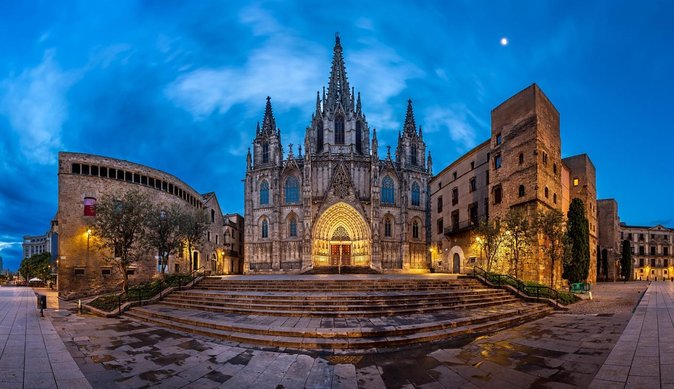
- Roman Barcelona begins the story: Learn how flowing water supported a Roman convalescent colony.
- The route covers two historic quarters: Walk through the Gothic Quarter and continue toward the Ribera and Passeig del Born.
- German makes the history accessible: The guide explains complex subjects in German, with humor and practical context.
- The tour stays mostly outdoors: You see monuments from the street, with no broad museum or church-entry program.
- Small stories carry the walk: Expect legends about dragons, royal fears, an egg dance, a mulberry grave, and a knife-grinder’s song.
- The price favors a small group: At $212 for up to four people, the cost can make sense for a family or group that wants private attention.
Starting at Plaça de Catalunya
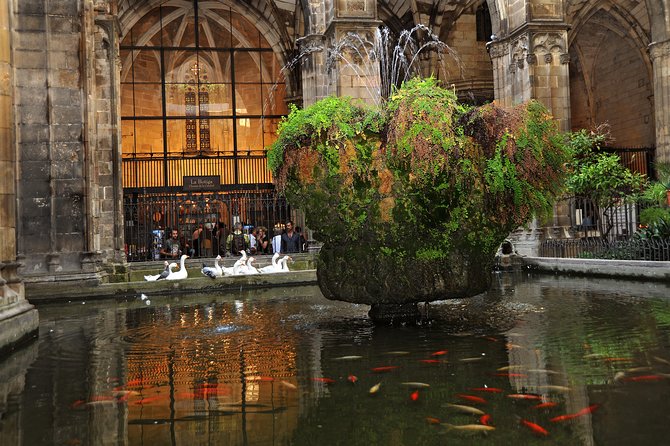
The meeting point is in front of Hotel Olivia Plaza at Plaça de Catalunya, 19. This is a useful place to begin because it sits at the edge of Barcelona’s newer central streets and the older quarters to the southeast.
Your guide uses the square as a natural starting line between modern Barcelona and the medieval city. From here, the walk heads into streets where the city’s scale changes quickly. Broad avenues give way to narrow passages, quiet corners, and small squares where history feels close to daily life.
The opening Roman section gives the tour a firm base. You hear about Roman luxury, including flowing water connected with a convalescent colony. That detail matters because it replaces the usual vague talk about ancient Barcelona with a concrete picture of how people lived and what infrastructure meant in its earliest urban years.
The guide also places Barcelona in the story of Catalonia. The tour addresses the birth of a nation, religious authority, political conflict, and the rise of the crown of Aragon. You are not simply shown old walls. You are given reasons for the city’s power and for the arguments that shaped it.
More Gothic Quarter walks:
- Barcelona in 1 Day: Sagrada Familia, Park Guell,Old Town & Pickup
★ 5.0 · 13,541 reviews - Barcelona all included: Sagrada, Park Güell, Montjuic & Gothic
★ 5.0 · 2,169 reviews - Barcelona: Sagrada Familia, Modernism, and Old Town Tour
★ 4.7 · 1,621 reviews
Small lanes and the medieval city
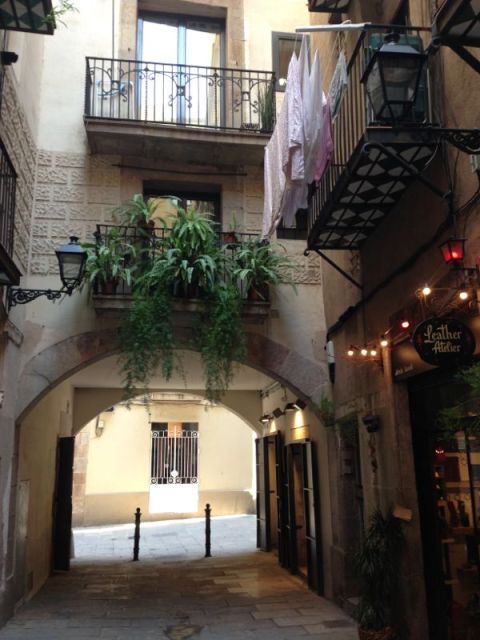
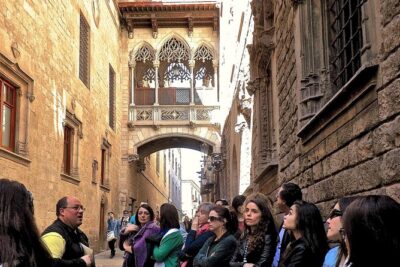
The Gothic Quarter is best understood on foot, and this route makes that the main event. The guide takes you through winding alleyways and picturesque squares rather than treating the old city as a series of quick photo stops.
I like this approach because the atmosphere is part of the subject. A quiet lane can explain more about medieval city life than a long list of dates. You may notice how close the buildings sit, how the streets turn unexpectedly, and how old stone shares space with cafés, shops, and ordinary city movement.
The route includes stories with memorable hooks. You hear how a dragon came to Barcelona, the tale of a young girl in the pines and a French soldier’s bayonet, and the story of a somewhat eerie brotherhood. These are not just decoration. Folklore shows how a city explains itself, remembers danger, and turns old events into local identity.
The tone is designed to be entertaining as well as informative. That matters on a long walking route. A guide who can move from Roman plumbing to a spooky brotherhood, then back to political history, helps the afternoon avoid becoming a stack of dull facts.
The Jewish Quarter and the lost communities
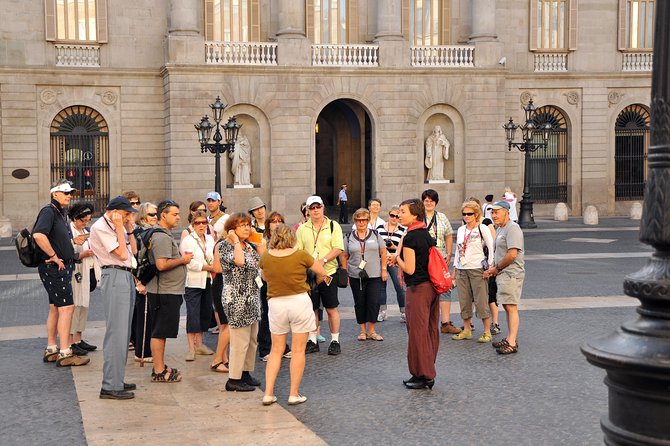
One of the more serious sections concerns Barcelona’s Jewish Quarter. The tour points to the remnants of a lost world and explains how religious communities once formed part of the city’s daily life.
This section deserves your attention. The old city can look romantic, but its past also includes exclusion, persecution, and forced change. The Jewish Quarter gives the walk a more honest balance. You see that Barcelona’s history was not only about kings, merchants, churches, and maritime success.
The Inquisition also enters the story, along with the warning that praise was not always safe. The material can be grim, but it helps explain how power worked in the city. The guide connects institutions and individuals, so the past feels less like a parade of rulers and more like a set of pressures on real communities.
For families, this may be a useful moment to judge the group’s interests. The tour covers difficult subjects, and the presentation is intended to be lively, but the themes are not purely light.
The crown of Aragon and Barcelona’s sea power
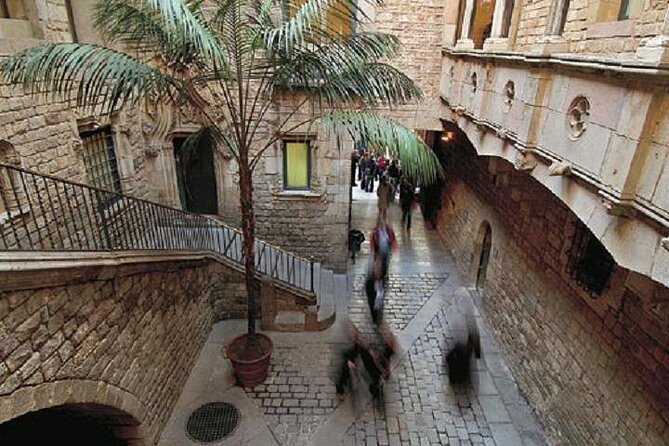
Barcelona’s medieval rise is tied to the crown of Aragon and to the sea. The walk explains how a smaller city grew into a maritime force, and it follows the political choices that helped shape that growth.
You also hear about the council of the hundreds and the idea of direct civic advice. The story of King Martin’s death marks a change in how that shared decision-making worked. These details help you see Barcelona not just as a royal city, but as a place where civic bodies, rulers, merchants, and military interests pulled against one another.
The route then turns toward the old Ribera Quarter. This gives the tour a welcome change of focus. The Gothic Quarter brings Roman remains, religious power, royal buildings, and narrow medieval streets. Ribera brings stronger connections to trade, seafaring, craft, and communal building.
The guide’s job here is to explain cause and effect. Barcelona’s position as a port mattered. Its wealth, its political reach, and its conflicts all connect to that location.
More walking tours in Barcelona:
- Barcelona Tapas and Wine Experience Small-Group Walking Tour
★ 5.0 · 5,804 reviews - Barcelona: Tapas Walking Tour with Food, Wine, and History
★ 4.8 · 4,261 reviews - Barcelona Tapas Walking Tour: Food, Wine & History
★ 4.5 · 1,928 reviews - Barcelona: Tapas Food Crawl Walking Tour with Tastings
★ 4.9 · 1,798 reviews
Royal power, fear, and the Columbus story
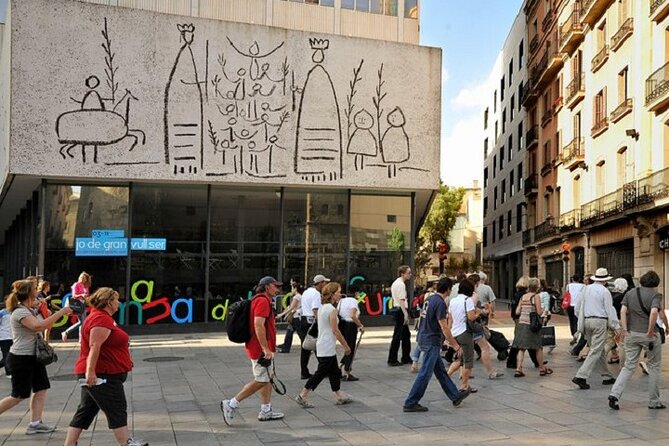
The royal palace section adds a human detail to otherwise grand political history. King Fernando is said to have fought his fears and did not receive Columbus at home. That small story brings the royal household down to a human scale.
You also encounter the claim that a Gothic theme park was created in part by moving houses stone by stone. The point is not simply to admire old façades. The guide encourages you to question what is truly medieval, what was reconstructed, and how later Barcelona presented its own past.
That is a valuable habit in the Gothic Quarter. Some sights look ancient because they are ancient. Others reflect later restoration, rebuilding, or deliberate historical design. A good explanation keeps you from treating every stone as untouched evidence.
The tour also includes the egg dance, a local tradition linked to a festive religious setting. It is the sort of small custom that gives the walk texture. You come away with more than famous names and grand events. You get odd, local details that are easier to remember.
Santa Maria del Mar and the Ribera Quarter
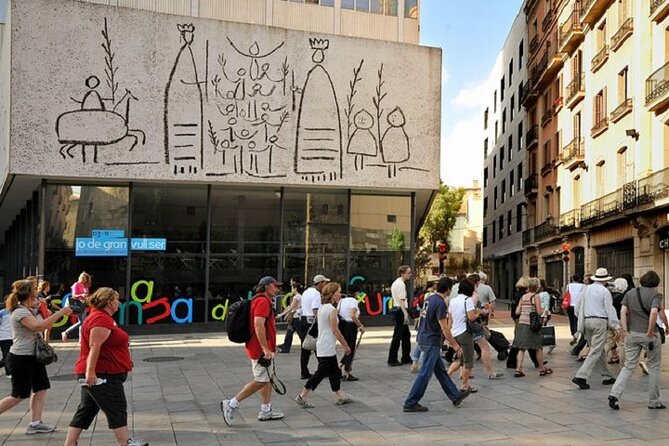
Santa Maria del Mar is one of the major landmarks on the route. The church is presented as a first collaborative project, with legends and heroes tied to its story.
Since interior visits are not generally included, you should set your expectations correctly. You will admire monuments from outside, and the guide will explain their place in Barcelona’s story. This suits you if you prefer context and street-level exploration. It may disappoint you if your main goal is to spend time inside churches or study art and architecture at close range.
The exterior approach still has value. Churches do not exist apart from the neighborhoods that built them. In the Ribera Quarter, Santa Maria del Mar helps explain shared effort, money, faith, and the working communities that shaped the district.
The walk finishes at Passeig del Born, 22. That ending is practical. You are left in an area connected with the historic Ribera Quarter, after moving from Plaça de Catalunya through the older city rather than doubling back to the start.
War, memory, and the scars on old streets
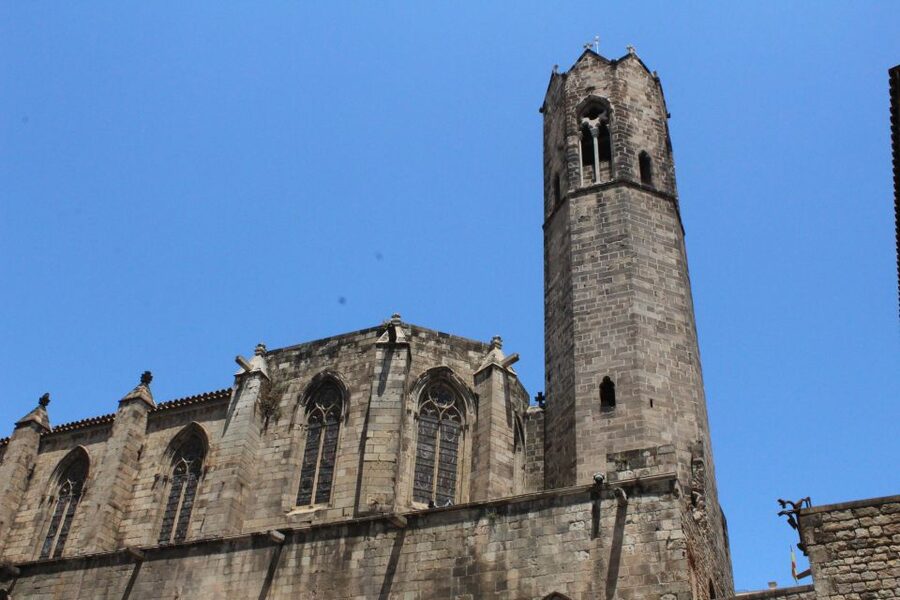
The route does not stop in the Middle Ages. It continues through later Barcelona, including a romantic place associated with the title My Immortal and the scars of the Spanish Civil War.
That shift is important. Barcelona’s old city can tempt you to focus only on medieval romance, but modern conflict changed the meaning of many streets and buildings. The tour keeps the old quarters tied to the city that exists now.
The story of the mulberry grave brings in Bourbon vengeance and the head of a general. It is another reminder that public spaces can carry memories of punishment, loyalty, and political control.
The final odd detail, involving a half house and the song of the knife-grinder, fits the tour’s wider style. Small fragments of local memory often stay with you longer than a formal list of dates. They give you something to look for as you continue walking alone.
What the three and a half hours feel like
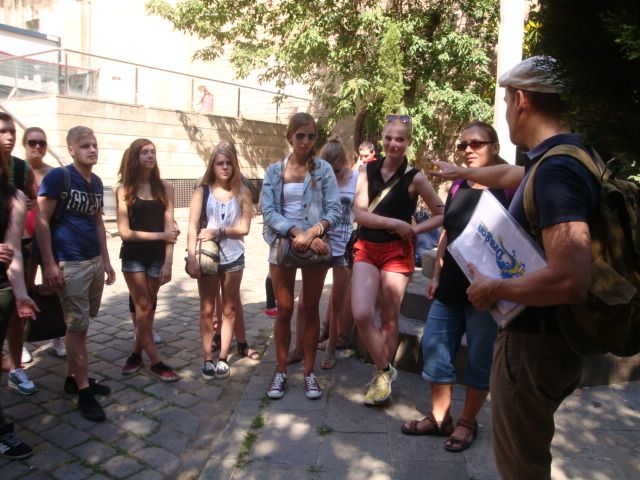
The advertised duration is 3.5 hours, with about 3 hours described as the city tour and roughly 3.25 hours assigned to the main Gothic Quarter visit and walk. In practical terms, plan on a substantial half-day outing.
This is a relaxed walk, not a race. The guide allows time for photos and bathroom breaks, and the route stays on streets and squares so you can experience the quarters at close range.
Still, relaxed does not mean effortless. One booking described the experience as tiring despite being very good. Wear comfortable shoes and treat the walk as a central activity for the day, not as a quick orientation before a packed schedule.
The tour runs in sun, rain, wind, and even strong showers. In summer, bring a hat, sunglasses, sunscreen, and water. In winter, a jacket or thin coat should be enough according to the practical guidance provided.
The activity is listed as wheelchair accessible. Because the route passes through historic streets and squares, you should confirm your own route needs when booking, especially if you require specific access arrangements.
The value of $212 for up to four people
At $212 per group of up to four, this is not priced like a large, low-cost group walk. It is aimed at people who want a private German-language experience and more room to shape the conversation.
For four people, the cost works out to $53 per person. For two people, it becomes $106 each, so the value depends heavily on group size and on how much you want a German-speaking guide rather than an English group tour.
The strongest value comes from personal attention. A small group can ask about restaurants, shopping, local specialties, history, and architecture without competing with a large crowd. One especially useful feature is the practical advice reported from Johannes, including suggestions that helped shape later days in Barcelona.
No entry fees are included, and interior visits are not part of the main program. That keeps the walk focused and avoids forcing you to pay for sights you may not want to enter. It also means you should budget separately if you want church, museum, or other paid visits afterward.
Free cancellation up to 24 hours before the tour and reserve-now, pay-later booking add flexibility. Those terms are useful if your Barcelona plans are still moving around.
Who will enjoy this German-language walk
I would choose this tour if you:
- Prefer German explanations and want more than a basic sightseeing script.
- Like political stories, legends, religious history, and local oddities.
- Want to see the Gothic Quarter and Ribera Quarter in one continuous walk.
- Value restaurant, shopping, and local-specialty suggestions.
- Are comfortable spending most of a half-day outdoors.
- Are traveling as a couple, family, or group of up to four.
I would look elsewhere if you mainly want interior access, museum time, or a short route with little walking. This is also not the best fit if you want to rush through major sights for photographs alone.
Practical questions to settle before starting
The tour is in German, and the guide is live rather than audio-based. Johannes has led at least some departures, but the provider does not promise a specific guide for every booking, so check if that matters to you.
The meeting point is easy to identify: in front of Hotel Olivia Plaza at Plaça de Catalunya, 19. The finish is at Passeig del Born, 22, so arrange your next stop from the endpoint rather than assuming you will return to the starting square.
For the cloister visit, wear clothing that covers your shoulders and reaches at least to the knees. This is a small point, but it can prevent a problem during the walk.
Should you book it?
Book this tour if you want Barcelona explained through stories, politics, faith, conflict, and everyday street life, all in German. The 4.9 rating from 383 reviews reflects a very strong overall response, and the most useful praise centers on clear structure, personal attention, extra visual material, and practical tips.
The decision comes down to format. You are paying for a private small-group walk, not for a package of admissions. If that sounds right, $212 can be fair for four people. If you want to go inside major monuments or avoid a long walk, choose a different experience.
FAQ
Where does the Barcelona Gothic Quarter tour begin?
It begins in front of Hotel Olivia Plaza at Plaça de Catalunya, 19, 08002 Barcelona.
Where does the tour finish?
The walk finishes at Passeig del Born, 22, 08003 Barcelona.
How long does the tour last?
The activity lasts 3.5 hours. The main city tour is described as about 3 hours, with the Gothic Quarter visit and walk taking roughly 3.25 hours.
What language is the tour conducted in?
The live tour guide speaks German.
Is this a private tour?
Yes. The activity is listed as a private group experience for up to four people.
What areas does the walk cover?
The route covers Barcelona’s Gothic Quarter and the Ribera Quarter, finishing near Passeig del Born.
Are interior visits included?
Interior visits and entry fees are not included. Monuments are generally viewed from outside, with a couple of exceptions.
Is the tour wheelchair accessible?
Yes, the activity is listed as wheelchair accessible.
Does the tour operate in bad weather?
Yes. It runs in sun, rain, wind, and strong showers.
What should I wear or bring?
In summer, bring a hat, sunglasses, sunscreen, and a small bottle of water. In winter, a jacket or thin coat should be sufficient. For the cloister visit, wear clothing that covers your shoulders and reaches at least to the knees.
Just added around Barcelona
- GoCar Full Day Tour★ 4.0 · 6 reviews
- Sagrada Familia and Barcelona Highlights: Private Guided 4-Hour Driving Tour★ 5.0 · 6 reviews
- Gobbi Yacht Rental in Barcelona 9 Pax 2/4/8hs★ 5.0 · 6 reviews
- Barcelona: Highlights & Gems Private Tour with Tapa & Drink★ 3.9 · 6 reviews
- Gothic Quarter and Born District: Photographic Workshop★ 5.0 · 6 reviews
- Barcelona: Gothic Quarter & La Sagrada Familia Private Tour★ 4.9 · 6 reviews
- Private Sailboat Ride at Sunset from Sitges★ 5.0 · 6 reviews
- Barcelona: Private Tour of Casa Batllo with Reserved Access★ 3.5 · 6 reviews
Gothic Quarter Walking Tours, compared.
Barcelona in 1 Day: Sagrada Familia, Park Guell,Old Town & Pickup
Read our review →
Barcelona all included: Sagrada, Park Güell, Montjuic & Gothic
Read our review →
Sagrada Familia, Modernism, and Old Town Tour
Read our review →
Barcelona Gothic Quarter Tapas & Taverns Food & Wine Tour
Read our review →
Gothic Quarter Ghosts and Legends Walking Tour
Read our review →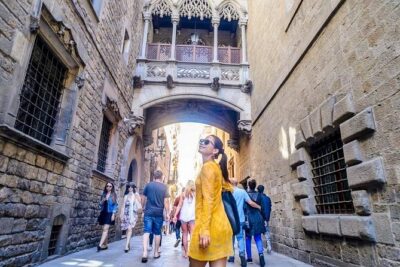
Barcelona Helicopter, Sailboat & Old Town Private Walking Tour
Read our review →
Barcelona Old Town & Gothic Quarter Small Group Tour
Read our review →Browse the lists this tour appears in