
Reviewed · GOTHIC QUARTER WALKING TOURS
Barcelona: Gothic Quarter Walking Tour with Optional Pintxos
Barcelona’s oldest streets tell their story in layers: Roman walls, medieval squares, royal palaces, and the modern political center of Catalonia. This 2.5-hour walking tour gives you a useful first look at that story, beginning near Plaça de Catalunya and winding through the Gothic Quarter to the cathedral, old port, and city hall.
I like the clear route through several major sights, and I like the option to finish with a drink and two pintxos while asking the guide for ideas about the rest of your stay. The main catch is simple: this is a serious walking tour over uneven old streets, and no monument entrance tickets are included.
In This Review
- Key points at a glance
- Starting beside the Fountain of the Six Putti
- From the Ramblas to Barcelona’s beginnings
- Finding Roman traces near the old port
- Nova Square and Barcelona Cathedral
- Stories of saints, rulers, and Catalonia’s flag
- Plaça del Rei and Plaça del Pi
- Plaça de Sant Jaume, city hall, and the Generalitat
- What the optional pintxos finish adds
- What the $18 price really offers
- Walking comfort, pace, and accessibility
- Who will get the most from this Gothic Quarter walk
- Should you book it?
- FAQ
- How long does the Gothic Quarter walking tour last?
- Where does the tour begin?
- How will I identify the guide?
- What languages are available?
- What sights are included in the walking route?
- Are monument entrance tickets included?
- What comes with the optional pintxos tasting?
- Is the tour suitable for wheelchair users?
Key points at a glance
- Roman Barcelona in the modern city: Look for surviving Roman remains among the narrow streets of the Gothic Quarter.
- A route packed with landmarks: See the Ramblas, old port, cathedral, Plaça del Rei, Plaça del Pi, and Plaça de Sant Jaume.
- Stories beyond buildings: Hear about Emperor Augustus, St. Roque, Wilfredo the Hairy, and the origins of Catalonia’s flag.
- A useful food add-on: Choose the pintxos option for one drink and two small bites at a local bar.
- Strong guide feedback: Sylvia has been praised for giving a clear picture of Barcelona’s culture and for being friendly and well informed.
- Good first-day orientation: The central meeting point and broad introduction can help you plan the rest of your time in the city.
Starting beside the Fountain of the Six Putti
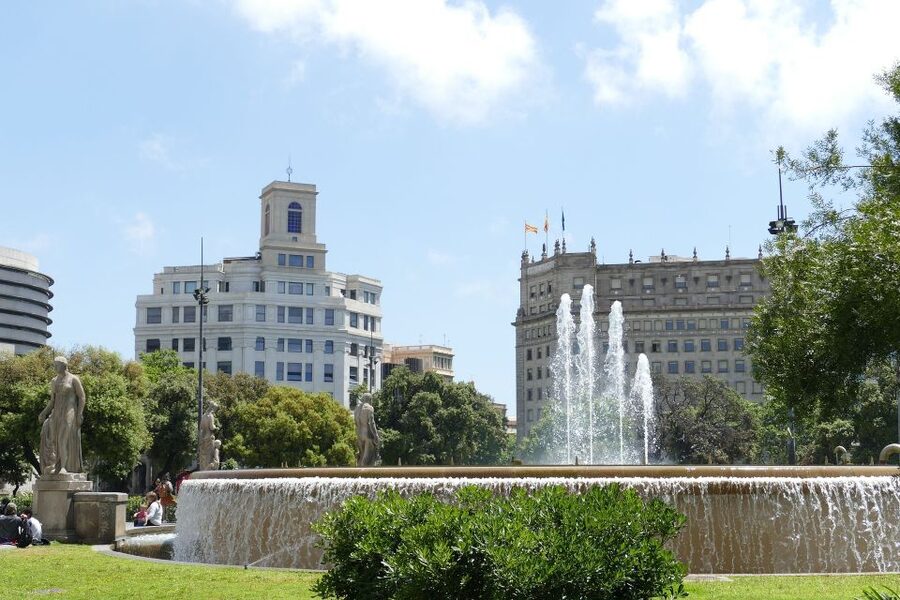
The tour begins beside the Fountain of the Six Putti at Pl. de Catalunya, 31. This is a central location, but Plaça de Catalunya is a large, busy urban space, so give yourself enough time to locate the exact fountain rather than simply arriving at the square.
Your guide carries an Amigo Tours sign. That small detail matters in a crowded meeting area. Look for the sign, then confirm that you are joining the English or Spanish group before setting off.
The tour is offered with live commentary in English and Spanish. If you want the clearest explanation, stay close enough to hear the guide, especially when the group moves from open plazas into narrow lanes where sound can scatter.
The route takes about 2.5 hours, though the listed duration can range from two to three hours. Starting times vary, so check the schedule carefully when you book. The central location makes this a practical choice for a first activity in Barcelona, particularly if you want a broad orientation before exploring individual sights on your own.
More Gothic Quarter walks:
- Barcelona in 1 Day: Sagrada Familia, Park Guell,Old Town & Pickup
★ 5.0 · 13,541 reviews - Barcelona all included: Sagrada, Park Güell, Montjuic & Gothic
★ 5.0 · 2,169 reviews - Barcelona: Sagrada Familia, Modernism, and Old Town Tour
★ 4.7 · 1,621 reviews
From the Ramblas to Barcelona’s beginnings
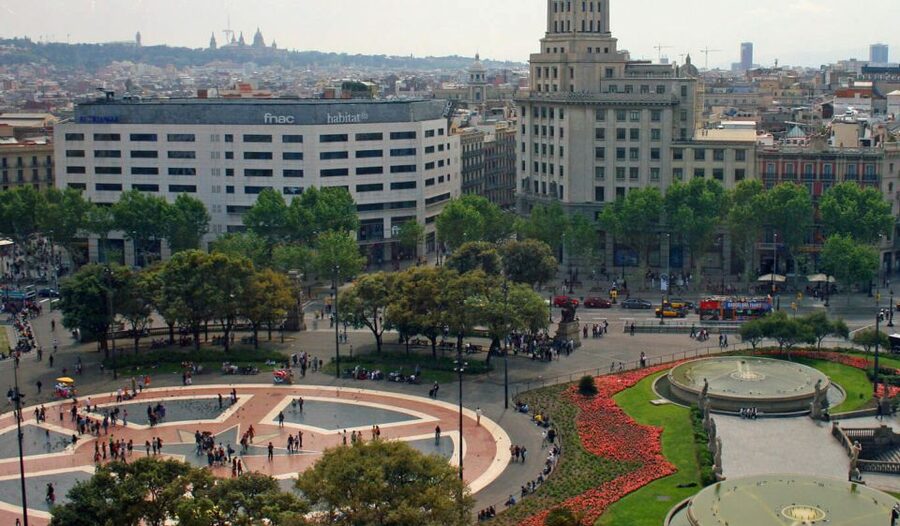
From Plaça de Catalunya, you walk toward the Ramblas, Barcelona’s famous central avenue. The route uses the street as a bridge between the newer city around the square and the older quarters closer to the port.
This is where the guide explains how Barcelona was founded under Emperor Augustus. You will not just be looking at a pleasant avenue. You will be given a basic timeline for understanding how the city grew from an ancient settlement into the Catalan capital you see today.
The Ramblas section also helps you get your bearings. It connects Plaça de Catalunya with the waterfront, and the walk shows how close the Gothic Quarter is to some of Barcelona’s most familiar public spaces.
The drawback is that the Ramblas can be crowded and distracting. Keep your attention on the guide and your belongings. This is a walking route, not a quiet history lecture, and city noise is part of the setting.
Finding Roman traces near the old port
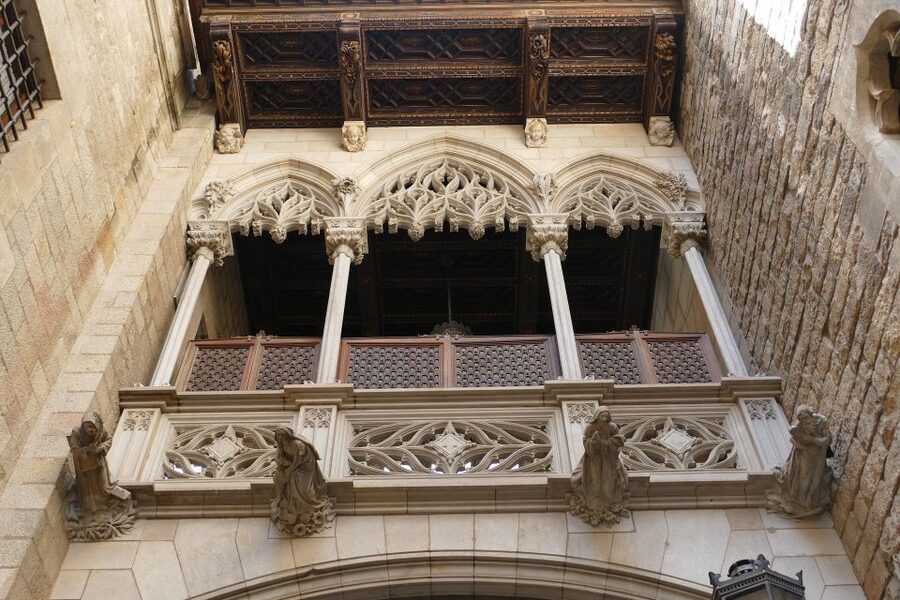
As you approach the old port, the tour turns toward the remains of the old city wall and the narrow streets of the Gothic Quarter. The Roman material is one of the most useful parts of the walk because it is easy to miss when you explore alone.
You will be shown how older construction survives within the present city. That gives the Gothic Quarter more depth than a collection of pretty lanes and stone buildings. The streets may look medieval, but parts of the urban shape reach much farther back.
The old port also marks a change in atmosphere and scale. You move from a broad avenue to tighter streets, where walls and buildings press in around you. Your guide’s commentary becomes especially helpful here because the physical remains are not always presented like a conventional museum exhibit.
Do not expect a long stop at a paid archaeological site. Monument tickets are not included, and the value of this portion comes from seeing the remains in context while the guide explains what you are looking at.
Nova Square and Barcelona Cathedral
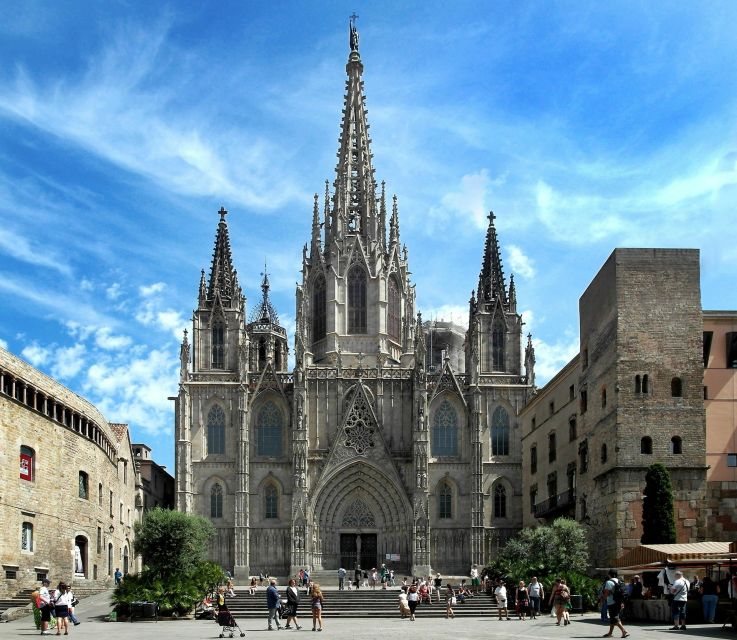
The route continues to Nova Square, in the heart of the Gothic Quarter. Here you can admire Barcelona Cathedral, one of the tour’s main visual rewards.
The cathedral is presented from the outside as part of the walking route. That distinction is important. You get the building, its setting, and the guide’s historical explanation, but you do not get an included interior visit or monument ticket.
Nova Square is a useful place to pause because it brings together the Gothic Quarter’s scale and character. You can take in the cathedral, the surrounding historic buildings, and the tight street plan that makes this district feel so different from the broad avenues elsewhere in central Barcelona.
The guide also introduces figures connected with Barcelona and Catalonia, including St. Roque and Wilfredo the Hairy. These names may be unfamiliar if you have not studied the region’s past, but they help connect local legends, religious traditions, and political identity to the places around you.
More walking tours in Barcelona:
- Barcelona Tapas and Wine Experience Small-Group Walking Tour
★ 5.0 · 5,804 reviews - Barcelona: Tapas Walking Tour with Food, Wine, and History
★ 4.8 · 4,261 reviews - Barcelona Tapas Walking Tour: Food, Wine & History
★ 4.5 · 1,928 reviews - Barcelona: Tapas Food Crawl Walking Tour with Tastings
★ 4.9 · 1,798 reviews
Stories of saints, rulers, and Catalonia’s flag
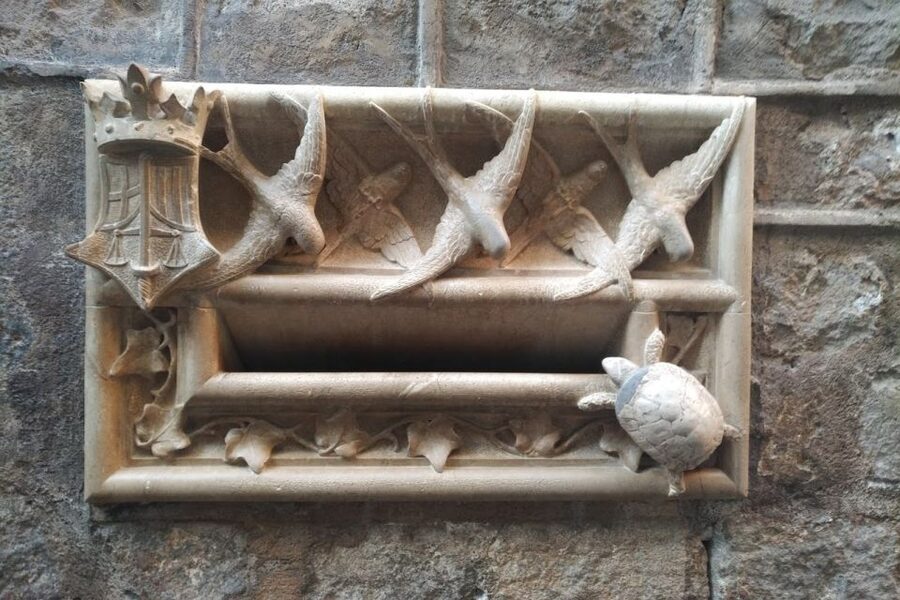
One advantage of a live guide is that the tour does not limit itself to architectural labels. You hear stories about people and symbols that help explain Catalan identity.
The discussion of Wilfred the Hairy and the development of the current Catalan flag gives you a quick look at how history and legend can overlap. You should treat this as an introduction rather than a full course in Catalan history, but it adds more meaning to the streets than simply naming dates and buildings.
St. Roque provides another link between the city’s public spaces and its religious past. These smaller stories are useful because they give you details to watch for later. Once you know the names and symbols, you may notice them again in churches, civic buildings, and local displays during the rest of your visit.
This is also where guide quality matters most. Sylvia has received especially warm feedback for presenting Barcelona’s culture clearly and for being friendly. Other feedback describes the guides as personable and very well prepared, though the exact guide depends on the date and language of your booking.
Plaça del Rei and Plaça del Pi
Next, the walk reaches Plaça del Rei and Plaça del Pi. These squares offer two different views of the old city and give the tour a slower, more focused rhythm after the main route through the Ramblas and cathedral area.
Plaça del Rei is tied to Barcelona’s royal and medieval past. It is the sort of place where the guide’s explanation helps you read the surrounding stonework and understand why the square matters.
Plaça del Pi has its own character, with a more intimate feel than the broad central spaces. The walk between these locations is part of the appeal. You move through narrow lanes rather than jumping between sights by vehicle, so the layout of the old quarter becomes easier to understand.
Expect plenty of standing while the guide talks. Wear comfortable shoes with good support. The old streets can be uneven, and the tour description makes clear that a lot of walking is involved.
Plaça de Sant Jaume, city hall, and the Generalitat
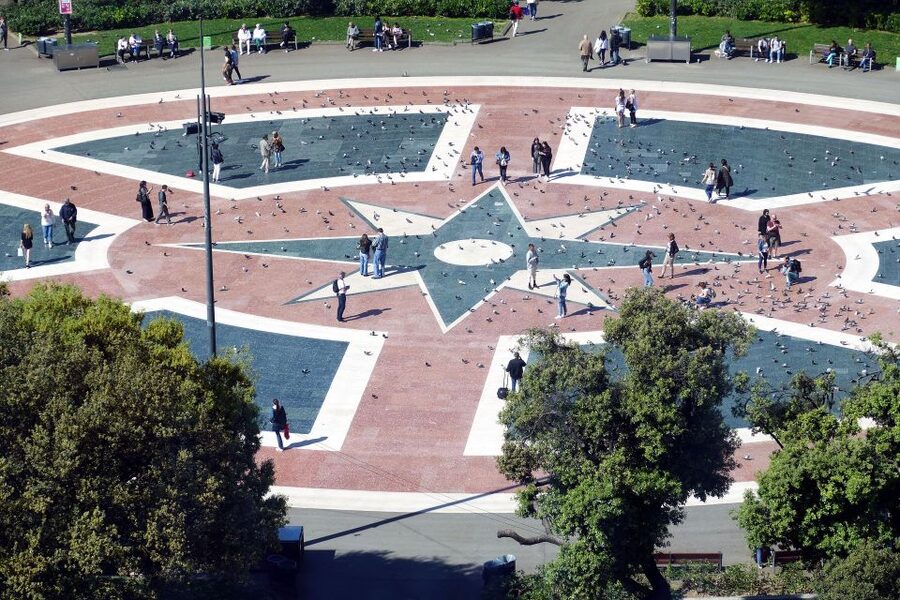
The final major section brings you to Plaça de Sant Jaume, Barcelona’s current administrative and political center. Here you see the town hall and the Palau de la Generalitat, two buildings that help explain how the old quarter remains part of present-day civic life.
This is a strong finish for a history walk because the story moves from Roman foundations and medieval power to modern administration. You are not simply ending at another attractive square. You are seeing where political life in Barcelona and Catalonia continues today.
The guide’s earlier explanations about Catalan identity and the flag make this stop more meaningful. You can connect the symbols and figures introduced earlier with the institutions in front of you.
The activity ends back at the stated meeting point in the Gothic Quarter area. That makes it easy to continue exploring on foot, find a nearby meal, or return toward Plaça de Catalunya. Since the route finishes in the center, you are not left needing separate transportation to get back to the city’s main visitor areas.
What the optional pintxos finish adds
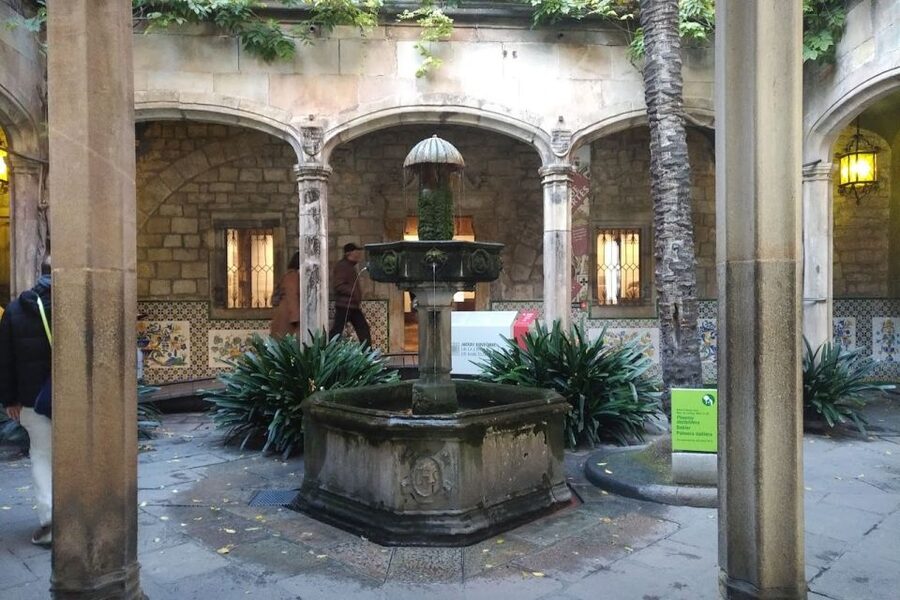
At the end, you can choose to visit a local bar for a drink and two pintxos. The drink can be alcoholic or nonalcoholic, so you are not forced into a wine or beer tasting if that is not your preference.
Pintxos are small servings commonly enjoyed with a drink, and this add-on gives the tour a social finish rather than ending the moment the last square is explained. You can sit down, chat with the guide, and ask for recommendations for the rest of your Barcelona visit.
I see this as more than a snack. It gives you a chance to ask practical questions while the guide still has the route fresh in mind. Ask about areas for dinner, places to revisit, or sights that need more time than this tour allows.
You must select the pintxos option before booking. It is not something you can assume will be available after the walking portion ends. The package includes one drink and two pintxos, but the supplied details do not state the additional price, so compare the upgrade cost with what you would normally spend at a local bar.
The food stop is also not a full meal. Two pintxos and one drink can be a pleasant introduction, but you should plan a separate lunch or dinner if you are hungry.
What the $18 price really offers
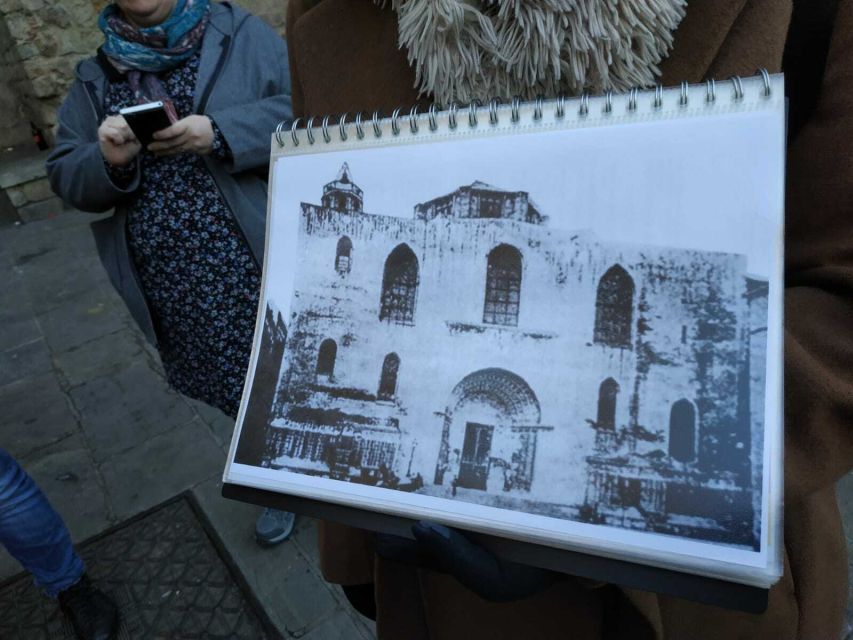
At $18 per person, the basic tour is priced as an accessible introduction to central Barcelona. You are paying for a professional guide, a guided route, and live commentary in English or Spanish. You are not paying for entrance to the cathedral or other monuments, and transportation is not included.
That makes the value strongest if you want context. You can walk through these districts alone for free, but you may miss the Roman remains, misunderstand the role of certain squares, or pass important civic buildings without knowing why they matter.
The price is less compelling if you want extensive interior visits. This activity focuses on streets, plazas, exteriors, and explanation. If your main goal is to go inside major monuments, you will need a separate plan and budget.
The optional pintxos finish may improve the value for you if you want a small local tasting and time with the guide. It is less useful if you already have firm restaurant plans or prefer to choose your own bar.
Free cancellation up to 24 hours before the tour and a reserve now, pay later option give you some flexibility. Those terms are useful in a city where weather, arrival times, and changing plans can affect a walking day.
Walking comfort, pace, and accessibility
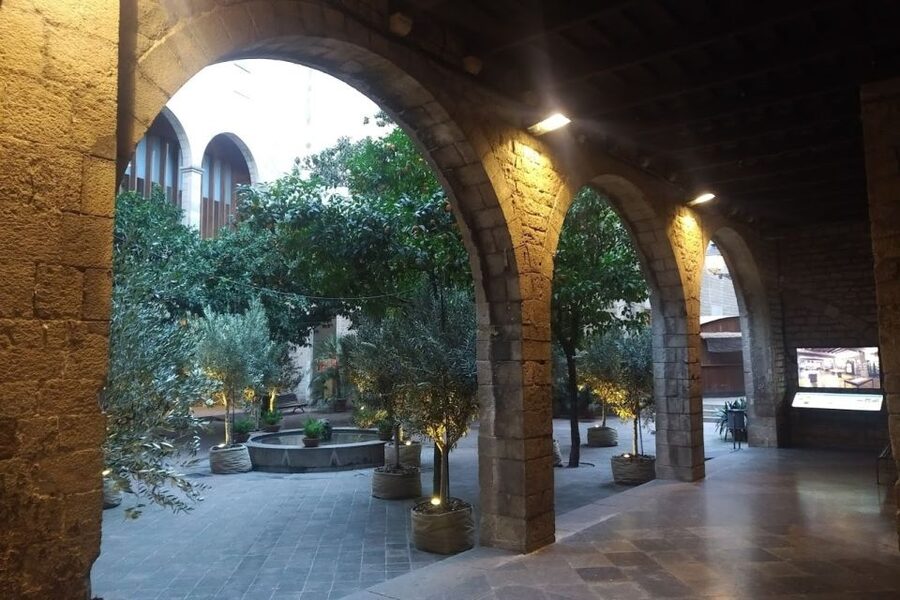
Plan on walking for most of the activity. Comfortable shoes are essential, and you should be ready for extended periods on foot rather than a series of short transfers between sights.
The information provided is mixed on accessibility. One section describes the tour as wheelchair accessible, while the practical notes say it may not be suitable for wheelchair users or people with reduced mobility. Because the route uses old streets and involves a lot of walking, contact the operator before booking if this is important for you.
No group size is given, so you should not assume a private or very small group. The guide carries a sign and provides live bilingual commentary, but the exact pace and ease of hearing will depend on the group on your date.
This tour works best when you are ready to follow the guide through central streets without rushing. It is not a good fit if you need frequent transport, want long independent stops, or have difficulty walking for several hours.
Who will get the most from this Gothic Quarter walk
I would recommend this tour to a first-time visitor who wants the basic Barcelona story in one compact outing. You see the city’s oldest district, several major public squares, the cathedral exterior, Roman remains, the old port, and the political center.
It also suits you if you like history delivered through place. The guide’s stories about Emperor Augustus, St. Roque, Wilfredo the Hairy, and the Catalan flag give you memorable hooks for understanding the city.
The pintxos option makes the tour a better match for anyone who enjoys a small food stop and wants direct local suggestions. The guide may be especially useful early in your stay, when you still need help deciding where to spend your evenings.
I would choose another activity if you want a museum-style archaeological visit, multiple monument interiors, or a relaxed food tour. You should also think twice if a long walking route on old streets will be uncomfortable.
Should you book it?
Book this Barcelona Gothic Quarter tour if you want an affordable, guided introduction to the oldest part of the city, with enough history to make later sightseeing easier. The route covers a lot without requiring transportation, and the optional drink and two pintxos add a friendly finish.
Choose the basic option if your priority is architecture, history, and orientation. Choose the tasting option if you want time to ask the guide for restaurant ideas and enjoy a small local bite.
The best practical plan is to wear supportive shoes, arrive early at the Fountain of the Six Putti, and avoid scheduling a major timed attraction immediately afterward. You will get the most from the experience if you accept that the tour is about streets and stories, not paid interior visits.
FAQ
How long does the Gothic Quarter walking tour last?
The tour lasts about 2.5 hours. The listed duration range is two to three hours, and starting times vary by date.
Where does the tour begin?
Meet the guide next to the Fountain of the Six Putti at Pl. de Catalunya, 31, 08002 Barcelona.
How will I identify the guide?
The guide carries an Amigo Tours sign at the meeting point.
What languages are available?
The tour offers live commentary in English and Spanish.
What sights are included in the walking route?
The route includes the Ramblas, the old port area, Roman remains, Nova Square, Barcelona Cathedral from the route, Plaça del Rei, Plaça del Pi, Plaça de Sant Jaume, the town hall, and the Palau de la Generalitat.
Are monument entrance tickets included?
No. Tickets to monuments are not included in the tour price.
What comes with the optional pintxos tasting?
The tasting includes one drink, alcoholic or nonalcoholic, and two pintxos. You must select this option before booking.
Is the tour suitable for wheelchair users?
The information provided is contradictory. One section marks the activity as wheelchair accessible, while the practical notes say it may not be suitable for wheelchair users or people with reduced mobility. Contact the provider before booking if accessibility is essential.
Just added around Barcelona
- GoCar Full Day Tour★ 4.0 · 6 reviews
- Sagrada Familia and Barcelona Highlights: Private Guided 4-Hour Driving Tour★ 5.0 · 6 reviews
- Barcelona: Highlights & Gems Private Tour with Tapa & Drink★ 3.9 · 6 reviews
- Gothic Quarter and Born District: Photographic Workshop★ 5.0 · 6 reviews
- Gobbi Yacht Rental in Barcelona 9 Pax 2/4/8hs★ 5.0 · 6 reviews
- Barcelona: Gothic Quarter & La Sagrada Familia Private Tour★ 4.9 · 6 reviews
- Private Sailboat Ride at Sunset from Sitges★ 5.0 · 6 reviews
- The Essence of Priorat | Private Wine Tour from Barcelona★ 5.0 · 6 reviews
Gothic Quarter Walking Tours, compared.
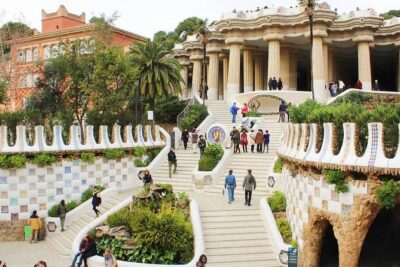
Barcelona in 1 Day: Sagrada Familia, Park Guell,Old Town & Pickup
Read our review →
Barcelona all included: Sagrada, Park Güell, Montjuic & Gothic
Read our review →
Sagrada Familia, Modernism, and Old Town Tour
Read our review →
Barcelona Gothic Quarter Tapas & Taverns Food & Wine Tour
Read our review →
Gothic Quarter Ghosts and Legends Walking Tour
Read our review →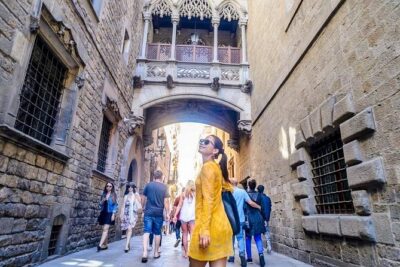
Barcelona Helicopter, Sailboat & Old Town Private Walking Tour
Read our review →
Barcelona Old Town & Gothic Quarter Small Group Tour
Read our review →Browse the lists this tour appears in