
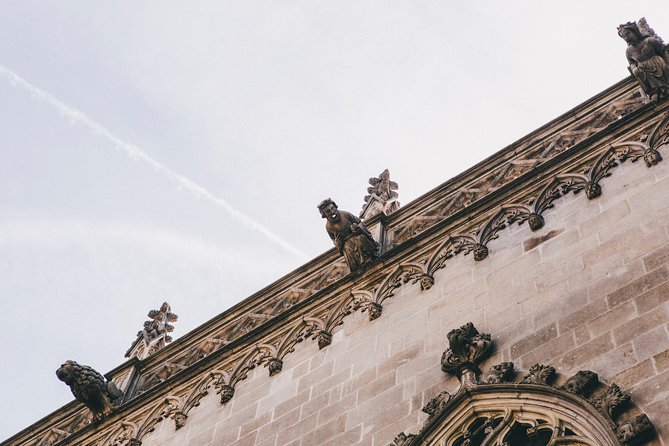
Reviewed · GOTHIC QUARTER WALKING TOURS
Barcelona & Gothic to Modern. Regular Tour
Barcelona’s old center becomes far more interesting when you stop treating it as a collection of pretty façades. This three-hour architecture walk connects Roman Barcelona, medieval power, post-Franco change, the Olympics, and the much-debated forat de la vergonya, or hole of shame, through the work of architect Enric Miralles.
I especially like the route’s wide historical range and its attention to places many sightseeing walks pass without explaining. I also like that guide Pia brings professional architectural experience, yet has worked successfully with both specialists and people who simply want to understand what they are seeing. The main caution is that this is a serious architecture lesson, not a light introductory stroll, so younger children or visitors with no interest in buildings may lose patience.
In This Review
- Key points
- Reading Barcelona from Roman stones to modern design
- Santa Caterina Market and Miralles’s working method
- Santa Maria del Mar and the making of medieval Barcelona
- Barcelona Cathedral and the layers of power
- The Temple of Augustus and Roman Barcelona
- From the Carolingian era to Olympic Barcelona
- The forat de la vergonya and modern urban conflict
- What Pia adds to the experience
- Group size, timing, and practical value
- Who should book this Barcelona architecture walk?
- My take: book it for a sharper view of Barcelona
- FAQ
- How long is the Barcelona & Gothic to Modern tour?
- What time does the tour start?
- Where does the tour begin?
- Where does the tour end?
- What language is the tour offered in?
- What places are visited?
- How many people can join the regular tour?
- Can I cancel for a full refund?
Key points
- Four major Barcelona landmarks: Santa Caterina Market, Santa Maria del Mar, Barcelona Cathedral, and the Temple of Augustus.
- A city told through architecture: Roman, Carolingian, medieval, post-Franco, Olympic, and modern Barcelona all enter the story.
- Guide Pia’s professional eye: Expect detailed explanations, charts, personal insight, and the ability to adjust the discussion to your group.
- A focus on Enric Miralles: The tour uses his ideas and working methods as a way to read Barcelona.
- Small-group format: The regular tour allows up to 20 people, with English commentary and a mobile ticket.
- A useful architectural tool: An architecture microguide is included, giving you something to use after the walk.
Reading Barcelona from Roman stones to modern design
The smart idea behind this walk is simple: buildings are evidence. Their size, shape, materials, placement, and alterations reveal who had power, what the city feared, and how Barcelona changed.
You begin at the Barcino Sculpture on Plaça Nova, a practical meeting point in Ciutat Vella. From there, the walk moves through the Gothic and La Ribera quarters, but it does not treat them as frozen medieval scenery. You trace the city backward and forward, from Roman foundations to the social and political changes of modern Barcelona.
The focus on Enric Miralles gives the tour a clear point of view. Miralles was interested in architecture as a response to complicated reality. That means you are not simply shown a church and told when it was built. You are encouraged to ask why it looks that way, what pressures shaped it, and how later generations changed or reused the surrounding space.
I find that approach more useful than a standard list of dates. You begin to notice that Barcelona’s old streets are not one neat historical layer. Roman remains, medieval religious buildings, modern markets, political decisions, and Olympic-era planning all occupy the same city.
More Gothic Quarter walks:
- Barcelona in 1 Day: Sagrada Familia, Park Guell,Old Town & Pickup
★ 5.0 · 13,541 reviews - Barcelona all included: Sagrada, Park Güell, Montjuic & Gothic
★ 5.0 · 2,169 reviews - Barcelona: Sagrada Familia, Modernism, and Old Town Tour
★ 4.7 · 1,621 reviews
Santa Caterina Market and Miralles’s working method
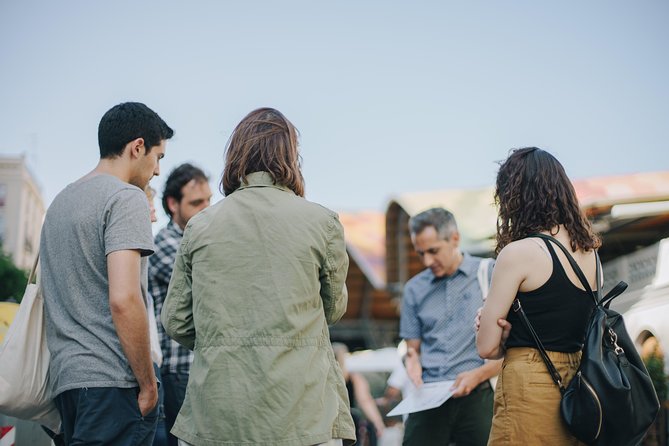
The walk ends at Mercado de Santa Caterina, but the market also appears as an important part of the tour’s architectural argument. Its colorful, undulating roof is one of the most recognizable modern additions to the old city, and it offers a direct way to discuss how contemporary design can enter a historic neighborhood.
Here, the guide uses fieldwork to examine some of Miralles’s methods. That is a valuable touch. Instead of treating architecture as something you admire from a distance, you look at how an architect studies movement, context, materials, memory, and the daily life of a place.
The market is also a good stopping point because it brings the discussion down to street level. Architecture is not just about famous architects or grand civic projects. It affects where people shop, how they move, what they see, and how an old quarter continues to function.
Pia has professional experience connected to one of the buildings discussed, and that can add a level of detail you will not get from a general city guide. She is also described as using charts and personal explanations to show how Barcelona evolved over the centuries. If you enjoy seeing the reasoning behind a design, this will likely be one of the strongest parts of the walk.
One limitation is that a market visit is not the same as a food tour. The focus is on design and urban change, not tasting products or shopping for lunch. You may want to plan a separate market visit if food is your main interest.
Santa Maria del Mar and the making of medieval Barcelona
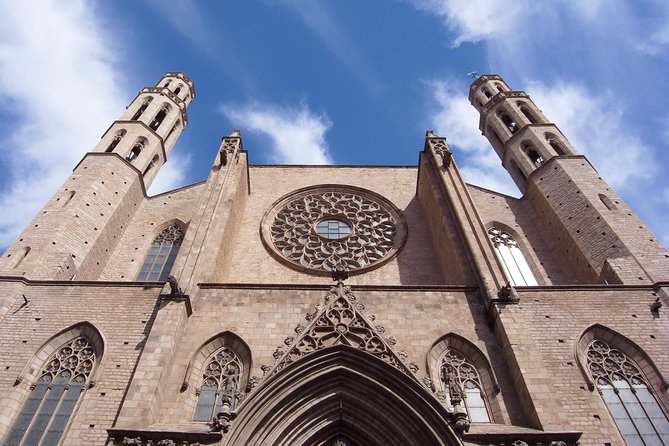
The Basilica of Santa Maria del Mar brings the walk into the medieval city and the La Ribera quarter. Its presence helps explain the economic and social importance of this part of Barcelona during the Middle Ages.
The value of seeing it with an architecture guide is that you can look beyond the familiar postcard view. The building becomes part of a larger story about religion, trade, civic ambition, and the people who shaped the district around it.
This stop also helps balance the tour’s attention to modern design. The point is not that contemporary architecture is more important than old architecture. Instead, you see how different periods solved different problems and expressed different ideas about order, authority, and community.
For visitors who already know Santa Maria del Mar, the benefit comes from revisiting it with a sharper eye. For first-time visitors, the discussion can give the basilica a useful setting within Barcelona’s social and political development.
Expect the pace to be that of an urban walking seminar. You will pause to listen, examine details, and connect one period to another. Comfortable shoes are sensible, although no special equipment is listed. The tour lasts about three hours, so this is not a quick photo stop circuit.
Barcelona Cathedral and the layers of power
Barcelona Cathedral brings you into another major part of the Gothic Quarter. It is an ideal place to discuss how religious architecture helped express institutional power and how the city’s identity was shaped around sacred buildings.
The cathedral is not presented as an isolated monument. The broader route looks at political and religious reasons for architectural change, helping you understand why Barcelona’s buildings do not all speak with the same voice.
This is where the tour can be especially useful for non-specialists. You do not need a university background in architecture to follow the basic questions: Who commissioned this? Who used it? What changed later? Why were certain forms valued in one period but rejected in another?
At the same time, the guide may mention architects, ideas, and historical periods at a fairly brisk pace. One family group found the material compelling for some members but too demanding for others. That is fair warning. If your group includes children or adults who prefer legends, food, or entertainment to architectural analysis, you may need to keep expectations clear before booking.
Pia’s English is described as excellent, and she has also helped bridge language gaps in a small group by translating some terms into Italian. The tour is offered in English, so you should be comfortable listening to detailed explanations in that language.
A few more Barcelona options worth an hour of your trip
- Barcelona: Park Güell Admission Ticket
★ 4.4 · 76,534 reviews - Barcelona: Casa Batlló Entry with Self-Audioguide Tour
★ 4.7 · 25,359 reviews - Barcelona: 24 or 48-Hour Hop-On Hop-Off Bus Tour
★ 4.4 · 20,872 reviews - Barcelona: Park Guell Guided Tour with Skip The Line Entry
★ 4.7 · 17,563 reviews
The Temple of Augustus and Roman Barcelona
The MUHBA Temple d’August takes the route back to Roman Barcelona. Roman remains can be easy to overlook in a city crowded with Gothic churches, modernist façades, and busy streets. Here, the tour places ancient Barcelona at the beginning of the city’s long sequence of changes.
This stop helps explain the idea that the modern city is built on earlier decisions. Roman planning, later medieval growth, and modern redevelopment are not separate subjects. They overlap in the streets you are walking through.
The Roman chapter also gives the tour a strong opening framework. You can begin to see Barcelona not as a city that suddenly became important in the Middle Ages, but as a place repeatedly reshaped by different political and cultural forces.
Because the experience covers such a long span, you should not expect an exhaustive treatment of every monument. The guide has to make choices. The strength is the connection between periods, not a full architectural inventory of the Gothic Quarter.
From the Carolingian era to Olympic Barcelona
One of the most unusual features is the inclusion of periods that many city walks skip. The route moves from Roman Barcelona to the Carolingian era, then through the post-Franco period and Olympic Barcelona.
That sequence gives you a better sense of how political change affects streets and buildings. The post-Franco period, in particular, opens a discussion about Barcelona’s transition after dictatorship and the changing ideas of public space and civic identity.
Olympic Barcelona adds another modern turning point. The city’s international transformation is often presented as a success story, but this tour places it within a longer process of urban decisions. You get a chance to consider not only what was built, but also how redevelopment changes the relationship between old neighborhoods and new ambitions.
The guide’s use of charts is helpful here. Long historical sequences can blur together when explained only through words. Visual material can show how the city expanded and how different periods fit together.
This is also where the tour’s intellectual demands become clearest. You are asked to connect architecture with history, politics, cultural imagination, and social change. That is rewarding if you enjoy context, but it is more work than a standard sightseeing walk.
The forat de la vergonya and modern urban conflict
The story of el forat de la vergonya, or hole of shame, brings the discussion into a more recent and contested part of Barcelona’s urban life. The name itself signals conflict, and the subject lets you consider what happens when official plans meet the needs and wishes of local communities.
This section is valuable because it shows architecture as a public argument. A plaza, market, street, or redevelopment project can affect daily life and provoke strong responses. The city is not merely shaped by architects and officials. It is also shaped by residents, politics, resistance, and negotiation.
For me, this is one of the route’s most authentic elements. It moves away from the easy idea that Barcelona’s buildings are only beautiful objects. You see that planning decisions carry consequences, and that the old quarter remains a lived-in part of the city.
The tour does not promise a simple answer to these conflicts. Its purpose is to help you read the evidence and understand the forces at work. That balanced approach suits visitors who want more than architectural admiration.
What Pia adds to the experience
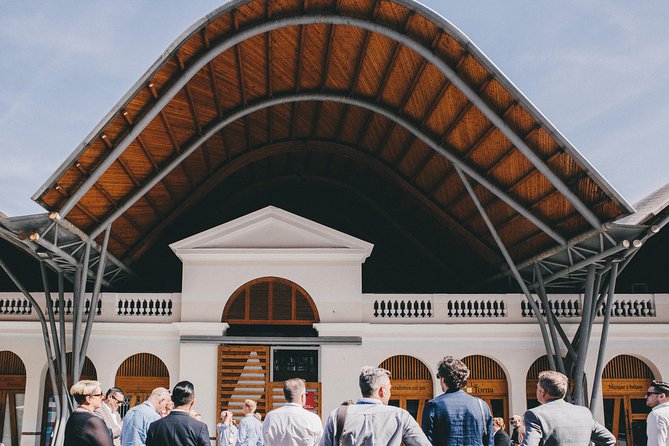
Pia receives the strongest praise for her command of Barcelona’s history and architecture, along with her ability to explain difficult ideas clearly. She has been described as an architect and university-level lecturer, which helps explain the depth of the material.
Her approach seems to work best when you ask questions. People with previous architectural experience can use the walk as a more advanced discussion, while beginners can ask for plain explanations and connect the ideas to what they see around them.
That flexibility matters. This tour is not designed only for architects or engineering specialists. It is aimed at people who are curious about design and want to learn how to look at a city with greater care.
Still, guide style can shape your experience. Pia’s strength is detailed instruction and serious subject knowledge. If you want a highly theatrical storyteller who fills every pause with jokes and legends, this may not be your ideal match.
I would book it early in a Barcelona visit, not because the route covers every attraction, but because it can change how you see the rest of the city. Afterward, Gothic churches, modern markets, and altered public spaces are likely to make more sense.
Group size, timing, and practical value
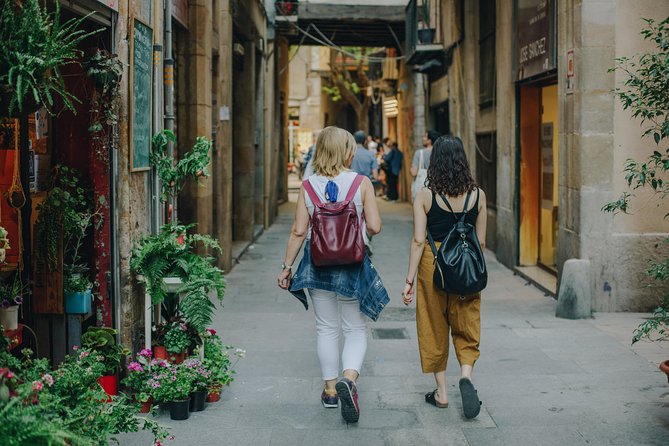
The regular tour starts at 10:30 in the morning and lasts about three hours. It begins and ends at Barcino Sculpture, Plaça Nova 40, in Ciutat Vella. Since the walk returns to its meeting point, it is easy to pair with other plans in the old center.
The maximum group size is 20 people. That is not an intimate private walk, but it is small enough for a focused discussion if everyone stays together. A group of this size can also make it harder to hear in noisy streets, so arrive at the meeting point a little early and identify the guide promptly.
One specific practical warning is worth noting: several tours may gather around the same starting location. Look carefully for the correct group rather than assuming the first guide you see is yours.
The mobile ticket keeps the booking simple. Service animals are allowed, public transportation is nearby, and most people can participate. The supplied information does not describe the exact walking surface, seating, or step-free access at every stop, so ask the operator if you have specific mobility needs.
No price is provided here, so I cannot judge the exact cost. In value terms, this walk makes the most sense if you want a guide with professional architectural training, a long historical span, and a more thoughtful look at familiar landmarks. It offers less value if you mainly want fast photo opportunities or a broad list of tourist highlights.
Free cancellation is available up to 24 hours before the start time. Cancellations or changes made later are not refunded, and poor weather or failure to meet the minimum group size can lead to a new date or a full refund.
Who should book this Barcelona architecture walk?
I would choose this experience if you like cities as works in progress. It suits architecture and design enthusiasts, history-minded visitors, journalists, students, and curious first-time visitors who want to understand how Barcelona grew.
It can also work well for people who live in Barcelona and feel they have seen the Gothic Quarter already. One of the tour’s pleasures is learning that familiar streets contain signs of older city plans, political change, and modern design decisions.
I would think twice if your group wants a relaxed, purely entertaining walk. The material can be detailed, and one direct assessment found it closer to an advanced architecture class than an introductory Barcelona tour. That does not make it unsuitable for beginners, but you should bring curiosity and be ready to listen.
The included architecture microguide is a useful extra. It gives you a compact reference for the concepts introduced during the walk, rather than leaving the ideas behind when the tour ends.
My take: book it for a sharper view of Barcelona
Book Barcelona & Gothic to Modern if you want to understand why Barcelona looks the way it does, not just photograph its best-known buildings. The route covers major landmarks, but its real strength is the connection between architecture, politics, religion, history, and public life.
Pia appears to be at her best with curious groups who ask questions and want detail. The strongest reason to go is the chance to see the Gothic and La Ribera quarters through an architect’s eye, from Roman remains to modern urban disputes.
Skip it if you want a short, breezy orientation with little technical discussion. Choose it if you want the old city to become more legible, complicated, and interesting.
FAQ
How long is the Barcelona & Gothic to Modern tour?
The tour lasts approximately three hours.
What time does the tour start?
The scheduled start time is 10:30 am.
Where does the tour begin?
It begins at the Barcino Sculpture on Plaça Nova, 40, in Barcelona’s Ciutat Vella.
Where does the tour end?
The activity ends back at the meeting point.
What language is the tour offered in?
The tour is offered in English.
What places are visited?
The route includes Mercado de Santa Caterina, the Basilica de Santa Maria del Mar, Barcelona Cathedral, and the MUHBA Temple d’August.
How many people can join the regular tour?
The maximum group size is 20 people.
Can I cancel for a full refund?
Yes. You can cancel up to 24 hours before the experience start time for a full refund. Later cancellations and changes are not refunded. If poor weather or an insufficient number of participants causes the tour to be canceled, you will be offered another date or a full refund.
Just added around Barcelona
- GoCar Full Day Tour★ 4.0 · 6 reviews
- Sagrada Familia and Barcelona Highlights: Private Guided 4-Hour Driving Tour★ 5.0 · 6 reviews
- Barcelona: Highlights & Gems Private Tour with Tapa & Drink★ 3.9 · 6 reviews
- Gothic Quarter and Born District: Photographic Workshop★ 5.0 · 6 reviews
- Gobbi Yacht Rental in Barcelona 9 Pax 2/4/8hs★ 5.0 · 6 reviews
- Barcelona: Gothic Quarter & La Sagrada Familia Private Tour★ 4.9 · 6 reviews
- Private Sailboat Ride at Sunset from Sitges★ 5.0 · 6 reviews
- Barcelona: Private Tour of Casa Batllo with Reserved Access★ 3.5 · 6 reviews
Gothic Quarter Walking Tours, compared.
Barcelona in 1 Day: Sagrada Familia, Park Guell,Old Town & Pickup
Read our review →
Barcelona all included: Sagrada, Park Güell, Montjuic & Gothic
Read our review →
Sagrada Familia, Modernism, and Old Town Tour
Read our review →
Barcelona Gothic Quarter Tapas & Taverns Food & Wine Tour
Read our review →
Gothic Quarter Ghosts and Legends Walking Tour
Read our review →
Barcelona Helicopter, Sailboat & Old Town Private Walking Tour
Read our review →
Barcelona Old Town & Gothic Quarter Small Group Tour
Read our review →Browse the lists this tour appears in