
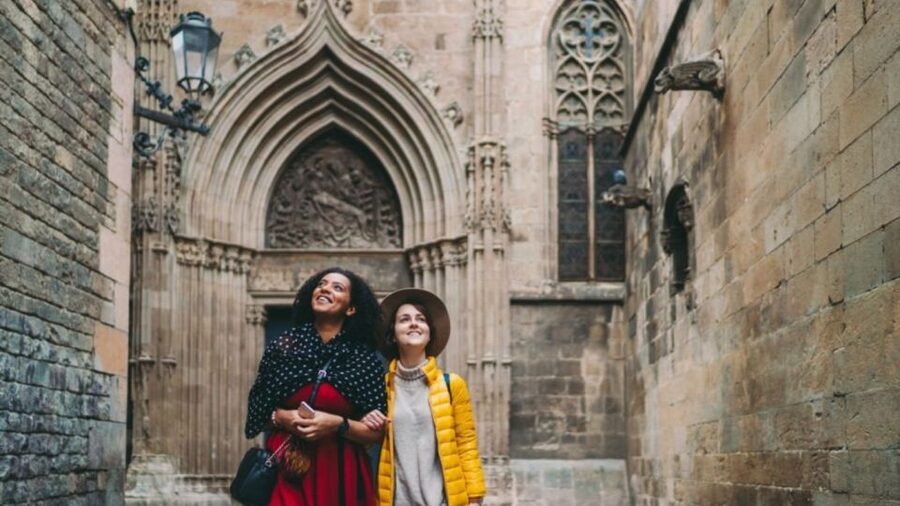
Reviewed · GOTHIC QUARTER WALKING TOURS
Barcelona Old Town Private Walking Tour with Local Historian
Barcelona’s oldest streets are not a museum set. They are working neighborhoods built over Roman walls, medieval lanes, markets, churches, and small plazas. This private walk links those layers clearly, from the Barcino sculpture and Roman aqueduct at Plaça Nova to Plaça Reial at the end of La Rambla.
I like the slow three-hour pace, which gives your guide room to explain rather than rush you from photo stop to photo stop. I also like the private format, limited to ten people, and the depth praised in the available feedback, especially for guides Inez and Alessandro. The main consideration is that attractions are visited from outside, so this is best for context and orientation, not cathedral or concert-hall interiors.
In This Review
- Key points
- Starting beside Barcelona’s Roman wall
- Palace of Catalan Music and Santa Caterina Market
- Santa Maria del Mar and the medieval Ribera
- El Born’s streets and everyday Barcelona
- Plaça Sant Jaume and the Gothic Quarter
- The Temple of Augustus and Roman foundations
- The Jewish Quarter and Plaça Sant Felip Neri
- La Rambla and the finish at Plaça Reial
- What the private format is really worth
- Pace, access, weather, and group size
- Who will get the most from this walk
- Should you book the Barcelona Old Town walk?
- FAQ
- Where does the tour begin?
- Where does the tour finish?
- How long is the tour?
- Which languages are available?
- Are attraction tickets included?
- Is the tour private and wheelchair accessible?
Key points
- Roman Barcelona comes first: Begin beside the old city wall, aqueduct, and the Temple of Augustus.
- A guide-led look at El Born: See Santa Caterina Market, Santa Maria del Mar, La Ribera, and the narrow medieval streets.
- Strong focus on overlooked corners: The Jewish Quarter and Plaça Sant Felip Neri add quieter, more thoughtful stops.
- Private and relaxed: The group is capped at ten, with about 3 kilometers of walking.
- Exterior sightseeing only: You will hear the story of major monuments without paying entrance fees or touring their interiors.
- Useful language choice: Tours are offered in English, Spanish, and Greek. One past booking also had a French-speaking guide.
Starting beside Barcelona’s Roman wall
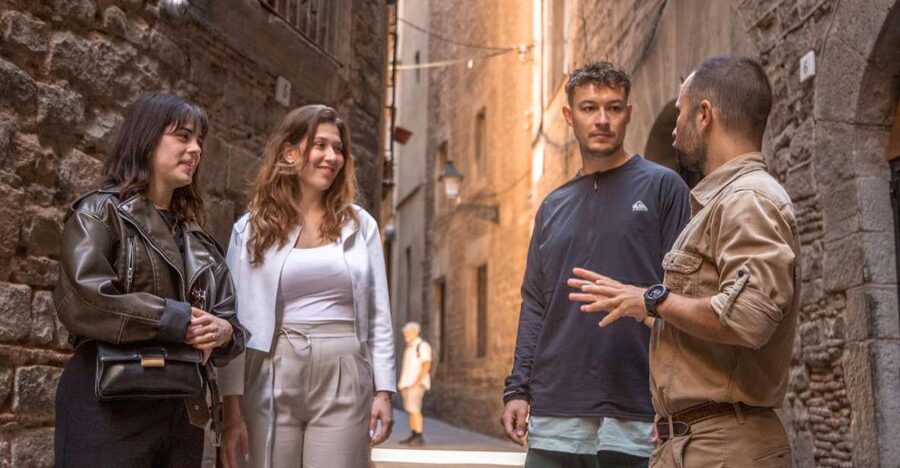
Meet at the Barcino sculpture in Plaça Nova, number 40, beside the Roman wall and the remains of an aqueduct. It is a fitting starting point because Barcelona’s oldest story is under your feet before the walk has even begun.
Your guide can use the surviving wall and stonework to explain Barcino, the Roman settlement that formed the city’s early core. This opening gives the rest of the walk a useful frame. Medieval Barcelona did not replace the Roman city completely. It grew around it, reused it, and sometimes hid it inside later buildings.
I would arrive a few minutes early. Plaça Nova is a busy Old Town meeting area, and the Barcino sculpture is the specific landmark to look for. Comfortable shoes matter more than stylish ones here. The route covers roughly 3 kilometers, much of it on old stone streets and uneven paving.
More Gothic Quarter walks:
- Barcelona in 1 Day: Sagrada Familia, Park Guell,Old Town & Pickup
★ 5.0 · 13,541 reviews - Barcelona all included: Sagrada, Park Güell, Montjuic & Gothic
★ 5.0 · 2,169 reviews - Barcelona: Sagrada Familia, Modernism, and Old Town Tour
★ 4.7 · 1,621 reviews
Palace of Catalan Music and Santa Caterina Market
The route includes the Palace of Catalan Music, one of the city’s major cultural landmarks. The visit is external, so you should not expect a concert-hall tour or a look inside the auditorium. Still, the building offers a useful chance to discuss Barcelona’s artistic identity and the architectural details visible from the street.
The walk then moves toward Santa Caterina Market. Markets are often better windows into daily life than grand monuments, and this stop helps balance the Roman and medieval material with a sense of the city as it functions today.
You will pass through streets where shopping, homes, churches, and historic façades sit side by side. That mixture is one of the Old Town’s pleasures. It is also why a guide helps. Without context, the area can seem like a maze of pretty lanes. With a good explanation, the route becomes a connected story.
Santa Maria del Mar and the medieval Ribera
Santa Maria del Mar is one of the tour’s major highlights. The church is closely tied to the medieval district of La Ribera, and its setting helps you understand how Barcelona expanded beyond the earliest Roman center.
The exterior visit lets you take in the scale and character of the building while your guide explains its place in the neighborhood. If you want to go inside, check separately for opening times and admission because the tour itself does not include attraction tickets or interior visits.
From here, the route continues through La Ribera and El Born. These districts reward slow walking. Their narrow lanes and small squares make more sense when you know they developed as working parts of the medieval city rather than as a planned modern quarter.
I especially like this portion for visitors who have already seen Barcelona’s headline attractions. You may have walked near El Born before without understanding how it connects to the city’s older core. Alessandro, one of the guides named in the available guest feedback, was praised for combining archaeology, art, history, and cultural heritage. That mix suits this part of the route well.
El Born’s streets and everyday Barcelona
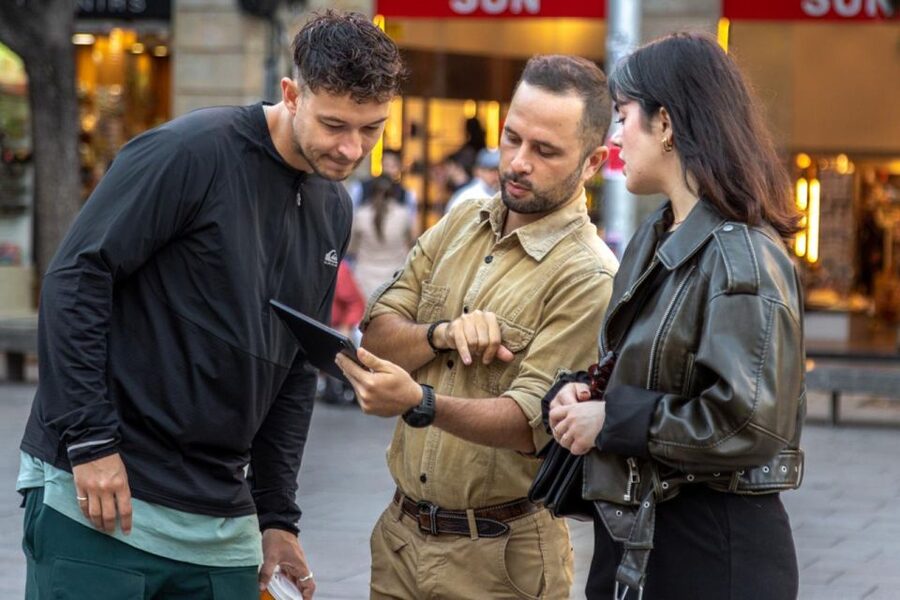
El Born is often presented as a stylish district, but this walk gives you more than cafés and attractive façades. The guide connects the neighborhood to its medieval past and points out how older buildings, lanes, and public spaces still shape local life.
The private setup is useful here. You can ask why a street bends, how the district relates to the Gothic Quarter, or what changed as Barcelona grew. In a large group, such questions can slow everyone down. With a private guide and a maximum of ten people, the conversation can stay more personal.
The pace is deliberately unhurried. You are not covering every corner of the Old Town, and that is a good thing. Three hours passes quickly, so the guide has to choose carefully. The stated route gives you major landmarks, but the value lies in the explanations between them.
More walking tours in Barcelona:
- Barcelona Tapas and Wine Experience Small-Group Walking Tour
★ 5.0 · 5,804 reviews - Barcelona: Tapas Walking Tour with Food, Wine, and History
★ 4.8 · 4,261 reviews - Barcelona Tapas Walking Tour: Food, Wine & History
★ 4.5 · 1,928 reviews - Barcelona: Tapas Food Crawl Walking Tour with Tastings
★ 4.9 · 1,798 reviews
Plaça Sant Jaume and the Gothic Quarter
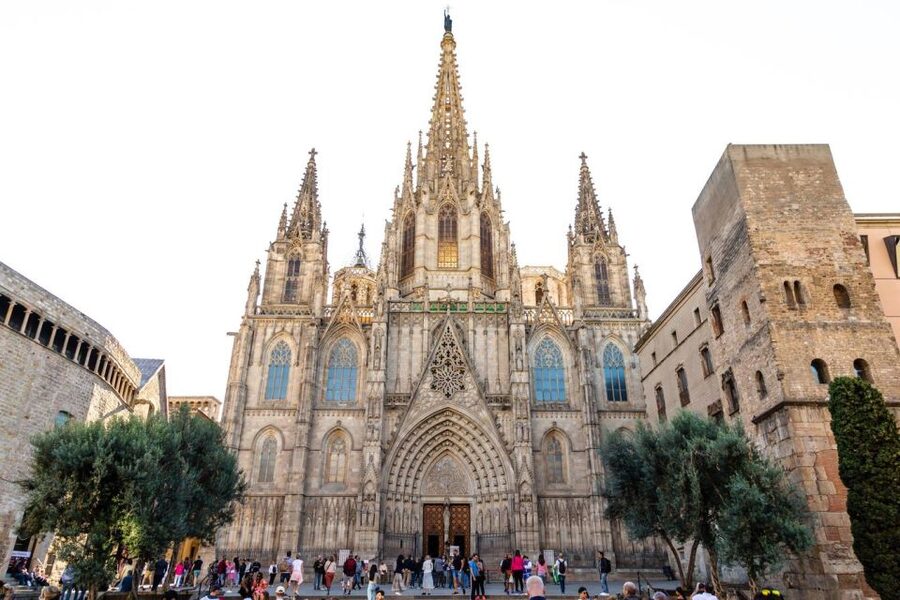
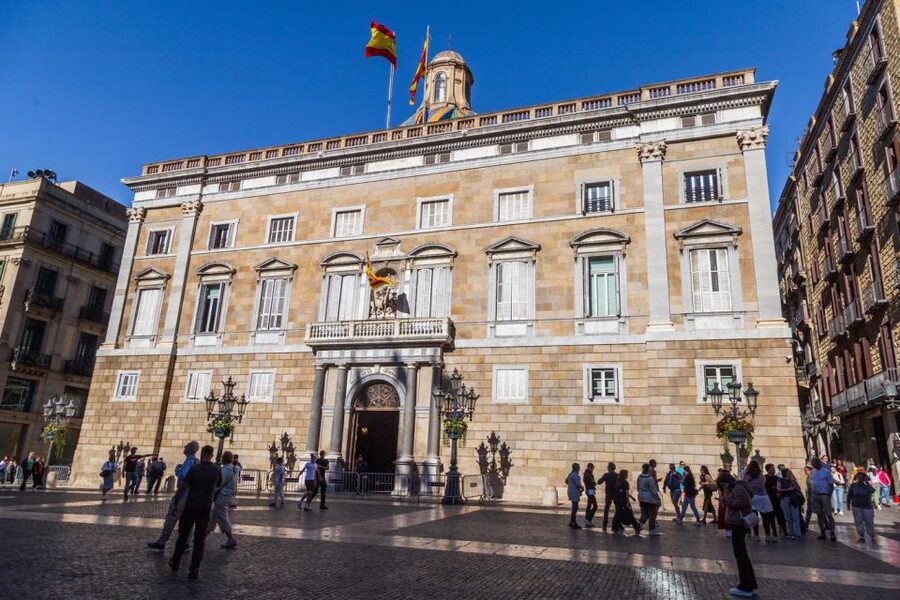
Plaça Sant Jaume is one of the central public squares in the historic city. It provides a clear sense of how important civic spaces remain embedded in the Old Town.
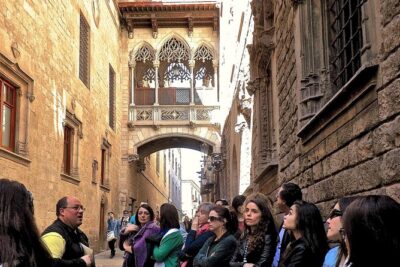
From here, the Gothic Quarter unfolds as a series of lanes, plazas, churches, and fragments from different periods. The name can make the district sound more uniform than it is. In practice, you are walking through layers of Roman, medieval, and later Barcelona.
This is where a local historian can save you time and confusion. The streets are close together, but the significance of each corner is not always obvious. The best commentary does not simply list dates. It explains how the city was organized, who lived in these quarters, and why certain buildings survived while others changed.
The tour’s slow pace also suits photography and people-watching. You can pause without feeling that a coach group is waiting. The tradeoff is that a relaxed walk may not satisfy you if your main goal is to enter every major monument.
The Temple of Augustus and Roman foundations
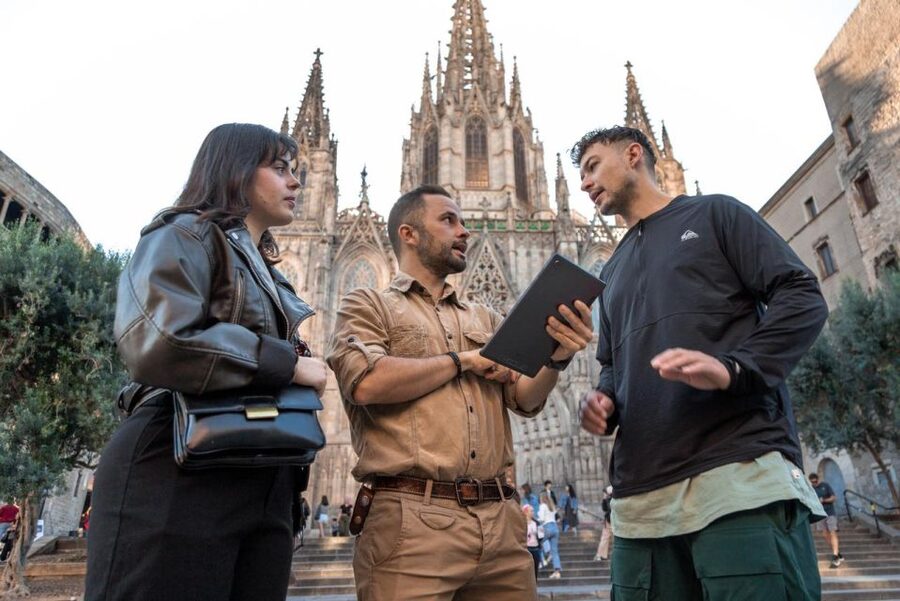
The Temple of Augustus is a particularly worthwhile stop for anyone interested in Barcelona’s earliest period. Roman columns survive inside the medieval city, creating one of those startling moments when two time periods share the same small space.
Again, the experience is external. You will not receive an archaeological-site ticket as part of the tour, and no entrance is required for the listed stops. The guide’s explanation is the main reason to include this point on the route.
I find this kind of stop more valuable after seeing the Roman wall at Plaça Nova. You begin with the broad outline of Barcino, then encounter a more specific remnant of Roman civic life. Together, the two locations help you picture the city before the Gothic Quarter existed.
The Jewish Quarter and Plaça Sant Felip Neri

The route includes the Ancient Synagogue and the Jewish neighborhood. This is a quieter, more reflective part of the walk, with narrow passages and a strong sense of the Old Town’s layered communities.
The guide’s role matters especially here. A short stop can easily become a vague mention of the past unless the explanation gives you a clear sense of the neighborhood and its place in Barcelona’s story. Lorraine, who had visited Barcelona before, found this section especially useful because the Jewish Quarter and nearby historic areas had not been fully apparent on earlier visits.
Plaça Sant Felip Neri adds another change of mood. The small square is known for its distinctive atmosphere and historic setting. It is the kind of place you could pass without understanding why it matters, especially if you are following a map from one famous attraction to the next.
This section gives the tour emotional range. You move from Roman engineering and grand churches to smaller spaces that invite you to slow down and listen. The guide’s commentary is central because the square and neighborhood are experienced mainly through observation and explanation.
La Rambla and the finish at Plaça Reial
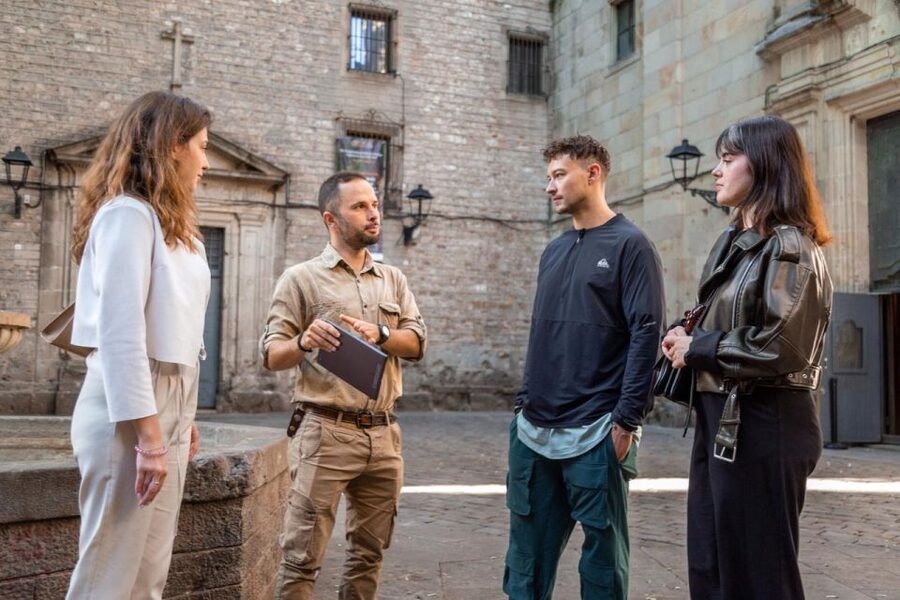
The final stretch reaches La Rambla, Barcelona’s famous central promenade, and ends at Plaça Reial. La Rambla is a useful contrast to the narrow lanes behind it. Here, the city’s movement becomes more open and public, with a broad route connecting the Old Town to the waterfront direction.
Ending at Plaça Reial gives you an easy place to continue your day, though no onward plans are included. Your guide can provide local recommendations, so this is a good moment to ask about nearby places for food, further sightseeing, or returning to a district you want to explore more slowly.
The finish also makes the route practical for first-time visitors. You see several historic quarters in one sitting, then end near one of Barcelona’s best-known public spaces. It is a strong orientation walk for the beginning of a stay, but it can also fill in important gaps if you have already visited the city’s major modernist sights.
What the private format is really worth
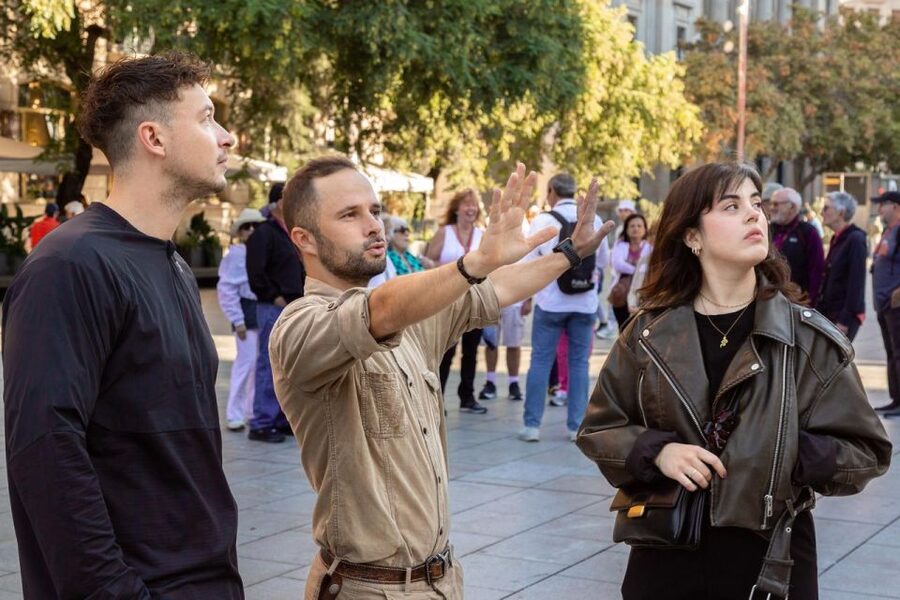
The price is $191 per person. That is a serious cost for a three-hour walk, especially for a couple or a small family. The value depends on how much you want from the guide rather than how many attractions you enter.
For a group of up to ten, the private arrangement can make financial sense when several people share the cost. You are paying for a guide focused on your group, a flexible conversation, and a route that links places many visitors see separately. You are not paying for admission tickets because the monuments are viewed from outside.
The strongest case for the price is the guide’s level of subject knowledge. Alessandro received particularly strong praise for his command of archaeology, art, history, and cultural heritage. Inez was singled out for being patient and well informed. Another booking had a French-speaking guide, though the stated tour languages are English, Spanish, and Greek, so confirm language availability when booking.
If you want interiors, this is not the best use of $191. You would need separate plans for the Cathedral of Barcelona, Santa Maria del Mar, the Palace of Catalan Music, or any other attraction where you want to go inside. If you want the city’s story explained by a local specialist, the private format is easier to justify.
Pace, access, weather, and group size
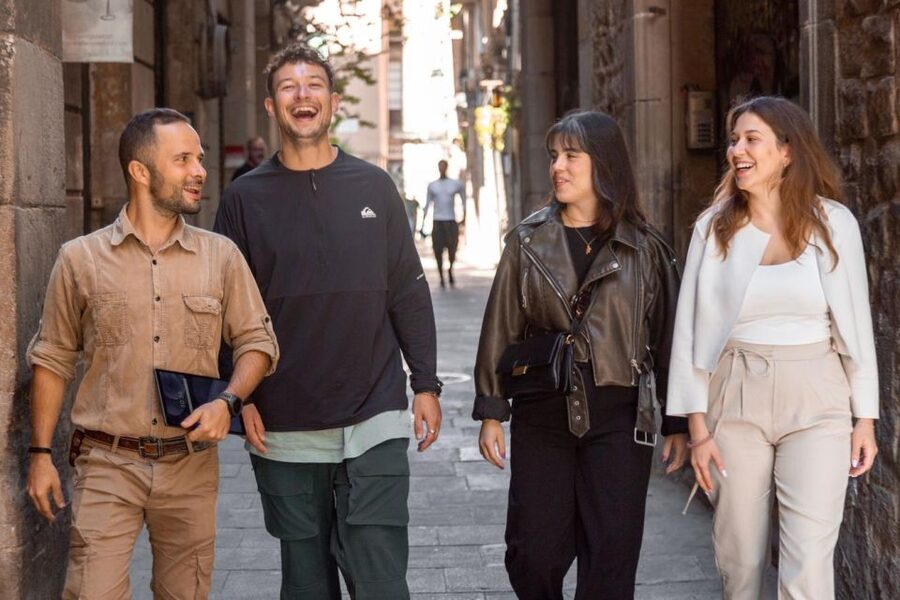
The tour covers about 3 kilometers at a slow pace. That makes it manageable for many people who prefer steady walking over a fast sightseeing circuit, but the Old Town still includes cobblestones and narrow streets. Bring comfortable shoes and prepare for the weather because the tour operates in all conditions.
The experience is listed as wheelchair accessible. Since historic streets can vary in surface and width, you may still want to discuss your particular needs with the provider before booking. The provided information does not promise a step-free route at every single point.
The private group has a maximum of ten participants. This is small enough for direct questions and easier conversation, while still allowing a family or friend group to stay together. It is not a silent audio-guide experience. You are expected to walk, listen, and take part in the discussion.
Free cancellation is available up to 24 hours before the tour for a full refund, and you can reserve now and pay later. Those policies are useful in Barcelona, where weather and changing plans can affect a walking day, but the bigger practical point is to choose a start time when you have enough energy for three hours outdoors.
Who will get the most from this walk
I would choose this tour for a first visit if you want Barcelona’s Old Town to make sense rather than simply provide a backdrop for photographs. It also suits repeat visitors who have seen the major landmarks but missed the Jewish Quarter, Roman remains, La Ribera, or the smaller plazas.
It is a strong match for people who enjoy archaeology, architecture, and cultural history. The available feedback repeatedly emphasizes the guides’ command of those subjects, with Alessandro receiving especially warm praise for the range of his explanations.
Families and private groups may appreciate the slower pace and ability to ask questions. People with limited walking stamina should note the 3-kilometer distance and old street surfaces. Anyone focused on interiors, formal museum visits, or a fast list of attractions should choose a different tour or add separate admission plans.
Should you book the Barcelona Old Town walk?
Book it if you want a personal, story-led introduction to Roman Barcelona, the Gothic Quarter, El Born, and the Jewish Quarter. The guide quality appears to be the main strength, and names such as Inez and Alessandro give you useful expectations about the sort of specialist leading the walk.
Think twice if $191 per person feels high for exterior sightseeing. This is not an admission-inclusive tour, and three hours is a short window for such a large subject. Its value comes from interpretation, local recommendations, and the chance to ask questions in a private group.
For history-minded visitors, repeat Barcelona visitors, and anyone who prefers a careful walk to a rushed checklist, I would book it. Wear sensible shoes, prepare for the weather, and treat the route as an orientation to the Old Town rather than a replacement for visiting its interiors.
FAQ
Where does the tour begin?
The meeting point is the Barcino sculpture in front of Barcelona’s Roman wall, next to the aqueduct, at Plaça Nova 40.
Where does the tour finish?
The walk finishes at Plaça Reial.
How long is the tour?
The experience lasts three hours and covers approximately 3 kilometers, or 1.8 miles, at a slow pace.
Which languages are available?
The stated tour languages are English, Spanish, and Greek. One past booking included a French-speaking guide, but you should confirm the language offered for your date.
Are attraction tickets included?
No tickets are included because the monuments are visited externally. No entrance tickets are required for the exterior stops included in the walk.
Is the tour private and wheelchair accessible?
Yes. It is a private tour with a maximum of ten participants, and the activity is listed as wheelchair accessible. The tour operates in all weather conditions.
Just added around Barcelona
- GoCar Full Day Tour★ 4.0 · 6 reviews
- Sagrada Familia and Barcelona Highlights: Private Guided 4-Hour Driving Tour★ 5.0 · 6 reviews
- Gothic Quarter and Born District: Photographic Workshop★ 5.0 · 6 reviews
- Gobbi Yacht Rental in Barcelona 9 Pax 2/4/8hs★ 5.0 · 6 reviews
- Barcelona: Highlights & Gems Private Tour with Tapa & Drink★ 3.9 · 6 reviews
- Barcelona: Gothic Quarter & La Sagrada Familia Private Tour★ 4.9 · 6 reviews
- Private Sailboat Ride at Sunset from Sitges★ 5.0 · 6 reviews
- Barcelona: Private Tour of Casa Batllo with Reserved Access★ 3.5 · 6 reviews
Gothic Quarter Walking Tours, compared.
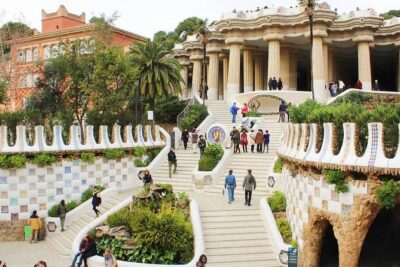
Barcelona in 1 Day: Sagrada Familia, Park Guell,Old Town & Pickup
Read our review →
Barcelona all included: Sagrada, Park Güell, Montjuic & Gothic
Read our review →
Sagrada Familia, Modernism, and Old Town Tour
Read our review →
Barcelona Gothic Quarter Tapas & Taverns Food & Wine Tour
Read our review →
Gothic Quarter Ghosts and Legends Walking Tour
Read our review →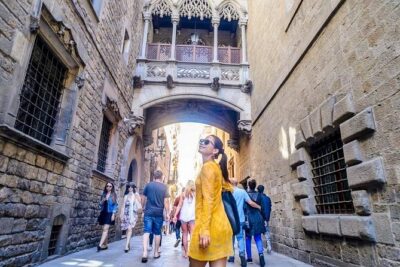
Barcelona Helicopter, Sailboat & Old Town Private Walking Tour
Read our review →
Barcelona Old Town & Gothic Quarter Small Group Tour
Read our review →Browse the lists this tour appears in