
Reviewed · HISTORICAL TOURS
Girona Jewish Heritage small group from Girona
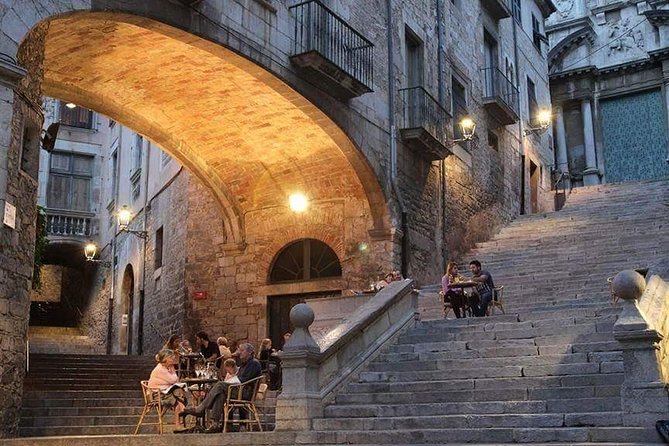
Girona’s Jewish quarter is not a museum set behind glass. It is a maze of old lanes, steep steps, slopes, stone homes, and surviving traces of a community that lived here for centuries. This tour helps you read that setting, then takes you into the Museum of Jewish History, housed in the city’s last synagogue before the 1492 expulsion.
I like two things right away: the small group size, capped at 10, and the way the tour links Jewish life with Girona’s wider story. I also like that admission to the museum is included, so you are not paying twice for the main indoor stop.
The main caution is simple: Girona has limited physical remains, and much of the experience depends on the guide’s storytelling. One guide may make the old lanes come alive, while another may deliver a more memorized talk. The steep streets also make this a poor choice if you have mobility problems.
In This Review
- Key points to know before booking
- What makes Girona’s Jewish quarter worth seeing
- Starting at Plaça de Sant Feliu
- Walking through the medieval Jewish quarter
- Inside the Museum of Jewish History
- The guides make the biggest difference
- Is $54.31 a fair price?
- Who will enjoy this tour most?
- Should you book the Girona Jewish Heritage tour?
- FAQ
- How long does the Girona Jewish Heritage tour last?
- Where does the tour begin and end?
- Is museum admission included?
- Is the tour offered in English?
- How large is the group?
- Is the tour suitable for people with mobility problems?
Key points to know before booking
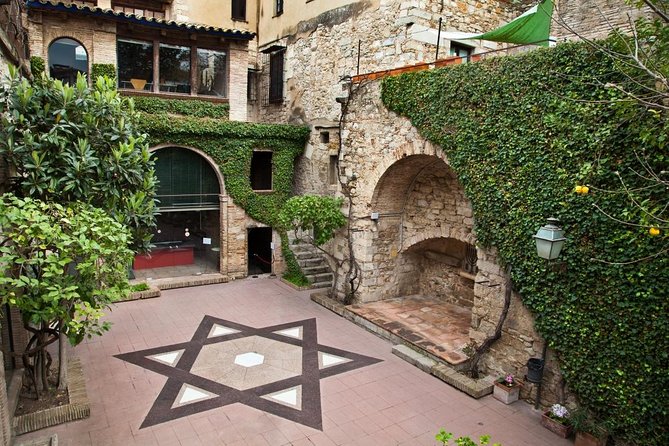
- The former synagogue is now the Museum of Jewish History, and museum admission is included.
- The walking portion covers Girona’s medieval Jewish quarter, one of the best-preserved in Europe.
- Groups are limited to 10 people, making questions and conversation easier.
- Guides vary, with particularly strong praise for Ona, Mike, Miguel, Pere, Pete, Monica, Julia, and Susana.
- The tour lasts about 2 hours and 30 minutes, beginning and ending at Plaça de Sant Feliu.
- Expect steps and slopes, with no food or drinks included.
What makes Girona’s Jewish quarter worth seeing
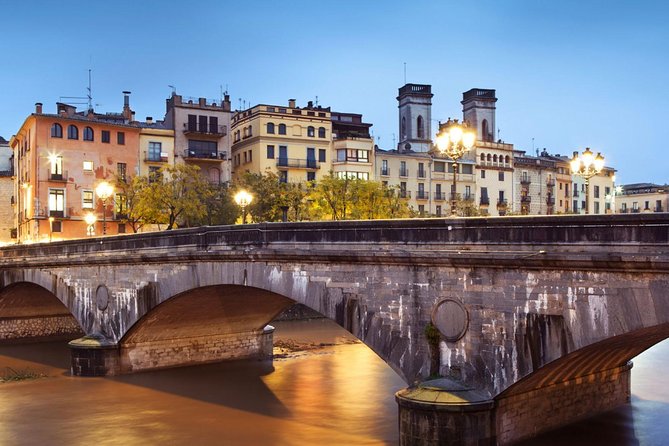
Girona is famous for its old city, but the Jewish quarter gives your walk a sharper focus. The streets retain much of their medieval layout, especially in the area associated with the Jewish community from the 11th and 12th centuries onward.
You will not find a large collection of standing synagogues or grand Jewish monuments. That is important to understand before you book. The evidence is often built into the street plan, stonework, buildings, and museum displays rather than presented as a long chain of complete sites.
A guide can point out details you might otherwise pass without noticing. One example is the presence of mezuzah indentations carved into the stone entrances of two homes. Small marks like these do not make a dramatic sightseeing stop, but they show how Jewish life once fit into ordinary domestic spaces.
The area also preserves parts of the last synagogue used by Girona’s Jewish community. It operated from 1435 until the expulsion in 1492 and now forms part of the museum. You are seeing a place tied directly to the final period of Jewish communal life in the city, not just a modern reconstruction with a historical label.
The best guides place these remains within Girona’s wider past. That can include the city’s growth, the relationship between Jewish and Christian communities, Catalan identity, religious customs, and the changes that came with the expulsion. The goal is not simply to point at old walls. It is to help you understand how a community lived in this particular city.
More Girona days from Girona:
- Girona & Costa Brava Small-Group Tour with Pickup from Barcelona
★ 5.0 · 6,955 reviews - Montserrat, Girona & Costa Brava Guided Day Trip from Barcelona
★ 5.0 · 5,128 reviews - Girona & Dali Museum Small Group Tour with Pick-up from Barcelona
★ 5.0 · 2,965 reviews
Starting at Plaça de Sant Feliu
The tour begins at Plaça de Sant Feliu, in Girona’s old city. This is also where the walk ends, so you do not need to arrange separate transport between the beginning and the museum.
From the square, your guide leads you through the Jewish quarter for about two hours. The exact route can vary, but the experience is built around walking the old streets and seeing the remaining structures in context. Because the quarter is compact and historic, the route includes slopes and many steps.
This is a walking tour, not a ride between scattered attractions. Wear practical shoes and expect uneven footing. If you have mobility concerns, the provider specifically advises against this activity. Service animals are allowed, and the meeting point is near public transportation.
A small group helps here. With a maximum of 10 people, you should be able to hear the guide in narrow lanes and ask about details that catch your eye. One group had nine people and found the size comfortable. The tour can also feel almost private when fewer people book, though that is not always an advantage if the guide is less engaging or spends too much time training another guide.
Walking through the medieval Jewish quarter
The walking section is the heart of the experience. You are not simply led from one address to another. The guide explains what the lanes, houses, and remaining structures can tell you about Jewish life in Girona.
Several guides have been singled out for making this section personal and clear. Mike, described as a lifelong Girona resident, connected the city’s past with local knowledge and Jewish history. Miguel was praised for an approachable manner and insight. Ona received strong praise for adapting her explanations to different levels of religious knowledge.
That flexibility matters. A group may include someone familiar with Jewish traditions alongside someone learning the basic terms for the first time. A good guide can explain customs without assuming too much, then answer more detailed questions without turning the walk into a lecture.
You may also hear about important Jewish residents and surviving homes connected with the community. The Palace of the Ravaia and the house associated with Lleó Avinay, the last governor of the Jewish community, are among the historic buildings linked to Girona’s Jewish past.
Keep your expectations realistic. This is not a tour of a quarter filled with intact synagogues, shops, and houses open to the public. Some of the most valuable moments may be a doorway, a street line, or a reference to a building that has changed use. If you want a long list of preserved interiors, the tour may feel thin. If you want help interpreting a medieval neighborhood, it offers much more.
One criticism of the experience is that the Jewish walk can repeat material covered on a general Girona city tour. If you have already taken a broad old-city tour, tell your guide what you have heard and ask for more detail about Jewish customs, community life, and the buildings specific to this route.
Inside the Museum of Jewish History
The museum visit takes about 30 minutes and admission is included in the $54.31 price. It occupies the site of Girona’s last synagogue, giving the indoor portion a strong connection to the walking route.
The museum helps fill in what the streets cannot show. Outside, you see the shape of the neighborhood and small physical traces. Inside, displays give you a clearer account of the Jewish community, its place in Girona, and the events that ended Jewish communal life in the city in 1492.
The guide leads you through the museum rather than leaving you to read everything alone. That is one of the tour’s strongest features. A guide can connect an object or display to a street you have just walked, or explain how Jewish practice shaped daily life.
Some visitors found the museum the most substantial part of the experience. That is fair. Girona preserves the quarter’s layout and some buildings, but the museum carries much of the historical explanation. If you visited it independently, the separate admission would be about 4 euros according to one comment, so the tour’s value rests mainly on the guided interpretation and the outdoor walk.
The half-hour museum visit is useful, but it is not a full afternoon museum program. If you like to read every panel at your own pace, you may want to return on your own. The tour gives you an introduction and a guided framework rather than unlimited time inside.
A few more Girona options worth an hour of your trip
- Girona History and Legends Tour Small Group from Girona
★ 5.0 · 299 reviews - Girona History, Legends, and Food Walking Tour with food tasting
★ 5.0 · 195 reviews - Girona: Jewish Heritage Guided City Tour and Museum Visit
★ 4.8 · 124 reviews - Private: Girona and Besalu Jewish History Tour from Girona
★ 5.0 · 16 reviews
The guides make the biggest difference
The most frequently praised part of this experience is the quality of several guides. Ona is repeatedly described as personable, patient, flexible, and able to explain both Girona and Jewish traditions. Mike is praised for combining local knowledge with a broad understanding of the Jewish experience. Miguel is described as enthusiastic and easy to approach.
Pere and Pete also receive strong praise for bringing energy and care to the subject. Monica is noted for experience, flexibility, humor, and clear explanations. Julia and Susana are also described as well informed and engaging.
Those names give you a useful booking tip. If the reservation system allows you to select a guide or date, look for one of these guides. The information does not guarantee who will lead your particular departure, but it shows how much the quality of the experience can depend on the individual guide.
There is one less favorable possibility. On a quiet day, you might be the only customer and receive what is effectively a private tour. That sounds ideal, but one guide may use the time well while another may spend too much of it training a second person. The provider acknowledges that students sometimes train as guides. If this happens and it distracts from your visit, it is reasonable to ask that the tour stay focused on your experience.
Another concern is presentation. One person found the guide’s delivery too memorized and lacking in story. That is a useful warning for anyone who values lively conversation over a formal script. This tour is strongest when the guide responds to questions and connects the history to the streets around you.
Is $54.31 a fair price?
At $54.31 per person, the price is not just an entrance ticket. Museum admission is included, but the museum’s separate entry is listed as about 4 euros in one comment. The rest pays for about two hours of guided walking, the museum explanation, and the convenience of having the route interpreted for you.
You are paying for context more than for a large number of attractions. Girona’s Jewish quarter has no parade of major interiors. The value comes from understanding what remains, what disappeared, and how Jewish life fit into the city.
For a visitor who would otherwise walk through the quarter and visit the museum alone, the price may feel high. For someone who wants a specialist guide and prefers asking questions on the spot, the small group setting makes the cost easier to justify.
The average booking lead time is 43 days, suggesting that planning ahead is sensible, especially if your Girona visit has fixed dates. The tour is offered in English, but one scheduled departure was reported to have shifted to Spanish when demand was low. If English guiding is essential, confirm the language before finalizing your plans.
Who will enjoy this tour most?
I would recommend it to you if you want Jewish history presented as part of Girona’s full story rather than as an isolated subject. It suits visitors with an interest in medieval Spain, Jewish heritage, local architecture, religious practice, and the history of the 1492 expulsion.
It is also a good fit if you have limited time in Girona. In two and a half hours, you cover the quarter and museum without giving up an entire day. The start and end at the same square make it easy to continue sightseeing afterward.
Families and mixed-interest groups may also find the format useful, provided everyone can manage the stairs and slopes. The guides can adjust the level of explanation, and the city history gives non-Jewish-history specialists a reason to stay engaged.
I would hesitate if you have already taken a general Girona walking tour and dislike repeated background information. I would also think twice if you need step-free access, want a large museum collection, or prefer exploring silently at your own pace.
Free cancellation is available until 24 hours before the start time. After that, changes and cancellations are not accepted for a refund. The tour also needs a minimum number of participants, so a departure can be canceled if that number is not reached, with another date or a full refund offered.
Should you book the Girona Jewish Heritage tour?
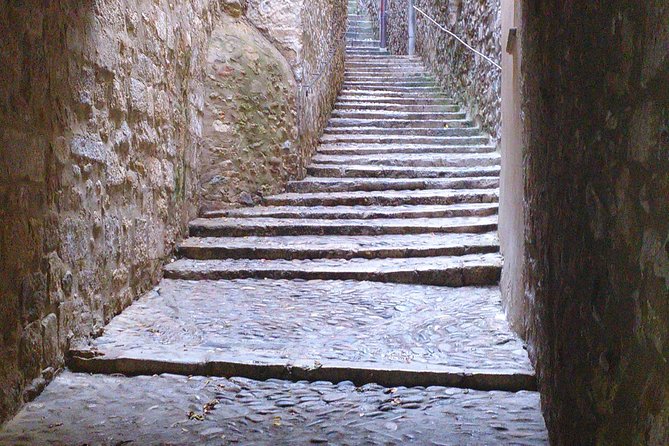
Book it if you want help seeing what is easy to miss: mezuzah marks, the old street pattern, surviving homes, and the former synagogue now used as a museum. The strongest guides, especially Ona, Mike, Miguel, Pere, Pete, Monica, Julia, and Susana, appear to make the history personal and easy to follow.
Skip it if you expect a large, fully intact Jewish district with many buildings open inside. Girona offers something quieter. Its evidence is scattered through the old city, and the museum supplies much of the detail.
For the best chance of a rewarding visit, confirm the English departure, choose a date that suits you well in advance, and arrive ready for steep streets. At its best, this is a thoughtful small-group walk through a historic neighborhood, followed by the museum that explains what the stones alone cannot.
FAQ
How long does the Girona Jewish Heritage tour last?
The experience lasts approximately 2 hours and 30 minutes. About two hours are spent on the guided visit to Girona’s Jewish quarter, followed by about 30 minutes at the Museum of Jewish History.
Where does the tour begin and end?
The tour begins at Plaça de Sant Feliu, 17004 Girona, Spain. It ends back at the same meeting point.
Is museum admission included?
Yes. Entry to the Museum of Jewish History in Girona is included in the tour price, along with a guided museum visit.
Is the tour offered in English?
Yes, the experience is offered in English. If English guiding is essential, confirm the language for your chosen departure because one scheduled date was changed to Spanish when demand was low.
How large is the group?
The tour has a maximum of 10 participants. The small size allows more room for questions and conversation with the guide.
Is the tour suitable for people with mobility problems?
The activity is not recommended for people with mobility problems because Girona’s old city has many steps and slopes. Service animals are allowed.
Just added around Girona
- Besalú, Banyoles Lake & Volcanic Castellfollit from Girona★ 5.0 · 6 reviews
- Dalí & Wine | Premium Private Tour with Coastal or Girona Add-On★ 5.0 · 6 reviews
- Private Andorra or Pyrinees Ski / Snowboard Tour Day trip★ 5.0 · 6 reviews
- From Girona: Dalí Museum and Girona Small Group Tour★ 4.8 · 7 reviews
- City Explorer: Girona Private Day Trip★ 5.0 · 7 reviews
- Dalí Triangle & Cadaqués Day-Trip From Girona★ 5.0 · 7 reviews
- Olot: Espai Cràter Volcanology Center Entry Ticket★ 4.7 · 7 reviews
- Private tour: Dali Museum and Girona from Barcelona★ 5.0 · 7 reviews
Historical Tours, compared.
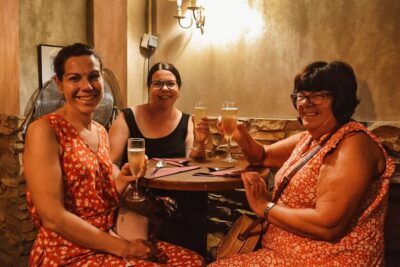
Tapas Walking Tour with Food, Wine, and History
Read our review →
Barcelona Tapas Walking Tour: Food, Wine & History
Read our review →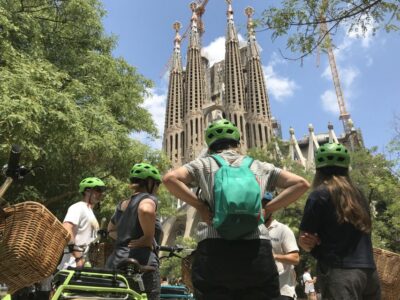
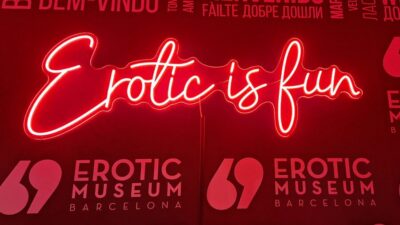
Barcelona Erotic Museum – Explore Art, History & Fun
Read our review →
Andorra Original History and Sightseeing Tour (Private, Pickup)
Read our review →
Tarragona and Sitges Small Group Tour – Roman History & Culture
Read our review →
Girona History and Legends Tour Small Group from Girona
Read our review →Browse the lists this tour appears in