
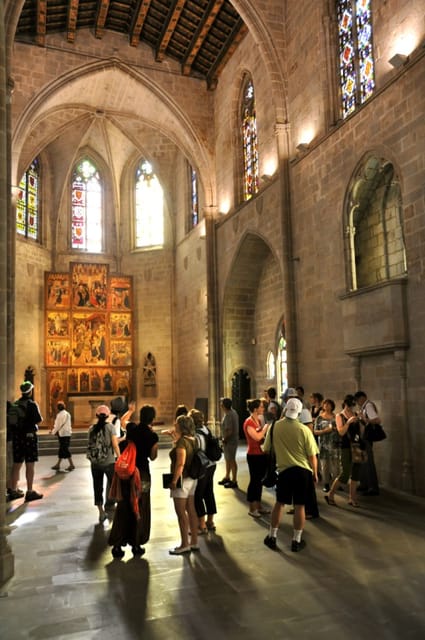
Reviewed · GOTHIC QUARTER WALKING TOURS
Barcelona 2-Hour Gothic Walking Tour
Barcelona’s Gothic Quarter is best understood one tucked-away corner at a time. In two hours, this tour links Roman Barcelona, medieval royal power, Gothic churches, Civil War scars, and the narrow lanes that are easy to wander past without knowing what you’re seeing. I especially like the Roman Temple of Augustus and the quiet, moving Plaça Sant Felip Neri.
I also like the focus on the cathedral cloister and the chance to visit the Museu Frederic Marès after the walk on the English tour. Guides such as Olga Escribano, Jordi, Alex, and Alexandra have been praised for clear explanations, humor, and personal recommendations. The main consideration is simple: you walk for two hours, often on uneven stone streets, so eat first and bring water.
In This Review
- Key points to know before booking
- Why this two-hour walk works so well
- Meeting the guide at Plaça de la Seu
- Barcelona Cathedral and its cloister
- The Temple of Augustus and Roman Barcelona
- Plaça del Rei, the royal palace, and Saló del Tinell
- Carrer del Bisbe and the quarter’s narrow lanes
- Plaça Sant Felip Neri and the marks of war
- The Museu Frederic Marès finale
- Is $32 good value?
- Pace, weather, and practical comfort
- Who will enjoy this Gothic Quarter tour?
- Should you book it?
- FAQ
- How long is the Barcelona Gothic Walking Tour?
- What language is the tour offered in?
- How much does the tour cost?
- Where does the tour meet?
- Where does the tour end?
- Does the tour visit Barcelona Cathedral?
- Which historic sites are included?
- Is Museu Frederic Marès included?
- Can I cancel for a refund?
- Do I have to pay when I book?
Key points to know before booking
- Roman ruins in a medieval setting: Find the Temple of Augustus tucked into a courtyard most people would miss alone.
- A compact two-hour route: The sights are close together, making this a useful first look at old Barcelona.
- Cathedral cloister visit: Go beyond the exterior and see one of the quarter’s most atmospheric spaces.
- Royal history at Plaça del Rei: Visit the Palau Reial Major, Capella de Santa Àgata, and Saló del Tinell.
- A thoughtful final stop: English-language bookings include free admission and free time at Museu Frederic Marès.
- Strong guide element: Past guides have included Olga Escribano, Jordi, Pilar, Alex, and Alexandra, with particular praise for storytelling and historical detail.
Why this two-hour walk works so well
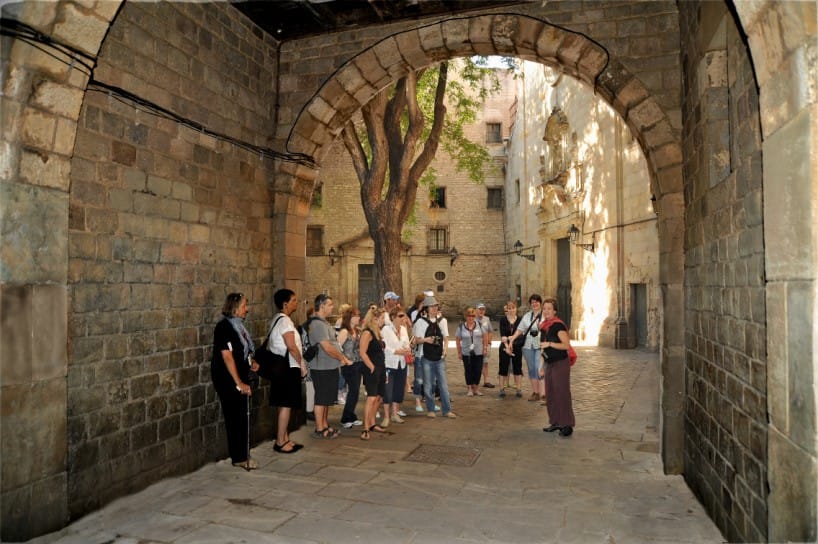
Barcelona’s Gothic Quarter can feel like a maze. That is part of its charm, but it can also make the area hard to read. A narrow lane may follow the line of a Roman street. A quiet courtyard may contain the remains of a temple. A grand facade may be medieval in appearance but shaped by later restoration.
This tour gives you a framework. Rather than simply ticking off churches and squares, you move through the old center in chronological layers. The guide connects Barcino, the Roman settlement, with the medieval city and the modern neighborhood around it.
I like this approach because the quarter is not a place where every important detail announces itself. A guide can point to a surviving column, a blocked-up doorway, or a small architectural feature and explain why it matters. Several guides have also used pictures to help explain buildings and earlier versions of the streets, which is useful when the past is no longer fully visible.
The route is compact, but it is not empty. You spend much of the time walking between nearby sights, stopping for explanations, photographs, and questions. The pace has been described as manageable, even for people with some movement difficulty, though the two-hour duration still requires a reasonable ability to walk and stand.
More Gothic Quarter walks:
- Barcelona in 1 Day: Sagrada Familia, Park Guell,Old Town & Pickup
★ 5.0 · 13,541 reviews - Barcelona all included: Sagrada, Park Güell, Montjuic & Gothic
★ 5.0 · 2,169 reviews - Barcelona: Sagrada Familia, Modernism, and Old Town Tour
★ 4.7 · 1,621 reviews
Meeting the guide at Plaça de la Seu
The meeting point is at the tourist information office at Plaça de la Seu. Look for the office marked with the familiar i symbol. This puts you directly beside Barcelona Cathedral, a practical starting point because the cathedral and surrounding squares provide an immediate sense of the old city.
The tour has listed starting options at Plaça de la Seu, 2, with the walk also ending in the same area. That makes the outing easy to combine with other central sights. You are not sent across town at the end, and the neighborhood is well placed for continuing on foot.
Guide quality matters a great deal here. The strongest part of this experience is not merely the route, but the person explaining it. Olga Escribano has repeatedly been singled out for her energy, historical command, humor, and ability to adjust stories to the group. Other praised guides include Jordi, Pilar, Alex, Alexandra, Olga, Luca, Theo, Miguel, and Val.
That variety means you should think of this as a guide-led experience rather than a scripted performance tied to one individual. The common thread is a local guide who can answer questions and place the monuments in context.
Barcelona Cathedral and its cloister
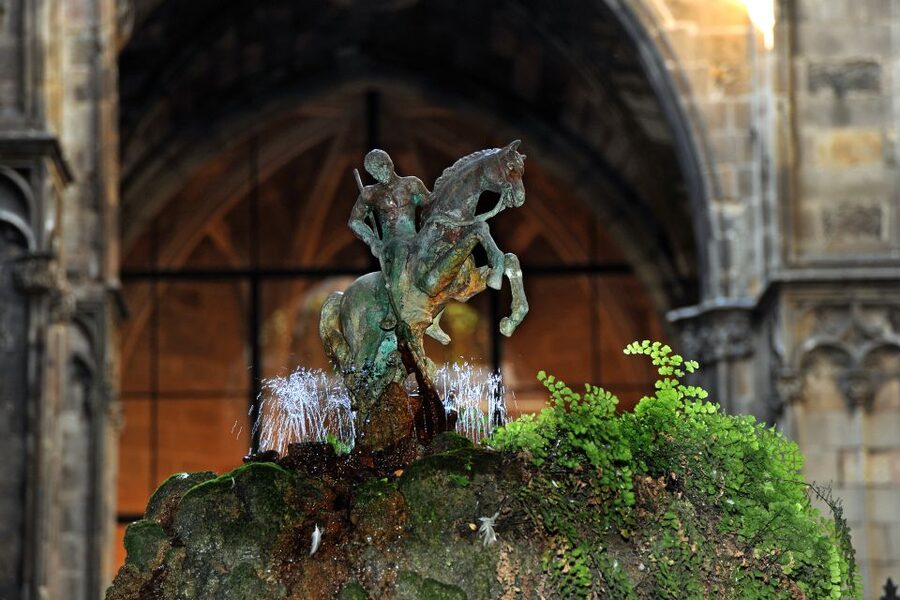
Barcelona Cathedral is one of the main anchors of the walk. Its Gothic forms, tall facade, and centuries of religious history make it a natural place to begin understanding the old quarter.
The important detail here is the visit to the cloister. From the street, the cathedral can seem like an imposing photo stop. Inside the cloister, the experience becomes quieter and more detailed. The space offers a closer look at Gothic design and gives the guide room to explain the religious and civic role of the cathedral.
The supplied details describe a guided visit to the cathedral and a closer look at the cloister. They do not promise a full tour of every interior area, so you should not book this expecting an exhaustive cathedral visit. Instead, think of it as one element in a broader historical walk.
Plaça de la Seu also helps you see how the old religious center fits into the surrounding streets. The square is a busy starting point, but once you turn into the lanes, the scale changes quickly. The route leads you away from the broad open space and into the tighter medieval core.
The Temple of Augustus and Roman Barcelona
One of the most rewarding stops is the Roman Temple of Augustus. The remains are tucked into a medieval courtyard, which is exactly why a guide adds value. You may pass nearby without realizing that the columns belong to the Roman city of Barcino.
This stop gives the walk its oldest layer. Barcelona is often associated with Gothic buildings and Gaudí, but the city’s story reaches back much further. The temple remains help you picture a Roman settlement beneath the later streets.
I like the contrast between the ancient columns and the surrounding medieval architecture. You are not viewing Roman ruins in an isolated archaeological park. You are seeing them woven into the living city, surrounded by buildings and lanes formed many centuries later.
The guide’s job is to make that connection clear. A good explanation here changes how you see the rest of the quarter. Streets that first look random begin to feel like a palimpsest, with one period built over another.
More walking tours in Barcelona:
- Barcelona Tapas and Wine Experience Small-Group Walking Tour
★ 5.0 · 5,804 reviews - Barcelona: Tapas Walking Tour with Food, Wine, and History
★ 4.8 · 4,261 reviews - Barcelona Tapas Walking Tour: Food, Wine & History
★ 4.5 · 1,928 reviews - Barcelona: Tapas Food Crawl Walking Tour with Tastings
★ 4.9 · 1,798 reviews
Plaça del Rei, the royal palace, and Saló del Tinell
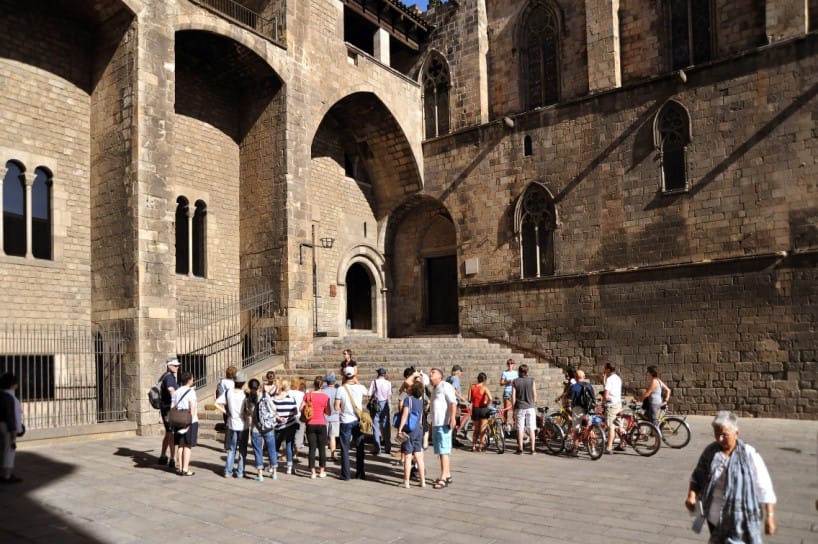
Plaça del Rei is among the most atmospheric stops on the route. The square is enclosed by historic buildings, giving it a strong sense of place even when you do not know the full story behind each facade.
Here you explore the Palau Reial Major, the former palace of the Catalan kings. The royal connection gives the tour a different tone from the cathedral and Roman temple. This was a center of political power, not only worship.
The palace is also linked with the famous meeting between Ferdinand and Isabella and Christopher Columbus after his return from the New World. That story can easily be reduced to a quick historical footnote, but in this setting it becomes more tangible. You are standing in a place associated with the monarchy and the political world of late medieval and early modern Spain.
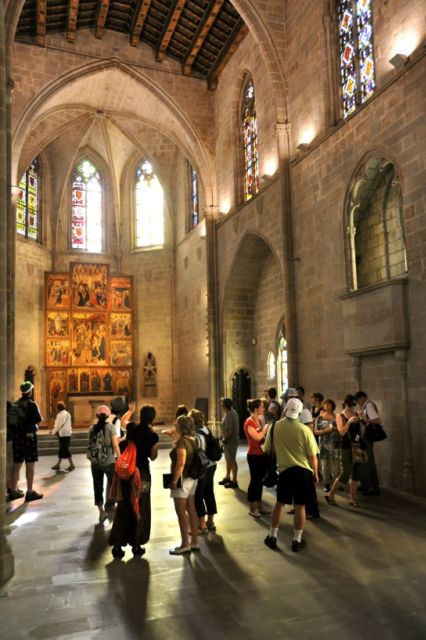
The Saló del Tinell is another major highlight. Its large medieval hall has an imposing presence, and the guide helps you understand why it mattered. The Capella de Santa Àgata adds a more intimate religious space beside the royal complex.
This section rewards travelers who enjoy history told through buildings. You are not simply looking at old walls. You are moving through a former seat of power, with the cathedral, palace, chapel, and square working together as one historical group.
Carrer del Bisbe and the quarter’s narrow lanes
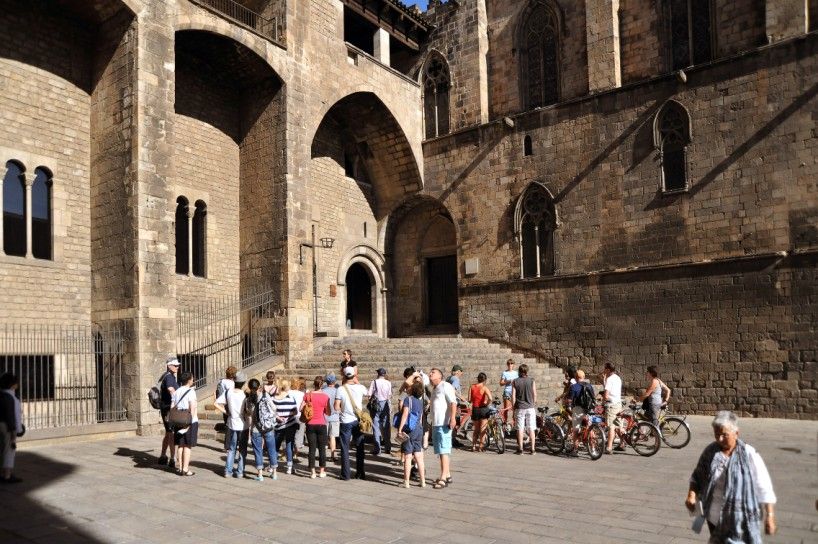
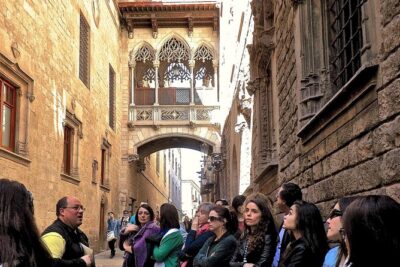
The walk also takes you through some of the Gothic Quarter’s most recognizable streets, including Carrer del Bisbe. Its Gothic facades, balconies, and enclosed views make it one of the best places for photographs.
This is where the route shifts from major monuments to smaller details. Medieval merchants, religious figures, and city politics all become part of the guide’s storytelling as you move through the lanes. The value is in learning how to look: at balconies, arches, doorways, courtyards, and changes in stonework.
You should expect some tourist traffic in this part of the quarter. Carrer del Bisbe is well known, and it is not a secret corner of Barcelona. Still, the guide can take you beyond the obvious photograph and explain why the street looks the way it does.
The tour also aims to show how the district functions today. Artisan shops, tapas bars, and everyday city life share space with the monuments. That balance matters. The Gothic Quarter is not a museum sealed off from modern Barcelona, and the walk makes that clear.
Plaça Sant Felip Neri and the marks of war
Plaça Sant Felip Neri is one of the most affecting places on the route. It is a quiet square with a Baroque church, and its walls still show pockmarks from bombing during the Spanish Civil War.
The square’s power comes from its contrast. Children may play there, and musicians may fill the space with sound, while the damaged walls preserve a painful memory. A guide can explain the events behind those marks without turning the stop into a simple photo opportunity.
I consider this one of the strongest parts of the walk because it shows that Barcelona’s old center is not only about medieval beauty. The quarter also carries the marks of modern conflict, loss, and survival.
The stop is relatively small, so the quality of the explanation makes a difference. You may spend only a short time there, but it can stay with you long after the tour ends. It also gives the route an emotional change of pace after the grand palace and cathedral interiors.
The Museu Frederic Marès finale
The English-language tour includes free admission to the Museu Frederic Marès after the walking portion. You have free time there, rather than another tightly guided segment.
The museum is housed in a medieval palace and contains Frederic Marès’s collection of sculpture, religious art, antique curiosities, and everyday objects from the nineteenth century. This is a useful cultural finish because it extends the themes of the walk indoors.
You can expect a different experience from the streets. Instead of looking at one building at a time, you move through galleries filled with objects. The collection includes medieval sculpture and personal artifacts, along with ordinary items that show how people lived and what they valued.
This bonus is particularly useful if you are comparing the $32 price with a basic walking tour. The museum admission adds substance, provided you have the time and interest to stay after the official two hours. It is not part of the guided walk itself, so plan to explore it independently once the guide has finished.
One caution: the free museum visit is specified for the English tour. If you book a different language option, do not assume the same inclusion. The listed live language for this activity is English.
Is $32 good value?
At $32 per person, this is not the cheapest way to stroll through the Gothic Quarter. You can walk the streets without paying anything, and many exterior sights are easy to find.
The price makes more sense if you want the area explained rather than merely photographed. The tour brings together Roman remains, the cathedral cloister, royal buildings, historic chapels, Plaça Sant Felip Neri, and the quarter’s smaller architectural details in one organized route.
The English-tour museum entry strengthens the value. You receive an official local guide, two hours of focused interpretation, and free time at Museu Frederic Marès afterward. If you visit the museum, the cost compares more favorably with paying for a separate walk and museum admission.
I would especially consider it good value at the start of a Barcelona stay. The tour helps you get your bearings, understand what you are seeing, and collect ideas for returning later. Several guides have also offered suggestions for food and other city sights, which can make the walk useful beyond its formal route.
The value is lower for you if you already know the Gothic Quarter well or prefer to explore at your own pace. It is also less suitable if you want long, detailed visits inside every monument. Two hours requires choices.
Pace, weather, and practical comfort
This is a walking tour, not a ride with occasional stops. Wear comfortable shoes, and remember that the old quarter has cobbled and uneven streets. A past participant specifically advised eating before the tour and carrying a drink, a sensible tip for a route that keeps moving.
The pace appears moderate. One person with movement difficulty found the guide understanding and the speed comfortable, while another described the tour as thorough without requiring long distances between sights. Even so, you should be prepared to walk and stand for the full two hours.
Weather can affect the experience. The route continues in rain, and an earpiece has been useful for hearing the guide clearly when umbrellas are out. One earlier visit had a tower closed because of rain, which shows that weather-related changes can occur. The supplied details do not promise access to every tower or interior feature in all conditions.
Free cancellation is available up to 24 hours before the start for a full refund. You can also reserve now and pay later, which is useful when your Barcelona schedule is still shifting. Check the available starting times when booking because the duration is fixed at two hours, but the departure time can vary.
Who will enjoy this Gothic Quarter tour?
I would choose this for a first visit to Barcelona, especially if you want the old city to make sense before exploring it alone. Families with older children and teenagers can benefit from the stories, since the route mixes palaces, ruins, churches, legends, and war history rather than focusing on one subject.
It also suits history fans and architecture lovers. The tour gives you enough context to understand how Roman, medieval, royal, religious, and modern elements overlap.
The experience is a good fit for solo visitors and couples who like asking questions. Guides have been praised for answering questions, adapting their explanations, and offering ideas for what to see next.
I would be more cautious about booking it for very young children who dislike walking or for anyone expecting a relaxed café-style outing. The route is not long in distance, but two hours on stone streets can feel demanding in hot weather or if you are hungry.
Should you book it?
Book this tour if you want Barcelona’s Gothic Quarter explained by a local guide rather than left as a collection of pretty streets. The strongest reasons are the Roman Temple of Augustus, the cathedral cloister, the royal complex at Plaça del Rei, and the sober history of Plaça Sant Felip Neri.
The English-language Museu Frederic Marès visit is an extra reason to choose it, especially if you enjoy sculpture and historical objects. At $32, the tour earns its price through the guide’s context and the added museum access, not through luxury or a long list of included services.
Skip it if you have already studied the quarter, dislike group walking tours, or want to spend a full morning inside the cathedral and palace. For most first-time visitors, though, this is a useful, focused introduction that can make the rest of Barcelona easier to read.
FAQ
How long is the Barcelona Gothic Walking Tour?
The tour lasts two hours.
What language is the tour offered in?
The listed live tour language is English.
How much does the tour cost?
The price is $32 per person.
Where does the tour meet?
Meet at the tourist information office at Plaça de la Seu, 2. Look for the office marked with the i symbol.
Where does the tour end?
The listed drop-off location is also Plaça de la Seu, 2.
Does the tour visit Barcelona Cathedral?
Yes. The itinerary includes a guided visit to Barcelona Cathedral and a closer visit to its cloister.
Which historic sites are included?
The route includes the Gothic Quarter, Barcelona Cathedral, the Chapel of Santa Àgata, Museu d’Historia de Barcelona, and Plaça Sant Felip Neri. The tour description also highlights the Roman Temple of Augustus, Palau Reial Major, and Saló del Tinell.
Is Museu Frederic Marès included?
English-language tours include a free visit to Museu Frederic Marès after the walking tour, with free time to explore.
Can I cancel for a refund?
Yes. You can cancel up to 24 hours in advance for a full refund.
Do I have to pay when I book?
No. The activity allows you to reserve now and pay later.
More 2-Hour Experiences in Barcelona
- Barcelona: Two-Hour Midday or Sunset Sailing Cruise
★ 4.8 · 1,732 reviews - Barcelona: 2-Hour City Sights Guided Segway Tour
★ 4.9 · 453 reviews - Barcelona: 2-Hour Sailboat Tour with Snacks and Drinks
★ 4.8 · 357 reviews - Barcelona: Jewish Quarter 2-Hour Walking Tour
★ 4.8 · 333 reviews
Just added around Barcelona
- GoCar Full Day Tour★ 4.0 · 6 reviews
- Sagrada Familia and Barcelona Highlights: Private Guided 4-Hour Driving Tour★ 5.0 · 6 reviews
- Barcelona: Highlights & Gems Private Tour with Tapa & Drink★ 3.9 · 6 reviews
- Gothic Quarter and Born District: Photographic Workshop★ 5.0 · 6 reviews
- Gobbi Yacht Rental in Barcelona 9 Pax 2/4/8hs★ 5.0 · 6 reviews
- Barcelona: Gothic Quarter & La Sagrada Familia Private Tour★ 4.9 · 6 reviews
- Private Sailboat Ride at Sunset from Sitges★ 5.0 · 6 reviews
- Barcelona: Private Tour of Casa Batllo with Reserved Access★ 3.5 · 6 reviews
Gothic Quarter Walking Tours, compared.
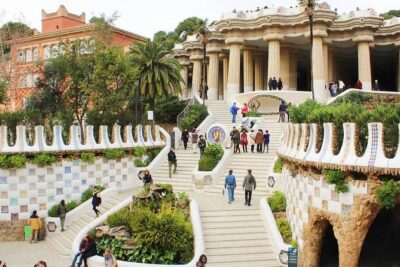
Barcelona in 1 Day: Sagrada Familia, Park Guell,Old Town & Pickup
Read our review →
Barcelona all included: Sagrada, Park Güell, Montjuic & Gothic
Read our review →
Sagrada Familia, Modernism, and Old Town Tour
Read our review →
Barcelona Gothic Quarter Tapas & Taverns Food & Wine Tour
Read our review →
Gothic Quarter Ghosts and Legends Walking Tour
Read our review →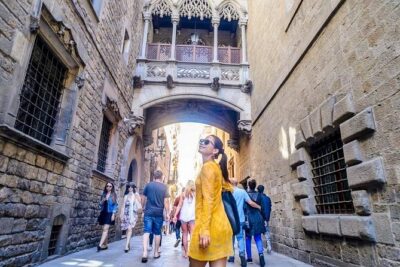
Barcelona Helicopter, Sailboat & Old Town Private Walking Tour
Read our review →
Barcelona Old Town & Gothic Quarter Small Group Tour
Read our review →Browse the lists this tour appears in