
Reviewed · GOTHIC QUARTER WALKING TOURS
Barcelona’s El Raval and the Gothic Quarter: A Self-Guided Audio Tour
Barcelona’s oldest quarters reveal their best stories in narrow lanes, old squares, and odd little details. This self-guided audio walk takes you from Font de Canaletes through El Raval and the Gothic Quarter, linking Roman Barcino, medieval streets, modern art, food, and some of the city’s less polished past.
I like the freedom to stop and pause whenever you want, and I like that the tour includes offline audio, maps, and geodata. You can move at your own speed, avoid a large group, and repeat the walk later. The main drawback is the app’s navigation. Tall buildings and tight lanes can confuse GPS, so you should download the tour and study the route before setting off.
In This Review
- Key points at a glance
- Starting at Font de Canaletes on La Rambla
- El Raval, from hardship to street life
- La Boqueria and El Gato de Botero
- Palau Güell, Gaudí in a quieter mood
- Crossing into the Gothic Quarter
- Barcelona Cathedral and Pont de Bisbe
- Picasso, Can Culleretes, and Meson del Cafe
- El Peto and the city’s modern memory
- How the app works in practice
- Price, timing, and who gets the best value
- Who should book this walk
- Should you book the El Raval and Gothic Quarter audio tour?
- FAQ
- How long does the self-guided audio tour take?
- Where does the tour start?
- Where does the tour end?
- Is the tour available every day?
- What language is the audio tour offered in?
- What is included with the booking?
- Do I need my own phone and headphones?
- Are attraction tickets, transportation, food, or drinks included?
Key points at a glance
- See two historic districts in one walk: Move from El Raval into the Gothic Quarter in roughly 75 to 90 minutes.
- Follow Barcelona’s stranger stories: Hear about the House of Mercy baby hatch, Can Culleretes’ competing origin stories, and the old Red Light District.
- Use the tour without mobile data: Audio, maps, and geodata are available offline through the VoiceMap app.
- Pause at the city’s best stops: Spend extra time at La Boqueria, Palau Güell, Plaça Sant Felip Neri, or Barcelona Cathedral.
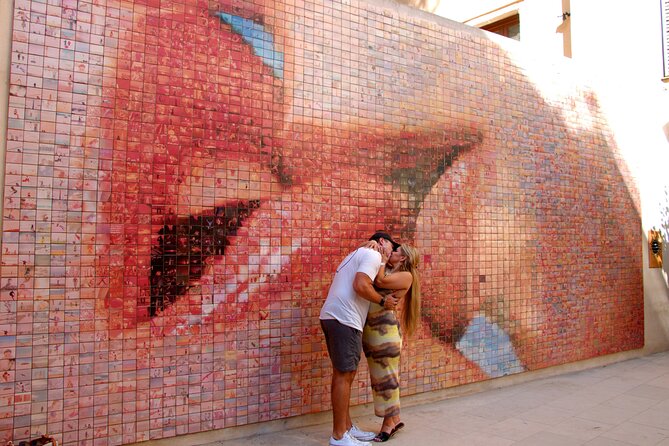
- Look for modern details among old streets: See El Gato de Botero and El Peto, a kissing mural made from 4,000 public photographs.
- Know the trade-off: The walk is private and flexible, but you must provide your own smartphone and headphones and manage the app yourself.
Starting at Font de Canaletes on La Rambla
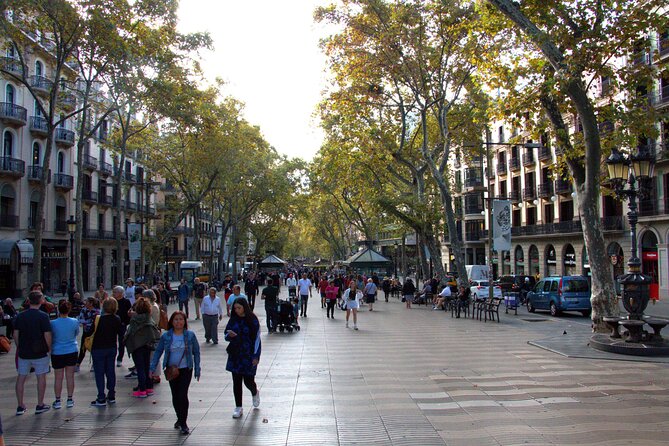
The tour begins at Font de Canaletes, at La Rambla 133. This is a useful starting point because La Rambla is easy to recognize, though it can be crowded and noisy. Take a moment to get your bearings before pressing play. The route ends back at the meeting point, making it easier to fit into a day of sightseeing without arranging transport.
The walk is designed for about one hour and 15 minutes to one hour and 30 minutes. The stated route is a 75-minute walk, but your actual time depends on how long you stop. You can pause the narration at a market, square, café, or church and continue when ready.
This is not a live guide waiting for you at a fixed hour. It is a VoiceMap audio tour for Android and iOS. You receive lifetime access in English, so you can take the route again later. That is useful if you want to split the walk into two parts or repeat a section after visiting an attraction.
Before leaving, download the audio, map, and geodata while you have a reliable internet connection. The offline feature is one of the tour’s strongest practical points. It saves mobile data and gives you a backup if your connection drops in the old quarter.
More Gothic Quarter walks:
- Barcelona in 1 Day: Sagrada Familia, Park Guell,Old Town & Pickup
★ 5.0 · 13,541 reviews - Barcelona all included: Sagrada, Park Güell, Montjuic & Gothic
★ 5.0 · 2,169 reviews - Barcelona: Sagrada Familia, Modernism, and Old Town Tour
★ 4.7 · 1,621 reviews
El Raval, from hardship to street life
After leaving La Rambla, the route enters El Raval. This district was once the most densely populated urban area in Europe and was also Barcelona’s Red Light District. That background gives the first part of the walk a different feel from the grand civic spaces of the Gothic Quarter.
The value here is the contrast. You are not only looking at attractive façades. You are also hearing how poverty, overcrowding, prostitution, religion, and commerce shaped this part of the city. The route uses the streets themselves as its subject, so you do not need to enter a museum to understand the basic story.
One of the more arresting stops is the House of Mercy. You hear how destitute mothers once left unwanted babies through a hole in the wall. It is a grim detail, but it helps you see the old city as a place where religion and charity dealt with problems created by extreme poverty.
The audio format works well for stories like this. You can stand outside, look closely at the building, and let the narration add the context. Just keep your expectations realistic. This is an outdoor walking tour, not a visit inside the House of Mercy, and entrance fees to attractions are not included.
La Boqueria and El Gato de Botero
The route gives you the chance to step into Mercat de la Boqueria, the famous food market operating since the 1100s. This is one of the tour’s most practical pauses. You can listen to the market’s story, then take a break from the route to look at the stalls.
La Boqueria can be crowded, so the self-guided format gives you a useful advantage. You do not have to keep a group together while you stop for a closer look. You can pause the audio, explore, and restart it once you are ready.
Food and drink are not included, and the tour does not promise a tasting. Treat the market as a sightseeing stop rather than a built-in meal. If you want to eat there, allow extra time beyond the 75-minute estimate.
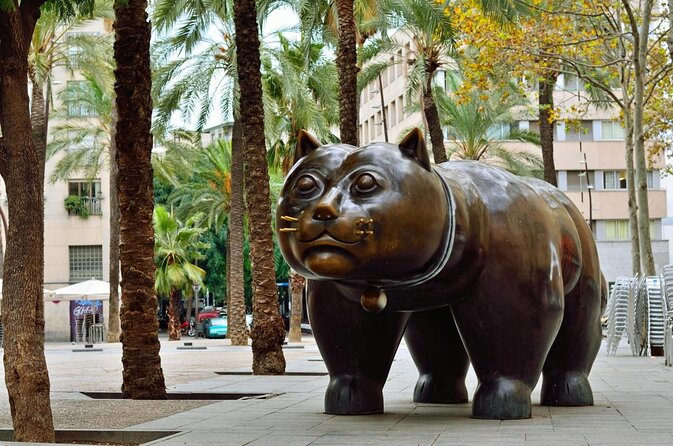
Another memorable stop is El Gato de Botero, Fernando Botero’s large, rounded cat sculpture. You will have the chance to rub the statue’s crown jewels, a bit of Barcelona sightseeing folklore that is more playful than solemn. The cat also gives the walk a welcome change of tone after the heavier story of the House of Mercy.
The route’s appeal comes from this mix. One moment you are considering medieval poverty, and the next you are looking at a famous modern sculpture. You get a better sense of Barcelona as a layered city, not simply a collection of grand churches and Gaudí buildings.
Palau Güell, Gaudí in a quieter mood
You will see Palau Güell, or Güell Palace, one of Antoni Gaudí’s more understated buildings. It is easy to associate Gaudí only with the flamboyant shapes of the Sagrada Família or Park Güell. Palau Güell offers a more restrained look at his work.
The tour lets you view the building from the route, but admission is not included. If you want to go inside, you will need a separate ticket and additional time. That makes this stop best for two kinds of visitors: those who want a quick architectural introduction, and those who are planning a longer visit and need help placing the palace within the neighborhood.
Because the narration continues at your pace, you can stop outside and examine the details without holding up anyone else. That is a real advantage over a fixed group walk. The limitation is that the audio cannot answer follow-up questions or adjust its explanation to your interests.
A few more Barcelona options worth an hour of your trip
- Barcelona: Palau de la Música Self-Guided Tour
★ 4.6 · 3,603 reviews - Casa Batllo Admission Ticket with Intelligent Audio Guide
★ 4.5 · 3,168 reviews - Barcelona: Mies van der Rohe Pavilion Ticket and Audio Guide
★ 4.6 · 380 reviews - Barcelona: Montjuïc Cable Car Ticket with Audio Guide
★ 3.9 · 270 reviews
Crossing into the Gothic Quarter
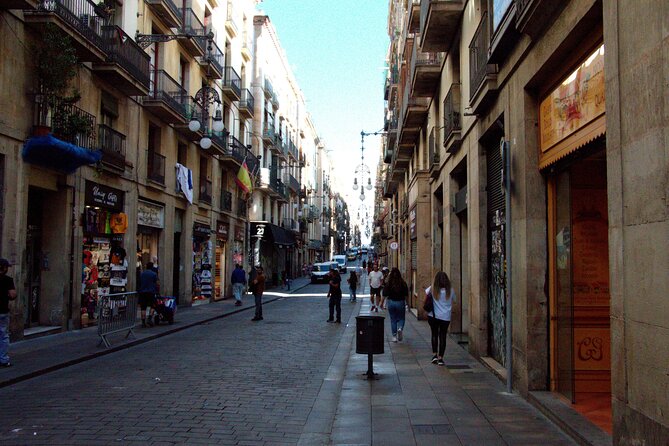
The route then moves into the Gothic Quarter, where narrow lanes, hidden alleys, and old squares replace the broader feel of La Rambla. You pass through Plaça de Sant Jaume, Plaça Nova, and Plaça Sant Felip Neri.
Plaça de Sant Jaume is one of the key public spaces in the old city. Plaça Nova provides a connection to the cathedral area, while Plaça Sant Felip Neri offers a quieter, more enclosed setting. The walk is strongest here because the audio encourages you to look up, turn into side streets, and notice how the quarter is arranged.
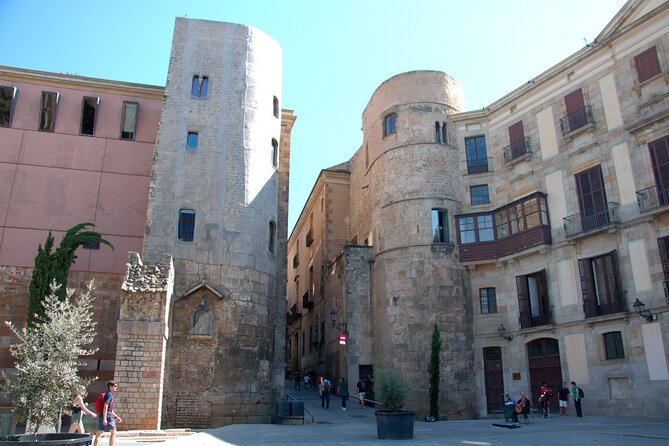
The route also explains how the small Roman settlement of Barcino developed into modern Barcelona. You see where tombs once lined the ancient village wall. That Roman layer is easy to miss when you are focused on shops, cafés, and church façades, so having the story delivered at the exact location adds real value.
The Gothic Quarter is also where GPS can be least reliable. Narrow streets and tall buildings may throw off your position or direction. One person found the app’s user experience difficult and had to rely on Google Maps for part of the walk. The provider advises using the map shown in the app when GPS positioning seems wrong, but you should still prepare before you start.
Barcelona Cathedral and Pont de Bisbe
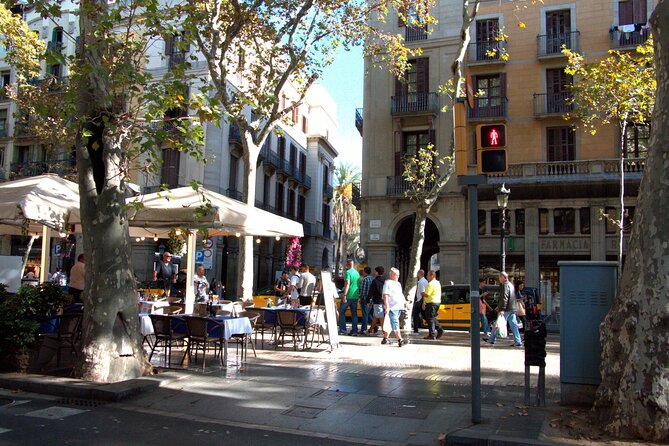
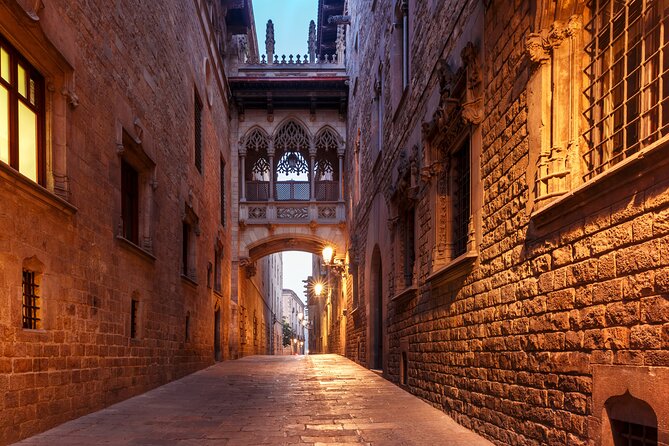
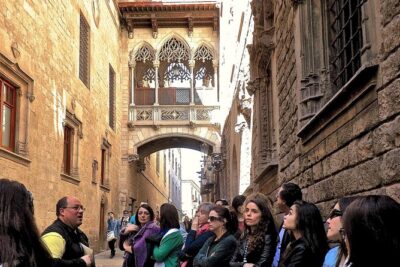
The route takes you past the Cathedral of Barcelona and Pont de Bisbe, the Bishops Bridge. These are among the Gothic Quarter’s most recognizable sights, though the route describes them as neo-Gothic attractions.
Pont de Bisbe is especially easy to appreciate when you know where to look. The bridge crosses the lane above you, creating one of the quarter’s most photographed views. The cathedral gives the walk a larger religious and civic focus after the smaller lanes and squares.
You can see these sights from the street, but tickets and entrance fees are not included. The audio tour is therefore best understood as a neighborhood orientation. It helps you decide which places deserve a later paid visit instead of pretending that a quick exterior stop replaces the full experience.
If you are short on time, this section gives you a good overview. If you have more time, pause the tour and explore the cathedral area on your own before continuing. Lifetime access means you can return to the audio later, though the activity itself ends at the starting point.
Picasso, Can Culleretes, and Meson del Cafe
The route uses local stories to keep the walk from becoming a parade of famous façades. On Carrer d’Avinyó, you hear about the street’s connection to Picasso’s Les Demoiselles d’Avignon. The story gives the lane an artistic link without requiring a museum visit.
You also hear two origin stories for Can Culleretes Restaurant. The tour leaves you to decide which version seems believable. That small detail gives the narration a conversational quality. It is not simply listing dates and names. It invites you to make a judgment.
Meson del Cafe is another stop with a local flavor. The narration presents it as a place with the city’s best coffee and the possibility of running into the mayor. You can decide for yourself if the claim holds up, but the stop works as a reminder that Barcelona’s old center is still used for ordinary daily life.
The tour does not include food or drink, so any café visit is extra. Still, these stops are useful if you prefer history tied to businesses, streets, and habits rather than only palaces and churches.
El Peto and the city’s modern memory

El Peto, the kissing mural, brings the route into modern public art. It is composed of 4,000 photographic images of freedom donated by members of the public.
This is a striking counterpoint to the Roman wall and medieval lanes. Instead of looking at a single artist’s finished work, you are looking at a large image built from many individual contributions. The stop also shows how Barcelona continues to use public spaces to tell collective stories.
It is worth pausing here. The tour’s narration may take only a short time, but the mural rewards a closer look. Since no guide is pushing you along, you can examine the small photographs and then continue when you are satisfied.
How the app works in practice
VoiceMap provides the audio, map, and geodata in one app. The narration is designed to keep pace with your movement, and that can make the route feel more natural than stopping every few minutes to read a written guide.
You control the timing. Pause for photographs, coffee, shopping, a market visit, or a quick look inside an attraction, then continue. Several people found this freedom to be the tour’s best feature, especially for a family group or anyone who dislikes moving at a fixed speed.
The app is not perfect. Getting started and following the first section can feel confusing if you have not prepared. GPS may also misread your position in narrow streets. I would open the app before leaving Font de Canaletes, confirm the starting point, check the direction of the first stop, and keep the in-app map visible when the audio seems unsure.
Bring your own smartphone and headphones. Neither is supplied. Transportation is also not included, though the route is walked from the central starting point and ends there.
Price, timing, and who gets the best value
At $11.99 per person, the tour is inexpensive for a private experience, especially if you are sharing the route with your own small group. A live walking tour can offer questions and personal guidance, but this audio walk costs less and lets you stop whenever you like.
The value is strongest if you plan to visit several sights along the way and want an introduction before deciding where to spend admission money. It is also a good choice if your schedule is irregular. The activity is available Monday through Sunday around the clock during the stated operating period, so you are not tied to a single departure time.
The price is less attractive if you want a polished, hands-off navigation experience. You are responsible for installing the app, downloading the content, following the map, and correcting your route if GPS becomes confused. The tour is offered in English only.
The experience has a 4.7 rating from 10 reviews, with 90 percent recommending it. The strongest praise centers on clear audio, informative stories, easy pacing, and the ability to pause. One five-star experience called it the best activity of a trip and found the program easy to install and follow. A Spanish-language review also praised the range of things to see, while noting that the first stops are somewhat spread out before the route becomes stronger.
Who should book this walk
I would choose this tour for independent visitors who want history without a fixed group. It suits couples, families, and solo visitors who like to stop for photos or food. It also works well as a first look at El Raval and the Gothic Quarter before returning to specific attractions.
It is less suitable if you want a live guide, detailed interior commentary, or help navigating every turn. People who dislike phone-based tours may find the app frustrating, particularly in the Gothic Quarter. Anyone booking should also remember that the experience is non-refundable and cannot be changed after purchase.
The audio is in English, and most people can participate. Since the route uses narrow lanes and public squares, wear comfortable shoes and leave room in your schedule for unscheduled stops, though the supplied information does not specify an accessibility assessment.
Should you book the El Raval and Gothic Quarter audio tour?
Book it if you value freedom, low cost, and local stories more than personal attention. The House of Mercy, Botero’s cat, La Boqueria, Palau Güell, El Peto, the Roman wall, and the Gothic Quarter squares make a varied route rather than a single-theme walk.
Skip it if dependable turn-by-turn guidance is essential or if you want someone beside you to answer questions. Download everything in advance, use the map when GPS drifts, and treat the 75 minutes as a guide rather than a strict finish time. For an inexpensive introduction to Barcelona’s oldest districts, it offers a lot of ground and plenty of reasons to pause.
FAQ
How long does the self-guided audio tour take?
The walk takes approximately one hour and 15 minutes to one hour and 30 minutes. The route itself is described as a 75-minute walk, but stops at La Boqueria, attractions, cafés, or squares can make it longer.
Where does the tour start?
It starts at Font de Canaletes, La Rambla 133, in Barcelona’s Ciutat Vella district.
Where does the tour end?
The activity ends back at the meeting point.
Is the tour available every day?
Yes. It is listed as available Monday through Sunday, from 12:00 AM to 11:59 PM, during the stated operating period of October 14, 2022, through February 16, 2027.
What language is the audio tour offered in?
The tour is offered in English.
What is included with the booking?
You receive lifetime access to the English tour, the VoiceMap app for Android and iOS, and offline access to the audio, maps, and geodata.
Do I need my own phone and headphones?
Yes. A smartphone and headphones are not included, so you must bring your own.
Are attraction tickets, transportation, food, or drinks included?
No. Tickets and entrance fees for museums or other attractions, transportation, food, and drinks are not included.
More Audio Tours in Barcelona
- Montjuïc Cable Car Entry Voucher with Audio Tour on Your Phone
★ 3.5 · 37 reviews - Tarragona Cathedral Entrance + Audio Guide (WebApp)
★ 4.5 · 36 reviews - Gaudi and La Sagrada Familia Exterior Self-Guided Audio Tour
★ 3.5 · 25 reviews - Tarragona Walking Tour: An Audio Guide to Tarraco
★ 4.5 · 23 reviews
Just added around Barcelona
- GoCar Full Day Tour★ 4.0 · 6 reviews
- Sagrada Familia and Barcelona Highlights: Private Guided 4-Hour Driving Tour★ 5.0 · 6 reviews
- Barcelona: Highlights & Gems Private Tour with Tapa & Drink★ 3.9 · 6 reviews
- Gothic Quarter and Born District: Photographic Workshop★ 5.0 · 6 reviews
- Gobbi Yacht Rental in Barcelona 9 Pax 2/4/8hs★ 5.0 · 6 reviews
- Barcelona: Gothic Quarter & La Sagrada Familia Private Tour★ 4.9 · 6 reviews
- Private Sailboat Ride at Sunset from Sitges★ 5.0 · 6 reviews
- Barcelona: Private Tour of Casa Batllo with Reserved Access★ 3.5 · 6 reviews
Gothic Quarter Walking Tours, compared.
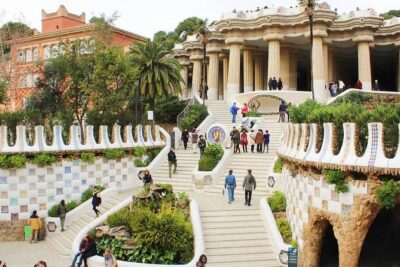
Barcelona in 1 Day: Sagrada Familia, Park Guell,Old Town & Pickup
Read our review →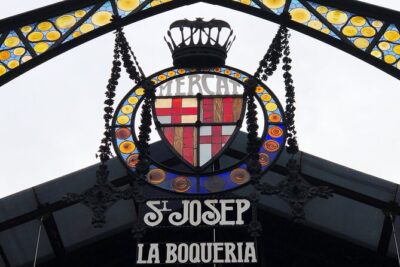
Barcelona all included: Sagrada, Park Güell, Montjuic & Gothic
Read our review →
Sagrada Familia, Modernism, and Old Town Tour
Read our review →
Barcelona Gothic Quarter Tapas & Taverns Food & Wine Tour
Read our review →
Gothic Quarter Ghosts and Legends Walking Tour
Read our review →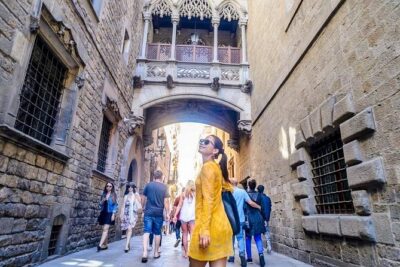
Barcelona Helicopter, Sailboat & Old Town Private Walking Tour
Read our review →
Barcelona Old Town & Gothic Quarter Small Group Tour
Read our review →Browse the lists this tour appears in